
TL;DR: 7mm neoprene knee sleeves are the best knee sleeves for squats for most lifters. They give the best mix of support, warmth, compression, and carryover to heavy barbell work. For one pair that fits heavy squats, regular gym sessions, and long-term use, Rogue Fitness Knee Sleeves are a strong all-around pick for the average lifter, especially the guy training between work, family stuff, and old knee irritation.
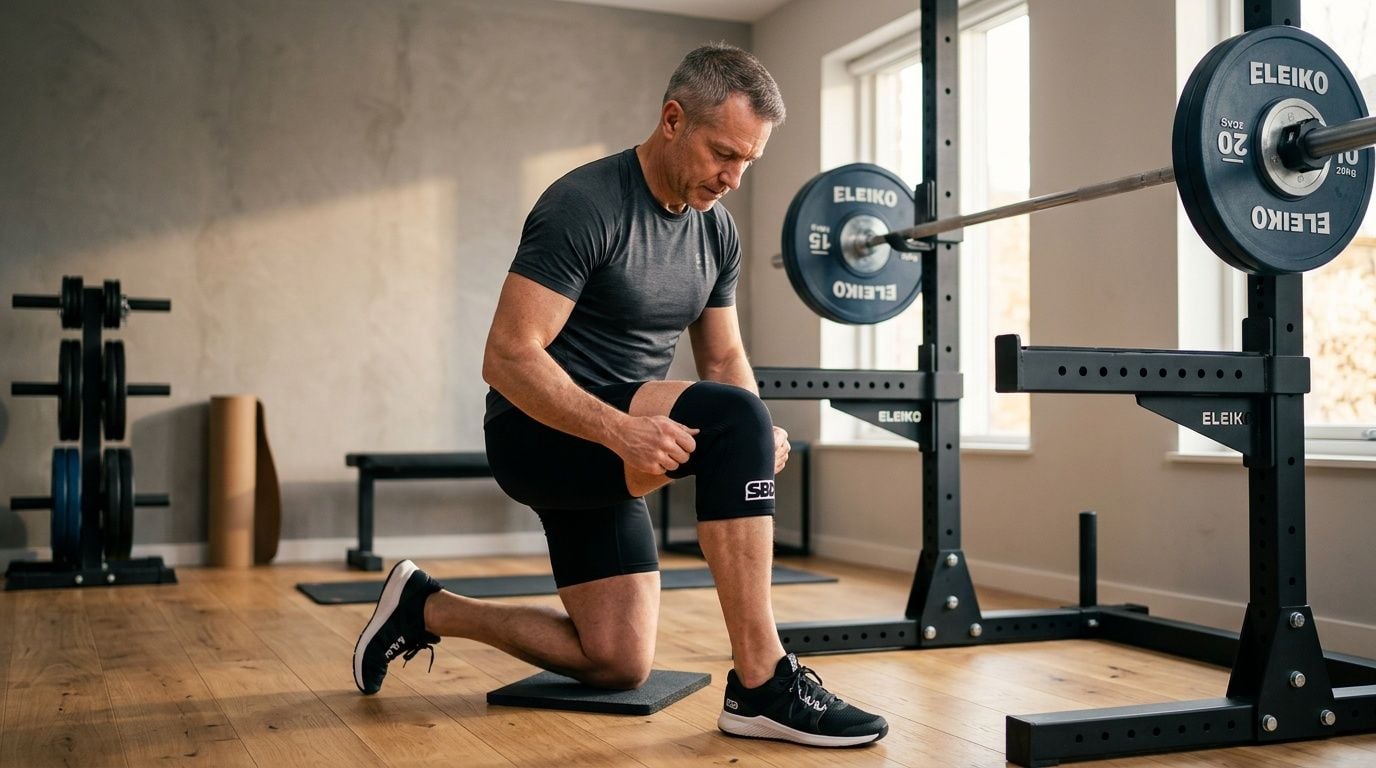
Saturday morning is usually when this shows up. You get the rack before the gym fills up, knock out a few warm-up sets, and then the working weight feels less settled than it should. Maybe it is an old patellar tendon flare-up from basketball. Maybe it is just stiff knees from sitting all week and trying to squat hard on a tight schedule.
Good knee sleeves help in that situation. They do not clean up bad squat mechanics, and they do not replace smart programming, but they can make heavy sets feel more stable and less beat-up. For a lot of dads and everyday lifters, that matters more than chasing the most aggressive competition-style sleeve on the market.
That is the angle here. A lot of knee sleeve roundups are written for elite powerlifters trying to squeeze every possible kilo out of meet day. Most lifters need something more practical. They want enough support to squat heavy, enough comfort to keep the sleeves on through a full leg session, and enough joint relief to come back next week without their knees feeling cooked.
That balance matters even more if you are pairing squats with faster-paced training, short sessions, or superset workout programs for busy lifters. Sleeve choice affects how quickly you can get them on and off, how much they restrict movement, and whether they help or annoy you once the session starts.
If you care about long-term training, not just your next PR, it also helps to understand the biomechanics of sport and exercise. Knee sleeves do their best work when they match your training style, injury history, and how you squat in practice.
What Knee Sleeves Do for Your Squats
You feel this most on the first heavy work set. The bar is loaded, your hips are ready, but your knees still feel stiff from sitting, coaching your kid’s practice, or rushing through a warm-up before work. In that situation, a good pair of 7mm neoprene sleeves can make squats feel more stable, more repeatable, and less irritating on the joints.
What are knee sleeves for squats
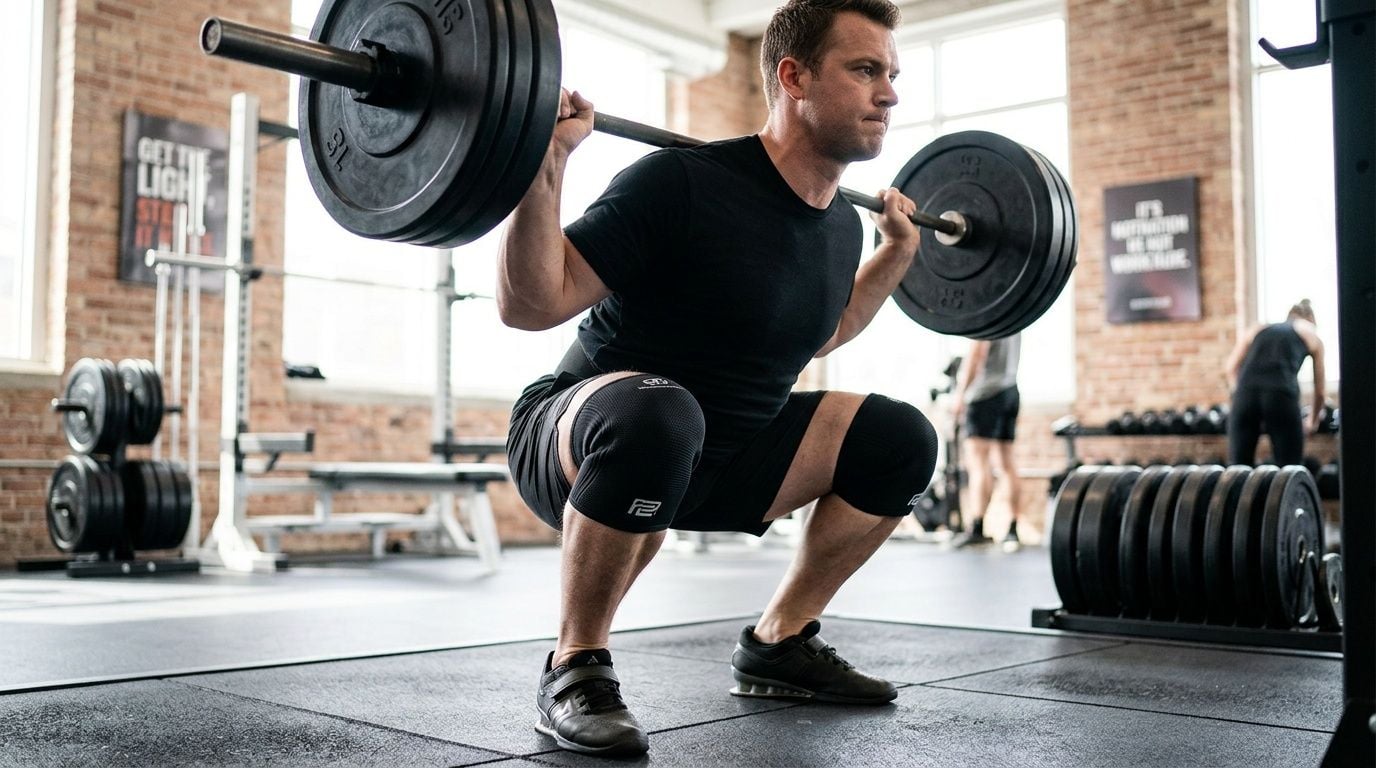
A knee sleeve is a snug compression sleeve, usually made from neoprene, that sits over the knee to add warmth, light support, and better positional feedback during training.
A sleeve is different from a rigid brace. It does not lock the joint in place. It gives the knee some compression while still letting you squat, walk, lunge, and train normally.
That makes sleeves useful for several types of lifters:
- Powerlifters who want more support under heavy loads
- General gym lifters who want more confidence and consistency on leg day
- CrossFit athletes who need warmth and support across mixed training
- Older lifters or busy dads who want to keep squatting hard without feeling wrecked afterward
Do knee sleeves help
Yes, if you use the right pair for the right job.
From a coaching standpoint, sleeves help in four practical ways. First, they keep the knee joint warm, which usually makes the first few heavy sets feel smoother. Second, the compression improves awareness, so many lifters track their knees more consistently. Third, they add a bit of support at the bottom of the squat, especially with a firmer 7mm sleeve. Fourth, they can improve confidence under the bar, which matters more than people admit.
That last point is real. Lifters who trust their knees tend to descend and drive up with better intent. Lifters who feel beat up often cut depth, shift position, or hesitate out of the hole.
Here is where sleeves earn their place in a gym bag:
- Compression improves feedback: You feel where your knees are and can keep them tracking more consistently.
- Warmth reduces that cold, stiff feeling: The joint stays ready between sets.
- Support helps under heavier loads: A firm sleeve makes the bottom position feel less loose.
- A little rebound can help: Good neoprene gives some pop out of the hole, though it is not magic.
Sleeves work best on top of decent technique and sensible loading. They support good squats. They do not clean up collapsing arches, caving knees, or a program that beats you into the ground.
For everyday lifters, that trade-off matters. The best sleeve is rarely the most aggressive one on the market. It is the pair you will wear consistently for heavy sets, machine work, and shorter sessions without fighting it the whole time. That is especially true if your training is built around fast, efficient sessions like superset workout programs for busy lifters.
If you want a clearer picture of why sleeves change how a squat feels, read about the biomechanics of sport and exercise. The short version is simple. Better joint position, steadier movement, and more confidence usually lead to better reps and happier knees over time.
Best Knee Sleeves for Squats in 2026
The best knee sleeves for squats aren’t always the flashiest pair or the most expensive pair. For most men, the right pick comes down to fit, thickness, and whether the sleeve matches how you train.
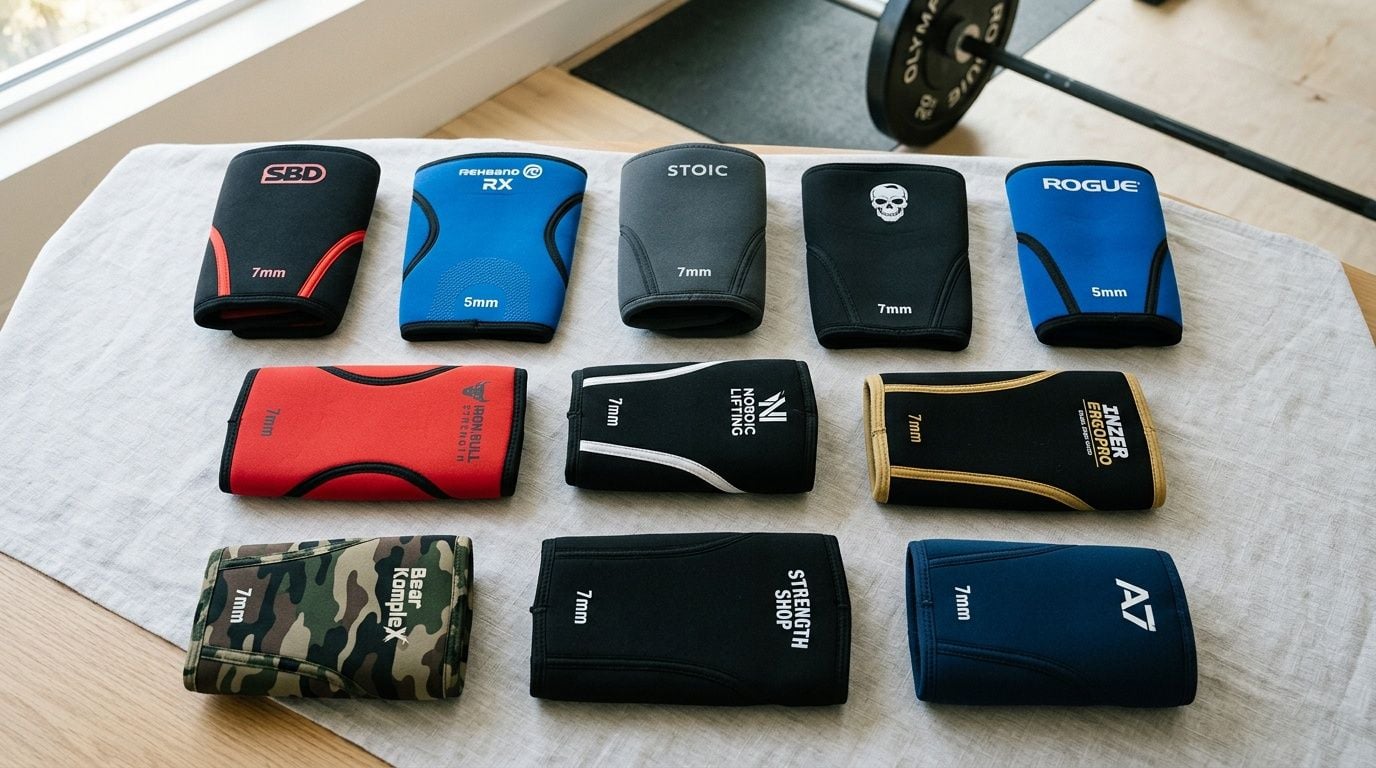
Rogue Fitness Knee Sleeves
Key features
- 7mm neoprene construction
- Strong compression for heavy squats
- Good reputation for durability
- Widely used across powerlifting and general strength training
Best for
- Most lifters who want one reliable pair for heavy squats
Pros
- Strong support without feeling overly bulky
- Good all-around choice for garage and commercial gyms
- Easy recommendation if you want a proven 7mm sleeve
Cons
- Not the cheapest option
- Can feel tight if you size aggressively
Verdict: If you want one pair that covers heavy squats, regular leg days, and long-term use, Rogue is the safest all-around pick for most lifters.
Bells of Steel Classic Knee Sleeves
Key features
- 7mm neoprene
- Built for squat-focused support
- Firm compression profile
- Practical design without extra gimmicks
Best for
- Lifters who want a squat-first sleeve at a solid value
Pros
- Serious support for heavy work
- Simple, no-nonsense build
- Good option for home gym lifters
Cons
- Less ideal if you want one sleeve mainly for dynamic mixed training
- Firm feel may be too much for lighter sessions
Verdict: Bells of Steel makes sense if your main priority is heavy squatting and you want a support-focused sleeve without paying for branding.
Eleiko PL Knee Sleeves
Key features
- 7mm design
- IPF-approved
- Competition-friendly build
- Premium finish and strong support
Best for
- Powerlifters who care about meet legality and a premium feel
Pros
- Easy choice for competition-minded lifters
- Strong compression for max-effort work
- Built with serious barbell training in mind
Cons
- Premium category pricing
- Overkill for casual lifters who squat lighter
Verdict: If you compete or plan to, Eleiko is a smart buy. If you just want support for weekly squats, there are simpler options.
Gymreapers 7mm Knee Sleeves
Key features
- 7mm support profile
- Popular among general strength lifters
- Built for squats and leg sessions
- Good balance of support and daily usability
Best for
- Lifters who want a performance sleeve that still feels practical in normal gym training
Pros
- Good support for heavy sets
- Easy to use for most gym routines
- Strong option for men who train for strength, not just competition
Cons
- Fit still matters more than logo
- Some lifters may prefer a stiffer or softer feel
Verdict: Gymreapers is a strong middle-ground option for men who want 7mm support without committing to a pure competition-style sleeve.
Iron Bull Knee Sleeves
Key features
- Premium sleeve category
- Graduated compression and advanced material blends
- Built to reduce pressure points during longer sessions
Best for
- Lifters who do more volume and want comfort with support
Pros
- More comfortable in long workouts than basic cheap sleeves
- Better fit feel for lifters who hate bunching
- Useful for squat days with a lot of accessory work
Cons
- Not every lifter needs premium materials
- Still won’t replace proper sizing
Premium sleeves from brands like Iron Bull or Gymreapers often use graduated compression and material blends that can enhance venous return and reduce intra-articular shear forces by up to 25% during high-rep sets (Sleeve Stars overview of premium knee sleeve design). That matters more in longer sessions than in a quick top-set-only workout.
Verdict: Iron Bull is a good choice if comfort during volume work matters as much to you as brute support.
Rehband RX Knee Sleeves
Key features
- Well-known anatomical fit
- Popular for lifters who mix strength work with athletic movement
- Supportive without feeling excessively rigid
Best for
- CrossFitters and general athletes who still squat heavy
Pros
- Strong versatility
- Good balance between support and mobility
- Usually a good fit for people who dislike extra-stiff sleeves
Cons
- Not always the first choice for max-support powerlifting feel
- Some squat-only lifters may want a firmer sleeve
Verdict: Rehband suits the lifter who wants one pair for squats, lunges, and mixed sessions without feeling trapped in ultra-stiff neoprene.
SBD Knee Sleeves
Key features
- Heavy-duty support reputation
- Built for serious strength work
- Popular with competitive lifters
Best for
- Lifters who want maximal compression feel
Pros
- Very supportive under heavy loads
- Strong option for squat specialists
- Appeals to lifters who like a locked-in feel
Cons
- Can feel aggressive for casual gym use
- More sleeve than many everyday lifters need
Most lifters focus on brand, but fit and thickness matter far more for performance and safety.
Verdict: SBD makes sense for lifters who want a firm, competition-style feel. For everyday use, some men will be happier with a slightly more forgiving sleeve.
How to Choose the Right Knee Sleeves for You
A lot of lifters buy knee sleeves the same way they buy belts. They pick the pair they keep seeing on stronger guys, pull them on for one heavy day, then realize they are too stiff for regular training or too loose to do much at all.
The right sleeve should match how you squat, how often you train, and what your knees need week to week. For the everyday lifter, especially the dad training before work or between family obligations, the best choice is rarely the most aggressive option on the market. It is the pair you will wear consistently for heavy sets, volume work, and those phases where an old knee issue starts talking again.
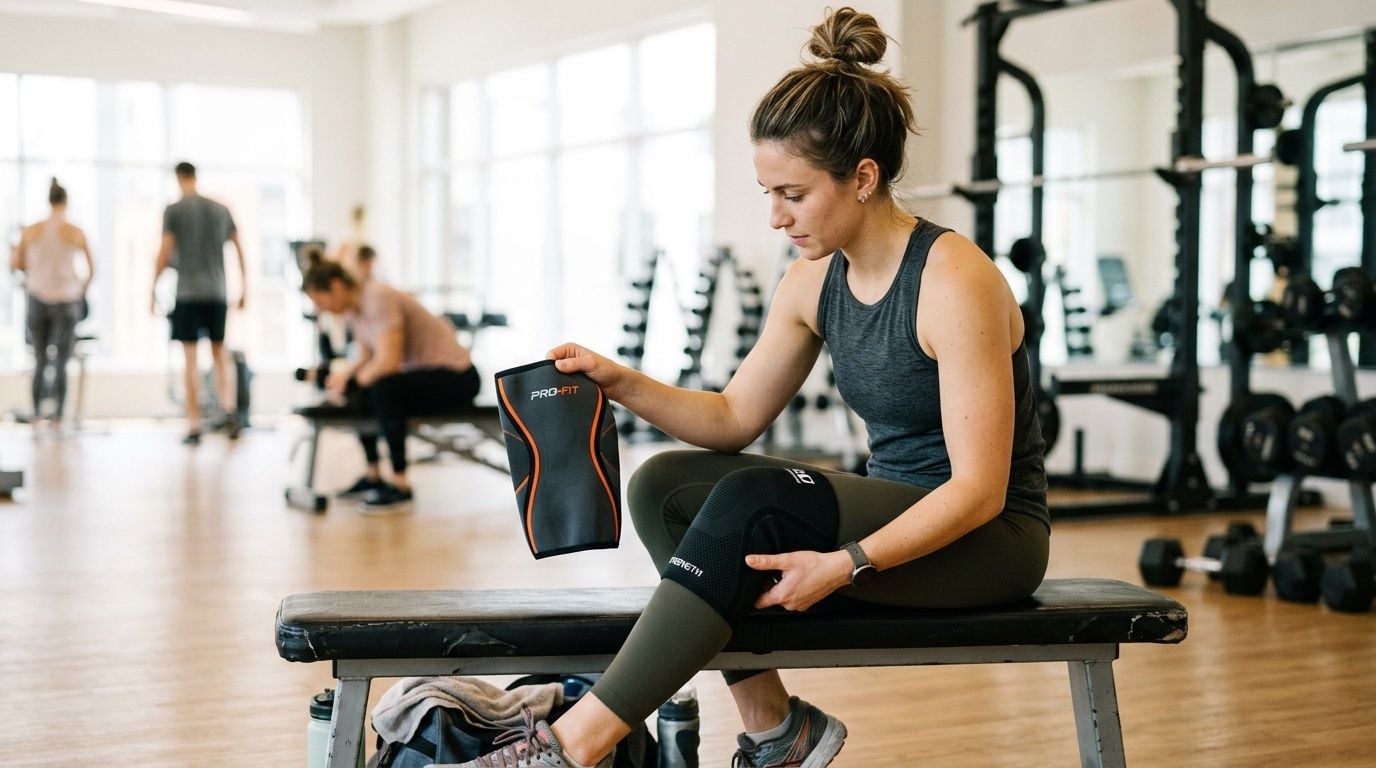
Start with your training style
Your sleeve choice gets easier once you answer one question. Are you trying to squeeze the most out of heavy squats, or do you need a sleeve you can keep on through a full session?
If your training centers on heavy barbell squats, low reps, and top sets that beat up your knees, 7mm usually makes the most sense. It gives more compression, more rebound out of the hole, and a more secure feel under load. If your sessions include split squats, machines, short rest periods, or functional trainer workouts for full-body home gym sessions, a 5mm sleeve or a softer 7mm build is often the better call because it bends easier and gets less annoying after 45 minutes.
Thickness matters, but comfort decides compliance
7mm sleeves are the standard pick for strength-focused squatting because they provide more support and usually hold more heat than 5mm sleeves, which helps many lifters feel better during warm-ups and working sets, as noted in Garage Gym Reviews' guide to knee sleeve thickness and support.
Use this rule:
- Choose 7mm for heavy squats, strength blocks, and lifters who want more compression.
- Choose 5mm for mixed training, higher-rep work, and lifters who hate feeling restricted.
- Choose based on tolerance if your knees are cranky. Some lifters with pain do better in firmer 7mm sleeves. Others need less pressure around the joint and train better in 5mm.
That last point matters more than people admit. A sleeve only helps if you keep it on long enough to train well.
Material and construction
Most squat sleeves are neoprene, but not all neoprene sleeves feel the same. Density, seam placement, taper, and how aggressively the sleeve narrows through the calf all change how it performs.
A denser sleeve usually feels better on heavy sets because it resists folding and gives more consistent pressure through the bottom of the squat. The trade-off is comfort. Dense neoprene can feel stubborn to put on, hotter during long sessions, and more irritating if your knees swell after hard training.
Softer sleeves are easier to wear for full workouts and usually feel better for general strength work. The downside is that they can bunch behind the knee, slide during repeated sets, or lose that locked-in feel once the material breaks in.
Construction details matter too:
- Flatlock seams tend to feel smoother against the skin but can stretch out sooner on cheaper sleeves.
- Reinforced stitching holds up better if you yank the sleeves on and off between movements.
- A strong taper helps keep the sleeve from sliding, but it can be brutal if you have bigger calves than your quads.
- Anatomical left/right designs often track better through deep knee flexion and wrinkle less behind the joint.
If you squat below parallel, check how a sleeve folds at the back of the knee. A sleeve that pinches hard there will distract you every rep, even if the front support feels great.
Sizing and fit
Sizing is where lifters get this wrong.
Too tight, and the sleeve cuts circulation, rolls at the top or bottom, and turns every warm-up set into a fight. Too loose, and you are basically wearing a warm knee sock. Neither helps much under a barbell.
Measure exactly how the brand tells you to measure. Some use the center of the kneecap. Others use a point 10 or 15 centimeters above it. Those are not interchangeable. If you use the wrong spot, you can end up a full size off.
A few practical rules I use:
- Buy true to size if you want an all-session sleeve.
- Size down only if you know you want a meet-style fit and you are willing to deal with a harder pull-on and pull-off.
- Respect your calves. A lot of lifters with athletic lower legs blame the sleeve when the underlying issue is that the calf opening is too narrow for their build.
- Test the sleeve after your first few working sets. A pair that feels fine cold can become too tight once blood flow and joint heat build up.
- Do not judge fit standing upright. Judge it in a bodyweight squat and again under the bar.
If you are between sizes, the right choice depends on your goal. For comfort and versatility, go up. For maximum compression on squat day, go down, but only if the brand is known to stretch a bit with use.
Match the sleeve to your knee history
Healthy knees and irritated knees do not always want the same thing.
Lifters with mild patellar tracking issues or general achiness often like a firmer sleeve because the extra compression makes the joint feel more stable. Lifters dealing with tendon pain sometimes prefer a sleeve that is supportive without crushing the area. If a sleeve increases pain during the descent or makes the front of the knee feel more pressured, that is a bad fit for you, no matter how popular the brand is.
Old injuries also change how long you can tolerate a sleeve. A pair that feels great for top sets may feel miserable during longer accessory work. That is why many everyday lifters end up happiest with a sleeve that gives up a little max support in exchange for better all-session wear.
The simplest buying filter
Choose your knee sleeves based on these priorities, in order:
- Fit
- Thickness
- Comfort across your actual workouts
- Durability
- Brand
Brand matters last. A well-fitted mid-priced sleeve usually beats a premium pair that is too stiff, too loose, or wrong for how you train.
Knee Sleeves Comparison Table
| Product | Thickness | Best For | Price Range |
|---|---|---|---|
| Rogue Fitness Knee Sleeves | 7mm | Best overall for most lifters | Mid to premium |
| Bells of Steel Classic Knee Sleeves | 7mm | Heavy squat support | Budget to mid |
| Eleiko PL Knee Sleeves | 7mm | Competition lifting | Premium |
| Gymreapers 7mm Knee Sleeves | 7mm | General strength training | Mid |
| Iron Bull Knee Sleeves | 7mm | High-rep comfort and support | Mid |
| Rehband RX Knee Sleeves | 5mm or 7mm options | Mixed training and squats | Mid to premium |
| SBD Knee Sleeves | 7mm | Max-support feel | Premium |
A simple takeaway. If heavy squats are your priority, start with a 7mm neoprene sleeve.
Thickness matters most
For serious squatting, 7mm neoprene knee sleeves are the standard because they provide maximal joint support and a measurable performance edge. They also offer 20 to 30% more warmth retention than 5mm sleeves and create the kind of compression that helps stabilize the patella and limit knee collapse during the lift (Garage Gym Reviews on knee sleeve thickness and support).
That doesn’t mean 5mm is useless. It means 5mm is usually the better call for lifters who want a more flexible sleeve for lighter work, mixed training, or all-session wear.
Use this rule of thumb:
- Choose 7mm if squats are heavy, low-rep, or strength-focused.
- Choose 5mm if you want more freedom for varied training.
- Skip ultra-thin sleeves if your main reason for buying is squat support.
Material and construction
Neoprene is still the default because it combines warmth, compression, and durability in one package.
What to look for:
- Dense neoprene: Better rebound and more support under load
- Clean stitching: Less bunching and fewer hot spots behind the knee
- Anatomical shape: Better fit through the top and bottom openings
- Consistent compression: Helps the sleeve stay put through the whole session
If your training includes cable work, unilateral work, and more varied lower-body movements, a setup like functional trainer workouts often pairs better with a slightly more versatile sleeve than a brutally tight competition-focused model.
Sizing and fit
A knee sleeve should feel snug. It should not cut off circulation, pinch sharply, or make you dread every set because getting it on feels like a wrestling match.
Here’s the practical way to get sizing right:
- Measure before you buy. Follow the brand’s chart, not your usual clothing size.
- Decide your use. Go tighter for heavy squat performance. Go truer-to-size for general training comfort.
- Test the feel. The sleeve should compress evenly above and below the kneecap.
- Watch for movement. If it slides, bunches, or rotates, the fit is wrong.
A good knee sleeve feels tight when you put it on, then disappears once you start lifting.
Pros Cons and Key Alternatives
A good sleeve helps. It also comes with trade-offs. That’s why the best knee sleeves for squats are the ones you’ll wear consistently, not the pair that looks toughest online.
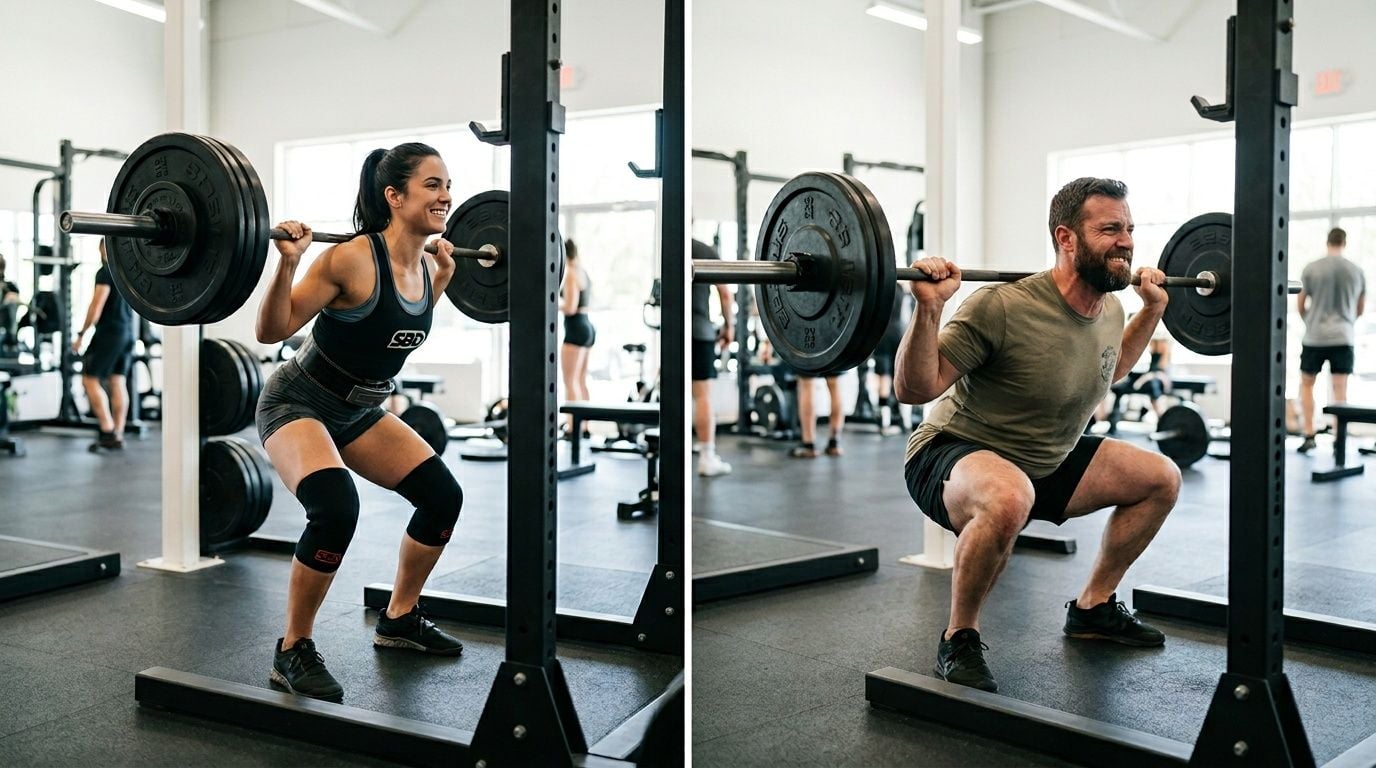
Pros of using knee sleeves
- Better knee stability: Sleeves make heavy squats feel more controlled.
- More confidence under the bar: Many lifters commit to depth and drive harder out of the bottom.
- Useful warmth: Warm knees usually feel better between sets and through longer leg sessions.
- Helpful for regular wear-and-tear: They can make training more manageable if your knees feel beat up from years of lifting, sports, or work.
Cons of using knee sleeves
- They can feel restrictive: Especially if you size down too aggressively.
- They don’t fix bad technique: A sleeve can hide problems for a while, but it won’t solve them.
- Good ones cost more: Quality neoprene and better stitching usually mean a higher price.
- Over-reliance is possible: Some lifters stop feeling confident without them, even on warm-up weights.
Knee sleeves vs knee wraps
Knee sleeves and knee wraps are not interchangeable.
Knee sleeves are better for most lifters because they’re simpler, easier to use, and more realistic for regular training. They give support, warmth, and compression without turning every squat session into a full setup ritual.
Knee wraps are for lifters who want far more aggressive support and are willing to deal with the extra tightness, setup time, and altered feel. That’s usually a competition or max-effort tool, not an everyday one.
If your gym setup already leans practical and versatile, you’ll probably get more long-term value from sleeves than from hyper-specialized gear, just like you do with the best adjustable kettlebell instead of a room full of single-purpose equipment.
Sleeves are the better choice for most men. Wraps are the niche tool.
Practical Guidance for Lifters
It’s 6 a.m., you’ve got 45 minutes before work, and your knees still remember every season of pickup basketball, manual labor, or bad squat programming. That’s the primary use case for knee sleeves. Not platform-only max attempts. Regular training when you want your knees to feel stable enough to squat hard, recover, and do it again next week.
Who should use knee sleeves
Knee sleeves earn their keep for lifters who already have a consistent squat pattern and enough load on the bar to notice the difference.
They make the most sense for:
- Strength-focused lifters who squat heavy enough to benefit from added compression and a more secure feel in the hole
- Lifters with repeatable, mild knee irritation during squats, split squats, or leg presses
- Home gym lifters who train in colder spaces and want to get their joints ready faster
- Men in their 30s, 40s, and 50s managing old sports wear-and-tear while still trying to train seriously
For older lifters and busy dads, the value is usually simple. Sleeves can make hard sessions feel more tolerable without adding setup time or changing your squat mechanics the way wraps do.
There is also some support for the idea that warmth and light compression around the knee can help with comfort and patellar tracking in people with patellofemoral symptoms. A review in the British Journal of Sports Medicine found that knee braces, sleeves, and straps may improve pain and function in patellofemoral pain patients in the short term, though the evidence quality is limited (BJSM review on patellofemoral pain supports). That doesn’t make sleeves a treatment, but it does explain why some lifters with mild irritation feel better in neoprene.
Training environment matters too. If you squat at home, a stable setup makes it easier to train consistently, and a DIY Olympic lifting platform for your home gym helps with that.
Who should avoid them
Sleeves are usually a poor buy for lifters who are still learning how to squat.
You should probably hold off if:
- Your squat loads are still light and your knees feel normal
- Your technique changes rep to rep
- You’re trying to train through obvious pain
- You expect sleeves to fix mobility limits, bad bracing, or poor programming
I’ve seen newer lifters get more from adjusting stance width, slowing the descent, and cleaning up bar position than from any piece of support gear.
Edge cases and common mistakes
The biggest mistake is sizing down too hard because tighter feels more serious. In practice, sleeves that cause numbness, pinching behind the knee, or sharp discomfort usually get worn less and help less.
A few other mistakes show up all the time:
- Too loose: They bunch up, slide down, and offer very little support
- Worn for the entire session: Fine for squat work, less useful for every upper-body set and every machine
- Used to hide a bad plan: If load selection, exercise choice, and recovery are off, sleeves won’t save the session
For lifters training around cranky knees, the better question is not “should I wear sleeves?” It’s “can I still tolerate the training dose I’ve chosen?” That’s where resources on high-intensity exercise with joint problems are useful, especially if you’re trying to keep strength work in your week without turning every lower-body day into a pain management exercise.
Used well, knee sleeves are a practical tool. Used blindly, they just make bad decisions feel more supported.
Final Verdict and Key Takeaways
Final verdict
Yes, buy knee sleeves if you squat heavy enough to want more support, better confidence, and more consistent knee comfort.
No, skip them if your squat is still light, your technique needs work, or you’re hoping sleeves will solve a problem that comes from poor movement.
For most men, the best knee sleeves for squats are still 7mm neoprene sleeves, with Rogue Fitness Knee Sleeves standing out as the safest all-around pick.
Key takeaways
- Knee sleeves improve stability and confidence during squats.
- 7mm sleeves offer maximum support for heavy lifting.
- Proper sizing is critical for effectiveness.
- They enhance performance but don’t replace good technique.
- Most lifters focus on brand, but fit and thickness matter far more for performance and safety.
Author
Fitness and product reviewer with a practical strength-training background, focused on gear that holds up in real gyms, home setups, and busy training schedules. The approach here is simple. Recommend what helps you lift better, recover better, and waste less money on gear that looks serious but doesn’t perform.
Frequently Asked Questions About Knee Sleeves
Do knee sleeves actually help squats
Yes. Good knee sleeves can improve stability, warmth, and confidence under load, which is why many lifters find squats feel stronger and more secure with them.
What thickness is best for squats
For most serious squat training, 7mm is the best choice. It offers the most support and is the standard pick for heavy lifting.
Are 7mm sleeves better than 5mm
For heavy squats, yes. For mixed training or lighter sessions, not always. 7mm is better for support, while 5mm is better for versatility.
Should beginners use knee sleeves
Usually not right away. Beginners should first build sound squat mechanics and only add sleeves if they need extra support or comfort later.
How tight should knee sleeves be
Snug and supportive, not painfully restrictive. They should stay in place and compress the knee evenly without causing obvious circulation problems.
Can I wear knee sleeves for my entire workout
You can, but most lifters only need them for the main lower-body work. Wearing them only when needed is usually more comfortable and more practical.
Are knee sleeves better than knee wraps
For most lifters, yes. Sleeves are easier to use, more versatile, and better suited to regular training, while wraps are more specialized.
If you want more practical gear reviews, training guides, and home gym advice built for real life, visit Alpha Dad Mode. It’s a strong resource for men who want useful recommendations without the fluff.
