

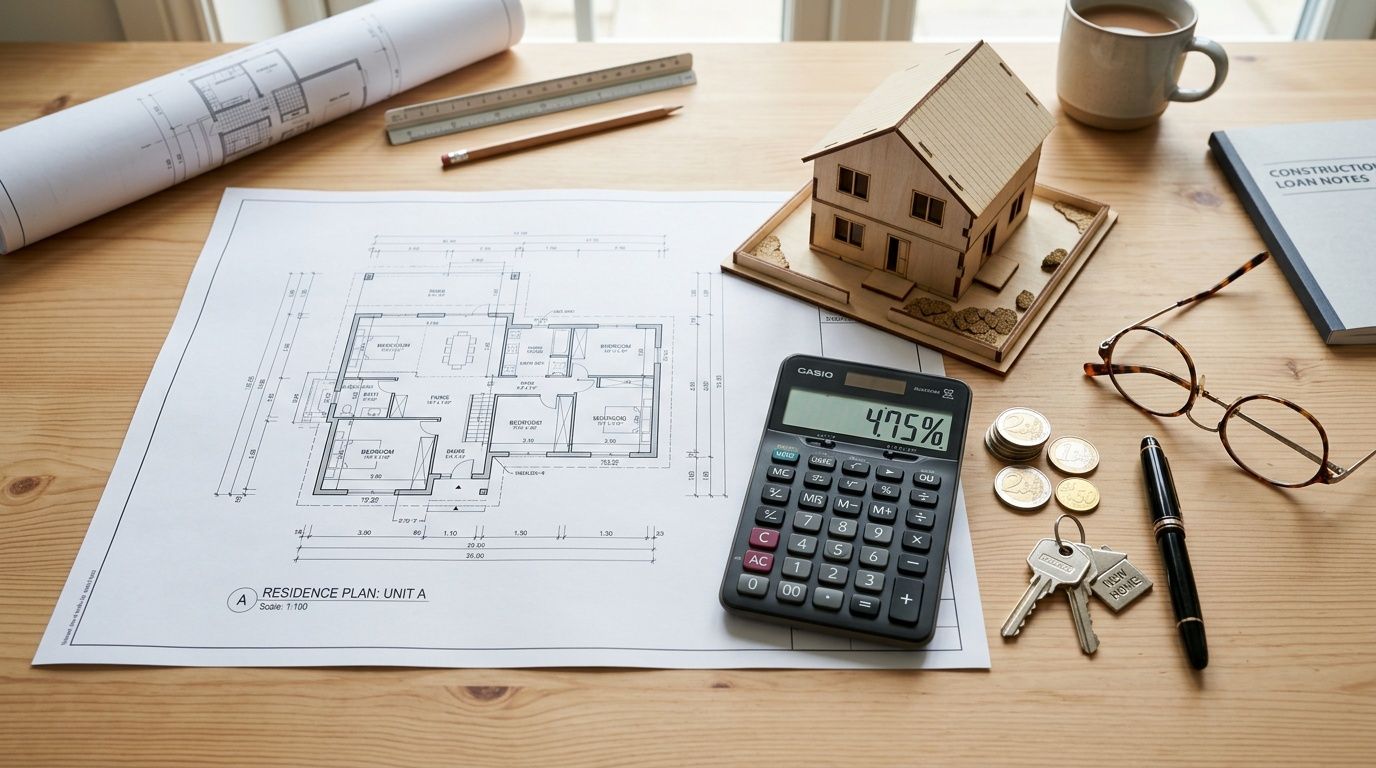
The best construction loan rates usually go to borrowers who improve their credit, keep debt under control, put at least 20% down, and compare several specialized lenders. In the current market, construction loans are often in the 8% to 9% range, so the key to success is reducing lender risk before you ask for pricing.
If you’re building a house, the rate can make or break the project.
Most guys start by chasing the lowest advertised number. That’s a mistake. Lenders don’t price construction loan rates based on what you want. They price them based on how risky you look on paper and how risky your build looks in real life.
Get this right and you save money, keep your payment manageable, and avoid getting trapped in a messy refinance later. Get it wrong and you’ll pay more, deal with tighter terms, and scramble when the project hits a snag.
What Are Construction Loan Rates
Quick Answer: Construction loan rates are the interest rates charged on short-term loans used to fund a home build. To get the best one, strengthen your credit, bring a bigger down payment, and choose a lender that understands construction lending.
A construction loan isn’t a standard mortgage. The lender is funding a project that doesn’t exist yet. That alone makes it riskier.
During the build, the lender usually releases money in stages called draws. You pay interest on the funds that have been drawn, not on the full approved amount. That’s useful for cash flow, but it also means your payment can rise as more of the project gets funded.
Construction loans also tend to be short-term and often variable. They’re commonly tied to the prime rate with an added margin. That makes them more sensitive to market swings than a plain vanilla mortgage.
If you’re trying to understand the mechanics before talking to a lender, this overview of how a self-build mortgage works is a helpful companion because it breaks down the build-stage financing process in plain English.
How they differ from regular mortgages
A regular mortgage is backed by a finished house. A construction loan is backed by plans, budgets, timelines, inspections, and your builder’s ability to finish the job.
That difference matters because lenders charge more for uncertainty.
According to LendingTree, construction loans carried 7.0% to 8.5% fixed rates in 2025, compared with 6.55% for a 30-year fixed mortgage, largely because the lender takes on more risk before the home is complete: https://www.lendingtree.com/home/mortgage/how-construction-loans-work/
Simple definition: Construction loan rates are the borrowing costs on short-term build financing, and they’re usually higher than mortgage rates because the lender is funding a property that hasn’t been completed yet.
What Drives Your Construction Loan Rate
Most borrowers obsess over the rate sheet. Smart borrowers focus on what creates the rate.
Credit score
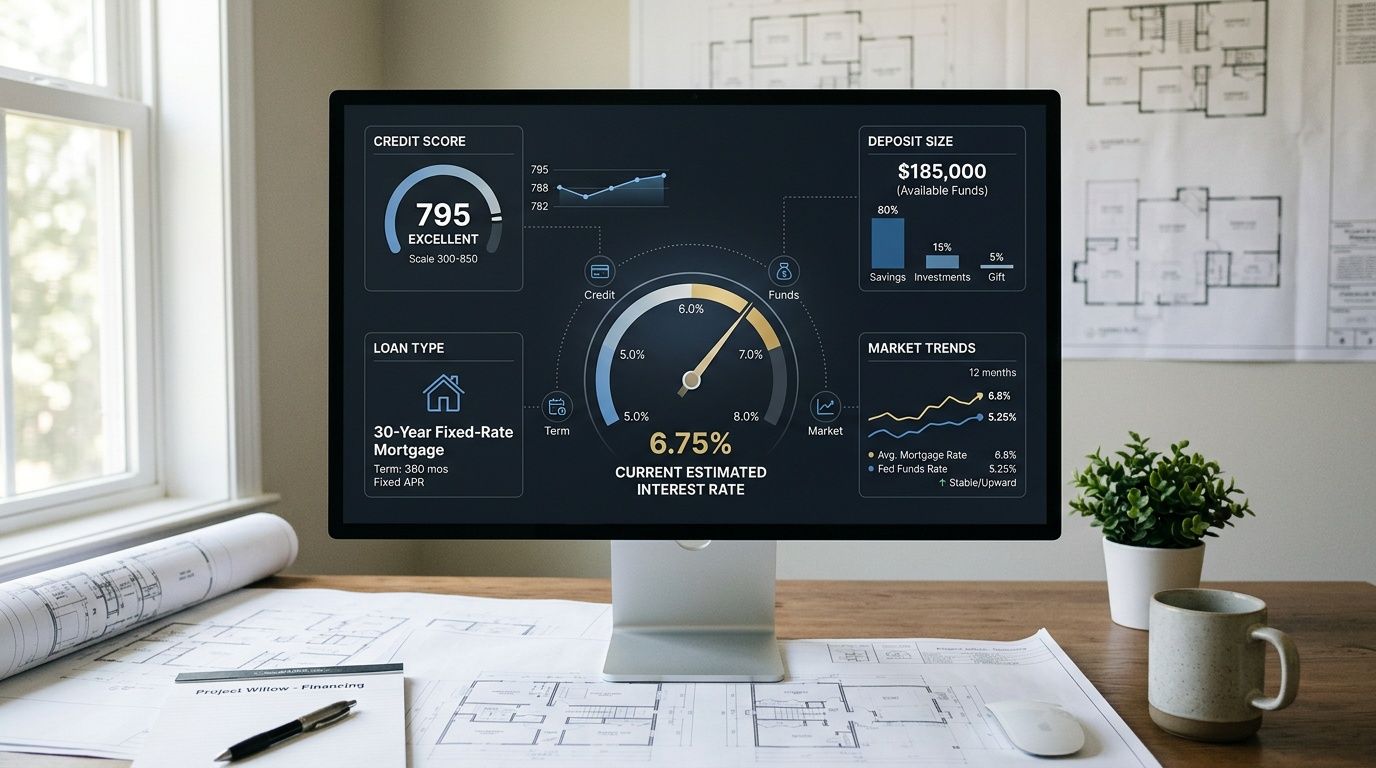
Your credit score tells the lender one thing fast. How likely are you to handle a complicated loan without missing payments?
LendingTree notes that borrowers with credit scores above 680 and DTI under 45% can often secure rates 0.5% to 1% lower on construction financing: https://www.lendingtree.com/home/mortgage/how-construction-loans-work/
That isn’t a small difference. On a build, even a modest rate drop can change your monthly carrying cost and your total interest bill in a hurry.
If you want a realistic payment picture while comparing scenarios, run the numbers with this https://alphadadmode.com/commercial-mortgage-calculator/ and stress-test the payment before you sign anything.
Deposit size
A larger down payment lowers the lender’s exposure. That’s the whole game.
The same LendingTree guidance says borrowers putting 20% or more down are in a stronger position to earn that 0.5% to 1% lower pricing because larger equity lowers the loan-to-value ratio: https://www.lendingtree.com/home/mortgage/how-construction-loans-work/
If you own the land outright, you’re even stronger. You walk in with real equity, and the lender sees less risk from day one.
Loan type
Not all construction loans are built the same.
A construction-only loan can leave you exposed because you may need a second loan once the build is done. A construction-to-permanent loan can be cleaner because it rolls into the long-term mortgage without a second financing scramble.
Lenders also price fixed and variable structures differently. If the rate can move, the starting quote may look better, but your risk goes up.
Market conditions
You can’t control the market, but you do need to respect it.
As of April 13, 2026, the 30-year fixed mortgage rate stood at 6.24%, while construction loans were typically priced at prime plus 1% to 2%, putting many of them in the 8% to 9% range. That sits far below the early 1980s, when mortgage rates topped 16%, but well above the 3.15% average in 2021: https://www.bankrate.com/mortgages/historical-mortgage-rates/
That spread is why sloppy preparation gets punished right now.
Builder risk
Lenders don’t just underwrite you. They underwrite the builder and the plan.
A clean contract, solid timeline, realistic budget, and experienced builder make the loan easier to approve and easier to price. A vague budget, a flaky contractor, or a weird custom build can push the rate higher or kill the deal.
Borrowers focus on the rate. Lenders focus on risk. Reduce the risk, and the rate usually follows.
Direct answer: Your construction loan rate is driven by five things. Credit, down payment, loan structure, market conditions, and project risk. The fastest way to improve pricing is to look less risky on all five.
Strategies to Secure the Best Rates
The best move isn’t begging for a lower quote. It’s building a file the lender wants to approve.

1. Improve your credit score
If your credit is weak, fix that before you apply.
Pay down revolving debt. Clean up reporting errors. Avoid opening new accounts. A stronger score can put you in the better pricing bucket instead of the expensive one.
2. Increase your deposit
More cash down strengthens your position.
If you can hit the 20% down mark, you usually look stronger to the lender. If you already own the land, use that equity to strengthen the file rather than stretching your budget thin on finishes and upgrades.
3. Compare multiple lenders
Don’t shop one bank and call it research.
Talk to:
- Local banks that know the area and local builders
- Credit unions that may offer more flexible construction-to-permanent options
- Mortgage brokers who understand one-time-close and specialty programs
- Builder-preferred lenders only after you compare them against outside options
Some of the best practical advice on organizing your documents and expectations comes from this guide on mastering construction loan requirements, especially if you’re trying to avoid underwriting surprises.
4. Lock your rate at the right time
If your lender offers a construction-to-permanent structure with a rate lock, pay attention.
A rate lock can protect you from a move against you during the build. That’s especially useful when the market is jumpy and your timeline depends on permits, inspections, and contractor scheduling.
I wouldn’t wait for a perfect market call. I’d lock when the build plan is solid, your budget is verified, and the lender’s terms are competitive.
5. Choose the right loan structure
Loan structure is where many borrowers subtly lose money.
A one-time-close construction-to-permanent setup can reduce friction because you aren’t forced into a second financing process after the build. That matters if rates move higher or your financial profile changes during construction.
Government-backed options matter too. Truliant Federal Credit Union notes that VA and USDA loans can offer 0% down for qualified borrowers, while FHA loans can require as little as 3.5% down. These programs can make building possible without draining savings, though qualification is stricter: https://www.truliantfcu.org/borrow/construction-loans/what-are-the-requirements-for-a-construction-loan
6. Bring a clean builder package
Underwriting gets easier when your builder package is complete.
Bring the contract, specs, timeline, permits, insurance details, and a realistic draw schedule. Missing paperwork signals disorganization. Lenders hate disorganization because it usually turns into delay.
Practical rule: The borrower who looks organized gets treated like a lower-risk borrower.
Direct answer: To get the best construction loan rates, improve your credit, bring more equity, compare specialized lenders, lock when the terms make sense, and choose a loan structure that reduces refinancing risk.
Understanding Current Rates and Loan Types
Current construction loan rates aren’t cheap. But they don’t need to wreck your project if you pick the right structure.
Current construction loan rates in 2026
Bankrate’s historical rate data shows the 30-year fixed was 6.24% on April 13, 2026, while construction loans were typically priced at prime plus 1% to 2%, putting many borrowers in the 8% to 9% range: https://www.bankrate.com/mortgages/historical-mortgage-rates/
That’s the market you’re buying in. Accept it, then work the parts you can control.
If you want broader context on rate direction before deciding when to lock, this breakdown can help: https://alphadadmode.com/will-mortgage-rates-go-down/
Why construction loan rates are higher
The lender is taking a bigger gamble.
There is no finished house yet. Funds go out in stages. The build can get delayed. Costs can rise. The contractor can mess up. Every one of those risks gets priced into the loan.
Fixed vs variable construction loan rates
A fixed-rate construction loan gives you cleaner planning. You know the payment path better, and your risk is lower if rates rise during the build.
A variable-rate construction loan can offer flexibility, but it also means your payment can move. If your project drags or the market turns, that flexibility can become a problem fast.
When fixed makes sense
Choose fixed if:
- You want predictable payments
- Your budget is tight
- You expect a longer build timeline
- You don’t want to gamble on market moves
When variable makes sense
Choose variable if:
- You expect a short, efficient build
- You have strong cash reserves
- You can absorb payment changes
- Your lender offers a strong conversion option later
Construction Loan Rate Comparison
| Option | Rate Type | Best For |
|---|---|---|
| Fixed | Stable | Predictable payments |
| Variable | Flexible | Potential savings |
Takeaway: If your budget has little room for surprise, fixed is usually the smarter call.
Direct answer: Current construction loan rates are commonly in the 8% to 9% range, and the best loan type depends on whether you value payment stability or are willing to accept rate movement for flexibility.
Weighing the Pros and Cons
Construction financing can be a smart tool. It can also punish sloppy planning.
If you’re running the project and the household budget, you need the upside and downside in plain language.
Pros
- Flexible drawdown structure: You typically borrow in stages as the build moves forward, which matches how contractors and suppliers get paid.
- Interest-only during the build: Because interest is generally charged on drawn funds, your early payments can be more manageable than a full mortgage payment on the total amount.
- Potential long-term savings: Building the right house on the right lot can put you in a better long-term position than overpaying for an existing property that still needs major work.
- More control over the final product: You get to choose the layout, systems, and finishes instead of inheriting someone else’s shortcuts.
Cons
- Higher rates than standard loans: Construction loan rates are usually above regular mortgage rates because the lender takes more risk.
- More complex approval process: You’ll need plans, specs, budgets, builder documents, timelines, and a lender willing to review all of it.
- Risk of rate increases: If your loan is variable or you need a second loan later, your financing cost can rise before the build is complete.
- Cash flow pressure from delays and changes: Every upgrade, delay, or mistake tends to show up as stress on your budget.
If your household cash flow already feels tight, work through your numbers first with a real plan like this guide on https://alphadadmode.com/how-to-create-a-family-budget/ before you commit to a build.
Real-World Scenarios and Hidden Risks
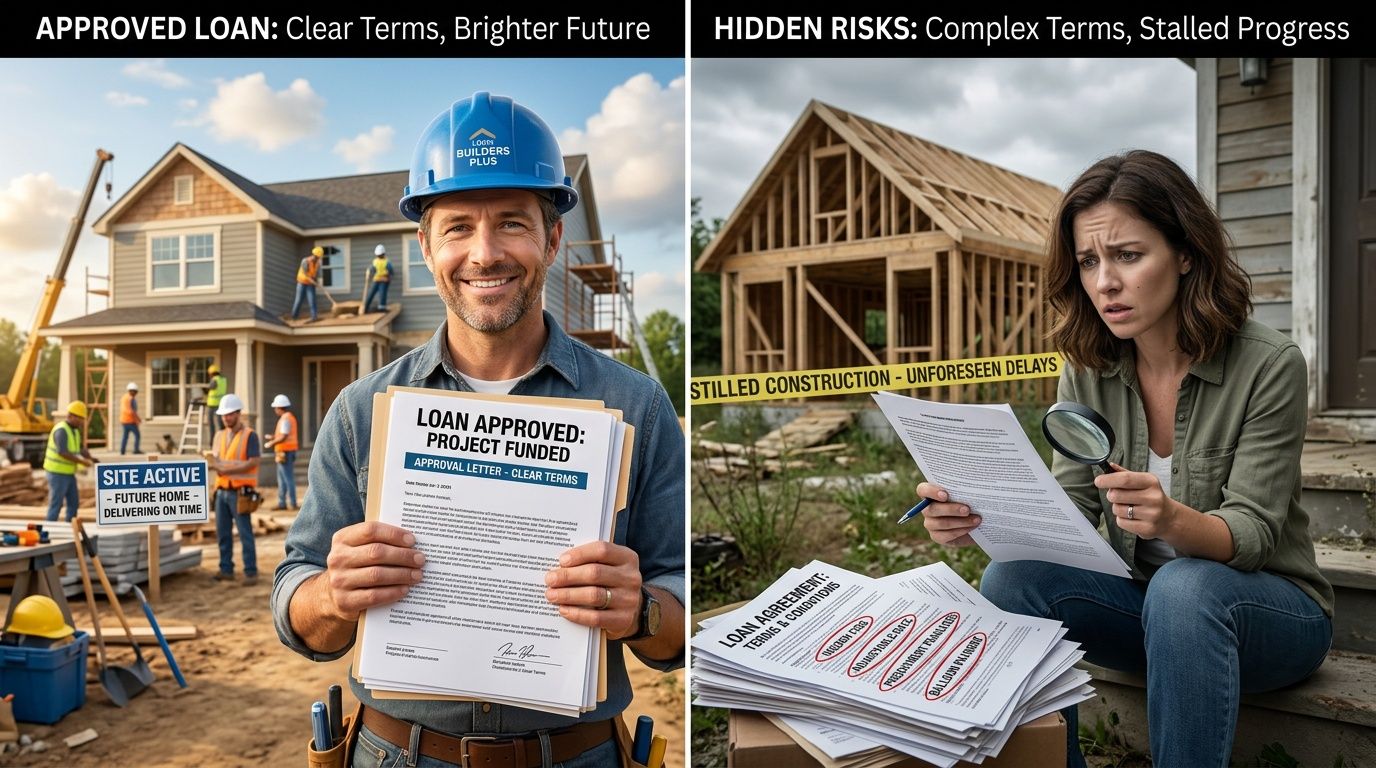
The best rates don’t go to the guy with the strongest opinion. They go to the borrower with the cleanest file and the safest project.
Who gets the best rates
A strong borrower usually looks like this:
- High credit borrower: He has solid credit history and doesn’t carry messy consumer debt.
- Large deposit: He brings real equity into the deal, often through cash down or land ownership.
- Low-risk build: The plans are clear, the budget is realistic, and the builder has a good reputation.
- Clean documentation: Every piece of paperwork is ready before underwriting asks twice.
Lenders like simple projects. Straightforward house. Straightforward budget. Straightforward borrower.
Who pays higher rates
The expensive file usually looks different:
- Lower credit profile: Missed payments, high utilization, or unstable income history
- Small deposit: Not much cash in the deal, which means the lender carries more risk
- Complex project: Unusual design, uncertain timeline, or a builder who can’t present a clean package
- Weak reserves: No margin for surprises, which makes every surprise dangerous
Edge cases to consider
The biggest hidden threat isn’t always the rate. It’s what happens when the project stops behaving.
DH Loans notes that material volatility can turn a $250,000 budget into a $275,000 project, and the borrower may need to cover that overrun out of pocket. Their recommendation is to build a 10% to 15% contingency fund into the initial budget and review the budget bi-weekly with the contractor: https://dh-loans.com/first-time-home-buyer/construction-loan-risks-challenges/
That advice is dead on.
Here are the edge cases that matter most:
- Cost overruns: Materials and scope creep can blow up your budget.
- Delays: Permit issues, weather, labor shortages, or inspection holdups can extend the loan period.
- Sudden rate increases: If you haven’t locked and the market shifts, your numbers can get uglier fast.
- Builder problems: Poor scheduling, weak subcontractors, or bad communication can stall the entire project.
A contingency fund isn’t optional. It’s what keeps a construction problem from becoming a family finance problem.
Final Verdict and Action Checklist
Final Verdict
Yes, a construction loan can be a smart move if you prepare financially, reduce risk, and compare lenders before you apply.
No, it isn’t a smart move if you’re rushing in with weak credit, thin cash reserves, and a builder you haven’t vetted.
Strong conclusion. Most borrowers focus only on rates, but lenders price risk first. Reduce risk, and you put yourself in position for the best deal.
FAQ
What are construction loan rates right now?
Many construction loans are currently landing in the 8% to 9% range, depending on the lender, the loan structure, and your risk profile.
Why are construction loan rates higher?
They’re higher because the lender is funding an unfinished property and taking on more project risk than with a standard mortgage.
Can you lock in a construction loan rate?
Yes, some construction-to-permanent loans let you lock a rate, which can protect you if rates move higher during the build.
How do I get a lower construction loan rate?
Improve your credit, lower your debt load, increase your down payment, and bring a clean, low-risk project to the lender.
Are zero-down construction loans possible?
Yes. Qualified borrowers may find 0% down VA or USDA options, and some FHA paths can go as low as 3.5% down.
Is fixed or variable better for a construction loan?
Fixed is better if you want stable payments. Variable can work if you have reserves and a short timeline, but it carries more risk.
Key Takeaways
- Construction loan rates depend heavily on risk, credit score, and market conditions.
- Improving your financial profile is the fastest way to lower your rate.
- Comparing lenders can save money over the life of the loan.
- Timing matters, but preparation matters more.
- Most borrowers shop rates first. Smart borrowers reduce risk first.
Action checklist
- Check your credit and clean up any issues before applying.
- Lower your DTI so the lender sees breathing room in your monthly budget.
- Save a stronger down payment or use land equity if you already own the lot.
- Choose your builder carefully and demand a detailed contract and realistic timeline.
- Get quotes from multiple lenders including banks, credit unions, and brokers.
- Ask about construction-to-permanent options if you want to avoid a second loan later.
- Build in a contingency fund before you finalize the budget.
- Read up on the lending side of real estate if you want sharper deal instincts. This list at https://alphadadmode.com/best-real-estate-books/ is a solid place to start.
Author
I’m a finance-focused writer who covers lending, housing, and practical money decisions for real people making expensive choices. My approach is simple. Cut the fluff, respect the numbers, and give advice you can use when it’s time to sign.
If you want more straight talk on money, homeownership, and practical decisions that help you lead well, visit alphadadmode.com. It’s built for men who want useful advice, not recycled filler.
