
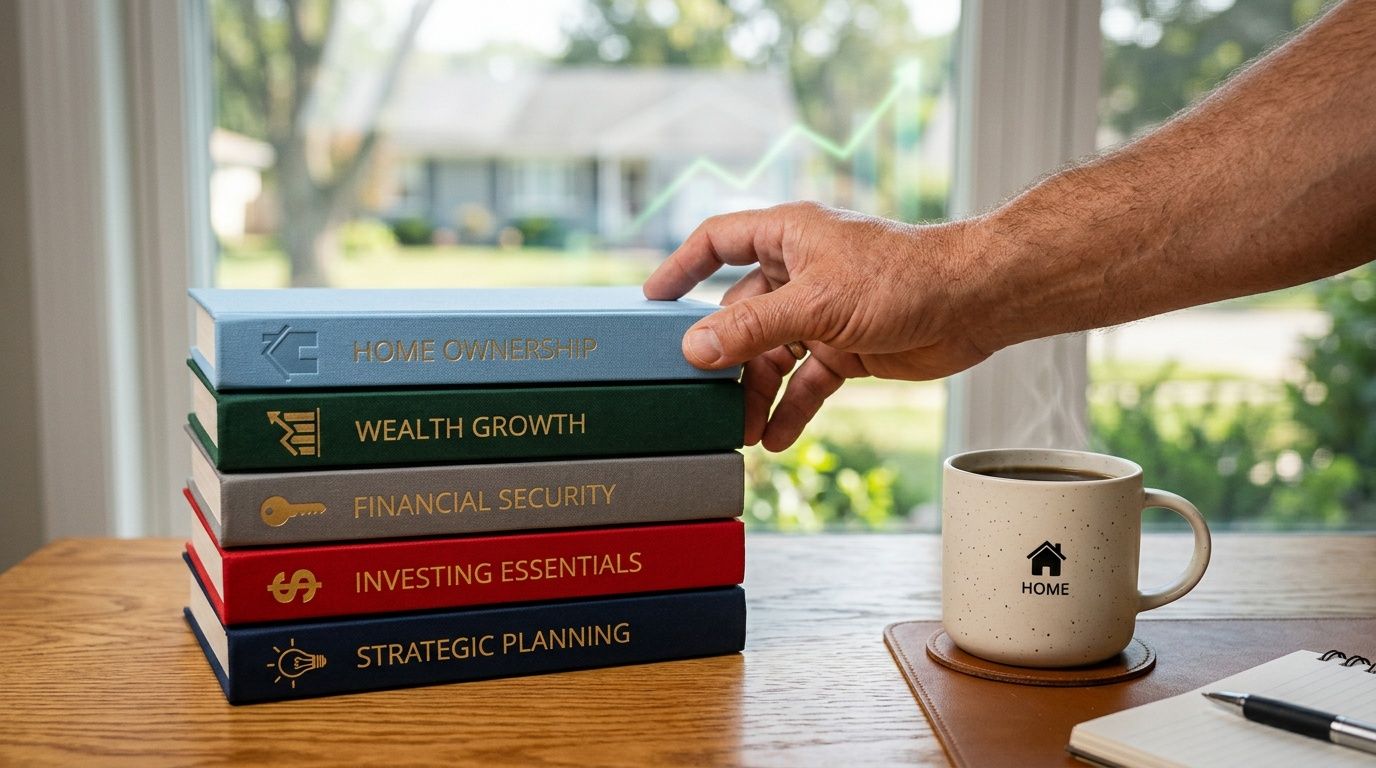
The best real estate books, sorted by goal. Practical picks for beginners, investors, agents, and busy readers who want a clear reading path.
Most lists mix beginner books, landlord manuals, agent sales books, and dense finance texts into one pile. That sounds helpful until you buy three books, finish none of them, and still don’t know whether you should learn rental analysis, house hacking, remote investing, or client acquisition.
This guide takes a different approach. It’s a reading plan, not a book dump.
If you’re trying to buy your first rental, you need an operator’s manual. If you want to analyze deals better, you need a numbers book. If you’re time-constrained and mainly want passive exposure or a better filter for sponsors, you need a different kind of book entirely. That distinction matters, especially for busy fathers trying to build family wealth without turning every evening into a second job. Most lists miss that angle, even though it’s one of the most useful ways to sort the best real estate investing books.
If you want more broad lists, you can compare this with other best real estate investing books lists. If you want a tighter shortlist with clearer trade-offs, keep going.
This article may contain affiliate links, which means we may earn a commission at no extra cost to you if you choose a recommended book or tool. We only recommend resources we believe may help.
This article is for education only. It isn’t personal financial, legal, or investment advice. Real estate decisions depend on your market, financing, risk tolerance, and tax situation.
Quick answer
- Best overall pick: The Book on Rental Property Investing
- Best for beginners: The House Hacking Strategy
- Best for investors: What Every Real Estate Investor Needs to Know About Cash Flow… and 36 Other Key Financial Measures
- Best for agents: The Millionaire Real Estate Investor for business mindset and systems, though it’s more investor-focused than sales-specific
- Best for practical action: Long-Distance Real Estate Investing
- Best for mindset: The Millionaire Real Estate Investor
How We Chose the Best Real Estate Books
I didn’t rank books by hype, social media mentions, or who has the loudest audience.
The books here earned a place because they help a specific reader do a specific job well. That’s the standard that matters.
The filter was simple:
- Clarity: Can a beginner follow it without rereading every page?
- Practical value: Does it help you buy, analyze, manage, or evaluate deals better?
- Reputation: Has the book held up over time or earned meaningful professional use?
- Fit by reader type: Beginner, active investor, passive investor, or agent
- Timelessness: Will the core ideas still matter when tactics shift?
- Depth versus readability: Some books are easy to act on. Some are better as desk references. Both can be valuable if you know which you’re buying.
A good real estate book should either shorten your learning curve or improve your decision quality. If it does neither, skip it.
Practical rule: Don’t buy books by category alone. Buy one book for strategy, one for numbers, and one for your immediate next move.
Best Real Estate Books at a Glance
Here’s the short version before the deeper breakdown.
- The Book on Rental Property Investing if you want the clearest beginner-to-operator path
- Long-Distance Real Estate Investing if your local market doesn’t pencil out
- Real Estate by the Numbers if your weakness is underwriting
- The House Hacking Strategy if your first property will also be your home
- The Hands-Off Investor if you want passive real estate exposure without managing property
- What Every Real Estate Investor Needs to Know About Cash Flow… and 36 Other Key Financial Measures if you want finance fluency
- The Millionaire Real Estate Investor if you need long-term strategic thinking and a bigger framework
Top 7 Real Estate Books: Side-by-Side Comparison
| Title | 🔄 Implementation Complexity | ⚡ Resource Requirements | 📊 Expected Outcomes | 💡 Ideal Use Cases | ⭐ Key Advantages |
|---|---|---|---|---|---|
| The Book on Rental Property Investing (Brandon Turner) | Low: step‑by‑step playbook, sequential tasks | Low: modest capital, time for learning; team-building guidance | Repeatable buy‑and‑hold system; faster deal execution | Beginner/part‑time investors seeking hands‑on guidance | ⭐ Practical, accessible; bonus videos/checklists; community tie‑ins |
| Long‑Distance Real Estate Investing (David Greene) | Medium: systems for remote oversight and SOPs | High: reliable remote “Core Four” team, travel/capital for purchases | Scalable remote acquisitions and rehab processes | Investors expanding out‑of‑state or scaling portfolios remotely | ⭐ Clear market guardrails, repeatable due‑diligence checklists |
| Real Estate by the Numbers (J Scott & Dave Meyer) | Medium: requires comfort with metrics and spreadsheets | Medium: time to learn templates; spreadsheet proficiency helpful | Confident underwriting; quantitative deal validation | Investors needing rigorous financial analysis across deal types | ⭐ Actionable metrics, fill‑in spreadsheets, worked examples |
| The House Hacking Strategy (Craig Curelop) | Low: tactical models and calculators for quick execution | Low‑Medium: owner‑occupied financing options; local compliance checks | Lower living costs; accelerated savings and first‑time equity | First‑time buyers, young families, high‑cost metro residents | ⭐ Fast on‑ramp to investing; concrete calculators and examples |
| The Hands‑Off Investor (Brian Burke) | Medium: checklist-driven diligence for passive deals | Medium‑High: capital to deploy; possible accredited investor requirements | Ability to vet syndications and deploy capital passively | Passive investors/LPs evaluating syndications and funds | ⭐ Thorough diligence questions, fee/sponsor guidance |
| What Every Real Estate Investor Needs to Know About Cash Flow (Frank Gallinelli) | High: finance‑first, technical concepts and models | Low: study time plus optional companion calculators | Deep financial mastery; strong pro‑forma stress‑testing | Analysts, students, and investors focused on financial rigor | ⭐ Thorough coverage of DCF/IRR/NOI with worked case studies |
| The Millionaire Real Estate Investor (Gary Keller et al.) | Low: high‑level mental models and strategic frameworks | Low: conceptual investment habits; implementation varies by capital | Strategic roadmap for scaling and disciplined acquisition | Investors seeking big‑picture strategy and growth mindset | ⭐ Broad strategic models, motivational and repeatable frameworks |
Best Real Estate Books for Beginners
1. The Book on Rental Property Investing

If you only buy one beginner-friendly title, this is the safest choice for most readers.
It’s practical in the way beginner books should be. It moves in sequence. Goals, deal finding, financing, analysis, team building, management. That matters because a lot of real estate books either stay too motivational or jump too fast into niche tactics.
Why it works
This book belongs on any serious list of the best real estate books for beginners because it helps people move from “I’m interested” to “I can start.” It’s especially useful if you want buy-and-hold rentals and need a repeatable process rather than scattered tips.
The biggest strength is accessibility. It reads like an operating manual, not a textbook.
Best for and one limitation
Best for: New landlords, first-time investors, and readers who want a step-by-step rental framework.
What you’ll learn: How to think about sourcing, financing, basic analysis, and building a team around rental property investing.
One limitation: It’s rental-focused. If your goal is flipping, commercial property, or purely passive syndication investing, this won’t be your main book.
Why it may be worth buying
If you’re the kind of reader who needs momentum, this one gives it to you. It’s one of the easier books to translate into action quickly.
If you’re comparing long-term rentals with short-term rentals, pairing this with a practical market comparison like Airbnb vs Vrbo can help you sort your strategy before you buy.
Buy it if your next move is a first or second rental. Skip it if you already underwrite confidently and want advanced finance or passive fund diligence.
2. The House Hacking Strategy
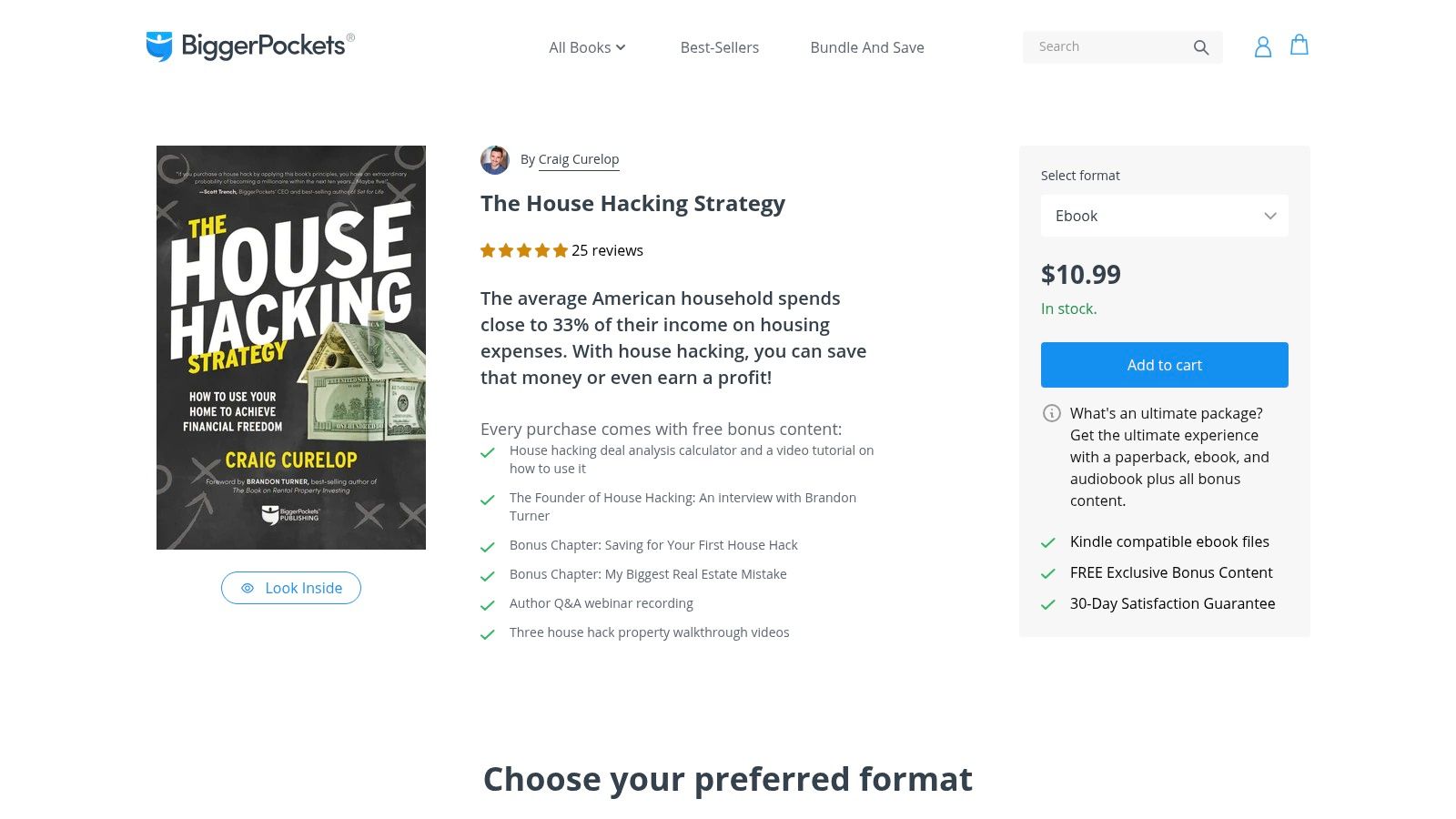
For many beginners, the first real estate deal shouldn’t be a perfect rental property. It should be a practical first property that lowers housing cost while teaching ownership.
That’s why this book stands out.
A better first move for some beginners
House hacking isn’t for everyone, but for readers who live in expensive areas or want a lower-friction entry point, this book is one of the smartest starting points in the whole category of real estate books for beginners.
It’s specific. It focuses on primary-residence strategies, room rentals, units, and practical ways to make your home work harder.
Living in the property changes the learning curve. You learn financing, maintenance, tenant interaction, and property selection faster because you’re close to the asset.
Best for and one limitation
Best for: First-time buyers, younger families, and readers who want to reduce housing costs while building investing experience.
What you’ll learn: Different house-hack models, funding pathways, and how to evaluate a property as both a place to live and a wealth-building asset.
One limitation: It depends heavily on local zoning, layout, and household tolerance. If privacy is your top priority, the strategy may not fit your life stage.
Why it deserves a spot on the list
A lot of beginner investing advice assumes readers are ready to buy a purely investment-focused property. Many aren’t. This book respects that reality.
It’s also a good bridge between personal housing decisions and investing discipline. If you’re thinking about property upgrades or layout efficiency, even adjacent topics like smart home interior design can become more useful when your home is also part of your investment plan.
3. Long-Distance Real Estate Investing
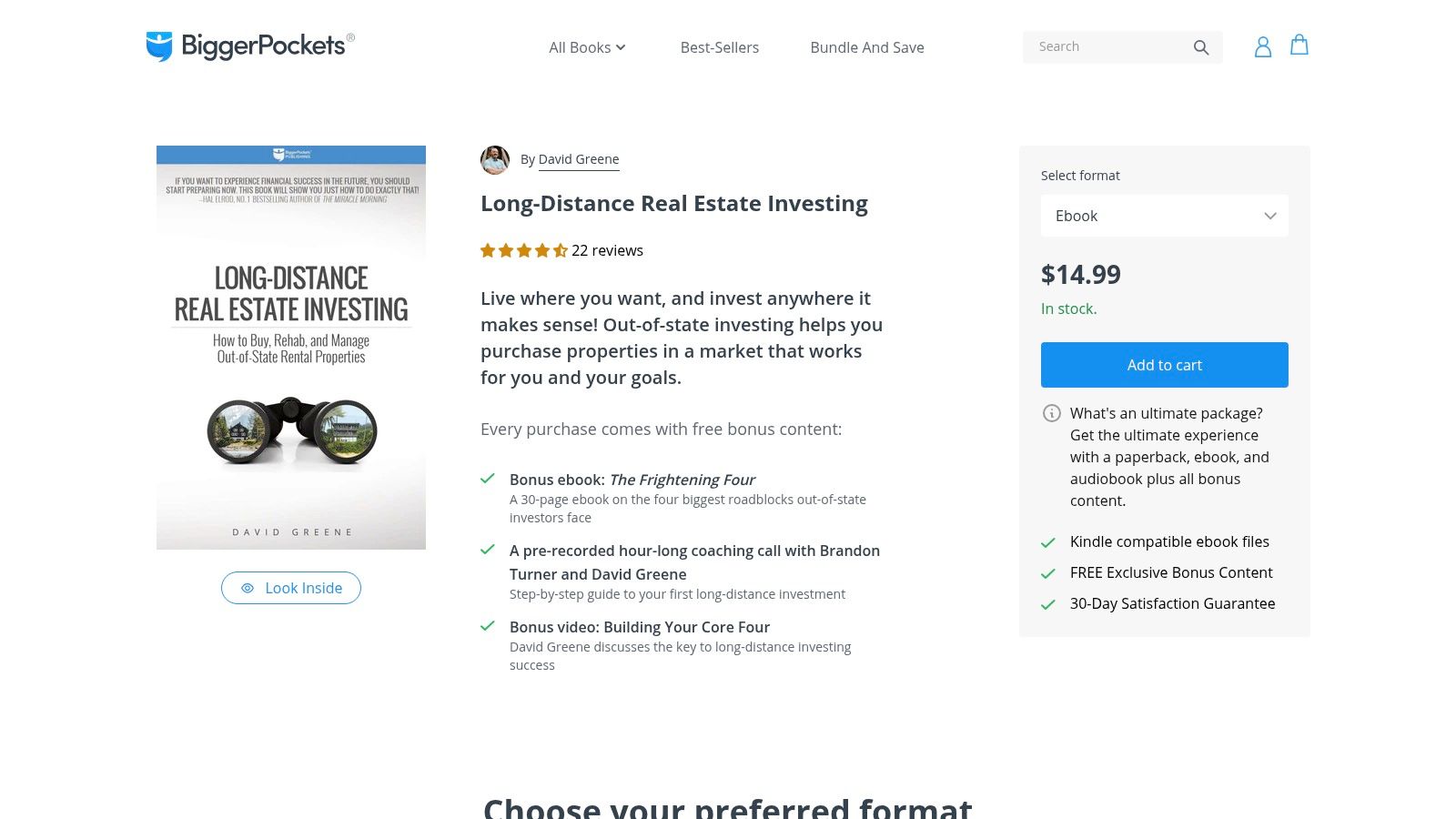
A lot of beginners get stuck on a bad assumption. They think they must invest where they live.
That assumption keeps plenty of people on the sidelines.
Why this book matters
If your local market feels too expensive, too competitive, or just doesn’t fit your goals, this book opens up a practical alternative. It focuses on buying and managing rentals remotely, which is one of the most useful frameworks for investors in high-cost cities.
Its strength is process. Team building, due diligence, market selection, and remote oversight all get attention.
Best for and one limitation
Best for: Readers who want out-of-state rentals and are willing to manage by systems instead of by proximity.
What you’ll learn: How to vet markets, build a reliable local team, and avoid the common mistake of buying remotely without enough controls.
One limitation: It works best for people comfortable delegating. If you need to physically inspect every detail yourself, remote investing will feel stressful.
Why it belongs on this list
This is one of the few beginner-accessible books that directly solves a modern problem. Your hometown might not be your best investing market.
For busy dads, that matters. The broader gap in most “top real estate books” content is that it rarely addresses time-constrained parents directly, even though strategy fit by time commitment is one of the most important variables in the operating environment, as noted by The Land Geek’s discussion of that content gap.
Best Real Estate Books for Investors
4. Real Estate by the Numbers
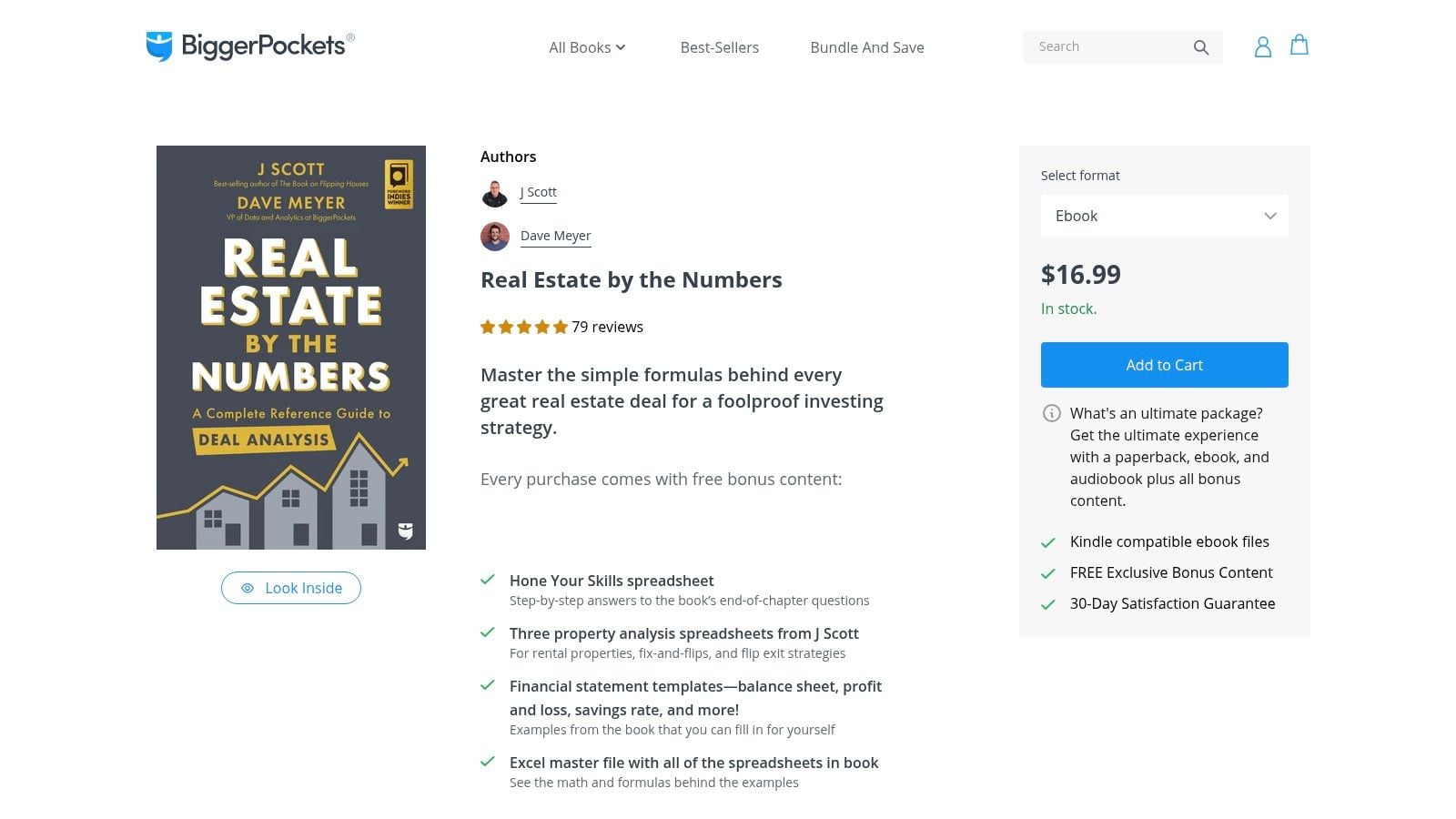
Some investors don’t have a motivation problem. They have a math problem.
This is the book for that group.
Where it stands out
It takes underwriting concepts that often intimidate beginners and makes them easier to repeat. The book is strongest when used as a desk-side reference. You don’t just read it once. You revisit it when you’re evaluating deals.
That’s a big reason it ranks among the best books on real estate investing for intermediate readers. It helps replace gut-feel decisions with a framework.
Best for and one limitation
Best for: Investors who understand the broad game but need better command of metrics and spreadsheets.
What you’ll learn: Core investment metrics, worked examples, and how to pressure-test a deal with more confidence.
One limitation: It’s not an operations book. It won’t teach you tenant communication, rehab execution, or how to build local teams.
Why it may be worth buying
This is the kind of book that saves people from talking themselves into weak deals. That alone can make it valuable.
If you’re trying to strengthen your household cash management before stepping into more deal analysis, resources like best budgeting apps for families can complement what this book teaches by tightening the personal finance side too.
5. What Every Real Estate Investor Needs to Know About Cash Flow… and 36 Other Key Financial Measures
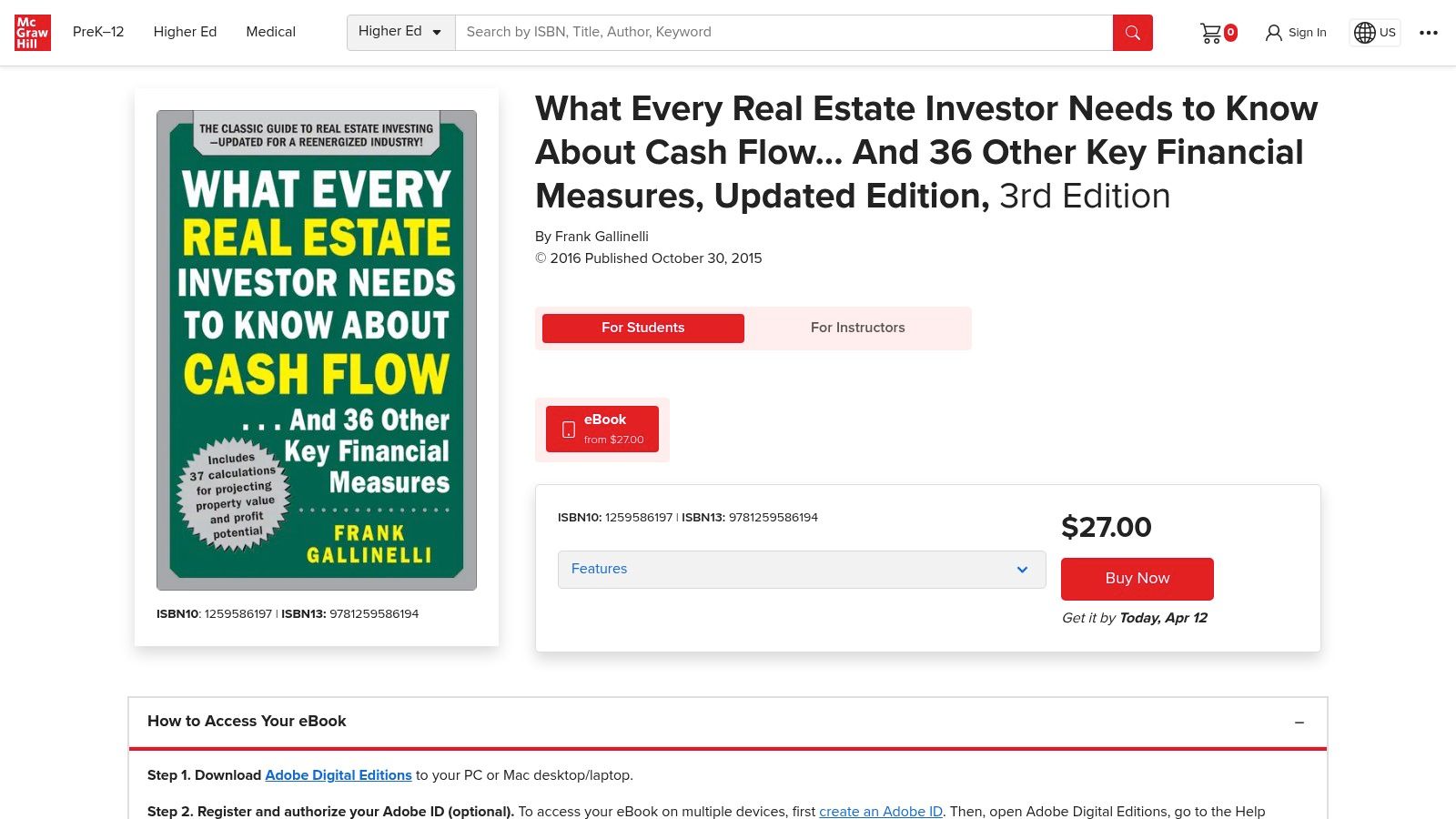
This is the finance-first pick on the list.
If you want a book that teaches you how investors evaluate income property instead of how people casually talk about it online, this one earns its reputation.
Why serious investors keep returning to it
Frank Gallinelli’s book was first published in 2003 and updated in 2015. It has sold over 100,000 copies and is described by InvestmentNews as a “must-have,” according to the verified summary tied to InvestmentNews coverage.
That staying power matters because a lot of investing books age badly. Good financial measures don’t.
The book explains NOI, IRR, DSCR, and other core measures in plain language. It’s not flashy. That’s part of why it works.
Best for and one limitation
Best for: Investors who want stronger deal analysis and fewer blind spots.
What you’ll learn: How to evaluate cash flow with more discipline and how to compare opportunities using consistent financial language.
One limitation: It reads more like a serious reference than a motivational guide. Some beginners will find it dry.
Why it deserves a place on the list
This book fills a gap that many popular real estate books leave open. They tell you to buy deals that cash flow. This one helps you define and test what that means.
For readers trying to improve household-level money management before scaling into property analysis, how to create a family budget is a useful companion habit.
If you want a deeper primer on underwriting logic, you can also compare the core ideas with this overview of real estate investment property analysis.
6. The Hands-Off Investor
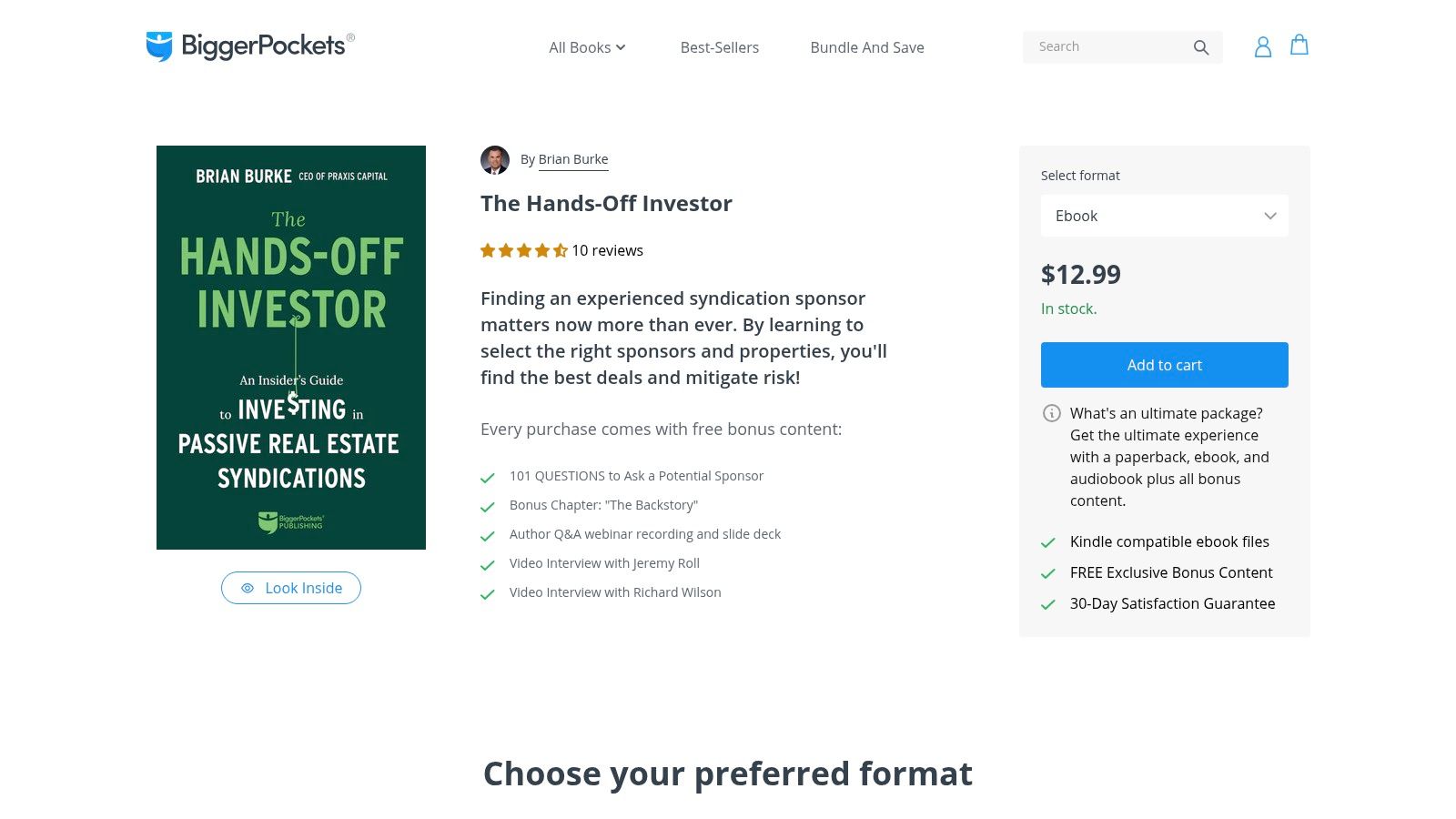
Not every investor should own property directly.
That’s an unpopular point in some corners of real estate media, but it’s true. Time, temperament, and access all matter.
The best passive-investor pick
This book is built for readers who want real estate exposure through syndications or private funds rather than self-managing assets. That makes it one of the most useful books for property investors who are busy, high-income, or don’t want a second operating business.
The strongest part of the book is its due diligence posture. It pushes readers to ask better questions about sponsors, assumptions, fees, reporting, and risk.
Field note: Passive investing still requires work. You’re not managing tenants, but you are evaluating people, structures, and incentives.
Best for and one limitation
Best for: Passive investors, limited partners, and busy professionals who want a framework for evaluating deals they won’t operate themselves.
What you’ll learn: How to vet offerings and where common blind spots show up in sponsor materials and investor presentations.
One limitation: It won’t help much if your plan is direct ownership and hands-on rental operations.
Why it may be worth buying
This book solves a problem that beginner books usually ignore. Passive real estate investing has its own failure modes, and they’re different from direct ownership mistakes.
7. The Millionaire Real Estate Investor
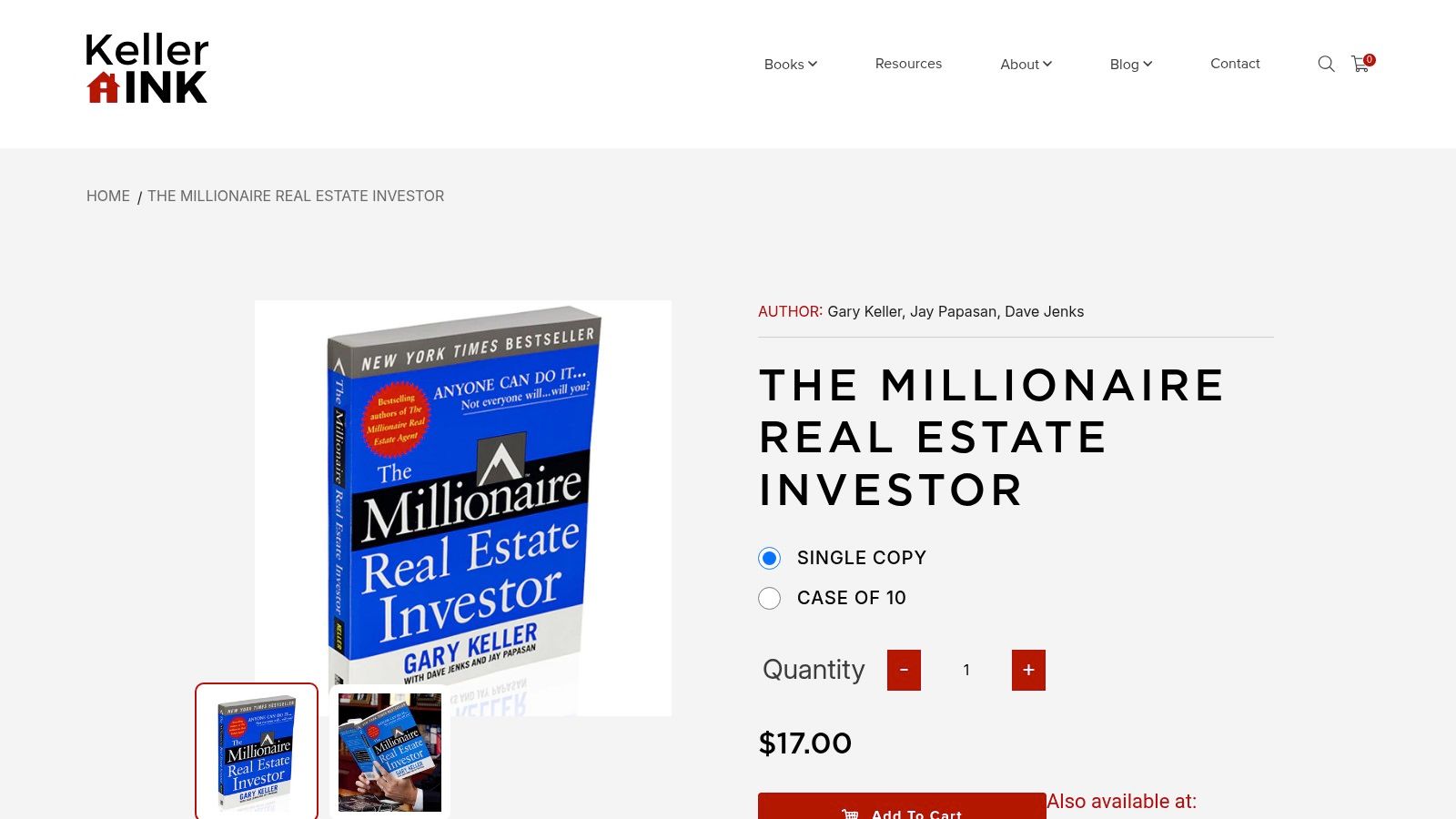
Some books tell you what to do next. This one helps you think bigger than the next deal.
That’s why it still matters.
Why it remains one of the top real estate books
Published in 2005, The Millionaire Real Estate Investor has sold over 1.5 million copies worldwide, according to the verified summary referencing Mashvisor’s roundup.
The value here isn’t just popularity. It’s the combination of strategic framing and investor examples. The book is drawn from more than 100 millionaire investors profiled in its model, and it’s one of the more durable big-picture guides in the category.
Best for and one limitation
Best for: Readers who want a long-term wealth framework, not just a deal checklist.
What you’ll learn: Acquisition criteria, habits, team thinking, and how disciplined systems can support portfolio growth.
One limitation: It’s less useful as a tactical first book if your immediate need is underwriting or property operations.
Why it belongs on the list
This is one of the best real estate books for readers who need a strategic reset. It helps investors think in terms of models, not just isolated transactions.
It’s also the closest thing on this list to a mindset book that still stays grounded in execution.
Cite author page or credible review source
Best Real Estate Books for Agents
Most agent-focused book lists blur the line between selling homes and investing in them. Those are related skills, but they’re not the same business.
For agents, the most useful reading path usually isn’t “read only sales books.” It’s “read one systems book, one numbers book, and one client-facing communication book.”
From this list, these are the most useful crossovers for agents:
The Millionaire Real Estate Investor for systems thinking
Agents who want to build an investing arm, think like owners, or stop treating every year like a fresh start should start here.
It helps with pipeline discipline, criteria, and long-term thinking.
What Every Real Estate Investor Needs to Know About Cash Flow for financial fluency
A lot of agents lose credibility with investor clients because they know listings better than they know numbers.
If you work with landlords or small investors, this book sharpens your language and helps you speak to decision-making instead of features.
The Book on Rental Property Investing for agent-investors
This one is strong for agents buying their first rentals or serving beginner investor clients.
It’s easy to recommend because it turns broad interest into an action plan.
Takeaway for agents: Read like an operator, not just a salesperson. The best books for real estate agents often come from the investor side because serious clients care about outcomes, not scripts.
Best Real Estate Books by Goal
Best for rental property investing
The Book on Rental Property Investing
This is still the strongest all-around pick for someone building a buy-and-hold foundation.
Best for house hacking
The House Hacking Strategy
The clearest match for readers whose first investment will be their primary residence.
Best for passive investing
The Hands-Off Investor
Best if you want exposure without handling tenants, turns, or contractor management.
Best for financial analysis
What Every Real Estate Investor Needs to Know About Cash Flow… and 36 Other Key Financial Measures
The most durable analysis pick on the list.
Best for remote investing
Long-Distance Real Estate Investing
Best when your investing market and your home market are not the same place.
Best for mindset and discipline
The Millionaire Real Estate Investor
Still one of the best books for real estate investing if you need a bigger framework and stronger habits.
Which Real Estate Book Should You Read First
If you’re a total beginner, start with The Book on Rental Property Investing.
If you’re an aspiring landlord who may buy a primary residence first, start with The House Hacking Strategy.
If you’re an active investor who keeps second-guessing deals, start with Real Estate by the Numbers.
If you’re a numbers-focused investor or agent serving investor clients, start with What Every Real Estate Investor Needs to Know About Cash Flow… and 36 Other Key Financial Measures.
If you’re a busy reader who wants one practical book, choose Long-Distance Real Estate Investing or The Book on Rental Property Investing, depending on whether you plan to invest locally.
If you’re a skeptical reader who wants practical, not motivational advice, skip the mindset-first route and go straight to the Gallinelli book.
If you’re a busy father who wants lower time demands, don’t force yourself into active landlording just because it’s popular. Start by comparing active ownership books with The Hands-Off Investor and decide what level of involvement your life can support.
[Internal Link: beginner real estate investing guide]
[Internal Link: best books on passive income]
[Internal Link: rental property calculator guide]
Best Tools and Resources to Apply What You Learn
Books are only useful if they change behavior. These tools help turn reading into decision-making.
BiggerPockets Bookstore
Direct link: https://store.biggerpockets.com/
Best for: Readers buying action-oriented investing books and related resources in one place.
Main advantage: The BiggerPockets ecosystem makes it easier to keep learning after the book. Forums, calculators, podcasts, and related materials give readers a practical next step.
One limitation: The ecosystem has a strong point of view. That’s useful, but it can also narrow your perspective if it becomes your only input.
Who should skip it: Readers who want academic or institutional-level real estate finance material.
A reasonable move is to buy one practical beginner title here, then pair it with a more rigorous finance book elsewhere.
McGraw-Hill for finance-oriented texts
Direct link: https://www.mheducation.com/
Best for: Readers who want direct access to established educational titles.
Main advantage: Strong for books that lean more analytical and less personality-driven.
One limitation: It isn’t curated around investor journey the way niche platforms are.
Who should skip it: Anyone who wants community and implementation support, not just the book itself.
Audiobook platforms
Direct link: https://www.audible.com/
Best for: Busy readers who consume books during commutes, workouts, or chores.
Main advantage: Makes it easier to finish more books, especially broad strategy titles.
One limitation: Numbers-heavy books don’t translate as well to audio. Analysis titles work better in print or ebook where you can pause and review tables and formulas.
Who should skip it: Readers starting with technical finance books.
Note-taking tools
Direct link: https://www.notion.so/
Best for: Readers building a personal investment playbook.
Main advantage: You can turn highlighted insights into reusable checklists. Market criteria, lender questions, due diligence prompts, and rehab assumptions all belong in one system.
One limitation: Setup takes discipline. If you love tools more than execution, this can become another form of procrastination.
Who should skip it: Anyone who won’t maintain it consistently.
A simple reading system works better than a perfect one. Capture key rules, questions, and mistakes to avoid. Then review them before every real deal.
Spreadsheet tools
Direct link: https://www.microsoft.com/microsoft-365/excel
Best for: Readers applying analysis books in real time.
Main advantage: Excel remains one of the most practical ways to test assumptions and compare deals.
One limitation: It requires some comfort with formulas and organization.
Who should skip it: Readers who want instant outputs without building their own models.
Common Mistakes When Choosing Real Estate Books
Buying only mindset books
Mindset matters. It just doesn’t replace deal analysis, financing knowledge, or management skills.
A good reading stack usually needs both vision and mechanics.
Choosing books above your current level
A dense real estate finance text can be excellent and still be the wrong first book.
If a book slows you down so much that you stop reading, it’s not the right next pick.
Confusing investor books with agent books
Agents need books that improve client judgment, pipeline discipline, and financial fluency.
Investors need books that improve acquisition, underwriting, operations, or sponsor evaluation.
Some overlap is useful. Total overlap is not.
Reading without applying
A real estate book should produce a checklist, a spreadsheet, a market shortlist, or a next-step conversation.
If it only produces highlights, you’re consuming, not implementing.
Following outdated tactics blindly
Older books can still be excellent. But local laws, financing options, and property management realities change.
Keep the principles. Recheck the tactics.
Assuming one book fits every life stage
A single investor might need three very different books across three years.
The right beginner book is rarely the right scaling book.
FAQ
What are the best real estate books for beginners?
For most beginners, The Book on Rental Property Investing is the best starting point. If your first deal will be a primary residence, The House Hacking Strategy is a better fit.
What is the best real estate investing book?
There isn’t one universal winner. For broad strategy, The Millionaire Real Estate Investor is strong. For practical rentals, The Book on Rental Property Investing is often the better first buy. For analysis, Gallinelli’s cash flow book is stronger.
Are real estate books worth reading?
Yes, if you choose them by goal. A good book can help you avoid common mistakes, sharpen your criteria, and improve how you evaluate opportunities. A random stack of generic books usually wastes time.
What books should new real estate agents read?
Start with books that improve business systems and investor fluency. From this list, The Millionaire Real Estate Investor and Gallinelli’s cash flow book are the most useful crossovers for agents.
Which real estate books are most practical?
The Book on Rental Property Investing, Long-Distance Real Estate Investing, and The House Hacking Strategy are the most action-oriented books on this list.
Are older real estate books still worth reading?
Often, yes. Especially if the book teaches durable principles like underwriting, cash flow analysis, team building, or disciplined acquisition criteria. Just don’t assume every tactic is current.
Should I read mindset books or strategy books first?
If you tend to stall out or think too small, start with one mindset-and-models book. If you’re already motivated and just need execution, start with a practical strategy or finance book.
What’s the best real estate book for rental property investing?
For direct ownership, The Book on Rental Property Investing is the best overall rental property pick on this list.
Your Next Step From Reading to Action
Knowledge helps. Action changes your results.
That’s the difference between people who collect the best real estate books and people who build something with them.
A book can clarify your strategy, improve your underwriting, or keep you from making a sloppy decision. That’s valuable. But books don’t buy properties, build teams, screen sponsors, or clean up your budget. You do that part.
The good news is you don’t need a huge reading list.
You need one book that matches your immediate goal.
If you’re brand new, start with The Book on Rental Property Investing. If your first move will likely be a live-in property, start with The House Hacking Strategy. If your biggest weakness is numbers, get Gallinelli’s book and work through it slowly. If your schedule is tight and your interest leans passive, read The Hands-Off Investor before you force yourself into a strategy that doesn’t fit your life.
That last point matters more than many admit. The “best” book isn’t the most famous one. It’s the one that fits your next move, your time constraints, and your decision style.
A simple way to use this list well:
- Pick one book, not three
- Read it with a pen or notes app open
- Write down the five ideas you’ll use
- Turn those into one checklist or one conversation
- Take one concrete step within the next few days
That step might be building a market shortlist, reviewing your household budget, creating a deal analysis template, or calling a lender. It doesn’t need to be dramatic. It needs to be real.
That’s how books become useful. Not because you finished them, but because you applied them.
So if you came here looking for the best real estate books, don’t leave with a giant pile and no plan. Leave with one smart next read and one smart next action.
Alpha Dad Mode helps fathers turn useful information into better decisions at home, with money, and in real life. If you want more practical, no-fluff guides on family finance, tools, routines, and smart next steps, visit alphadadmode.com.
