


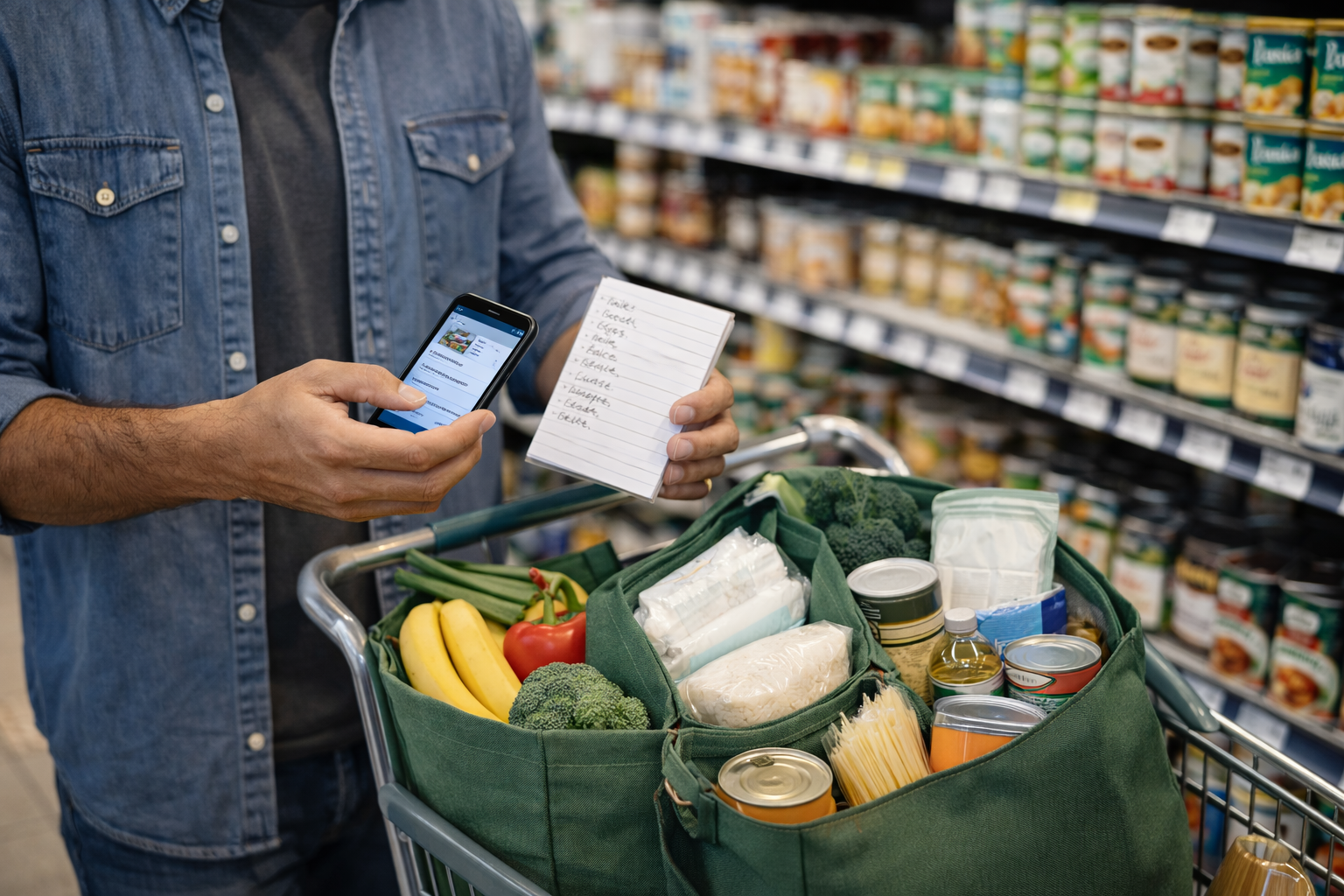
That feeling when the cashier announces your total and your stomach drops? We’ve all been there. The quickest way to slash that grocery bill isn’t some extreme couponing marathon; it’s about getting back to basics. If you focus on three key things—strategic meal planning, smart shopping in the aisles, and slashing food waste—you can realistically cut 15-25% off your spending right away.
Your Blueprint for Immediate Grocery Savings
Sticker shock at the checkout line is more than just a minor headache; it’s a real budget-buster for most families. Think of this guide as your game plan for taking back control, starting with your very next trip to the store. We’re skipping the fluff and diving straight into the practical strategies that actually work, building good habits instead of relying on temporary fixes.
This is all about a simple mindset shift. You’ll go from being a reactive shopper—tossing whatever looks good into the cart—to an intentional one with a clear mission. You already have the power to control your grocery spending; this guide just shows you exactly how to wield it.
The Three Pillars of Grocery Savings
Real, lasting savings come from a foundation built on three simple but powerful principles. When you focus your energy here, you create a system that consistently saves you money week after week.
- Proactive Planning: The saving starts before you even grab your keys. This is all about mapping out your meals, making a list (and sticking to it), and shopping your own pantry first.
- Strategic Shopping: This is how you win in the aisles. You’ll learn to become a pro at comparing unit prices, see the value in store brands, and use cashback apps to get money back on things you were buying anyway.
- Reducing Waste: Every bit of food you throw out is like tossing cash in the trash. Smart storage, getting creative with leftovers, and only buying what you’ll actually use makes a huge difference. Even small daily habits add up, like making your own coffee instead of buying it. You can learn more by checking out our guide on how to make your favorite hot drinks healthy and tasty.
A recent study found that the average American family of four could save up to $3,000 per year just by minimizing the food they waste. It’s proof that the small changes you make at home can lead to massive financial wins.
To get the ball rolling, here are a few simple changes you can make this week. These are the quick wins that will immediately lower your next grocery bill.
Quick Wins for Your Grocery Budget This Week
Implement these simple changes on your next shopping trip to see immediate savings on your grocery bill.
| Actionable Tip | How It Saves Money | Potential Weekly Savings |
|---|---|---|
| Switch to Store Brands | Private-label products are often 20-40% cheaper than name brands for comparable quality. | $15 – $30 |
| Use a Cashback App | Apps like Ibotta or Fetch offer rebates on items you already buy. | $5 – $10 |
| Plan One “Pantry Meal” | Create a meal using only ingredients you already have, avoiding an extra store trip. | $10 – $20 |
| Buy Produce in Season | In-season fruits and vegetables are more abundant and therefore much less expensive. | $5 – $15 |
Tackling just one or two of these on your next shopping run will prove how easy it is to start chipping away at that total. The key is to start small and build momentum.
Your Pre-Shop Game Plan: How to Win Before You Leave the House
Let’s be honest, the biggest battles in saving money on groceries are won before you even grab a shopping cart. What you do in the 30 minutes before you head to the store makes all the difference. This is your pre-game prep.
Think of it this way: going to the store without a plan is like wandering into a minefield of impulse buys. But with a solid plan, you’re on a mission. You get in, get what you need, and get out with your wallet intact.
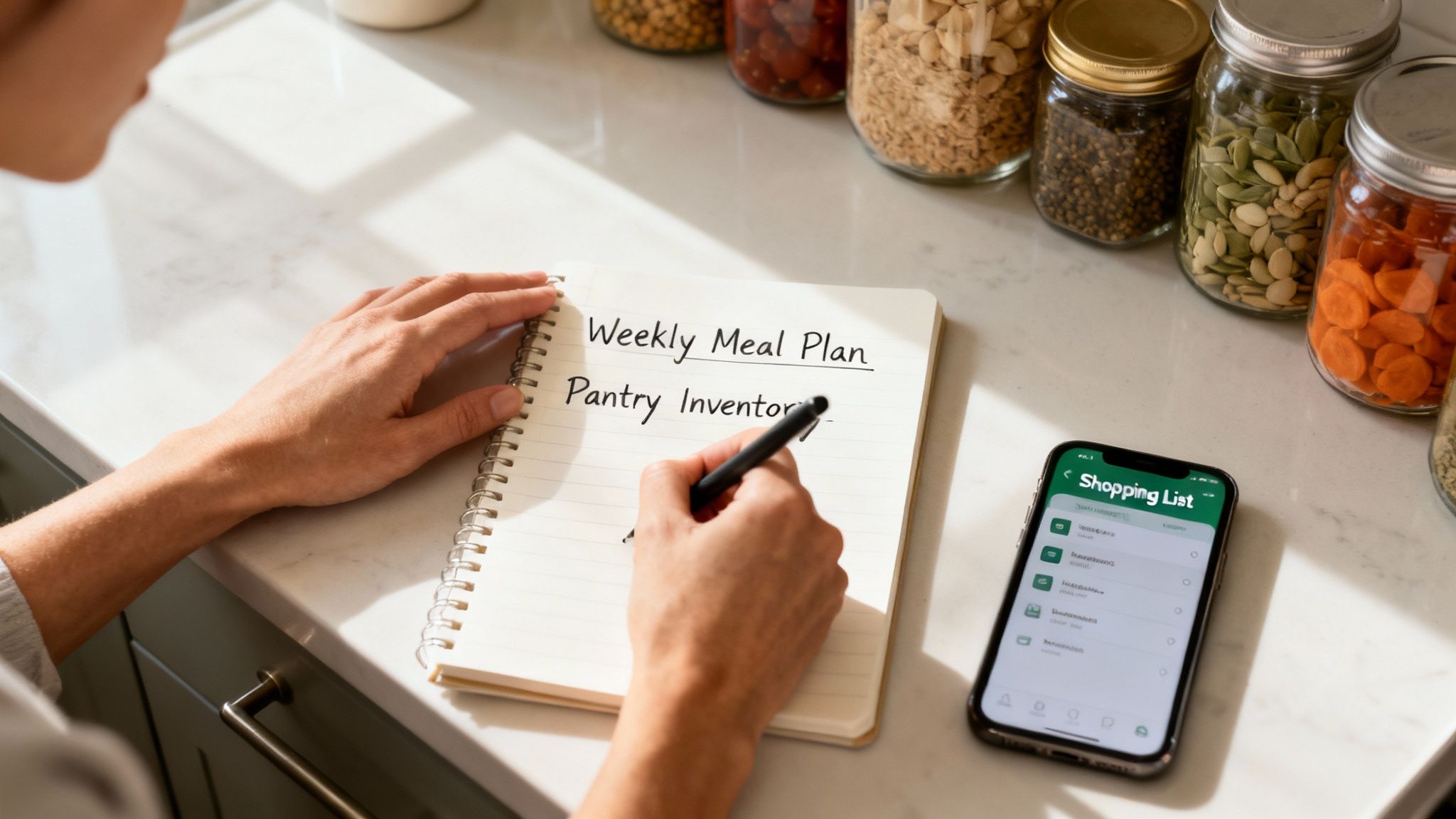
This whole process is about creating a simple, repeatable system. When you know what you have, what you need, and what everyone’s eating for the week, you eliminate the expensive guesswork. It’s your best defense against those tempting end-cap displays and the 5 PM “what’s for dinner?” panic.
First, Set a Realistic Budget
You can’t hit a target you can’t see. A food budget isn’t about being restrictive; it’s about taking control. It’s a simple spending plan that lets you call the shots instead of letting clever marketing or a rumbling stomach make decisions for you.
To get started, pull up your last couple of months of bank or credit card statements. Add up everything you spent on groceries and takeout to get a real, honest average. That number might be a bit of a gut punch, but that’s okay—it’s just your starting line.
Now, set an achievable goal. If you’re spending $1,200 a month on food, don’t try to slash it to $600 overnight. That’s a recipe for failure. Instead, aim for a 10-15% reduction in the first month. Dropping from $1,200 to around $1,080 feels doable, and hitting that small goal builds the momentum you need for bigger savings later.
Next, Shop Your Own Kitchen
The most expensive food in the world is the stuff you buy when you already have it at home. Seriously. Before you even think about making a list, take a quick five-minute tour of your own kitchen. This “pantry audit” is a game-changer. It stops you from buying a third jar of paprika when two are already hiding in the back of the cupboard.
This doesn’t have to be a huge production. Just a quick scan is all you need:
- Pantry: What’s in there? Grains, canned goods, pasta, spices?
- Fridge: Is there any produce that’s about to turn? Leftover chicken? A half-empty jar of salsa?
- Freezer: What’s buried in there? Forgotten ground beef, frozen veggies, that chili you made a month ago?
This simple “shop at home” habit does more than prevent you from buying duplicates. It forces you to get creative and use up what you already paid for. This directly fights food waste, which can save the average family up to $3,000 per year.
Finally, Build Your Meal Plan and Shopping List
Okay, you’ve got your budget and you know what’s in your kitchen. Now it’s time to connect the dots with a meal plan. This is where the strategy really comes together. Your goal is to build a week’s worth of meals around two key things: what you already have and what’s on sale this week.
Grab the weekly flyer from your local grocery store (or just pull it up on their app). See that ground beef is on sale? Great, plan for tacos one night and spaghetti the next. Found a bag of potatoes during your pantry audit? Looks like a baked potato bar just made it onto the menu. This approach guarantees every meal is built on a foundation of savings.
Here’s what that looks like in practice:
- Monday: Tacos (using sale-priced ground beef and the half-jar of salsa from the fridge)
- Tuesday: Spaghetti with Meat Sauce (using more of the ground beef and pasta from the pantry)
- Wednesday: Baked Potato Bar (using those pantry potatoes and leftover taco toppings like cheese and sour cream)
Once you have a rough meal plan, write out your shopping list. And be specific. Don’t just write “cheese”—write “8 oz block of sharp cheddar.” A vague list is an invitation to wander the aisles, and that’s where budgets go to die. Your list is your roadmap—it gets you straight to what you need, and right past everything you don’t.
In-Store Strategies That Slash Your Spending
Okay, you’ve got your plan and a solid list. Time to head to the store. This is where all that prep work pays off, but you’ve got to stay sharp. Grocery stores are designed by geniuses to make you spend more—from the smell of fresh bread at the door to the candy gauntlet at the checkout. Your job is to navigate it like a pro.

Executing your shopping trip is a skill. It’s about knowing where the real deals hide, understanding the psychology they’re using against you, and using your phone to your advantage. Sticking to the list is rule number one, but a few extra strategies will really amplify your savings.
Become a Unit Price Expert
Don’t let the big, bright sale tag fool you. The secret to finding the actual best deal is usually a tiny number on the shelf tag: the unit price. This little number breaks down the cost per ounce, per pound, or per item, so you can make a real apples-to-apples comparison.
A giant “family-size” box of cereal might look like a great deal, but a quick glance at the unit price might show that two smaller, on-sale boxes are actually cheaper. Make it a habit to check this number for everything you grab. It’s probably the most powerful piece of info you have for making smart decisions in the aisle.
Master the Art of Store Selection
Not all grocery stores are built the same. Where you shop has a huge effect on your final bill. The trick is to develop a shopping routine that plays to the strengths of different stores instead of just relying on one spot for everything.
- Discount Grocers: Places like Aldi and Lidl are your go-to for staples. Milk, eggs, bread, produce—their no-frills model keeps these basics consistently cheap.
- Warehouse Clubs: Think Costco or Sam’s Club. These are perfect for non-perishables you burn through (paper towels, pasta, canned goods) and proteins you can freeze. Just make sure you actually have the space to store it all.
- Traditional Supermarkets: Use these more surgically. Hit them up for the specific loss-leaders advertised in their weekly flyer and for any specialty items you can’t find elsewhere.
By splitting your shopping trip between two or even three stores, you’re basically guaranteeing you pay the lowest price for every single thing on your list.
The growing gap between the cost of dining out and cooking at home is pushing more families to find savings wherever they can. This trend has fueled a surge in popularity for discount grocers, highlighting how strategic shopping choices are becoming essential for managing the family budget.
Embrace the Power of Store Brands
One of the quickest ways to bring your grocery bill down is to let go of brand loyalty. In most cases, the store brand or private label version of a product is almost identical to the big-name one. They’re often even made in the same factory. The only real difference is the price tag.
It might feel like a small change, but the savings pile up fast. Consistently choosing the store brand for things like cereal, canned veggies, spices, and cleaning supplies can easily knock 20-40% off your bill. You can dig into how consumer habits are shifting in this grocery tracker report. It’s a simple swap with a huge payoff, and you likely won’t notice a difference in quality.
And when it comes to saving on the most expensive part of the meal, exploring alternative proteins in our guide can be another game-changer.
Build Your Digital Savings Toolkit
Your smartphone is a secret weapon for saving money at the store. A few key apps can rack up cash back and find coupons without you having to do much work.
- Cashback Apps: Services like Ibotta and Fetch give you rewards for buying stuff you were going to buy anyway. Just scan your receipt when you get home and watch the points or cash roll in.
- Store Loyalty Programs: Always sign up for the free loyalty program at your go-to stores. This is your ticket to exclusive sale prices and digital coupons you can clip right in their app.
- Digital Coupons: Before you leave the house, pop open your grocery store’s app and see what digital coupons are available. You can “clip” them with a tap, and the savings come off automatically at checkout.
When you combine these in-store tactics with your pre-shop plan, you’ve created a powerful system. You’re not just spending less—you’re shopping smarter and getting it done faster.
Running an Efficient Kitchen to Eliminate Food Waste
Getting your groceries home is only half the battle. The real money-saving work happens in your kitchen. This is where a smart shopping trip turns into a week of easy, delicious meals, and you make sure every dollar you spent ends up on a plate instead of in the trash.
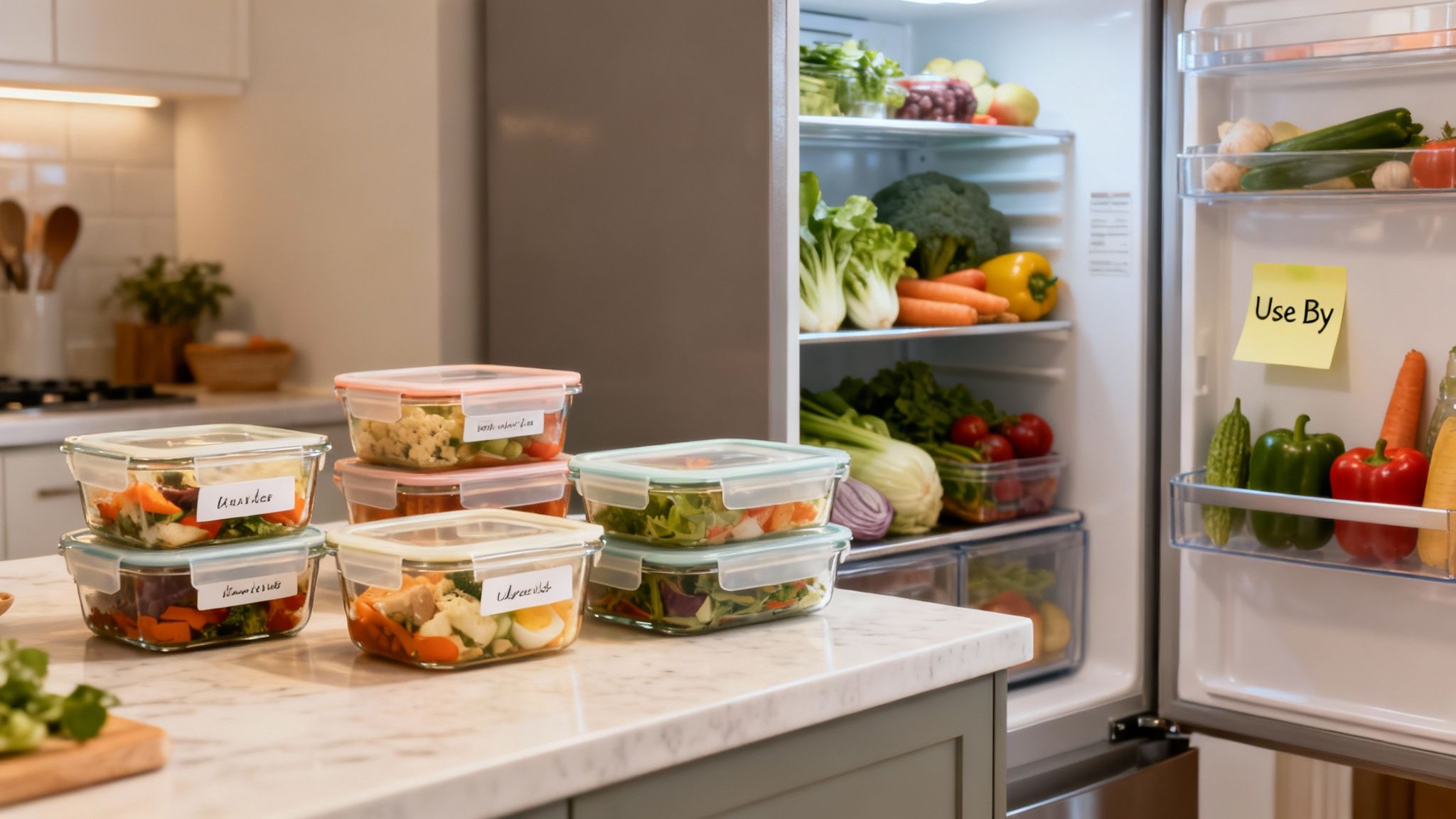
You don’t need to be a gourmet chef to run an efficient kitchen. It just takes a few simple systems to slash food waste and, frankly, make your life easier. By getting good at batch cooking, smart storage, and using leftovers, you build a solid defense against those last-minute takeout orders and produce that goes bad way too fast.
The Power of Batch Cooking and Meal Prep
For any busy dad, time is your most valuable asset. That’s where batch cooking becomes your secret weapon. The whole idea is simple: put in a little time upfront to save a massive amount of time and stress during the week.
Instead of starting from scratch every single night, you just cook key parts of your meals in bigger quantities. Think of it as creating your own ready-to-go “meal kits.” This definitely doesn’t mean you’re stuck eating the same thing for five days straight.
Here are a few ways to make it work:
- Get Your Grains Ready: Make a big pot of rice, quinoa, or pasta on Sunday. Tucked away in the fridge, it’s ready to become a quick side dish, the base for a grain bowl, or an addition to a soup.
- Prep Your Proteins: Grill a family pack of chicken breasts, brown a couple of pounds of ground beef, or hard-boil a dozen eggs. These are your building blocks for tacos, salads, sandwiches, or a quick pasta sauce.
- Chop Your Veggies: Take 15 minutes to wash and chop onions, bell peppers, carrots, and celery. Having these ready to go makes healthy cooking the easiest option.
This isn’t just a time-saver; it’s a proven money-saver. Purdue University’s Consumer Food Insights Report highlights that top strategies for saving money now include hunting for sales and avoiding impulse buys. A fridge stocked with prepped food is your best defense against takeout. When you plan your batch cooking around what’s on sale, you can easily join the households reporting 15-25% lower spending.
Smart Storage for Maximum Freshness
Think about it—you wouldn’t leave cash lying on the kitchen counter, so why do it with your food? Storing groceries the wrong way is one of the fastest ways to waste money. A few small tweaks can add days, or even weeks, to the life of your food.
Storing your food correctly isn’t just about avoiding waste; it’s about respecting the money and effort it took to get that food into your home in the first place. Every wilted head of lettuce is a few dollars lost.
A little knowledge here goes a long way. This quick guide shows the best way to store common items to keep them fresh as long as possible.
Smart Storage Guide to Reduce Food Waste
| Food Item | Best Storage Method | Average Shelf Life |
|---|---|---|
| Leafy Greens (Lettuce, Spinach) | Wash, dry thoroughly, and store in a container with a paper towel. | 5-10 days |
| Berries | Keep dry, unwashed, in a breathable container in the fridge. | 3-7 days |
| Onions & Potatoes | Store separately in a cool, dark, dry place like a pantry. | 2-4 weeks |
| Fresh Meat & Poultry | Store on the bottom shelf of the fridge to prevent drips. Freeze if not using within 2 days. | 1-2 days (fridge), 3-6 months (freezer) |
| Bread | Keep in a bread box at room temperature or freeze for long-term storage (never refrigerate). | 3-5 days (pantry), 3 months (freezer) |
Mastering these basics means you have more time to actually use what you bought, turning potential waste back into meals.
Reimagining Leftovers as Your Next Meal
It’s time to stop thinking of them as “leftovers” and start seeing them as “ingredients.” Last night’s dinner isn’t just something to reheat in the microwave; it’s the head start on a completely new, incredibly fast meal. This mindset doesn’t just save money—it keeps your meals interesting.
Here are a few ideas to get the ball rolling:
- Roast Chicken: Shred the extra meat for chicken salad sandwiches, quesadillas, or as a topping for a loaded baked potato.
- Leftover Steak: Slice it thin and toss it with some stir-fried veggies and soy sauce for a quick beef and broccoli that beats any takeout.
- Cooked Rice: You’re just minutes away from a great lunch. Fry it up with an egg, some frozen peas, and a dash of soy sauce for simple fried rice.
- Roasted Vegetables: Chop them up and add them to an omelet or a frittata for a protein-packed breakfast or lunch.
By bringing these three pillars together—batch cooking, smart storage, and creative leftover use—you turn your kitchen from a daily chore into a well-oiled, money-saving machine.
Getting the Whole Family on Board with Savings
Ever feel like you’re fighting a one-man war on the grocery budget while everyone else in the house is on a different mission? You’re not alone. The truth is, you can’t make a real dent in your spending if it isn’t a team sport.
Getting everyone—especially the kids—involved is the secret sauce. It not only makes your life easier but also starts teaching them crucial lessons about money, food, and working together. This isn’t about running a military-style operation in your kitchen. It’s about creating a family culture where everyone gets why you’re making changes and feels like they’re part of the solution. When kids have some skin in the game, they’re far more likely to get on board.
Turning Kids into Savings Superheroes
The best way to get kids invested is to make it fun. Frame the grocery budget not as a restriction, but as a family challenge you’re all going to crush together. This simple shift in perspective turns a boring chore into an exciting game and lays the groundwork for financial smarts down the road.
A great place to start is by giving them an official “job.” One kid can be the “Produce Picker,” in charge of finding the best-looking apples on the list. Another can be the “Unit Price Detective,” using a phone calculator to figure out which box of cereal is actually the better deal.
Here are a few other ways to get them in on the action:
- Make Them Co-Pilots in Planning: Spread the weekly sales flyer on the table and let them pick one dinner for the week based on what’s on special. If ground beef is on sale, they get to choose: tacos or spaghetti bolognese?
- Give Them a “Kid Budget”: Hand them $5 in cash and put them in charge of a specific item, like the bananas for the week. This makes the concept of money real and tangible for them.
- Start a Shopping Scavenger Hunt: Give them a short list of three or four items to find. This keeps them focused and helps cut down on the “Can we get this?” pleas every two minutes.
By bringing them into the process, you’re doing more than just saving a few bucks. You’re actively teaching them valuable life skills. We dive deeper into this in our guide on how to teach kids about money and financial responsibility.
Outsmarting the Snack Aisle
Let’s be honest, the snack aisle is a battlefield. It’s a strategic assault of cartoon characters and colorful packaging, all designed to make your kids beg and your wallet cry. Those pre-packaged, single-serving snacks are convenience traps that cost a fortune and often offer little nutritional value. But you can easily beat them at their own game.
A simple switch from pre-packaged snack packs to buying the components in bulk and portioning them yourself can easily save $10-$20 a week. That adds up to over $500 a year in savings on snacks alone.
Instead of grabbing those pricey “lunchables,” buy a block of cheese and a box of crackers. It takes five minutes to slice some up and costs a fraction of the price. The same goes for yogurt tubes, fruit cups, and granola bars—buy the big container and portion it out yourself.
Here’s how a few common swaps stack up:
| Expensive Kid Snack | Budget-Friendly Homemade Swap |
|---|---|
| Individual Yogurt Tubes | Buy a large tub of plain yogurt. Portion it into small, reusable containers and add fresh fruit or a swirl of honey. |
| Pre-Packaged Trail Mix | Create a “snack station” with bulk containers of nuts, seeds, pretzels, and dried fruit for custom mixes. |
| Gourmet Fruit Pouches | Blend a big batch of applesauce or a fruit smoothie and pour it into reusable pouches for the week. |
Making these swaps can be another fun family activity. Let the kids help mix the trail mix or fill the containers. When they help create the snacks, they’re way more excited to eat them.
Winning the War with Picky Eaters
The picky eater phase can feel like a direct attack on your grocery budget. You end up buying multiple dinner options just to get one meal on the table, and perfectly good food gets tossed in the trash. The answer isn’t to become a short-order cook. It’s to build meals around a customizable base.
Think “deconstructed.” Think “build-your-own.” This approach puts the kids in the driver’s seat, making them more likely to actually eat what’s on their plate. It also lets you use a single set of inexpensive ingredients to keep everyone happy. A taco bar is the classic example: cook one protein, like ground chicken, and let everyone assemble their own with toppings they love.
This concept works for just about any meal:
- Pasta Night: Cook one big pot of pasta and offer a couple of different sauces—a simple marinara for the kids, maybe a pesto or spicy arrabbiata for the adults.
- Pizza Night: Use English muffins or pre-made dough as a base and let everyone create their own masterpiece with various toppings.
- Baked Potato Bar: Offer baked potatoes with a spread of toppings like chili, cheese, broccoli, and sour cream.
This strategy slashes your food waste and stops you from buying specialty items for just one person. Better yet, it turns mealtime from a potential power struggle into a fun, collaborative family event.
Answering Your Biggest Grocery Savings Questions
Even with the best game plan, you’re bound to run into a few tricky situations. Let’s tackle some of the most common questions that pop up when you’re trying to slash that grocery bill. Think of this as your quick-reference guide for a few of those “what about this?” moments.
Is Buying in Bulk at Warehouse Clubs a Guaranteed Win?
Walking into Costco and seeing a pallet of paper towels for a great price feels like an automatic win. But the truth is, bulk buying isn’t always the slam dunk it appears to be. The real math isn’t just about the unit price; it’s about whether you’ll actually use all of it before it goes bad or you’re just plain sick of it.
For stuff that doesn’t expire—toilet paper, canned goods, pasta, cleaning supplies—warehouse clubs are tough to beat. Same goes for things you can easily portion out and freeze, like a big pack of chicken breasts or ground beef.
But when it comes to perishables, you have to be brutally honest with yourself. That giant bag of organic spinach or two-gallon jug of milk can quickly turn from a bargain into literal garbage if your family can’t get through it in time.
The golden rule here is simple: It’s only a good deal if you avoid waste. Before you load up the cart, compare the unit price to what you’d pay at your regular grocery store during a sale.
How Can I Save Money When We Have Dietary Needs (Gluten-Free, Organic, Etc.)?
Trying to manage a grocery budget with special dietary requirements can feel like you’re fighting an uphill battle with your wallet. But it’s totally possible to eat well without going broke. The trick is to stop thinking about specialty products and start focusing on foods that are naturally what you need.
Your foundation should be whole foods. Things like fruits, vegetables, potatoes, rice, and simple cuts of meat are naturally gluten-free and almost always cheaper than the processed, pre-packaged versions. When it comes to organics, you don’t need to go all-or-nothing.
- Be Strategic with Organics: Use the “Dirty Dozen” and “Clean Fifteen” lists as your guide. They’ll show you which produce has the highest pesticide residue (buy organic) and which has the lowest (save your money).
- Go for Store-Brand Organic: Nearly every major supermarket has its own organic line now. From Kroger’s Simple Truth to Target’s Good & Gather, these are often significantly cheaper than the big national brands.
- Make it Yourself: That pre-made gluten-free snack or organic pasta sauce comes with a massive convenience tax. Making your own from scratch puts you in complete control of both the ingredients and the cost.
For families with these needs, meal planning is less of a “nice-to-have” and more of a non-negotiable strategy to avoid expensive, last-minute decisions.
What if My Schedule Is Just Too Crazy for Meal Planning?
Look, the idea of sitting down and planning out 21 meals for the entire week is enough to make any busy dad want to just order a pizza. If that feels like a mountain you can’t climb, don’t ditch the idea entirely—just scale it down to something that actually works for your life.
Even a tiny bit of planning goes a long, long way. You don’t need a perfect, color-coded spreadsheet. Try one of these approaches instead:
- Theme Nights: This is the easiest win. “Taco Tuesday,” “Pasta Wednesday,” “Breakfast-for-Dinner Friday.” You’re not locked into a specific recipe, but you’ve eliminated the dreaded “what’s for dinner?” debate.
- Cook Once, Eat Twice: This is a lifesaver. Making chili, soup, or a casserole? Always double the recipe. Eat half tonight and freeze the other half for a chaotic evening down the road. You’ll thank yourself later.
- The 3-Day Plan: Forget planning for a full week. Just figure out your meals for the next three days. It’s way less intimidating and ensures you use up fresh ingredients before they turn into a science experiment in the back of your fridge.
The goal here is to reduce stress and spending, not to add another miserable chore to your to-do list.
Are Grocery Delivery Services a Total Waste of Money?
This one is a classic “it depends” situation. At first glance, paying delivery fees and potential markups for a service like Instacart seems like an obvious budget-killer. But for some guys, it can actually be a secret money-saving weapon.
The biggest financial upside to ordering online is that it completely eliminates impulse buys. You aren’t tempted by the smell of the rotisserie chickens or the candy display at the checkout. You search for what’s on your list, add it to your cart, and you’re done. That discipline alone can save you $20, $30, or even more per trip if you’re someone who gets sidetracked easily in the aisles.
To figure out if it’s right for you, do the math. Weigh the service and delivery fees against the money you’ll save by avoiding those impulse purchases, not to mention the value of your own time. For a lot of busy families, getting two hours of a Saturday back is worth every single penny.
At alphadadmode.com, we’re building a community focused on providing dads with the tools and resources they need to win at home and in life. To get early access to our guides, product recommendations, and exclusive content before anyone else, sign up for updates at alphadadmode.com.
