


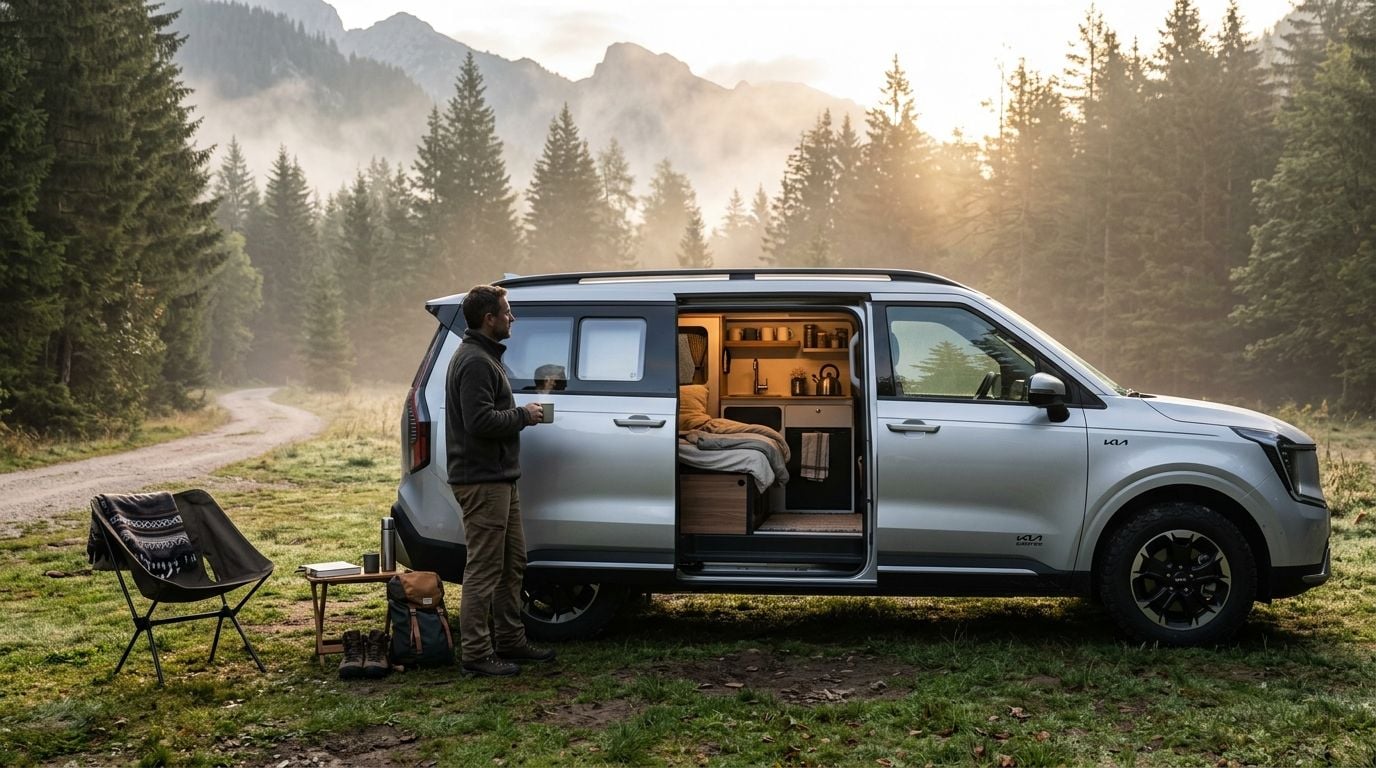
Packing for a family road trip usually starts with a simple idea and turns into a gear puzzle fast. You want one vehicle that can handle school runs, weekend escapes, wet shoes, snacks, bikes, and the occasional long highway slog without feeling like a compromise. Kia Camper Van 2026 matters because it looks aimed at exactly that middle ground: more usable than a traditional camper build for daily life, but more travel-ready than a regular family van.
The short answer is this. The kia camper van 2026 looks promising if you want a compact camper with modular design, multiple powertrain paths, and real off-grid potential. The biggest open question isn't the concept. It's whether the final family-friendly layouts, pricing, and ownership costs make sense in practice.
Table of Contents
- Your Next Family Adventure Awaits the Kia Camper Van 2026
- Kia Camper Van 2026 Features and Expected Specs
- Understanding the Price and Value Proposition
- Is the Kia Camper Van 2026 Right For You
- Kia Camper Van 2026 vs Other Camper Vans
- Next Steps and Frequently Asked Questions
Your Next Family Adventure Awaits the Kia Camper Van 2026
Friday afternoon is a true test. Two kids are hungry, the duffel bags are overpacked, someone brought muddy boots into the cabin, and you still have three hours of highway before camp. That is the context that matters for the kia camper van 2026. Families do not need a van that only looks clever at an auto show. They need one that drives calmly, swallows gear without a fight, and turns into a usable sleeping space before everyone gets cranky.
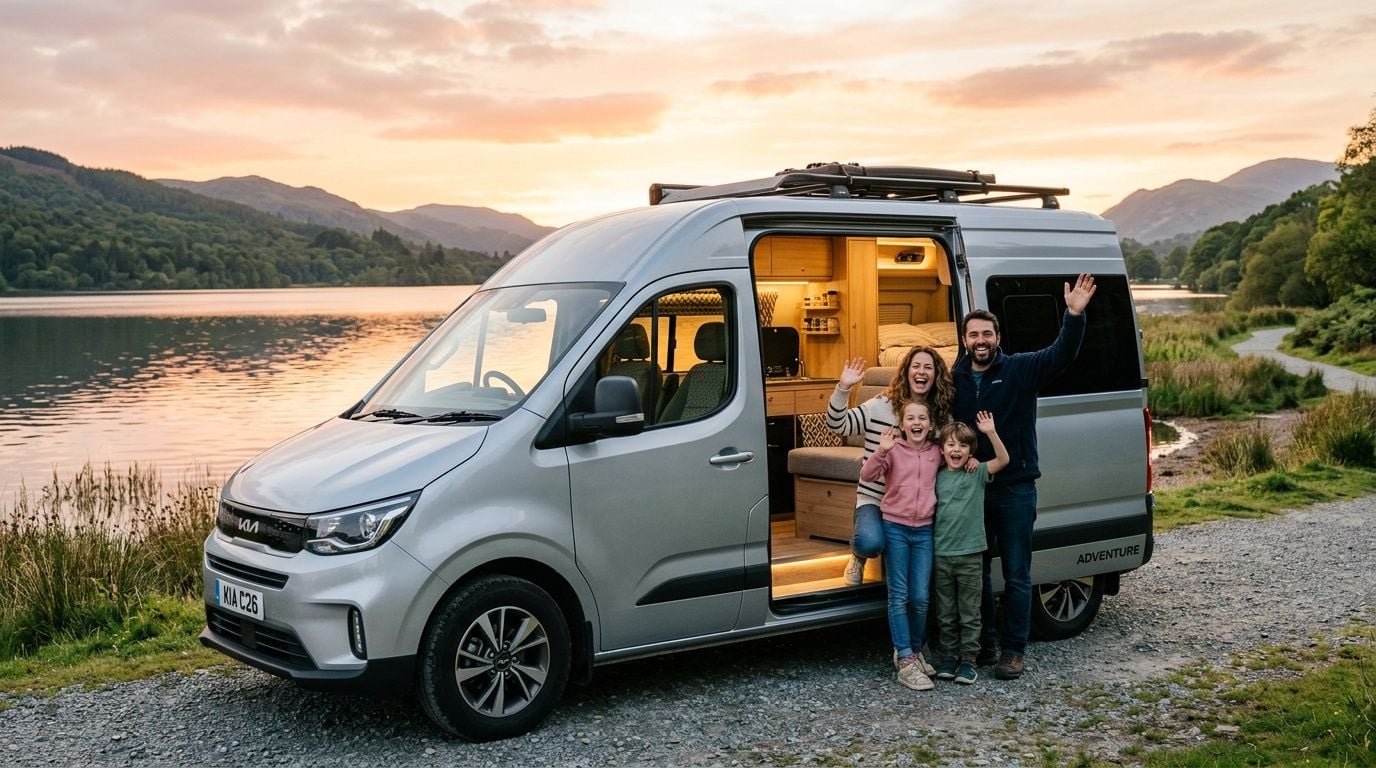
What makes this Kia worth watching is the family-use brief. The appeal is not just that it could become a camper. It is that the concept points to a van built around flexible layouts, so owners may be able to shift between school-run duty, weekend hauling, and a short camping trip without living with a full-time conversion every day. For parents, that trade-off matters more than brochure-friendly luxury details.
That flexibility also comes with limits. A modular interior usually gives you better daily usability, but it can mean more setup at camp and less built-in storage than a fixed camper conversion. Families who travel with strollers, sports gear, coolers, and wet jackets should pay close attention to how quickly the cabin can be reconfigured and how much stuff can stay packed while the beds are in use.
Before any long trip, a smart move is running through a solid pre-trip vehicle inspection checklist. Camper vans carry more weight, spend more time idling in campgrounds, and ask more from tires, brakes, and charging or fuel planning than a typical family crossover.
Gear discipline matters too. A van can have a clever layout and still feel chaotic by day two if the storage plan is poor. If you are building a packing list around real family use, this guide to the best camping gear for families is a useful place to start.
Practical rule: A family camper works only if packing, sleeping, and everyday driving stay easy enough to repeat without dreading the next trip.
Kia Camper Van 2026 Features and Expected Specs
What Are the Key Features of the Kia Camper Van 2026
A family camper van lives or dies on daily use. If it feels awkward at school pickup, too cramped on a rainy evening, or too slow to convert at bedtime, the trip gets old fast.
Kia's camper direction looks promising because the underlying idea is practical. Early information points to a van that can shift between camper, cargo, and passenger duty instead of forcing owners into a full-time RV layout. For families, that matters more than flashy trim. One vehicle that can handle weekday errands and a week away is easier to justify than a dedicated camper that sits unused most of the year.
The EV-based PV5 also starts with the right hardware for this kind of job. Kia's modular E-GMP.S platform, front-drive electric layout, available larger battery, fast-charging capability, and vehicle-to-load power were outlined in this PV5 technical video breakdown. On paper, those details matter because a camper benefits from a low floor, better packaging, and usable onboard power more than it benefits from luxury features.
If you want a useful comparison point, a Chevy conversion van setup shows the old-school alternative. Those vans often give you familiar road-trip comfort, but they usually cannot match a purpose-built modular platform for packaging efficiency.
Kia Camper Van 2026 Features
The interesting part is not the brochure list. It is how the van may work once you load it with kids' duffels, a cooler, charging cables, muddy shoes, and bedding that has to disappear by breakfast.
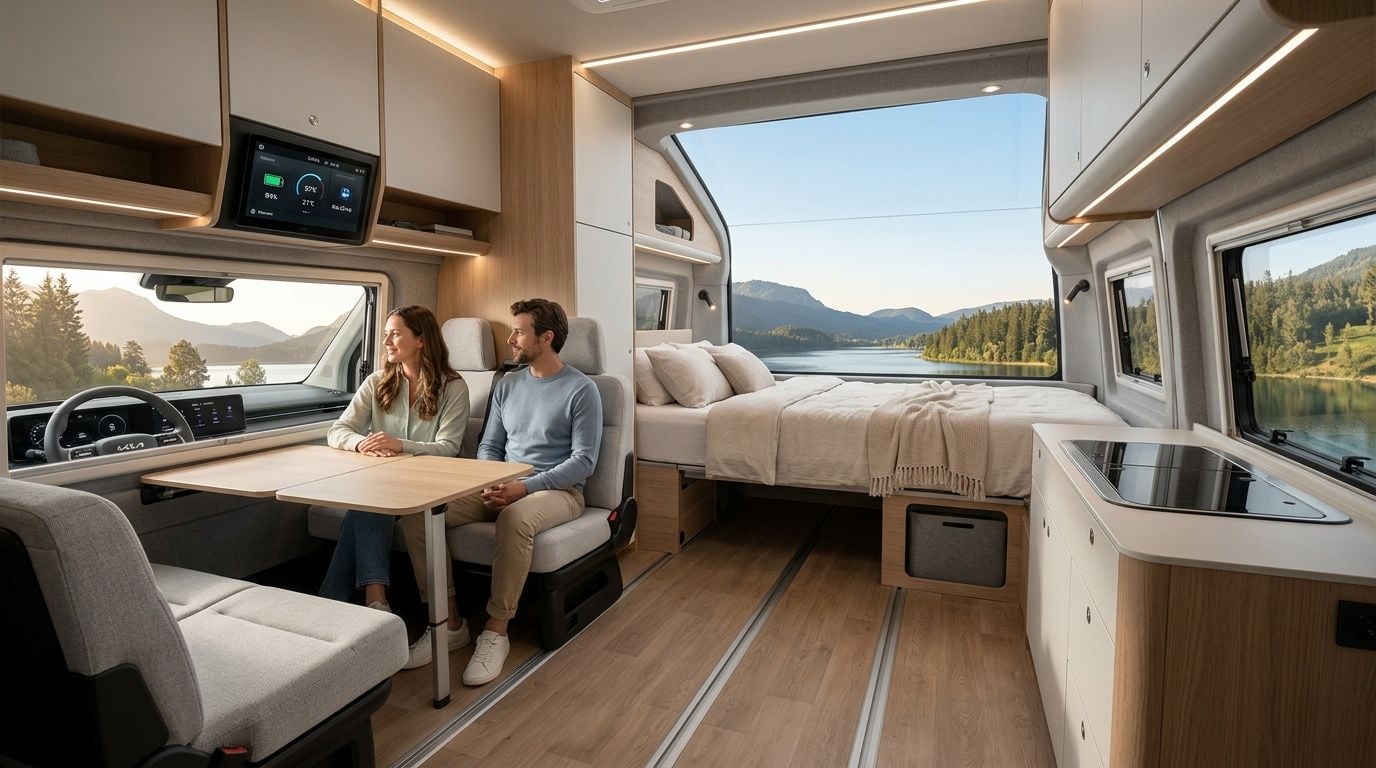
Interior layout
Kia appears to be building this van around a modular cabin structure. That should let buyers choose a simpler camper fit-out or a more flexible mixed-use layout. The trade-off is obvious. Modular interiors are easier to live with during the week, but they often ask for more setup once you arrive at camp.Sleeping setup
Current previews suggest a base sleeping arrangement aimed at two adults, with some versions potentially stretching to four with a pop-up roof or similar add-on. For a family with one or two kids, that can work. For four full-size adults, space and privacy will be tight.Storage solutions
The available L-track mounting system across the walls, floor, and ceiling could be one of the van's best real-world features, based on the same PV5 technical source. Good mounting points make a huge difference. They let owners secure beds, cabinets, bins, and tie-downs in ways that suit actual trips instead of a fixed showroom layout.Kitchen or utility features
Kia appears to be considering anything from removable kitchen modules and folding beds to more loaded layouts with washroom equipment and lounge-style seating, as noted earlier. That sounds attractive, but buyers should be skeptical until they see final production packaging. A compact galley that looks smart in photos can still be frustrating if it blocks the aisle, limits storage, or only works well in good weather.Off-grid capability
The EV version's V2L output looks useful. Running lights, a small induction cooker, device charging, or a portable fridge from the van is much better than hauling a generator for basic campsite power.Family usability
A pop-up roof adds more than sleeping space. It gives children a separate perch, improves standing room, and makes the cabin feel less claustrophobic over several days. That is a bigger deal than it sounds when everyone is stuck inside during wind or rain.
The best camper features are usually the least glamorous. Easy bed setup, smart tie-down points, low loading height, and power that can run the gear families actually bring.
Kia Camper Van 2026 Specs
Some expected specs are clearer than others. The broad picture is easier to judge than the final trim details.
Engine or powertrain
Kia has signaled that this van family may include gasoline, hybrid, and fully electric options, as noted earlier. That wide spread makes sense. Some families want EV quietness and campsite power, while others need long-distance flexibility in areas where charging is still hit or miss.Hybrid setup
Reports have pointed to a turbocharged hybrid configuration with healthy output and an automatic transmission, but this part of the lineup still needs official production confirmation. The practical point is simple. A hybrid camper only makes sense if it can carry extra weight without feeling strained on grades, merges, and two-lane passes.Electric drivetrain
The PV5 EV setup uses a front motor and multiple battery choices, according to the PV5 source cited above. That should give Kia room to offer a basic version for lighter-duty use and a more travel-friendly version for families who plan to cover real distance between campsites.Dimensions
The long-roof PV5 format is compact by RV standards but still large enough to be useful, based on the technical source. The low loading height stands out. That makes everyday packing easier, especially when you are lifting bikes, food bins, or a sleeping child instead of just tossing in a backpack.Fuel efficiency
Official real-world efficiency figures still are not locked down across the expected lineup. That is normal at this stage. Families should pay more attention to loaded-trip efficiency than headline test-cycle numbers anyway, because a camper's weight, roof accessories, and stop-start driving can change the result quickly.Range
The EV version is quoted at up to 400 km WLTP in the technical source. That is workable for regional travel and planned charging stops. It is less relaxing for long interstate runs with kids if cold weather, roof gear, or highway speeds cut range harder than expected.Technology features
Kia is expected to include the usual safety and driver-assistance equipment, including the kinds of tools that matter in a larger vehicle with more blind spots. Adaptive cruise, camera coverage, and parking aids are not luxury extras in a camper. They reduce stress when the van is loaded and visibility is compromised.AWD availability
An all-wheel-drive option has been discussed for some versions of the wider van program, though final availability still depends on market and trim. For families who camp on gravel, damp grass, or rough access roads, AWD is useful. It does not turn a camper into an off-roader, but it can save a trip from becoming a recovery job.
Understanding the Price and Value Proposition
Kia Camper Van 2026 Price
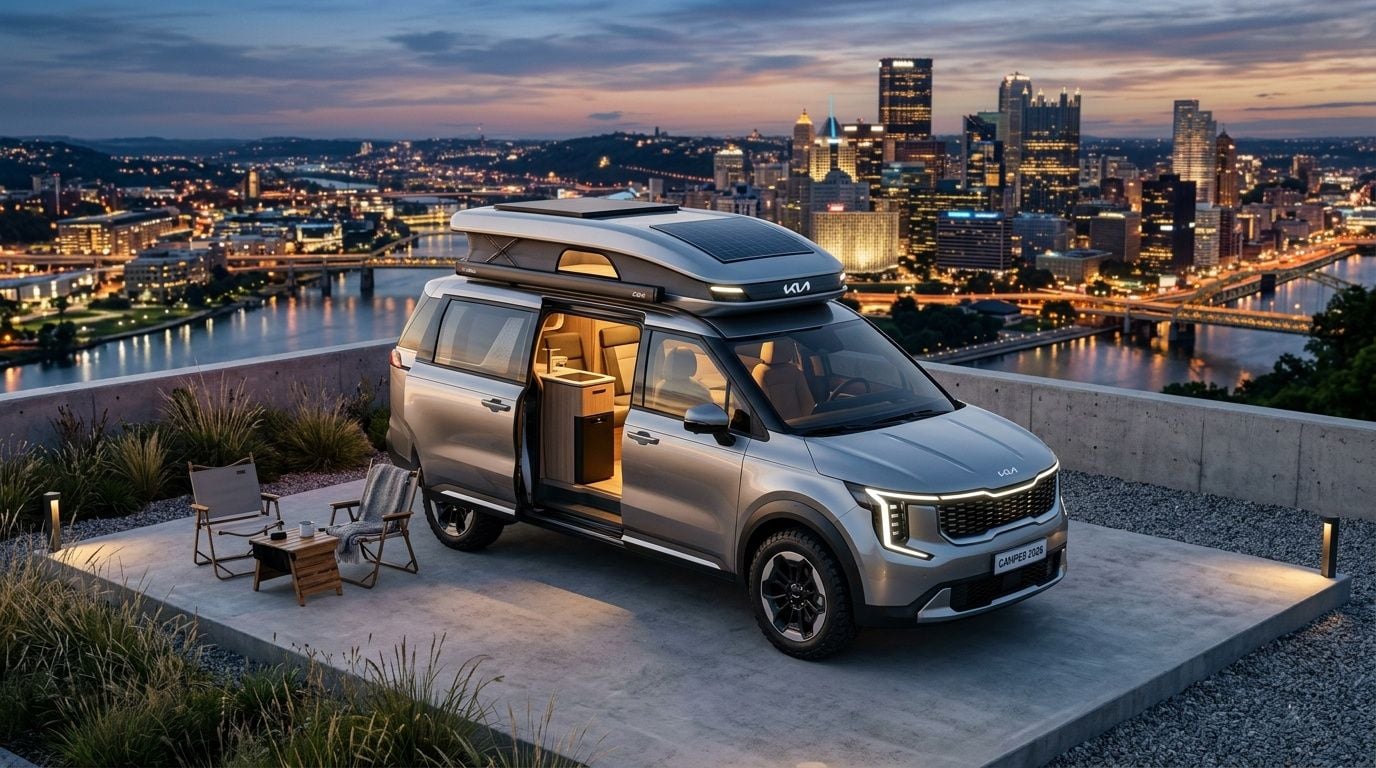
The honest answer is simple. Confirmed public pricing is still limited, and that's the biggest reason buyers should stay cautious.
Some coverage frames the purchase as a serious long-term decision and raises the right questions around warranty coverage, long-term parts availability for the PBV platform, and repair costs compared with traditional RVs, as noted in this ownership-cost discussion. That's exactly where smart buyers should focus instead of obsessing over a teaser number.
If you're cross-shopping different van formats, it helps to compare this upcoming Kia with something already in the market, like this look at a Chevy conversion van option. A conversion van and a purpose-built camper don't serve the same buyer, but the comparison clarifies what you're paying for: sleeping and utility capability versus passenger comfort first.
What Makes the Kia Camper Van 2026 Unique
Design approach
Most camper vans start with a compromise. A converter takes a cargo or passenger shell and works around what the base vehicle gives them.
Kia's more interesting move is designing around a modular multi-use architecture from the beginning. That doesn't guarantee a better camper, but it gives the van a better chance of having sensible floor height, better packaging, and fewer awkward workarounds.
Buying a camper isn't just about the sticker. Service access, parts support, and how the platform ages matter just as much.
Versatility
This van makes the strongest case for buyers who don't want a dedicated RV sitting idle most of the week. If the final production versions stay true to the concept, the Kia should work as:
- A daily family vehicle with less visual bulk than many traditional motorhomes.
- A weekend camper with removable or modular interior pieces.
- A gear hauler for bikes, coolers, sleeping kits, and sports equipment.
That's a real value advantage if one vehicle replaces two roles.
Travel convenience
Compact camper vans live or die by friction. If parking is a headache, if setup takes too long, or if the interior gets annoying in bad weather, owners stop using them.
The Kia's convenience story looks strong on paper because it's centered on low loading height, modular cabin use, and modern driver-assistance features rather than old-school RV bulk. What still needs proof is the daily reality: how quickly beds convert, how well storage stays organized, and whether the bathroom and water systems feel practical rather than token.
Is the Kia Camper Van 2026 Right For You
Who Should Consider the Kia Camper Van 2026
This van makes the most sense for buyers who want flexibility more than maximum space.
- Weekend travelers who want easier setup than tent camping and less size than a full RV.
- Couples who prioritize a compact footprint and modern driving manners.
- Small families willing to manage space carefully and keep gear disciplined.
- Buyers wanting one multi-use vehicle instead of a dedicated camper that sits parked.
- Men comparing compact camper vans and looking at alternatives like these small camper vans worth cross-shopping.
It makes less sense for large groups, buyers who need a fully separate bathroom and shower room, or anyone expecting full-size motorhome comfort in a compact shell.
Pros and Cons
A balanced read matters here, because the van gets compelling fast if you only look at concept photos.
Pros
Compact and versatile
The modular idea is the strongest part of the whole package. It promises real flexibility across daily use and camping.Travel-friendly design
The low-floor EV architecture should make loading and unloading easier than many taller, more awkward conversions.Potential off-grid capability
V2L power and multiple layout choices point toward practical short-trip independence.Modern features
Available driver-assistance tech, digital monitoring, and AWD hybrid capability make it feel current rather than retro.
Cons
Limited confirmed specs
Some details are clear, but final trim-by-trim layouts and market-specific equipment still aren't locked down publicly.Availability may vary
Buyers in different regions may see different body styles, powertrains, or camper packages.May not suit large groups
A family of four can sometimes fit in compact campers. Living comfortably for several days is a different standard.Minimalist layouts can frustrate families
Coverage still leaves a real gap around how well the van handles cooking, sleeping, hygiene, and water or waste management for a family of four on a multi-day trip, which is a key practical concern highlighted in this family-use analysis.
Is the Kia Camper Van 2026 Worth Waiting For
Yes, if you want a compact camper that could blend everyday usability with real travel flexibility.
The reason to wait is the platform logic. Kia appears to be treating the camper van as a purpose-built modular vehicle, not just a decorated people mover. That's the right direction, especially for buyers who hate the clumsy feel of many conventional RV-based setups.
The reason not to rush is equally clear. Family practicality still depends on details the current coverage doesn't fully answer. For a week-long trip with kids, the difference between "clever layout" and "works in practice" comes down to bed conversion speed, gear storage, interior standing room, and whether the hygiene setup is usable when everyone is tired and wet.
Kia Camper Van 2026 vs Other Camper Vans
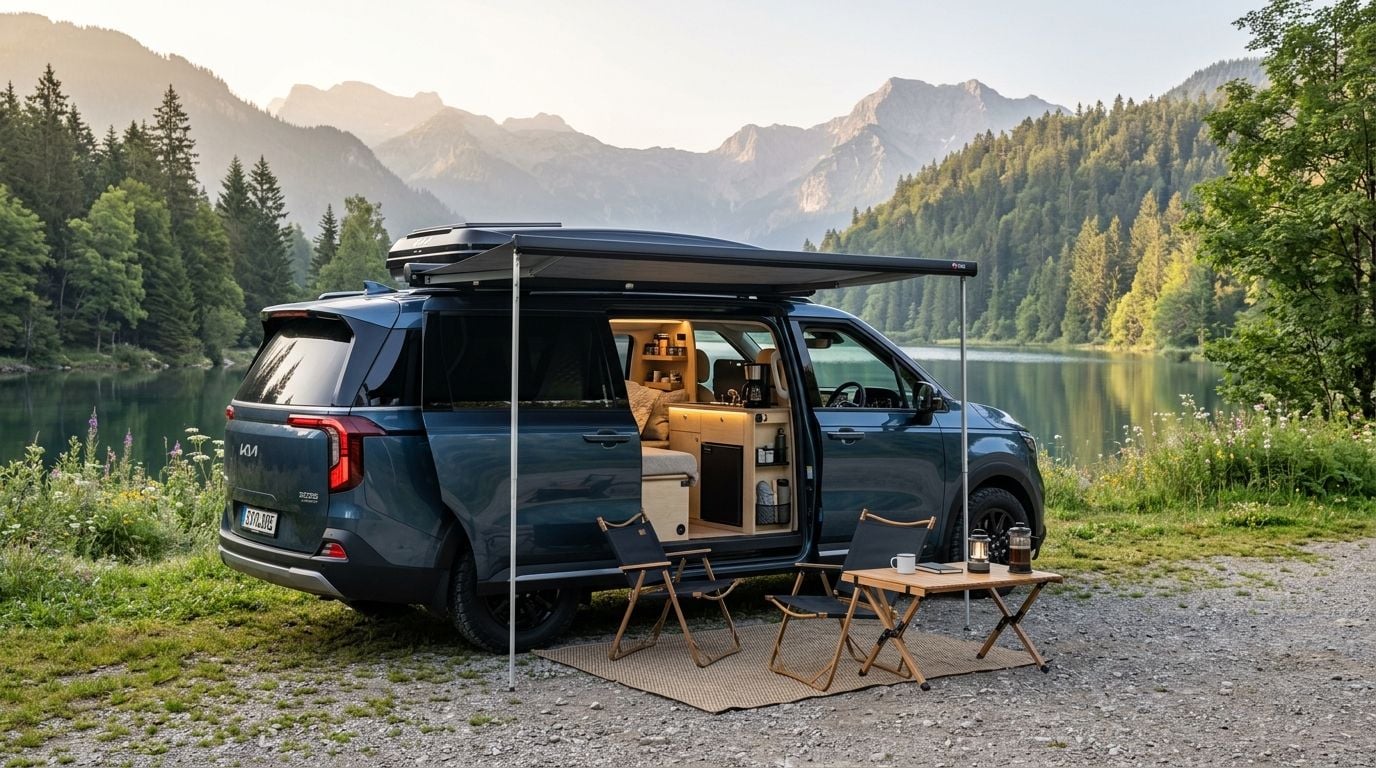
Shopping this Kia in a vacuum doesn't help. The key question is how it stacks up against other camper vans buyers already know.
| Feature | Kia Camper Van 2026 (Est.) | VW ID. Buzz Camper (Concept) | Ford Transit Custom Nugget |
|---|---|---|---|
| Size | Compact-to-mid-size camper footprint | Compact electric van format | Traditional camper-van format |
| Features | Modular layouts, gas/hybrid/EV paths, off-grid potential | EV-first appeal, lifestyle-focused design | Established camper layout approach |
| Flexibility | Strong on paper because of multi-use platform | Strong for style-conscious EV buyers | Strong if you want a more conventional camper setup |
| Price | Not fully confirmed | Varies by concept and market discussions | Varies by market and conversion spec |
The Kia's edge is flexibility. It looks better suited to buyers who want one vehicle to do several jobs, not just camping. That's also why it may appeal to shoppers considering compact adventure trailers and hybrid travel setups, including options like the Airstream Basecamp 20X, even though that isn't a van at all.
If your trips involve city parking, school runs, and occasional campgrounds, a compact modular van usually makes more sense than a large dedicated RV.
The VW ID. Buzz camper angle leans harder into design and electric appeal. The Ford Transit Custom Nugget represents the more traditional camper route. The Kia sits between them. Less nostalgia, less old-school camper baggage, and potentially more platform flexibility. That middle position could be its biggest advantage.
Next Steps and Frequently Asked Questions
Where to Learn More About the Kia Camper Van 2026
Start with the basics that matter after the reveal photos fade. Families need to know the final seating and sleeping layout, how much room is left once a stroller, cooler, duffels, and muddy shoes are onboard, and whether the powertrain options make sense for long highway days with kids in the back.
Official Kia updates and reputable automotive reporting are still the best places to track production details. Pay close attention to regional availability, dealer support, charging or fueling convenience, and the small ownership details that shape a real trip. Cupholders and USB ports sound minor until you are six hours into a drive with two children.
If you plan to work from camp or keep tablets running on rainy days, internet hardware deserves the same attention as battery size and storage bins. A practical guide to choosing a camper WiFi router is worth reading before you trust campground WiFi or a phone hotspot.
One more point. As noted earlier, the AWD hybrid setup looks aimed at gravel roads, wet campsites, and winter family travel, not hard-core trail use. That is the right balance for many buyers. It should be more useful for soccer practice, grocery runs, and state park weekends than a van built to chase extreme overlanding credibility.
FAQs
When will it be released?
Coverage points to a 2026 model year, but timing will vary by market. Wait for official regional confirmation before planning a purchase.
How much will it cost?
Early pricing talk is still tentative. The key number to watch is the on-road cost after options, camper equipment, and local market adjustments.
Is it good for van life?
Potentially, yes. It looks better suited to compact van life, weekend travel, and week-long family trips than full-time RV living.
Will it support off-grid travel?
Likely in a limited, practical way, especially if the final setup includes usable onboard power. Real off-grid performance will still depend on the battery, the conversion, water capacity, and how much gear your family brings.
Is it good for families?
Potentially, yes for small families. The key questions are sleeping space, everyday storage, easy cleanup, and whether parents can still move around once the beds are set up.
Should you wait or buy something already available?
Wait if you want modular packaging, newer tech, and are comfortable with some unanswered questions. Buy now if you need a proven layout, established service access, and a van that can be ready for this summer instead of next year.
If you want straightforward gear coverage, family-vehicle analysis, and practical buying advice without the fluff, visit alphadadmode.com.
