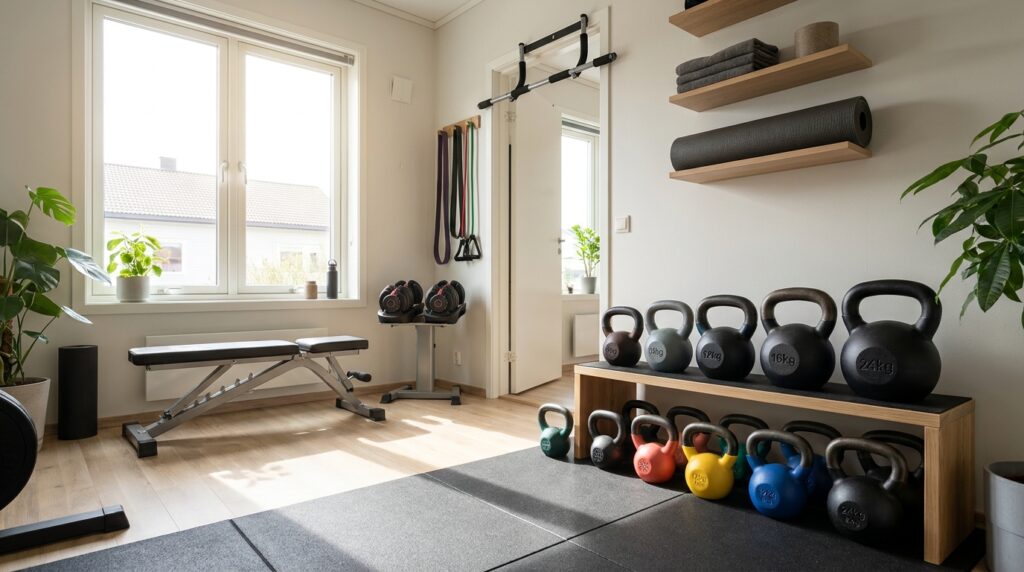

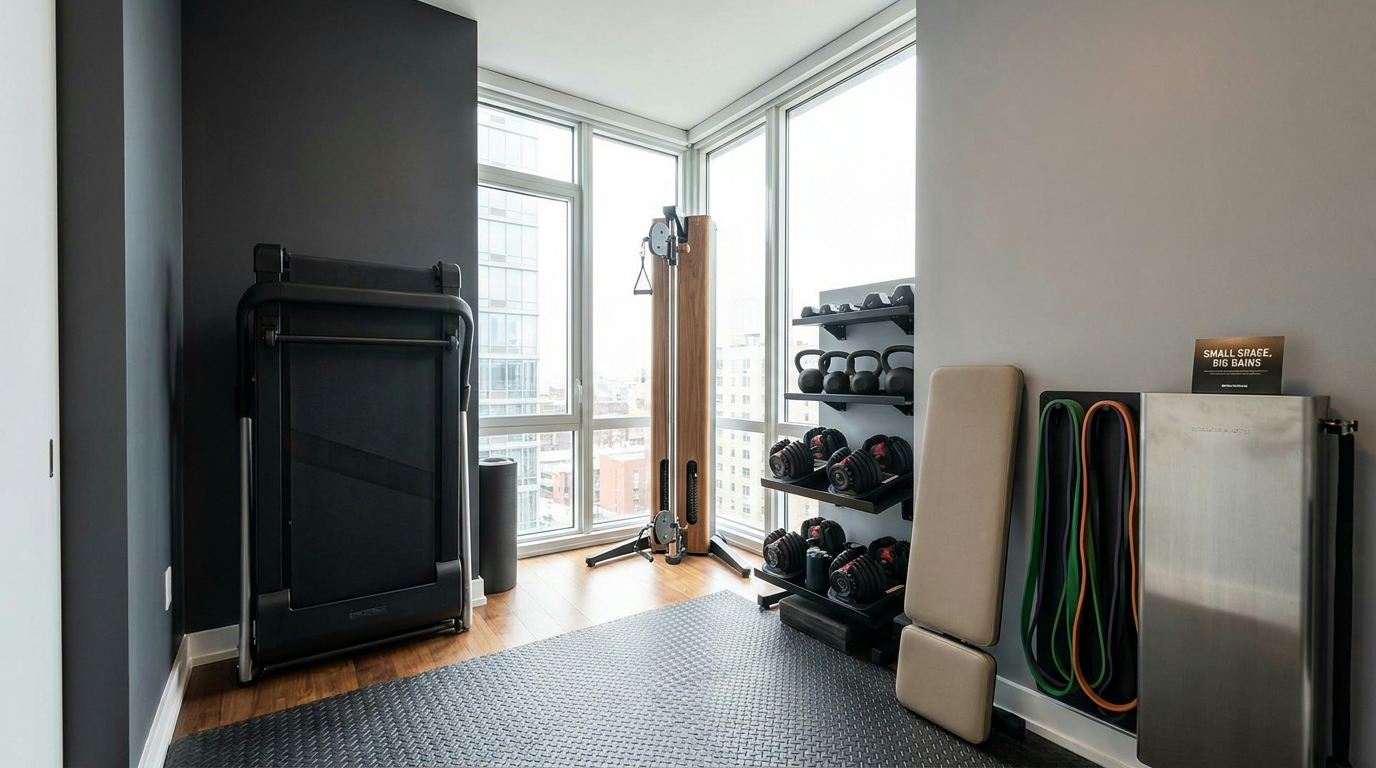
For busy dads, finding the right home gym equipment for small spaces isn’t just about saving room—it’s about finding smart gear that works as hard as you do. We’re talking about things like adjustable dumbbells, versatile resistance bands, and foldable benches that can turn any corner into a serious workout zone without taking over your living space.
Build Your Fitness Corner Without Losing Your Living Room

Let’s be honest, juggling work, family, and your own health can feel like an impossible mission. The idea of hitting the gym often gets shoved to the bottom of the list, especially when your house is already bursting at the seams.
But what if you could build a powerhouse personal gym without needing a whole dedicated room? The secret is embracing the “micro-gym”—a small, forgotten corner transformed into your personal fitness hub.
This guide flips the script on what a “home gym” means. We’re not talking about those massive, single-purpose machines that hog your entire basement. Instead, we’re going to show you how to reclaim your strength and get your energy back using the space you already have. This is about building a fitness habit that actually fits your life, leaving you with more in the tank for your family and career.
The Rise of the Compact Home Gym
If you’re looking for a space-saving solution, you’re not alone. Dads everywhere are figuring out how to create effective home gym setups in apartments and crowded living rooms, and the numbers back it up.
The global home gym equipment market is on track to jump from USD 12.4 billion in 2025 to USD 19.6 billion by 2035, all thanks to the growing demand for gear like foldable benches and resistance bands. You can dig deeper into these market trends and check out the full report on home gym equipment growth for yourself.
This boom proves one thing: you don’t need a massive setup to hit your fitness goals. A few smart pieces of equipment can unlock hundreds of different exercises.
A well-planned micro-gym isn’t a compromise; it’s a strategic advantage for a busy father. It removes the two biggest obstacles to consistency: travel time and lack of space.
What This Guide Will Do for You
Think of this as your no-nonsense roadmap to building the perfect small-space gym. No more guesswork or expensive mistakes. By the time you’re done reading, you’ll have a rock-solid plan for:
- Choosing the right gear that gives you the biggest bang for your buck without cluttering up the house.
- Setting up your space safely to protect both your family and your equipment.
- Fitting effective workouts into your daily routine—proving that even 20 minutes can make a massive difference.
This is your blueprint for turning a small corner into your personal source of strength, energy, and accomplishment. Let’s dive in.
Alright, let’s get this done. Here’s the rewritten section, designed to sound like it’s coming from an experienced dad who’s been through the home gym setup trenches himself.
Creating Your Small Space Gym Blueprint
Jumping into buying equipment without a solid plan is a classic rookie mistake. It’s a fast track to a cluttered corner and a lighter wallet. Before you even think about clicking “Add to Cart,” we need to create a blueprint that makes every square inch count.
Think of it like building a LEGO masterpiece with your kids. You don’t just dump the bricks out and hope for the best, right? You look at the instructions and figure out where the foundation goes. This planning phase is what separates a gym that works from a gym that just gets in the way. Let’s walk through how to map out your space, whether it’s a corner of the office, a slice of the garage, or that awkward nook by the stairs.
Measure Twice, Buy Once
First things first: get intimately familiar with your space. Don’t just eyeball it. Grab a tape measure and get the real numbers, because a few inches can make all the difference. This goes way beyond just the floor space, too—a lot of guys forget some key details that can totally derail a setup.
Start with the basics: length and width. That gives you your total square footage. But don’t stop there.
- Look Up: Measure the height from floor to ceiling. This is an absolute must if you’re thinking about a door-mounted pull-up bar or doing any exercises like overhead presses. You need to know you have clearance.
- Create a “Movement Bubble”: You won’t be standing still. You need room to swing, lunge, and move. Can you do a full kettlebell swing without punching a hole in the drywall? Is there enough space to lunge forward without kicking the dog’s water bowl?
- Check the Foundation: Is the floor level? Is it sturdy enough to handle a dropped weight or two? An old, creaky floor might not be the best spot for heavy deadlifts.
Here’s a golden rule to live by: Your workout area needs to be bigger than your equipment’s footprint. You absolutely need room to move around the gear safely and go through a full range of motion.
The Painter’s Tape Trick: Visualize Your Layout
Once you have your measurements, it’s time for a simple trick that will bring your gym to life before you spend a single dollar. All you need is a roll of painter’s tape.
Use the tape to mark the exact dimensions of the home gym equipment for small spaces you’re considering, right there on the floor. If the adjustable dumbbell stand is 2 feet by 2 feet, tape out that square. If the bench you want is 4 feet long when unfolded, map it out.
This little visualization hack is a total game-changer. It helps you:
- Stop the Squeeze: You’ll see instantly if your ambitions are bigger than your room. It’s far better to realize this with tape than with a 100-pound box that’s a nightmare to return.
- Test the Flow: Walk around the taped-off areas. Is there a clear path? Can you get to everything without doing some awkward shuffle?
- Confirm Your “Movement Bubble”: Do a few air squats, shadow box, or lunge inside your taped-off zone. This is a real-world test to make sure you have the clearance you actually need.
Taking just 30 minutes to do this will save you hours of headaches and potentially hundreds of dollars. It turns an abstract idea into something you can see and feel, making sure the gear you buy actually fits your home and your life.
Before you finalize your layout, run through this quick checklist. It’s an easy way to double-check that you’ve covered all your bases for a safe and functional space.
Your Micro-Gym Space Planning Checklist
Use this checklist to ensure your chosen space is perfectly suited for a safe and effective home gym.
| Checklist Item | Key Consideration | Pro Dad Tip |
|---|---|---|
| Clearance Check | Do you have at least 2-3 feet of open space around your primary workout zone? | Do a “snow angel” on the floor. If your hands or feet hit anything, you need more room. |
| Ceiling Height | Is the ceiling high enough for overhead presses, pull-ups, or jump rope? | Stand in the spot and raise your arms fully. If you’re considering a pull-up bar, measure from the bar’s height. |
| Floor Stability | Is the floor level and solid? Can it support you and the equipment’s weight? | Place a heavy object (or yourself) on the spot and see if the floor creaks, sags, or feels unstable. |
| Electrical Access | Are outlets nearby if you plan on using equipment with a monitor or a fan? | Don’t rely on extension cords. They can be a serious tripping hazard in a tight space. |
| Kid & Pet Safety | Can the area be secured or blocked off when not in use? | Think about a foldable baby gate or a room divider to create a clear boundary when you’re done. |
| Ventilation | Is there a window or good airflow? A small fan can make a huge difference. | A stuffy, sweaty room is the last place you’ll want to be. A fan is a non-negotiable accessory. |
Going through this list takes just a few minutes, but it ensures your blueprint is built on a solid foundation, setting you up for success from day one.
The Best Space-Saving Equipment for Dads
Alright, now for the fun part—picking out the actual gear. We’re not just going to throw a random list of products at you. Instead, let’s think about this strategically. We’ll break down the best tools by their function—strength, cardio, and flexibility—so you can build a balanced, powerful routine without turning your living room into a commercial gym.
This is all about making smart investments in versatile home gym equipment for small spaces. You want pieces that can do the job of ten others and grow with you as you get stronger. Let’s dive into the best options for busy dads.
Building Strength Without the Bulk
When you’re working with a tight space, versatility is everything. You need equipment that can replace an entire rack of weights or a massive cable machine, and luckily, modern gear makes that totally possible.
The demand for compact, powerful equipment is blowing up, especially among dads who are short on space. In fact, a whopping 70% of millennial dads say that lack of space is a major hurdle. This has fueled a market that’s projected to hit USD 31.01 billion by 2029. We’re also seeing a 40% jump in the popularity of free weights and ellipticals that take up less than four square feet. If you’re curious, you can explore the full data on these at-home fitness trends to see just how big this movement has become.
Let’s look at the top-tier choices for getting seriously strong at home.
Adjustable Dumbbells: The Undisputed MVP
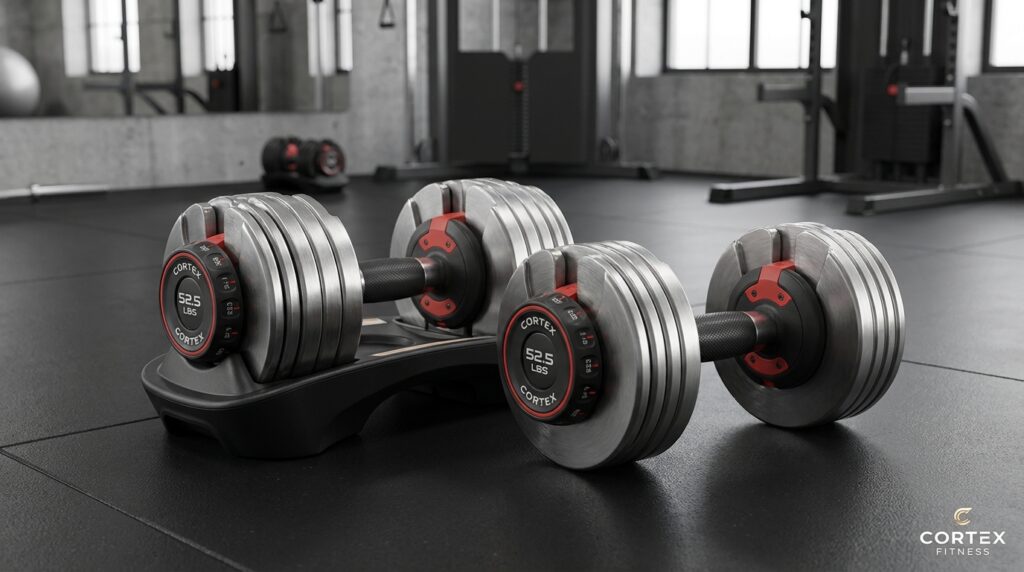
If you can only buy one thing for strength training, make it a set of adjustable dumbbells. Period. They are the ultimate space-saver, replacing up to 15 pairs of regular dumbbells in one tidy package. With a quick twist of a dial or the slide of a pin, you can switch from light warm-up curls to heavy presses in seconds.
- Good: A basic set that adjusts from 5 to 25 pounds is perfect for getting started and for hitting smaller muscle groups.
- Better: A mid-range set that goes up to 50 or 55 pounds is the sweet spot. It’ll cover the vast majority of exercises for most guys and give you plenty of room to progress.
- Best: Premium sets that go up to 90 pounds with rapid-adjustment tech are a serious investment, but they’re a true “buy it for life” solution that you’ll never outgrow.
When you’re shopping, pay attention to how smooth the adjustment mechanism is and make sure the grip feels comfortable and secure.
Suspension Trainers: Your Bodyweight Powerhouse
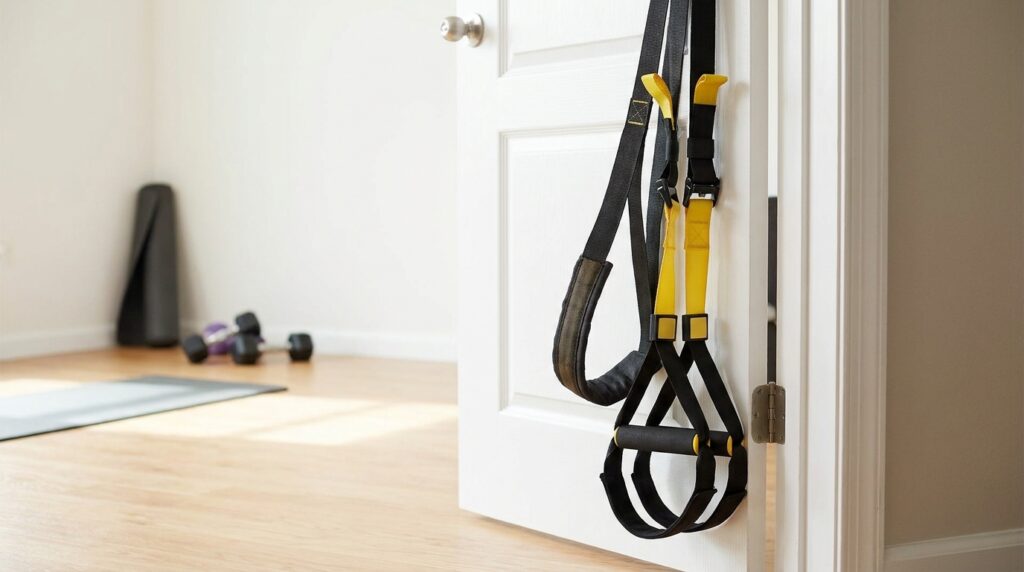
Another absolute must-have for a micro-gym is a suspension trainer, like the original TRX system. It’s basically two heavy-duty straps with handles that you can anchor to a sturdy door, a pull-up bar, or even a tree in the backyard. The magic is that it uses your own bodyweight for resistance.
By simply changing your body angle, you can make an exercise easier for a beginner or brutally difficult for a seasoned pro. It’s a full-body workout system that literally fits into a small mesh bag.
Door-Mounted Pull-Up Bars: Unlocking Upper-Body Strength
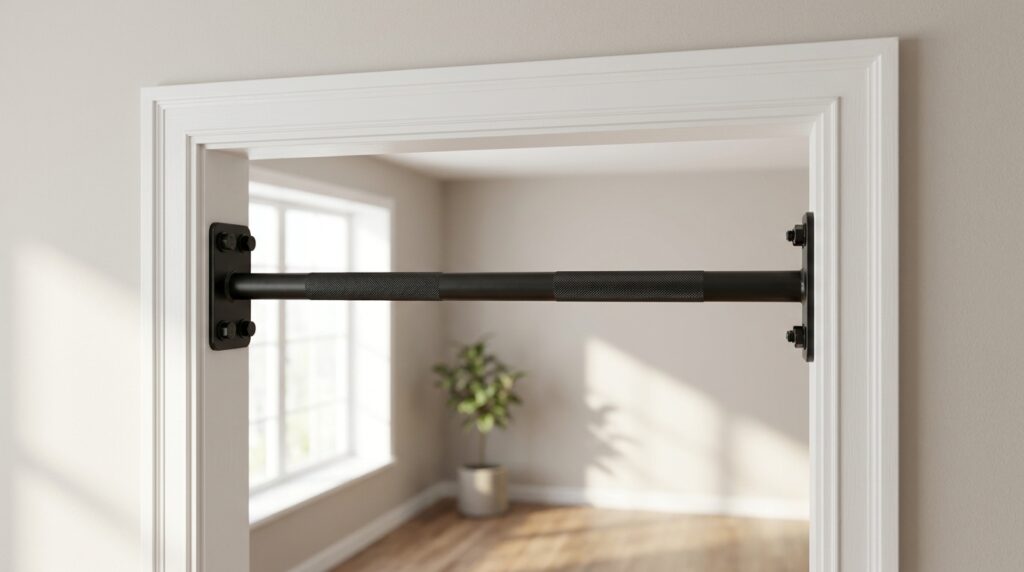
A good door-mounted pull-up bar is one of the fastest ways to build a powerful back and biceps. The new designs are way safer than the old ones you might remember; they use leverage to distribute your weight across the doorframe, so there are no screws or permanent damage. It takes seconds to put up and take down, and you can even use it on the floor for deeper push-ups and sit-up support.
This flowchart shows the simple three-step process for prepping your space before you even think about buying equipment.

Following this sequence—evaluate, measure, map out—ensures you have a solid plan and prevents you from making a purchase you’ll regret.
Cardio That Disappears When You’re Done
Cardio machines are notoriously huge, but there are some fantastic options out there that deliver an intense workout and then tuck away neatly out of sight.
The best cardio for a small space is whatever you’ll actually do consistently. It doesn’t need a giant screen or a powerful motor—it just needs to get your heart rate up and be easy to put away.
Here are the top contenders:
- Foldable Rowing Machines: A rower gives you a killer full-body, low-impact cardio session. Many of the best models today are designed to be stored vertically, taking up no more floor space than a dining room chair.
- A High-Quality Jump Rope: Don’t sleep on the jump rope. A good weighted “speed rope” can give you a high-intensity workout that torches calories in just 10-15 minutes. It’s the definition of compact and effective.
- Under-Desk Ellipticals or Bikes: If you work from home, these things are brilliant. They let you get in some light cardio and keep the blood flowing during your workday without taking up any extra dedicated floor space.
Flexibility and Recovery Essentials
Finally, don’t forget about flexibility and recovery. These tools take up almost no room but are critical for preventing injury and working out the stiffness from sitting at a desk or chasing kids all day.
- A Quality Yoga Mat: This is your home base for stretching, core work, and any floor exercises. Look for one with decent cushioning that rolls up tightly.
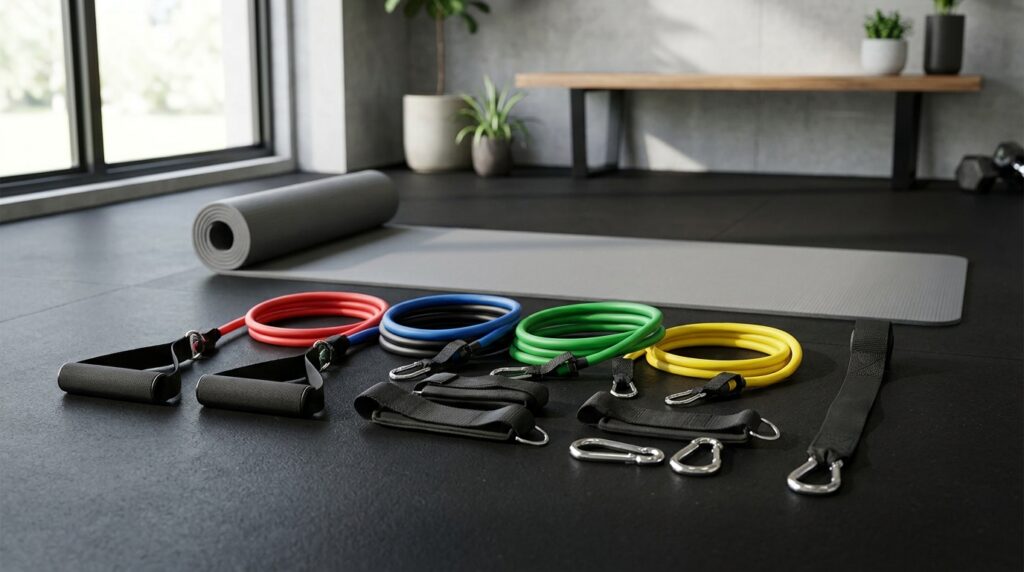
- Resistance Bands: A set of loop bands and tube bands with handles is like a Swiss Army knife for your gym. They’re perfect for warm-ups, mobility drills, and even adding a little extra challenge to squats and push-ups.
- A Foam Roller: A compact foam roller is a must. Think of it as your on-demand deep-tissue massage for working out knots and soothing sore muscles.
By picking a few key items from each of these categories, you can build a seriously effective, well-rounded home gym, no matter how little space you have to work with.
Smart Storage Solutions for a Clutter-Free Home

The real trick to a successful micro-gym isn’t just the workout gear—it’s making it all disappear when you’re done. Smart organization is what keeps your living space from turning into a permanent, chaotic gym, which is crucial when you’ve got curious kids exploring every corner. Let’s get into some dad-approved storage hacks that work.
Think of it like a well-organized toolbox. Everything has its place, ready for action when you need it and completely out of the way when you don’t. This is the key to keeping the peace in a shared family space.
Go Vertical: Think Up, Not Out
When floor space is prime real estate, the only way to go is up. Using your walls is one of the single most effective ways to organize your home gym equipment for small spaces without losing a single square foot of living area.
- Pegboards: A simple pegboard with a few hooks is a game-changer. It’s perfect for hanging resistance bands, jump ropes, foam rollers, and even yoga mats. Everything is visible and easy to grab.
- Wall-Mounted Racks: For your heavier gear like dumbbells or kettlebells, you’ll need sturdy, wall-mounted shelving. Just make absolutely sure you install it directly into wall studs for safety.
This vertical approach gets everything off the floor, which is a massive win for both tidiness and safety.
The goal is to create a “grab-and-go” system. Your equipment should be accessible enough that you have no excuses, but stored securely enough that it won’t become a tripping hazard or your toddler’s new favorite toy.
Hide in Plain Sight with Dual-Purpose Furniture
Your storage doesn’t have to scream “gym.” The best setups blend right into your existing decor. This is where dual-purpose furniture becomes your secret weapon for hiding fitness gear.
A storage ottoman is a classic example. To everyone else, it’s a stylish footrest or extra seating. But lift the lid, and it’s the perfect spot for your adjustable dumbbells, bands, and yoga blocks. Nobody needs to know your living room doubles as a weight room.
Likewise, a decorative trunk or a sturdy storage bench can do the same job. These pieces actually add to your home’s look while giving your workout gear a hidden home. It’s the ultimate way to maintain a clean, uncluttered space.
Under-Utilized Spaces: Your Hidden Storage Goldmines
Take a look around your room. I’ll bet there are pockets of unused space just waiting to be put to work. These are the perfect spots for stashing equipment completely out of sight.
- Under the Bed: Low-profile rolling containers slide easily under a bed or couch. They can hold a surprising amount of gear—weights, mats, and accessories—and keep it all dust-free and hidden.
- Inside a Closet: You don’t need a whole closet. Just dedicate one shelf or a small corner to your gym gear. A sturdy, even lockable, case for dumbbells is a great idea here, especially with kids around.
- Behind the Door: Don’t forget this spot! An over-the-door organizer with pockets is brilliant for smaller items like resistance bands, workout gloves, and heart rate monitors.
These simple strategies turn a potential mess into a clean, functional part of your home. It just goes to show that with a little creativity, you can have a powerful fitness setup without taking over your living space.
Your 20-Minute Dad-Bod Demolition Workouts
Alright, you’ve got the gear. That’s half the battle. But let’s be honest, equipment just collects dust unless you have a solid plan to put it to work. As a busy dad, your most precious resource is time, so forget those marathon gym sessions you see on social media.
These three workouts are built for the real world. Each one is designed to be brutally effective in 20 minutes or less, turning that corner of your home into a powerhouse for results. Consistency is the name of the game here—short, intense workouts done regularly will beat scattered, hour-long efforts every single time. No guesswork. Just pick one and go.
Full-Body Strength Circuit
This is your bread and butter. Using just your adjustable dumbbells and suspension trainer, we’re going to hit every major muscle group to build real-world, functional strength. Think of it as training for life—lifting kids, hauling groceries, and just feeling more capable in your own skin. The secret is to move from one exercise to the next with almost no rest, which keeps your heart rate jacked up and the intensity high.
Do each exercise for the reps listed, then take a 60-second breather after the full circuit. Knock out a total of 3 rounds.
- Dumbbell Goblet Squats (10 reps): Grab one dumbbell and hold it vertically against your chest like you’re holding a goblet. Drop into a squat, keeping your back straight and chest proud.
- Suspension Trainer Rows (12 reps): Lean back with the straps, keeping your body as straight as a board. Pull your chest up to your hands, squeezing your shoulder blades together like you’re trying to crack a nut between them.
- Dumbbell Bench Press (10 reps): Lie flat on your bench (or the floor). Power the dumbbells up from your chest until your arms are straight.
- Dumbbell Romanian Deadlifts (12 reps): Hold a dumbbell in each hand in front of your thighs. Hinge at the hips—don’t squat—and lower the weights with a flat back. You should feel a good stretch in your hamstrings.
- Overhead Press (10 reps): Stand tall (or sit). Start with the dumbbells at your shoulders and press them straight up overhead.
High-Intensity HIIT Blast
Got a day where you’re really crunched for time? This is your go-to. High-Intensity Interval Training (HIIT) is the most efficient way to torch fat and fire up your metabolism. All you need is a jump rope and your own body. The formula is simple: go all-out, rest briefly, and repeat.
The real magic of HIIT isn’t just the calories you burn during the workout. It’s the “afterburn effect,” where your body keeps burning fat for hours after you’re done.
Set a timer and smash out 5 rounds of this sequence:
- Jump Rope: 45 seconds of non-stop, fast-paced jumping.
- Rest: 15 seconds.
- Push-Ups: 45 seconds. Drop to your knees if you have to, but keep that form clean and keep moving.
- Rest: 15 seconds.
- Bodyweight Squats: 45 seconds of smooth, deep squats.
- Rest: 15 seconds.
You’re done in under 15 minutes, but you’ll feel like you put in an hour of hard labor.
Core and Mobility Rescue
Let’s face it, sitting at a desk or behind the wheel all day wreaks havoc on your body. It leads to a weak core and a stiff, angry back. This routine is your antidote. It’s specifically designed to undo the damage of the daily grind, improve your posture, and forge a rock-solid midsection.
This isn’t just about looks; a strong core is your body’s best defense against injury. It’s a non-negotiable part of juggling your responsibilities without feeling broken. Learning how to balance work and family life means taking care of the machine that runs it all—you.
Move through these with purpose and control. Aim for 2-3 rounds.
- Plank (Hold for 45-60 seconds): No sagging hips! Keep your body in one straight, strong line from your head to your heels.
- Glute Bridges (15 reps): Lie on your back, knees bent. Drive your hips to the sky and give your glutes a hard squeeze at the top.
- Bird-Dog (10 reps per side): Get on all fours. Extend your opposite arm and leg at the same time, keeping your core braced and your back flat.
- Cat-Cow Stretch (10 reps): Flow between arching your back (cow) and rounding it (cat). This is amazing for spine mobility.
How to Budget and Maintain Your Home Gym
Let’s be honest, building a home gym is an investment. But it’s an investment in you—your health, your energy, your ability to keep up with the kids. The good news is, it doesn’t have to break the bank. With a smart budget and a little bit of care, you can build a setup that pays you back for years to come.
You don’t need a thousand-dollar squat rack on day one. The real secret is to start small with a few killer essentials and build from there as you get stronger and more committed.
Smart Budgeting Strategies
You can get an incredible workout with just a handful of versatile, affordable pieces. Think of it like this: you don’t go all-in on a risky stock with your life savings. You start with solid, reliable investments. The same logic applies to your gym.
Start with these game-changers:
- Resistance Bands: A full set is cheaper than a single heavy dumbbell and gives you a ridiculous number of options for strength, mobility, and warm-ups.
- A Quality Jump Rope: For less than $20, you get a cardio machine that melts calories and disappears into a drawer when you’re done.
- A Durable Yoga Mat: This is your home base for core work, stretching, and any exercise that puts you on the floor. Don’t cheap out here—a good one will last for years.
Once you’ve made working out a habit with these basics, then you can start saving for that bigger ticket item, like a great set of adjustable dumbbells. Budgeting for fitness isn’t all that different from managing household expenses. In fact, if you’re looking to trim the fat from your spending, check out our guide on how to save money on groceries—a lot of the same principles apply.
A classic rookie mistake is buying cheap, flimsy equipment that falls apart in a few months. You’re far better off investing in one high-quality, do-it-all piece of gear than three cheap ones you’ll just end up replacing.
Hunting for Used Equipment Deals
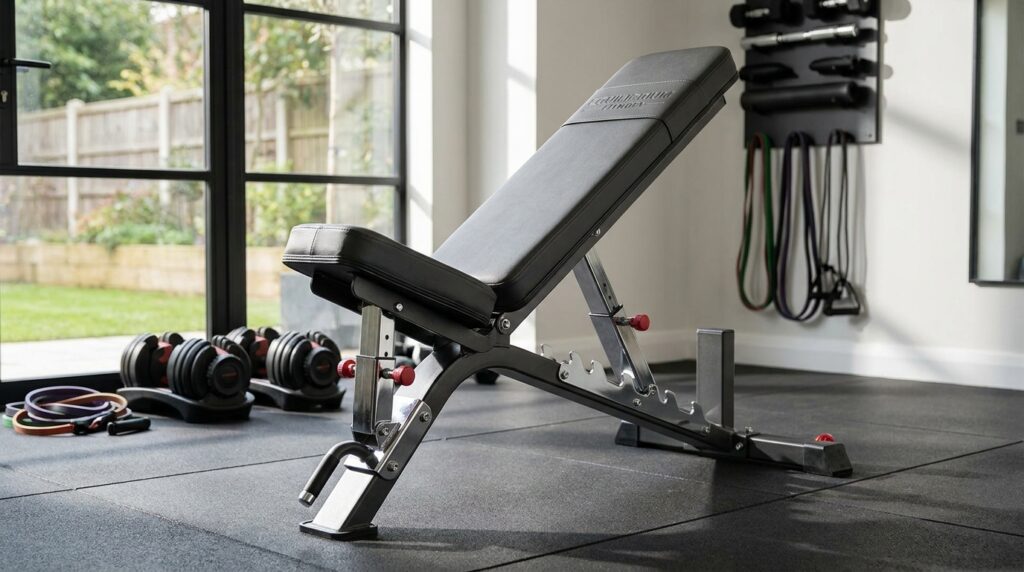
The secondhand market can be an absolute goldmine for home gym equipment for small spaces, but you’ve got to know what you’re looking for. Scour online marketplaces and local classifieds for things like cast-iron kettlebells, weight plates, and simple benches. These things are practically indestructible and often sell for half the price of new.
A word of caution, though: be extra careful with more complex gear. If you’re looking at adjustable dumbbells, you need to inspect them in person. Click through every weight setting and make sure the locking mechanisms are solid and engage smoothly. For anything with straps, like a suspension trainer, check every inch for fraying or wear. A great price means nothing if the gear isn’t safe.
Protecting Your Investment with Simple Maintenance
Just like your car, your gym equipment needs a little TLC to perform well and keep you safe. A simple monthly check-up is all it takes to dramatically extend the life of your gear.
Here’s a quick routine you can knock out in minutes:
- Wipe Down Everything: Give your mats, benches, and grips a quick wipe-down after you use them. Sweat and body oils can break down materials over time.
- Inspect All Straps and Bands: Look closely for any tiny tears, cracks, or worn spots. If a band looks even slightly sketchy, replace it. It’s not worth the risk.
- Check Nuts and Bolts: For benches or any gear you assembled, give the bolts a quick check to make sure everything is still tight and secure.
- Lubricate Moving Parts: For adjustable dumbbells or anything with moving joints, a little silicone lubricant will keep the mechanisms working like new.
This whole process takes less than ten minutes a month, but it’s the key to making sure your equipment is always ready and, most importantly, safe for every single workout.
Frequently Asked Questions About Small Space Gyms
Even with the best-laid plans, a few questions always seem to pop up. Let’s run through some of the most common ones I hear from other dads so you can get started with total confidence.
Can You Really Build Muscle with Compact Equipment?
You absolutely can. Don’t let the size of the equipment fool you. Building muscle is all about a principle called progressive overload, which is just a fancy way of saying you have to keep challenging your muscles over time. It’s the effort that counts, not the square footage of the machine.
Think about it: adjustable dumbbells are a perfect example. You can slowly and steadily bump up the weight as you get stronger. Suspension trainers are another great one—they use your own bodyweight for resistance, and you can make an exercise instantly harder just by shifting your body’s angle. Trust me, you can get some serious results with the right compact gear.
How Do I Keep My Kids Safe Around Workout Gear?
This is non-negotiable. Safety has to be priority number one, and the golden rule is simple: the second your workout ends, everything gets put away. No exceptions.
Think of your workout space as a temporary zone, not a permanent jungle gym. A clean floor is a safe floor, especially with curious kids running around.
Here are a few practical tips to make your space kid-proof:
- Use secure storage. Think vertical racks, stackable bins with lids, or even a lockable case for your weights.
- Get it off the floor. High closet shelves or dedicated under-the-bed containers are your best friends here. Out of sight, out of mind.
- Set a hard and fast family rule. Make it clear that the workout gear is off-limits unless you are right there with them.
What Is the Single Best Piece of Equipment If I Can Only Buy One?
If I had to pick just one thing, it’s a no-brainer for me: a high-quality suspension trainer. For pure versatility in the smallest possible footprint, nothing else comes close.
It gives you a legitimate full-body workout—chest, back, legs, core, you name it—all by using your own bodyweight. When you’re done, it rolls up and takes up less space than a pair of shoes. Anchor it to a sturdy door, and you’re good to go.
Plus, it’s great for any fitness level. You can tweak the difficulty in a split second just by moving your feet, making it a piece of home gym equipment for small spaces that truly grows with you. And while you’re focusing on your physical strength, don’t forget your overall health; it’s worth checking out the best multivitamins for men over 30 to back up your new routine.
Ready to build that fitness corner and get your energy back? Come join the community over at alphadadmode.com. Sign up for our newsletter and you’ll get exclusive tips, workout plans, and a first look at resources built for dads who are ready to level up. Get started here: https://alphadadmode.com.