


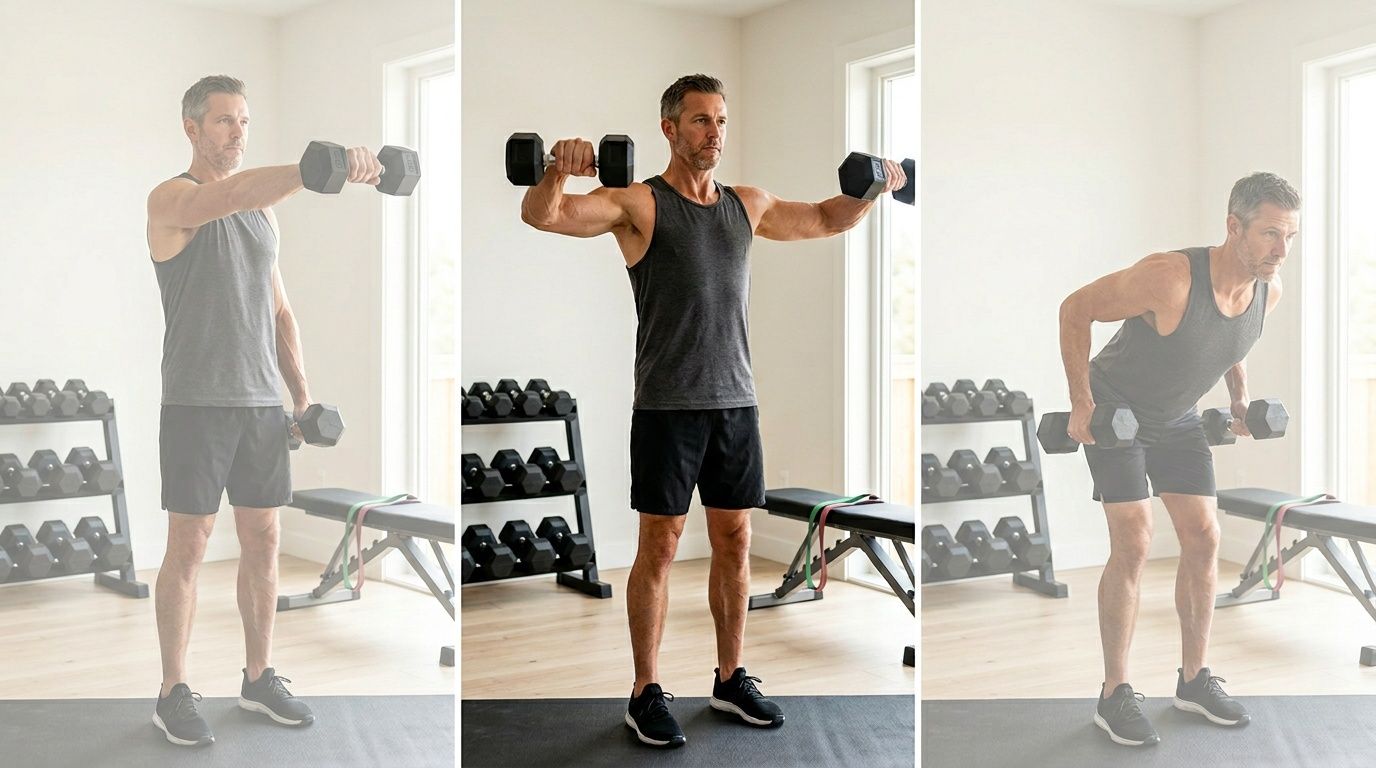
Build Shoulders That Command Respect
Struggling to build broad, strong shoulders even though you press, row, and train hard? That usually means you’re missing a key point. Deltoid exercises work best when you train all three heads of the shoulder instead of hammering only the front delts with pressing.
Shoulder size matters for aesthetics, but shoulder balance matters even more for strength, posture, and staying pain-free. Strong delts help with pressing, carrying, lifting overhead, and keeping your upper body from folding forward after long hours at a desk or behind a steering wheel.
Here’s the direct answer. The best deltoid exercises combine one heavy press, one side-delt isolation move, and one rear-delt movement. If you want shoulders that look good and hold up, you need all three.
This guide gives you a practical system, not just a random list. You’ll get the best deltoid exercises, how to do them, what to avoid, and how to make them work in a full gym, garage, or small home setup.
What Are the Best Deltoid Exercises for Growth?
The best deltoid exercises for growth are the ones that train the front, side, and rear delts with enough tension and control to keep the target muscle working. In practice, that means a press for the anterior delts, a raise for the lateral delts, and a rear-delt movement for balance.
The dumbbell shoulder press stands out as a top choice for anterior delt development. An ACE study found it produced the highest anterior deltoid activation of the exercises tested, while the 45-degree incline row and bent-arm lateral raise performed best for the medial delt, and the seated rear lateral raise plus 45-degree incline row led for the posterior delt in that testing setup among 16 healthy male volunteers aged 18 to 30 using EMG at 70% of one-rep max for five reps across multiple exercises (ACE shoulder exercise research).
If you want a short answer, start with a shoulder press, add lateral raises, and finish with rear-delt work like face pulls, reverse pec deck, or band pull-aparts. That combination works better than relying on bench press and chest work to “cover” your shoulders.
Best Deltoid Exercises
- Overhead shoulder press
- Lateral raises
- Front raises
- Rear delt fly
- Arnold press
Press for size first
Overhead pressing builds the base. It loads the shoulders hard, trains coordination, and gives you the most obvious carryover to strength.
Front raises can help, but they’re usually a secondary move. Most lifters already give the front delt plenty of work through pressing, so they don’t need to build a shoulder day around front raises.
Raise for width and balance
Lateral raises are what add visible width. Rear delt fly variations keep the shoulders balanced and help posture.
Arnold presses fit well when you want more time under tension and a longer range of motion. Just don’t treat them like a max-strength lift. They work better with controlled reps than ego loading.
1. Overhead Press
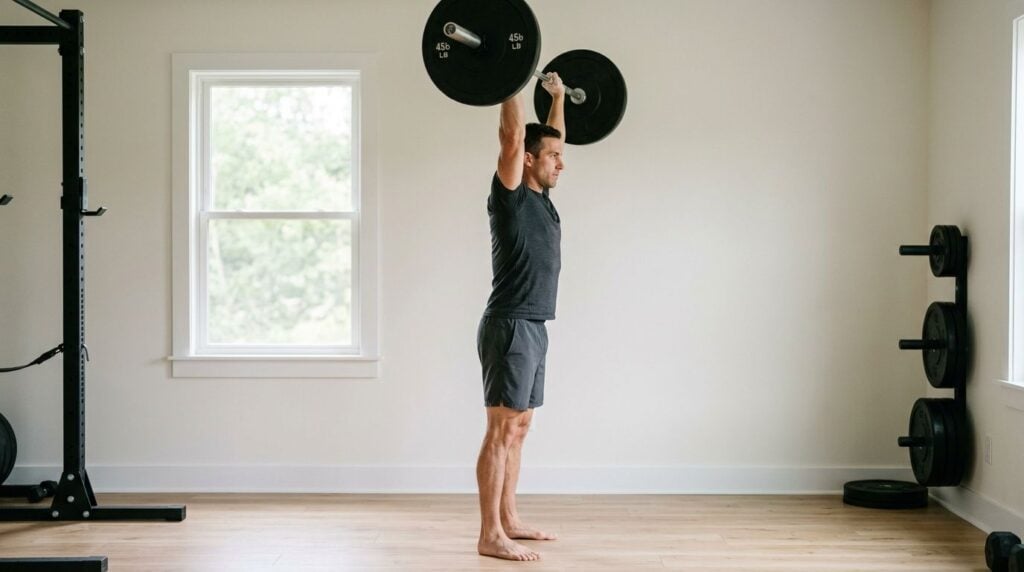
If you only keep one heavy shoulder movement in your program, make it the overhead press. It builds the front delts, challenges the side delts, and forces your trunk to stabilize the load so your body works as one unit.
This is also one of the easiest lifts to do badly. Many lifters start too heavy, lean back, and turn the rep into a sloppy incline press. That builds compensation, not strong shoulders.
How to make it work
Start with the bar or light dumbbells and own the path first. Press up in a straight line, keep the ribcage down, and brace your abs before the weight leaves shoulder height.
A practical setup works like this:
- Grip with intent: Place hands just outside shoulder width so your forearms stay vertical.
- Brace before each rep: Tight abs and glutes protect your lower back.
- Finish overhead: The weight should end above you, not drifting out in front.
- Lower under control: Don’t drop back to the start and hope your shoulders tolerate it.
Practical rule: If you have to lean back hard to finish the rep, the weight is too heavy.
For many home lifters, dumbbells are the better version because the shoulder joint can move more naturally. If you don’t own a bench yet, these home alternatives for a gym bench make pressing variations easier to set up in a small space.
A real-world example. If you train in the garage before work, overhead press gives you more return than chasing five shoulder isolation drills. A few crisp sets, followed by one side-delt move and one rear-delt move, gets the job done fast.
2. Lateral Raises
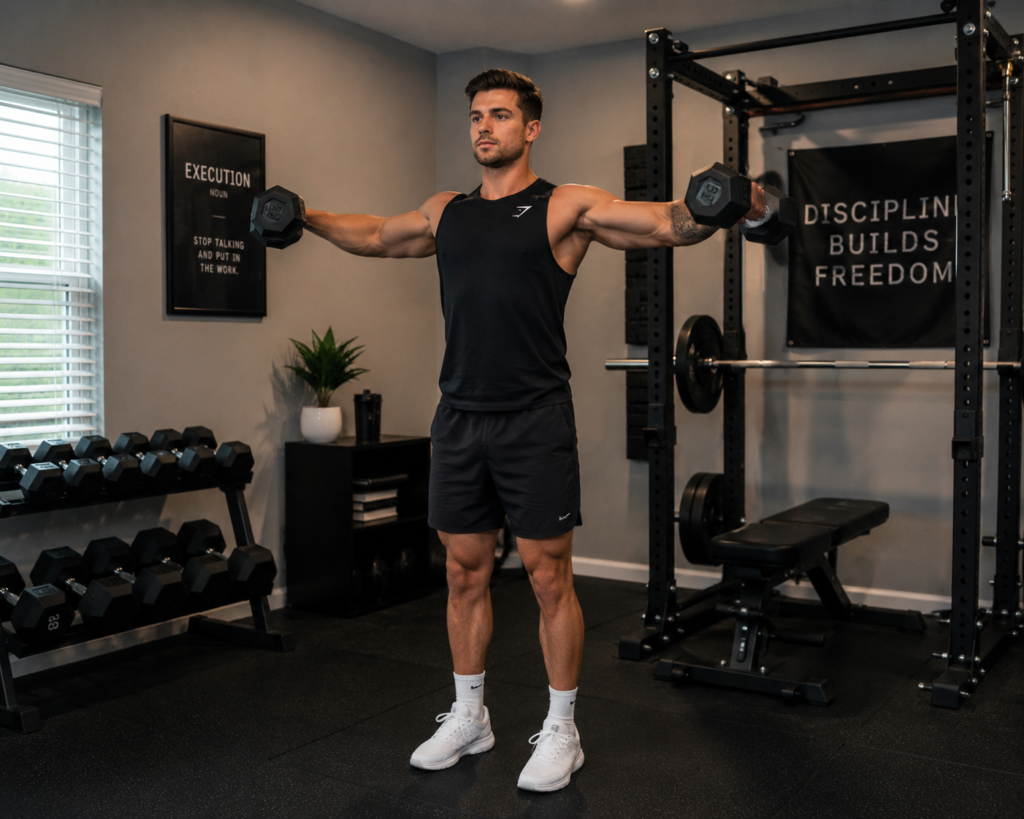
Want shoulders that look wider without turning every session into a long bodybuilding workout? Lateral raises earn their place because they target the side delt directly, which pressing alone often misses.
This is also one of the easiest shoulder exercises to butcher. A lot of lifters go too heavy, swing the dumbells up, and shrug hard at the top. That shifts tension into the traps and neck, which is why the exercise feels irritating instead of productive.
Form that actually hits the side delt
Use a weight you can control for the full rep. If the last few inches only happen because your torso jerks, the set stopped being useful.
Keep these cues in mind:
- Soft elbows: Keep a slight bend and hold it.
- Raise out, not forward: Drifting into the front plane turns it into more front-delt work.
- Stop around shoulder height: Higher usually adds traps, not better delt tension.
- Lead with the elbows: That helps keep the dumbbells from dominating the movement.
- Lower slowly: The eccentric is where a lot of the training value sits.
For shoulder health, this exercise fits best as part of a balanced system. Press for overall strength, raise laterally for side-delt growth, and pair it with rear-delt or upper-back work so the shoulder stays strong from every angle.
If dumbbells bother your joints, use cables or bands. Cables keep tension more consistent. Bands are easier to set up at home and work well for higher reps. Dumbbells are still the simplest option for most men training in a garage, spare room, or small home gym.
Try these after presses, not before. They’re also a good fit inside superset workout programs when time is tight. Pair them with rear-delt work and keep rest short.
Don’t chase load on lateral raises. Chase clean reps, controlled lowering, and side-delt tension.
3. Pull-Ups
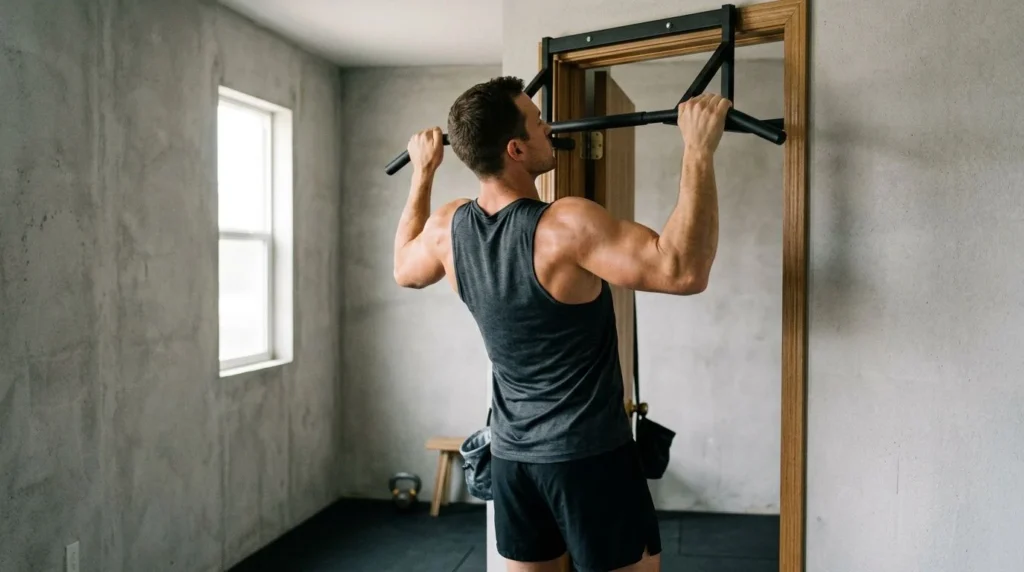
Pull-ups aren’t a pure delt isolation move, but they deserve a place here because they help build the rear side of the shoulder girdle when done well. They also keep shoulder training from becoming too press-heavy.
That matters because a lot of men train front delts hard through pressing and almost ignore the back of the shoulder. Pull-ups don’t fully replace rear-delt isolation, but they add useful pulling volume that supports shoulder balance.
How to bias the rear shoulder
Grip choice changes the feel. A wider grip usually shifts more work toward the upper back and rear shoulder area, while a closer grip tends to pull more from the lats and arms.
Use these standards:
- Start from a dead hang you can control
- Pull the chest up, not just the chin
- Avoid kicking or swinging
- Stop short of ugly reps
If bodyweight pull-ups aren’t there yet, use a band or controlled eccentrics. You can also build the right muscles with rows and reverse flyes from a back dumbbell exercises routine, then bring pull-ups back in later.
For anyone who wants a deeper breakdown of the movement pattern, this guide on what muscles do pull ups work is a useful companion.
A practical example: a doorway pull-up bar gives you a dependable pulling setup at home. That alone can help balance out all the pressing work and keep your shoulders from becoming overly front-delt dominant.
4. Reverse Pec Deck
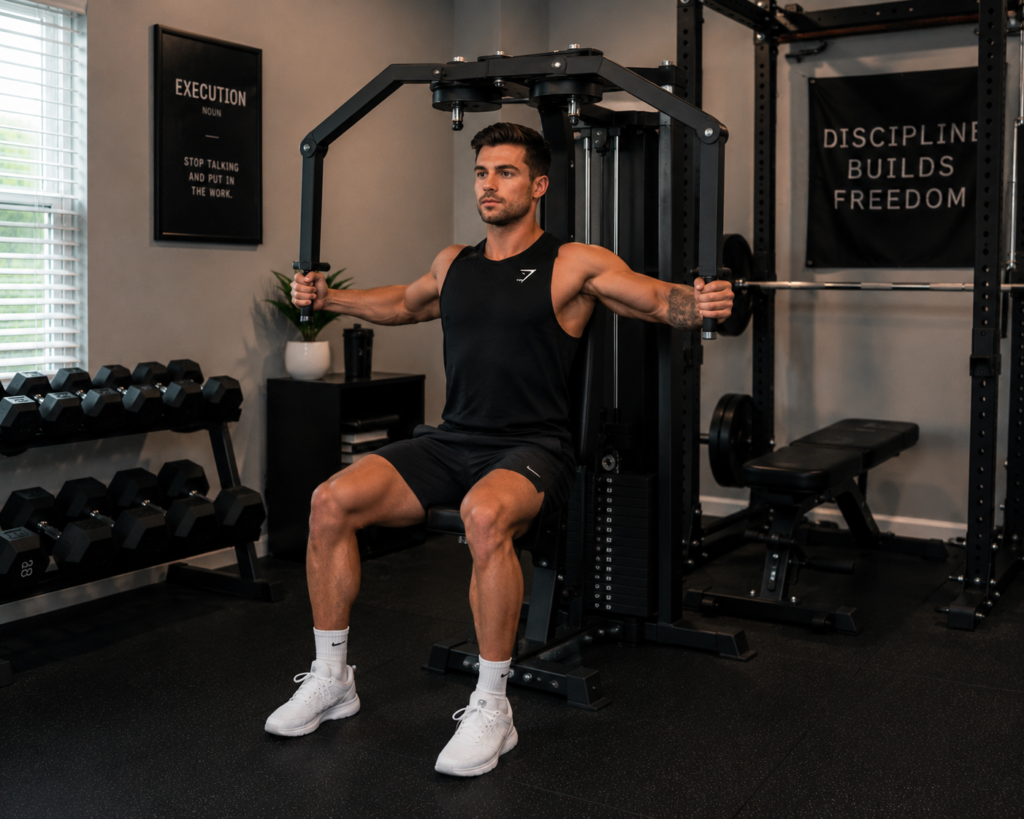
The reverse pec deck is one of the cleanest ways to train the rear delts. The machine stabilizes the body so you can focus on moving from the shoulder instead of cheating with the lower back, traps, or momentum.
That’s why this exercise works so well for lifters who can’t feel rear-delt flyes with dumbbells. The machine strips away a lot of the nonsense.
Machine setup matters
Seat height is the first check. If the handles sit too high or too low relative to your shoulders, the rep gets awkward fast.
Use this approach:
- Set shoulder height first: Handles should line up with the rear delt path.
- Keep the chest planted: Don’t rock backward for extra momentum.
- Open with the elbows: Think wide, not just back.
- Squeeze at the end: Give the rear delts a clear finish position.
This is one of the best options for desk workers who live in rounded posture. Pressing alone usually makes that worse if you don’t balance it with rear-delt work.
A good reverse pec deck rep should feel small, strict, and direct. If it feels explosive, you’re probably just moving weight.
A gym-based example makes this obvious. Put reverse pec deck after chest press or overhead work and the shoulders often feel more balanced by the end of the session, not more beat up.
5. Upright Rows
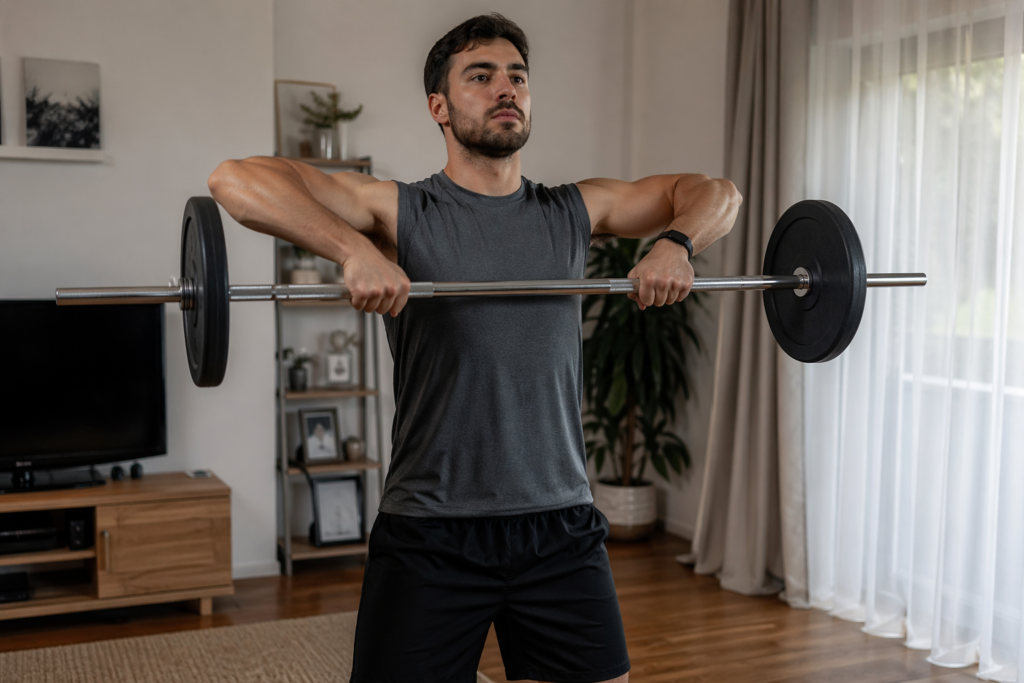
Upright rows can build the side delts and upper traps well, but they come with a bigger trade-off than most shoulder exercises. Some lifters tolerate them fine. Others feel pinching almost immediately.
That means this isn’t a must-do lift. It’s an optional one.
Use this exercise carefully
The safer version is with dumbbells, not a straight bar. Dumbbells let your hands and shoulders settle into a more natural path.
Keep the movement clean:
- Use a shoulder-width or slightly wider path
- Lead with the elbows
- Stop around chest height
- Use moderate weight only
What doesn’t work is yanking the load to chin level with wrists folded and shoulders jammed up. That version irritates a lot of people fast.
If your shoulders already complain during pressing, skip upright rows and use lateral raises plus face pulls instead. You’ll still train the side delts without forcing a movement your joints hate.
A real-world example. In a crowded commercial gym, upright rows look productive because the weight moves a lot. In practice, many lifters get better shoulder results by dropping the load, shortening the range, or replacing the exercise entirely.
6. Face Pulls
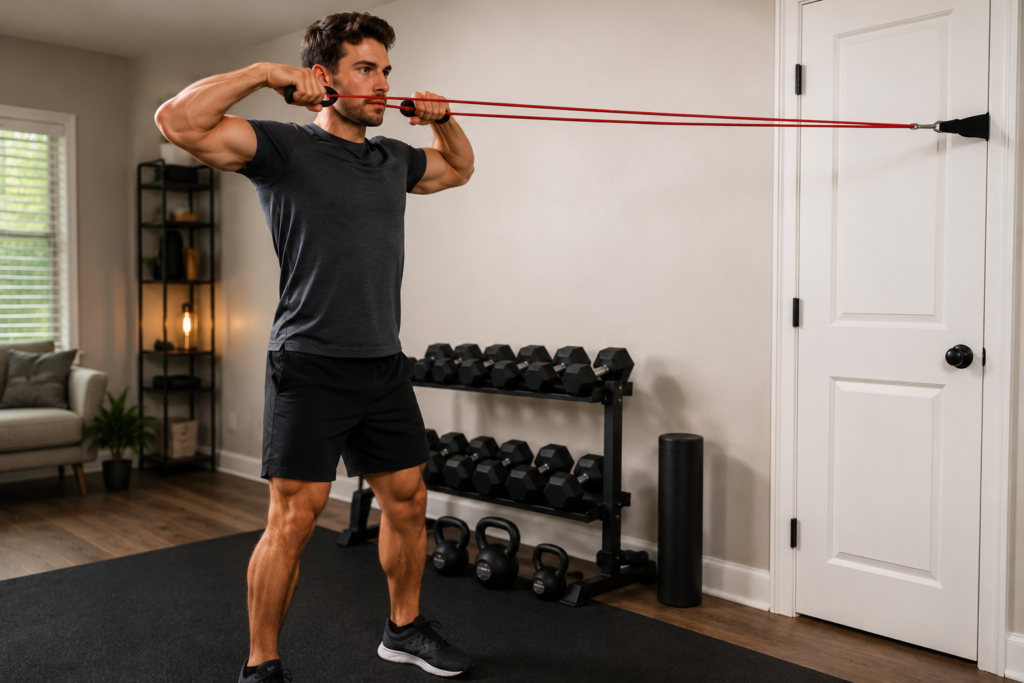
Face pulls are one of the best “keep your shoulders healthy while getting stronger” movements you can do. They train the rear delts, upper back, and the small stabilizers that help the shoulder sit and move better.
They’re also one of the most butchered exercises in the gym. People set the pulley wrong, pull to the chest, and turn the whole thing into a bad row.
Best use in a real program
Set the cable or band around face height. Pull toward the eyes or upper nose area with the elbows high, and let the hands separate as you finish.
For better reps, remember this:
- Use light resistance: This isn’t a max-effort movement.
- Keep tension the whole time: Don’t let the band or cable go slack.
- Rotate slightly at the end: That usually helps the rear delt and upper back finish the rep.
- Program it often: Face pulls work well as warm-up, filler, or finisher.
This is especially useful if your day includes laptop time, driving, or long phone use. Face pulls won’t magically fix posture, but they do give the rear shoulder more of the work it often misses.
A simple real-life setup is a resistance band anchored to a rack, doorway, or sturdy post in the garage. That’s enough to keep this movement in your week without needing a cable stack.
7. Dumbbell Shoulder Press
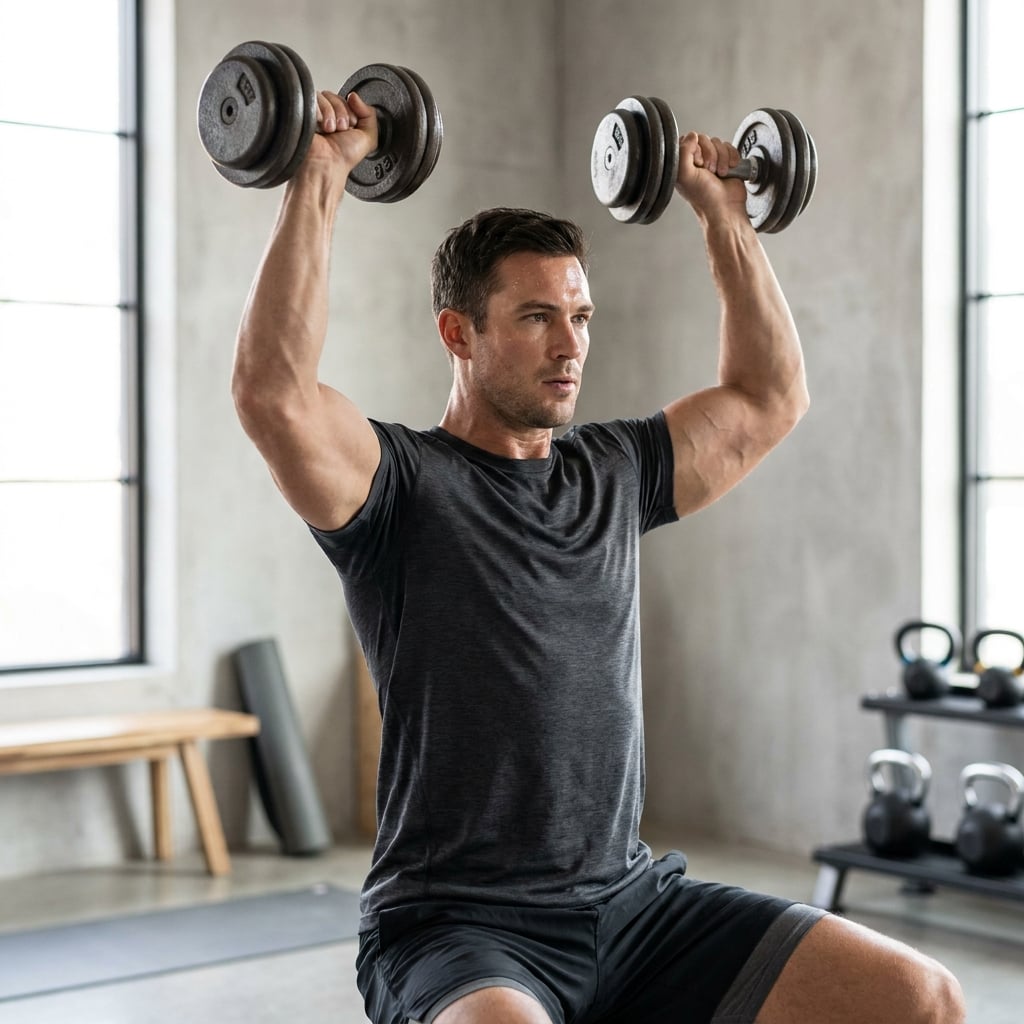
Want a shoulder press that builds size and strength without asking for a full rack setup? The dumbbell shoulder press earns its place because it trains the delts hard, exposes weak links, and works in almost any home gym.
Using one dumbbell at a time changes the lift in a useful way. The pressing arm drives overhead while the torso has to resist twisting, side-bending, and sloppy shifting. That makes this more than a delt exercise. It also trains control through the trunk and upper back, which matters if your goal is strong shoulders that stay healthy under real training loads.
It is also a good diagnostic tool. If one side locks out cleanly and the other drifts forward, shakes, or forces you to lean, do not ignore it. That is usually a sign to clean up shoulder position, core tension, or side-to-side strength before piling on more weight.
How to get more from it
Run these cues on every set:
- Brace before the press: Set the ribs down and squeeze the handle hard.
- Press in the scapular plane: Let the elbow sit slightly in front of the body instead of flaring straight out.
- Finish overhead, not forward: The biceps should end close to the ear.
- Lower under control: The eccentric is where a lot of lifters lose shoulder position.
- Stop short of ugly reps: If you have to arch hard or chase the dumbbell, the set is done.
The biggest trade-off is load. You will not move as much total weight as you can with a barbell overhead press, but you get more freedom at the shoulder and a clearer look at left-to-right imbalances. For many men training around cranky shoulders, limited equipment, or time, that trade is worth it.
A simple way to use it is 3 to 4 sets of 6 to 10 reps early in the workout, after your main warm-up and before smaller isolation work. If overhead pressing bothers your shoulder, try a neutral grip, press from a seated position with back support, or work in a half-kneeling stance to keep the rib cage and low back under control.
This variation also fits naturally beside rows, curls, and carries in a compact arms workout with dumbbells. If you are building shoulders with limited time, this is one of the presses that gives you strength, muscle, and useful feedback at the same time.
8. Band Pull-Aparts
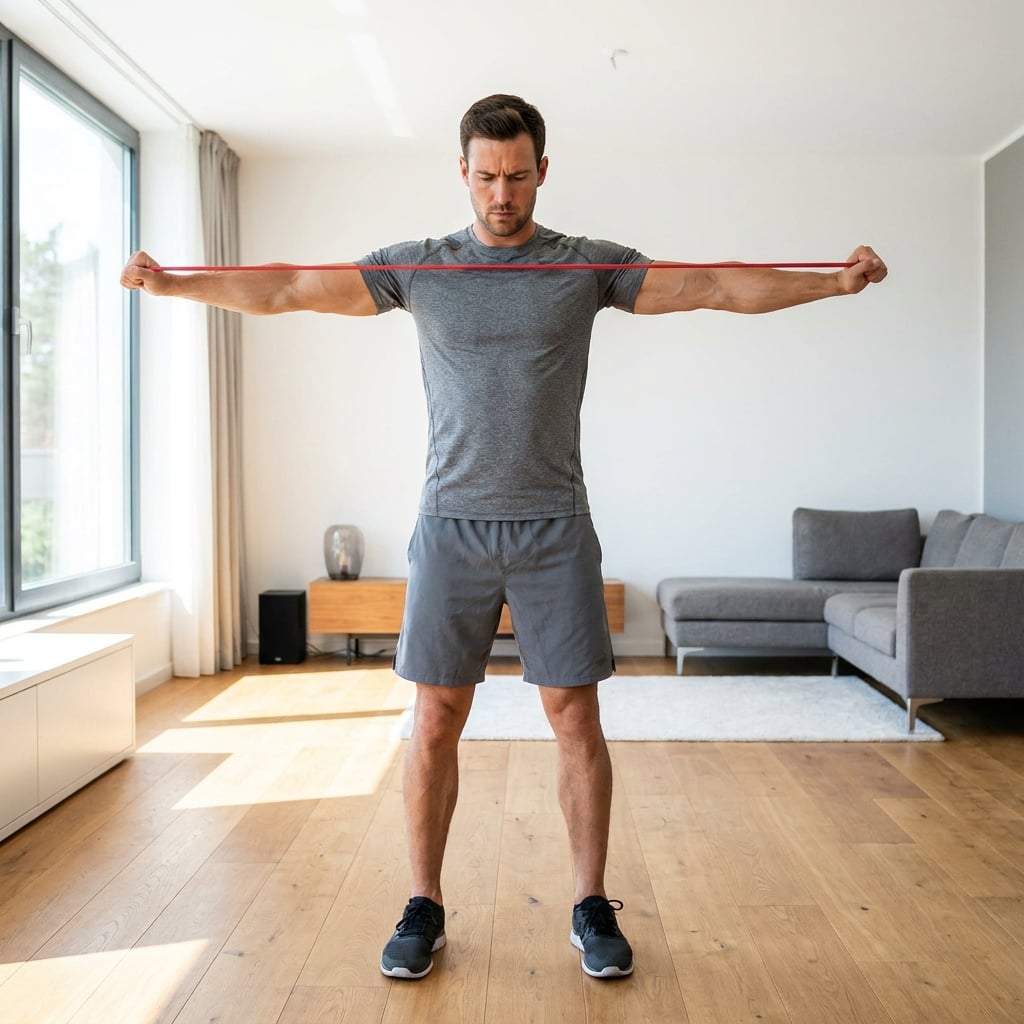
Band pull-aparts look too easy to matter. That’s exactly why many lifters skip them. That’s also a mistake.
This move trains the rear delts and upper back with almost no setup, almost no space, and very little joint stress. It works well as prep, recovery work, or extra weekly rear-delt volume.
Simple but worth doing
Hold the band at chest or shoulder height and pull it apart without shrugging. Control both directions.
A few ways to make it useful:
- Use smooth reps: Don’t snap the band open.
- Keep the ribs down: Avoid turning it into a low-back movement.
- Change hand spacing: Wider or narrower grips change the feel.
- Use it often: This is one of the few shoulder drills many people can recover from easily.
8-Exercise Deltoid Comparison
| Exercise | 🔄 Complexity | ⚡ Resources & Efficiency | ⭐📊 Expected outcomes | 💡 Ideal use cases | Key advantages |
|---|---|---|---|---|---|
| Overhead Press (Strict Press) | Moderate, technical cues, shoulder mobility, core bracing | Barbell or dumbbells; low equipment; time-efficient sets | ⭐⭐⭐⭐⭐ Builds overall shoulder strength, deltoid development, functional overhead power | Compound strength sessions, posture improvement, short home workouts | Compound, scalable, high functional carryover |
| Lateral Raises | Low, isolation but easy to use momentum incorrectly | Dumbbells or bands; minimal space; fast to perform | ⭐⭐⭐⭐ Hypertrophy of medial deltoid; shoulder width emphasis | Finisher for width, accessory work in home routines | Targets medial delt, joint-friendly, space-efficient |
| Pull-Ups (Posterior Deltoid Focus) | High, requires relative strength and progressions | Pull-up bar (low cost); needs installation; scalable with bands | ⭐⭐⭐⭐⭐ Functional pulling strength; posterior delts and back development | Calisthenics, functional strength, minimal-equipment setups | Bodyweight, highly functional, progressive challenge |
| Reverse Pec Deck (Machine) | Low, machine-guided, form easier to maintain | Reverse pec deck machine; gym-based; not travel-friendly | ⭐⭐⭐⭐ Precise posterior delt isolation; posture correction | Rehab, gym hypertrophy, correcting desk-job posture | Excellent isolation, low back stress, beginner-friendly |
| Upright Rows | Moderate, technique-sensitive; impingement risk if poor form | Barbell or dumbbells; minimal equipment; efficient movement | ⭐⭐⭐⭐ Builds shoulder thickness and traps; moderate risk | Short home sessions for width/thickness; experienced lifters | Time-efficient compound, develops width and traps |
| Face Pulls | Low, simple but requires correct elbow position | Resistance band or cable; very low cost; quick sets | ⭐⭐⭐⭐⭐ Improves shoulder health, posterior delts, scapular stability | Warm-up, prehab, desk-worker posture routines | High prehab value, low risk, inexpensive |
| Dumbbell Shoulder Press (Single-Arm) | Moderate, unilateral stability and anti-rotation demands | Single adjustable dumbbell; minimal space; slightly longer sets | ⭐⭐⭐⭐ Builds unilateral shoulder strength and core stability | Busy schedules, imbalance correction, functional carry tasks | Corrects imbalances, increases core stability, portable |
| Band Pull-Aparts | Very low, extremely simple to perform correctly | Loop band ($5–20); no setup; ultra-portable and quick | ⭐⭐⭐ Posterior activation, shoulder health, endurance | Travel, warm-ups, daily posture work, desk breaks | Cheapest, portable, safe for frequent use |
Deltoid Exercises Workout Routine
A shoulder routine doesn’t need to be complicated. It needs enough pressing, enough lateral work, and enough rear-delt volume to keep the shoulders growing without getting cranky.
Use 3 to 4 sets per exercise, 8 to 12 reps for the main work, and rest 60 to 90 seconds between sets. For high-rep rear-delt work like face pulls or band pull-aparts, stay controlled and stop before form breaks.
Simple weekly plan
Workout A
- Overhead press
- Lateral raises
- Face pulls
- Band pull-aparts
Workout B
- Single-arm dumbbell shoulder press
- Reverse pec deck
- Upright rows or rear delt fly
- Pull-ups
A practical approach:
- Train shoulders once or twice weekly: Once can work. Twice often works better if recovery is solid.
- Start with the hardest lift: Press first while you’re fresh.
- Save isolation work for later: Side and rear delts respond well after compounds.
- Leave a little in reserve: Grinding every set usually beats up the shoulders before it builds them.
If time is tight, cut it to three moves. Press, lateral raise, rear-delt work. That’s the core.
Benefits of Deltoid Exercises
Deltoid exercises do more than make the shoulders look bigger. Done well, they improve how the upper body performs and holds up.
- Builds shoulder size and width: Side-delt and rear-delt work adds shape that pressing alone usually misses.
- Improves upper body strength: Strong delts support pressing, carrying, and overhead tasks.
- Enhances posture: Rear-delt training helps balance all the pressing and forward-reaching most men do.
- Supports overall athletic performance: Better shoulder strength and control help with throwing, grappling, pushing, pulling, and daily labor.
There’s also a practical health angle. Balanced shoulders usually tolerate training better than shoulders built only on benching and front-delt overload.
Who Should Do Deltoid Exercises
Deltoid exercises belong in most strength programs.
- Beginners: Learn basic pressing and isolation patterns early.
- Intermediate lifters: Use them to bring up weak areas and improve shoulder shape.
- Gym users: Machines, dumbbells, cables, and barbells all offer good options.
- Men focused on aesthetics and strength: Shoulder development changes how the whole upper body looks.
They also fit men with limited time. A focused shoulder session doesn’t require a huge equipment setup or a long workout block.
Pros and Cons
Every good shoulder plan has trade-offs. Here’s the honest version.
Pros
- Effective for shoulder growth: Direct delt work fills gaps compound lifts often miss.
- Improves strength: Pressing and raising build better upper-body capacity.
- Versatile exercises: You can train shoulders with barbells, dumbbells, bands, cables, or bodyweight.
- Works all shoulder heads: Good programming covers front, side, and rear delts.
Cons
- Requires proper form: Small technique errors can shift tension away from the delt fast.
- Risk of overtraining shoulders: Pressing, chest work, and shoulder isolation can pile up quickly.
- Needs consistency for results: A random shoulder day now and then won’t do much.
The biggest mistake is volume creep. Too many men add shoulder work on top of already high pressing volume and then blame the exercise when the joint gets irritated.
How Fast Can You See Results from Deltoid Exercises
You can usually feel shoulder training working before you see big visual changes. Early improvements often show up as better control, more stable pressing, and a stronger muscle connection in side and rear-delt work.
Visible changes in shoulder shape take longer. If your nutrition, sleep, and training consistency are in place, most men notice gradual improvement over the following weeks and months, not overnight.
Be realistic:
- Strength changes come first
- Muscle shape takes patience
- Rear delts often lag if you don’t train them directly
- Consistency beats variety for most lifters
If you keep changing exercises every week, progress gets harder to track. Pick a few lifts, do them well, and give them time.
Best Equipment for Deltoid Exercises
What equipment gives you the most shoulder training value without turning your house into a commercial gym?
Start with adjustable dumbbells. They cover the biggest share of useful delt work, including overhead presses, lateral raises, rear-delt raises, and shoulder-friendly single-arm variations. If you train at home and want one purchase that carries the most workload, this is it.
Resistance bands come next. They are cheap, easy to store, and especially useful for face pulls, pull-aparts, warm-ups, and higher-rep prehab work. Bands do not replace free weights for strength, but they do fill gaps that many home setups miss.
A doorway pull-up bar helps if you want more than isolated shoulder work. Pull-ups build upper-back strength that supports healthier pressing mechanics and better shoulder balance over time. An adjustable bench, or any stable setup that lets you support your chest or sit upright, also makes rear-delt work cleaner and harder to cheat.
Alpha Dad Mode has practical home training ideas and small-space workout content if you want gear-friendly ways to build strong, healthy shoulders without a full gym.
FAQs
What are deltoid exercises
Deltoid exercises target the front, side, and rear shoulder muscles. They include presses, raises, flyes, and pulling variations.
How often should you train shoulders
Most men do well training shoulders once or twice per week. The right frequency depends on how much pressing and upper-body work you already do.
Can beginners do these exercises
Yes. Beginners should start with simple versions like dumbbell presses, lateral raises, band pull-aparts, and light face pulls.
What weight should you use
Use a weight you can control with clean form for the full rep range. If you have to swing, shrug, or lean to finish reps, go lighter.
Your Blueprint for Shoulder Strength
Want shoulders that look good, press well, and stay pain-free? Train the delts as a system, not as a vanity muscle.
That means balancing all three heads across the week, matching exercise choice to your equipment, and treating shoulder health work as part of training, not as an afterthought. Presses build strength. Lateral raise variations build width. Rear-delt and upper-back work help keep the joint centered and your posture from drifting forward under too much pressing volume.
Execution decides whether these exercises help or beat up your joints. Strict reps with a controllable load usually outperform sloppy heavier sets, especially on raises, upright rows, and other movements where ego tends to take over. If progress stalls or your shoulders feel irritated, clean up the reps before you add more sets.
Home training works fine. A pair of dumbbells, a few bands, and a pull-up bar cover a lot. In a commercial gym, cables and machines make it easier to train side and rear delts without piling on more pressing fatigue. Use the setup you have, then fill the gaps intelligently.
Recovery matters here because shoulders already get work from benching, rows, carries, push-ups, dips, and arm training. If soreness lingers or your joints feel beat up, trim the extra isolation sets and keep the highest-value lifts.
Pain changes the plan. Sharp pain, pinching, or a sudden loss of range of motion is not something to push through. If shoulder discomfort is already limiting you, this guide on Effective Shoulder Pain Relief Exercises may help you sort out what to reduce and what to rebuild.
A practical shoulder plan is simple. Pick three to five movements that cover front, side, and rear delts. Run them consistently for a few months. Add load slowly, keep your technique honest, and give prehab work the same respect you give presses.
If you want more practical training ideas, home gym solutions, and straightforward men’s fitness content, check out Alpha Dad Mode. It covers no-fluff guidance built for real life.
