


Wondering why so many explanations of the pronebone position jump straight past comfort, body mechanics, and communication? That’s usually the missing piece. Those searching this term want a simple, neutral explanation they can use.
The pronebone position is a body alignment where one partner lies face down while the other lines up from behind. People look it up because they’re curious about how it works, whether it feels comfortable, and how to make it easier on the back, hips, and shoulders. The short answer is simple: it’s a low, close-contact position that can feel stable and straightforward when both people adjust for support and talk openly.
Table of Contents
- What Is the Pronebone Position?
- How the Pronebone Position Works
- Key Benefits of the Pronebone Position
- Tips for Optimal Comfort and Positioning
- Who May Find This Position Useful
- Pros and Cons of the Pronebone Position
- Is the Pronebone Position Right for You?
- Products That Can Improve Comfort
- Frequently Asked Questions
What Is the Pronebone Position?
The pronebone position is a simple rear-entry variation where the receiving partner lies flat on their stomach and the other partner aligns from behind. The key idea is body position, not complexity. One person stays low and supported by the bed, while the other adjusts angle and weight for comfort.
That’s why many people describe it as more grounded than other rear-entry setups. There’s less need for balancing, holding a raised posture, or moving into a complicated shape. For some couples, that makes it easier to try without a lot of setup.
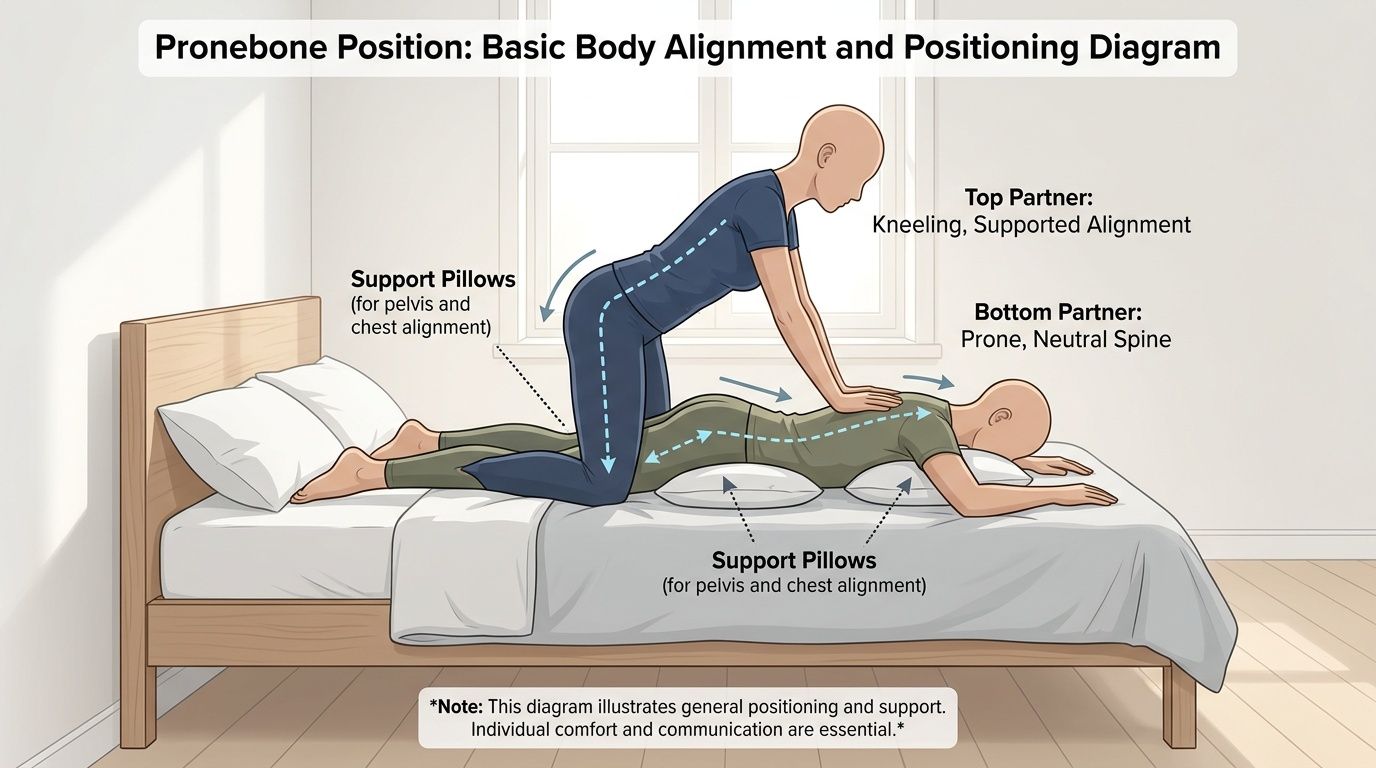
The position can be adjusted in small ways. A pillow under the hips, a slight turn of the chest, or a wider leg position can all change how it feels. Those small changes matter more than people expect.
Practical rule: If a position only works when both people tense up, it probably needs better support, not more effort.
How the Pronebone Position Works
The main reason this position feels different is the body angle. When someone is lying face down, the pelvis and lower back sit differently than they do in upright or kneeling positions. That changes pressure, depth, and how much support comes from the mattress.
Basic Positioning
In plain terms, this is a low-to-the-bed position. The receiving partner stays supported by the surface underneath, and the other partner lines up from behind while adjusting height and pace.
Because the body is flatter, it often feels more stable than positions that require both people to hold themselves up. That stability can make the experience feel calmer and more controlled.
Why It’s Used
Some people choose it because the angle can feel more direct. A summary on prone position mechanics notes that the prone setup can narrow the introitus by up to 30 to 50 percent compared with missionary and that the flattened lumbar curve and anterior pelvic tilt can increase G-spot stimulation by 40 percent through pressure on the anterior vaginal wall.
Those numbers don’t mean the position is automatically better for everyone. They do help explain why some couples notice a different sensation. The body is meeting the surface in a different way, which changes contact and alignment.
A second reason people use it is simplicity. There are fewer moving parts, and small adjustments can have a big effect.
- Lower posture: The bed does more of the supporting.
- Simple alignment: Many couples find it easier to set up than positions that require flexibility.
- Controlled pace: Slowing down and staying aligned is often easier when the body is stable.
Key Benefits of the Pronebone Position
This position appeals to couples who want something straightforward, close, and easy to modify. Its strongest benefits usually come from comfort and stability rather than novelty alone.
- Simple setup: It doesn’t require advanced flexibility or a complicated transition.
- Stable base: Because one partner is supported by the bed, there’s often less wobbling and less need to brace with the arms.
- Close body contact: The overall shape encourages full-body closeness, which some couples prefer over more separated positions.
- Minimal adjustment: A pillow, small hip shift, or slower pace can change the feel without resetting everything.
- Works well for low-energy moments: If a couple wants connection without a high-effort setup, this can be a practical choice.
- Easy starting point for discussion: If you’re already talking about variety and comfort, guides on how to spice up your sex life often work best when the change is simple enough to test without pressure.
One overlooked benefit is predictability. When a position is easier to hold, people can focus more on comfort cues and less on trying to keep their balance.
Tips for Optimal Comfort and Positioning
Comfort doesn’t happen by accident here. It comes from communication, support, and a willingness to make small changes early instead of pushing through discomfort.
Start with communication
This position can feel physically close while still leaving room for misunderstanding if nobody says what they need. That matters even more for long-term couples who may assume they already know each other’s preferences.
Ask simple questions before and during. “Is this angle okay?” works better than waiting until someone is uncomfortable. If one partner feels emotionally exposed, say that directly and slow the pace down.
Some couples need more than physical comfort. They need reassurance, clear consent, and a way to pause without awkwardness.
That emotional side is easy to ignore, but it affects relaxation. Couples who are navigating recovery, body changes, or stress may also find it helpful to read about timing and comfort questions in everyday intimacy topics such as sex after laser hair removal.
Use support under the body
Support changes everything in this position. A firm pillow or wedge under the hips can improve alignment, reduce pressure, and make the setup feel less flat and strained.

Try these practical adjustments:
- Add a pillow under the hips: This can reduce the feeling of compression and help the pelvis sit more comfortably.
- Support the chest or head: If the neck feels tight, a small cushion can help.
- Change leg spacing: A slightly wider or narrower stance can change pressure quickly.
- Shift weight off the lower back: The top partner shouldn’t drop full weight onto the other person.
A good rule is to test the setup before settling into it. If shoulders, hips, or the lower back tense up right away, adjust first.
Keep safety in mind
Rear-entry positions can place more force on alignment if movement gets too aggressive. A 2024 meta-analysis on penile fracture risk found doggy-style positions were associated with significantly increased injury odds, and the paper also notes that penile fracture incidence globally spans 1.14 to 10.48 per 100,000 men, with intercourse accounting for 46 percent of cases in the data reviewed. Surgical treatment is required in 80 to 100 percent of cases according to the same review in Translational Andrology and Urology.
That sounds alarming, but the practical takeaway is simple. Don’t force alignment. Use lubrication, keep movements controlled, and stop if anything feels sharp, bent, or suddenly wrong.
- Go slower when adjusting angles
- Use enough lubrication for comfort
- Pause at the first sign of pain
- Avoid treating discomfort like something to “push through”
Who May Find This Position Useful
This position tends to suit adults who want less complexity and more support from the surface underneath them. It isn’t universal, but it does fit a few common needs very well.
- People who want a simple setup: If complicated positioning kills the mood, this one is easier to understand.
- Beginners trying a low-fuss option: It’s often easier to explain and adjust than positions with a lot of moving parts.
- Couples who value comfort over acrobatics: Stability is part of the appeal.
- Partners dealing with fatigue: A lower-energy position can feel more realistic at the end of a long day.
- People already thinking about sleep posture and support: Resources on best pillows for stomach sleepers can be surprisingly useful if face-down comfort, neck support, or chest pressure are concerns.
- Men working on better relationship habits: Broader guidance on intimacy, stress, and connection often helps more than position tips alone, especially in pieces about a healthy sex life.
It may also appeal to couples who like a calmer pace and fewer transitions. If the goal is ease, not performance, this position often makes sense.
Pros and Cons of the Pronebone Position
A balanced view helps. Some couples love this position right away, while others find they need more support or prefer something else.
Pronebone Position At a Glance
| Pros | Cons |
|---|---|
| Simple to understand | May not suit every body type |
| Minimal setup required | Limited movement for some couples |
| Can feel stable and grounded | Neck, hip, or lower back pressure can show up if alignment is off |
| Easy to adjust with pillows or wedges | Visual connection may feel reduced |
| Works well for a slower pace | Not ideal if either partner dislikes face-down pressure |
The biggest advantage is that it usually feels manageable. The biggest drawback is that “simple” doesn’t always mean “comfortable” without a few adjustments.
If a position feels awkward after a few small changes, that’s useful information. You don’t need to force a fit.
Is the Pronebone Position Right for You?
The best position is the one both people can enjoy without tension, guesswork, or strain. That means checking real-world factors, not just whether something sounds appealing in theory.
Check your back and hip comfort
This matters a lot for men with existing lower back issues, especially those who lift kids, sit for long periods, or already deal with stiffness. Existing content on this topic often misses that point, even though improper execution can worsen lower back pain, which is noted as common in 40 percent of men over 40 in the discussion at Popstar Labs.
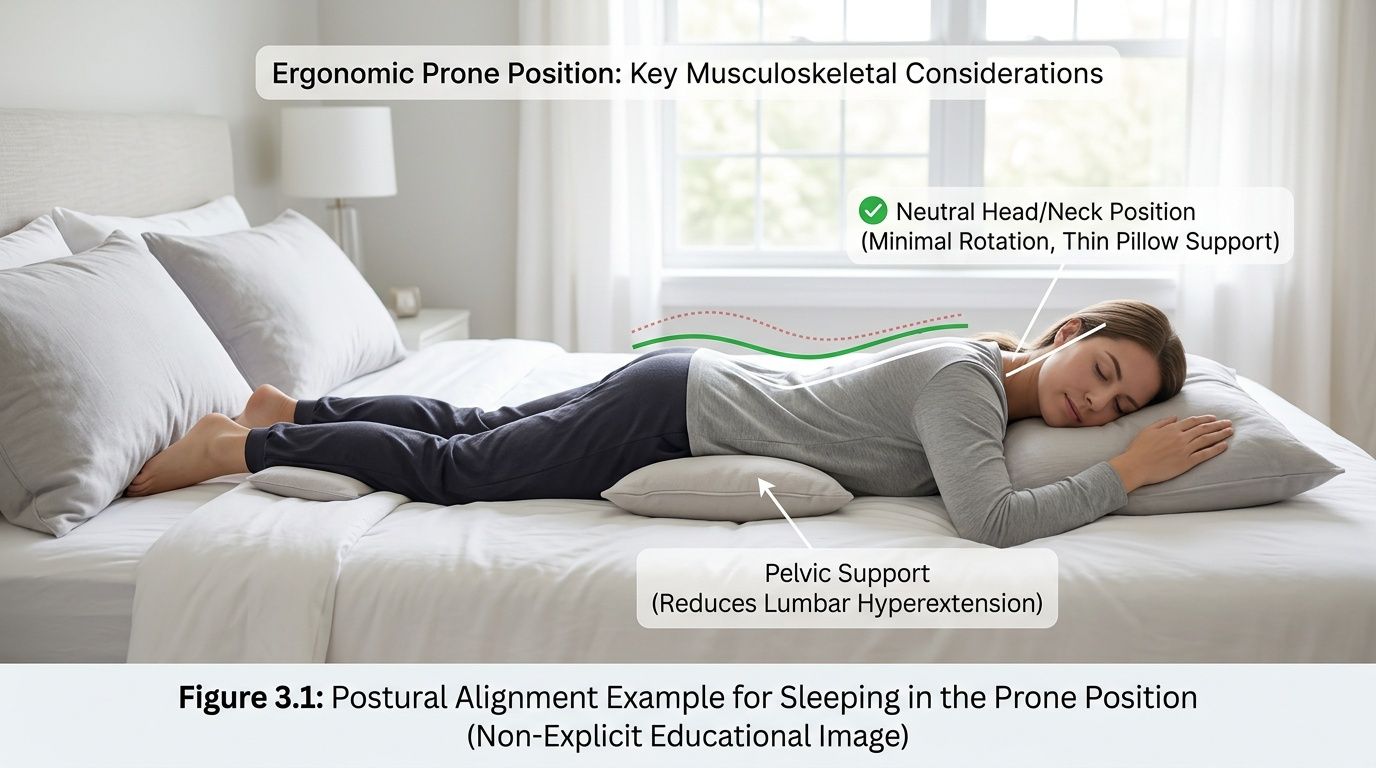
If you already know your lower back gets irritated by extension, be honest about that. Use support, keep your spine neutral, and stop if you feel compression instead of comfort. General sleep-posture resources like what is the best sleeping position for a perfect night’s sleep can also help you think more clearly about alignment, pressure points, and pillow placement.
Consider your partner’s recovery and comfort
This can matter for postpartum partners, people with hip tightness, and anyone rebuilding comfort after stress or physical change. The right question isn’t “Can we do it?” It’s “Does this feel safe, supported, and easy to stop or adjust?”
A quick self-check helps:
- Back history: Do you already feel strain in your lower back?
- Hip comfort: Does face-down positioning feel neutral or restrictive?
- Breathing and pressure: Can the receiving partner relax into the surface?
- Communication: Can either person say “pause” without hesitation?
- Emotional context: If connection has been strained, would this position feel close or distant?
Relationship tension can shape physical comfort too. If intimacy has been difficult for a while, broader reflection on issues like a sexless marriage may be more useful than focusing on technique alone.
Products That Can Improve Comfort
A few comfort-focused products can make this position much easier to adjust. The goal isn’t to buy a bunch of gear. It’s to reduce pressure and support alignment.
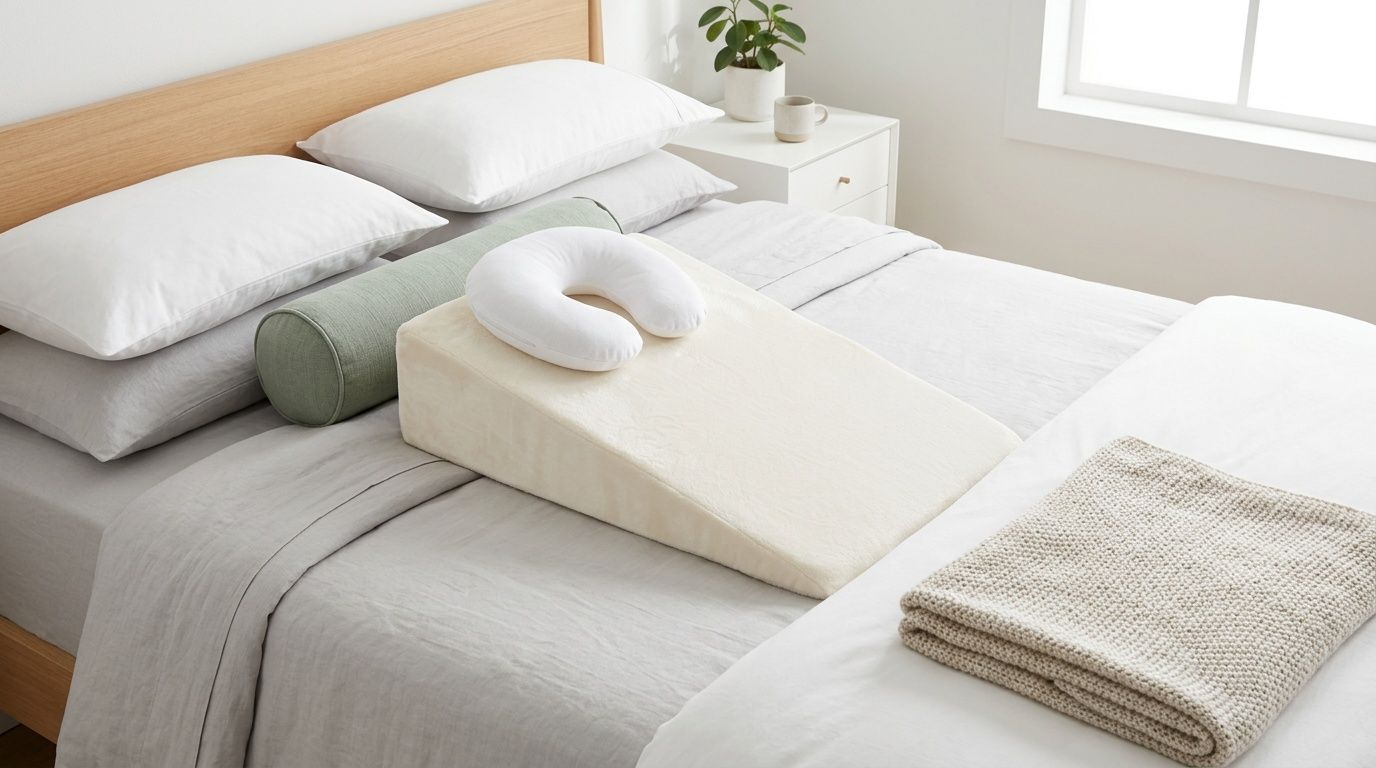
Consider these options:
- Firm bed pillows: Good for lifting the hips slightly or supporting the chest.
- Foam wedge pillows: Useful when a regular pillow collapses too much.
- Mattress toppers: Helpful if the bed feels too hard on the knees, ribs, or hips.
- Small neck cushions: A simple way to ease head and shoulder tension.
- Supportive bedding: Stable sheets and a non-slippery comfort layer help people stay aligned.
Look for support that keeps the body steady rather than sinking too far. If a pillow flattens immediately, it probably won’t help much.
Frequently Asked Questions
What is the pronebone position?
It’s a rear-entry position where the receiving partner lies on their stomach while the other partner aligns from behind. The focus is on low, supported body positioning.
Why do people use it?
People often choose it for simplicity, stability, and close body contact. Some also prefer the angle and the lower-effort setup.
Is it comfortable?
It can be, especially with pillows, a slower pace, and good communication. Without support, some people may feel pressure in the neck, hips, chest, or lower back.
Can beginners try it easily?
Yes, many beginners can try it because it doesn’t require a complicated setup. The easiest approach is to start slowly and make small adjustments early.
Does it require a lot of flexibility?
Usually not. That’s one reason it appeals to couples who want something more practical than athletic.
How is it different from other rear-entry positions?
The main difference is that the receiving partner stays face down instead of holding a raised or kneeling posture. That changes support, movement, and overall feel.
What if the bed setup makes it uncomfortable?
Change the surface or the support before assuming the position is the problem. Some people do better with firmer mattresses, wedge pillows, or even bedroom setups that allow more elevation, similar to adjustable bases with Zero Gravity features that reduce pressure in other face-up or reclined resting positions.
What should you say if something feels off?
Keep it direct. “Slower.” “More support.” “That angle doesn’t feel good.” Clear language is better than trying to endure discomfort politely.
If you want practical, honest guidance on men’s health, relationships, and real-life family leadership, visit alphadadmode.com. It’s a strong resource for men who want useful advice they can apply.
