


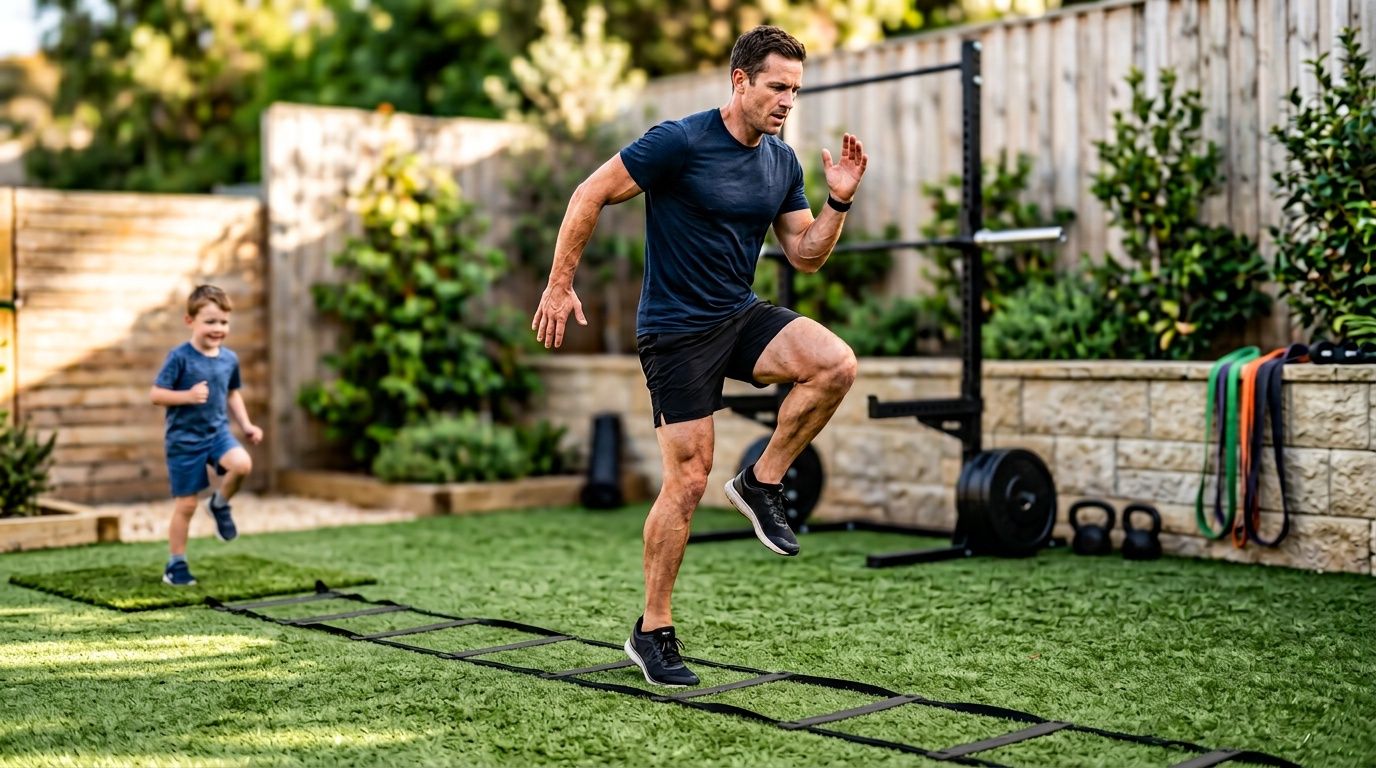
If you want to improve your speed and coordination, the agility ladder is one of the simplest tools to get started. It's a staple for a reason—from pro athletes to fitness enthusiasts—because it delivers real, noticeable gains in footwork, balance, and reaction time. This guide delivers simple drills for quick results.
How to Use an Agility Ladder for Fast Results
- Use an agility ladder to train fast footwork and coordination.
- Start with basic drills like one-step and two-step patterns.
- Focus on rhythm, balance, and control.
- Train 10–15 minutes regularly for best results.
- Combine with strength and sprint training for improvement.
What Is an Agility Ladder and How It Works
An agility ladder is a simple training tool designed to improve foot speed, coordination, and overall agility. It is used in various sports and fitness routines to teach the body how to move quickly and efficiently through precise footwork patterns.
Benefits of Using an Agility Ladder
- Faster Footwork: Trains your feet to move quickly and with precision.
- Better Coordination: Improves the mind-body connection for smoother movement.
- Improved Balance: Teaches you to maintain your center of gravity while moving.
- Increased Reaction Time: Sharpens your ability to change direction on demand.
Best Agility Ladder Drills to Build Speed
Here are the core agility training exercises to master. Keep each drill short and focus on quality over speed.
One Step Drill
This is the most basic drill. Run through the ladder, placing one foot in each box as quickly as you can. Focus on finding a smooth rhythm and staying light on your feet.
Two Step Drill
Place two feet inside each box before moving to the next. This drill is essential for developing the quick, choppy steps needed for rapid acceleration and improved coordination.
Lateral Shuffle
Move sideways down the ladder, placing both feet in each square without crossing them. This builds crucial side-to-side quickness and agility for multi-directional sports.
In & Out Drill
Step one foot in, then the second foot in, then step the first foot out to the side of the next box. This pattern improves dynamic control as you move forwards and laterally at the same time.
High Knees Drill
Perform the one-step drill, but drive your knees up toward your chest with each step. This adds intensity and power, boosting your speed and engaging your core.
Agility Ladder Workout Plan (Beginner to Advanced)
Progress your training with this simple plan.
- Beginner: Perform basic drills for 10 minutes, focusing on accuracy over speed. Do 2-3 sets of One Step and Two Step drills with plenty of rest.
- Intermediate: Increase your speed and add variations like the Lateral Shuffle and In & Out Drill. Your workouts should feel more intense.
- Advanced: Combine drills with sprints. For example, perform an In & Out drill and immediately sprint 10 yards. This builds game-ready speed.
A popular training tool worth trying is the agility ladder, especially when combined with other exercises.
Best Agility Ladder Equipment
Here are a few popular options commonly used in training.
SKLZ Speed and Agility Ladder
This is a good option for beginners and pros alike. It has durable, flat rungs that stay in place, so you can focus on your footwork.
Who it’s for: Anyone who wants a reliable, no-fuss ladder.
View details
Yes4All Agility Ladder
This ladder features adjustable rungs, allowing you to customize the difficulty. It’s a great choice for those who want to progress their training over time.
Who it’s for: Beginners and intermediate users looking for versatility.
Check price
GHB Pro Agility Ladder Kit
Often sold as a kit, this package includes cones and sometimes resistance bands. It’s perfect for creating a more complete training setup at home.
Who it’s for: Athletes or families who want an all-in-one training solution.
Check price
Optional Add-Ons to Consider:
- Cones: Essential for creating change-of-direction drills.
- Resistance Bands: Add a band around your ankles to build hip strength and stability.
How to Use an Agility Ladder Correctly
- Stay light on your feet: Your heels should barely touch the ground.
- Keep your head up: Avoid looking down at your feet to build better awareness.
- Focus on accuracy first, then speed: Master the movement pattern before you rush.
- Maintain proper posture: Keep your knees bent and your chest up in an athletic stance.
Common Mistakes to Avoid
- Going too fast too early: This builds sloppy habits and reduces the drill's effectiveness.
- Looking down constantly: This trains poor spatial awareness for real-world sports.
- Poor foot placement: Aim for clean, precise steps in the center of each box.
- Skipping warm-up: Always warm up to prevent injury and prepare your muscles for explosive work.
Who Should Use an Agility Ladder?
- Athletes: A must-have for sports like soccer, basketball, football, and tennis.
- Beginners: An excellent tool for learning basic coordination and footwork.
- Fitness Enthusiasts: A fun way to add cardio and skill work to any routine.
- Kids: A great way to develop coordination, balance, and athleticism in a fun way.
FAQs
Does an agility ladder really improve speed?
Yes, it improves the foundation of speed by enhancing footwork, coordination, and reaction time. For top-end speed, combine it with sprint training.
How often should I train with an agility ladder?
Aim for 10-15 minute sessions 3-4 times per week for the best results. Consistency is more important than workout length.
Can beginners use an agility ladder?
Absolutely. It's a perfect tool for beginners. Start slowly and focus on accuracy before adding speed to your agility ladder drills for beginners.
How long should an agility workout be?
A quality agility ladder workout can be completed in just 10-15 minutes. Focus on high-quality repetitions rather than a long, exhausting session.
Is agility ladder good for weight loss?
Yes. High-intensity agility ladder workouts can elevate your heart rate, burn calories, and contribute to weight loss as part of a balanced fitness plan.
Using an agility ladder regularly can help improve your speed and coordination over time. This popular training tool is simple, effective, and easy to get started with. Consistent practice is the key to seeing results, so find a ladder that works for you and start building quicker feet today.
