

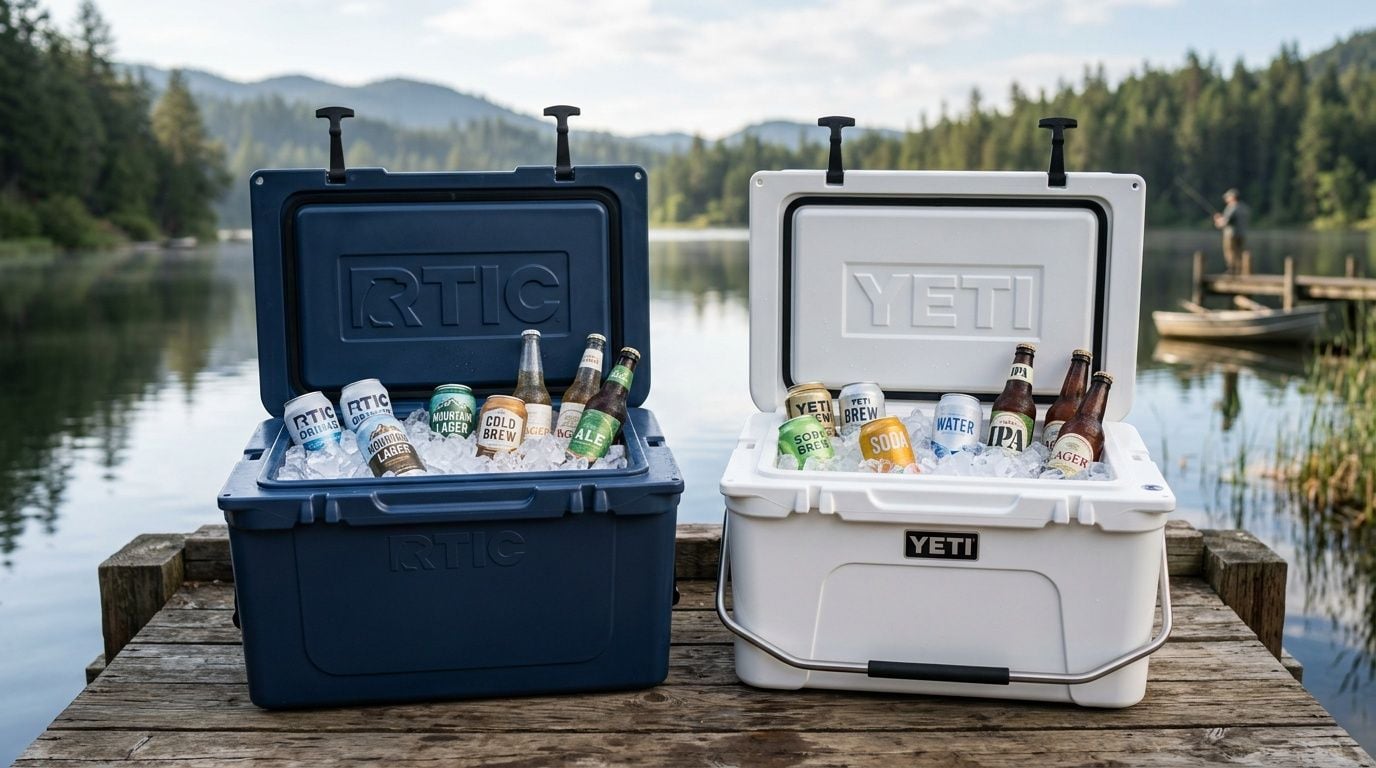
RTIC is the better buy for a lot of dads. It usually gives you more usable cooler space for the money, and that matters more on a family road trip than a logo on the lid.
The question is simple. Are you paying to keep drinks and food cold, or are you also paying for brand prestige, cleaner finish details, and the confidence that comes with a more polished product?
For a tailgate, park day, weekend campsite, or a long drive with snacks, juice boxes, and a toddler’s milk in the back, RTIC is usually the smart pick. It handles the job well and leaves more room in the budget for ice, fuel, and groceries.
YETI still has a place. If you care about tighter fit and finish, stronger long-term brand reputation, and the extra margin that can matter on hotter, longer outings, it earns its price more often than budget-minded buyers want to admit.
That is why broad advice to “just buy YETI” misses the point. For plenty of real-world use, RTIC gets you close enough in performance that the better value is hard to ignore.
Quick Answer
If you want the best value, buy RTIC. If you want the best premium experience, slightly better ice retention, and longer warranty coverage, buy YETI.
That’s the clean answer. RTIC wins for most buyers. YETI wins for buyers who care more about top-end refinement than price.
RTIC vs YETI Comparison Table
| Feature | RTIC | YETI |
|---|---|---|
| Price | Lower | Higher |
| Value | Excellent | Lower for most buyers |
| Ice retention | Strong | Slightly better in benchmark testing |
| Capacity | Often higher at comparable sizes | Often lower at comparable sizes |
| Warranty | 1-year | Longer coverage, including 5-year on some models |
| Brand feel | Functional, value-first | More premium |
| Best for | Tailgates, camping, family hauling, budget-minded buyers | Extended trips, rough use, buyers who want the premium name |
Takeaway: For those comparing rtic vs yeti, the price gap is bigger than the performance gap.
What Are RTIC and YETI
RTIC and YETI sell to two different buyers, even when the coolers look similar on paper.
YETI built its reputation as a premium outdoor brand. The company is known for hard coolers, soft coolers, drinkware, and other gear that feels polished and carries real brand weight at the campsite, boat ramp, or tailgate.
RTIC came in with a simpler pitch. Give buyers the cooler performance and storage they need, skip some of the prestige pricing, and keep the product line practical. It now sells hard coolers, soft coolers, drinkware, bags, and related outdoor gear too.
Simple definition: YETI is the premium-name option. RTIC is the value-first alternative for buyers who care more about function per dollar.
Brand positioning in plain English
This comparison matters because dads do not all use a cooler the same way.
If the job is keeping a few beers cold for an afternoon tailgate, both brands can handle it. If the job is packing milk, fruit, and snack cups for a toddler during a long summer drive, the question changes. Now price still matters, but so do trust, organization, and how confident you feel when the cooler is riding in the back all day.
YETI sells that extra sense of finish and brand confidence. RTIC sells the argument that you do not need to pay for the badge to get a cooler that does the job well.
That is the core split. YETI is often bought by people who want premium gear and are comfortable paying for it. RTIC is usually the pick for practical buyers who want strong performance without spending more than the trip calls for.
Practical rule: If your first question is, “How much useful cooler am I getting for this price?”, RTIC is probably closer to your kind of buy.
Design & Build Quality
Build quality is where the price gap starts to make sense. YETI usually feels tighter, cleaner, and more refined. RTIC feels more utilitarian. For a lot of dads, that difference matters less for a Saturday tailgate than it does for repeated family trips where the cooler gets loaded, unloaded, wiped out, and hauled around for years.
Alt text: RTIC vs YETI cooler design comparison showing build quality differences
What both brands get right
Both brands build hard coolers for real abuse. Thick insulated walls, solid latches, drain systems, and rope or molded handles are standard on the models most buyers compare. On relevant models, both also offer bear-resistant designs.
That means either brand can handle the normal punishment of camping, fishing, hunting camp, or a crowded tailgate. Tossed in the truck bed, slid across a dock, or left baking in the sun, neither is a fragile box.
Where the extra money shows up
YETI tends to win on fit and finish. The lid alignment, hardware feel, handle attachment points, and overall polish are usually a little better. You notice it when you open and close the cooler a dozen times in a day, or when you are strapping it down in the back of an SUV with kids' food packed inside and you want fewer little annoyances.
RTIC usually takes the more practical route. The construction is still heavy-duty, but the focus is clear. Hold temp, survive abuse, keep the price lower. That trade-off works well for buyers who care more about what is inside the cooler than the badge on the front.
I have found that to be the dividing line. If the cooler’s job is keeping beers cold for a few hours before kickoff, RTIC’s simpler finish is easy to live with. If the cooler is pulling family-duty on road trips, with milk, yogurt tubes, sandwich meat, and juice boxes riding in the car all day, YETI’s nicer hardware and more polished feel can inspire a little more confidence over time.
Practical differences that show up in use
RTIC strengths
- Built for hard use: It feels like gear meant to get scuffed up.
- Less cosmetic stress: Scratches and dings hurt less when you did not pay premium-brand money.
- Strong value in the shell itself: You get the features commonly used without paying extra for prestige.
YETI strengths
- Better finish quality: The details feel more sorted out.
- More polished ownership experience: Buyers who care about long-term fit, finish, and support usually notice the difference.
- Stronger brand appeal: That matters to plenty of buyers, even if they do not say it out loud.
Bottom line on design
RTIC gives you the tougher value proposition. YETI gives you the nicer object.
For plenty of households, RTIC is the smarter buy because cooler abuse is part of the plan. For buyers who use a cooler constantly, care about refinement, or want the premium brand and are willing to pay for it, YETI still has the edge.
Ice Retention & Performance
Direct answer: YETI usually holds cold longer in hard-cooler use, but RTIC stays close enough that many dads will never notice the gap on a normal weekend.
Alt text: RTIC vs YETI ice retention performance comparison in outdoor test
Ice retention gets talked about like it is the whole story. It is not. The key question is what you are trying to protect, and what happens if the cooler slips a few degrees by hour 20 or hour 30.
If the load is beer, canned soda, and burger meat for a tailgate, RTIC is usually plenty. If the load is milk for a toddler, lunch meat, yogurt, or anything you do not want riding the edge on a hot highway, YETI’s extra margin has real value.
Hard cooler performance in the real world
YETI has a measurable edge in controlled hard-cooler testing, as noted earlier in the article. That lines up with what many owners report over time. Better insulation efficiency and tighter execution tend to show up once the trip gets longer, the weather gets hotter, or lid openings get sloppy.
RTIC still performs well. For one- to two-day use, especially if you pre-chill the cooler, use enough ice, and keep it out of direct sun, the practical difference narrows fast.
That is the part buyers should focus on.
A cooler in the back of an SUV on a family road trip does not live in a lab. It gets opened at gas stations. Kids ask for snacks. Someone forgets and leaves it in the sun during soccer or a beach stop. In that kind of use, both brands can do the job, but YETI gives you more cushion for user error.
Soft coolers are closer than the brand hype suggests
Soft coolers are less about absolute endurance and more about how long they stay safely cold during active use. Carry one to the park, a sideline, or a half-day fishing trip, and the gap between RTIC and YETI often feels smaller than the branding suggests.
That does not make them equal. YETI still tends to feel more confidence-inspiring when the contents matter more than convenience. RTIC makes a stronger case when the mission is simple: keep drinks cold, keep lunch cold enough, and do it without spending premium money.
What the performance difference actually means
Choose based on the consequence of warmer contents:
Tailgate, cookout, or backyard day
RTIC is usually the smarter buy. Drinks get rotated out quickly, and the cooler does not need elite retention to succeed.Weekend camping trip
Both can work well. YETI gives you more breathing room. RTIC rewards good cooler habits and saves a meaningful chunk of money.Long car ride with toddler food and milk
YETI earns its premium faster here. Extra cold retention is not about bragging rights. It is about reducing the chance that your backup milk or snacks drift into the danger zone.Hot beach day or all-day fishing trip
YETI’s edge matters more if the cooler sits in heat for hours and gets opened often. RTIC still works, but it asks a little more from the person packing and managing it.
My take after using both is simple. YETI wins on pure performance. RTIC wins a lot of buying decisions because it gets close enough for the jobs many families and tailgaters have.
Price & Value
Direct answer: RTIC gives you more value for the money. YETI asks you to pay extra for a nicer finish, stronger brand pull, and a little more confidence when reliability is paramount.
That difference matters because "value" changes with the job.
For a dad loading up a cooler for a tailgate, RTIC is usually the easy call. It keeps drinks cold, carries a lot for the price, and you do not feel like you brought a luxury item into a muddy parking lot. For a long family drive where you need milk, yogurt pouches, and lunch meat to stay reliably cold hour after hour, YETI’s premium starts to make more sense. You are not just paying for a logo in that case. You are paying for more margin for error.
That is the essential split in rtic vs yeti. RTIC wins the budget argument. YETI wins the peace-of-mind argument.
What you are actually paying for
RTIC built its name by offering rotomolded coolers that get close to YETI performance without charging YETI money. In plain English, RTIC usually gets you into this category for less cash.
YETI still has the stronger brand, better resale appeal, and a more polished ownership experience. The hardware, fit and finish, and overall feel tend to be a touch nicer. Some buyers care about that. Some do not.
I have found that plenty of owners say they want maximum performance, then use the cooler for burgers, juice boxes, and beer over a one- or two-day outing. In that job, RTIC often feels like the smarter purchase because the practical result is close enough.
Where RTIC gives you the better deal
- Tailgates and backyard parties: RTIC makes more sense when the goal is cold cans and easy value.
- Weekend family trips: RTIC is a strong buy if you pack well and keep the lid closed instead of treating the cooler like a fridge.
- Rough use without babying it: A lower price makes it easier to toss in the truck bed, lend to a friend, or let the kids sit on it without cringing.
Where YETI earns the extra cost
- Long, hot travel days with kid food: The extra cushion matters more when spoiled milk is a real problem.
- Frequent use over years: Some buyers want the better finish, stronger brand reputation, and the confidence that comes with it.
- Buy once, keep forever mindset: YETI fits the guy who would rather spend more up front and stop second-guessing the purchase.
The mistake is treating price like a scoreboard. It is really a filter.
If your cooler’s main duty is keeping beers cold at a tailgate, RTIC usually gives you the better return. If your cooler sometimes carries food you cannot afford to have warm up, YETI’s higher price is easier to justify. That does not make YETI a better value for everyone. It makes it a better value for buyers who need the extra margin and care about the premium feel.
Portability & Everyday Use
Direct answer: For everyday hauling, RTIC usually makes more sense. YETI still has an edge for buyers who care more about fit, finish, and long-term ownership feel than shaving pounds or dollars.
Alt text: RTIC vs YETI cooler portability and outdoor carry comparison
A lot of cooler reviews treat portability like a side note. For real use, it can be the deciding factor.
A cooler that stays in the garage because it is awkward to lift is not more useful just because it posts strong ice numbers. That matters fast when one hand is on a toddler, the other is grabbing a bag of snacks, and the cooler still has to make it from the house to the SUV.
Capacity versus carry weight
The rtic vs yeti choice gets less romantic once you have to lift a loaded cooler into a truck.
RTIC often gives you more interior space for the size class, which is great if you are packing sandwiches, milk, juice boxes, and a few adult drinks for a full day out. The trade-off is simple. More cooler and more capacity can also mean more bulk to manage, especially once ice and food are inside.
That is why the biggest model is not always the best buy.
For a tailgate, extra room is nice because the cooler may only move twice. Out of the garage, into the truck, then out again. For a family road day with frequent stops, bulk gets old in a hurry. Reaching around a huge hard cooler to grab a sippy cup or lunch meat is a lot less convenient than people admit.
Why lighter often wins
RTIC has a practical advantage in some lineups, especially if you are looking at models built around easier hauling instead of maximum insulation bragging rights.
I have found that dads usually care about two different portability jobs. One is carrying a cooler from the parking lot to the field with chairs, a wagon, and half the family’s gear. The other is sliding it in and out of the car during a long drive without throwing out your back. In both cases, a lighter cooler with good handles and sane outside dimensions often beats a heavier premium box that looks better on the patio.
That does not mean YETI is hard to live with. It means YETI makes the most sense for the guy who does not mind the extra heft and wants the more polished, more confidence-inspiring build every time he grabs the handles.
Everyday use cases where this matters
Long car rides with kid food
If the cooler is holding milk, yogurt, fruit, and backup snacks for a toddler, usability matters as much as insulation. You want a cooler that fits cleanly in the vehicle, opens easily at rest stops, and does not feel like overkill for a one-day haul.
Sports weekends
Tournament days are all about repeated handling. In, out, repack, reload. RTIC often lands better here because the value is easier to justify, especially when the cooler is hauling water bottles, orange slices, and lunch instead of expensive steaks.
Tailgates and backyard use
Either brand works well. For beer, soda, and ice, portability usually comes down to how far you have to carry it. If the cooler is parked near the truck or the patio, YETI’s extra cost buys less day-to-day advantage.
General family duty
This is the category a lot of reviews miss. A cooler used for Costco freezer runs, park days, beach trips, and road snacks needs to be easy to grab and easy to live with. RTIC often fits that role better because you get solid performance without feeling like every scratch just hit your wallet.
The short version is practical. If your cooler spends more time being moved than being admired, RTIC usually feels like the better everyday tool. If you want the more premium carry experience and are willing to pay for it, YETI still has a case.
Pros and Cons
A lot of buyers overcomplicate this part. The core question is simple. Are you buying a cooler to solve a job at the best price, or are you buying the cooler you will feel better owning for years?
For a dad packing milk, pouches, and cut fruit for a long drive, value usually matters more than badge prestige. For a guy who wants the best-built cooler in the lot and does not mind paying for that confidence, YETI still earns its place.
RTIC Pros
- Costs less for the job it has to do: RTIC usually undercuts YETI by a meaningful margin while still giving you hard-cooler performance that works for camping, tailgates, and road trips.
- Makes more sense for family-duty use: It is easier to buy RTIC for park days, tournament weekends, grocery runs, and kid-food duty because the price feels proportional to the task.
- Often gives you more usable space at similar sizes: In side-by-side shopping, RTIC frequently offers more room for drinks, snacks, and ice.
- Easier to use hard without babying it: Scratches and scuffs sting less when you did not pay top-shelf money.
RTIC Cons
- Fit and finish are a step down: RTIC is solid, but it does not have the same polished feel in the latches, handles, and overall refinement.
- Warranty coverage is shorter: YETI generally gives buyers more long-term reassurance here.
- Small performance gap at the top end: If you camp longer, deal with higher heat, or want every bit of cold retention you can get, YETI has the edge.
YETI Pros
- Better all-around premium feel: YETI tends to feel tighter, cleaner, and more confidence-inspiring in the details.
- Slight edge in retention and long-haul confidence: That matters more on multi-day trips than it does for a Saturday tailgate.
- Stronger ownership proposition for long-term buyers: If you keep gear for years and care about warranty support, YETI is easier to justify.
- Brand reputation still carries weight: Some buyers want the established benchmark, and that is a real part of the purchase.
YETI Cons
- The price jump is real: For many families, the extra spend buys less practical benefit than they expected.
- The value case gets weaker in normal use: If the cooler is mostly hauling juice boxes, sandwich meat, and a few beers, RTIC usually covers the same ground for less money.
- You can pay more and still get less capacity: At comparable sizes, YETI is not always the roomier option.
The short version is practical. RTIC wins more often on value. YETI wins more often on pride of ownership, finish, and that extra bit of confidence if the cooler will see harder use over time.
RTIC vs YETI Which Should You Choose
Direct answer: Choose RTIC if value matters most. Choose YETI if you want the premium build, slight performance edge, and stronger long-term confidence.
Choose RTIC if
- You want the best performance-per-dollar.
- Your main use is tailgating, short camping trips, beach days, road trips, or family outings.
- You care more about storage and price than logo prestige.
- You want a cooler that works hard without feeling like a luxury item.
Choose YETI if
- You take longer trips in hotter conditions.
- You want every bit of insulation advantage you can get.
- Warranty and premium fit-and-finish matter to you.
- You’re willing to pay more for a product that feels like the category benchmark.
The honest verdict
For most buyers, RTIC is the smarter pick.
For buyers who already know they want the top-shelf option and won’t enjoy owning the “value alternative,” YETI is the right call.
Who Should Buy RTIC
RTIC is for the buyer who wants useful performance, not image.
It fits men who camp a few times a year, tailgate often, stock cold drinks for weekends, or need a reliable cooler for family logistics without dropping premium money.
Best RTIC buyer profiles
- Budget-conscious outdoorsmen: You want real performance and don’t care about flex.
- Casual campers: Weekend use doesn’t always require the absolute best retention test score.
- Tailgate regulars: More space for less money is the winning formula.
- Dads managing gear chaos: Snacks, drinks, meal prep, baby bottles, and sports-day supplies all add up. RTIC’s value shows up here.
Who Should Buy YETI
YETI is for the buyer who cares about margin, finish, and reputation.
It fits men who spend longer stretches outside, use their gear hard, and want the comfort of buying the premium benchmark instead of the practical alternative.
Best YETI buyer profiles
- Frequent outdoor users: You’re outside enough to appreciate the small edge.
- Long-trip campers and anglers: Better insulation matters more over time.
- Premium gear buyers: You care how a product feels, not just what it costs.
- Families needing maximum cold confidence: If keeping sensitive food and drinks colder for longer is the priority, YETI’s edge becomes easier to justify.
Edge Cases to Consider
Not every cooler decision is about beer and ice. Some are about margin for error.
Extreme heat
If you regularly camp or travel in serious heat, YETI’s benchmark advantage matters more. The hotter the conditions, the less “close enough” feels close.
Long family trips
A weekend tailgate forgives a lot. A longer family trip with milk, formula, lunch meat, or other perishables doesn’t.
That’s the strongest case for YETI in this whole debate. Not because RTIC fails, but because YETI gives you more buffer.
Heavy-duty abuse
If your cooler gets dragged through rough terrain, packed for repeated long outings, or treated like permanent truck gear, YETI’s premium build and longer warranty become more relevant.
Daily value use
There’s also an edge case in the other direction. If your cooler is basically a utility tool for park days, sports weekends, and grocery or meal-prep transport, paying YETI money can be overkill.
A GearJunkie summary highlights an underserved angle here: cooler choice isn’t just about outdoor bragging rights. It affects family meal prep, portability, baby-item storage, and how manageable the day feels when you’re carrying multiple things at once (family-use angle in cooler comparison).
Final Verdict
RTIC wins on value. YETI wins on premium experience.
If you want the best buy for typical cooler use, choose RTIC. If you want the stronger brand, better hard-cooler insulation benchmark, and longer coverage, choose YETI.
FAQ
Is RTIC as good as YETI
For most everyday use, RTIC is close enough that many buyers won’t notice a major difference. YETI is still the stronger premium product overall.
Which keeps ice longer
YETI has the stronger hard-cooler benchmark in the tested comparisons here. In one direct test, the YETI Roadie 48 lasted 35 hours while the RTIC Original 65 lasted just under 27 hours.
Why is YETI more expensive
You’re paying for the premium brand position, stronger finish, longer warranty coverage, and a measurable edge in some insulation tests.
Is RTIC worth it
Yes. RTIC is the best choice for most buyers because it combines strong real-world performance with much better value.
Does RTIC hold more than YETI
Often, yes. In several direct model comparisons, RTIC holds more cans or more ice than the comparable YETI model.
Which is better for tailgating
RTIC is usually the better tailgating buy because the value gap is large and the actual performance is close.
Which is better for family camping
RTIC is great for regular family camping, but YETI makes more sense for longer hot-weather trips where cold retention margin matters more.
Key Takeaways
- RTIC offers similar performance to YETI at a lower price.
- YETI stands out for premium build and brand reputation.
- Most buyers will find RTIC delivers better value.
- Performance differences are smaller than price differences.
- Most buyers pay for the YETI brand more than measurable performance gains.
Author
Product reviewer and field tester focused on practical outdoor gear, family-use equipment, and practical buying decisions. Testing coolers in actual use says more than showroom impressions ever will. The best pick isn’t the one with the loudest hype. It’s the one that fits how you camp, haul, and live.
If you want more no-fluff gear breakdowns and buying advice built for real life, check out Alpha Dad Mode.
