


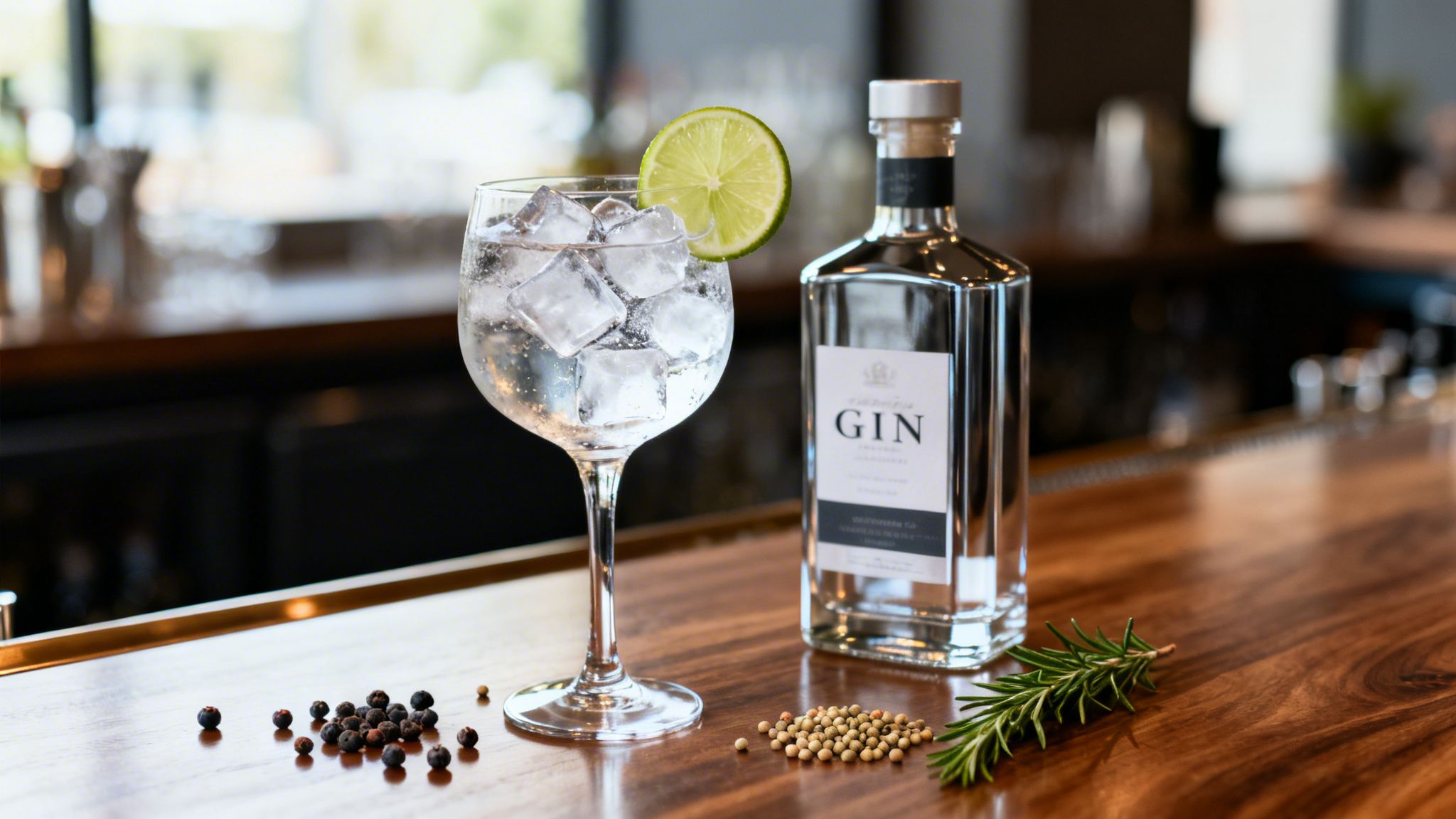
The gin and tonic is a timeless classic, a simple two-ingredient cocktail that feels both elegant and refreshingly straightforward. But if you’ve ever had one that tasted a bit flat or another that was truly exceptional, you know the secret lies in one key decision: choosing the right gin. The difference between a decent G&T and a spectacular one all comes down to the bottle you pour.
Finding the best gin for gin and tonic can feel overwhelming with so many options on the shelf. This guide is here to change that. We'll explore the diverse world of gin, from classic London Dry to modern floral and citrus-forward styles. You'll learn how to pair your spirit with the right tonic and garnish to create a bar-quality cocktail at home. Get ready to discover your perfect G&T, with top gin recommendations for every taste and budget.
What Makes a Gin Great for a Gin and Tonic?
A great G&T is a masterclass in balance. The gin provides the complex botanical heart, while the tonic offers bitterness and fizz. The magic happens when these elements work together seamlessly.
Think of it this way: the gin is the lead singer of the band. The tonic is the rhythm section. If the frontman is off-key, it doesn't matter how good the beat is—the whole song just falls apart. Here's what makes a gin shine in a gin and tonic:
- Botanical Balance: A great G&T gin has a clear flavor profile. Whether it's juniper-forward, citrus-heavy, or floral, its botanicals should be distinct enough to stand up to the tonic water without being overpowering.
- Dry vs. Floral vs. Citrus-Forward Gins:
- Dry gins (like London Dry) offer a classic, crisp, and piney character.
- Floral gins bring a softer, more delicate, and aromatic quality with notes like elderflower or lavender.
- Citrus-forward gins deliver a bright, zesty punch that's incredibly refreshing.
- Alcohol Content and Mouthfeel: The gin's ABV (alcohol by volume) affects its texture and intensity. A higher-proof gin will have a richer mouthfeel and bolder flavor, which may require more tonic to achieve balance.
- Interaction with Tonic and Garnish: The best gins are versatile. They should taste great with a simple light tonic but also have enough complexity to pair beautifully with different garnishes like cucumber, rosemary, or grapefruit, allowing you to customize your drink.
This simple chart shows how everything comes together.
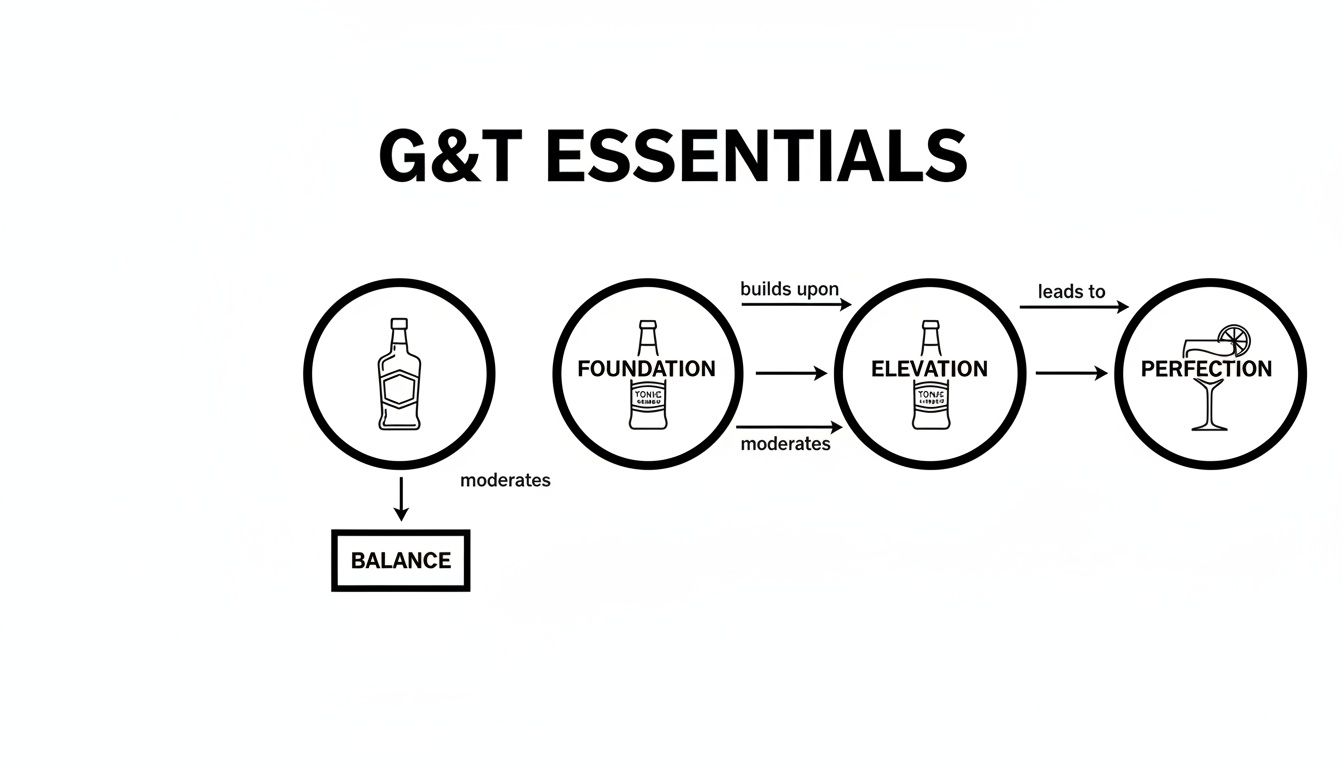
It all starts with a great gin. From that foundation, the right tonic and garnish can elevate it into something special.
Top Gins for Gin and Tonic
Alright, theory is great, but now it's time to get down to the bottles themselves. Finding the right gin for your perfect gin and tonic is all about matching the spirit to what you enjoy. To make things easy, I’ve broken down my top picks based on gin style, with price ranges and ideal garnishes to make each one sing.
London Dry Gins – Classic, Crisp, Juniper-Forward
When most of us picture a classic G&T, we’re thinking of one made with a London Dry Gin. This style is the gold standard for a reason. It’s all about a bold, assertive juniper flavor that gives the drink its signature piney, crisp bite.
-
Tanqueray London Dry Gin: This is the benchmark. Tanqueray is perfectly balanced with just four botanicals—juniper, coriander, angelica, and licorice—which makes for an incredibly clean and versatile gin. It’s what many people think of when they imagine a crisp, no-fuss G&T.
- Price Range: Under $30
- Ideal Garnish: A thick wedge of lime is all it needs.
-
Beefeater London Dry Gin: Another absolute giant in the gin world. Beefeater brings a bit more citrus to the party than Tanqueray, with distinct notes of Seville orange and lemon peel. It's a fantastic, affordable gin that always delivers.
- Price Range: Under $30
- Ideal Garnish: Try a lemon twist and a thin orange slice to play up its citrus notes.
Floral Gins – Delicate Botanicals, Ideal for Lighter Tonics
If the traditional piney-ness of London Dry isn't your thing, you're in luck. The world of Floral and Contemporary Gins is booming. Distillers in this category dial back the juniper and let other botanicals take the spotlight—think elderflower, hibiscus, lavender, and chamomile.
-
Hendrick's Gin: This is the gin that arguably launched the modern gin craze. Infused with cucumber and rose after distillation, Hendrick's has a uniquely delicate and refreshing character. The result is a G&T that's exceptionally smooth and easy to sip.
- Price Range: $30–$50
- Ideal Garnish: A thin ribbon of cucumber is non-negotiable.
-
The Botanist Islay Dry Gin: This gin is a complex journey in a bottle. Made with 22 hand-foraged botanicals from the Scottish island of Islay, it’s a beautifully layered spirit. You get hints of mint, chamomile, and citrus, offering a real taste of the wild landscape it comes from.
- Price Range: $30–$50
- Ideal Garnish: A fresh sprig of thyme or rosemary really brings out its herbal side.
Citrus or Mediterranean Gins – Enhanced with Lemon or Orange Botanicals
For a G&T that’s bursting with bright, zesty life, you have to try a Citrus and Mediterranean Gin. These gins are practically built for refreshment, leaning heavily on botanicals like lemon peel, grapefruit, blood orange, and even savory notes from olives or rosemary.
- Malfy Gin Con Limone: Made with sun-ripened Italian lemons, this gin is a vibrant and unapologetic citrus bomb. It’s like a quick trip to the Amalfi coast in a glass, creating a G&T that’s sharp, tangy, and so satisfying on a hot afternoon.
- Price Range: Under $30
- Ideal Garnish: A thick lemon wheel is the only way to go.
Premium / Small-Batch Gins – Unique Flavors, Craft Options
When you’re ready to really explore the creative side of gin, the small-batch world is waiting. These gins are crafted with an incredible focus on detail, often using unique botanicals you won't find anywhere else.
- Monkey 47 Schwarzwald Dry Gin: If you want to see just how complex a gin can be, this is it. Hailing from Germany's Black Forest, Monkey 47 is a wild symphony of 47 different botanicals. It’s woody, spicy, fruity, and herbal all at the same time. Every sip is a new discovery, making for a G&T you won’t soon forget.
- Price Range: Premium Investment
- Ideal Garnish: A twist of grapefruit peel helps cut through the complexity.
How to Pair Gin with Tonic Water
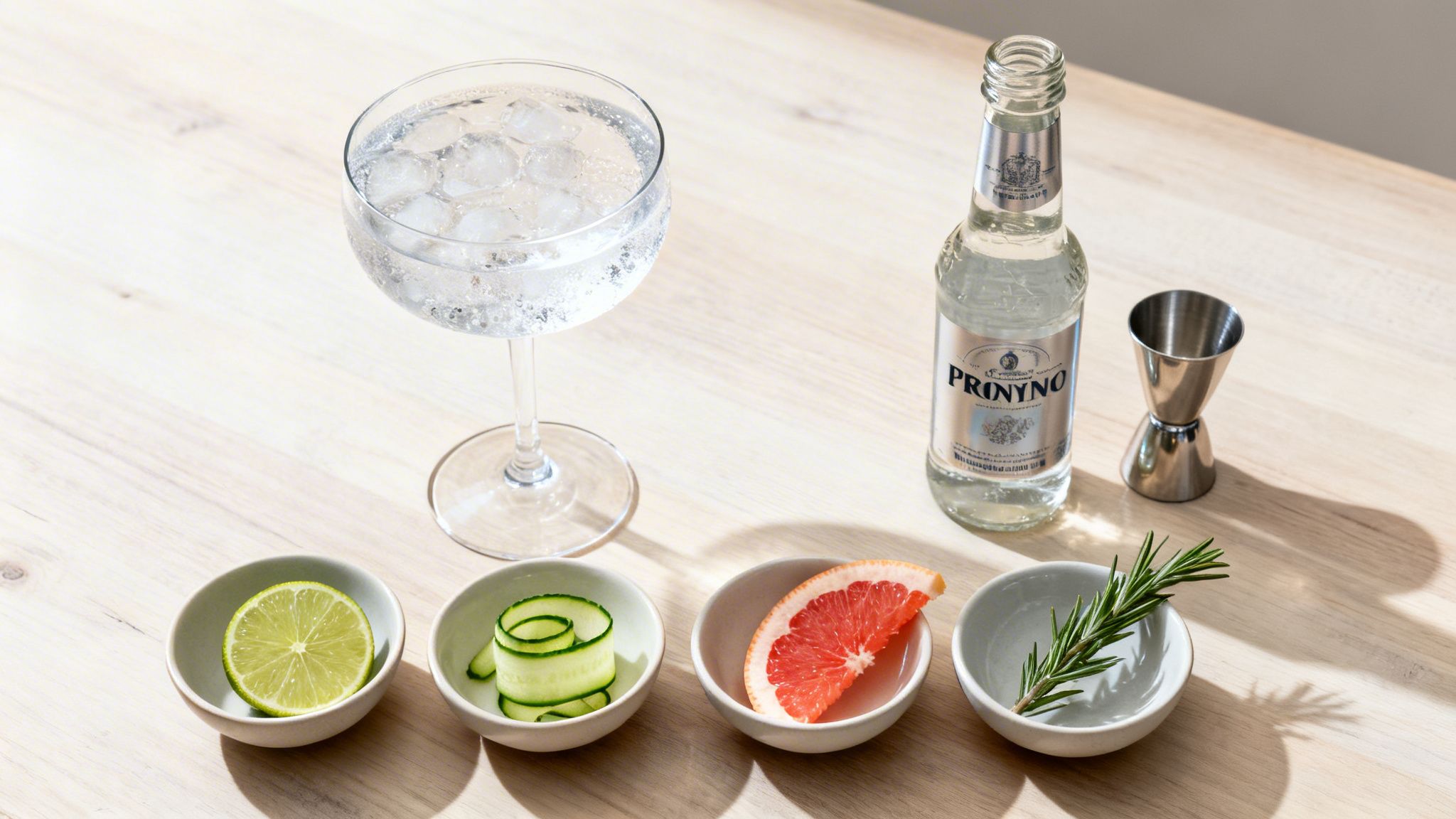
Alright, so you've got a great bottle of gin. That's a solid start, but it's only half the battle. The other half—the tonic water and garnish—is where the real magic happens. Let's get one thing straight: the tonic water you choose is just as important as the gin.
- Light Tonic vs. Premium Tonic: Those big plastic bottles from the supermarket? They're usually packed with high-fructose corn syrup, creating a sugary-sweet mess that will completely bulldoze the complex botanicals in a good gin. Premium tonics, like Fever-Tree or Q Mixers, use real sugar and high-quality quinine, resulting in a crisp, balanced bitterness that lets your gin shine. A light tonic is a great all-rounder, especially with floral or citrus gins.
- Adjusting Gin-to-Tonic Ratio: The accepted "golden ratio" for a gin and tonic is somewhere between one part gin to two or three parts tonic (1:2 or 1:3). This sweet spot ensures the gin stays front-and-center without being overpowering. For most standard-proof gins, that looks like 2 ounces of gin followed by 4-6 ounces of tonic.
- Garnish Suggestions: The garnish is your final signature. The goal is to complement the botanicals in your gin.
- Classic: Lime or lemon wedge
- Herbal: Cucumber ribbon, rosemary sprig, or thyme
- Fruity: Berries, grapefruit twist, or an orange slice
Budget-Friendly Options
Let's get one thing straight: you don't need to drain your bank account for a top-tier gin and tonic. A hefty price tag doesn't automatically mean better gin, especially when it's going into a mixed drink. The real secret is knowing how to spot the hidden gems—the bottles that deliver fantastic flavor and quality without the sticker shock. You can enjoy high-quality flavor without breaking the bank.
Here are a few widely available, affordable gins that offer outstanding value and taste great in a G&T. You can find them at most liquor stores or buy them online.
- Gordon's London Dry Gin: This is the benchmark for a reason. It’s clean, juniper-forward, and beautifully straightforward. Gordon's gives you that quintessential G&T flavor profile without any fuss, making it an incredible and highly affordable place to start.
- New Amsterdam Stratusphere London Dry Gin: An American gin that is exceptionally smooth for its price point. It dials back the juniper just a bit to let more citrus character come through. It’s a crisp, modern, and incredibly refreshing take on the London Dry style.
- Broker's London Dry Gin: Made in a traditional copper pot still using a 200-year-old recipe, Broker's packs serious quality for the cost. Its botanical blend is perfectly balanced, with a warm, spicy finish that adds a layer of complexity you’d expect from a much more expensive bottle.
These gins prove you can be resourceful without ever compromising on the quality of your drink. And if you're looking for more ways to be smart with your spending, you can find some great tips in our guide on how to save money on groceries.
Tips for Making the Perfect Gin and Tonic
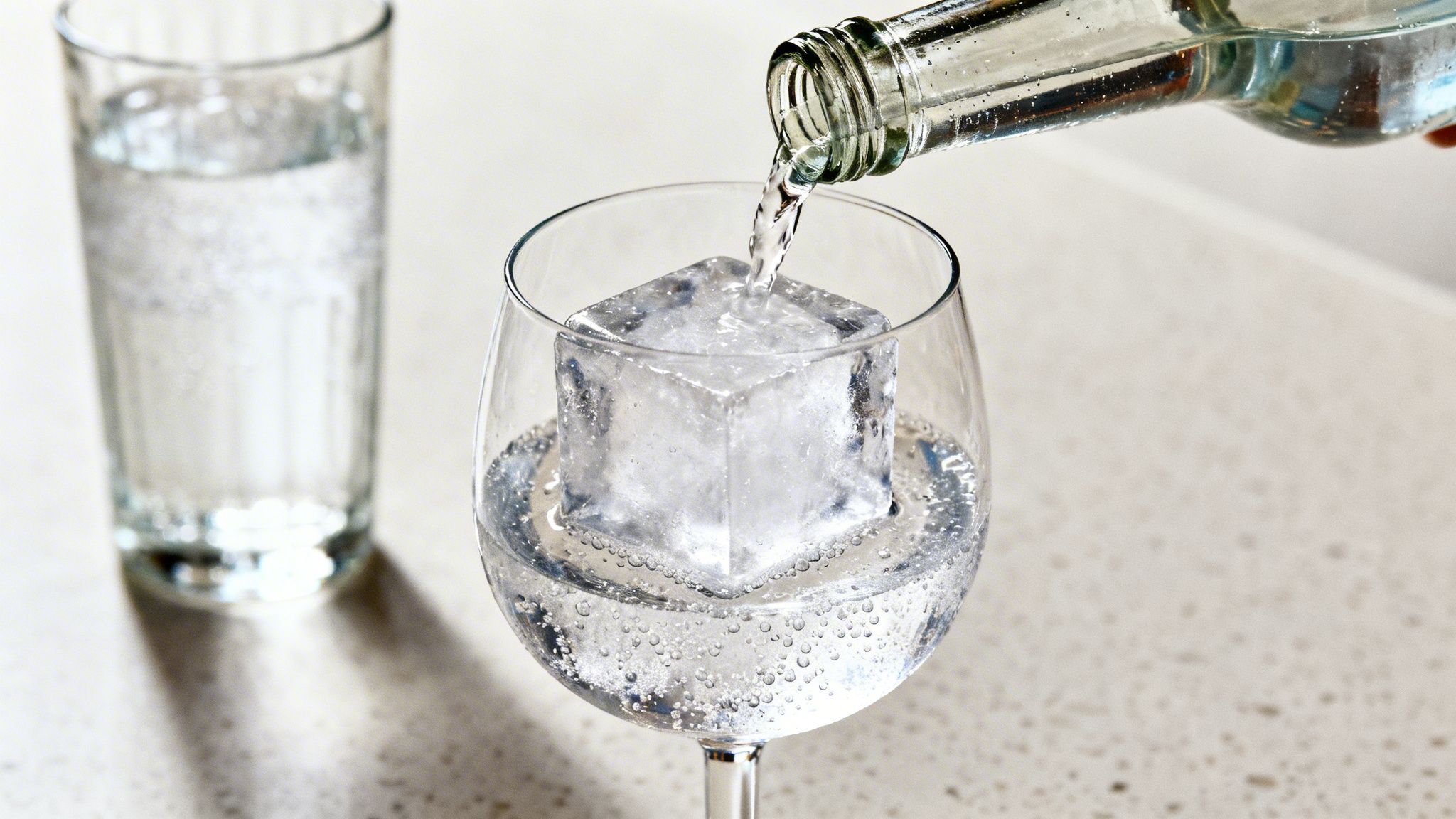
You’ve got the right gin, a great tonic, and the perfect garnish. Now for the final, crucial step: putting it all together. This is where technique comes in, and it's what separates a decent G&T from a truly exceptional one.
- Use ice cubes that won’t melt too quickly. The undisputed enemy of a good gin and tonic is dilution. Use large, solid ice cubes. They have less surface area, so they melt much slower, chilling your drink perfectly without turning it into a watery mess.
- Pour tonic slowly to preserve carbonation. Tilt the glass at a 45-degree angle and pour the tonic gently down the inside. This gentle entry preserves the bubbles for a fizzier, more refreshing drink.
- Experiment with garnishes to complement botanicals. While a classic lime wedge is never a bad call, try a cucumber ribbon with Hendrick's or a grapefruit twist with Monkey 47. The right garnish makes the gin's flavors pop.
- Try different glassware for aroma and presentation. A large, balloon-shaped Copa de Balon glass is great for trapping aromas, while a tall, slender Highball glass helps preserve carbonation.
Expert Recommendations
Today, we're living in a golden age of gin. The market has absolutely exploded, hitting USD 24.4 billion in 2025 and on track to reach a staggering USD 34.5 billion by 2035, according to gin market trend reports. This boom is fueled by drinkers discovering just how incredibly versatile this spirit can be.
Bartenders and mixologists often have their go-to bottles that deliver consistently. Beyond the big names, many recommend exploring regional or craft gins from local distilleries. These small-batch spirits often feature unique local botanicals and offer a taste you can't find anywhere else. Don't be afraid to ask your local bartender what they're excited about. Keep an eye out for seasonal variations or limited editions, too, as they can provide a unique twist on your favorite cocktail, such as a vibrant Blood Orange Gin Tonic.
Frequently Asked Questions (FAQ)
As you start mixing, a few questions are bound to pop up. Here are some quick answers to the things people ask most often.
What is the best gin for a classic gin and tonic?
For that classic, crisp gin and tonic you know and love, you can’t go wrong with a London Dry Gin. It's the gold standard for a reason. Its juniper-heavy profile is the backbone of the drink. Think of brands like Tanqueray or Beefeater. Their clean, dry character provides the perfect stage for the tonic and a simple citrus wedge to shine.
Can flavored gins be used in a G&T?
Absolutely! Flavored gins are a fantastic way to add a personal twist to the classic G&T. Whether you're reaching for a rhubarb, blood orange, or elderflower gin, they can make for an incredibly refreshing drink. The trick is to pair them with a light or classic tonic that won't compete with the gin's flavor and to use a garnish that complements the main botanical.
How much gin should you use per glass?
Everyone’s taste is different, but a great starting point is the classic bar ratio: one part gin to three parts tonic (1:3). In practice, that usually means about 2 ounces (60ml) of gin, topped off with 6 ounces (180ml) of tonic. This ratio keeps the gin's botanicals front and center without the drink tasting overwhelmingly of booze.
What garnishes pair best with different gins?
The best garnish is always the one that highlights the botanicals in the specific gin you're pouring. While London Dry remains a heavyweight with a 35% market share, the world of super-premium and flavored gins is exploding, as noted in this IMARC Group report. For these, think beyond the lime. If you can taste cucumber (like in Hendrick's), a ribbon of cucumber is perfect. If you pick up on grapefruit, a grapefruit peel is the way to go.
Conclusion
Finding the best gin for gin and tonic is a personal journey, but a delicious one. Whether you prefer the timeless, juniper-forward bite of a London Dry like Tanqueray, the delicate floral notes of Hendrick's, or the zesty punch of a citrus gin like Malfy, there is a perfect bottle waiting for you.
Remember the key tips: use a high-quality tonic, don't skimp on large ice cubes, and choose a garnish that complements your gin's unique botanicals. Now that you have the knowledge and recommendations, it’s time to start experimenting. Pour yourself a glass, find your favorite combination, and enjoy one of life's simple pleasures. Cheers
