
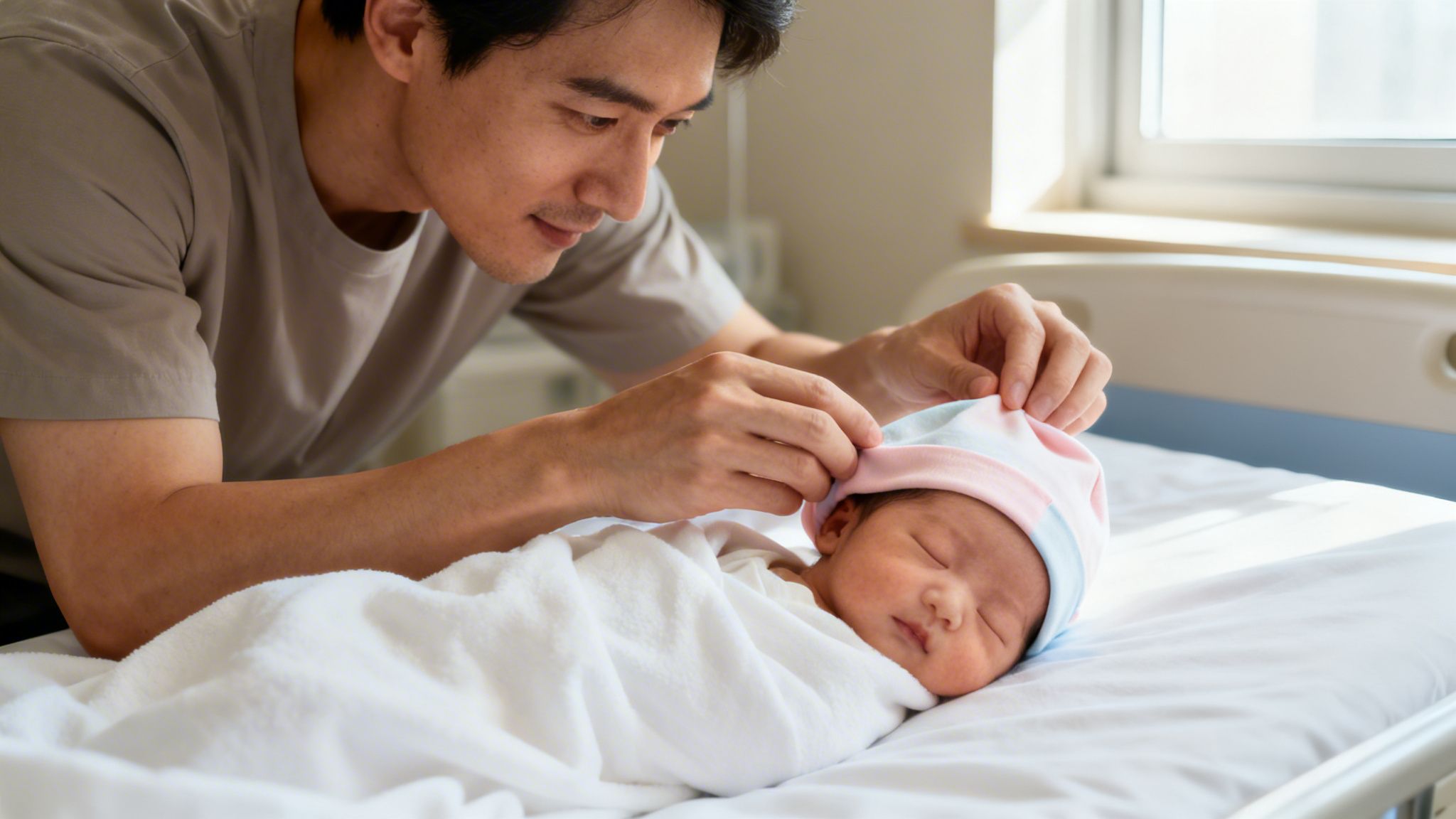
That little striped beanie the nurse puts on your baby’s head right after they’re born? It’s more than just a cute photo op. A hospital hat for newborns is one of the very first things your baby will wear, and it’s a crucial piece of gear to help them stay warm as they adjust to the world. Understanding its role, benefits, and safety considerations is one of your first moves as a proactive and protective dad.
Hospital Hats for Newborns: The Pros & Cons
Alright, let's talk about the pros and cons of that little beanie your newborn will be rocking. Making good calls for your baby is what being a dad is all about, and that simple hat is no exception. It seems minor, but it’s worth taking a second to understand both the real benefits and the safety checks that go along with it.
The biggest plus is, without a doubt, keeping your baby warm. As we’ve talked about, newborns get cold fast—like, really fast. A hat is a surprisingly effective first line of defense against heat loss, helping them save precious energy for growing instead of shivering. It also adds a thin layer of protection for their delicate scalp, guarding against those surprisingly sharp newborn fingernails.
And don't underestimate the comfort factor. For a baby who just spent nine months in a snug, warm womb, the gentle pressure of a hat can feel reassuring and secure.
Key Benefits to Remember
While that hospital hat is technically a medical tool, its benefits all work together to ease your baby's transition into the world.
- Maintains Body Heat: Think of it as insulation. The hat is crucial for preventing heat from escaping through their head, which is huge relative to their body.
- Conserves Critical Energy: When a baby isn’t working overtime to stay warm, they can use all that energy for the important stuff—breathing, eating, and getting stronger.
- Provides Gentle Protection: It's a soft barrier, shielding their fontanelle (the soft spot) and sensitive skin from accidental scratches or little bumps.
- Offers a Sense of Security: The snug fit mimics the feeling of being swaddled, which can be incredibly calming for a newborn adjusting to the big, open world.
But it’s not just a "set it and forget it" piece of gear. Using a hat means you need to be aware of a few things. The number one risk is overheating. A baby can't just tell you they’re too hot, so you’re the human thermostat. If you notice a sweaty neck, flushed cheeks, or skin that feels hot to the touch, it’s time to take the hat off.
The other big one is proper fit. This is non-negotiable. A hat that’s too big can easily slide down over your baby’s nose and mouth, which is a serious suffocation hazard. It needs to be snug enough to stay put but not so tight that it leaves a mark. Their airway must be clear at all times.
The rule of thumb is simple: a hat is a tool for warmth, not an all-day accessory. It’s most useful in the first hours after birth and in cooler environments. In a warm, temperature-controlled room, a hat is often unnecessary and can do more harm than good.
To help you see it all at a glance, I've put together a quick breakdown of what you need to keep in mind.
Hospital Hats: A Quick Look at the Pros and Cons
This table breaks down the key benefits and potential risks of using a hospital hat for your newborn, helping you make an informed decision.
| Factor | The Upside (Pros) | The Downside (Cons to Watch For) |
|---|---|---|
| Thermoregulation | Effectively prevents heat loss and helps maintain stable body temperature. | Can lead to overheating if the baby is already warm or in a hot room. |
| Safety & Fit | Provides a minor buffer against scalp scratches from their own nails. | A poorly fitting hat can slip over the face and obstruct breathing. |
| Comfort | The snug sensation can be calming and soothing for a brand-new baby. | Not necessary for sleep once home due to overheating and suffocation risks. |
| Energy Use | Conserves vital energy that would otherwise be spent trying to stay warm. | Over-reliance can make it harder to spot your baby’s own temperature cues. |
So there you have it. The hospital hat is a great tool in your new parent toolbox—as long as you use it wisely. Understanding both sides helps you keep your baby safe, warm, and comfortable.
Your Newborn's First Hat: What Dads Need to Know
Welcome to the club, Dad. One of the first, and most iconic, images you'll have of your newborn is them wearing that tiny hospital hat. It might seem like just a simple piece of fabric, but it plays a huge role in your baby’s health right from the start. Understanding its job is one of your first moves as a protector.
The main reason for that hat is thermoregulation. It’s a fancy word for keeping their body temperature stable. Your baby just spent nine months in the perfect, climate-controlled environment of the womb. The delivery room, no matter how warm it feels to us, is a cold shock to their system. In fact, they can lose body heat up to four times faster than an adult.
Why Temperature Is a Big Deal
A newborn's head is massive compared to the rest of their body, which means it’s a major source of heat loss. On top of that, their internal thermostat isn't fully fired up yet, and they don't have the insulating body fat we do. All this makes them incredibly vulnerable to getting cold, fast.
When a newborn gets cold, they have to burn extra calories and oxygen just to stay warm. A simple hat helps them hang onto that precious energy, so they can use it for more important things—like breathing, eating, and growing.
This one simple step helps prevent a dangerous drop in body temperature, a condition called hypothermia. When the hospital staff puts that hat on your baby, they're making a smart, easy move to help your little one transition smoothly. It’s a proactive way to support their health from their very first breath.
Here are the key takeaways for dads:
- It’s Not Just for Looks: The hat is a medical tool for keeping your baby stable.
- Babies Get Cold Fast: Their bodies aren't built to stay warm on their own yet.
- It Saves Energy: A warm baby is a healthy baby who can focus on growing strong.
As you step into your new role, getting a handle on details like this is part of the gig. You can get up to speed on other essentials by checking out these valuable tips for new dads, which will help you feel more confident from day one.
The Science of Why Newborns Need to Stay Warm
When your baby finally arrives, they face an immediate and massive challenge: adjusting to the cool, dry air outside the womb. Their tiny bodies just aren't built to handle this radical temperature shift on their own. Understanding the science behind this transition makes it crystal clear why that simple little hospital hat is so important in their first few hours.
A newborn’s head is surprisingly large compared to the rest of their body, creating a huge surface area for heat to escape. Think of it like a house without any insulation in the attic—it’s where most of the warmth gets lost. This is compounded by the fact that babies have very little of the insulating body fat that adults rely on, making them incredibly vulnerable to getting cold.
The Dangers of a Temperature Drop
Here’s a startling fact: a newborn can lose body heat up to four times faster than an adult. When their temperature starts to drop—a condition called hypothermia—their body has to work overtime, burning precious calories and oxygen just to generate warmth. This diverts critical energy away from essential tasks like breathing, eating, and growing. On top of that, their brand-new nervous system, which is supposed to regulate body temperature, is still too immature to manage cold stress effectively.
This is why that little beanie becomes one of the most important tools in the delivery room.

As you can see, a newborn's internal thermostat and their physical makeup are working against them. That little hat acts as a simple but powerful lid, trapping warmth and giving their system a much-needed break.
Why Simple Interventions Are Lifesaving
The risks of heat loss are serious. Globally, hypothermia affects a staggering 32% to 85% of all newborns. Tragically, these infants face double the risk of mortality compared to babies who stay warm.
But the good news is that simple, low-tech solutions make a massive difference. When combined with other warming practices like skin-to-skin contact, hats have been proven to dramatically reduce hypothermia during that critical time right after birth. If you're interested in the details, you can explore the full research on newborn temperature management to see just how impactful these small actions are.
A hospital hat for newborns isn't just a tradition; it's a science-backed tool that conserves your baby’s energy, supports stable vital signs, and provides a crucial buffer against the cold shock of entering the world.
Once you understand the physiology, you stop seeing the hat as a cute accessory. It’s the first line of defense for your baby’s health, empowering you to be a proactive and knowledgeable parent from their very first moments.
Choosing the Best Hat for Your Newborn
Once you get past the standard-issue hospital beanie, you'll discover that not all baby hats are made the same. It can feel like a huge market of options. Think of this as your practical guide to picking a hat that’s not just cute, but genuinely safe and comfortable for your new arrival.

The first thing you need to zero in on is the material. A newborn's skin is incredibly sensitive, so your top priority is finding fabrics that are gentle and breathable.
Material Matters Most
The hat's fabric is the first thing that will touch your baby's delicate scalp, so it needs to be soft and non-irritating. The best materials allow air to circulate, which keeps your baby from getting sweaty and uncomfortable.
Here are the top fabrics to look for:
- Organic Cotton: This is the gold standard for a reason. It's incredibly soft, naturally hypoallergenic, and grown without harsh chemicals or pesticides, making it perfect for sensitive skin.
- Bamboo Fabric: If you've never felt it, bamboo is silky-smooth. It’s also fantastic at wicking away moisture and is naturally antibacterial.
- Jersey Knit: This is a stretchy cotton blend that gives you a snug but flexible fit. It easily adapts to your baby’s head shape without feeling too restrictive.
On the flip side, try to steer clear of purely synthetic fabrics like polyester or acrylic for a newborn's first hat. They might be cheaper, but they don't breathe well and can trap heat and moisture, which can lead to overheating or skin irritation.
The Perfect Fit Is a Safe Fit
Right after material, the fit is the most important safety check. A hat that’s too loose is a real hazard. If it slips down over your baby's face, it could cover their nose or mouth and pose a suffocation risk. At the same time, a hat that’s too tight is just plain uncomfortable and could even restrict circulation.
Your goal is a hat that is snug but not tight. It should stay put without leaving any red marks or indentations on their skin when you take it off. A good rule of thumb is that you should be able to easily slide a finger between the hat and your baby’s head.
Many new parents quickly become fans of adjustable styles. Knotted hats are a great example, as you can simply tie the knot tighter or looser to get a custom fit that grows with your baby. This little feature makes them a more practical, longer-lasting choice than a standard, fixed-size beanie. Getting the fit right ensures the hospital hats for newborns you choose are both safe and doing their job well.
Picking out the right gear is a big part of getting ready for fatherhood. If you're building out your dad toolkit, you might also want to check out our guide on the best diaper bags for men to make sure you're ready for anything on the go.
Packing Your Hospital Go Bag: A Dad's Checklist

Everyone talks about mom’s hospital bag, but trust me, yours is just as crucial. Being well-prepared means you can stay focused on what really matters: supporting your partner and meeting your new baby for the first time. This isn't just about packing a bag; it's about gearing up for one of the most important missions of your life.
Your go-bag is your support toolkit. It holds everything you need to be a present, hands-on partner and a comfortable, functional dad during labor, delivery, and those first incredible days.
Your Essential Gear
First things first: you need to take care of yourself. Labor can be a marathon, not a sprint, and you'll be no good to anyone if you're running on empty. Pack for comfort and endurance. You’ll be glad you did.
Here’s a breakdown of what to bring for yourself:
- High-Energy Snacks & Drinks: Think granola bars, beef jerky, and trail mix. These are easy to grab and will give you a real energy boost. A refillable water bottle is non-negotiable.
- A Change of Clothes (or Two): You'll want something comfortable for what could be a long wait, plus a fresh set of clothes for the ride home.
- Basic Toiletries: A toothbrush, toothpaste, and deodorant can work wonders in making you feel human again after a sleepless night.
- Phone & Extra-Long Charger: A 10-foot charging cable is a pro move. It lets you stay connected without being chained to the wall outlet.
- Entertainment: Have some podcasts, music, or a movie downloaded on your phone for any unexpected downtime.
Gear for Baby and Capturing Memories
Once your own essentials are covered, it's time to think about the baby and how you'll capture those unforgettable first moments. This is your chance to add a personal touch to your baby's grand entrance.
Don't just rely on the hospital's standard-issue gear. Packing your own hospital hats for newborns and a special going-home outfit makes those first photos feel more personal and prepared.
Make sure you have these items ready for your new arrival and for making memories:
- The Special Newborn Hat: The hospital will have one, but bringing your own soft, perfectly-fitting hat adds a personal touch for those first pictures.
- Going-Home Outfit: Pack a weather-appropriate outfit for the baby's first big adventure: the car ride home.
- Camera or Smartphone: Double-check that you have plenty of free storage. You're going to take more photos and videos than you can possibly imagine.
- Car Seat: This is a big one. The hospital staff won't let you leave until a car seat is properly installed. To get it right, check out our guide on choosing a portable car seat for your newborn well before go-time.
Summary: Key Facts for Dads
That first hospital hat for your newborn is more than a cute accessory; it’s a critical medical tool. Its main job is to help your baby maintain their body temperature as they adjust to the world. Newborns lose heat rapidly through their large heads and lack the body fat to stay warm on their own. The hat conserves precious energy that would otherwise be spent just trying to stay warm, freeing it up for vital functions like breathing and growing. While crucial in the first hours and days, it’s important to monitor for overheating and ensure a snug, safe fit that doesn't obstruct breathing. For sleep, the hat should be removed to follow safe sleep guidelines.
Conclusion: Being a Prepared Dad
Understanding the 'why' behind even the smallest details, like a hospital hat for your newborn, is a huge part of stepping confidently into fatherhood. It's not just about a piece of fabric; it's about being an informed, proactive protector from your baby's very first moments. This hat is the first line of defense in helping your child make a safe and healthy transition into the world. By knowing the benefits, the risks, and the right way to use it, you're already making smart, confident decisions for your family. Welcome to the team, Dad. You've got this.
Frequently Asked Questions
Alright, even after getting the rundown, you probably have a few practical questions rattling around in your head. That's completely normal. Getting straight answers helps build confidence, so let's tackle the common questions dads ask about those tiny hospital hats.
How Long Should My Newborn Wear a Hospital Hat?
Right after birth, plan on keeping the hat on your newborn for the first several hours, or even the first day or two. This is especially true if the hospital room feels a bit drafty. This initial period is the most critical time for them to get the hang of regulating their own body temperature.
However, the hat isn't meant for round-the-clock wear.
Once you're back home and in a comfortable, temperature-controlled room (think 68-72°F or 20-22°C), a hat usually isn't necessary for a healthy, full-term baby after the first day or so. The key is to watch for signs of overheating—is their neck sweaty? Is their skin getting red or flushed? If so, it's time to take the hat off.
A simple touch test can tell you everything you need to know. Gently feel the back of your baby's neck. If it's sweaty, they're too hot and the hat should come off. If it feels a little cool to the touch, they might appreciate the extra warmth for a bit longer.
Is It Safe for My Baby to Sleep with a Hat On?
The short answer is no. It is generally not safe for a baby to sleep with a hat on once you’re home from the hospital.
Current safe sleep guidelines are crystal clear: keep the crib completely free of soft objects and loose bedding. That includes hats. A hat can easily slip down over your baby's nose and mouth, which poses a serious suffocation risk. It can also lead to overheating during sleep, another known risk factor.
For sleep, the safest bet is a simple one-piece sleeper or a swaddle in a bare crib. Keep the room at a comfortable temperature, and save the cute hats for when your baby is awake and you're right there with them.
When Can My Baby Stop Wearing a Hat?
Most full-term, healthy babies can stop wearing a hat indoors after the first few weeks of life. By then, they’ve usually gotten much better at maintaining their own body temperature without extra help. For many, this transition happens naturally within the first month.
After that initial period, start thinking of the hat as outdoor gear—something to protect their head from cold and wind when you're out and about. There's no single "right" day to stop. Just pay attention to your baby and trust your gut. If they seem fussy or warm, they'll let you know.
At alphadadmode.com, we're gearing up to launch a full suite of resources built for fathers like you. Sign up now for exclusive first access to articles, gear guides, and a community that gets it. Join us at alphadadmode.com and be the first to know.
