


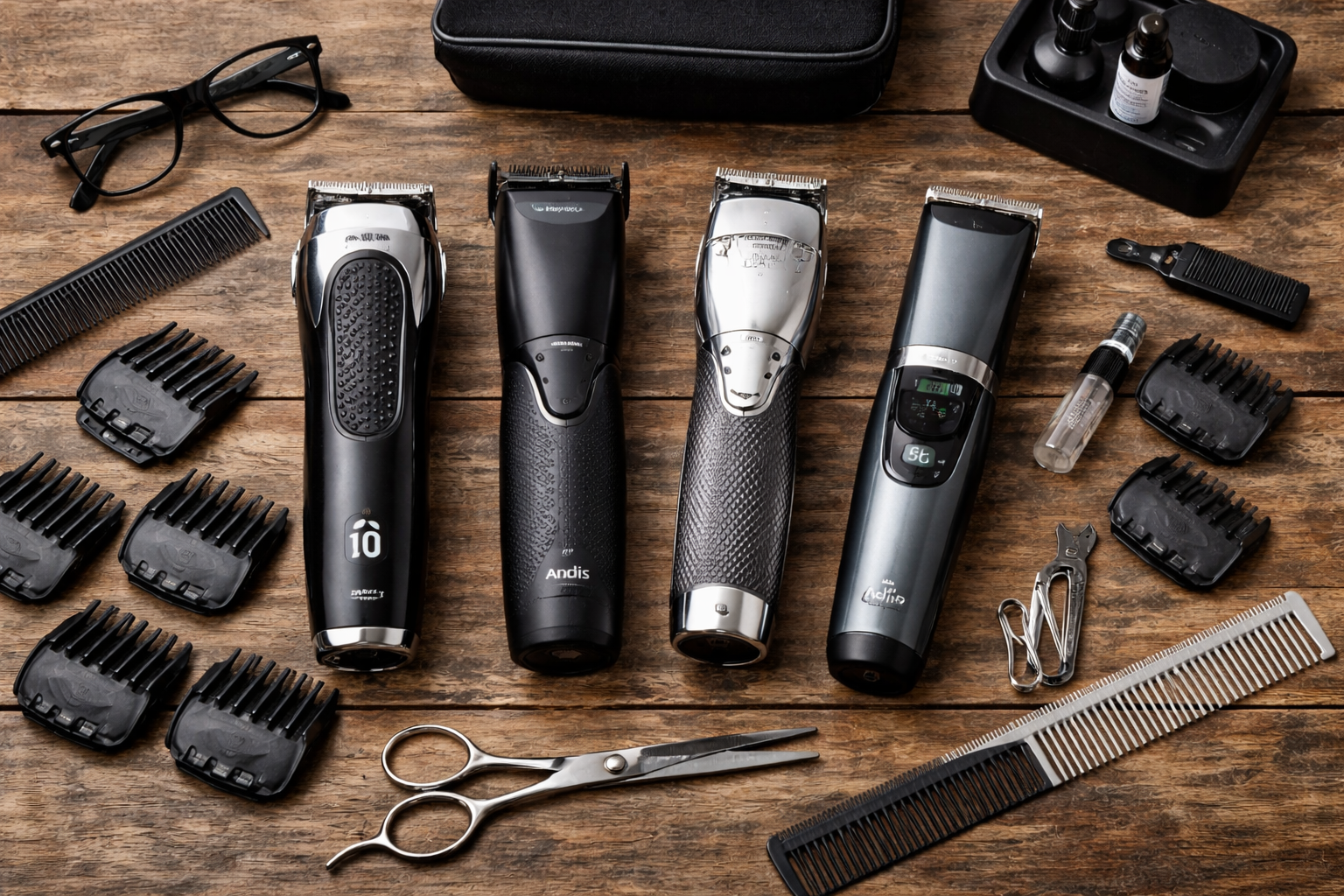
Tired of the endless cycle of scheduling and paying for family trips to the barber? Rechargeable hair clippers are a dad's best friend for saving time, money, and sanity. Think of it as your secret weapon for taking control of your family's grooming, giving you a powerful, convenient tool you can use just about anywhere.
Freedom From Cords and Costly Barber Shops
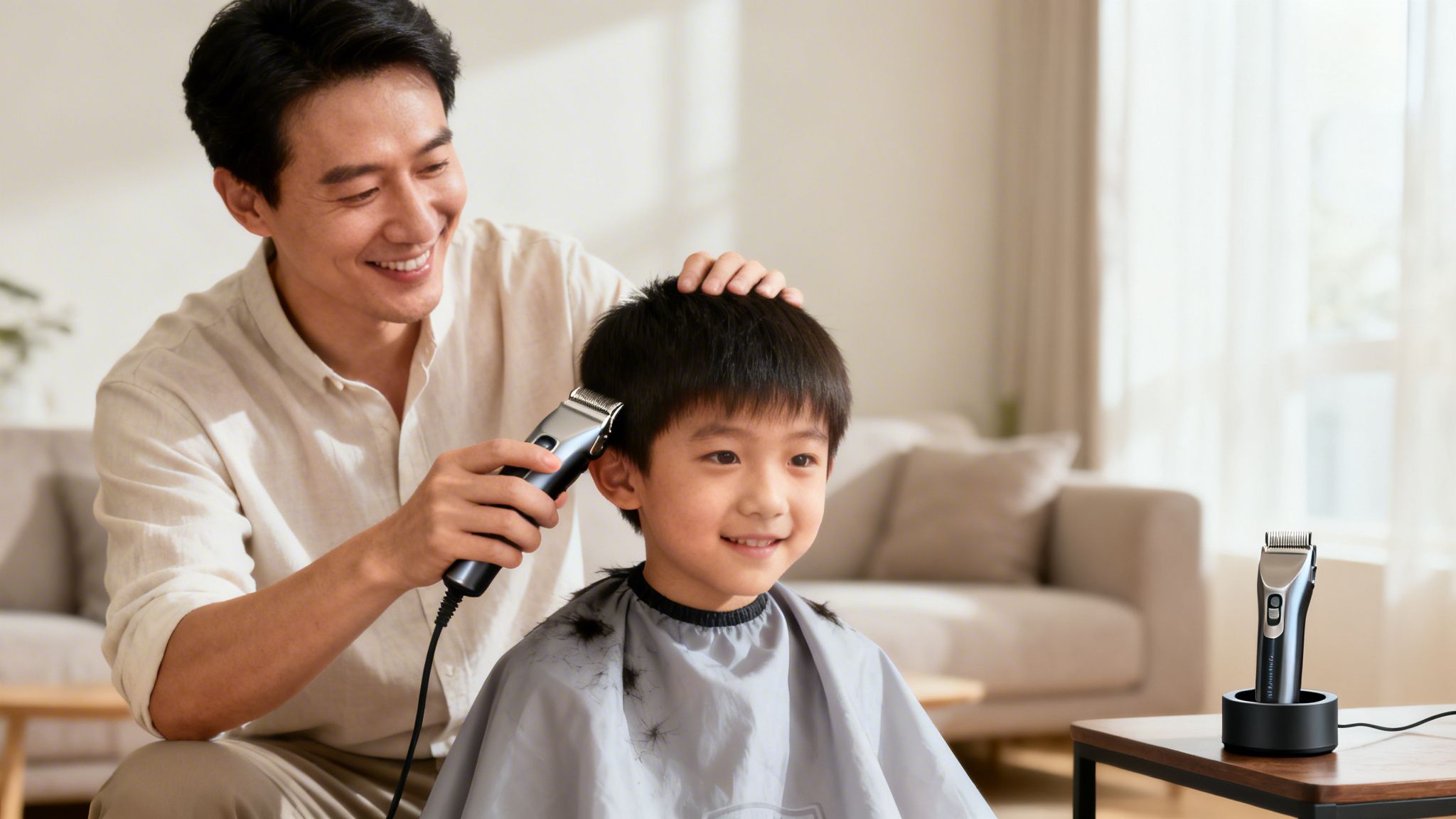
Let's be real—the haircut routine is a grind. It chews up your schedule and your wallet. Each trip means booking a slot, driving across town, waiting around, and then forking over cash for a simple trim you know you could handle yourself. If you're ready to break that cycle, you're in the right place.
Switching to at-home haircuts is about more than just the money. It's about getting your time back and picking up a genuinely useful skill. With the right set of clippers, you're free to give clean, sharp-looking haircuts on your own schedule. Need a quick cleanup before school pictures? Done. A fresh buzz cut on a lazy Sunday afternoon? No problem.
Why Dads Are Choosing Cordless Convenience
The cordless design is what really changes the game. Without being tied to a wall outlet, you can set up shop wherever it makes sense—the bathroom, the back porch, even the garage for easy cleanup. That kind of flexibility is a lifesaver when you're trying to cut a toddler's hair, and they’ve decided sitting still is no longer on the agenda.
This isn't just a hunch; the numbers back it up. The market for cordless clippers is growing fast as more dads get on board. Valued at USD 0.56 billion in 2026, the industry is expected to jump to USD 0.96 billion by 2035. It’s proof that families everywhere are catching on to the convenience of cutting the cord.
The advantages are pretty clear right from the start:
- Total Portability: Cut hair anywhere. This makes cleanup way easier since you can pick a spot that’s simple to sweep.
- Enhanced Safety: No cords means no tripping hazards for you and nothing for little hands to grab onto.
- Improved Maneuverability: Getting around ears and cleaning up the neckline is so much easier without a cord constantly getting in your way. The result is a much cleaner, more precise cut.
By mastering a simple tool, you're not just saving a few dollars. You're building confidence, creating bonding moments with your kids, and taking charge of another aspect of family life.
This guide is your roadmap. We’ll walk you through picking the right model, mastering the basics, and keeping your clippers in top shape for years. The money you save on just a handful of family haircuts will likely pay for a quality set of clippers, making it an investment that pays for itself almost immediately. And if you're looking for other ways to tighten the family budget, check out our guide on how to save money on groceries.
What Really Powers Your Clippers?
To pick the right pair of rechargeable clippers, you've got to know what’s going on under the hood. It’s a lot like choosing a car—you wouldn't just grab the first one you see without knowing a bit about its engine and how far it can go on a tank of gas. The same logic applies here. Understanding the motor and the battery is the key to finding a tool that won't die on you mid-cut.
Think of the motor as the engine. It’s what drives the blades, determining how smoothly and powerfully the clippers slice through hair. A weak motor will snag and pull, especially on thick hair, turning a simple trim into a frustrating (and sometimes painful) ordeal for both you and your kid.
This is where knowing the basic types comes in handy. Each motor is built for a different job, just like a car engine is designed for either fuel efficiency or raw power.
The Engine Room: Motor Types Explained
When you’re browsing online, you’ll typically see three kinds of motors mentioned. Each one strikes a different balance between speed, power, and noise, which makes them better suited for different hair types and cutting styles.
-
Rotary Motors: These are the V8 engines of the clipper world. Rotary motors are absolute workhorses—powerful, versatile, and capable of handling any hair type you throw at them, from the finest fluff to the thickest curls. They have a fantastic balance of blade speed and torque, meaning they just don't bog down or pull. It’s what the pros trust for a reason.
-
Magnetic Motors: Think of these as the efficient four-cylinder engines. Magnetic motors run at incredibly high speeds, which translates to a super smooth finish on finer hair. The trade-off? They have less raw power (torque) than rotary motors, so they can sometimes struggle with really dense or wet hair. They're simple, reliable, and often found in more affordable clippers meant for home use.
-
Pivot Motors: These are the high-torque, low-speed specialists. A pivot motor has more cutting muscle than a magnetic one but moves the blades a bit slower. This design makes it an absolute champ for cutting thick, heavy, or even wet hair without any pulling. As a bonus, they're usually quieter than magnetic motors.
The push for better performance—especially quieter operation for kid-friendly cuts—is driving huge growth in this space. The electric hair clipper market, valued at USD 6.16 billion in 2026, is on track to hit USD 6.88 billion by 2030, and that growth is almost entirely thanks to better rechargeable tech. You can dig into the numbers yourself over at Research and Markets.
What's the Deal with Clipper Batteries?
Just as important as the motor is the battery that powers it. The battery dictates how long you can use your clippers, how fast they recharge, and how long they'll last before you need a new pair. The two main players in the battery game are Lithium-Ion (Li-ion) and Nickel-Metal Hydride (NiMH).
Think of a Lithium-Ion battery like the one in your smartphone. It charges up fast, holds that charge for a long time, and doesn't have a "memory effect," which means you don't have to fully drain it before plugging it back in.
NiMH batteries, on the other hand, are the older tech. They're cheaper, sure, but they tend to lose their charge when they're just sitting in a drawer. They can also develop that dreaded memory effect if you don't fully discharge them regularly, which slowly kills their total capacity. For the kind of grab-and-go convenience a busy dad needs, Lithium-Ion is almost always the way to go.
Finally, let’s translate a few key battery terms you’ll see on the box into what they actually mean for your haircut routine.
-
Runtime: This is simply how long the clippers will run on a full charge. You’ll want to look for models that offer at least 90-120 minutes of runtime. That's enough juice for several haircuts without feeling rushed or having to watch a battery indicator like a hawk.
-
Charge Time: This is how long it takes to bring a dead battery back to 100%. Modern clippers with Li-ion batteries can often get a full charge in just 1-3 hours. Faster charging means less downtime and more readiness.
-
Cord/Cordless Use: Honestly, this is a non-negotiable feature for dads. It means you can use the clippers while they are plugged into the wall. If the battery dies unexpectedly halfway through a cut, you can just plug it in and finish the job. No panic necessary.
How to Choose the Right Clippers for Your Family
Alright, now that we've covered the power plant—the motor and battery—let's get into the fun part: picking the perfect clippers for your crew. This isn't just about grabbing a cool-looking box from the store. It's about finding the right tool for the job, whether that's giving a toddler their very first trim or keeping your own fade looking sharp.
The right choice turns haircut night from a chore into a quick, stress-free routine. Get it wrong, and you've just bought a fancy paperweight that lives in the back of a drawer. It all comes down to three things: the blades, the guards, and how the clippers feel in your hand.
Decoding the Blades
The blades are the business end of the clippers. They're the single most important part for getting a clean, smooth cut without any painful snagging. Cheap, poorly made blades will pull hair, irritate the skin, and go dull faster than you can say "bad haircut."
When you're shopping for clippers, you'll generally run into two types of blade material.
-
Stainless Steel Blades: This is the tried-and-true industry standard. Stainless steel is tough, durable, and holds a sharp edge for a long time. For most families, it's a fantastic all-around choice that can handle different hair types and stand up to regular use without any fuss.
-
Ceramic Blades: Think of ceramic as the modern, high-performance upgrade. These blades are incredibly sharp, but their real superpower is that they create less friction. Less friction means they stay much cooler during a haircut. This is a huge deal for kids or anyone with sensitive skin, as a hot blade can be really uncomfortable. The only catch? They're more brittle, so a drop on a hard floor could mean a chip or a crack.
Dad's Pro Tip: If you’re mostly cutting a squirmy kid’s hair, the cooler touch of ceramic blades is a game-changer. It helps keep them calm and comfortable. For an all-purpose, durable workhorse, you can't go wrong with stainless steel.
Guard Combs: The Unsung Heroes
Those little plastic attachments that snap onto the blade? They're called guard combs, and they are absolutely essential. They are what let you cut hair to a specific, even length every single time. Without a good set of guards, you're just winging it, and that's a surefire way to end up with a patchy disaster.
A good set of clippers will come with a whole range of guards. You want to see a kit with at least 8-10 different sizes, usually from a #1 guard (that's 1/8 inch) all the way up to a #8 guard (1 inch). Having that variety gives you the freedom to do anything from a short buzz cut to a longer, more textured style.
Don't forget to check the quality of the plastic itself. Flimsy guards can bend or pop off mid-cut. Look for sturdy plastic with solid clips that snap on securely—that's your ticket to a consistent, predictable cut.
Why Ergonomics Matter
How the clippers actually feel in your hand is a bigger deal than you might think. We're talking about ergonomics—the weight, the balance, and the grip. A tool that's heavy, awkward, or slippery will wear out your hand fast, making it tough to stay steady and precise.
Picture trying to clean up the lines around your son's ears with a clunky, heavy brick of a clipper. It’s a recipe for nicks and crooked edges. Look for a model that feels balanced and comfortable to hold. A textured, non-slip grip is a huge bonus, giving you the confidence to maneuver the clippers easily.
Weight is part of the equation, too. Sure, the heavy-duty professional clippers often feel hefty because of their powerful motors and all-metal construction. But plenty of fantastic models for home use are designed to be lightweight and agile without giving up much power. Finding that sweet spot is key when you're looking for the best tools for dads.
Ultimately, picking the right clippers is about matching the tool to your family. If you're dealing with thick, coarse hair, you'll want a powerful rotary motor and sharp stainless steel blades. If the main job is trimming a toddler’s fine hair, a quieter model with cool-running ceramic blades is probably your best bet. Nail the blades, guards, and ergonomics, and you'll have a tool that makes haircuts at home something you can actually look forward to.
Your Playbook for the Perfect At-Home Haircut
Alright, you’ve picked out your clippers, and now it's game time. This is where you go from a dad with a new toy to the family’s go-to barber. Trust me, this is way less intimidating than it looks. A little prep and a few simple moves are all it takes to deliver clean, consistent cuts that will have everyone looking sharp.
The goal isn't some high-fashion masterpiece right out of the gate. It's about getting a great-looking, clean haircut with zero fuss. We'll walk through everything, from setting up your space to the basic techniques for a simple buzz cut or a quick trim.
Creating Your Dad Barber Station
First things first: location, location, location. The best part about rechargeable clippers is that you're not chained to an outlet. You can set up shop anywhere that makes cleanup easy. The back porch or the garage are fantastic options—you can just sweep or blow the hair away when you're done.
Here’s a quick checklist to get your station ready:
- A Comfortable Stool: Get your "client" sitting at a good height. You don't want to spend the next 20 minutes hunched over, killing your back.
- An Old Towel or Cape: Drape this over their shoulders. It’s the number one defense against itchy hair clippings getting down their shirt.
- A Hand Mirror: This is non-negotiable. It helps them see the back and lets you show off your handiwork as you go.
- Your Clipper Kit: Lay out your fully charged clippers, the guards you’ll need, a little blade oil, and the cleaning brush. Have it all within arm's reach.
Before a single blade touches a single hair, make sure it’s clean, bone dry, and combed out. Trying to cut dirty or damp hair is a fast track to dulling your blades and getting a choppy, uneven result.
Think of this setup like a chef prepping their ingredients. It just makes the whole process run smoother.
Mastering the Basics: A Buzz Cut and Simple Trims
For your first few haircuts, keep it simple. The classic buzz cut is the perfect place to start—it’s all about consistency, and it's genuinely hard to mess up.
Always start with a longer guard than you think you need. You can always take more hair off, but you can’t put it back on. A #4 guard is a super safe starting point.
- Move Against the Grain: For an even cut, you always want to guide the clippers against the direction the hair naturally grows.
- Start at the Bottom: Begin at the nape of the neck and use a smooth, steady upward motion. Let the clippers do the heavy lifting; no need to press down hard.
- Overlap Your Strokes: To avoid leaving lines or patchy spots, make sure each new pass slightly overlaps the last one. It’s like mowing a lawn.
- Tackle the Top: Once the back and sides are done, switch your direction and cut the top, usually moving from front to back.
Going through these motions helps you get a feel for the clippers and how they move through hair. Once you're comfortable, you can start playing with shorter guards to blend and create a fade.
Cutting Kids' Hair Without Tears
Cutting a kid's hair, especially a wriggly toddler's, is a whole different ballgame. Patience isn't just a virtue here; it's a necessity. The mission is to make this a positive experience—or at least a neutral one.
It’s no surprise that at-home grooming is taking off. The North American market for electric hair clippers and trimmers was valued at USD 1.95 billion in 2023 and is expected to hit USD 2.86 billion by 2033. A huge chunk of that—54.6% of the revenue, in fact—came from electric clippers, a trend fueled by dads wanting powerful, reliable tools. You can find more insights on this from NovaOneAdvisor.
This simple guide breaks down the key things to look for when picking the right clippers for your family.
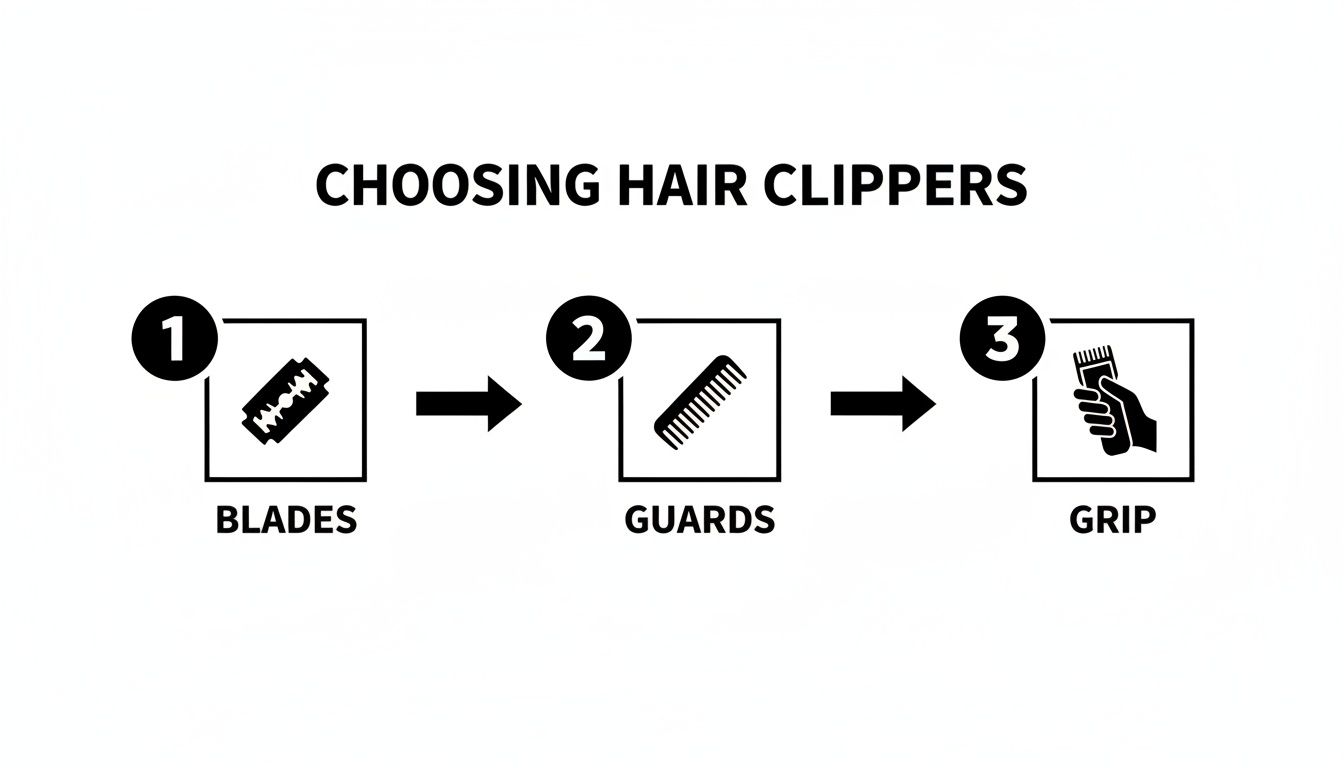
As the visual shows, focusing on the right blades, guards, and grip is the foundation for a successful and stress-free haircut at home.
Here are a few battle-tested tips for a tear-free trim:
- Distraction is Key: A tablet playing their favorite show or a new toy can be pure magic. A distracted kid is a still kid.
- Talk Them Through It: In a calm, reassuring voice, explain what you’re doing. Give the clippers a funny name like "Mr. Buzzer" to make them less scary.
- Take Breaks: Don’t try to power through it all in one sitting. If they start getting fussy, take a five-minute break for a snack or a stretch.
Make it a game. Let them "help" by holding a comb (nowhere near their head, of course). The more they feel involved and in control, the less likely they are to fight you on it.
Safety is everything. Always keep the clippers moving and use a light touch, especially when cleaning up around the ears and neckline. If you're tackling curly hair, you may also want to check out our guide on finding the right curl cream for men.
Keeping Your Clippers in Top Condition
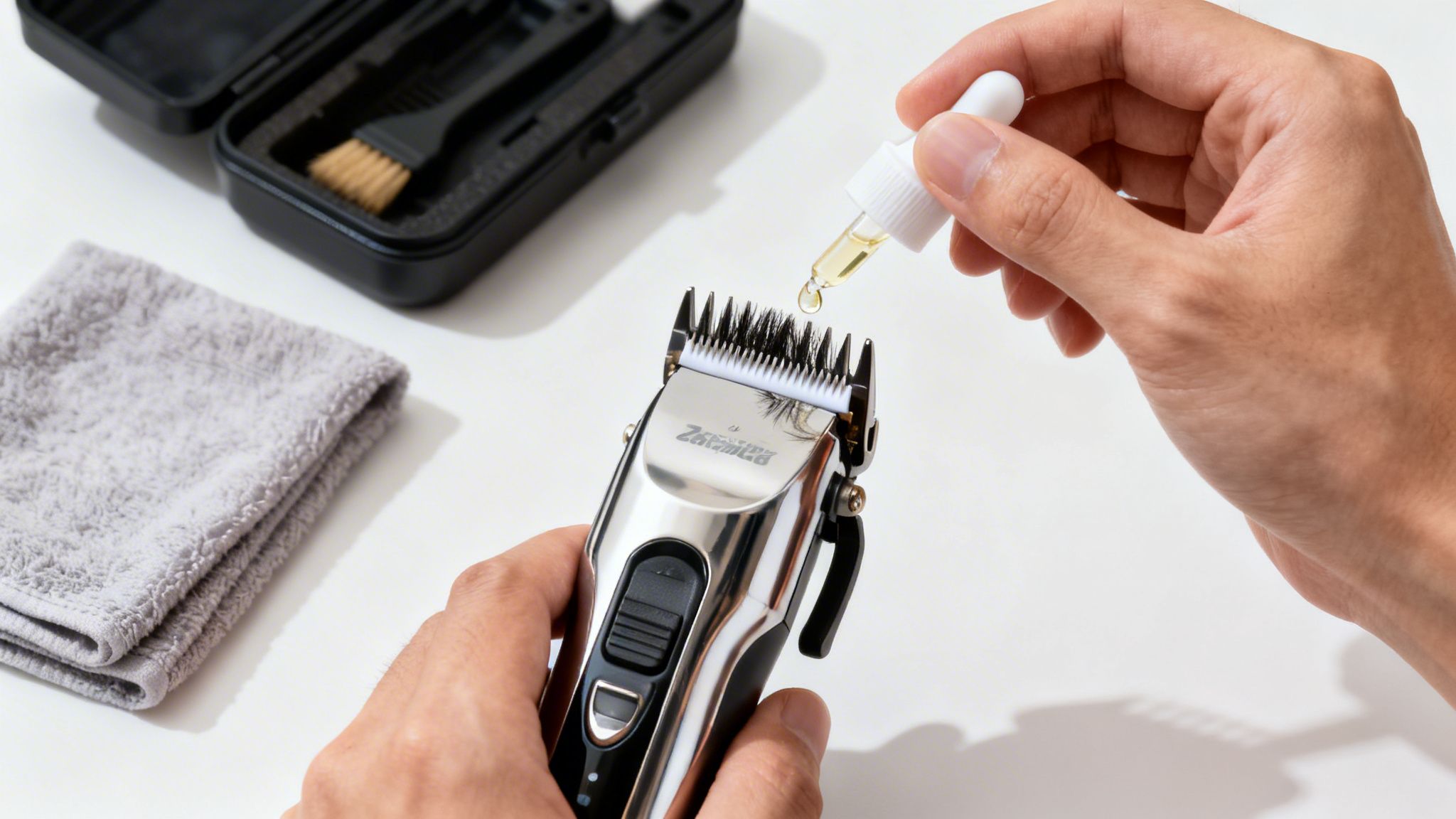
A great tool deserves great care, and your new clippers are no exception. Think of maintenance like a quick pit stop after a race—just a few simple steps to make sure your machine is ready for peak performance next time. This isn't some complicated chore; it's a fast habit that protects your investment.
When you take care of your clippers, they stay sharp, powerful, and ready for action. Neglect them, and you'll end up with dull blades that pull hair, a motor that struggles, and a battery that dies way too soon. The good news? A simple, two-minute routine after each haircut can add years to the life of your clippers.
The Post-Haircut Care Checklist
After every cut, tiny hair clippings, skin oils, and product residue build up on the blades. Leaving this gunk behind is the quickest way to dull the blades and put a strain on the motor. The solution is a quick, systematic cleanup that honestly takes less time than brushing your teeth.
Here’s a simple, effective cleaning process to follow every time:
-
Detach and Brush: First things first, unplug the clippers for safety. If your model allows it, pop the blade head off. Use that little brush that came in the kit to sweep away all the visible hair from the blades and the clipper body.
-
Rinse if Possible: Check the manual to see if your blades are washable or water-resistant. If they are, a quick rinse under warm water is fantastic for getting rid of those super-fine particles. This is crucial: make sure the blades are completely dry before you reattach them. Water is the enemy of metal.
-
Oil the Blades: This is the most important step, hands down. Put the blades back on, turn the clippers on, and apply just 2-3 drops of clipper oil across the teeth. Let them run for about 10 seconds to spread the oil evenly, then just wipe off any excess with a soft cloth.
Oiling is non-negotiable. It lubricates the metal, cuts down on friction, and keeps the blades from getting hot during a cut. This one simple action prevents snagging and guarantees a smooth, comfortable experience for your kids.
Smart Charging for Maximum Battery Life
The battery is the heart of your cordless freedom, and how you charge it has a huge impact on its lifespan. Almost all modern clippers use Lithium-Ion (Li-ion) batteries—the same tech that's in your smartphone. They're powerful and efficient, but they really benefit from smart charging habits.
Unlike the old batteries from back in the day, Li-ion batteries don't have a "memory effect," but they are happiest when kept within a certain charge range. Constantly leaving your clippers plugged in or always running them completely dead will wear the battery down over time.
To get the most life out of your battery, try to keep the charge between 20% and 80%. Avoid leaving it on the charger all night, and don't let it sit completely dead for weeks on end. It's a simple habit that keeps the battery healthy and ready for years of reliable, cordless cuts.
Proper Storage Between Uses
Finally, where you keep your clippers actually matters. A humid bathroom is the absolute worst place for metal blades, as it practically invites rust and corrosion to the party. After you've cleaned and oiled them, store your clippers and all their attachments somewhere dry.
- Use the Case: If your kit came with a case or pouch, use it. It keeps everything organized and protects it all from dust and moisture.
- Find a Dry Spot: A drawer in the bedroom or a shelf in a linen closet is a much better home for your clippers than the bathroom counter.
This quick routine—clean, oil, charge smart, and store dry—is really all it takes. It’s a tiny time investment that pays off big, with clippers that perform like new every single time you turn them on.
A Few Common Clipper Questions
Even after you pick the perfect clippers, you’re bound to have some questions once you start using them. That’s completely normal—anytime you're learning a new skill, you'll run into a few things you hadn't thought of. We've pulled together the most common questions we hear from dads and laid out some straightforward answers.
Think of this as your quick-reference guide. The goal is to get you feeling totally confident with your clippers, so you can start cutting hair without a second thought.
Can I Use My Clippers While They’re Plugged In?
Great question. The answer really comes down to the model you buy. Many modern rechargeable hair clippers are built with what's called "cord/cordless" functionality. This feature is an absolute game-changer if your battery dies halfway through a haircut.
With a cord/cordless model, you can just plug it into the wall and keep going without skipping a beat. It’s the ultimate safety net. On the other hand, some of the more basic or older models are designed only for cordless use and simply won't run while they're charging.
Always double-check the product specs for this feature before you buy. For a busy dad who can’t afford to be stuck with a half-finished haircut, it’s one of the most important things to look for.
How Often Should I Oil the Blades?
Seriously, oiling the blades is the single most important thing you can do to keep your clippers running well. It keeps friction down, which means the blades stay cooler, sharper, and glide through hair smoothly. A well-oiled blade prevents that awful snagging and pulling, making the whole experience way more comfortable for everyone.
A good rule of thumb is to apply a few drops of clipper oil after every two or three haircuts.
- For Regular Use: Cleaning and oiling them after every third cut should be fine.
- For Thick or Coarse Hair: If you're tackling really dense hair, it's a good idea to oil the blades after every single use to handle the extra strain.
It's a quick job. Just brush off any loose hair, put 2-3 drops of oil across the teeth of the blade, and turn the clippers on for about ten seconds to let it spread evenly. This tiny step will dramatically extend the life of your blades and the motor.
Are Rechargeable Models Powerful Enough for Thick Hair?
Absolutely, but this is where your choice of motor really matters. The old idea that cordless clippers are weak is a holdover from outdated battery technology. Today’s high-quality rechargeable models pack just as much punch as their corded cousins.
If you’re dealing with thick, coarse, or curly hair, you need to look for clippers with a rotary motor. There's a reason the pros use them—these are the workhorses of the industry. They deliver consistent power that won't get bogged down, no matter the hair type.
A pivot motor is another solid choice, offering great cutting power for dense hair. The one type you'll want to avoid for thick hair is a basic magnetic motor; they're better suited for finer hair and light-duty trimming.
What’s the Difference Between Clippers and Trimmers?
It's easy to get these two confused, but their jobs are totally different. Think of it like the difference between a lawnmower and a weed whacker—you need both for a clean-looking yard.
-
Clippers: These are your main tools for bulk hair removal. They have wider blades and are used with guard combs to cut hair down to a specific length. You'll use clippers for the main event, like a buzz cut or taking down the length on top.
-
Trimmers: These are for the detail work. Trimmers have much finer, narrower blades designed for precision. They're what you use to clean up the neckline, edge around the ears and sideburns, and create those sharp, clean lines.
For a haircut that looks truly polished and professional, you'll eventually find you need both. Luckily, many rechargeable clipper kits are sold as a combo, bundling a main clipper with a smaller detail trimmer so you're covered from start to finish.
Ready to take control of your family's grooming schedule and budget? Join the community of dads mastering new skills. Sign up at alphadadmode.com to get updates, exclusive content, and promotions when we launch. Visit us at https://alphadadmode.com and be the first to know.
