


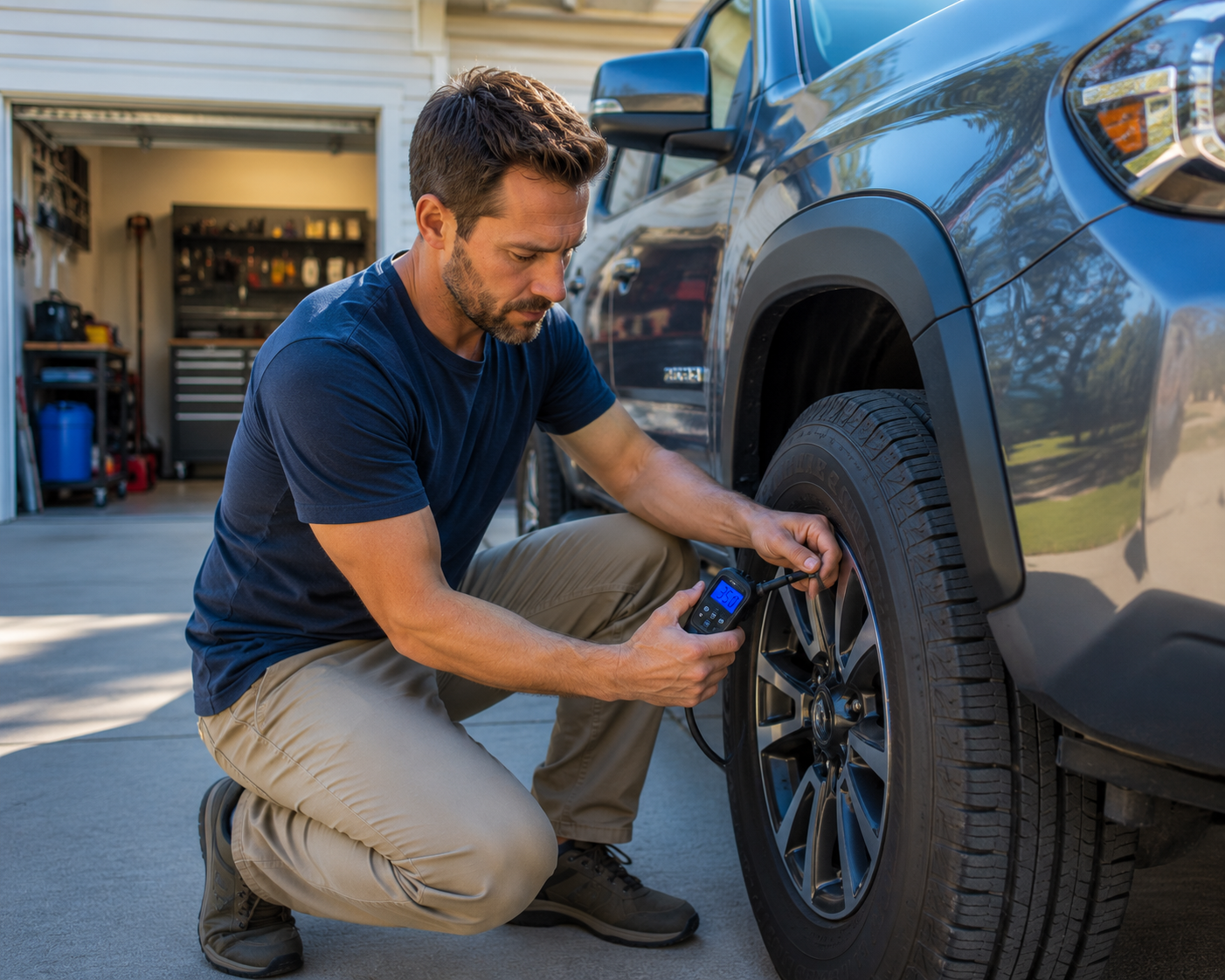
Dads can spend a lot of money maintaining their vehicles. We service them regularly, change the oil, replace worn parts and spend far too much money filling the fuel tank. Yet one of the simplest and cheapest tools that can improve safety, tyre life and fuel economy often gets completely ignored.
I’m talking about a Digital Tire Pressure Gauge.
After working on commercial job sites for over 20 years, driving countless kilometres between jobs on rough terrain and maintaining multiple family vehicles, I’ve learned that tyre pressure is one of those boring little things that makes a surprisingly big difference.
It’s not exciting. Nobody brags about their tyre pressure gauge at a barbecue.
But if you’ve ever had a tyre wear out prematurely, noticed poor fuel economy or experienced sketchy handling in wet weather, there’s a good chance tyre pressure played a role.
I’ve used several digital tyre pressure gauges over the last decade. Some were accurate, some were complete rubbish and a few ended up disappearing into the mysterious black hole that seems to exist inside every work ute.
Why Tyre Pressure Matters More Than Most Drivers Realise
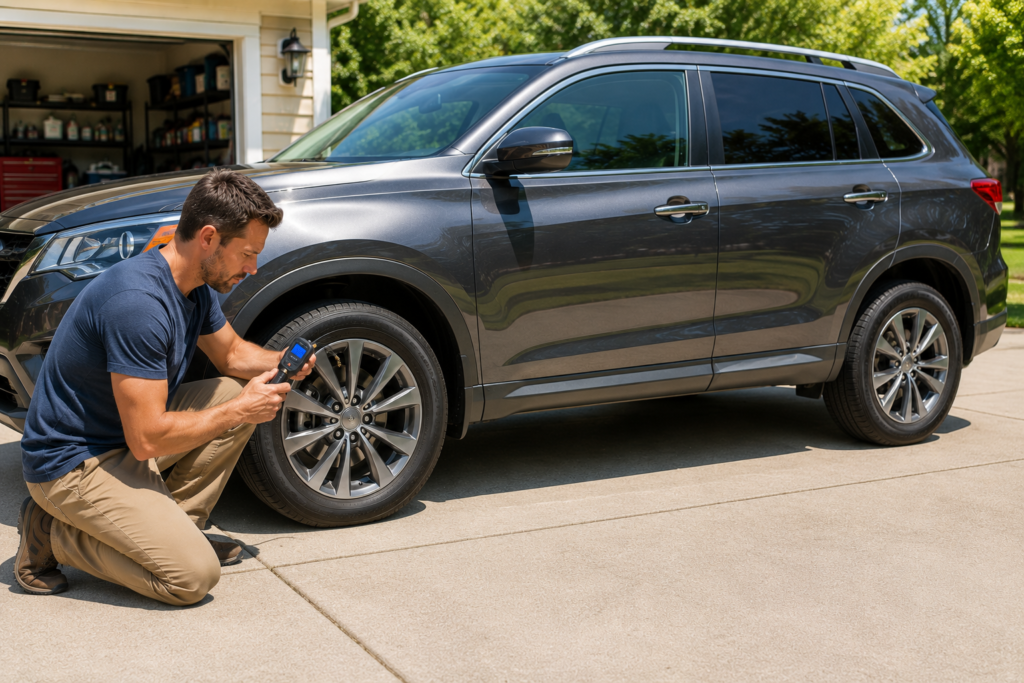
Most people assume their tyres are fine simply because they don’t look flat.
That’s a mistake.
Modern tyres can be significantly underinflated without looking noticeably different. By the time a tyre visibly appears low, you’re often already driving on incorrect pressure.
Incorrect tyre pressure affects:
- Fuel economy
- Tyre lifespan
- Braking performance
- Steering response
- Ride comfort
- Wet weather traction
- Overall vehicle safety
Underinflated tyres create additional rolling resistance. Your engine works harder, fuel consumption increases and tyre shoulders wear faster.
Overinflated tyres aren’t much better. They can reduce grip, create uneven centre tread wear and make the vehicle ride like a shopping trolley with square wheels.
Considering tyres are one of the only things connecting your vehicle to the road, it makes sense to keep them properly inflated.
Why I Prefer a Digital Tire Pressure Gauge
I’ve owned both analogue and digital gauges.
Analogue gauges certainly work and some high-quality models are very accurate. However, after years of using both, I consistently reach for my digital gauge.
Why?
Because it’s quick.
Before work, before a road trip or before towing a trailer, I can check all four tyres within minutes.
No squinting.
No guessing.
No trying to determine whether the needle is pointing at 36 PSI or 38 PSI while balancing on one foot.
Most quality digital gauges provide a clear reading instantly.
For busy dads juggling work, kids, sports practice, school runs and trying to remember why they walked into the garage in the first place, simplicity matters.
My Favourite Digital Tire Pressure Gauge After 10 Years
Over the last decade I’ve used several brands ranging from cheap specials through to professional-grade models.
Some lasted years.
Others lasted approximately three Tuesdays.
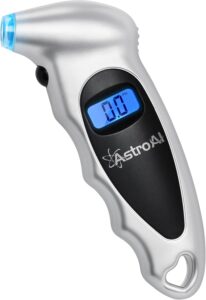
My favourite has consistently been the AstroAI Digital Tire Pressure Gauge.
Why?
Because it does exactly what it’s supposed to do.
It provides fast readings, feels solid in the hand, has a backlit display and remains accurate even after years of use.
I’ve dropped mine on concrete, left it in hot vehicles and generally treated it with the same level of care most tradies reserve for their tape measures.
It still works.
That reliability is what matters most.
When you’re checking tyre pressure before towing a camper trailer or heading off on a family holiday, you want confidence that the reading is accurate.
Not “hopefully accurate.”
Actually accurate.
The Hidden Cost of Driving on Incorrect Tyre Pressure
Many drivers focus entirely on fuel prices while ignoring one of the easiest ways to improve efficiency.
According to tyre manufacturers such as Michelin and Bridgestone, maintaining correct tyre pressure helps maximise tyre lifespan and optimise fuel efficiency.
Think about it.
A quality Digital Tire Pressure Gauge costs less than a family takeaway dinner.
Yet it can potentially extend tyre life by thousands of kilometres.
Given the cost of replacing four tyres these days, that’s a pretty solid return on investment.
Digital vs Analogue Tire Pressure Gauges
Here’s a simple comparison.
| Feature | Digital Tire Pressure Gauge | Analogue Tire Pressure Gauge |
|---|---|---|
| Ease of Reading | Excellent | Moderate |
| Accuracy | Excellent | Good to Excellent |
| Night Use | Excellent | Poor |
| Battery Required | Yes | No |
| Speed of Use | Fast | Moderate |
| User Friendly | Excellent | Average |
| Price | Affordable | Affordable |
| Recommended for Most Dads | Yes | Sometimes |
For most drivers, digital wins simply because it’s easier to use consistently.
And consistency is what matters.
The world’s most accurate gauge is useless if it sits forgotten in a toolbox for five years.
When Should You Check Tyre Pressure?
Ideally:
- Once per month
- Before long road trips
- Before towing
- After major temperature changes
- Before carrying heavy loads
Tyres naturally lose pressure over time.
Temperature fluctuations also affect pressure significantly.
That’s why tyre pressure should always be checked when tyres are cold whenever possible.
Checking pressure after driving can give artificially high readings.
Perfect for Road Trips and Family Adventures
One thing I’ve noticed over the years is that dads tend to become unofficial logistics managers.
We’re loading bikes.
Packing camping gear.
Towing trailers.
Hauling furniture.
Transporting sporting equipment.
Driving across the country because apparently my partner’s horse needs a new paddock.
When I load up the ute for camping trips, tyre pressure is always one of the first things I check.
If you’re already preparing for outdoor adventures, you might also enjoy my guide on the best portable grill for tailgating.
Likewise, if you’re carrying bikes for family trips, my review of the best bed bike racks for trucks covers several practical options I’ve used personally.
The point is simple.
A few minutes spent checking tyre pressure can help avoid headaches later.
Common Mistakes Drivers Make
Relying On Visual Inspections
A tyre can be significantly underinflated without looking obviously flat.
Your eyes aren’t a tyre pressure gauge.
Unfortunately.
Trusting Service Station Gauges
Most service station air pumps are accurate.
Some aren’t.
It’s a bit like ordering fast food and hoping the photo on the menu matches reality.
Sometimes you’re pleasantly surprised.
Other times you’re not.
Having your own Digital Tire Pressure Gauge removes the guesswork.
Ignoring Seasonal Changes
Cold weather reduces tyre pressure.
Hot weather increases it.
This is particularly important for drivers who experience large seasonal temperature swings.
Only Checking When Something Feels Wrong
By the time handling feels noticeably different, tyre wear may already be occurring.
Regular checks prevent problems before they start.
Pros and Cons of a Digital Tire Pressure Gauge
Pros
- Fast and easy to use
- Highly accurate readings
- Easy-to-read display
- Great for night-time use
- Helps improve tyre lifespan
- Can improve fuel economy
- Inexpensive investment
- Ideal for all vehicle types
Cons
- Requires batteries
- Cheap models may be inaccurate
- Can be damaged if poorly built
- Screen visibility varies between brands
Features Worth Looking For
Not all digital gauges are created equal.
When shopping for one, I recommend prioritising:
Accuracy
This should be your number one priority.
Look for gauges with good reviews and proven reliability.
Backlit Display
Incredibly useful when checking tyres early in the morning or late at night.
Ergonomic Design
If it feels awkward to use, you probably won’t use it.
Automatic Shutoff
Helps preserve battery life.
Multiple Pressure Units
Most quality gauges allow switching between:
- PSI
- BAR
- kPa
- kg/cm²
Handy if you’re reading recommendations from different sources.
Why Every Dad Should Keep One In The Vehicle
As fathers we spend a lot of time looking after everyone else.
Kids.
Partners.
Pets.
Work responsibilities.
Mortgage payments.
The never-ending list of household jobs.
Vehicle maintenance often gets pushed down the priority list until something breaks.
A Digital Tire Pressure Gauge is one of those tools that costs very little yet can prevent much larger expenses later.
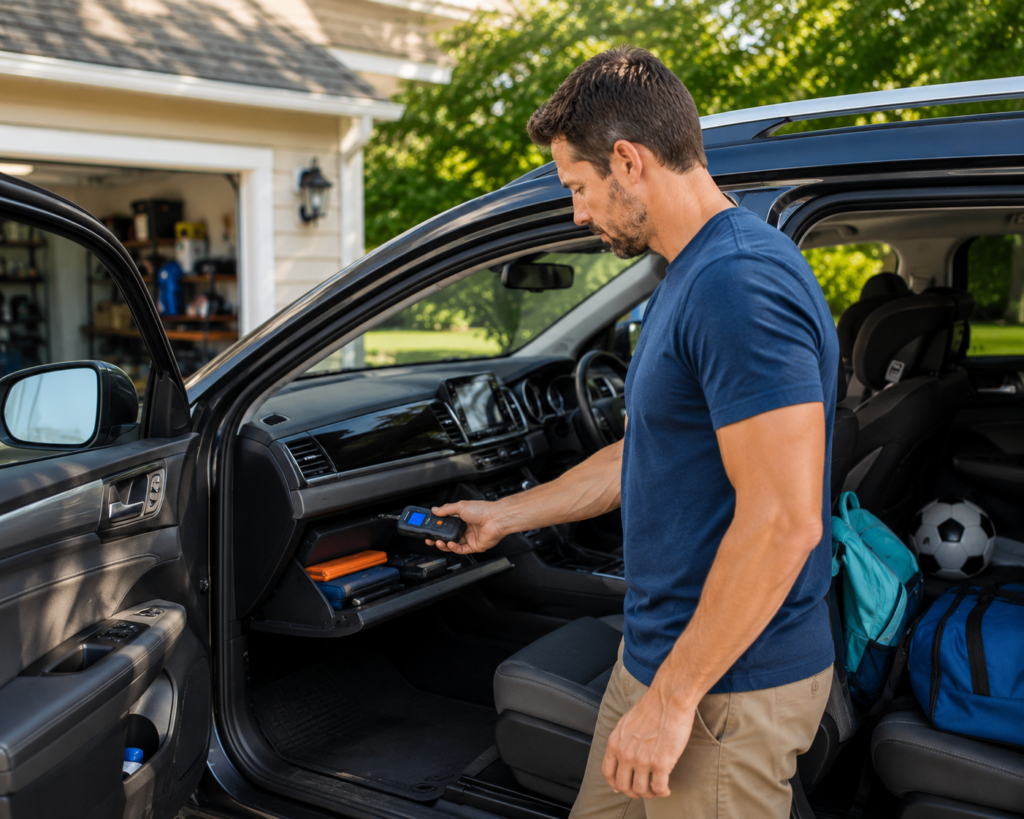
It’s small enough to keep in the glovebox.
It takes seconds to use.
And unlike many gadgets collecting dust in garages around the world, it actually solves a real problem.
What I’ve Learned
After using multiple tyre pressure gauges over the last decade, I genuinely believe every driver should own a Digital Tire Pressure Gauge.
It’s one of the cheapest and easiest ways to improve vehicle safety, maximise tyre life and potentially reduce fuel costs.
I’ve tested several over the years and my personal favourite remains the AstroAI Digital Tire Pressure Gauge because it’s accurate, durable and easy to use.
No complicated setup.
No gimmicks.
No unnecessary features designed by a marketing department trying to justify a higher price tag.
Just reliable tyre pressure readings.
For busy dads managing work, family life, road trips and everything in between, that’s exactly what you want.
Sometimes the simplest tools end up being the most valuable.
A digital tyre pressure gauge falls firmly into that category.
Frequently Asked Questions
Are digital tire pressure gauges more accurate than analogue gauges?
A quality digital gauge is typically extremely accurate and easier to read. While high-end analogue gauges can also be accurate, digital models remove much of the guesswork.
How often should I check my tyre pressure?
At least once per month and before any major road trip, towing situation or heavy load.
What tyre pressure should I use?
Always follow the vehicle manufacturer’s recommended tyre pressure. This information is usually found inside the driver’s door jamb or in the owner’s manual.
Can low tyre pressure reduce fuel economy?
Yes. Underinflated tyres create more rolling resistance, forcing the engine to work harder and consume more fuel.
Do digital tire pressure gauges need calibration?
Most quality gauges remain accurate for years. However, professional users may occasionally compare readings against calibrated equipment.
What is the best digital tire pressure gauge?
After personally using several over the last decade, my favourite is the AstroAI Digital Tire Pressure Gauge due to its reliability, accuracy and durable construction.
Should I keep a digital tire pressure gauge in my vehicle?
Absolutely. They’re inexpensive, compact and can help prevent tyre wear, improve safety and ensure you’re always running the correct pressure.
