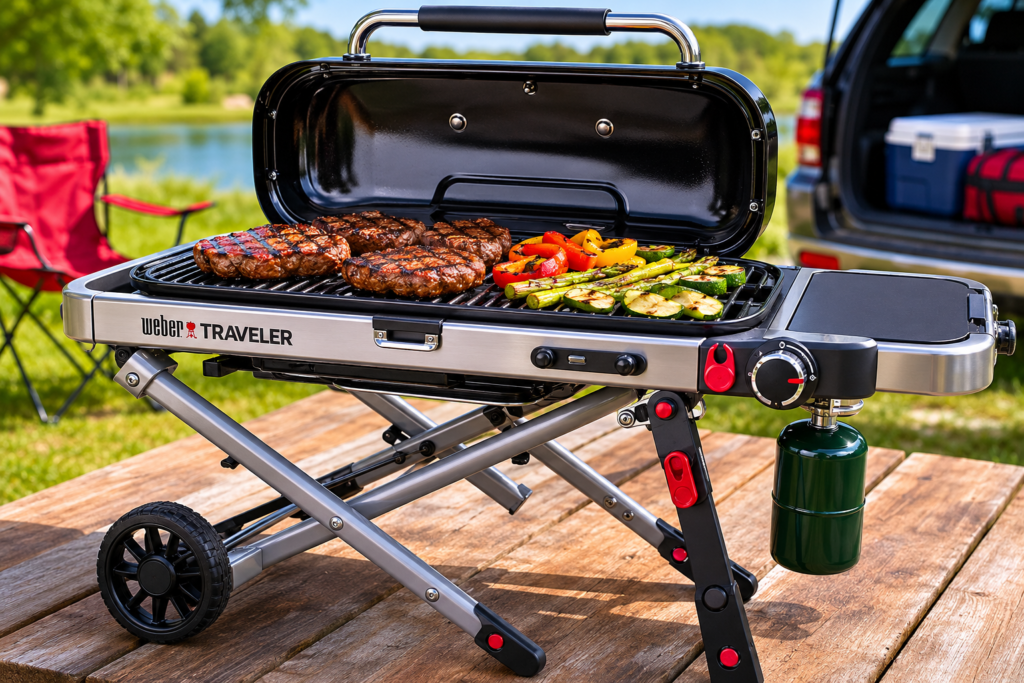

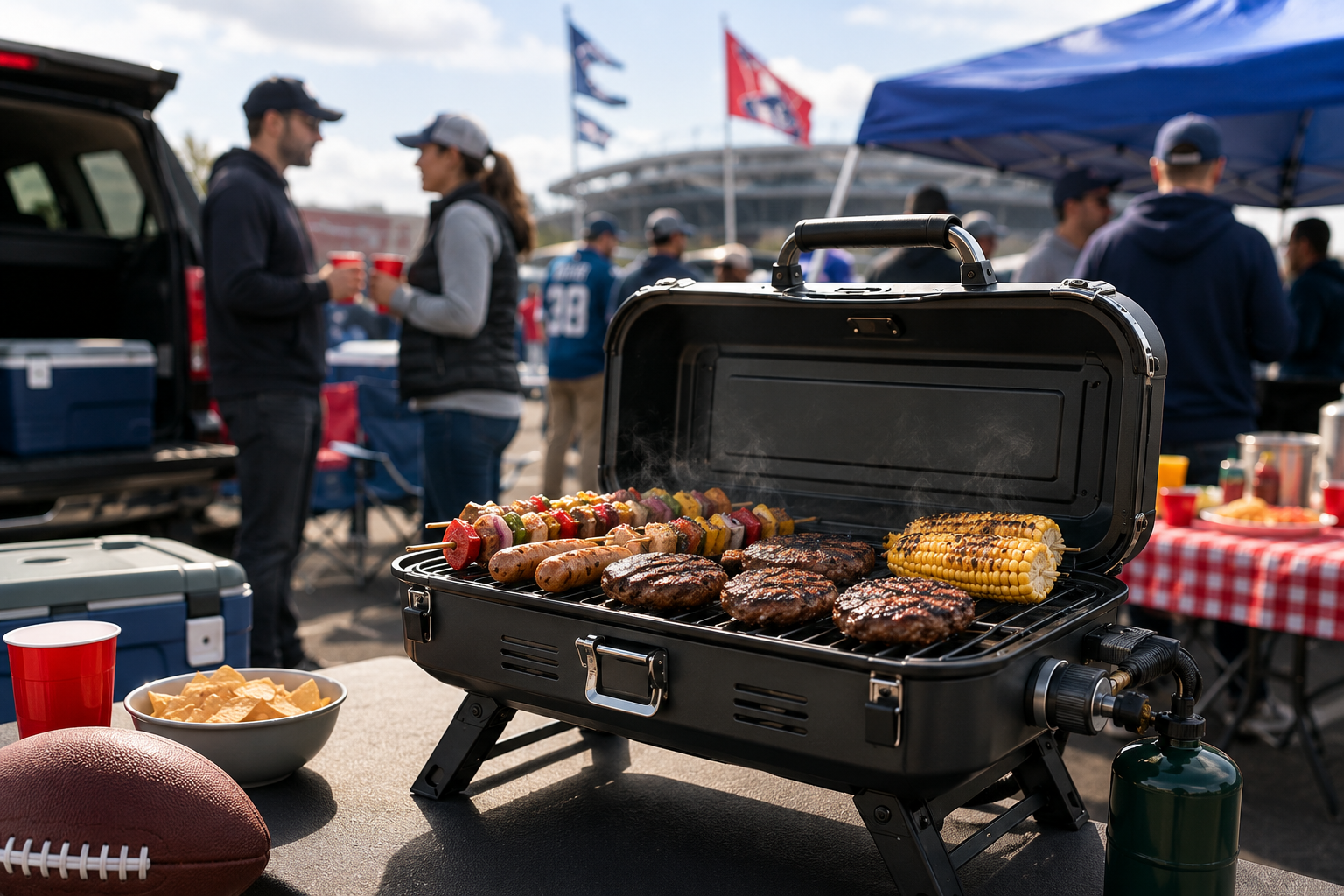
When it comes to game day, the grill is the undisputed MVP. But what makes the best portable grill for tailgating? Is it the raw power of gas, the smoky flavor of charcoal, or the high-tech precision of pellets? The truth is, the best grill is the one that perfectly matches your tailgating style. This guide will help you cut through the marketing noise and choose a gameday workhorse that will have you grilling like a legend. Whether you prioritize speed, flavor, or convenience, we’ll help you find your perfect match and ensure your pre-game feast is a certified touchdown.
Finding Your Gameday Grilling MVP
A great grill is the heart and soul of any pre-game ritual. It’s what turns an ordinary parking lot into a neighborhood block party, all centered around delicious food. Picking the right one means finding a grill that’s not just powerful, but also portable and tough enough to handle the chaos of game day.
This guide is built for the tailgating dad who wants to find his next gameday workhorse. We'll skip the marketing fluff and get straight to what matters when you’re setting up shop behind the stadium.
Comparing the Top Tailgating Grill Types
Before we get into specific models, you need to understand the big picture: the trade-offs between the three main grill types. This single decision will shape your entire tailgating experience, from how quickly you can start cooking to the final taste of your burgers and brats.
Each fuel type has its own personality, with clear pros and cons for a parking lot cookout. The best portable grill for tailgating is simply the one that fits your personal style—whether that’s all about speed, flavor, or ease of use.
At its core, the choice is a simple one: Propane delivers unmatched speed and convenience. Charcoal brings the classic, smoky flavor and searing heat. Pellets offer automated, wood-fired precision.
Here’s a quick look at how each grill type stacks up on game day.
| Feature | Gas Grills | Charcoal Grills | Pellet Grills |
|---|---|---|---|
| Setup & Heat-Up | Fastest (5-10 min) | Slowest (20-30 min) | Moderate (15-20 min) |
| Flavor Profile | Clean, basic grill flavor | Authentic, smoky flavor | Rich, wood-fired flavor |
| Portability | Excellent, lightweight options | Very portable | Heavier, often requires power |
| Best For | Quick, no-fuss cooking | Traditionalists seeking flavor | Hands-off, precise cooking |
In the end, choosing the right grill is all about matching its strengths to your tailgating style. Whether you need to fire up the grill the second you park or you enjoy the ritual of tending to the coals, we’ll help you make the right call so your tailgate becomes legendary.
What to Look For in a Tailgating Grill
Choosing the right portable grill for tailgating goes way beyond just picking a brand you recognize. It's about matching the grill’s features to how you actually operate on game day. Get it right, and your grill feels like a natural part of your setup. Get it wrong, and your pre-game ritual becomes a masterclass in frustration.
More and more dads are dialing in their tailgate parties, and the numbers back it up. The portable grill market is booming, hitting USD 2.5 billion in 2024 and expected to reach USD 4.1 billion by 2033. This surge is tied directly to tailgating's unstoppable rise in North America, which accounts for over 50% of all BBQ grill revenue. It makes sense when you consider the 18 million fans heading to NFL games each year. You can get the full story in this market report on portable grills.
Fuel Source: The Big Three
The fuel you pick is the single most important decision you'll make. It dictates everything from how fast you can get cooking to how long you’ll spend cleaning up.
- Propane: This is the king of convenience. A propane grill fires up instantly, and you get precise temperature control just by turning a knob. It’s the perfect choice if you want to be grilling burgers minutes after you put the truck in park.
- Charcoal: This is all about flavor. Nothing—and I mean nothing—beats that smoky taste you get from cooking over real charcoal. It definitely takes more time to get the coals hot and manage the temperature, but the payoff is that authentic BBQ experience.
- Pellets: Think of these as the "set-it-and-forget-it" option. Wood pellet grills are masters of precision, using digital controls to automatically maintain temperature and infuse food with a rich, wood-fired flavor. The main catch is they usually need a power source to run.
Your gut feeling here really sets the tone for everything else. Always running behind schedule? Propane is your best friend. Is flavor the one thing you won't compromise on? Go with charcoal.
Portability and Footprint
"Portable" can mean a lot of things, from a tiny tabletop unit you can carry in one hand to a massive collapsible grill on wheels. When it comes to tailgating, true portability isn't just about weight—it’s about how painless it is to get the grill from your garage to the parking lot and set it up.
Think about these factors:
- Weight and Dimensions: Can you actually lift it into your vehicle by yourself? A grill under 30 pounds is typically manageable for one person. And just as important, will it leave you enough room for the cooler, chairs, and canopy?
- Collapsible Design: Look for grills with folding legs that lock securely. A model with a rolling cart is an absolute back-saver, especially when you’re forced to park a mile away from your spot.
- Locking Lid: This is non-negotiable. A secure latch is the only thing standing between you and a car interior coated in grease and ash.
A grill's footprint isn't just about trunk space. It's also how much real estate it hogs when it's set up. A sprawling grill can be a major hazard in a crowded, chaotic parking lot.
Cooking Capacity and Surface Area
So, how many people are you feeding? The answer to that question tells you exactly how much grill space you need. A classic rookie mistake is buying a tiny grill, only to find you can only cook four burgers at a time for a crew of ten hungry fans.
You can use a rule of thumb like 72 square inches per person, but tailgating is a different beast—you're usually cooking in waves.
- Small Crew (2-4 people): Around 200-300 square inches is the sweet spot. That’s plenty of room for a small family or a few buddies.
- Average Tailgate (5-8 people): You'll want to be in the 300-450 square inch range. This lets you cook a batch of burgers for the main group while keeping hot dogs warm off to the side.
- Large Crowd (10+ people): Look for 500+ square inches, or seriously consider bringing a second grill. A big cooking surface prevents a food traffic jam and makes sure everyone gets to eat around the same time.
For dads who pull double duty with family camping, a lot of these principles cross over. Our guide on the best camping gear for families can help you find gear that works great for both.
Heat Control and Stability
Finally, your grill has to work reliably in a less-than-perfect environment. A stadium parking lot is a long way from your quiet backyard patio.
Heat control is about more than just BTUs; it's about consistency. A good tailgating grill needs to hold a steady temperature whether you're searing steaks or slow-cooking brats, even when the wind kicks up. Look for features like adjustable vents on charcoal models or multiple burners on gas grills to create different heat zones.
Stability is a critical safety feature you can't overlook. The grill must have a wide, sturdy base to keep it from tipping over on uneven asphalt or if it gets bumped. A wobbly grill is a serious burn and fire hazard, especially when there are kids and excited fans running around.
Gas vs. Charcoal vs. Pellet Grills: The Tailgating Showdown
When it comes to picking the perfect portable grill for tailgating, your first and most important decision is the fuel source. This choice dictates everything from how fast you can get cooking to the final taste of your burgers and brats. Let's break down the real-world differences between gas, charcoal, and pellet grills in the parking lot.
This isn't just a local debate; it's a ritual for dads everywhere. Portable grills have become the go-to tool for game day feasts. North America is the heart of this movement, set to capture over 50% of a barbecue grill market projected to hit $6.36 billion in 2026 and swell to $8.14 billion by 2031. A huge piece of that pie is the portable grill segment, growing at a rapid 6.06% clip, especially since 61% of American grillers already lean on the convenience of gas.
This flowchart maps out the decision-making process, helping you narrow down your options based on what matters most to you.
As you can see, your top priority—whether it’s getting food on the table fast, achieving that perfect smoky flavor, or having automated control—points you directly to a specific type of grill.
Gas Grills: The Need for Speed
Pros: Unmatched speed and convenience; easy temperature control; quick setup and cleanup.
Cons: Lacks authentic smoky flavor; can be less effective in high wind.
Gas grills are the undisputed champions of convenience, which is why they are so popular for tailgating. Their single biggest advantage is speed. You can literally go from a packed car to a grill that’s hot and ready in less than 10 minutes. Cleanup is another huge win. With no ash to deal with, you just scrape the grates, turn off the propane tank, and you’re ready to pack it up.
Charcoal Grills: The Flavor Purist
Pros: Superior smoky flavor; high searing temperatures; most portable and affordable options.
Cons: Slower heat-up time; temperature management requires practice; messy ash cleanup.
For many tailgating veterans, grilling is about the authentic experience and flavor you only get from a live fire. This is where charcoal grills truly shine, delivering a classic smoky taste that gas grills just can't match. Of course, that signature flavor comes at a price: time and effort. You'll need a good 20-30 minutes to get charcoal properly lit and ashed over before you can even think about cooking.
Charcoal grills demand more from you, but the reward is a flavor that’s simply undeniable. That smoky char on a perfectly cooked burger is why traditionalists swear by them.
If you love the hands-on ritual of grilling and put flavor above all else, charcoal is the only way to go. For those who enjoy cooking over a traditional wood fire, you might also find our guide on whether eucalyptus is good firewood interesting for other outdoor cooking adventures.
Pellet Grills: The Precision Cooker
Pros: Excellent wood-fired flavor; set-it-and-forget-it temperature automation; highly versatile.
Cons: Requires a power source; heavier and bulkier than other types; generally more expensive.
Pellet grills offer a fascinating middle ground, aiming to give you the wood-fired flavor of charcoal with the set-it-and-forget-it ease of a gas grill. This automated precision is their main draw. You can smoke ribs for hours at a steady 225°F or crank the heat to sear steaks, all while the grill's digital controller does the heavy lifting. But this technology comes with two big asterisks for tailgating: they are heavier and require a power source.
Portable Grill Comparison for Tailgating
Choosing the right grill means being honest about what you value most on game day. Each type excels in a different area. To make it easier, here's a quick side-by-side look at how they stack up on the factors that matter most for tailgating.
| Feature | Gas Grills | Charcoal Grills | Pellet Grills |
|---|---|---|---|
| Speed & Setup | Excellent. Ready in minutes, no preheat. | Fair. Needs 20-30 minutes for coals to heat up. | Good. Heats up in 15 minutes but needs power. |
| Flavor | Good. Clean, grilled flavor but no smoke. | Excellent. Unbeatable, authentic smoky taste. | Excellent. Deep, wood-fired smoke flavor. |
| Ease of Use | Excellent. Simple knob controls for temp. | Fair. Requires practice to manage heat. | Excellent. Set-it-and-forget-it automation. |
| Portability | Excellent. Generally lightweight and compact. | Excellent. The most lightweight and simple designs. | Fair. Heavier, bulkier, and requires power. |
| Cleanup | Excellent. No ash, just scrape the grates. | Poor. Messy ash disposal is required. | Good. Contained ash, but needs to cool down. |
So, what's the verdict? If you want maximum efficiency with minimum fuss so you can get back to the party, a gas grill is your MVP. If authentic flavor is your number one priority and you enjoy the hands-on process, stick with a classic charcoal model. And if you crave wood-fired flavor combined with automated precision, a pellet grill is a fantastic choice—as long as you’re prepared to handle its power and weight.
Our Top Portable Grill Picks for 2026
Alright, we've talked theory, but now it's time to get down to the grills themselves. I've sorted through the options and picked out the top portable grills for 2026, each one chosen to solve a specific tailgating challenge. This isn't about finding one "best" grill, but about finding the right grill for your gameday.
And it's a booming market. These little cooking powerhouses are more popular than ever, with the portable grill market valued at $0.68 billion in 2024 and expected to climb to $1.12 billion by 2033. A huge chunk of that growth comes from events like college football, which sees over 50,000 tailgates every year. It’s no surprise that 65% of tailgaters want a grill under 30 pounds for easy carrying. If you want to dive deeper, you can read more about these portable grill market trends.
The Crowd-Pleaser for Big Crews
Are you the designated grill master for the whole crew? If so, you know the pressure is on. You're not just cooking for your family; you're feeding an army of hungry fans. Your main concern is pure cooking capacity—a grill that can churn out a mountain of burgers and brats without creating a huge line.
For this job, you need a serious, wheeled propane grill. I’m talking about something with at least 450-500 square inches of primary cooking real estate. Make sure it has two or more independent burners. This is critical for setting up different heat zones, letting you sear steaks on one side while keeping finished food warm on the other. A collapsible rolling cart isn't a luxury; it's a necessity for getting this beast from the truck to your spot without wrecking your back.
This kind of grill eliminates the classic food bottleneck. With that much space, you cook in big, efficient batches, so everyone gets to eat hot food at the same time.
The Compact Champion for Tight Spaces
Not everyone rolls up in a massive truck with a dedicated spot. If you're working out of a smaller car or squeezing into a packed parking lot, a compact, lightweight grill is your most valuable player. Here, portability and a small footprint are what matter most.
For this dad, a high-quality tabletop gas or charcoal grill is the way to go.
- Weight: Keep it under 25 pounds. You want something you can easily carry with one hand, leaving the other free for a cooler or a couple of chairs.
- Footprint: A small, tidy design is key. It should fit on a small folding table and still leave room for your tongs, spices, and a cold drink.
- Efficiency: Don’t compromise on performance. The best compact models are known for surprisingly even heat, proving you don't have to sacrifice a good sear for a small size.
It's a common mistake to think small means weak. The best compact grills pack a serious punch, delivering high heat and consistent results in a tiny package. They’re perfect for handling a small-to-medium-sized group without any drama.
This is your solution for quick, no-fuss cooking when every inch counts. It sets up in seconds, cools down quickly, and packs away without a struggle, making it the best portable grill for tailgating in tight quarters.
The Gameday and Campsite Hybrid
For the dad who needs one grill that can pull double duty—rocking the stadium parking lot one weekend and the family campground the next—you need a blend of versatility and durability. This grill has to be tough enough to get tossed in the back of an SUV but adaptable enough for different cooking situations.
My top recommendation here is either a premium portable pellet grill or a rugged, cast-iron charcoal model. A pellet grill, while it needs a power source, offers incredible "set-it-and-forget-it" convenience. That's a game-changer for smoking ribs at a tailgate or slow-cooking a pork shoulder at the campsite.
On the other hand, a well-built charcoal grill, like a small kamado, provides amazing heat retention and fuel efficiency, which is ideal for longer cooks out in the woods. Its sturdy construction can definitely handle the bumps and bruises of frequent travel. These hybrid grills solve the problem of owning too much gear by giving you one reliable workhorse for all your outdoor cooking.
Mastering Your Tailgate Setup and Safety
Having a great portable grill is only half the equation. The real secret to becoming a gameday legend lies in a smooth, safe, and efficient setup. It’s the logistics—getting there, cooking without a hitch, and packing up cleanly—that truly separate the seasoned pros from the rookies.
Your gameday prep starts long before you pull into the parking lot. Let’s be honest, transporting a grill can be a greasy, messy job. A simple trick is to lay down a heavy-duty tarp or place the grill in a large plastic tub in your trunk. If you're using charcoal, make absolutely sure the old ash is cold, then dump it into a metal bucket for transport.
The single best thing you can do for a stress-free tailgate? Create a dedicated "go-bag" for all your grilling gear. When your tongs, lighter, and thermometer are always in one spot, you'll never have that "oh no, I forgot the…" moment again.
Thinking ahead with your food prep is another game-changer. Our guide on meal planning for busy families has some killer strategies you can easily adapt for game day.
Your Essential Gameday Checklist
Nothing kills the vibe faster than realizing you left a crucial tool at home. A good checklist isn't about being rigid; it's about making sure the important stuff is packed so you can relax and focus on the food and fun.
- Cooking Tools: You absolutely need long-handled tongs, a solid spatula, and a meat fork. More importantly, bring a reliable instant-read thermometer—guessing doneness is a rookie move.
- Safety Gear: Don't mess around here. Pack a small fire extinguisher that's rated for grease fires. A good pair of heat-resistant grilling gloves is also non-negotiable for handling hot grates or shifting coals.
- Fuel & Fire: Always bring more fuel than you think you need. Pack an extra 1-pound propane cylinder or an extra bag of charcoal. And don’t forget a dependable lighter or igniter.
- Cleanup Supplies: Heavy-duty trash bags are a must. Also pack paper towels, a grill brush for scraping the grates, and a metal can or bucket specifically for hot ash disposal.
This isn’t just a list; it’s your playbook for a flawless tailgate execution.
Parking Lot Safety Protocols
Grilling in a bustling parking lot is a whole different ballgame than your quiet backyard. You've got cars, kids, and crowds to contend with, so safety has to be front and center. The first rule is simple: location, location, location.
Find a spot in the open, well away from any cars, canopies, or flammable debris like dry grass. Create a 10-foot safety bubble around your grill and make it a strict no-go zone for kids and games. This simple rule is your number one defense against bumps, trips, and burns.
Next, you need a plan for flare-ups. Keep a spray bottle of water nearby for small flame-ups on the food itself. For a real grease fire, have a box of baking soda ready to smother it—and never, ever throw water on a grease fire. Also, ensure you have plenty of ventilation. Never operate a grill, gas or charcoal, inside a tent or vehicle. The carbon monoxide risk is real and deadly.
Finally, think about your exit strategy. When it's time to head into the stadium, shut your grill down completely. For gas models, turn off the burners and the tank valve. For charcoal, close all the vents to starve the coals of oxygen. Never leave a hot grill unattended, and always give it plenty of time to cool down before you even think about packing it away.
Summary: Finding Your Perfect Tailgating Grill
Choosing the best portable grill for tailgating boils down to a single question: what’s your top priority on game day? There’s no single "best" grill, only the right grill for your specific needs. Here's a quick recap to help you make the final call.
- If you want speed and convenience: A gas grill is your undisputed champion. It offers instant ignition, precise temperature control, and the easiest cleanup, getting you from parked to cooking in minutes. It's the ultimate "no-fuss" option for maximizing your party time.
- If you crave authentic smoky flavor: A charcoal grill is the only way to go. It delivers that classic, unbeatable taste that defines traditional barbecue. While it requires more time and hands-on effort, the flavorful reward is well worth it for purists.
- If you seek wood-fired taste with automation: A pellet grill is your high-tech solution. It combines rich, smoky flavor with set-it-and-forget-it precision, but remember it's heavier and needs a power source, adding an extra layer of logistics to your setup.
Ultimately, your gameday MVP is waiting for you. Whether it’s a small-but-mighty champ for intimate gatherings or a crowd-feeding powerhouse, the right grill turns a pre-game meal into a legendary tailgate. With this guide in hand, you’re ready to pick the one that will help you make some incredible memories—one perfectly grilled burger at a time.
Your Top Tailgating Grill Questions, Answered
Even with the perfect grill, tailgating in a crowded parking lot comes with its own unique set of challenges. We’ve answered the most common questions to ensure your gameday grilling is smooth, safe, and successful from start to finish.
How do I clean a portable grill without a hose?
The key is to use the grill's own heat. After you finish cooking, crank the temperature to high and close the lid for 10-15 minutes. This incinerates any leftover food, turning it into ash. Then, simply use a sturdy grill brush to scrape the grates clean. For a final touch, you can use tongs to wipe the warm grates with a paper towel lightly dipped in cooking oil. This removes any remaining debris and seasons the grates for next time.
How much fuel is enough for a tailgate?
Running out of fuel mid-cook is a classic rookie mistake. The golden rule is to always bring more than you think you need.
- For gas grills: A standard 1-pound propane cylinder should last for a typical 3-4 hour tailgate. However, it's always wise to pack a spare.
- For charcoal grills: Plan on using about half of a large 20-pound bag of charcoal for an average tailgate. Factors like wind and cooking duration can affect consumption, so having extra is never a bad idea.
Here's a solid rule of thumb I live by: always pack about 25% more fuel than you think you'll need. Cold days, unexpected wind, or a last-minute decision to grill another round of hot dogs will burn through fuel faster than you expect.
Are electric grills a good option for tailgating?
While convenient for balconies with outlets, electric grills are generally a poor choice for tailgating. Their primary drawback is the need for a constant power source, which means lugging a heavy portable power station or a noisy generator. This adds significant weight, cost, and complexity to your setup. For the freedom and simplicity required in a parking lot, gas or charcoal grills remain the superior options.
What are the most important safety tips for gameday grilling?
Safety should be your number one priority in a busy, crowded environment.
- Establish a Safety Zone: Create a 10-foot "no-go" circle around your hot grill. Keep kids, pets, and games out of this area.
- Ensure Stability: Set up your grill on the flattest surface you can find to prevent it from tipping over.
- Be Prepared for Flare-Ups: Have a box of baking soda on hand to smother any grease fires. Never use water on a grease fire.
- Proper Shutdown: When you're done, turn off the burners and the tank valve on a gas grill. For charcoal, close all vents to cut off oxygen. Always allow the grill to cool completely before packing it up.
Ready to become the MVP of your next tailgate? At alphadadmode.com, we're building a community for dads who want to master everything from grilling to fatherhood. Sign up now to get exclusive updates, practical tips, and be the first to know when we launch. Join us at https://alphadadmode.com.