


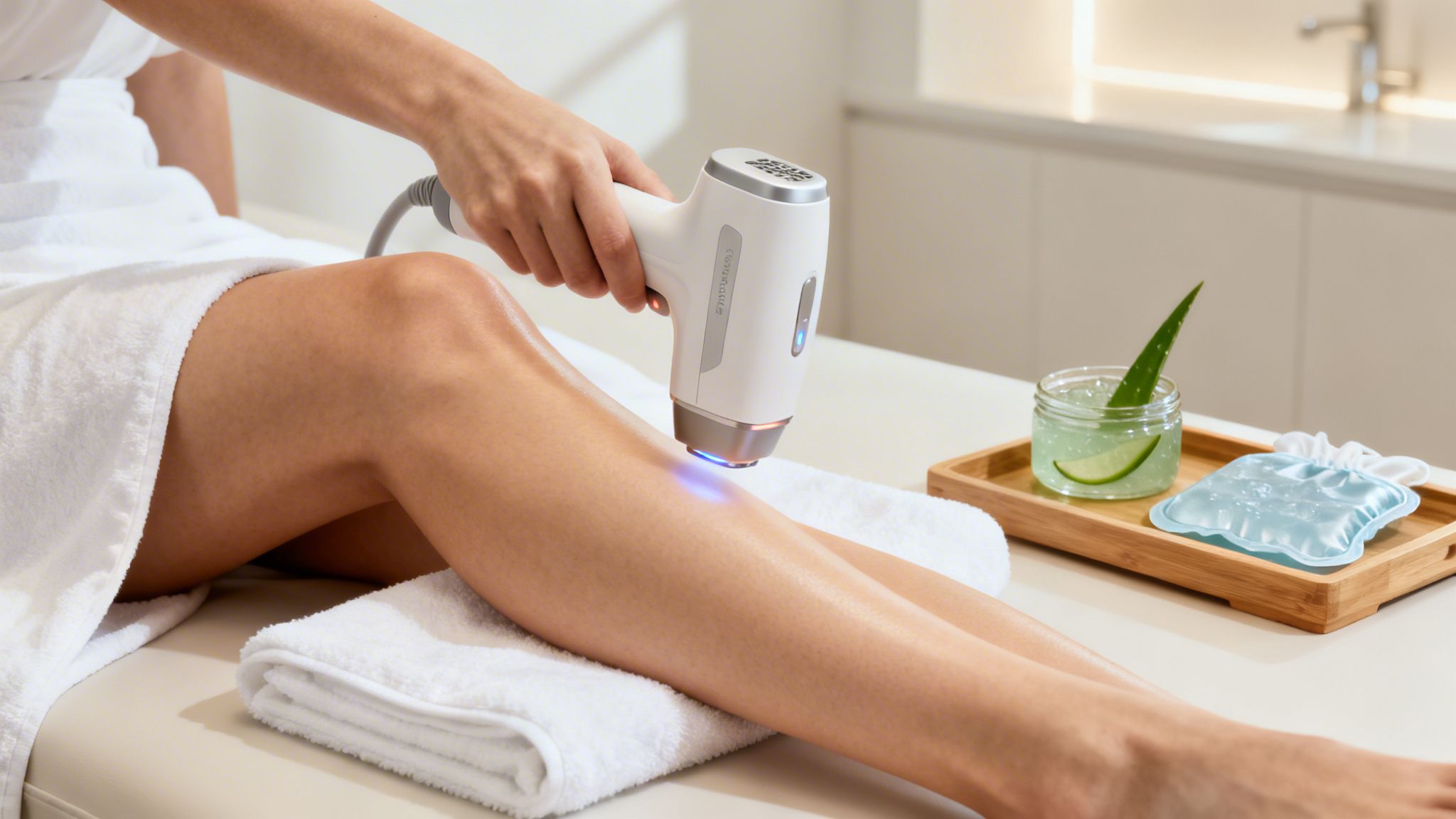
Let’s get straight to the point: yes, you can absolutely have sex after laser hair removal, but hitting the pause button for a short time is a smart move. The general rule of thumb is to wait at least 24 to 72 hours. Think of your skin post-treatment as having a mild sunburn—it’s sensitive, a little stressed, and needs some time to cool down and recover.
The Quick Answer And Why It Matters

During a laser hair removal session, a highly concentrated beam of light zaps your hair follicles with heat to stop them from growing hair. It’s an effective process, but it leaves those follicles temporarily open and the skin around them pretty sensitive. That waiting period isn’t just a random number; it’s a critical window for healing that protects your skin and the investment you’ve made in your treatment.
Why The Waiting Period Is So Important
Jumping into sexual activity too quickly introduces a trio of potential troublemakers: friction, sweat, and bacteria. The simple skin-on-skin contact that happens during sex can easily chafe the delicate, freshly-treated area. This can turn minor redness into angry bumps or prolonged irritation. Nobody wants that.
On top of that, sweat can get trapped in those open hair follicles, which is a recipe for small breakouts or even folliculitis—a fancy term for inflamed follicles.
Giving your skin just a day or two to breathe and close up shop dramatically lowers these risks. This brief pause helps ensure your recovery is smooth and comfortable, letting you get back to enjoying the silky-smooth results without any painful setbacks.
While most pros recommend waiting 1-3 days, some might say it’s okay to resume activity sooner if you have zero redness or irritation. But playing it safe for a day or two is always the best bet. You can find more detail on proper post-treatment care at sevlaser.com.
The golden rule is to listen to your body. If your skin feels tender, looks red, or is warm to the touch, that’s your cue to wait. Once it looks and feels completely normal again, you’re good to go.
Post-Laser Activity Quick Reference
To make it even clearer, let’s break down why you need to be mindful of more than just sex after your appointment. This table summarizes the main things to avoid and why.
| Concern | Why It Matters for Recovery | Recommended Wait Time |
|---|---|---|
| Friction | The number one issue with sex post-laser. It can easily turn minor sensitivity into significant irritation and chafing. | 24-72 Hours |
| Sweat | Can clog the open follicles, leading to bumps or inflammation. This also applies to heavy workouts, saunas, or hot tubs. | 24-48 Hours |
| Bacteria | Open follicles are more vulnerable to infection. Sweat and close physical contact can introduce unwanted bacteria. | 24-72 Hours |
Ultimately, this short break is all about putting your comfort and the effectiveness of your treatment first. A little patience now pays off with much better, happier results later.
How Laser Hair Removal Actually Works

Before we get into the “why” behind holding off on sex, it’s helpful to understand what’s actually going on with your skin during a laser session. It’s not magic—it’s a very precise bit of science that uses controlled stress to stop hair growth in its tracks.
Think of the laser as a super-smart, heat-seeking device. It sends out a concentrated beam of light that zips past your skin and zeroes in on the hair follicles. The dark pigment in your hair, known as melanin, eagerly soaks up all that light energy.
The moment the melanin absorbs the light, it converts to heat. And that heat is what does all the heavy lifting, damaging the follicle at the root and making it much harder for it to grow new hair. After a few sessions, that damage becomes significant enough to give you that long-term smoothness you’re after.
The Targeted Heat Effect
The real genius of modern lasers is how incredibly precise they are. The technology is specifically calibrated to target the melanin in the hair itself, leaving the surrounding skin tissue mostly alone. That little zapping sensation people describe—like a warm pinprick or a tiny rubber band snap—is the heat hitting its target.
This targeted heat is also exactly why you see those common, temporary side effects right after your appointment.
- Redness: This is just your skin’s normal inflammatory response to the heat. Totally expected.
- Mild Swelling: You might notice some slight puffiness around each follicle. That’s called perifollicular edema and it’s a good sign the treatment worked.
- Sensitivity: Your skin is going to feel a bit tender, which makes sense since it just went through a controlled thermal procedure.
Once you understand this, the aftercare advice—especially waiting to have sex—starts to make perfect sense. It’s not about being overly dramatic; it’s about giving your skin the time it needs to cool down and recover from what are essentially thousands of tiny, targeted heat treatments.
The key takeaway is this: the laser’s heat leaves your hair follicles temporarily open and the skin around them is sensitive. This is why all aftercare is focused on avoiding friction, sweat, and bacteria, which can easily irritate the area.
From Treatment To Recovery
That immediate redness and warmth you feel? That’s a sign the treatment did its job and your body’s natural healing process is kicking into gear. But during this initial recovery phase, your skin is at its most vulnerable.
This is where activities like sex or a sweaty workout come into play. The friction and moisture can seriously aggravate that sensitivity, leading to more irritation, bumps, or even minor infections.
By giving your skin a solid 24 to 72-hour window to calm down, you’re letting that initial inflammation fade naturally and without any trouble. It’s a simple pause that protects your investment, ensures you get the best possible results, and gets you on the fast track to that smooth, confident skin you wanted in the first place.
The Real Risks of Not Waiting
It’s tempting to blow off the recommended waiting period. I get it. But understanding why you’re being told to wait can make all the difference. When you ignore that advice, you’re introducing three major troublemakers to your freshly treated skin: friction, sweat, and bacteria. These aren’t just minor issues; they can genuinely mess with your comfort and your results.
Think of your skin right after a laser session as being in a very delicate state. The laser just zapped your hair follicles with targeted heat, leaving them open and the surrounding skin pretty sensitive.
Jumping into any kind of intense, skin-on-skin friction too soon is like rubbing a fresh sunburn. It can quickly turn mild redness into serious chafing, irritation, and outright pain. What should have been a super quick recovery could easily become days of feeling miserable.
Sweat and Bacteria: The Unseen Instigators
Friction is the obvious problem, but sweat is another big one to think about. Any activity that gets your heart rate up—including sex—is going to make you perspire. That moisture can get trapped in those vulnerable, open follicles.
When sweat and your body’s natural oils clog those pores, it creates the perfect breeding ground for little pimple-like bumps. In some cases, you could end up with folliculitis, which is a common but really annoying infection of the hair follicles that shows up as red, itchy bumps.
Finally, you have to consider bacteria. The risk of a serious infection is very low, let’s be clear. But the logic is simple: your follicles are basically tiny open channels to the deeper layers of your skin for a short while. Introducing bacteria from sweat and close physical contact is a risk you just don’t need to take.
The waiting period isn’t about being overly dramatic; it’s a smart, proactive step. Think of that short break as a simple insurance policy against discomfort. It ensures you get the smooth, hassle-free results you paid for without any preventable headaches.
Let’s Use an Analogy
Imagine you’ve just had your carpets professionally deep-cleaned. The fibers are damp and vulnerable, and the cleaner tells you not to walk on them for a few hours so they can dry properly.
If you stomp all over them with dirty shoes right away, you won’t ruin the carpet forever. But you will track in dirt, flatten the fibers, and undo that clean, fresh result you were so excited about.
It’s the same idea here. Having sex right after laser hair removal won’t reverse the treatment, but it introduces that “dirt”—friction, sweat, and bacteria—that gets in the way of a clean healing process and detracts from the smooth skin you’re aiming for.
Ultimately, the choice is yours. But waiting 24 to 72 hours is a tiny price to pay for a comfortable recovery. The most important thing is to listen to your body. If your skin still feels sensitive, tender, or looks red, it’s telling you it needs more time. Giving it that time is the smartest way to protect your investment and enjoy the fantastic benefits of your treatment.
Your Action Plan For A Smooth Recovery
Alright, let’s get down to brass tacks. What you do in the first 24 to 48 hours after your session is what really counts. Think of it as a mandatory cooldown for your skin—it’s just been through a serious workout, and now it needs to rest.
Your main goal is simple: keep the treated area cool, clean, and free from any unnecessary friction.
The easiest win here? Ditch the tight, synthetic underwear and swap them for loose-fitting, breathable cotton boxers. It seems like a small thing, but giving your skin room to breathe and avoiding constant rubbing makes a world of difference.
First 48 Hours Do’s and Don’ts
I’ve put together a simple cheat sheet to make aftercare foolproof. Sticking to these guidelines will help you heal faster and get you back in the game—intimacy included—without any uncomfortable setbacks.
Here’s a clear breakdown of what to do versus what to skip while your skin is in recovery mode.
| What to Do | What to Avoid |
|---|---|
| Wear loose, natural fabrics like cotton to help your skin breathe and minimize friction. | Tight, synthetic clothing that traps heat and moisture, which is a recipe for irritation. |
| Take cool or lukewarm showers to stay clean without introducing extra heat to the area. | Hot tubs, saunas, and steamy showers. These will only crank up the skin’s temperature and can worsen inflammation. |
| Apply fragrance-free aloe vera gel to calm any warmth or redness you might feel. It’s your best friend right now. | Heavy lotions or scented products. They’re often packed with chemicals that can seriously irritate those open hair follicles. |
| Pat the skin dry gently with a soft, clean towel after you wash. No aggressive rubbing. | Intense gym sessions or anything that makes you sweat a lot. Sweat can clog pores and lead to pesky bumps. |
Think of these two days as an investment. A little bit of care now prevents a lot of discomfort later.
Ultimately, it all boils down to avoiding friction, sweat, and bacteria. That’s it. This isn’t some complicated medical protocol; it’s just about being smart and giving your skin the space it needs to heal.
Once you’re past this initial window and your skin is feeling back to normal, you can start thinking about reconnecting with your partner. For some inspiration, you can check out these date night ideas at home.
How Hair Removal Boosts Confidence And Intimacy
Let’s move past the aftercare logistics and get to the real payoff. Why do so many men opt for laser hair removal? Sure, the look is part of it, but the reasons often go much deeper. It’s a genuine confidence booster that can completely change how you feel in your own skin.
When you’re not worried about unwanted back hair or dealing with razor burn in your groin, you just feel more comfortable and self-assured. That feeling of being ready and in control carries over into every part of your life, especially intimate moments.
Enhancing Physical Connection
The physical benefits are immediate and obvious. For many, removing hair seriously cranks up skin-on-skin sensitivity, which can make things more pleasurable for both you and your partner. It’s like taking away a tiny barrier and getting a more direct, connected physical experience.
This isn’t just in your head—there’s real data to back it up. Studies show that hair removal has a major positive impact on sexual confidence and satisfaction. For instance, research found that 53-63% of women felt enhanced sexual pleasure after Brazilian laser hair removal, and 60% of clients overall reported greater sexual pleasure with less pubic hair. From a purely physical standpoint, you’re removing a buffer and allowing for more direct stimulation. You can read more about how hair removal changes the game at dermahealthinstitute.com.
This turns laser hair removal from a simple grooming choice into a real investment in your personal well-being and the quality of your intimate relationships. It’s all about feeling undeniably good in your skin.
An Investment In Your Relationship
When you feel good about yourself, that confidence naturally spills over into how you interact with your partner. It can lead to more spontaneity and a willingness to be more open and vulnerable, which is the bedrock of a strong emotional bond.
Ultimately, this is about more than just convenience. It’s about setting yourself up for more confidence and a better connection. By getting rid of a recurring grooming hassle, you free up your energy to focus on what really matters. For more on this, check out our guide to maintaining a healthy and vibrant sex life.
A Broader Look at Health Considerations
Laser hair removal is incredibly safe and effective, but it’s always wise to step back and look at the bigger picture when it comes to pubic grooming. Let’s talk frankly about what complete hair removal means for your body’s natural defenses. This isn’t about fear-mongering; it’s about giving you the full story so you can make smart, proactive choices.
Think of pubic hair as a natural cushion. It creates a subtle, protective barrier for some of the most sensitive skin you have. It helps cut down on friction during movement and intimacy, and it might even offer a bit of a buffer against certain skin-to-skin pathogens.
Grooming and Your STI Risk: What the Research Says
When you go completely bare down there, that natural buffer is gone. This has prompted researchers to dig into the potential links between grooming habits and health, which is a crucial conversation for anyone who’s sexually active.
A major study from the University of California, San Francisco, really put this on the map. Researchers discovered that people who practice “extreme” grooming—meaning they remove all of their pubic hair—had a significantly higher risk for certain sexually transmitted infections.
Specifically, the study found these individuals had up to four times greater odds of contracting STIs that spread through skin-on-skin contact, like herpes and HPV. You can dive into the full details of the UCSF study on grooming and STI risks here.
The key takeaway isn’t to stop grooming. It’s about being aware of the potential risks so you can double down on safe practices. Knowing this empowers you to enjoy the confidence of being smooth while staying vigilant about your health.
This information really just highlights the importance of two things that are non-negotiable, no matter how you groom: open communication with your partners and consistent safe sex practices. These are your best lines of defense, period.
At the end of the day, your grooming style is your call. The goal is to find the sweet spot between the aesthetic you want and a clear-eyed understanding of your overall well-being. Being informed and proactive lets you make the best decisions for your body and lifestyle. And if you’re looking for more ways to optimize your overall health, check out our guide on how to boost testosterone naturally.
Alright, let’s tackle the questions that are probably on your mind. When it comes to post-laser care, a little common sense goes a long way, but getting straight answers helps even more.
Does The Waiting Time Change For Different Body Parts?
You bet it does. The two biggest things to worry about are friction and sweat, so where you got zapped matters a lot.
Think about it: a laser treatment on your back or chest isn’t going to get nearly as much direct contact during sex as, say, your bikini line or inner thighs. For those less high-traffic areas, you might feel perfectly fine and ready to go after just 24 hours, especially if you don’t see any lingering redness.
The golden rule, though, is simple: listen to your body. If an area feels even slightly tender, warm, or just “off,” give it more time. Don’t rush it, no matter where the treatment was.
What Are Signs I Should Wait Longer?
Your skin is pretty good at telling you when it’s not ready for action. You just have to know what to look for.
Hold off if you notice any of these signs:
- Lingering Redness: Is the area still pink or red a full day later? That’s a clear signal to wait.
- Swelling or Puffiness: Any puffiness around the follicles means there’s still inflammation. Give it time to calm down.
- Soreness or Itching: If your skin is tender to the touch or gets easily irritated by your clothes, it’s definitely not ready for more friction.
Bottom line: if your skin doesn’t look and feel 100% normal, it’s telling you to pump the brakes.
Is It Safe To Use Lubricants After Treatment?
This is a great question. You’ll want to be careful here. It’s best to wait out that initial 24-48 hour healing window before introducing any kind of product to the area.
Why? Because freshly zapped hair follicles are open and sensitive. Many lubricants contain ingredients—like fragrances, glycerin, or certain preservatives—that can easily cause irritation or even a nasty reaction.
Once you’re past that initial recovery phase and your skin feels completely back to normal, reach for a simple, water-based, and hypoallergenic lubricant. Steer clear of anything with special warming or cooling effects until you know you’re fully healed.
At alphadadmode.com, we’re building a community to help dads navigate everything from health to home life. Sign up for early access and updates at alphadadmode.com.
