


The debate over should kids get participation trophies is a fiery one, touching on deep-seated beliefs about parenting, competition, and what it takes to raise resilient children. For parents, coaches, and educators, it's more than just a question of plastic awards; it's about how we celebrate effort, build confidence, and prepare kids for life's inevitable wins and losses.
So, what’s the right answer? This guide breaks down the controversy, exploring the pros, cons, psychological impact, and expert-approved alternatives to help you make an informed decision for your child.
What Are Participation Trophies?
A participation trophy is an award given to every child on a team or in a program, regardless of their individual performance or the team's final standing. The core idea is to recognize the commitment and effort of simply "showing up" and being part of the group.
This practice is most common in youth sports leagues (like T-ball or soccer for very young kids) and at school events like field days or science fairs. While the concept of rewarding participation isn't new, the widespread use of identical trophies for all has become a modern parenting flashpoint, sparking a larger conversation about motivation and achievement.
Arguments in Favor of Participation Trophies

Before dismissing these awards, it’s important to understand why they became so popular. Proponents argue that for young children, participation trophies serve a valuable purpose in fostering a positive relationship with sports and extracurricular activities.
- Encourages Involvement and Effort: For a five-year-old, a small trophy is a powerful motivator. It’s a tangible symbol that their commitment to showing up for practices and games was valued, which can encourage them to sign up again next season.
- Boosts Self-Esteem and Confidence: A young child’s self-esteem is fragile. A trophy can be a simple, effective way to make them feel seen and included, reinforcing the message that their contribution matters. It provides a perfect opportunity for parents to praise specific efforts, a key step in building resilience in children.
- Rewards Persistence, Not Just Winning: Especially for kids who aren't natural athletes, a participation trophy celebrates the journey—the perseverance, the teamwork, and the courage to try something new. It shifts the focus from a "win-at-all-costs" mentality to a celebration of the process.
- Promotes Inclusive and Supportive Environments: By ensuring every child receives recognition, these awards help create a welcoming team atmosphere where every member feels like a valued part of the group, which is crucial for social development in early childhood.
Arguments Against Participation Trophies
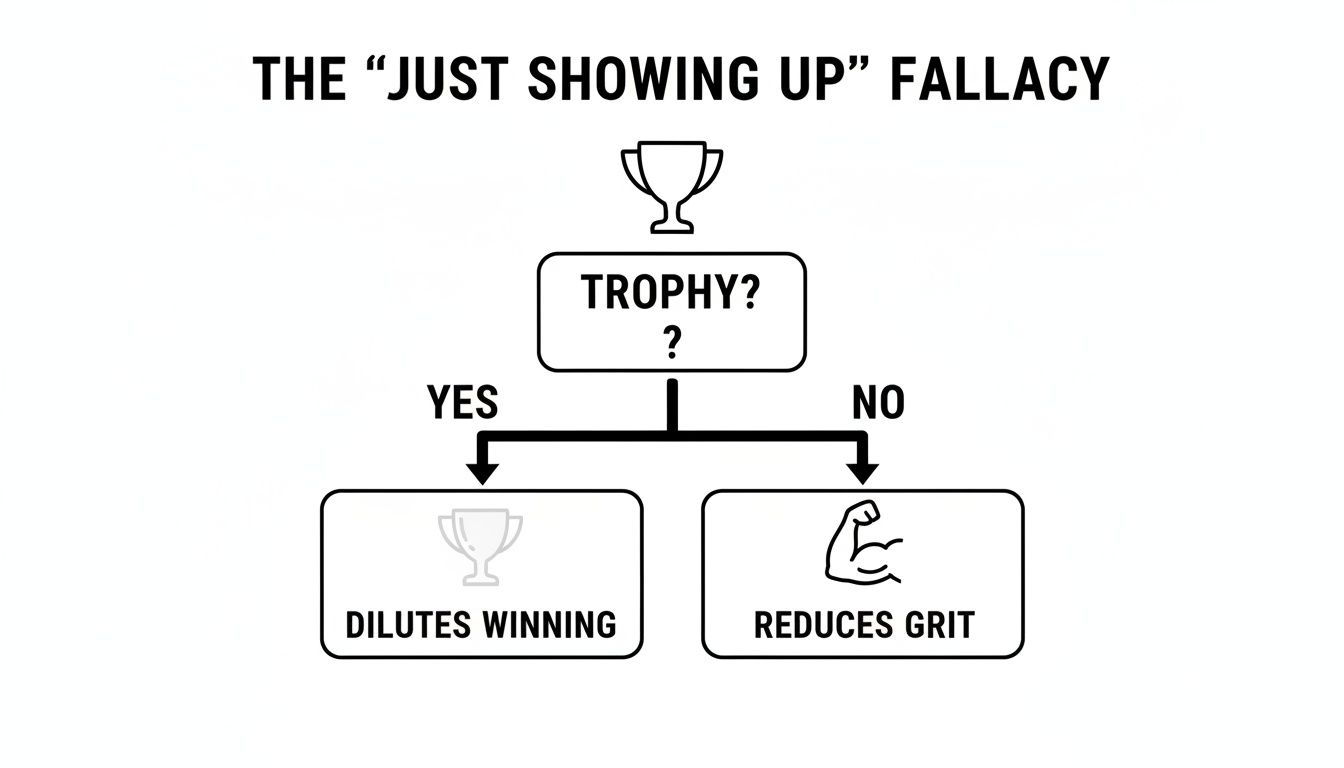
On the other side of the debate, critics argue that the practice of rewarding everyone can have unintended negative consequences. They believe it sends the wrong message about effort and achievement.
- May Devalue Achievement and Competition: When every player gets an identical trophy, the award for first place can lose its significance. The message becomes muddled: if showing up gets you the same reward as winning, the value of healthy competition and striving for excellence can be diminished. This can impact the difference between self-confidence and self-esteem in our detailed guide.
- Risk of Fostering Entitlement: A primary concern is that kids may develop an expectation of being rewarded for minimum effort. If a trophy is guaranteed, the incentive to hustle in practice or push through challenges can decrease, potentially fostering a sense of entitlement.
- Can Reduce Motivation to Improve: Why put in extra work if the outcome is the same for everyone? Critics worry that participation trophies can inadvertently kill a child's internal drive to get better, suggesting that extra effort doesn't lead to extra recognition. The idea that the kids who win early rarely win later suggests that early, unearned praise may not build long-term drive.
- Fails to Prepare Kids for Real-World Challenges: The real world rarely gives out awards for just showing up. Promotions, raises, and opportunities are earned. Opponents believe that shielding kids from the reality of losing robs them of the chance to develop resilience, learn from failure, and understand the deep satisfaction of earning success through hard work.
Psychological and Social Considerations

The impact of a participation trophy isn't in the plastic itself—it's in the message a child receives. This is where psychology and parenting style play a crucial role.
For a young child, a trophy is a concrete symbol of a positive experience. It can bolster self-esteem at a critical developmental stage. However, as children get older, they become more aware of peer comparison. A high-achieving child might feel their victory is cheapened, while a struggling child might feel patronized by an award they know they didn't "earn."
Your parenting style is the key variable. A parent who uses the trophy as a conversation starter about effort, teamwork, and fun can turn it into a positive tool. A parent who presents it as an achievement equivalent to winning may foster a fragile sense of accomplishment. The goal is building genuine self-esteem in your children, which comes from internalizing effort and progress, not just from external rewards.
Alternatives to Participation Trophies
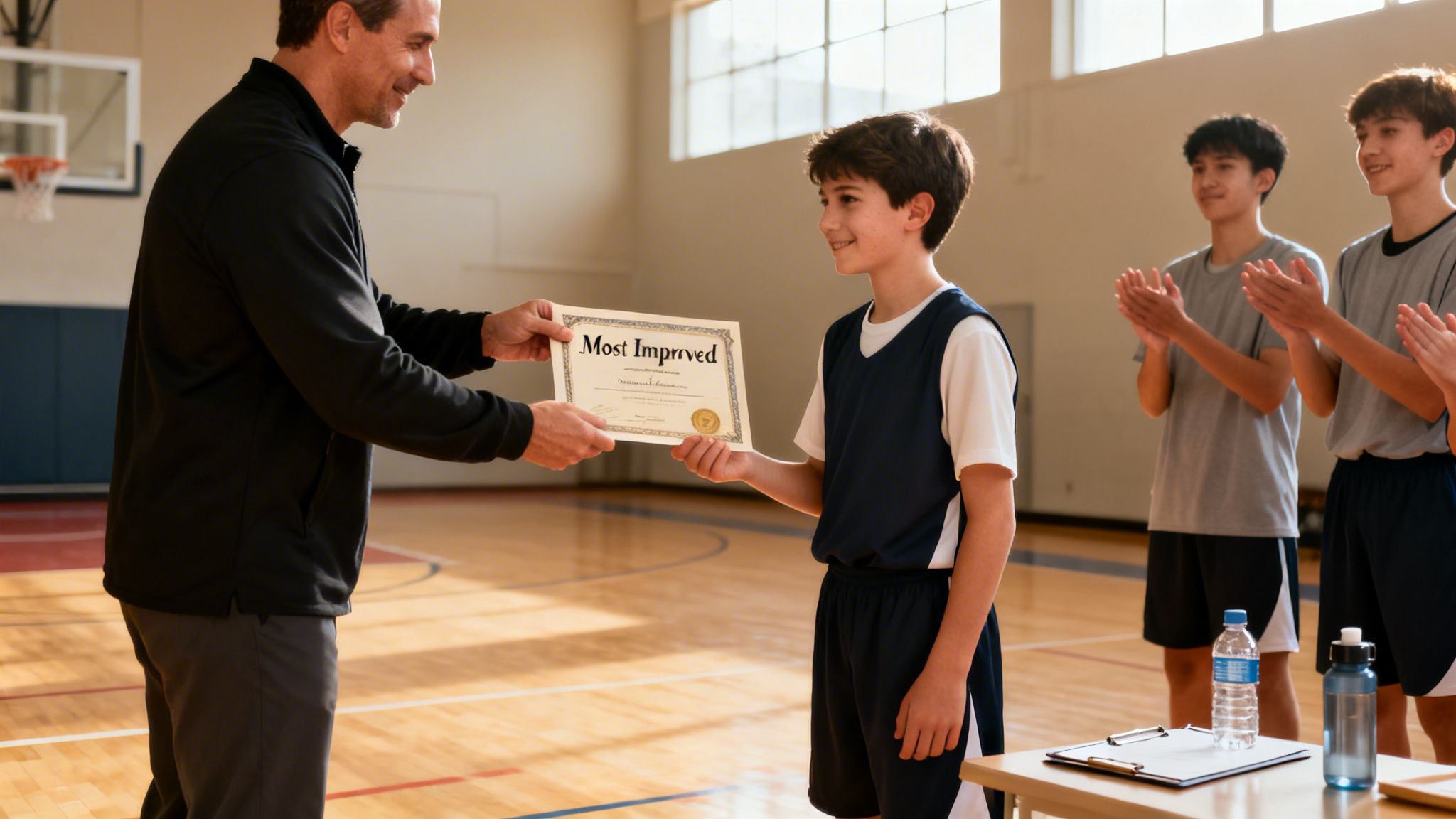
If you're looking for ways to recognize children's efforts without resorting to generic trophies, there are many meaningful alternatives. The goal is to make recognition specific, personal, and focused on growth.
- Certificates of Effort or Improvement: Instead of a generic trophy, create certificates for specific achievements like "Most Improved Player," "Hardest Worker Award," or "Best Team Spirit." This recognizes individual contributions and values different kinds of success.
- Team-Based Recognition or Badges: Shift the focus from individual prizes to team celebration. This could be an end-of-season party, a team outing, or custom badges that celebrate the entire group's journey together.
- Praise for Specific Skills, Effort, or Teamwork: The most powerful tool a parent or coach has is specific, authentic praise. Saying, "I loved how you hustled back on defense in the second half," is more impactful than any trophy. It's about mastering the art of giving a compliment.
- Non-Material Rewards: Offer experience-based rewards. Let a child be "captain for the day," choose the next practice drill, or enjoy a special one-on-one activity. These build a sense of leadership and internal satisfaction.
What Experts Say
Child psychologists and sports coaches generally offer a nuanced view on the question of should kids get participation trophies. Many agree on an age-based approach.
For children under 8, experts like Dr. Carol Dweck, known for her work on "growth mindset," suggest that praising effort and persistence is crucial. A participation trophy, when framed as a reward for commitment and trying hard, can align with this. It encourages a love for the activity itself.
However, as kids mature (around ages 9-12), experts warn that unearned praise can be counterproductive. A 2014 poll by Reason-Rupe found that 57% of Americans believe only winners should get trophies, indicating a societal shift in expectations as kids age. You can explore the full findings.
The consensus among many coaches is to use these early years to build foundational skills and a love for the game. As competition becomes more central, recognition should shift to reward skill, improvement, and performance. You can find more strategies to keep kids motivated in football and other sports that focus on this balanced approach.
FAQs
Should all kids get participation trophies?
It depends on the age and context. For very young children (typically under 8), they can be a positive tool to encourage involvement and celebrate effort. As kids get older and develop a better understanding of competition, most experts recommend phasing them out in favor of merit-based awards and specific praise.
Do participation trophies harm motivation?
They can, if presented poorly. If a child comes to believe that effort doesn't matter because everyone gets the same reward, it can reduce their motivation to improve. However, if the trophy is framed as a memento of a fun season and a celebration of commitment, it is less likely to be harmful.
How can parents balance encouragement and achievement?
Focus on a "growth mindset." Celebrate personal bests, effort, and resilience over just winning or losing. Acknowledge wins with excitement, but treat losses as learning opportunities. Ask questions like, "What did you learn from that game?" or "What do you want to work on in practice this week?" This teaches kids that both outcomes are part of the journey to success.
Are there better ways to reward kids’ efforts?
Yes. Specific, personalized recognition is often more effective. This includes certificates for "Most Improved," verbal praise highlighting specific actions, team-based celebrations, or non-material rewards like leadership roles. These alternatives tie recognition directly to a child's actions and build genuine self-esteem.
Conclusion
The debate over should kids get participation trophies is complex because both sides stem from a desire to help children succeed. Proponents see them as a tool for encouraging young kids and building early confidence. Opponents worry they devalue achievement and fail to prepare kids for the real world.
The most balanced approach is to consider the child's age and focus on the message you send. For the youngest kids, a trophy can celebrate the courage to participate. As they grow, shift the focus to recognizing specific efforts, personal improvement, and the valuable life lessons learned through both winning and losing. Ultimately, your guidance as a parent or coach is what gives any award its true meaning.
At Alpha Dad Mode, we’re all about raising resilient, capable kids by focusing on what builds true character—effort, integrity, and growth. We give fathers the tools and insights to lead their families with confidence. For more practical parenting strategies, head over to alphadadmode.com.
