

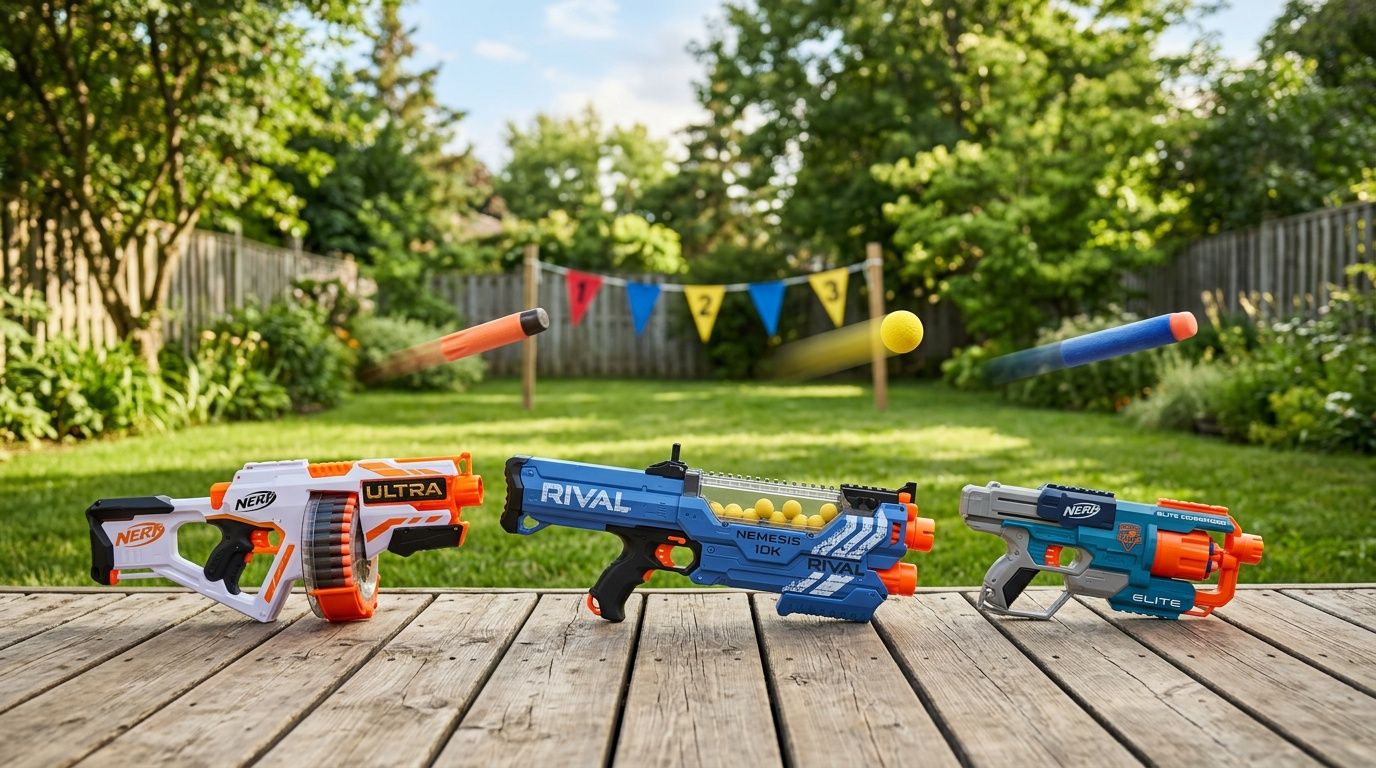
Backyard Nerf wars usually start the same way at my house. One kid grabs the loudest blaster, another picks the one with the biggest drum, and five minutes later somebody is frustrated because the “cool” one is slow to reload, awkward to hold, or just doesn’t hit where they aimed.
That’s why comparing the most powerful Nerf gun brands and models matters more than most parents expect. Raw power is fun. Range is fun. But the blaster that wins in a product box callout doesn’t always win in real family use.
For dads, the sweet spot is different. You want enough punch to make backyard battles exciting, enough durability to survive drops on the patio, and enough control that younger kids can still join the action safely. If you also want the play session to turn into something more meaningful, pairing a Nerf afternoon with other father-son bonding activities is an easy win. The right blaster doesn’t just help you win the backyard war. It keeps the fun going longer.
Introduction Winning the Backyard Nerf War
If you’re shopping for the most powerful nerf gun, you’re probably not looking for another random toy. You want something that feels fast, hits hard enough to be exciting, and doesn’t become annoying after ten minutes of real use.
That’s where a lot of buying guides miss the point. They treat power like the only thing that matters. In a family setting, it doesn’t. A blaster can have strong performance and still be the wrong pick if it’s too bulky for kids, chews through batteries, or turns every match into a reload fest.
The better question is simple. Which blaster gives you the best mix of Nerf gun performance, durability, and fun factor for the kind of battles your family has?
Here’s the quick view before we dig in.
| Model | Brand | Best known for | Practical takeaway |
|---|---|---|---|
| Nerf Ultra One | Nerf Ultra | Long-range stock performance | Best choice if you care most about distance |
| Nerf Rival line | Nerf Rival | Strong accuracy and consistent velocity class | Better for older kids, teens, and tighter aim |
| Mach 100 Hyper | Nerf Hyper | Fastest official Nerf velocity listed here | Best for buyers focused on official top-end speed |
| Modified Caliburn builds | Hobby platform | Extreme enthusiast performance | Not a casual family blaster |
| Giant Guinness record build | Custom one-off | Extreme modding example | Inspiration, not a practical purchase |
Understanding Nerf Blaster Power Metrics
Power gets thrown around loosely in Nerf marketing. In practice, it usually comes down to velocity, range, and accuracy. If a blaster looks aggressive but can’t put darts on target, it won’t feel powerful in a real game.
FPS tells you the class, not the whole story
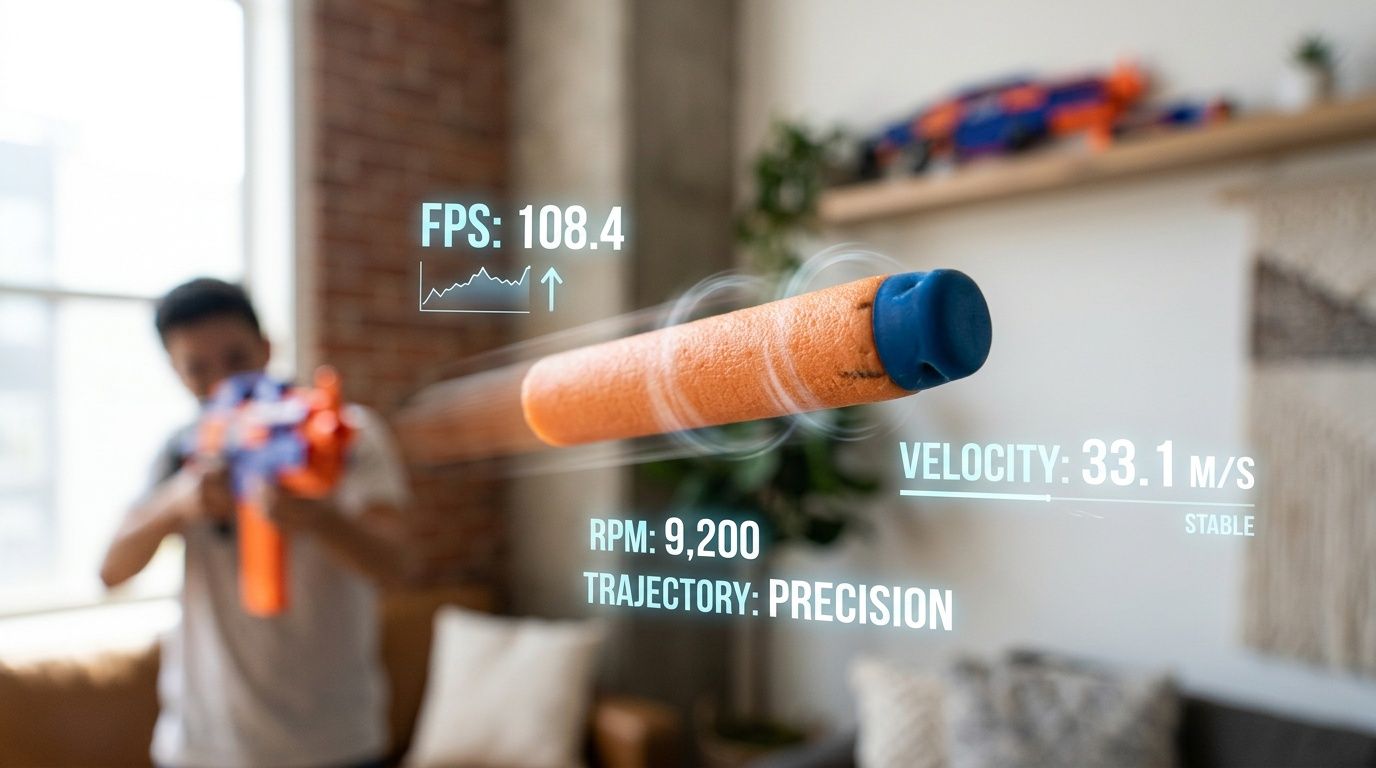
Feet per second, or FPS, is the cleanest way to understand where a blaster sits in the performance ladder.
Official Nerf products stay within a defined range. The Mach 100 Hyper fires at 110 feet per second, while the Rival line typically delivers 100 fps, according to GamesRadar’s Nerf performance overview. That gives you a useful baseline for what “powerful” means in off-the-shelf Nerf.
Once you leave stock blasters, the numbers change fast. The same GamesRadar overview notes that heavily modified hobby systems can run from 150 to 400 fps, with Caliburn builds reaching 300+ fps. That’s a different category of equipment and a different safety conversation.
Practical rule: For normal backyard family play, stock Nerf performance is the lane to stay in. Once you move into hobby-grade velocity, safety gear and strict supervision stop being optional.
Range matters because battles aren’t fought on paper
A high FPS reading sounds impressive, but parents usually notice range first. Kids notice it too. If one blaster can reach across the yard and another drops early, nobody needs a chronograph to see the difference.
Still, range can fool people. Some blasters launch far but spray darts all over the place. Others don’t reach quite as far but land more shots. In family games, the second one often feels better.
Use this checklist when you compare high-powered Nerf blasters:
- Velocity class: Tells you whether the blaster is mild, strong, or hobby-grade.
- Effective range: Focus on usable distance, not just the farthest lucky shot.
- Accuracy under pressure: Can you hit a bucket, fence post, or cardboard target quickly?
- Rate of fire: Great for chaos, but it can burn through ammo fast.
- Ammo behavior: Some dart types fly cleaner than others.
Accuracy decides whether power is fun or frustrating
This is the part kids discover immediately. A blaster that shoots hard but misses wide stops being impressive fast.
Rival blasters have a good reputation for precision-oriented play because they combine strong stock velocity with steadier grouping. That’s why they appeal to older kids and dads who like target shooting as much as wild run-and-gun battles.
For younger kids, though, too much emphasis on power can backfire. A lighter springer or milder motorized blaster may create more smiles because it’s easier to hold, easier to reload, and less intimidating.
Key Blaster Features Beyond Firepower
Raw output gets the headlines. The features below decide whether the blaster earns a permanent spot in the toy bin or gets ignored after two weekends.
Ergonomics decide who uses it
A blaster can be powerful and still feel terrible in the hand. That matters more in family play than in solo testing.
Look for a grip that fits both adult and kid hands reasonably well. Pay attention to front-heaviness too. Some blasters look amazing until a child tries to keep the muzzle up for more than a few seconds.
If a blaster is awkward, younger kids start hip-firing or dragging the barrel. Accuracy falls apart, and so does the fun.
Capacity and reload speed change the pace of play
Nothing kills momentum like constant fiddling with ammo. In backyard games, reload speed often matters more than a tiny edge in power.
A big drum or hopper can be a blast for defense games or multi-kid chaos. The trade-off is bulk. Slimmer magazines feel better for moving around, but they run dry sooner.
For practical family use, I’d think in terms of game style:
- Base defense games: Higher capacity feels great.
- Obstacle-course battles: Lighter blasters win.
- Mixed-age play: Simpler reloads beat flashy systems.
- Short rounds: Manual springers stay reliable and low-drama.
The best family blaster is often the one that gets back into the action fastest, not the one with the loudest marketing line.
Manual versus motorized is a real trade-off
Spring-powered blasters are simple. They usually work when you pick them up, they don’t need batteries, and they tend to handle rough kid use well.
Motorized blasters feel more exciting. They also add battery management, spin-up time, and one more thing that can frustrate younger players.
That doesn’t make motorized models worse. It just means the right buyer is different.
- Choose manual if you want lower fuss, easier storage, and quick handoff to younger kids.
- Choose motorized if your kids love sustained fire and don’t mind the extra weight and battery upkeep.
Dart compatibility matters more than buyers expect
This is one of the least glamorous parts of any Nerf gun buying guide, and one of the most practical. Replacement ammo needs to be easy to find, easy to sort, and easy for kids to reload.
Specialized ammo can improve performance. It can also create headaches when darts get lost in bushes, under decks, or behind the garage shelf.
That’s why a lot of dads end up favoring blasters with simpler ammo ecosystems for everyday use. You may get a bit less bragging-rights performance, but you’ll spend less time hunting for the right darts and more time playing. If your family also likes slower, face-to-face game nights, balancing outdoor blaster chaos with something calmer like these best family board games works well.
Head-to-Head The Top Powerful Nerf Blasters Reviewed
Here, the hype gets filtered through real use. Some blasters win on paper. Some win in the backyard. Those aren’t always the same thing.
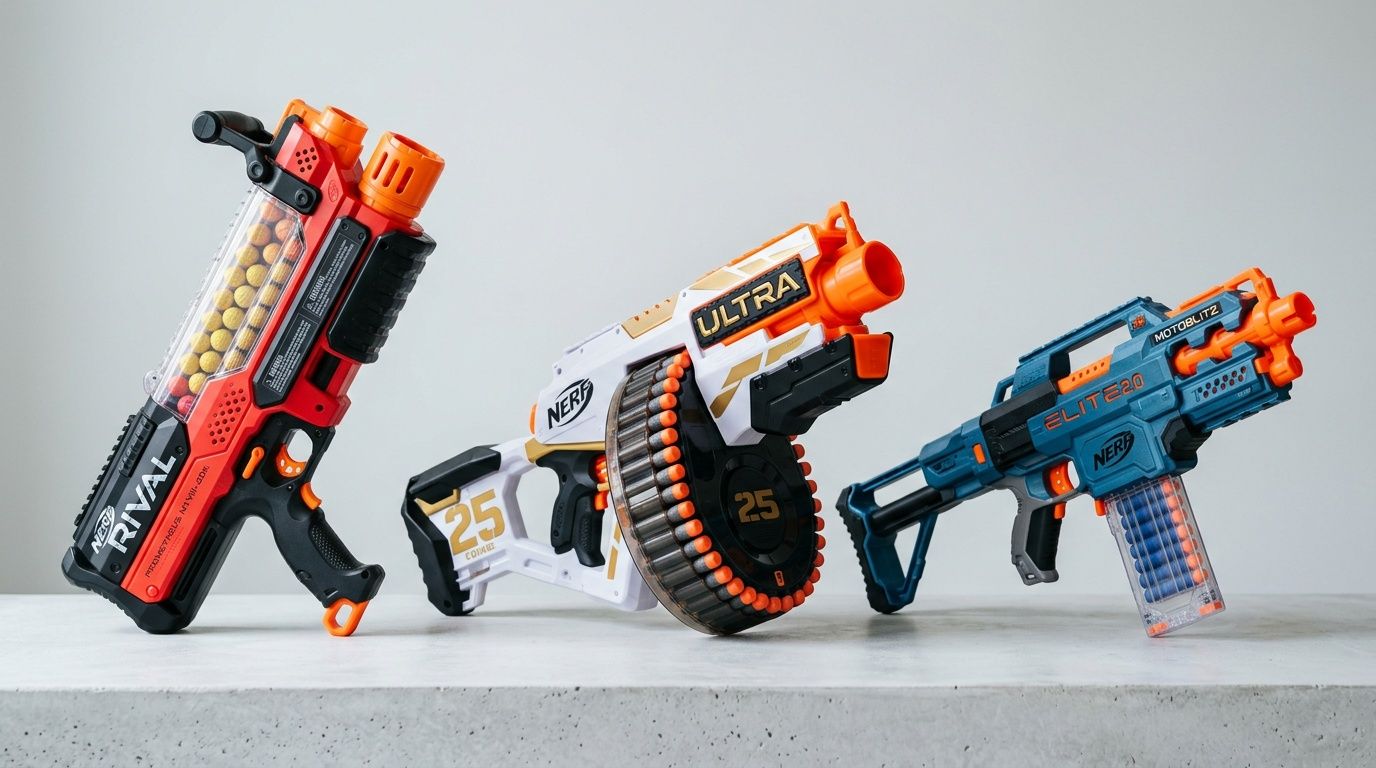
Nerf Ultra One
If your question is which stock Nerf blaster reaches farthest in independent testing, the Nerf Ultra One has the strongest case in this article.
TechGearLab found that the Ultra One launched darts up to 135 feet, driven by specialized darts with aerodynamic tips and rear grooves that help stabilize flight, as covered in their Nerf Ultra One testing.
That’s impressive. It also matches what makes the blaster appealing in family play. It feels dramatic. Kids notice the extra distance. Dads notice that it changes the shape of a backyard match.
Where it works:
- Long-lane backyard battles
- Target shooting across open space
- Older kids who enjoy distance over compact handling
Where it doesn’t:
- Tight spaces
- Families who hate specialized ammo
- Players who want the simplest reload process
The biggest strength is obvious. The biggest weakness is just as obvious. Long-range gear is exciting, but it isn’t always the easiest setup for younger players.
Nerf Rival line
Rival blasters sit in a very practical sweet spot for older kids and dads who care about controlled shots. They typically operate around 100 fps, as noted earlier from GamesRadar, and they’ve built a reputation around stronger precision than many dart-based stock blasters.
In real use, Rival tends to feel more “serious.” The rounds, the handling, and the way many Rival blasters track targets all lean that direction.
Best fit:
- Teens
- Dad-versus-kid target sessions
- Players who care more about hit consistency than max range
Less ideal for:
- Very young kids
- Families that want feather-light blasters
- Buyers who want the absolute longest stock dart flight
Rival isn’t always the funniest choice for pure chaos. It is often one of the most satisfying choices for players who want more control.
Mach 100 Hyper
If you’re focused on official velocity ceilings, the Mach 100 Hyper deserves attention because it’s listed at 110 feet per second in the GamesRadar performance hierarchy cited earlier.
That gives it a strong place in the official Nerf conversation. For buyers who define “most powerful nerf gun” by stock speed category, Hyper has a real argument.
Still, speed category alone won’t decide family value. Hyper-style performance can be appealing, but parents should think hard about who’s using it and where. Faster official performance is fun. It’s not automatically the best fit for younger kids or casual mixed-age games.
Hobby-grade modified blasters
Online debates often go sideways when discussing this. Modified blasters can absolutely outgun stock Nerf. That part isn’t in dispute.
The issue is practicality.
Once you step into hobby builds pushing far past stock performance, you’re no longer shopping the way most parents shop. You’re entering enthusiast territory. That means tuning, maintenance, eye protection, stricter rules, and a very clear divide between toy-like fun and serious foam-flinging hardware.
For hobbyists, that’s part of the appeal. For dads buying a first or second family blaster, it usually isn’t.
A modified blaster can be the strongest thing in the field and still be the wrong thing to bring into a family backyard game.
Dad's Choice Our Picks for the Most Powerful Nerf Gun
After enough backyard use, the “best” blaster usually depends on what kind of fun you want. Distance. Accuracy. Simplicity. Controlled chaos. Those don’t all point to the same model.
Most Powerful Nerf Gun Comparison 2026
| Model | Power Tier (Avg. FPS) | Effective Range | Best For | Price |
|---|---|---|---|---|
| Nerf Ultra One | Stock long-range leader in this guide | Excellent outdoor reach | Big backyard battles | Check retailer |
| Nerf Rival line | Around the official 100 fps class | Strong practical battle range | Older kids and accuracy-focused play | Check retailer |
| Mach 100 Hyper | Official 110 fps class | Strong speed-oriented performance | Buyers chasing top official velocity | Check retailer |
| Modified Caliburn builds | 300+ fps enthusiast tier | Extreme, supervised-use only | Hobbyists, not casual family play | Varies |
| Custom giant record build | One-off exhibition build | Novelty and engineering showcase | Inspiration only | Not a retail item |
Best for backyard chaos
The Ultra One gets my nod if your yard has room to stretch out and your kids care about dramatic shots. Its tested distance gives it clear bragging rights among stock models covered here.
That said, this is best for families who are fine dealing with specialized ammo and a blaster that’s more about spectacle than simplicity.
Best for controlled competitive play
The Rival line is the one I’d steer toward for dads with older kids who like aiming. It gives up some of the Ultra-style headline range, but the play experience often feels cleaner and more skill-based.
If your family likes set rules, targets, cover, and rematches, Rival makes a lot of sense.
Best for speed-focused buyers
The Mach 100 Hyper is the pick for shoppers who want the strongest official velocity class mentioned here. It’s a straightforward answer for the dad who wants to compare blasters by stock speed category first.
It’s not automatically the most versatile pick. It is a clear one for that specific priority.
Best left to enthusiasts
Modified Caliburn-style builds are impressive. They’re also beyond what I’d call normal family gear. Save those for hobby circles, controlled spaces, and players who understand exactly what they’re handling.
If you’re the kind of parent who likes comparing adjacent hobbies before buying, this Ultimate Guide for a Top Airsoft Blaster in 2026 is useful context because it shows how quickly “toy blaster” conversations can move into more serious equipment territory.
What I’d buy for most dads
For most families, I’d split it this way:
- Choose Ultra One if range is the whole point.
- Choose Rival if accuracy and repeatable fun matter more.
- Choose Hyper if you want to chase official stock speed.
- Skip hobby mods unless you already know the safety and maintenance side.
If you’re also buying for a younger child in the same season, this roundup of 4-year-old present ideas can help you avoid the classic mistake of buying one kid advanced gear and forgetting age-fit for the other.
The World of Nerf Modding and Safety Rules
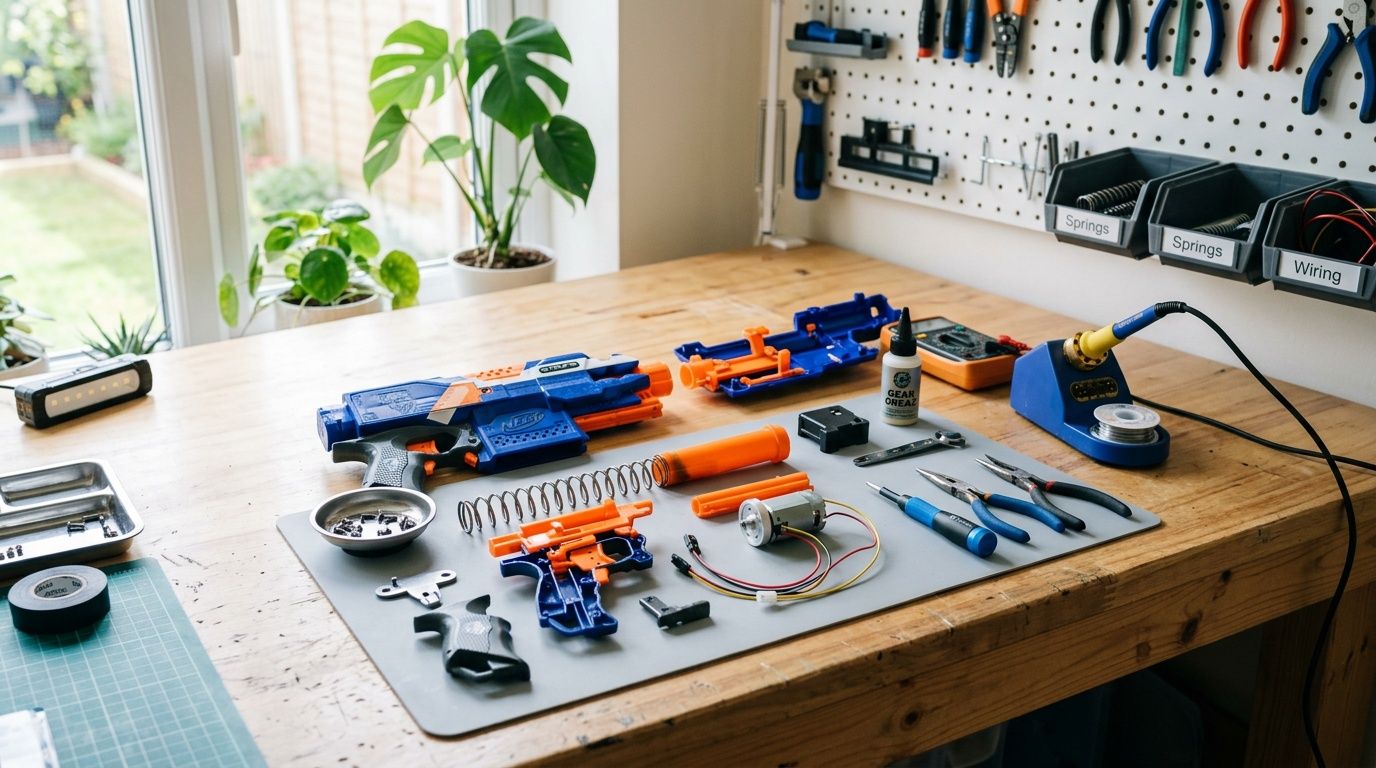
For dads who like to tinker, Nerf modding is part toy, part garage project, part engineering rabbit hole. It can be a great hobby. It can also get out of hand fast if you treat every blaster like a harmless off-the-shelf toy after modifying it.
Why modding is so appealing
Nerf invites tinkering. Springs, flywheels, barrels, seals, and body shells all tempt people who like to improve gear.
At the extreme end, the hobby gets wild. Guinness World Records recognizes a giant custom build by Michael Pick that measures 12 feet 6 inches, weighs 200 pounds, and fires 12-inch darts at over 50 mph, according to the Guinness record listing for the largest Nerf gun.
That’s not a buying recommendation. It is a reminder of how far the platform can go when engineering and obsession meet.
Safe modding starts with realistic goals
Most dads don’t need to chase maximum output. A better goal is smoother performance, improved reliability, or a project you can build and explain with your kids nearby.
That kind of tinkering can be fun and educational. It also gives kids a hands-on way to learn about springs, air pressure, fitment, and simple troubleshooting.
If you’re already the kind of parent who likes workshop projects, keeping solid garage basics on hand helps. A practical place to start is this guide to the best tools for dads.
Treat every modification like it changes the rules of use, because it does.
Family safety rules that work
Here’s the checklist I’d use before any powerful blaster comes out:
- Use eye protection: Especially for stronger stock blasters and any modified build.
- Match the blaster to the player: Younger kids should use lighter, simpler, lower-intensity options.
- Set engagement distances: No point-blank shots.
- Separate stock play from mod play: Don’t mix advanced hobby builds into casual kid battles.
- Inspect ammo and blasters regularly: Torn darts and damaged internals create unreliable shots and frustration.
- Keep a hard stop rule: If anyone ignores face-shot rules or safe distance rules, the game pauses.
What doesn’t work
A few things reliably create bad outcomes.
- Handing a strong blaster to a child just because they begged for the “big one.”
- Mixing very young kids and heavily modified gear in the same game.
- Assuming foam automatically means harmless.
- Treating online hobby advice like it applies to every family yard.
The best modding mindset is still a dad mindset. Build cool stuff. Respect the limits. Keep the fun bigger than the ego.
Answering Your Top Nerf Gun Questions
Which is the most powerful nerf gun in this guide?
If you mean stock distance, the Nerf Ultra One stands out because of its independently tested long-range performance. If you mean official stock velocity class, the Mach 100 Hyper has the strongest number listed here. If you mean absolute foam-blaster power including enthusiast builds, modified hobby blasters go far beyond normal retail Nerf territory.
Is Rival better than Ultra?
It depends on what you care about. Ultra is the better conversation if you want standout distance. Rival is the better conversation if you want strong practical performance with a more accuracy-focused feel.
Are high-powered Nerf guns safe for younger kids?
Some stock blasters can still work for younger players with supervision and clear rules. Stronger models are usually better suited to older kids. Modified hobby-grade blasters are a different category and need much tighter control.
What matters more than power?
Comfort, reload speed, ammo availability, and whether the blaster fits your family’s style of play. Those are the factors that decide whether a blaster gets used often or sits in a corner.
Should dads get into Nerf modding?
Yes, if you enjoy tinkering and you respect the safety side. No, if you mainly want something simple to hand kids on a Saturday afternoon.
What’s the smartest first buy for most families?
A stock blaster with dependable performance, easy ammo handling, and no complicated setup. That usually beats chasing the most extreme option right out of the gate.
Alpha Dad Mode helps dads make practical calls like this without the fluff. If you want more straight-up advice on family gear, activities, routines, and everyday fatherhood wins, check out alphadadmode.com.
