


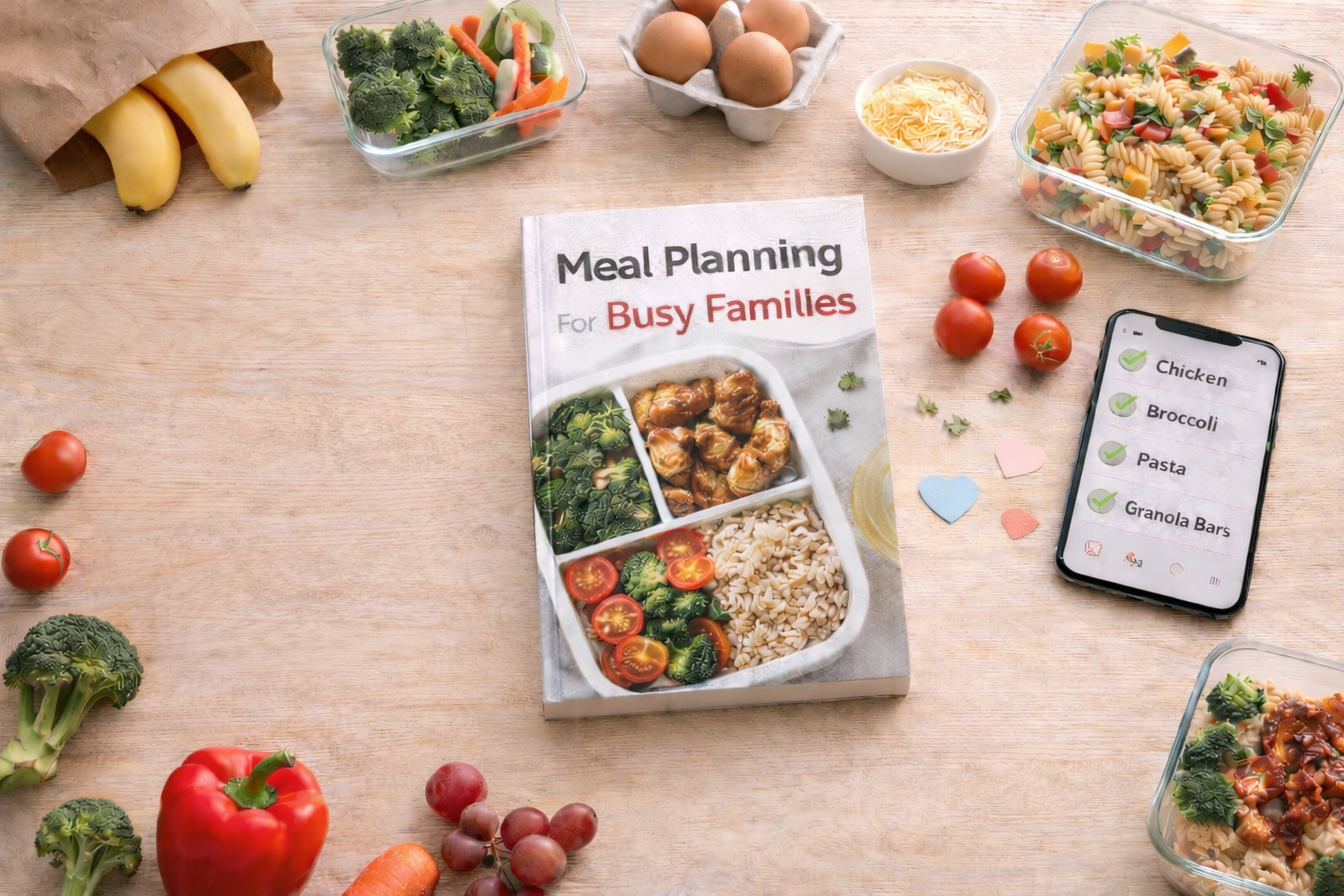
That feeling hits you right in the gut around 5:30 PM. The kids are a swirling vortex of energy and hunger, you’ve just walked in the door, and the question “What’s for dinner?” feels like a final exam you didn’t study for.
It's time to reframe meal planning for busy families. This isn’t about adding another chore to your list; it’s a strategic move to slash stress, save cash, and reclaim your weeknights.
Why Meal Planning Is Your Secret Weapon
Let's get one thing straight: meal planning isn't about becoming a gourmet chef with color-coded spreadsheets. Forget that. The real goal is far simpler—it's about making fewer decisions when your brain is already fried.
Think of it less as a rigid set of rules and more as a flexible game plan. It’s the difference between staring blankly into the fridge at 6 PM, surrounded by a random assortment of groceries, and confidently grabbing pre-chopped veggies for a stir-fry you already picked out on Sunday. That one small shift can completely change the dynamic of your entire week.
Reclaiming The Family Dinner Table
The payoff here is huge, and it goes way beyond just knowing what to cook. A good plan tackles the biggest obstacles that keep families from actually eating together. The data doesn't lie—recent global research found that only 49.12% of kids and teens have a daily family meal. And why? The top reasons are a lack of time (a reality for 47% of parents) and just being too exhausted (21%).
You can read the full research about these family meal trends to learn more, but the bottom line is clear. This is precisely where a solid meal plan becomes your ace in the hole, turning chaotic evenings into valuable connection time.
By shifting the decision-making and a bit of the prep work to a calmer part of your week, you’re basically creating breathing room for yourself. This system is built to help you:
- Kill Daily Decision Fatigue: No more "what's for dinner" debates draining your mental energy every single night.
- Save Serious Cash: You'll shop with a list, which means fewer impulse buys and way less food waste. It’s a direct win for your wallet.
- Eat Healthier: When you aren't scrambling, you're not defaulting to takeout or frozen pizza. You’re in control.
- Win Back Your Time: An hour or two of planning on a Sunday can easily save you double that in stress and cooking time during the busy week.
For a lot of dads, getting a handle on meal planning isn’t about culinary greatness. It’s about becoming a strategist for your family. You're building a system to protect your time, your energy, and the chance to actually sit down and connect with your kids.
This isn't about perfection; it's all about what's practical and sustainable. It’s a core skill for any dad trying to figure out how to balance work and family life. Let's dive into the dad-approved system that actually works.
Your Repeatable Blueprint For Weekly Meal Success
A solid meal plan isn't about finding some magical new recipe—it's about creating a repeatable process that actually fits your family's life. This is how you swap that nightly 5 PM chaos for a calm, predictable rhythm. The real goal here is to build a simple, sustainable workflow that you can practically run on autopilot, freeing up your mental space for things that matter more.
When you nail this down, meal planning stops being a chore and becomes a powerful way to connect with your family. It's a clear path from stress to success.
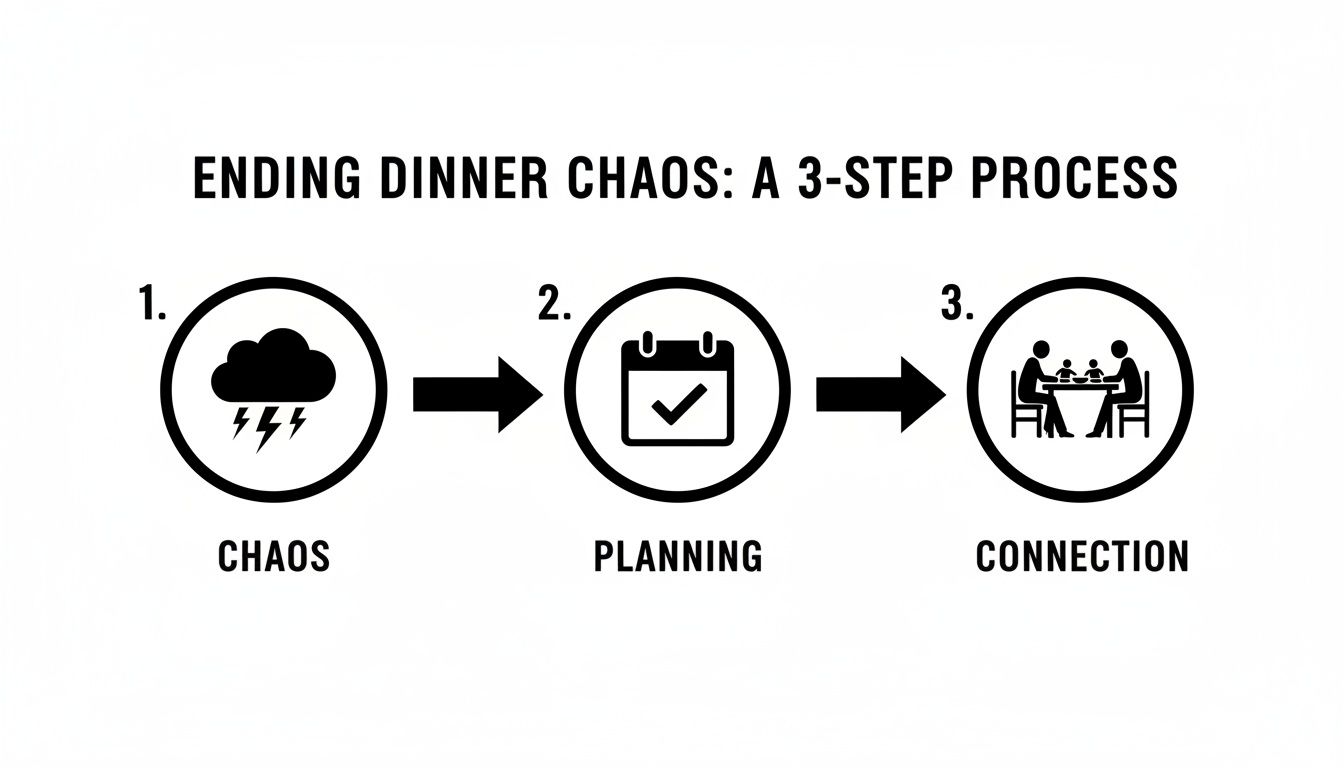
This image says it all: a small investment in planning upfront leads directly to more quality family time at the dinner table. It's a trade I'll make any day.
The Sunday Family Huddle
The best meal plans start with a quick chat. Before you even think about what to cook, gather everyone for a five-minute "Family Huddle" on a Sunday afternoon. This isn't some formal meeting; it's a quick check-in to get everyone on board and stop complaints before they even start.
Let each kid pick one meal for the week. Of course, you give them a few pre-approved options to choose from. This simple move gives them a sense of ownership and something to actually look forward to. For those of us with toddlers, it’s as simple as, "Hey, do we want spaghetti or chicken nuggets this week?" If you've got teenagers, it might be, "You're in charge of Friday. What are you thinking?"
This one small step is a game-changer for picky eaters. When they've had a say in the menu, they are far more likely to eat without a fight. You're not just planning food; you're proactively managing your weeknight stress levels.
Embrace The Power Of Theme Nights
One of the biggest things that drains my energy is decision fatigue. Theme nights are the ultimate fix for this. By assigning a specific type of food to each day, you completely eliminate the "what should we make tonight?" debate. Your brain is free to focus on getting it done, not figuring out what "it" is.
Take a look at how this simple concept can structure an entire week, making your planning almost effortless.
Sample Themed Weekly Meal Plan
| Day of the Week | Theme | Example Meal Idea | Quick Prep Note |
|---|---|---|---|
| Monday | Meatless Monday | Black Bean Burgers on Buns | Thaw veggie patties in the AM. |
| Tuesday | Taco Tuesday | Ground Turkey Tacos | Brown the meat on Sunday. |
| Wednesday | Pasta Wednesday | Spaghetti & Meatballs | Use pre-made meatballs. |
| Thursday | "Anything Goes" Thursday | Leftovers or Breakfast-for-Dinner | Scramble some eggs and toast. |
| Friday | Pizza Friday | Homemade or Frozen Pizza | Let the kids add their own toppings. |
This structure provides a reliable framework, but it's totally flexible. You can create themes that fit your own family's tastes, like "Soup Saturday" or "Slow Cooker Sunday." The point is to make the decision for yourself once, then coast on it.
Build Your Core Recipe List And Smart Grocery Plan
With your themes locked in and the kids' picks on the board, it's time to choose 5-7 core recipes for the week. These don't need to be fancy. Just stick with proven winners you know the family likes and you can cook without staring at a recipe for 20 minutes.
Once your meals are set, the next move is creating a smart grocery list. This is more than just scribbling down ingredients; it’s about organizing your list to get you in and out of the store as fast as possible. Group items by store section:
- Produce
- Meat & Deli
- Dairy & Eggs
- Pantry & Canned Goods
- Frozen Foods
This simple trick stops you from backtracking through crowded aisles and can easily cut your shopping time in half. A well-planned list is also your best defense against impulse buys, which is a key strategy for anyone learning how to save money on groceries.
By following this blueprint—huddle, themes, and a smart list—you build a reliable system. You turn a task you dread into a manageable, 30-minute routine that pays you back all week long in saved time, money, and sanity. This isn’t about adding more work; it’s about doing the right work at the right time.
Get Ahead of the Game with Smart Prep and Batch Cooking
A solid weekly meal plan is your roadmap, but smart prep work is the fuel that actually gets you through the week without hitting a wall. This is where you trade a couple of hours over the weekend for priceless time and mental energy on those hectic weeknights. Think of it as front-loading the effort to make life for "Future You" a whole lot easier.
Let's face it: modern family life can feel like a logistical nightmare. Over the last three decades, the frequency of family dinners in the U.S. has plummeted by over 30%. The main culprits? Packed schedules (47%), not enough time to cook (21%), and just being plain exhausted (21%). For dads committed to reclaiming that invaluable time around the table, these stats aren't a downer—they're a call to action. You can discover more insights about the benefits of family meals and see how strategic prep directly tackles these hurdles.
This is where techniques like batch cooking and component prepping become your superpowers in the kitchen.
Embrace The “Cook Once, Eat Twice” Method
The "Cook Once, Eat Twice" philosophy is a cornerstone of efficient meal planning for busy families. It's a simple but brilliant idea: make one larger meal and intentionally repurpose the leftovers into a completely different dish later in the week. This isn't about eating the same exact thing two days in a row; it's about transforming a core ingredient into something new.
This approach saves a massive amount of time because you’re knocking out the most time-consuming part—cooking the main protein—all at once.
Here’s what this looks like in my house:
- Sunday Roast Chicken: We'll have a classic roast chicken dinner on Sunday with potatoes and green beans. I'll shred the leftover chicken, which becomes the base for quick chicken salad sandwiches on Monday and a hearty chicken noodle soup on Wednesday.
- Big Batch of Chili: I'll make a huge pot of chili over the weekend. The first night, it's served in bowls with cornbread. Later in the week, those leftovers are perfect as a topping for baked potatoes or for making a quick round of Frito pies.
- Slow Cooker Pulled Pork: A pork shoulder goes into the slow cooker on Sunday morning. That night, it's pulled pork sandwiches. The rest of it is ready for pulled pork tacos on Tuesday and can even be mixed into mac and cheese on Thursday for a guaranteed kid-pleaser.
The real win here is efficiency. You do the heavy lifting once—the seasoning, the long cook time—and then reap the rewards with two or three fast, flavorful meals that feel totally different from each other.
Master Batch Cooking Your Staples
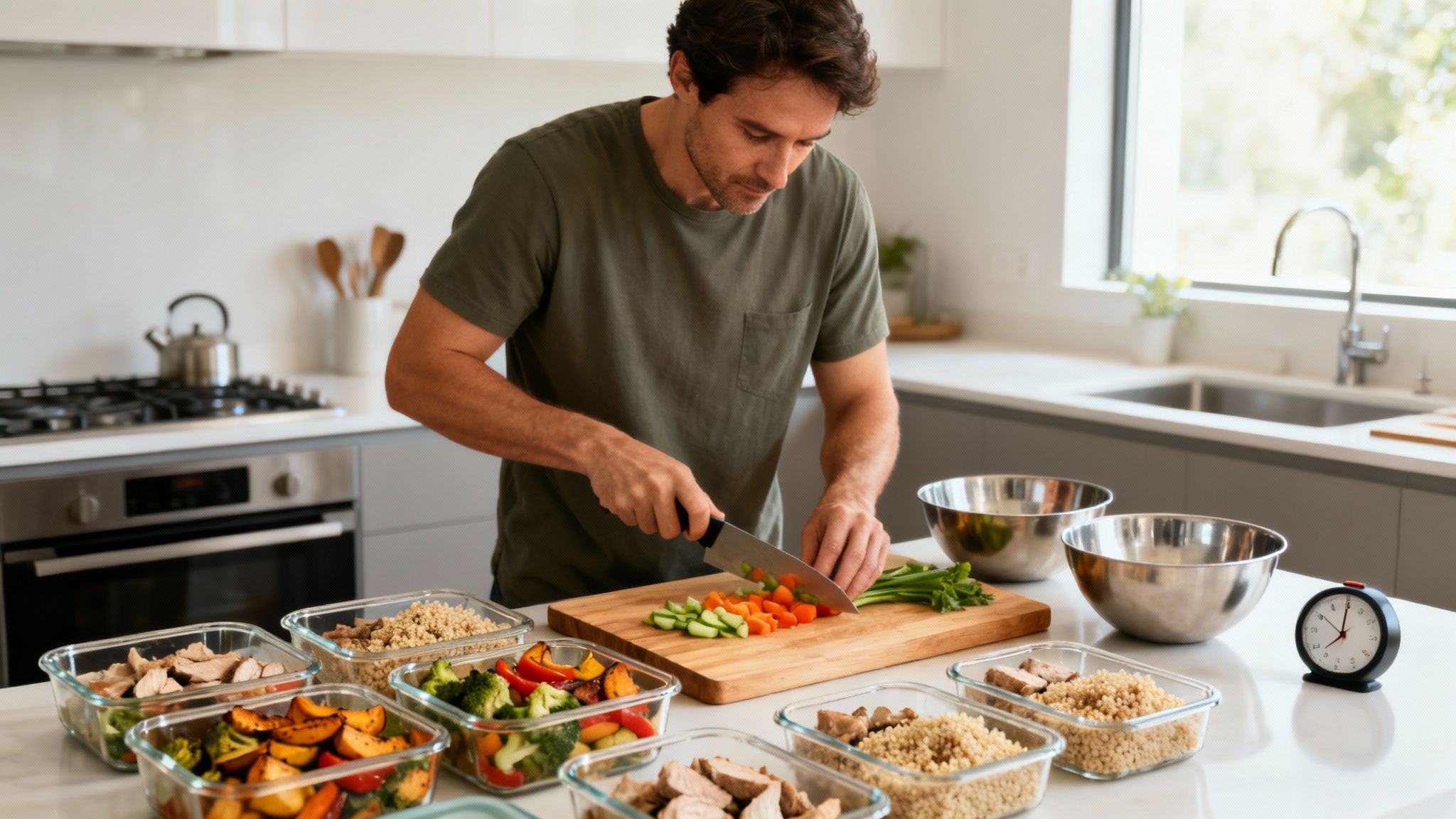
Beyond full meals, batch cooking versatile base ingredients is a total game-changer. These are the building blocks that can anchor multiple meals throughout the week. If you spend an hour on Sunday cooking these staples, weeknight dinner becomes a simple assembly job instead of a full-on cooking session.
I recommend focusing your energy on these high-impact items:
- Grains: Cook up a big pot of quinoa, brown rice, or farro. Stash it in the fridge, and you're ready to add it to salads, build grain bowls, or serve it as a quick side.
- Proteins: Brown a few pounds of ground beef or turkey. It’s then ready to be thrown into tacos, spaghetti sauce, or stuffed bell peppers. Grilling a family pack of chicken breasts gives you ready-to-go protein for salads, wraps, and pastas all week.
- Vegetables: Roast a big sheet pan of veggies like broccoli, bell peppers, and onions. They can be a side dish one night, tossed with pasta the next, and even added to a frittata for a quick breakfast-for-dinner.
This method gives you incredible flexibility. When you have pre-cooked components ready to go, throwing together a healthy meal in under 15 minutes becomes the norm, not the exception.
Unlock Speed with Component Prepping
If a full batch cooking session feels like too much, "component prepping" is your answer. This is simply the act of getting all the small, tedious tasks out of the way at once. When it’s time to cook on a busy weeknight, you can just get straight to the good part.
Think of it as setting up your own personal kitchen crew. You’re doing the mise en place (that’s just a fancy term for getting all your ingredients prepped and in place) for the entire week in one go.
Here’s what component prepping often looks like:
- Chop All Your Veggies: Dice every onion, slice every bell pepper, and chop every head of broccoli you'll need for the week's recipes. Store them in labeled, airtight containers in the fridge.
- Mix Marinades and Dressings: Whisk together the marinade for Wednesday's chicken and the vinaigrette for Thursday's salad. Having them in jars saves you from pulling out all the bottles and measuring spoons mid-week.
- Portion Out Snacks: Divide things like nuts, grapes, and crackers into grab-and-go bags or containers. This not only saves you time but also makes it easy for the kids to grab their own healthy snacks.
This level of prep systematically removes all those little points of friction that make cooking feel like a chore. By breaking down the work, you make the daily task of getting dinner on the table faster, cleaner, and a whole lot less stressful.
Building Your Arsenal Of Kid-Approved Recipes
A great meal plan is pointless if your kids refuse to eat what you make. We’ve all been there—that exhausting dinner-table standoff after a long day at work that completely torpedoes the evening. This is where you need a secret weapon: an arsenal of go-to, family-friendly recipes that are fast, healthy, and—most importantly—guaranteed wins.
This isn’t about being a short-order cook. It’s about creating a reliable list of about 10-15 meals you can pull out on any given weeknight. Think simple ingredients, less than 30 minutes of hands-on prep, and minimal complaints. Having this list ready to go makes weekly planning a cakewalk.
Core Recipes That Actually Work
Forget those complicated recipes with a million steps. Your core arsenal should be built on simple, flexible concepts the whole family can get behind. These are designed for speed and adaptability, making them perfect for your weekly rotation.
Here are a few foundational ideas to get you started:
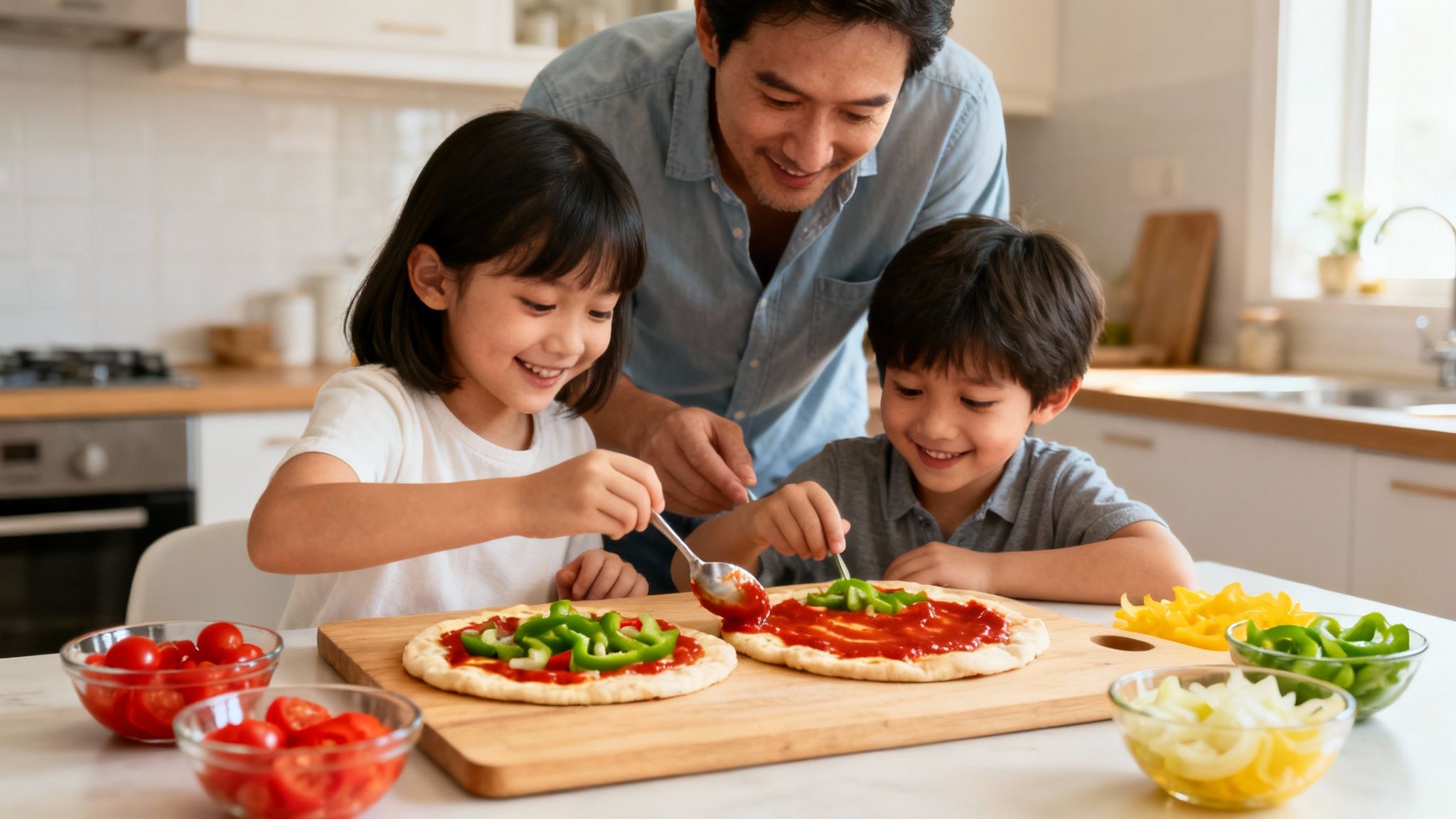
- DIY Pizza Night: Use flatbreads, pitas, or even English muffins for the crust. Set out bowls of sauce, cheese, and toppings like pepperoni, chopped peppers, or olives, and let everyone assemble their own. It’s an activity and a meal in one, and it gives kids a sense of control.
- Deconstructed Burrito Bowls: This is an absolute lifesaver. Put out separate bowls of seasoned ground turkey or chicken, black beans, corn, rice, shredded lettuce, and salsa. Everyone builds their own, so they only take what they like.
- Sheet Pan Lemon Herb Chicken & Veggies: Toss chicken thighs, broccoli florets, carrots, and potato wedges with some olive oil, lemon juice, and dried herbs. Throw it all on a single sheet pan and bake. Minimal cleanup, maximum flavor.
- 5-Ingredient Pasta: Keep it dead simple. Cooked pasta, a good jarred marinara sauce, pre-cooked meatballs, a bag of fresh spinach (it wilts right into the hot sauce), and a sprinkle of parmesan. You can have this on the table in 15 minutes.
The real secret to a successful recipe arsenal is customization. Most of these meals can be served 'deconstructed' or 'build-your-own' style. This one simple shift in presentation empowers kids and dramatically cuts down on dinner-table drama.
Get Them in the Kitchen
One of the best ways to get kids to try new foods is to let them help make them. When they have a hand in the process, their natural curiosity often wins out over their pickiness. Even small, age-appropriate jobs can make a world of difference.
- Toddlers: They're perfect for washing veggies, stirring ingredients in a big bowl, or sprinkling cheese on top of a casserole.
- Young Kids (5-8): They can tear lettuce for a salad, measure out dry ingredients, or use a kid-safe knife to slice soft things like bananas.
- Older Kids (9+): Let them take on more responsibility, like grating cheese, reading the recipe steps out loud, or browning ground meat with supervision.
Getting kids involved is a crucial tactic, especially since 59% of parents report dealing with picky eating. This hands-on approach builds a positive connection to food. If you're facing some serious mealtime battles, check out our guide on how to handle picky eaters for more strategies.
Simple Swaps for Common Dietary Needs
A solid recipe arsenal is an adaptable one. You never know when you'll have a guest with an allergy or need to tweak a meal for a dietary preference. Building that flexibility in from the start saves you a ton of stress later.
Here’s how you can adapt some of the core meals:
| Original Meal | Gluten-Free Swap | Dairy-Free Swap |
|---|---|---|
| DIY Pizza Night | Use gluten-free flatbreads. | Use dairy-free cheese shreds. |
| Burrito Bowls | Base the bowl on rice and corn. | Skip cheese and sour cream; add extra guacamole. |
| 5-Ingredient Pasta | Use lentil or chickpea pasta. | Omit the parmesan or use a nutritional yeast sub. |
Thinking ahead like this makes meal planning for busy families a much more resilient and less frustrating process. With these swaps in your back pocket, you’re always prepared.
Ultimately, the goal is more shared family dinners. A 2022-2023 Gallup World Poll found that U.S. residents rank a distant 69th in how often they share meals, a huge contrast to other countries. Having a pre-planned arsenal of appealing, quick recipes is a dad's best tool for boosting that number from the U.S. average of just five shared meals a week. And as research shows, sharing meals supports happiness and social connections, which is what it's all about.
Your Meal Planning Toolkit Is Ready
Look, all the advice in the world is just noise until you actually do something with it. So, let's get practical. I’ve put together a simple, no-fluff toolkit to help you take everything we've talked about and turn it into a real, stress-busting system you can start using tonight.
This is more than just a few downloads. It's about giving you a repeatable process that claws back time and mental energy week after week. Think of these tools as the "how-to" part of the guide, ready to be printed and slapped on the fridge.
What You'll Find Inside
I've focused on the three core documents that are the backbone of any solid meal planning system for busy families. Each one is dead simple and designed to be customized for your crew's tastes. They're built to work together, creating a smooth flow from the plan, to the store, to the stove.
Here’s the breakdown:
- The Weekly Meal Plan Template: This is your mission control. It has spots for breakfast, lunch, and dinner for the whole week, plus an area for snacks. This is where you'll map out your theme nights and pencil in the family's go-to meals.
- The Categorized Grocery List: Ditch the aimless wandering. This list is broken down by grocery store section (Produce, Meat, Pantry, etc.) so you can get in, grab what you need, and get out. It’s your secret weapon against impulse buys and forgotten ingredients.
- The ‘Family Favorites’ Recipe Card: This is how you build your playbook. Use this card to list your top 10-15 tried-and-true meals, complete with a few key ingredients or prep notes. When you hit a wall and can't think of what to make, this is your ultimate cheat sheet.
Making the Tools Work Together
The magic happens when you use these three resources as one connected system. It's a simple workflow that pulls the chaos out of the weekly scramble.
Think of it like this: The Family Favorites card is your library of ideas. The Meal Plan Template is your weekly schedule. And the Grocery List is the game plan you take to the store to make it all happen.
Here’s how to put it into action:
- Pull out your ‘Family Favorites’ Card during your Sunday planning session. Let the kids point to a couple of meals they want that week.
- Plug those choices and your theme night ideas directly into the Weekly Meal Plan template.
- Walk through your plan, day by day, and add every single ingredient you'll need to the Categorized Grocery List.
Following these steps turns a dreaded chore into a focused, 20-minute task. These printables aren't meant to be precious—they're made to be used, written on, and adapted. They're here to help you finally take control of your weeknights.
Click the link below to grab your toolkit and get started.
[Download Your Free Meal Planning Toolkit Now]
Got Questions? Let's Troubleshoot Your Meal Plan
Look, even the most dialed-in plan can go off the rails. You're in the middle of a busy week and life happens—a meeting runs late, you completely forget about soccer practice, or the kids suddenly decide they hate the one thing they loved last week. It's totally normal.
A meal plan that actually works isn't about perfect execution. It's about having a solid game plan for when things inevitably get chaotic. Let's tackle the most common hurdles I see guys run into when they start planning their family's meals.
What If My Schedule Changes Unexpectedly?
Life with kids is basically a masterclass in unpredictability. Your meal plan needs to be able to roll with it. If you treat your plan like a rigid, unbreakable contract, you're just adding a new layer of stress to your life.
The trick is to build that flexibility right into the plan from day one.
- Have a "Flex Meal" ready to go. I always plan for at least one night a week to be an ultra-fast backup. Think a quality frozen pizza with a bagged salad, breakfast-for-dinner (scrambled eggs and toast is always a win), or a good jarred pasta sauce over some quick-cooking noodles.
- Front-load your effort. Schedule the meals that take a little more work for Monday and Tuesday. By the time Thursday and Friday roll around, everyone's running on fumes. Save your simplest, fastest meals for the end of the week.
- Swap, don't skip. If a late meeting blows up your Tuesday dinner plans, don't just give up and order takeout. Just swap Tuesday's meal with Thursday's super-quick one. You're still on track, just in a different order.
How Can I Meal Plan Effectively On A Tight Budget?
Meal planning is, without a doubt, one of the most powerful ways to get a handle on your grocery bill. Most families waste a surprising amount of money on impulse buys and produce that goes bad in the back of the fridge. A good plan stops that cold.
Your first move should be to build your meals around what's on sale, especially protein. That's almost always the most expensive part of the meal. Check the weekly flyers from your local grocery stores before you sit down to plan.
Your grocery list is your best defense against those budget-busting impulse buys. A recent survey found that a whopping 79% of shoppers make at least one unplanned purchase every time they hit the store. A detailed list keeps you focused and on-mission.
Also, start leaning on budget-friendly powerhouses like beans, lentils, and rice. Planning just one meatless meal a week can make a massive difference. But the real secret weapon? Master the "Cook Once, Eat Twice" strategy. You'll stretch every ingredient and every dollar.
My Kids Are Extremely Picky Eaters. How Can This Help?
Ah, the picky eater. This is probably the number one source of dinner-time frustration for parents. The key to using your meal plan to your advantage here is to give them a little bit of empowerment. I've found that when kids feel like they have some say in the matter, their willingness to try new things goes way up.
When you're doing your weekly planning, let each kid pick one meal for the week. (Pro tip: give them a list of 3-4 pre-approved options to choose from). This gives them something to actually look forward to and cuts down on the complaining.
Another game-changer is serving meals "deconstructed" or family-style. Instead of handing them a fully-loaded taco, set up a taco bar with all the toppings in separate bowls. This works for burrito bowls, salads, and pasta, too. It gives them the control to build their own plate, which guarantees they have a "safe" food while still being exposed to new stuff without any pressure.
I Do Not Have A Whole Sunday For Meal Prep
You don't need one. Honestly, the idea that you need a huge, uninterrupted block of time is what stops most people from even starting. The secret is to think in "pockets of time" and focus on the tasks that give you the biggest bang for your buck.
What can you get done in the 15-20 minutes while tonight's dinner is in the oven?
- Chop all the onions and peppers you'll need for two other meals this week.
- Brown a pound of ground beef for Taco Tuesday.
- Wash and tear up lettuce for salads.
- Whisk together a marinade for Wednesday's chicken.
Think about the biggest bottlenecks on a busy weeknight. For most of us, that’s prepping the protein and chopping all the vegetables. Just 30-60 minutes of this kind of focused "component prep" can save you hours of stress and cleanup later. You just have to break it down into smaller chunks that fit the life you actually have.
Ready to stop that 6 PM scramble and finally win your weeknights back? It all starts with having the right tools. Over at alphadadmode.com, we're building a community and resource hub specifically for dads who want to be more effective and intentional at home.
Sign up for our pre-launch list to get our exclusive Meal Planning Toolkit for free and be the first to know when we go live.
