

Close Menu
Alpha Dad ModeAlpha Dad Mode
    What's Hot

    Nike Hoops Elite Pro Backpack Review: Pros, Cons & Verdict

    April 16, 2026

    Will Mortgage Rates Go Down​? 2026 Forecast

    April 15, 2026

    Auto Approve Reviews: Is It Right for Your Car Refinance?

    April 15, 2026
    Facebook X (Twitter) Instagram
    Alpha Dad ModeAlpha Dad Mode
    • Home
    • Parenting
    • Health
    • Finance
    • lifestyle
    • Sex & Relationships
    • Dad Gear
    • DIY
    Alpha Dad ModeAlpha Dad Mode
    Home - Parenting - How to Become a Better Father: Expert Advice for Dads of All Ages
    Parenting

    How to Become a Better Father: Expert Advice for Dads of All Ages

    The Dad TeamBy The Dad TeamFebruary 11, 2026Updated:March 20, 2026No Comments
    Facebook Twitter Pinterest LinkedIn WhatsApp Reddit Tumblr Email
    Share
    Facebook Twitter LinkedIn Pinterest Email

    The journey to becoming a better father starts in your head. It’s a conscious shift away from just being the “provider” to becoming a truly present and engaged partner in your child’s life. This isn't about grand gestures; it's about prioritizing connection, really listening, and showing up consistently. Everything else builds on this foundation.

    Redefining Modern Fatherhood: It's More Than a Paycheck

    A loving father and his young son smiling at each other, sharing a joyful moment indoors.

    Let's be honest: the old playbook for dads is officially out of date. For generations, the main expectation was to be the stoic breadwinner, a role that, frankly, often created a ton of emotional distance. Kids today need more than financial security. They're craving a real, authentic connection with their dad.

    This isn’t just some new parenting trend; it’s backed by a deep understanding of what helps kids thrive. When a father is emotionally available and consistently present, it builds a lifelong foundation of trust, resilience, and self-worth in a child. It’s that simple.

    The Modern Father Mindset Shift

    Thinking about fatherhood as a true partnership, rather than a list of assigned duties, can completely change the game. This table breaks down the shift from the traditional view to a more modern, engaged approach.

    Traditional Mindset Modern Mindset Actionable First Step
    Primary role is to provide financially. Role is a blend of providing, nurturing, and teaching. Take on one daily childcare task without being asked (e.g., bath time, making lunch).
    Emotions are a sign of weakness; stay stoic. Emotional expression is healthy and models resilience. Share one high and one low from your day with your kids at dinner.
    Mom handles most of the childcare and household plans. Both parents are co-pilots in managing the family. Put all kid-related appointments (doctor, school events) in your own calendar.
    Discipline is about enforcing rules and authority. Discipline is about teaching, guiding, and setting boundaries with empathy. When your child misbehaves, ask "What's going on?" before jumping to a consequence.
    Being "present" means being physically in the house. Being "present" means giving focused, undivided attention. Create a "no-phone zone" for the first 30 minutes after you get home from work.

    This isn't about abandoning tradition entirely, but about expanding our definition of what it means to be a great dad. It's about being more, not less.

    The Power of an Equitable Mindset

    This isn't just a "feel-good" idea; it has a real impact. The State of America's Fathers 2023 report found that dads with more equitable views on gender roles are 1.6 times more likely to be deeply involved in all aspects of parenting—from daily care to managing the family’s mental load.

    Even when fathers want more time with their kids, work pressures and outdated stereotypes can get in the way. By consciously deciding to see parenting as a truly shared responsibility, you tear down those barriers and naturally increase your involvement.

    Core Principles for the Modern Dad

    Embracing this new role doesn't mean you need a personality transplant. It really boils down to focusing on a few key things:

    • Emotional Availability: Be the safe harbor for your child's feelings. You don't have to fix everything; just listen without judgment and let them know their emotions are valid.
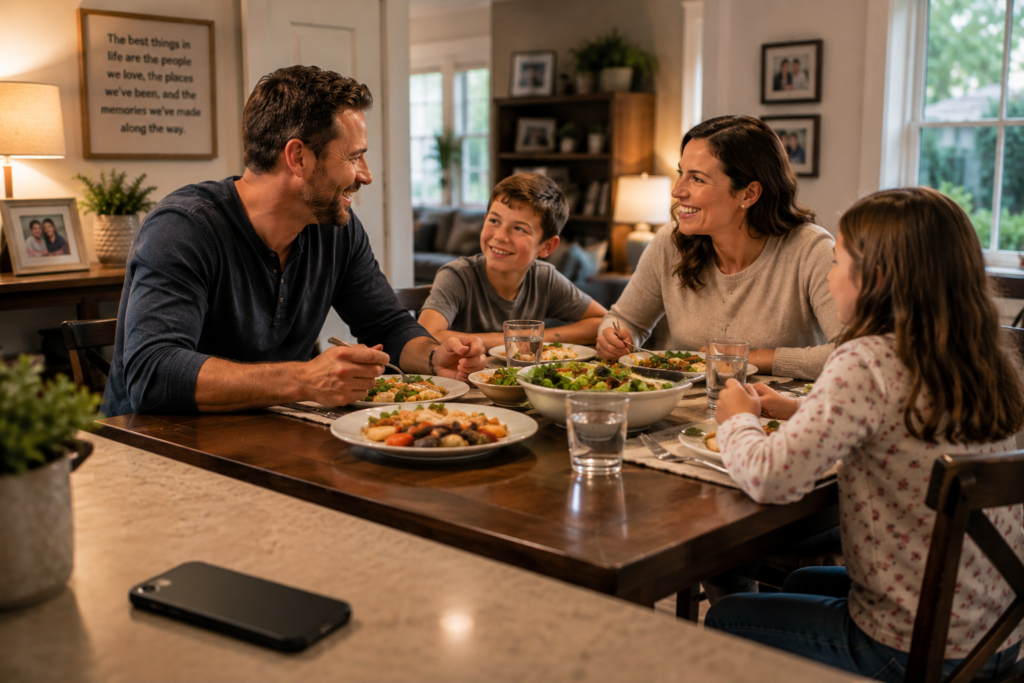
    • Active Presence: This is more than just being in the same room. It’s putting the phone down, making eye contact, and giving your child your undivided attention. Even 10 minutes of pure, focused time can make a huge difference.
    • Shared Partnership: Think of yourself as a co-pilot, not just a helper. Proactively jumping into household planning and decisions is a game-changer for how you balance work and family life.

    The goal is to shift from a position of authority to one of influence and guidance. You’re not just raising a kid; you’re building a relationship with a future adult who will always see you as their trusted confidant.

    This internal shift is the most powerful tool you have. When you decide to be more than just a provider, you open the door to a bond that will enrich both your life and your child’s in ways you can't even imagine.

    Building Unbreakable Bonds Through Daily and Weekly Rituals

    A happy father and his young child building a colorful house with toy blocks together.

    Those big, once-a-year vacations are fantastic, but they aren't what forge a truly unbreakable bond. The real magic, the stuff that sticks, happens in the small, consistent moments you build into every single day. Being a better father is all about weaving connection into the very fabric of your family's life through reliable, intentional rituals.

    These routines aren't just more things to check off a to-do list. They're powerful signals you send to your kids that they are a priority. They create a rhythm of connection, a predictable pattern of love and attention that becomes a massive source of security and comfort. It's the difference between being a guest star in their life and being a constant, steady presence they can count on.

    This consistency is even more crucial when you look at the bigger picture. The U.S. Census Bureau reports that 18.2 million children—a staggering one in four—grow up without a father in the home. Yet, research shows that even non-resident dads who stay involved in those early years (ages 1-5) dramatically reduce both maternal financial hardship and kids' behavioral issues. It's a clear sign of just how powerful your consistent presence really is. You can learn more about the impact of father involvement on fatherhood.org.

    Crafting Your Daily Connection Rituals

    Daily rituals are the very bedrock of your bond. They don't have to be epic or time-consuming, but they absolutely must be consistent. The goal is simple: create small pockets of focused time where your child gets all of you, no distractions.

    Think of it as embedding the message "I see you, I hear you, you matter" directly into your family's daily schedule.

    • The 10-Minute Download: Set aside ten minutes, phone down and TV off, to just listen. Ask open-ended questions like, "What was the coolest part of your day?" or "Tell me something that made you laugh today." Your job isn't to solve their problems, just to listen and let them know you heard them.
    • Bedtime Story & Chat: This one's a classic for a reason. It’s a calm, quiet moment of connection before sleep that builds a deep sense of safety and love. As kids get older, this can easily shift into chatting about their day or reading a chapter from a book together.
    • The "Welcome Home" Connection: Those first five minutes when you walk in the door are gold. Before you get lost in checking mail or changing clothes, connect first. Get down on their level, make eye contact, and give them a real hug. This tiny act screams, "You're the most important part of my day."

    A ritual is just a habit infused with meaning. It's the meaning—the feeling of being seen and valued—that strengthens the bond with your child.

    These small, daily deposits into your relationship bank account really add up over time, building a huge reserve of trust and connection. You're proving that your love isn't just for big events but is a constant, steady force in their life.

    Designing Meaningful Weekly Routines

    While daily rituals build consistency, weekly routines are all about creating shared joy and making memories. These become the anchors in your family's week—events your kids can actually look forward to and count on. Having these traditions in place takes the guesswork out of planning, ensuring that quality time doesn't get squeezed out by a busy schedule.

    The key is to pick things that encourage you to interact and work together. You can find all sorts of great ideas for father-son bonding activities to spark your own family traditions.

    Here are a few ideas to get you started, which you can easily adapt for any age:

    • Saturday Morning Adventure: This could be anything from a hike at a local park to a trip to the library or the farmers market. The activity itself isn't as important as the commitment to do it together, whether it's just the two of you or the whole family.
    • Family Game Night: Dust off the board games or fire up the video games for some friendly competition. This is a fantastic way to teach good sportsmanship, tackle problems together, and just have a good laugh.
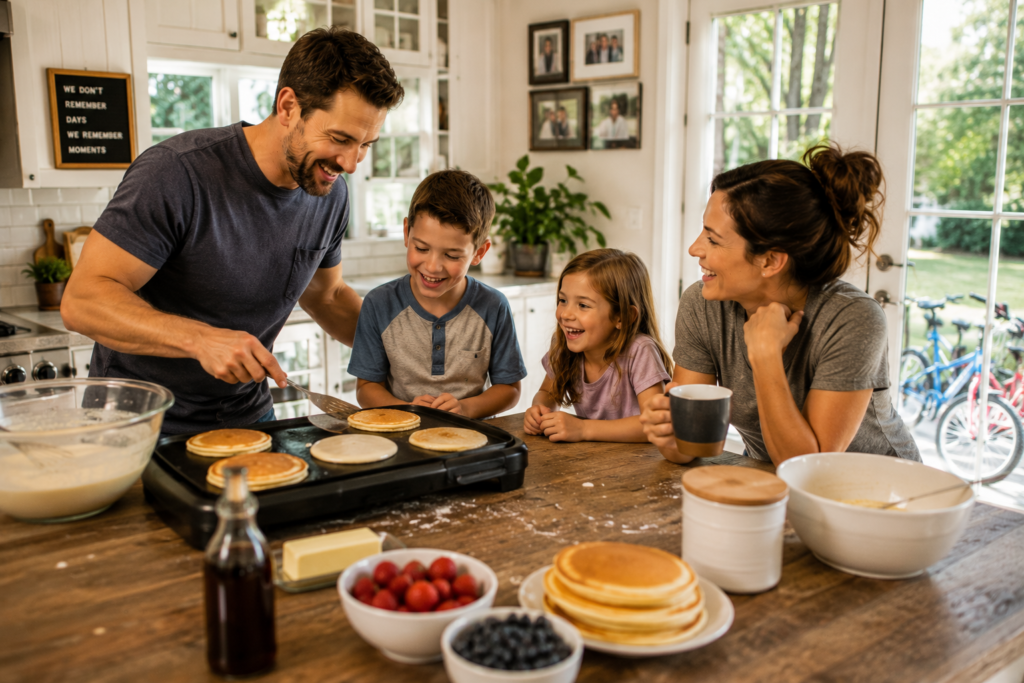
    • Sunday "Pancake Project": Make breakfast together every Sunday. Let the kids help measure the flour, mix the batter, and maybe even flip a pancake (with you standing by!). It’s a fun, low-stakes way to teach a life skill while making a delicious memory.

    By putting these daily and weekly touchpoints in place, you are actively building a strong, resilient relationship. You're showing up, again and again, proving through your actions that you are a father they can always count on. This is how you become a better dad—one small, meaningful ritual at a time.

    How to Actually Talk to Your Kids (And Get Them to Talk Back)

    A father kneels to have an eye-level conversation with his son in their kitchen.

    Let's be honest, real communication is the engine that drives any good relationship, especially with our kids. It's so much more than just barking orders or asking checklist questions. It’s about building a two-way street where they feel safe enough to be themselves—the good, the bad, and the messy.

    When you get this right, you stop being the "manager" of their life and become their most trusted guide. You're the one they run to when they ace a test and when they bomb one, because they know you'll listen without immediately jumping down their throat. This is one of the biggest leaps you can make as a father.

    Stop Asking Questions That Get One-Word Answers

    We’ve all been there. You get home, you’re tired, and you fall into the classic trap: "How was school?" The inevitable answer? "Fine." It’s a dead-end conversation.

    The problem isn't your kid; it's the question. Closed-ended questions are designed for simple answers. The simple fix is to start asking open-ended questions that actually require a thought.

    Instead of the usual "yes/no" questions, try throwing these into the mix:

    • "What was the most interesting thing that happened today?"
    • "Tell me about something that made you laugh at recess."
    • "What was the hardest part of your day? What was the best part?"
    • "If you were the teacher for a day, what's one thing you would have done differently?"

    These kinds of questions send a clear signal: you're not just going through the motions. You’re genuinely interested in their world, and that invitation opens the door to conversations that go deeper than the surface.

    The quality of your questions determines the quality of your connection. An open-ended question tells your child, "I'm not just asking if you're okay; I want to understand why you are."

    It takes a little more mental energy than "how was your day," I get it. But the payoff is a kid who actually wants to share their life with you.

    Listen to Their Feelings Before You Try to Fix Their Problems

    As dads, our default setting is often "fix-it mode." Your kid comes to you, heartbroken over a fight with a friend, and your brain immediately starts spitting out solutions. But jumping straight to a fix often makes them feel like you didn't really hear them. It can shut the whole conversation down.

    The single most powerful thing you can do first is validate their feelings. This doesn't mean you agree with them or are giving them a pass. It just means you’re acknowledging their emotion is real and okay. You're saying, "It's okay to feel sad/angry/frustrated right now."

    Here's what that looks like in the real world:

    The Scene: Your 10-year-old slams the door, fuming because a friend ignored them at school.

    Your Instinct (Problem-Solving Mode) A Better Way (Connection-Building Mode)
    "Don't worry about it. Just play with someone else tomorrow." "Wow, that sounds really hurtful. It's tough feeling left out like that."
    "Well, what did you do to them first?" "I can see how upset you are. It's okay to feel angry about that."
    "It's not a big deal. You have plenty of other friends." "Tell me more about what happened. I'm here to listen."

    See the difference? The responses on the right don't offer a single solution. They build a bridge first. Once your child feels heard and understood, they'll be far more open to figuring out a solution with you. This is a game-changer and a core part of building your own emotional intelligence for men, a skill that pays huge dividends in fatherhood.

    By making active listening and emotional validation a habit, you're building a foundation of trust that is absolutely priceless. You teach your kids that their feelings are welcome, even the ugly ones, and that Dad is always a safe place to land.

    Setting Boundaries and Discipline with Respect

    Let’s be honest: discipline is probably one of the most confusing parts of being a dad. Many of us grew up with a model that was all about punishment and control. The goal was to make kids fear the consequences of stepping out of line. But if you want to be a truly great father, you have to flip that script entirely.

    Real discipline isn’t about punishment at all—it's about teaching. It’s about guiding your kids, showing them how to navigate the world, and helping them develop an internal compass to make good choices on their own. When you handle discipline with respect, you're not just stopping a bad behavior. You're actually making your relationship stronger.

    Moving from Punishment to Connection

    The old way of doing things often relies on fear. "If you do X, then you'll get Y punishment." Sure, that might work for a minute, but it doesn't teach a child how to manage their own actions. All it really teaches them is how to not get caught.

    A much better way is what I call connected discipline. This is where the consequence is directly and logically tied to the action. It's about helping your child see the natural outcome of their choices, not just slapping on an unrelated penalty because you're angry.

    Think of it like this: a punishment is about making a child pay for a mistake. A logical consequence is about helping them fix it and learn something in the process.

    The goal is to raise a child who does the right thing because they genuinely understand why it's the right thing to do—not just because they're afraid of what will happen if they don't. This builds real character, not just blind obedience.

    Making this shift changes your role from enforcer to guide. It’s a powerful move that shows your child you’re on their side, even when you have to hold a firm line.

    Effective Discipline Techniques at a Glance

    Putting this into practice requires a calm, consistent approach. It means taking a breath before you react and remembering the lesson you want to teach. It's definitely not always easy, but the results are worth it.

    Here’s a look at how this plays out in some common, everyday scenarios.

    Scenario Punitive Response Connective Discipline Alternative
    Kids won't stop arguing over a toy. "That's it! Nobody gets the toy! I'm taking it away for the rest of the day!" "It sounds like you two are having a hard time sharing. The toy needs to take a break until you can come up with a plan to play together peacefully."
    Your teen misses their curfew. "You're grounded for a month! No phone, no friends, no fun!" "The rule is you're home by 10 PM so we know you're safe. Since you broke that trust, we need to rebuild it. For the next week, your curfew is 9 PM."
    A child refuses to clean up their mess. "If you don't clean this up right now, you're going to your room and getting no screen time!" "You're welcome to go play as soon as these toys are put back where they belong. I can help you get started if you feel stuck."

    Notice that the alternatives aren't soft. They are firm, clear, and hold the boundary. The key difference is that they treat the child with respect and focus on teaching responsibility, not just on making them feel bad.

    Collaborating on Family Rules

    Want to get your kids to actually follow the rules? Let them help create them. This isn't about letting them run the house, but about working together on a set of expectations that everyone understands and agrees to.

    Try holding a "family meeting" to come up with a family contract. This can be a total game-changer, especially for those big-ticket items like chores and screen time.

    Here’s how to do it:

    • Frame it Positively: Instead of a list of "Don'ts," focus on what you do want. "We treat each other with respect" works so much better than "No yelling."
    • Get Their Input: Ask for their opinion. For screen time, you could ask, "How much screen time do you think is fair for a school day?" You still have the final say, of course, but just asking makes them feel heard and valued.
    • Define Consequences Together: Talk through what happens when a rule is broken. A logical consequence for chores might be, "If chores aren't done, allowance isn't paid," or "If you don't put dirty clothes in the hamper, they won't get washed."
    • Write It Down and Post It: Make it official. Write down the rules and consequences you all agreed on and stick it on the fridge. Now it’s a neutral authority you can all point to.

    This whole process shifts the dynamic. You stop being the dictator handing down orders and become more of a team leader, guiding the family toward a shared set of values. It’s a foundation of respect that every great father needs.

    You Can't Pour From an Empty Cup: Why Your Wellbeing Comes First

    Let's get one thing straight: the old-school image of the stoic, tireless dad who sacrifices everything is a fast track to burnout. It sounds noble, but in reality, it just doesn't work. The simple truth is, if you're running on empty, you have nothing left to give your family.

    Taking care of yourself isn't selfish. It’s actually one of the most critical things you can do to be a better father. A dad who is stressed out, exhausted, and frayed at the edges is a dad who's short on patience and low on energy. When you prioritize your own mental and physical health, you're directly fueling your ability to be the engaged, present, and patient parent your kids truly need. It's about building up your own reserves so you can handle the daily chaos of fatherhood without losing your cool.

    Ditching the "Selfless Father" Myth

    For generations, the unspoken rule for dads was that their needs always came last. This mindset isn't just outdated—it’s actively harmful. When you ignore your own wellbeing, it leads to stress, irritability, and a sense of detachment, which are the exact things that get in the way of connecting with your family.

    Real strength isn't about gritting your teeth through endless stress. It's about having the self-awareness to know your limits and taking steps to recharge before you hit them. Plus, modeling this for your kids is an incredibly powerful lesson. When they see you taking time to manage stress or even just enjoy a hobby, you're teaching them that self-care is a normal, healthy part of life.

    A better father isn't the one who never takes a break. He's the one who understands that taking that break makes him a better father. Think of it as a strategic investment in your family's happiness.

    Practical Ways to Guard Your Mental Space

    Self-care for dads doesn't have to mean spa days (unless that's your thing, of course). It’s more about weaving sustainable, non-negotiable habits into your life that protect your mental and emotional energy.

    • Schedule "You" Time: Look at the calendar and block out at least 30-60 minutes a week that is unapologetically yours. This isn't "if I have time"—it's an appointment. Use it to hit the gym, read a book, tinker on a project in the garage, or just sit in silence with some music.
    • Find Your Dad Crew: Connect with other fathers. It could be a group text, a local meetup, or just a couple of good buddies you can be real with. Having a space to share the wins and the frustrations of fatherhood is a game-changer. You’ll realize very quickly that you aren't the only one going through it.
    • Get Good at Saying "No": You simply can't be everything to everyone, all the time. It is perfectly okay to turn down extra work projects, social events, or volunteer requests when you feel your plate is full. Protecting your own time is, by extension, protecting your family's time.

    Work Stress, Paternity Leave, and Why It Matters

    Work and financial pressure are often the biggest stressors for modern dads. It's a tough balancing act. A major 2023 global study found that while 87% of Australian dads view themselves as equal caregivers, they are among the least likely to actually take parental leave. Worldwide, the average paternity leave is a startlingly low nine days.

    This gap between what dads want to do and what they feel they can do creates a massive strain. The evidence is clear, though: fathers who do take leave report stronger family bonds and better wellbeing. You can discover more insights about these global fatherhood trends on YouTube.

    Fighting for leave and flexibility at work does more than just help you—it chips away at outdated norms and tackles a primary source of paternal stress head-on.

    Just as important is talking to your partner. Don't fall into the trap of assuming they can read your mind. A simple, direct statement like, "Hey, I'm feeling pretty burned out. I could really use an hour to myself this weekend," can make all the difference. That kind of open communication builds a true partnership, where you both work as a team to make sure everyone's cup stays full. This isn't just self-care; it's family care.

    Your 30-Day Better Father Action Plan

    Knowing what to do is one thing; actually doing it is another. This is where the rubber meets the road. I've put together a practical, 30-day challenge to help you turn all these ideas into real, everyday habits. Forget trying to change everything at once. This is about building momentum through small, consistent wins.

    The plan is straightforward and broken down week by week. Each day gives you a single, manageable task that reinforces one of the core ideas of being an engaged dad. The whole point is to make these actions so simple that they start to feel like second nature.

    Week 1: Focus on Presence and Active Listening

    This first week is all about one thing: showing up. I mean really showing up. Your mission is to put distractions away and give your kids your undivided attention. It's the foundation for everything else we've talked about.

    • Day 1: Pick a 15-minute window, put your phone in another room, and do whatever your child wants to do. No questions asked.
    • Day 2: At the dinner table, share one high point and one low point from your day. Then, invite everyone else to do the same.
    • Day 3: Ask your child three open-ended questions about their day and just listen. Really listen. Don't jump in with advice or solutions.
    • Day 4: When you first see your child in the morning or after work, make real eye contact and give them a proper hug.
    • Day 5: Notice a positive quality in your child and say it out loud. Something like, "I really admire how you kept trying on that puzzle."
    • Day 6: Go for a walk together, just the two of you. No destination, no agenda—just walking and talking.
    • Day 7: Take a few minutes to think about the week. What was the hardest part of being present? What felt the most rewarding?

    Week 2: Build Rituals and Connection

    Now it's time to turn that presence into something reliable. This week is all about creating small, consistent rituals that become anchors in your family's routine. These little moments signal to your kids, day in and day out, that they are a priority.

    Week 3: Practice Boundaries and Emotional Coaching

    This is where you step into the role of the calm, steady guide. Your focus will be on setting clear, respectful limits while also validating your child's feelings. The goal is to shift from being a "punisher" to being a teacher who helps build emotional intelligence.

    Week 4: Prioritize Self-Care and Your Partnership

    Let's be honest: you can't pour from an empty cup. This final week is about you and your co-parent. Taking care of your own needs isn't selfish; it’s a prerequisite for being the patient, engaged dad you want to be.

    This timeline gives you a good look at how a dad's well-being is a year-round journey—it’s not just a one-and-done fix. It’s a cycle of destressing, connecting with family, and recharging yourself.

    Timeline of Dad's wellbeing journey showing stages: Destress in January, Connect in April, Recharge in July.

    The big takeaway here is that a father's mental and emotional health is a process, not a destination. It needs consistent attention throughout the year to keep you at your best.

    The most powerful thing about this plan isn't completing every single task perfectly. It's the simple act of trying, of showing up each day with the intention to connect. That consistency is what builds an unbreakable bond and truly makes you a better father.

    Got Questions About Being a Dad? We've Got Answers.

    Look, navigating fatherhood is a wild ride, and it's totally normal to have a ton of questions swirling around. Let's be real—you're not the only one wondering if you're doing this whole thing right. Here are a few of the big ones I hear all the time, along with some straight-up advice to keep you moving forward.

    What If I Don't Feel That "Instant Bond"?

    This is a big one, and it's way more common than you'd think, especially with a newborn. We see it in movies—that instant lightning bolt of connection. But for a lot of guys, it's more of a slow burn, something that builds over time through your day-to-day actions.

    The key is not to force it or beat yourself up. Just show up. Focus on the small, tangible things you can do. Handle a middle-of-the-night feeding. Figure out how to get that swaddle just right. Make bath time your thing. These little moments of just being there, of physical closeness and taking care of them, are the bricks you're using to build a solid, lifelong bond. Your presence is everything.

    How Do I Be a Good Dad After a Divorce?

    Co-parenting adds a whole new layer of complexity, no doubt about it. But the fundamentals of being a great dad don't change: consistency and emotional safety. When your kids are with you, make that time truly count. Put the phone away and be all in.

    Start creating special rituals that are just for your house. Maybe it's Friday night pizza and a movie, or maybe you become the undisputed king of Saturday morning pancakes. The most important thing? Never, ever bad-mouth their other parent in front of them. Your kids need to see you as a rock—a stable, respectful, and reliable dad they can count on, no matter what the living situation is.

    Being a better father isn't about some impossible standard of perfection. It's about being present and being intentional. The very fact that you're trying to learn and grow is the best thing you can do for your kids.

    I'm Completely Wiped Out. How Do I Find the Energy?

    Dad burnout is real. Fatherhood is a marathon, and trying to sprint it will leave you gassed. The answer feels backward, but it's the only one that works: you have to make time for yourself. You can't pour from an empty cup.

    Even just 30 minutes a few times a week to hit the gym, go for a run, or just zone out with some music can make a world of difference. Talk to your partner. Let her know what you need and work together to make sure you both get a break. Taking care of yourself isn't selfish—it's essential maintenance for being the dad you want to be.


    Here at alphadadmode.com, we're building a community to give dads the tools and support they need for modern parenting. To get updates and be the first to know when we launch, sign up for our newsletter at https://alphadadmode.com.

    being a good dad fatherhood advice how to become a better father parenting tips for dads
    Share. Facebook Twitter Pinterest LinkedIn Tumblr Telegram Email
    The Dad Team
    • Website

    Related Posts

    When to Introduce Pacifier: A Dad’s Guide

    April 10, 2026

    7 Top 4 Year Old Present Ideas for Dads (2026)

    April 9, 2026

    When Do You Stop Burping a Baby? Expert Tips 2026

    April 9, 2026
    Leave A Reply Cancel Reply

    Recent Posts
    • Nike Hoops Elite Pro Backpack Review: Pros, Cons & Verdict
    • Will Mortgage Rates Go Down​? 2026 Forecast
    • Auto Approve Reviews: Is It Right for Your Car Refinance?
    • Blue Chevy Trax Review (2026): Is It a Smart Buy?
    • Living Will vs Living Trust​: Choosing Your Estate Plan
    About Us

    Alpha Dad Mode is built for fathers who refuse to settle for average. We believe being a great dad starts with becoming the strongest version of yourself—physically, mentally, and emotionally. Our mission is to equip men with practical tools, honest guidance, and real-world motivation to lead their families with confidence, discipline, and integrity.

    Email Us: support (at) alphadadmode.com

    Our Picks

    Nike Hoops Elite Pro Backpack Review: Pros, Cons & Verdict

    April 16, 2026

    Will Mortgage Rates Go Down​? 2026 Forecast

    April 15, 2026

    Auto Approve Reviews: Is It Right for Your Car Refinance?

    April 15, 2026
    Most Popular

    Nike Hoops Elite Pro Backpack Review: Pros, Cons & Verdict

    April 16, 2026

    What is the Worst Age for Divorce for Children (What Studies Really Say)

    January 28, 2026

    10 Actionable Date Night Ideas at Home in 2026

    January 28, 2026
    © 2026 Alpha Dad Mode. Designed by Alpha Dad Mode.
    • Home

    Type above and press Enter to search. Press Esc to cancel.