



If you’ve ever searched how to be a better husband and father, you’re already ahead of a lot of men.
Seriously.
Most guys don’t wake up one morning and think, “You know what? I should probably become a more patient husband, a more present father, and a better role model.”
Instead, life happens.
Work gets busy.
Kids get older.
The house needs repairs.
The dog throws up on the carpet five minutes before you leave for work.
And before you know it, you’re operating on autopilot.
As dads, it’s easy to focus on providing for our families while accidentally neglecting the relationships that matter most. The good news is that learning how to be a better husband and father doesn’t require a complete personality transplant or a 5 AM ice bath routine followed by motivational speeches in the mirror.
It starts with small actions.
Consistent actions.
The kind your family notices.
The kind that actually matter.
As a father who has made plenty of mistakes and learned from them, I’ve discovered that being a better husband and father isn’t about perfection. It’s about showing up, improving, and being intentional with the people who depend on you most.
Why Being a Better Husband Makes You a Better Father

Many dads separate marriage and parenting into two different categories.
They’re not.
Your children are constantly watching how you interact with their mother.
They’re learning:
- Communication
- Respect
- Conflict resolution
- Emotional regulation
- Healthy relationships
Whether you realize it or not, you’re teaching lessons every day.
The way you speak to your spouse often teaches more than anything you say directly to your kids.
Research from the American Psychological Association has consistently highlighted the connection between healthy parental relationships and positive child development.
In simple dad language?
When your marriage improves, your family improves.
The Biggest Mistake Most Dads Make
We assume our family knows how much we care.
Big mistake.
Your wife can’t read your mind.
Your kids can’t either.
Love isn’t measured by thoughts.
It’s measured by actions.
You may love your family deeply.
But if you’re always distracted, unavailable, stressed, or glued to your phone, they don’t experience that love the way you intend.
This realization hit me hard.
I was physically present.
But mentally?
Sometimes I was at work.
Or checking emails.
Or thinking about projects.
Being present and being available aren’t always the same thing.
Comparison Table: Average Dad vs Intentional Dad
| Average Dad | Intentional Dad |
|---|---|
| Assumes family knows he cares | Shows family he cares |
| Reacts emotionally | Responds thoughtfully |
| Prioritizes work first every time | Balances work and family |
| Waits for problems to appear | Invests proactively in relationships |
| Spends time near family | Engages with family |
| Focuses on big moments | Values small daily moments |
Nobody lands perfectly on either side.
But it’s a useful framework.
Start Listening More Than You Talk
This sounds simple.
It’s not.
Many dads are natural problem-solvers.
Wife has a problem?
Fix it.
Child has a problem?
Fix it.
Dog has a problem?
Fix that too.
The challenge is that people don’t always want solutions.
Sometimes they want understanding.
Before offering advice, try asking:
- “How are you feeling about that?”
- “Tell me more.”
- “What do you think would help?”
You’ll be amazed how much changes when family members feel heard.
Put Your Phone Down
I know.
Nobody likes hearing this.
Including me.
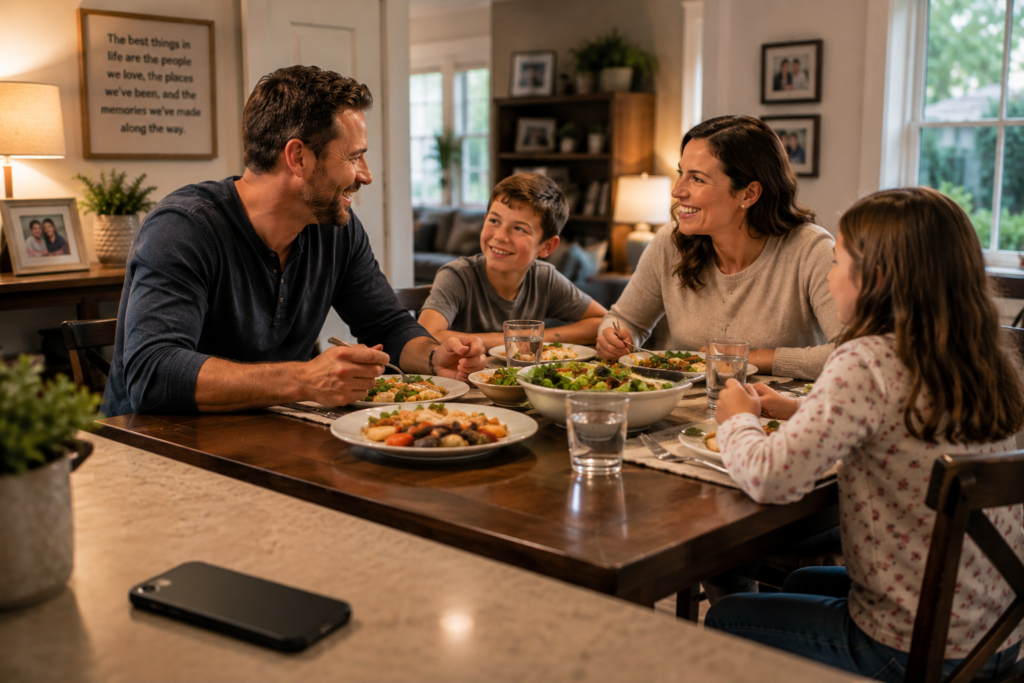
But if we’re being honest, many of us spend more time looking at screens than looking at the people we love.
A study published by Pew Research Center has repeatedly shown how technology affects family interactions and attention.
You don’t need to throw your phone into a lake.
Although some days that feels tempting.
Instead:
- Put it away during dinner
- Avoid scrolling during conversations
- Create device-free family time
Small changes create huge improvements.
Learn Emotional Intelligence
One of the biggest breakthroughs in my own parenting came from developing emotional awareness.
Not exactly a topic most men discussed growing up.
Many of us were taught:
- Work hard
- Stay tough
- Push through
Useful skills.
But incomplete.
Understanding emotions helps you become:
- A better communicator
- A better spouse
- A better father
If you’d like to learn more, check out this guide on emotional intelligence.
From one dad to another, it’s worth it.
This skill pays dividends everywhere.
Why Your Presence Matters More Than Presents
This one can be difficult for dads.
We’re providers.
We want our families to have opportunities.
But children rarely remember the things you bought.
They remember:
- Family dinners
- Backyard games
- Road trips
- Bedtime stories
- Saturday mornings
Some of my kids’ favorite memories cost almost nothing.
Which is mildly frustrating after seeing the price of some toys.
The point is simple.
Presence matters more than presents.
Help Without Being Asked
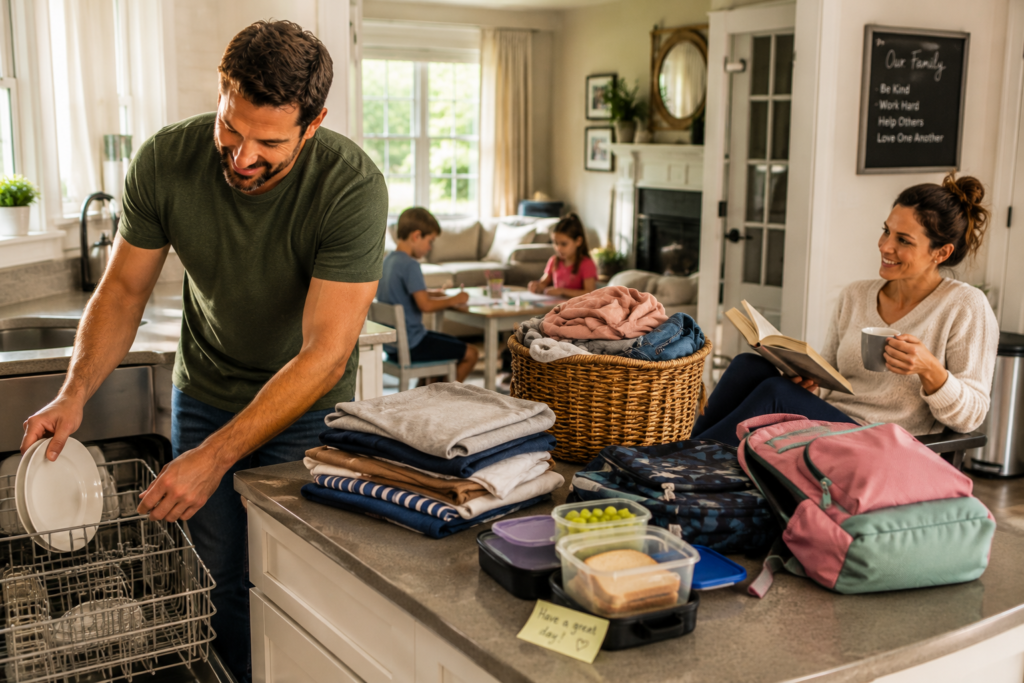
Want a practical way to become a better husband?
Look around.
Find something that needs doing.
Do it.
Without being asked.
Revolutionary concept.
I know.
Examples:
- Start the dishwasher
- Fold laundry
- Pack lunches
- Handle bath time
- Take the trash out
The goal isn’t earning points.
The goal is becoming a genuine partner.
A strong marriage operates like a team.
Not a manager and employee relationship.
Set Healthy Boundaries
Many dads struggle because they say yes to everything.
Work requests.
Social obligations.
Extra commitments.
Eventually, family gets whatever energy remains.
Usually not much.
Learning boundaries changed my life.
Healthy boundaries protect:
- Marriage
- Parenting
- Mental health
- Family time
I cover this in more detail here.
Because nobody wins when you’re constantly exhausted.
Apologize When You Mess Up
You will make mistakes.
I certainly do.
Every dad does.
The goal isn’t perfection.
The goal is accountability.
When you’re wrong:
Say it.
Examples:
- “I lost my patience.”
- “I shouldn’t have said that.”
- “I’m sorry.”
Simple.
Powerful.
Children learn humility when they see it modeled.
Prioritize Your Marriage
One parenting trap is putting the marriage on hold until the kids get older.
Unfortunately, that strategy often backfires.
Children eventually grow up.
Your spouse remains. Or doesn’t…
Strong marriages don’t happen accidentally.
They require maintenance.
Think of marriage like a vehicle.
Ignore it for years and eventually something breaks.
Sometimes expensively.
Some practical ideas:
- Weekly date nights
- Evening walks
- Coffee together
- Regular conversations
- Tell them you love them
Nothing fancy required.
Consistency matters more than extravagance.
Develop Better Patience
Patience is one of those qualities everyone wants.
Until they’re tested.
Which usually happens before breakfast.
Children move slower.
Ask more questions.
Forget instructions.
Create mess.
Repeat the same stories.
Frequently.
The best strategy I’ve found?
Pause before reacting.
Even a few seconds helps.
Those moments often determine whether a situation escalates or improves.
Build Family Traditions
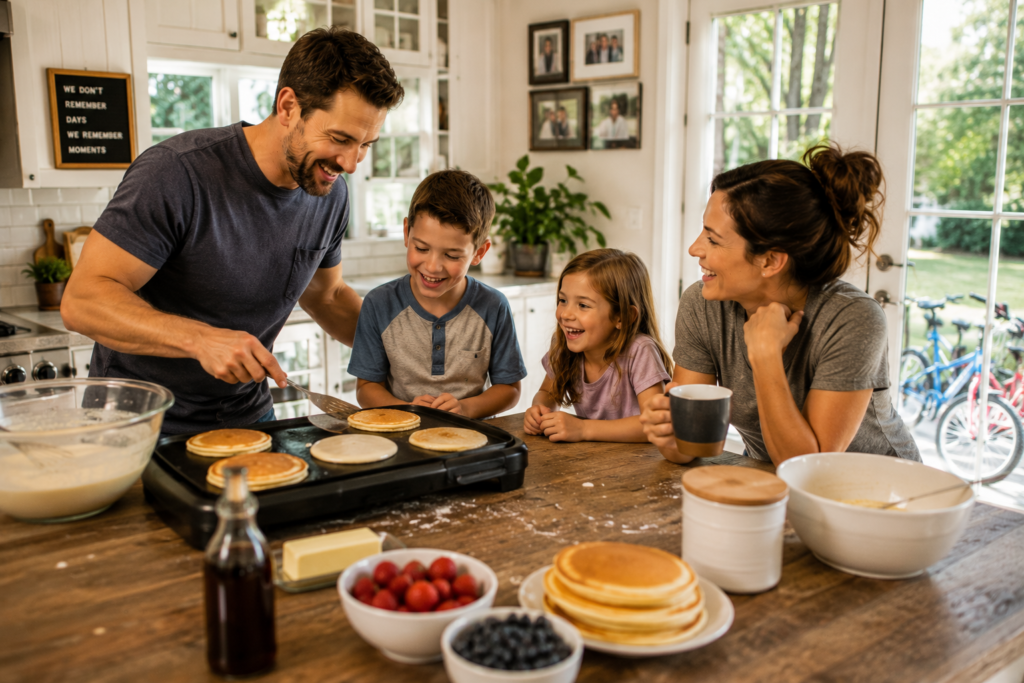
Traditions create memories.
And they don’t need to be complicated.
Some ideas:
- Friday pizza nights
- Saturday morning pancakes
- Family movie nights
- Camping trips
- Evening walks or bike rides
Children remember these moments far longer than most parents realize.
Often the simplest traditions become the most meaningful.
Take Care of Yourself Too
This section surprises people.
Being a better husband and father includes taking care of yourself.
Not selfishly.
Responsibly.
You can’t pour from an empty cup.
Sleep.
Exercise.
Mental health.
Friendships.
Hobbies.
These things matter.
A healthier dad is often a better husband and father.
Helpful Resources for Dads
- American Psychological Association
- Pew Research Center
- The Gottman Institute
- National Fatherhood Initiative
These resources offer evidence-based insights without requiring you to earn a parenting degree.
Frequently Asked Questions
How can I be a better husband and father starting today?
Start with small actions. Listen more, spend focused time with your family, put your phone away during important moments, and actively help around the house.
What is the most important quality of a good husband and father?
Consistency.
Grand gestures are nice, but daily reliability builds trust and stronger relationships.
Can I become a better husband and father even if I’ve made mistakes?
Absolutely.
Every father makes mistakes.
What matters is acknowledging them, learning from them, and continuing to improve.
How much time should dads spend with their kids?
Quality matters more than quantity. Even short periods of focused, engaged interaction can have a meaningful impact.
Why is emotional intelligence important for dads?
It improves communication, strengthens relationships, and helps children learn healthy emotional skills.
How can I strengthen my marriage while raising children?
Prioritize regular connection with your spouse, communicate openly, share responsibilities, and make time for your relationship.
What should I do if work constantly interferes with family life?
Evaluate boundaries, priorities, and commitments. Protecting family time often requires intentional decisions.
The Bottom Line
Learning how to be a better husband and father isn’t about becoming perfect.
It’s about becoming more intentional.
Your family doesn’t need a flawless superhero.
They need you.
Present.
Engaged.
Consistent.
Some days you’ll nail it.
Other days you’ll lose your patience because someone spilled juice over the cat while asking seventeen questions.
That’s called parenting.
What matters is continuing to show up.
One conversation.
One apology.
One family dinner.
One bedtime story.
One day at a time.
Those small moments are what build strong marriages, great fathers, and healthy families.
Start today.
