

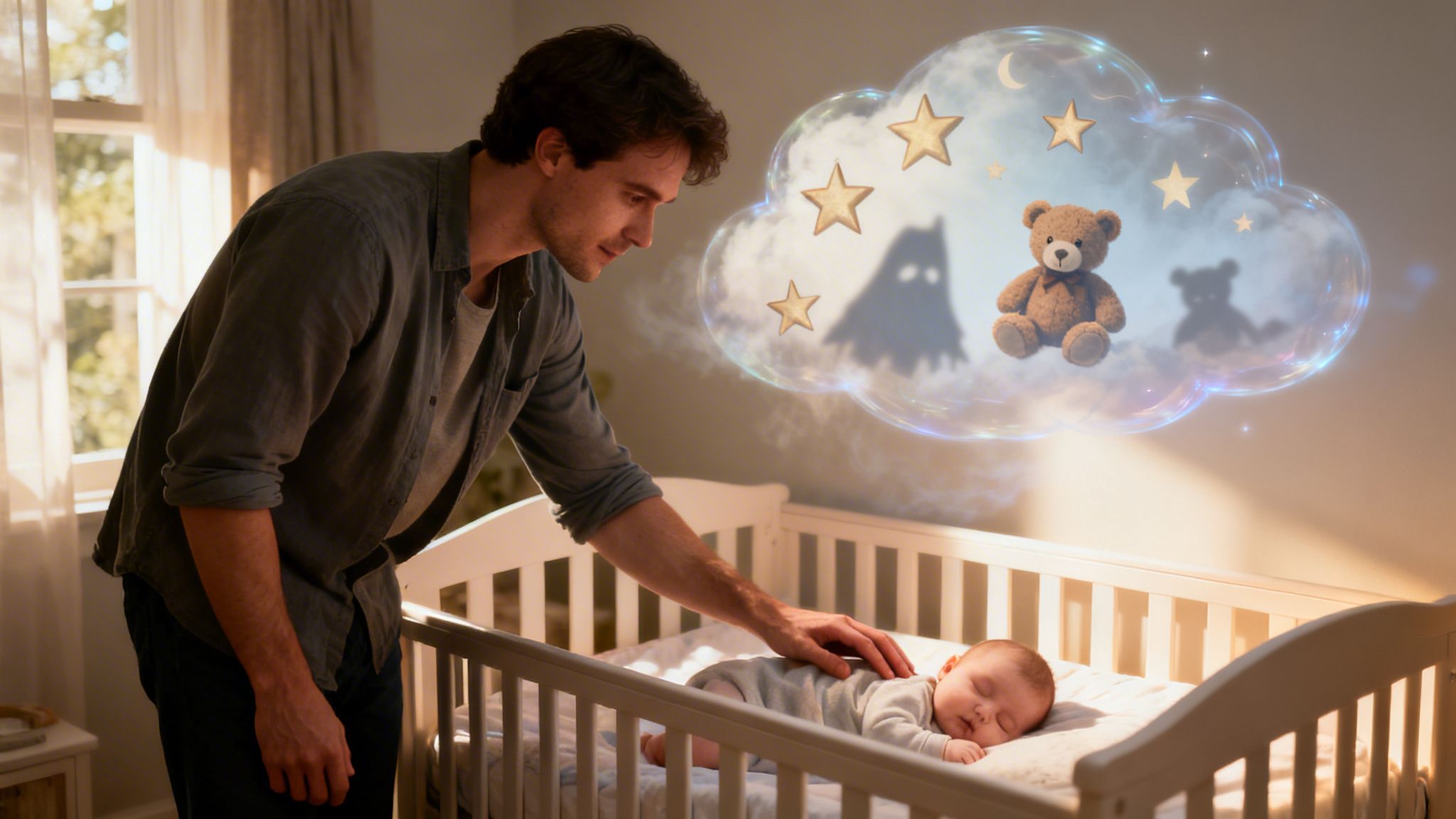
It’s 3 AM. A sharp cry from the nursery rips you out of a deep sleep. Your heart pounds as you bolt to their room, only to find your baby whimpering, eyes still shut tight. A wave of worry hits you: are they having a nightmare? Or is this something else entirely?
It’s a question every parent asks, and that middle-of-the-night cry can leave you feeling confused and helpless. Don't worry, we're here to give you the clarity and reassurance you need to handle these moments with confidence.
Quick Answer: True, story-like nightmares are very rare in babies under one year old because their brains haven't developed the capacity for complex fear or imagination. Nightmares typically don't start until ages 2 to 4. For infants, crying during sleep is almost always about their sleep cycles, minor discomfort, or developmental leaps.
Do Babies Actually Have Nightmares?
That sudden wail from the crib is unsettling. Your first thought is probably, do babies have nightmares? It’s easy to project our own adult experiences with bad dreams onto them, but the reality is usually much simpler—and a lot less scary. To have a nightmare like we do, a baby would need to imagine things that aren't there and understand complex fear, which they can't yet.
A baby’s brain is a work in progress. What looks like a terrifying nightmare to us is almost always something else entirely, tied to their physical needs or the fascinating world of their developing sleep cycles. Babies spend up to 50% of their sleep in the active REM phase, where twitching, smiling, and even crying are completely normal.
Toddlers, on the other hand, are starting to develop imagination, which is why nightmares become more common around age two. For your baby, those nighttime noises are just a part of growing.
7 Surprising Facts Parents Don’t Know
So, if it’s not monsters, what is going on when your baby cries in their sleep? Understanding the "why" behind their nighttime behavior turns confusion into confidence. Here are seven insightful facts that will change how you see your baby’s sleep.

1. Babies Under 1 Year Rarely Have True Nightmares
Here’s some good news: a baby younger than 12-24 months doesn't have the mental machinery for a real nightmare. A proper nightmare requires imagination—the ability to picture a monster or a scary situation—and that's a skill that only starts developing in the toddler years.
So, what you're actually seeing when your baby cries out or jerks suddenly isn't fear. Think of it more like neurological static. It’s the sound of a brain working overtime, building connections and processing the day. It’s a physical process, not a scary dream.
2. Night Crying Is Often Not Fear-Based
Your parental instincts are hardwired to hear a cry and think, "Something's wrong!" But for a baby, crying in their sleep is often just a reflex, like a hiccup or a sneeze. It's a physical release, not an emotional SOS.
This happens a lot during their active REM sleep stage, when their little brains are firing away and their bodies are twitchy. That cry could just be a reaction to a tiny change in temperature, a full bladder, or a muscle spasm. Most of the time, it has absolutely nothing to do with being scared, which is a key part of understanding normal baby sleep behavior.
3. Night Terrors Are Different From Nightmares
This is a huge one, and getting it right will save you a lot of worry. While the question do babies have nightmares is common, it's crucial not to confuse them with night terrors. They are completely different phenomena.
A nightmare is a bad dream that wakes your child up, and they'll seek comfort from you. A night terror is a partial arousal from deep sleep where your child might scream or thrash but remains asleep and unaware of you. Night terrors are very rare in babies and more common in toddlers. Knowing the difference helps you react the right way.
4. Sleep Cycles Affect Baby Behavior
An adult’s sleep cycle lasts about 90 minutes. A baby's is much shorter, around 45–60 minutes. This means they transition between light and deep sleep far more often than you do. At the end of each cycle, there’s a brief "almost-awake" moment.
This transition is a vulnerable point. Any little thing—a noise, a change in light, or minor discomfort—can cause them to wake up completely instead of rolling into the next cycle. That sudden cry might just be them hitting that transition and needing a little help connecting to the next round of sleep. Understanding the different baby sleep regression stages can shed light on this.
5. Overstimulation Can Cause Night Disturbance
A busy day full of new faces, bright lights, or loud noises can be overwhelming for a baby’s brand-new nervous system. You'd think it would wear them out, but it often gets them "wired" and fussy right when you want them to be winding down.
That chaos doesn't just stop when they close their eyes. Their brain keeps churning, trying to process all that stimulation. The result? Restless sleep, more frequent wake-ups, and little cries that you might mistake for a nightmare. A calm, predictable bedtime routine is your best weapon against these infant sleep problems.
6. Babies Can’t Visualize Fear Like Older Kids
A toddler sees a shadow and their budding imagination turns it into a monster. A baby's brain just doesn't work that way yet. Their world is all about immediate senses—what they can actually see, hear, and feel right now.
Since they can't create those detailed mental pictures, they can't dream up the scary stuff that makes our nightmares so vivid. A cry in the night is almost always a signal of a physical need, like hunger or gas, not some monster they invented in their head. Other physical habits can also pop up during sleep; for more on that, see why babies grind their teeth.
7. Parent Response Affects Sleep Patterns
Even though infants don't have nightmares, how you respond to their night wakings shapes their future sleep. If you go flying into the room every time your baby makes a peep, you accidentally teach them that nighttime is alarming and that every little stir is an emergency.
But if you stay calm, pause for a moment to see if they'll settle on their own, and then offer quiet, gentle reassurance, you send a powerful message: "You're safe. Night is for sleeping." Fascinating research shows that a baby's temperament can predict their dream life later; you can read the full research about these findings to see the connection. Your steady presence is the best tool for building a foundation of healthy sleep.
Signs Your Baby Might Be Distressed At Night
It's one thing to know that nightmares are unlikely, but it's another to see your baby crying. While most nighttime noises are normal, some signs can indicate genuine distress that needs your attention.
It's important to distinguish what's normal from what might be concerning. Normal baby sleep behavior includes twitching, smiling, grunting, and brief cries during active sleep. However, if you notice the following, your baby might be truly uncomfortable:
- Sudden, Piercing Crying: A cry that is much sharper and more intense than their usual fussing.
- Difficulty Calming: They continue crying even after you've checked their diaper, offered a feed, and tried to soothe them.
- Frequent Waking: They are waking up much more often than usual, and each waking is accompanied by intense crying.
- Signs of Physical Pain: Arching their back, pulling their legs up to their chest, or other signs of physical discomfort.
How To Comfort A Baby At Night
Knowing how to calm a crying baby at night isn't just about stopping the noise; it's about reinforcing a sense of safety and building healthy sleep habits. Your calm, confident presence is the most powerful tool you have.
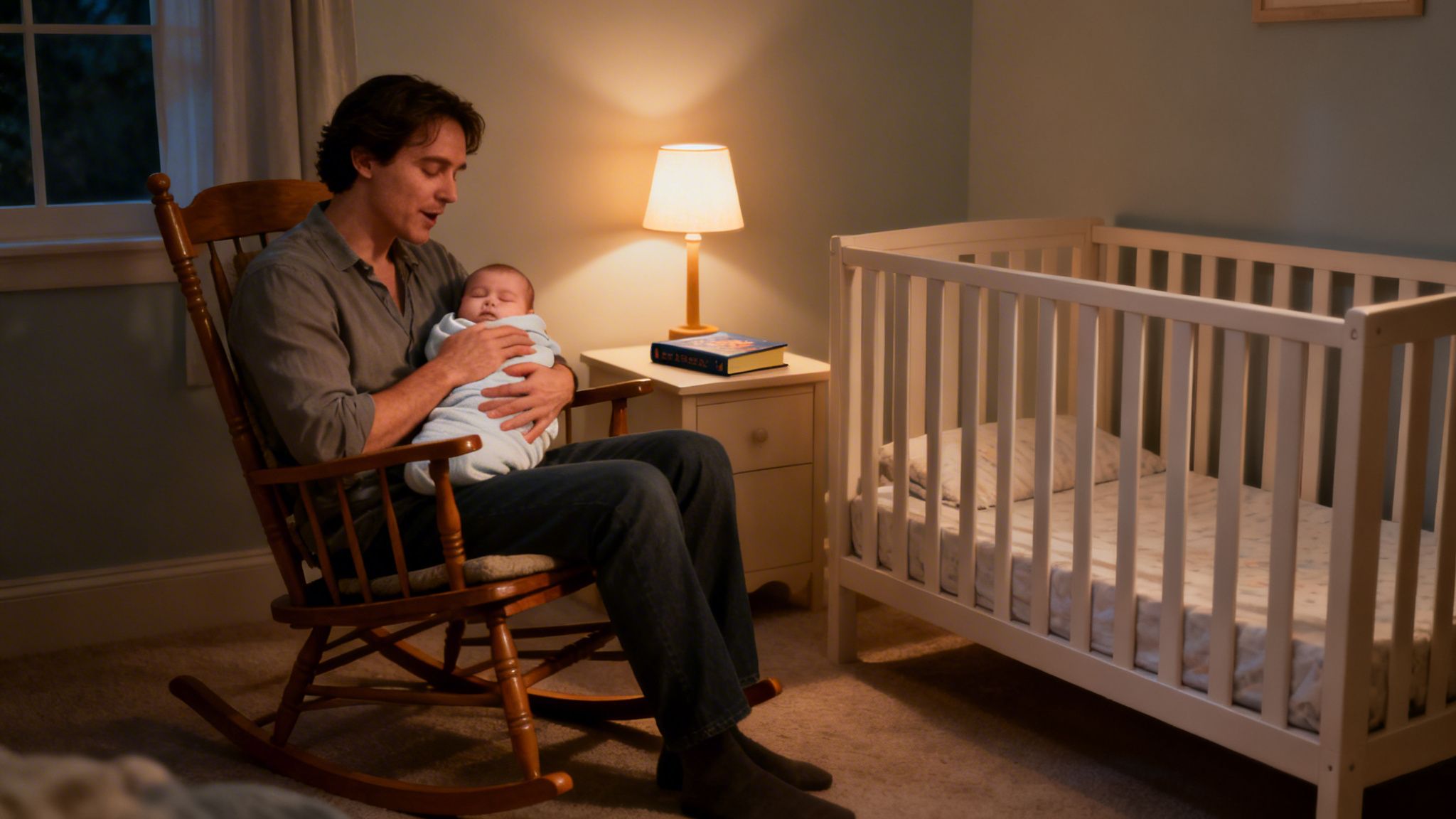
Here are a few practical, actionable tips:
- Offer Gentle Soothing: Before picking them up, try a gentle hand on their chest and a soft "shushing" sound. Sometimes, just knowing you're there is enough. If they need more, try slow, rhythmic rocking.
- Maintain a Consistent Routine: A predictable bedtime routine (bath, book, feeding) signals to your baby's brain that it's time to wind down. Consistency is key for helping them feel secure. For more on routines, see when babies drop to one nap.
- Create a Safe Sleep Environment: Ensure the room is dark, quiet, and at a comfortable temperature. A safe and boring crib environment encourages sleep. Also, a quick check for common discomforts like a wet diaper or gas can make all the difference. Check our guide on when to stop burping a baby.
When Should Parents Be Concerned?
Most of the time, a crying baby at 3 a.m. is just a normal part of parenting. However, your instincts are there for a reason. While you shouldn't panic over a few rough nights, you should watch for persistent patterns that don't improve.
Here are a few clear guidelines for when it might be time to check in with your pediatrician:
- Frequent, Extreme Distress: If your baby is inconsolable almost every night for more than a week, and nothing you do seems to help, it’s worth a conversation.
- Persistent Sleep Regression Patterns: A sudden, drastic change in sleep that lasts longer than a week or two without any signs of improvement could signal an underlying issue.
- Health-Related Concerns: Look for physical signs like a fever, repeatedly arching their back (a sign of reflux), pulling at their ears, or any changes in their breathing. Breathing concerns should be addressed immediately. A parent's guide to pediatric urgent care can be a helpful resource.
Remember, your pediatrician is there to help. It's always better to seek reassurance than to worry alone.
Frequently Asked Questions
Even with all this information, you might still have a few lingering questions. Here are quick, clear answers to some of the most common concerns parents have.
Do newborns have nightmares?
No, you can relax on this one. A newborn’s brain isn’t developed enough to create the complex stories or feel the specific fears that cause true nightmares. When a newborn cries in their sleep, it's almost always a response to a physical need like hunger, a wet diaper, or simply transitioning between sleep cycles.
Why does my baby cry in sleep?
Babies can be surprisingly noisy sleepers. That sudden cry-out is often just a random sound made during their active REM sleep phase, much like a muscle twitch or a sleepy sigh. Most of the time, they are still completely asleep and will settle back down on their own without intervention.
Are night terrors common in babies?
No, true baby nightmares vs night terrors are different, and night terrors are very rare in infants. They are more common in toddlers and young children, usually appearing between ages 3 and 7. A night terror is a partial arousal from deep sleep, and your child won't remember it the next day.
How can I improve baby sleep?
Consistency is your best friend. The single most effective way to improve your baby’s sleep is to establish a predictable and calming bedtime routine. This signals to their brain that it's time to rest. Ensuring their sleep space is dark, quiet, and comfortable also makes a huge difference.
What’s the difference between baby nightmares vs night terrors?
A nightmare wakes your child up; they will be scared and need your comfort. A night terror happens while they are still asleep; they may scream or thrash but are not truly awake and won't remember it. You soothe a nightmare but simply ensure safety during a night terror.
How can I calm a crying baby at night?
First, pause for a moment to see if they settle on their own. If not, try gentle soothing with a soft "shhh" and a hand on their chest. Check for basic discomforts like a wet diaper or hunger. A calm, steady presence from you is the most effective tool for reassuring them.
Final Takeaway
Navigating your baby’s sleep can feel like a mystery, but here's the key insight: when your infant cries at night, it's almost never a nightmare. Their nighttime noises are typically signs of development, minor physical discomforts, or their brain working hard as they shift through sleep cycles.
Instead of worrying about monsters, focus on being a calm, consistent presence. By creating a safe and predictable environment, you are not just solving a temporary problem—you are building a foundation of healthy, secure sleep for years to come. You've got this.
