


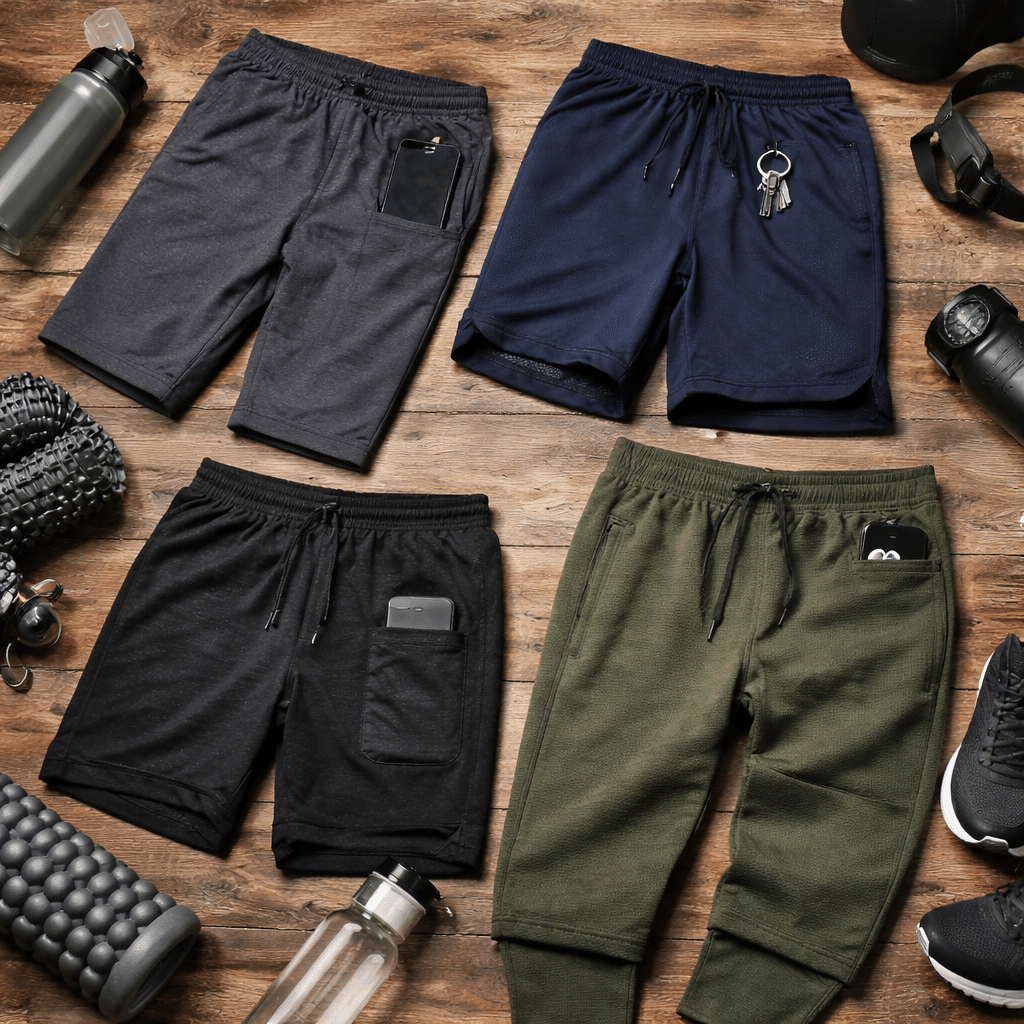
The best running bottoms are the ones you forget you're even wearing. They just work, offering chafe-free comfort, smart pocket solutions, and fabric that keeps sweat from becoming a problem. For most dads, the sweet spot is a pair of 5" or 7" lined shorts with a pocket that actually holds your phone without it bouncing around. That's your go-to for year-round training.
Your Foundation for a Better Run

Let's be real—for dads juggling work, family, and trying to squeeze in a workout, running gear has to be practical above all else. It needs to be durable and simple. You just don't have time for shorts that chafe, tights that creep down, or bottoms with no decent place to stash your keys and phone. The right pair isn't about chasing a personal best; it's about removing one more piece of friction that keeps you from getting out the door.
Think of your running bottoms as the foundation of your workout. You wouldn't build a house on shaky ground, and you can't build a consistent running habit on gear that drives you crazy. A bad pair can turn a much-needed mental break into a frustrating battle of constant tugging and adjusting.
More Than Just Shorts
Finding the right running bottoms is about a whole lot more than just picking a color you like. It’s about understanding how different fabrics, fits, and features come together to either help or hinder your run, whether that's a quick 20-minute jog around the block or a longer trail session on the weekend. The goal is to find gear that works just as hard as you do.
This guide is here to cut through all the marketing hype. We’re going to zero in on the things that actually matter for a busy dad:
- Performance Fabrics: Materials that don't just soak up sweat but actually pull it away from your skin.
- Functional Pockets: Clever storage that keeps your phone and keys secure and quiet.
- Unrestricted Fit: Designs that move with you, not against you.
- Long-Term Durability: Gear that holds up to the reality of frequent use and washing.
The perfect pair of running bottoms should make you forget you're even wearing them. They should solve problems like chafing and storage, not create new ones. This allows you to focus purely on your stride and the path ahead.
A Practical Roadmap to a Better Run
This isn't about buying the most expensive gear or chasing the latest trends. It's about making a smart choice that actually supports your fitness goals. A great pair of running bottoms can be the difference between a run you have to force yourself through and one you genuinely look forward to, which makes staying consistent a whole lot easier. When you match the right gear with a smart fitness plan, you've got a powerful combo for success. You can learn more about structuring your workouts with our guide to superset workout programs, which is perfect for maximizing your limited time.
Ultimately, our goal here is to give you the know-how to pick bottoms that fit seamlessly into your life—from that early morning run to an impromptu game of tag at the park. Let's find the gear that helps you reclaim your run, one comfortable stride at a time.
Understanding the Fabric Technology That Matters
When you’re looking at a wall of running gear, it's easy to get lost in the marketing jargon. But the truth is, the fabric of your running bottoms isn't just a minor detail—it's the engine that powers your comfort and performance on the road or trail. Think of it less like clothing and more like specialized equipment, fine-tuned to make every stride feel better than the last.
The difference between a great run and a miserable one often boils down to how your shorts or tights handle sweat. We've all made the mistake of running in a cotton t-shirt. It gets soaked, heavy, and clings to you uncomfortably. Performance fabrics are engineered to do the exact opposite, and for a runner, that’s everything.
Decoding Moisture-Wicking Fabrics
Imagine your gear working like a smart thermostat for your body. That's the core idea behind moisture-wicking technology. Instead of trapping sweat, fabrics like polyester, nylon, and spandex are designed to pull moisture away from your skin and spread it across the outer surface, where it can evaporate in a flash.
This simple process delivers two massive wins:
- Temperature Regulation: On a hot day, it helps your body's natural cooling system work better. On a cool day, it prevents that clammy, cold feeling you get from damp fabric against your skin.
- Chafe Prevention: Keeping your skin dry is the number one defense against friction and irritation. No one wants to end a long run with raw, angry skin.
This focus on better materials is a big reason the running world keeps expanding. More dads than ever are carving out time for themselves on the pavement, and the market reflects that. The global running apparel market hit $27.864 billion in 2025, a significant jump from $22.4838 billion in 2021. For a dad juggling work, kids, and everything in between, grabbing a solid pair of running bottoms isn’t just about gear—it’s about committing to that time. Discover more insights on the running apparel market growth.
The Supportive Hug of Compression
Beyond just staying dry, let's talk about support. Compression technology—found in tights and some lined shorts—is all about a snug, supportive fit that applies gentle, consistent pressure to your major muscle groups. It's not about feeling squeezed; it's about giving your quads, glutes, and hamstrings a firm "hug" while you run.
The theory here is that this targeted pressure can help improve blood circulation and reduce the muscle vibrations that happen every time your foot strikes the ground. While the jury is still out on massive performance gains, countless runners (myself included) will tell you it makes a real difference in how fresh their legs feel, potentially leading to less soreness after a tough workout.
The Freedom of Four-Way Stretch
Running isn't a one-dimensional movement. You're lunging, striding, maybe even hopping over a curb or a tree root. That's where four-way stretch comes in. This type of fabric is engineered to stretch and recover in every direction—up, down, and side-to-side.
Without four-way stretch, every high knee, lunge, or stride over an obstacle would feel constricting. This feature is non-negotiable for true running freedom, allowing the fabric to adapt to your body's natural mechanics seamlessly.
A quick look at some of these common technologies can help you cut through the noise and find what you really need.
Running Bottoms Fabric Feature Breakdown
This table breaks down the key fabric tech you'll see on product tags and what it actually means for your daily runs.
| Fabric Technology | What It Does | Why It Matters for Dads |
|---|---|---|
| Moisture-Wicking | Pulls sweat away from the skin to the fabric's surface for quick evaporation. | Keeps you dry and comfortable, preventing that heavy, soggy feeling and reducing the risk of chafing. |
| Compression | Applies gentle, graduated pressure to key muscle groups. | Can help reduce muscle vibration and post-run soreness, making it easier to bounce back for the next run. |
| Four-Way Stretch | Allows the fabric to stretch and recover in all directions (crosswise & lengthwise). | Provides total freedom of movement, so your shorts never hold you back, whether you're sprinting or stretching. |
| Antimicrobial | Inhibits the growth of odor-causing bacteria within the fabric. | Your gear stays fresher for longer, meaning less funk in the hamper and more wears between washes. |
Ultimately, knowing what these terms mean helps you look past the brand names and focus on the features that will genuinely make your runs better. For instance, an antimicrobial treatment is a small detail that makes a huge difference. It's woven into the fabric to stop odor-causing bacteria from taking hold, which is a lifesaver for any busy dad who might not get to the laundry right away. It's about choosing gear that works as hard as you do.
Choosing the Right Fit and Style for Your Needs
Now that you've got a handle on performance fabrics, let's talk about the actual cut and style of your running bottoms. This is where the rubber really meets the road. The best gear is purpose-built; those breezy shorts that are perfect on a sweltering July afternoon just won't cut it on a frosty morning jog. It’s all about matching the design to your run, your body, and the weather.
Think of it like picking the right tool for a job. You wouldn't use a hammer to drive a screw, right? In the same way, wearing loose joggers for a speed workout will just create drag and slow you down. The main players here—shorts, tights, and joggers—each have a specific role to play in your running wardrobe.
Shorts: The Go-To for Freedom and Speed
For most of us, shorts are the daily workhorse, especially when it’s warm out. They give you the best range of motion and let the air flow, which is exactly what you need when you're working up a sweat. But "running shorts" is a broad category, and the biggest difference comes down to the inseam length.
- 3-Inch to 5-Inch Inseam: These are your speed demons. The shorter cut is all about maximum leg freedom, making them a favorite for race day or any time you're pushing the pace. They don't offer much coverage, which some guys love and others might feel a bit exposed in.
- 7-Inch Inseam: This is the sweet spot for a lot of dads. A 7-inch inseam gives you a bit more coverage and a more relaxed vibe without feeling baggy or getting in your way. It’s a solid all-rounder for daily training, hitting the gym, or even making a quick store run afterward.
- 9-Inch Inseam and Longer: Longer shorts provide the most coverage, usually hitting just above the knee. While some guys prefer the secure feeling, they can sometimes feel heavy or interfere with high-knee movements like sprinting up a hill.
If you're ever on the fence, this simple decision tree can help you decide based on the day's weather.
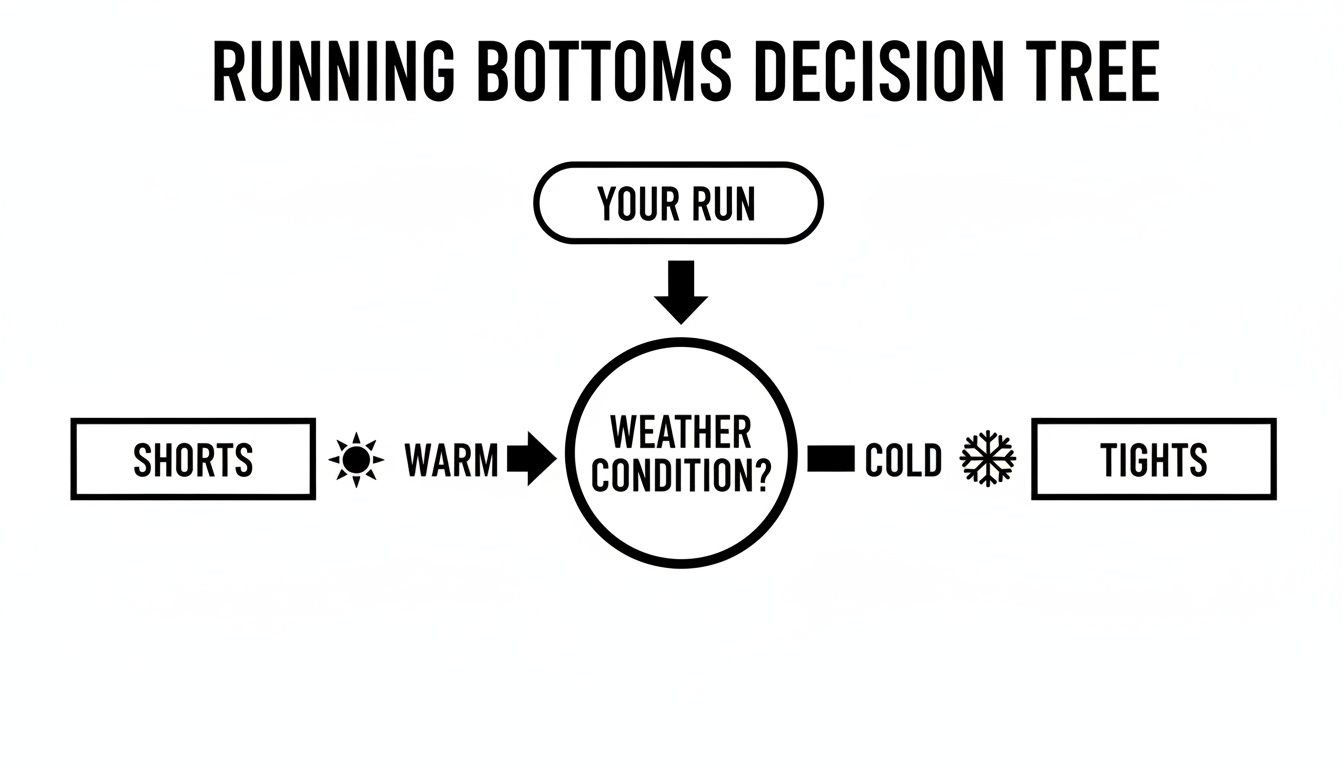
As you can see, temperature is the first and most important factor. Getting this right is the foundation of a solid running kit.
Tights and Joggers for Support and Warmth
Once the temperature drops, tights (or leggings) become your best friend. They fit snugly against your skin, trapping a thin layer of air that your body heat warms up, creating fantastic insulation. But it’s not just about warmth; many running tights also offer compression, giving you a locked-in, supportive feel that can help reduce muscle vibration and maybe even stave off fatigue on those longer efforts.
Joggers, on the other hand, bring a more casual, relaxed fit to the table. They're usually made from super soft, comfy fabrics and have a tapered leg so the extra material isn't flapping around your ankles. They aren’t the best choice for high-speed workouts because of the looser fit, but they're absolutely perfect for:
- Easy recovery runs
- Warming up before a race or workout
- Cross-training days at the gym
- Just being comfortable after a run
Here's a solid rule of thumb I've always followed: If the temperature is below 40°F (4°C), running tights are your best bet for staying warm without having to pile on bulky layers. Above that, shorts are usually the way to go.
Dad-Specific Needs: Waistbands and Pockets
For dads, a couple of features can make or break a pair of running bottoms: a rock-solid waistband and pockets that actually work. There's nothing worse than a flimsy waistband that rolls over, digs into your stomach, or starts sliding down mid-stride. You want to find wide, flat waistbands with a durable drawcord so you can dial in the fit, set it, and completely forget about it.
Pockets are just as critical. We've all been there—running with a phone slapping against your thigh is not only annoying, but it can also throw off your form. The best running gear solves this with smart, secure storage.
Essential Pocket Types for Dads:
- Zippered Back Pocket: Usually sitting right in the middle of the waistband, this little pocket is the perfect spot to stash a key, ID, or an energy gel without it bouncing.
- Side Thigh Pockets: A game-changer often found on tights or built into the liners of shorts. These pockets hold your smartphone tight against your leg, so it basically disappears while you run.
- Hip Pockets: Some shorts have small, subtle pockets tucked into the waistband on the hips, great for stashing chapstick, gels, or anything else you need to grab quickly.
When you're juggling family life, you're often carrying more than just a house key. Having the right pocket setup is as crucial as having a good pair of shoes. For dads who have mastered the art of carrying everything, having well-designed storage is second nature, even when it comes to parenting gear. You can check out our guide on the best diaper bags for men for more on that.
How to Make Every Run a Chafe-Free Run
Nothing stops a good run in its tracks like chafing. That raw, stinging burn is a runner's worst enemy, and it can turn a great workout into a miserable experience. While the fabric is your first line of defense against moisture, the real secret to a pain-free run lies in the construction of your gear—the seams, the liners, and the gussets. These details might seem small, but they make all the difference.
Think of it this way: your skin and your shorts are two surfaces constantly sliding against each other, thousands of times over a single run. Add a little sweat to the mix, and you've got the perfect recipe for friction. The goal is to get that friction as close to zero as possible, and that starts with how your shorts are put together.
The Devil Is in the Details: Seams and Gussets
Ever notice angry red lines on your skin after a run, tracing the exact outline of your shorts? That's usually the work of traditional, bulky seams. They’re fine for your jeans, but on running gear, those raised ridges act like sandpaper against your skin.
This is where flatlock seams are a game-changer. Instead of overlapping fabric layers, which creates a noticeable ridge, flatlock stitching lays the fabric panels edge-to-edge. The result is a seam that's completely flat against your skin. It’s a simple idea, but it’s probably the single most important construction feature for eliminating a major source of irritation.
The other unsung hero is the gusseted crotch.
- What it is: That diamond or triangle-shaped panel of fabric sewn right where the leg seams meet.
- Why it matters: It gets rid of that clunky four-way seam intersection, which is a notorious hot spot for friction.
- The benefit: This design gives you more room to move, spreads out the stress on the seams, and prevents the fabric from bunching up where you least want it to.
A gusseted crotch isn't just a comfort feature; it's smart, anatomical engineering. It's built with the understanding that running is a dynamic, repetitive motion, and it allows the shorts to move with you, not against you.
Why You Should Ditch Your Underwear for a Built-In Liner
Your next line of defense is the built-in liner. If you’re new to running shorts, a liner might feel a bit strange at first, but it has one critical job: to replace your regular underwear.
Trust me on this one—wearing your everyday cotton underwear for a run is a mistake you only make once. Cotton is a sponge; it soaks up sweat and holds it right against your skin, creating the damp, abrasive environment where chafing thrives. Built-in liners are the solution.
- They Manage Moisture: Liners are made from the same wicking fabrics as the shorts themselves, designed to pull sweat away from your skin and keep you dry.
- They Offer Seamless Support: You get gentle, breathable support without the extra seams and elastic bands of regular underwear, which means one less thing to rub you the wrong way.
- They Reduce Layers: Fewer layers mean less heat, less bulk, and less material to bunch up and cause trouble.
For the everyday runner, these features are what make running enjoyable. Dads fitting in a 5K before work or after dropping the kids off are a huge part of this community. It's no surprise that recreational runners commanded a 36.3% share of the running gear market in 2025, a market valued at a massive $45.30 billion globally. This just goes to show that comfort and practical, anti-chafe features are what most of us are looking for. You can see more about the growth of the running gear market on snsinsider.com.
Ultimately, when you choose running bottoms with flatlock seams, a gusset, and a good liner, you're not just buying a piece of clothing. You're investing in a complete system designed to eliminate friction so you can focus on your run, not the burn.
Mastering Your All-Weather Running System

A little wind or a drop in temperature shouldn't be enough to sideline your run. Building a versatile, all-weather system is actually simpler than it sounds, and it all starts with your running bottoms. The trick is to stop thinking of your gear as individual pieces and start seeing it as a toolkit, where you can combine items to create the perfect shield against any forecast.
The most effective strategy? It's all about layering. Your running bottoms—whether you're a shorts or tights guy—are the foundation. They manage moisture right at the source, which is the single most important step in regulating your body temperature and staying comfortable from start to finish.
The 20-Degree Rule for Perfect Comfort
The biggest mistake runners make when the weather turns cool is overdressing. We've all done it. You step outside, feel that initial chill, and pile on the layers, only to be overheating a mile down the road.
To nail it every time, follow the golden rule of cold-weather running: dress as if it’s 15-20 degrees Fahrenheit warmer than the thermometer actually says.
Your body is a powerful furnace. Once you get moving, you'll generate a surprising amount of heat. This simple rule accounts for that, ensuring you start your run feeling just a bit cool but end it feeling just right. It's a mental shift that keeps you from turning into a sweaty, uncomfortable mess.
Remember, it’s always better to feel a little chilly for the first five minutes than to feel miserably hot for the last thirty. A successful layering system is one that adapts as your body warms up.
This principle is key whether you're just getting a quick jog in or building up serious endurance. A smart layering approach also works great alongside a well-organized training space, a topic we cover in our guide to home gym equipment for small spaces.
Building Your Weatherproof Combinations
With just a few key pieces, you can build a setup that handles almost anything Mother Nature throws at you. It’s all about creating synergy between your items to balance warmth, wind resistance, and breathability.
Here are a few combinations I've relied on for years, using running bottoms as the base:
Cool and Breezy Days (40-50°F / 4-10°C): This is where a simple setup shines. A quality pair of running tights gives you just enough insulation to cut the chill without making you sweat buckets. If you prefer more coverage or just need the extra pocket space, layering a pair of 7-inch shorts over your tights is a classic and highly effective move.
Cold and Raw Days (30-40°F / -1-4°C): Time to double down. Start with your moisture-wicking running tights as the base layer. On top, add a pair of wind-resistant running pants or joggers. This two-layer system is a game-changer; it traps warmth while blocking the wind that’s so good at stealing your body heat.
Wet or Snowy Conditions: When it’s raining or snowing, your main goal is staying dry. A pair of water-resistant or waterproof running pants over your base-layer tights is absolutely essential. This outer shell blocks the precipitation from the outside while your tights keep managing sweat from the inside.
Don't Forget About Visibility
For a lot of dads, running has to happen in the low-light hours—early mornings or late evenings. This makes visibility a non-negotiable safety feature, not just a nice-to-have.
When you're shopping for gear, especially for fall and winter runs, actively look for items with reflective elements. These aren't just flashy details; they are critical safety tools. Those small strips, logos, or patterns catch a car's headlights from hundreds of feet away, making you instantly more visible. Your legs are constantly in motion, making your running bottoms a prime spot for these life-saving features.
Making Your Performance Gear Last Longer
You've spent good money on the right running bottoms, so let's make sure they stick around for the long haul. High-performance gear isn't like your old cotton tees; it needs a little extra TLC to keep doing its job. A few simple tweaks to your laundry routine can make all the difference.
Think of that high-tech fabric as a network of tiny channels designed to pull sweat off your skin. Washing is all about clearing those channels out, not gumming them up. This is where a lot of runners accidentally sabotage the very features they paid a premium for.
Simple Rules for Laundry Day
Don't worry, this isn't complicated. It’s just about being a bit more mindful. Following these steps will keep your shorts and tights performing run after run.
- Turn It Inside Out: This is a simple one. It protects the outer fabric from getting roughed up and lets the soap and water get to work on the sweaty side.
- Wash with Friends: Keep your running gear with other synthetics. Throwing it in with heavy stuff like jeans or fluffy towels is a recipe for pilling and snags.
- Keep It Cool: Always use cold water. Hot water is the enemy of fabrics like spandex, causing them to break down and lose that all-important stretch and support.
If you remember only one thing, make it this: never, ever use fabric softener. It coats the fibers with a waxy film that clogs up the moisture-wicking channels. Your gear will lose its ability to breathe and manage sweat, which pretty much defeats its whole purpose.
Knowing When to Say Goodbye
Even the most well-cared-for gear has a finite lifespan. It's important to recognize when your bottoms are past their prime so they aren't holding you back. Look for tell-tale signs like a saggy waistband that won’t stay up, a noticeable loss of compression, or fabric that’s getting thin and see-through.
Taking care of your gear is non-negotiable, especially when you consider its value. The running apparel market hit $50.06 billion in 2025, and with fakes out there, you want to protect your investment in the real deal. Read more about the running apparel and footwear market.
And my final, most crucial tip? Always hang your gear to dry. The intense heat of a machine dryer is the quickest way to kill the elastic fibers and send a perfectly good pair of shorts or tights to an early grave.
Your Running Bottoms FAQs, Answered
Alright, let's tackle some of the most common questions that come up when you're trying to dial in your running gear. Getting these details right can make a massive difference in your comfort and performance on the road or trail.
Think of this as the "ask an experienced runner" section. We're cutting through the noise to give you straight-up, practical answers to what dads are really wondering about.
Do I Wear Underwear with Lined Running Shorts?
I get this one all the time. The answer is a hard no. Seriously, don't do it.
That built-in liner is your underwear. It’s made of technical, moisture-wicking fabric and designed without seams in all the wrong places for a reason: to prevent chafing and keep you comfortable.
Throwing a pair of cotton boxers under there completely defeats the purpose. You're just adding a layer that traps sweat and has seams that will rub you raw. Trust the liner—it's engineered for the job. Go commando and let your shorts work as intended.
How Can I Tell if My Running Tights Are Too Tight?
This is a classic "Goldilocks" problem. Your tights should feel supportive and compressive, like a firm hug for your muscles, not like they're trying to cut off your circulation.
Here’s a quick gut check to see if you’ve got the fit right:
- Too Tight: If the waistband is digging in, the seams are leaving deep red marks on your skin, or you feel restricted when you do a high-knee test, they’re too tight. You should have a full, free range of motion.
- Too Loose: On the flip side, if you're constantly yanking them up mid-run or there's saggy fabric around the knees or crotch, they’re too loose. You're losing all the benefits of compression and support.
The perfect fit feels like a second skin. The tights stay put without pinching or sliding down, and you honestly forget you're even wearing them a mile or two into your run. They should just move with you.
What’s the Best Way to Carry My Phone on a Run?
Nothing ruins a good run faster than a phone bouncing around and slapping against your leg. It’s not just annoying; it can actually mess with your stride. The solution is storage that pins the phone securely to your body.
Here are the pocket designs that actually work:
- The Thigh Pocket: This is the best in the business, usually found on tights or the liner of 2-in-1 shorts. It presses your phone flat against your biggest muscle (your quad), so there’s virtually zero bounce.
- The Rear Waistband Pocket: A zippered pocket, centered on the back of the waistband, is another great option. It holds the phone snugly against your lower back, keeping it stable and out of the way.
Just avoid those floppy, open-side pockets you find on basketball or lounge shorts. They're a recipe for a bouncing, swinging disaster.
At alphadadmode.com, we're building a community focused on providing dads with the resources they need to excel in fitness, family, and life. Sign up for our pre-launch list to get exclusive updates and be the first to know when we go live. Join us at https://alphadadmode.com.
