


Last updated: April 2026
If you’re considering the Yamaha XSR900 GP, you’re probably wondering one thing: is it worth your money, or just another good-looking retro bike?
In this guide, we break down everything you need to know, from performance and real-world usability to who this bike is really for, so you can make the right decision before buying.
Quick answer: Yes, for the right rider, the Yamaha XSR900 GP is worth it. If you want a retro-styled sport bike with serious performance, modern electronics, and a riding experience that feels special every time you sneak out for a weekend blast, it delivers. If your priorities are touring comfort, beginner-friendliness, or the cheapest path to CP3 performance, it’s harder to justify.
Quick Verdict (TL;DR)
The Yamaha XSR900 GP is worth it if you want a retro-styled sport bike with modern performance, strong midrange power, and unique styling.
However, it may not be ideal for beginners or riders looking for comfort on long-distance touring.
- Best for experienced riders who want a stylish weekend bike with real performance, modern rider aids, and a stronger sense of occasion than a standard naked bike
- Avoid if you want maximum comfort, lower entry cost, easy two-up practicality, or a first motorcycle that forgives every mistake
Is the Yamaha XSR900 GP worth it?
Yes, the Yamaha XSR900 GP is worth it for riders who want a blend of retro styling and modern performance. It stands out for its design, engine power, and uniqueness, but may not suit beginners or long-distance touring riders.
Yamaha XSR900 GP Specs & Key Features
Saturday morning is usually a short window. Kids’ sport later, jobs around the house after lunch, maybe two or three clear hours to ride. In that kind of real-world use, the Yamaha XSR900 GP’s spec sheet matters less for bragging rights and more for one question. Does it deliver enough thrill to justify the price and the riding position every time you pull it out of the garage?
Yamaha says the XSR900 GP uses its 890cc liquid-cooled CP3 inline-three, paired with a six-speed gearbox, ride-by-wire throttle, and a full electronics package built around a modern IMU setup. On paper, that puts it in the sweet spot for experienced riders who want serious road performance without stepping into full superbike expense or commitment.
Key specs at a glance
| Specification | Value |
|---|---|
| Engine | 890cc liquid-cooled inline-three CP3 |
| Power | 119 PS |
| Torque | 93 Nm |
| Transmission | 6-speed |
| Electronics | Ride modes, traction control, slide control, lift control, cornering ABS |
| Chassis | Deltabox aluminum frame |
| Suspension | Fully adjustable front and rear |
| Brakes | Dual front discs with radial-mount calipers |
| Styling | Full fairing with retro GP-inspired bodywork |
What matters in actual ownership
The CP3 engine is the heart of the bike. It pulls hard through the midrange, sounds great without needing silly rpm, and gives the bike its character. For a rider who gets limited seat time, that matters. You can head out for an 80-minute blast and get the full experience without needing a track or an empty mountain road.
The chassis and electronics are just as important as the engine. Fully adjustable suspension gives you room to tune the bike if you’re riding solo one weekend and carrying a bit more weight or luggage the next. The rider aids also make a difference on imperfect roads. They are not there to flatter bad riding, but they do add a margin of safety when the surface turns greasy or you get greedy with the throttle on corner exit.
A few features sound great in a brochure but matter differently in practice. The fairing improves wind protection over a naked bike, but this is still not a touring machine. The clip-ons and sportier ergonomics add focus and front-end feel, yet they also ask more from your wrists, hips, and neck than a standard XSR900 or MT-09 setup.
That trade-off sits at the center of this bike.
For a dad buying one with family money in mind, the headline features are not just power and style. They are usable engine response, quality suspension, strong electronics, and just enough weather protection to make short weekend rides feel special. The weak point is easy to predict. Passenger comfort and all-day comfort are both secondary here.
Buyer takeaway: The XSR900 GP gives you premium road-bike hardware and a brilliant engine, but the sporty riding position means you need to want the experience enough to accept the comfort compromise.
What Makes the XSR900 GP Unique
A lot of bikes borrow from the past. The XSR900 GP commits to it.
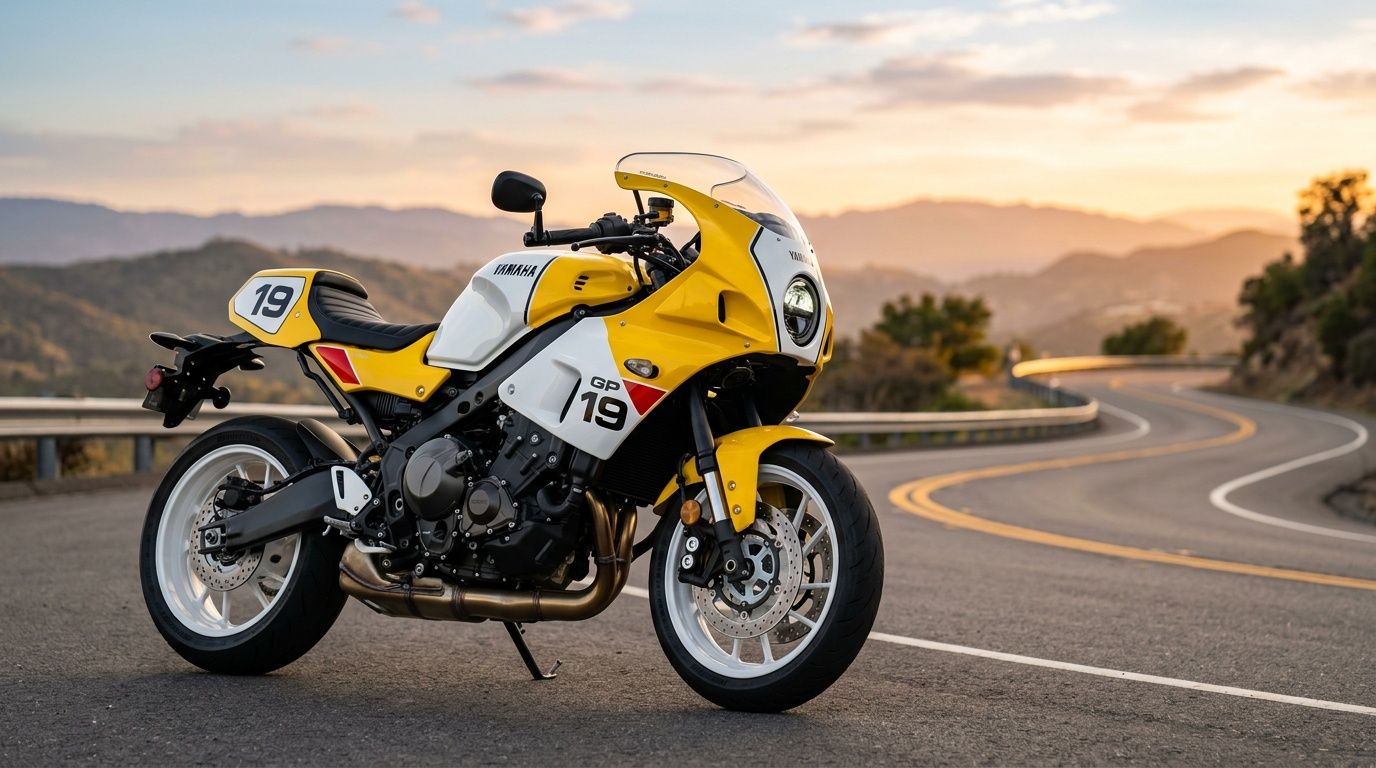
As noted by Visordown’s coverage of the 2026 Yamaha XSR900 GP, this bike pays direct homage to Yamaha’s 1980s Grand Prix era, specifically King Kenny Roberts’ YZR500, with GP-style bodywork, Legend Yellow paint, and design cues tied to Roberts’ three straight 500cc world titles from 1978 to 1980.
It doesn’t just look retro
The fairing, tail section, and overall silhouette change how the bike feels before you even move. It has presence. Park it next to a standard naked and the GP immediately feels more deliberate, more curated, more emotional.
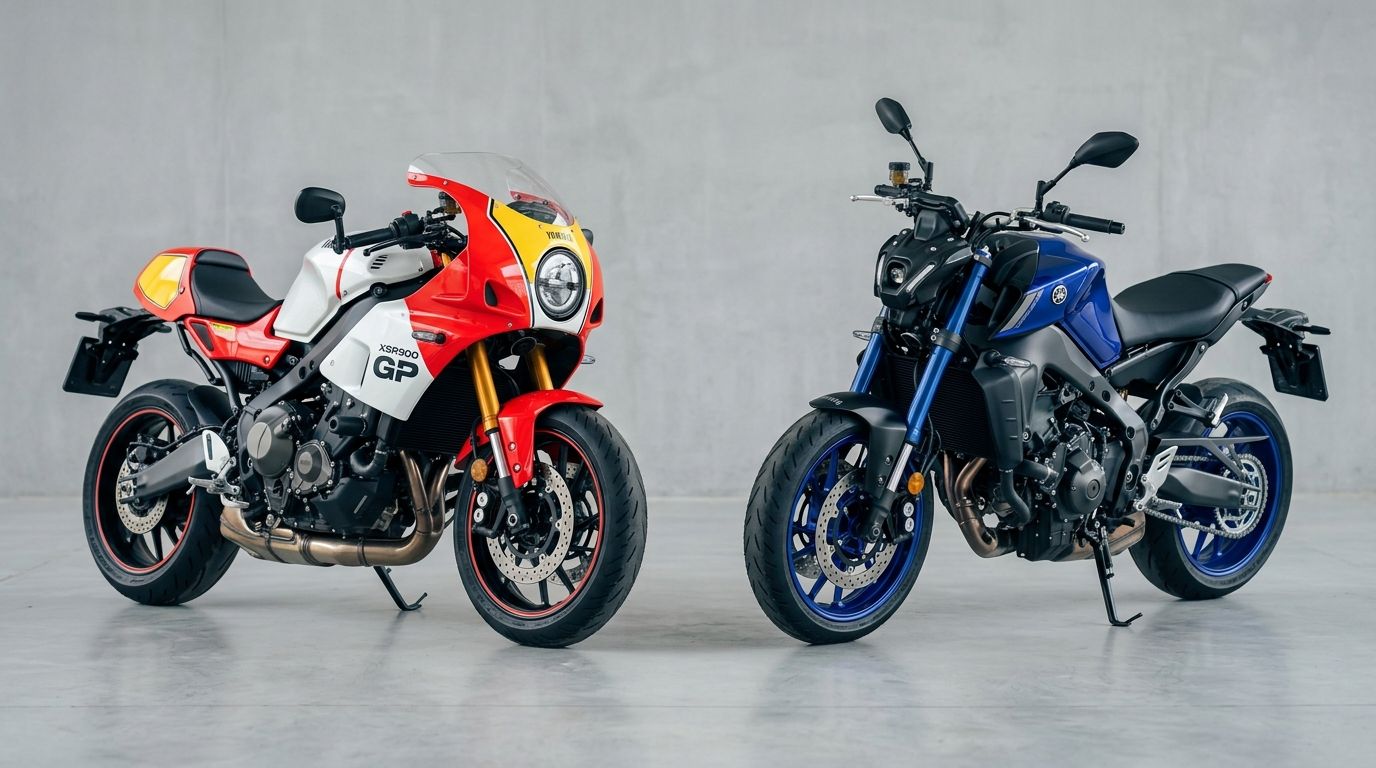
That’s why the Yamaha XSR900 GP vs MT-09 decision isn’t just mechanical. The GP sells a memory and a mood. The MT-09 sells direct function.
You’re paying for character
This represents the value proposition:
- The MT-09 gives you the CP3 engine in a more stripped-back format
- The XSR900 GP adds heritage styling and a more focused riding experience
- The buyer chooses with both heart and head
For some riders, that premium is easy to justify. If a bike makes you turn around and look back every time you park it, that matters. For a dad with limited free time, the emotional side counts even more. You may only ride for a few hours a week. Those hours should feel special.
It’s not the rational choice in the lineup. It’s the one you buy because it makes the ride feel bigger than the mileage.
That’s what makes the yamaha xsr900 gp unique. It isn’t just a retro skin on a modern platform. It’s a motorcycle built to trigger something in riders who grew up loving Yamaha race bikes, or just wish they had.
Performance & Riding Experience
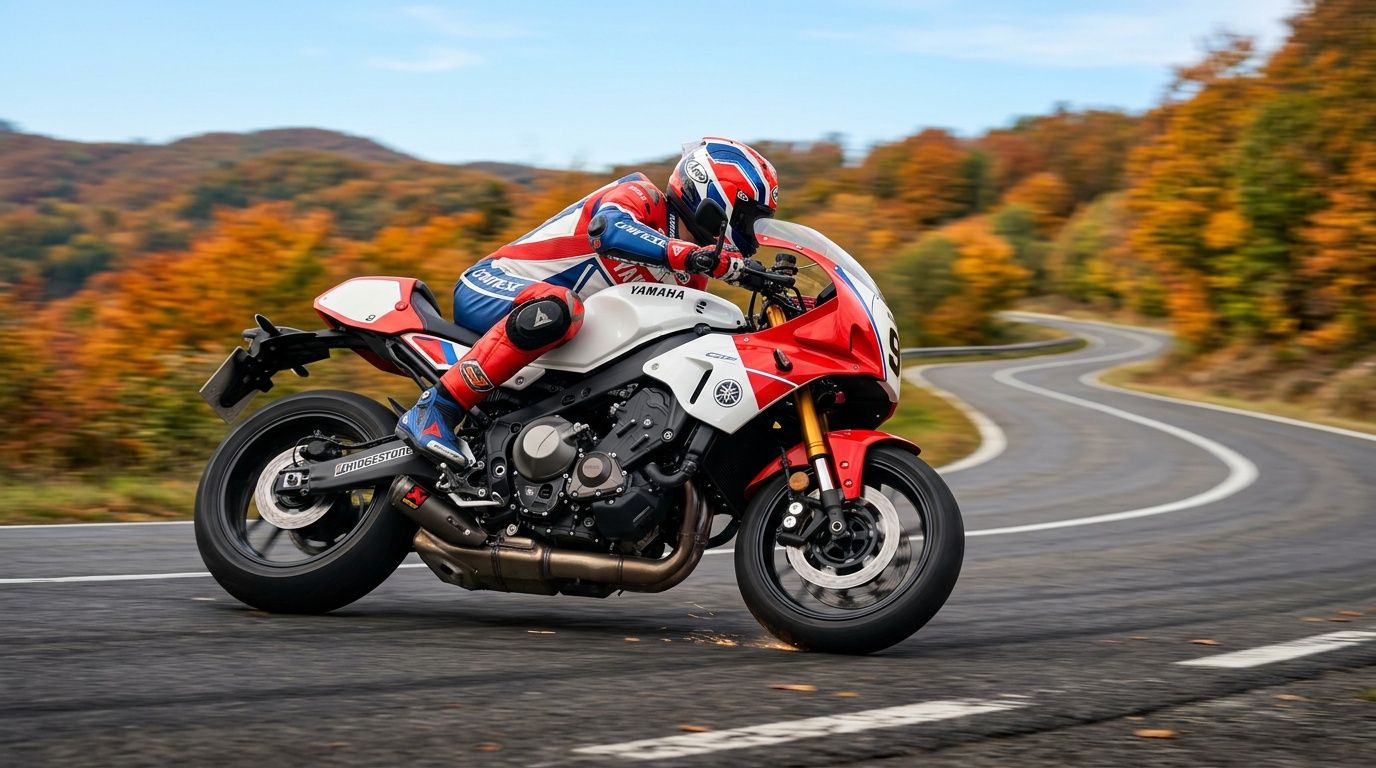
The XSR900 GP feels quick in the way road riders use quick. Not just high up the rev range. Right where you grab the throttle leaving a roundabout, passing traffic, or firing out of a bend before family duties call you back home.
Engine and road manners
Claim: The CP3 engine is the reason this bike works so well on real roads.
Explain: Triple-cylinder engines often strike a sweet spot between twin-style punch and four-cylinder top-end appetite. On this bike, that translates into a broad, satisfying spread of drive that feels alive without becoming exhausting.
Example: On a Sunday morning ride, the bike doesn’t need a perfect road or a perfect mood. It wakes up fast, responds fast, and gives you that immediate connection good bikes have.
Buyer takeaway: If your riding time is limited, the XSR900 GP makes short rides count.
Electronics that actually matter
The six-axis IMU is more than brochure filler. According to AMCN’s XSR900 GP review, the bike’s six-axis IMU enables lean-sensitive rider aids including slide control and cornering ABS, helping mitigate rear wheel slip under acceleration and front wheel lockup in a lean, with stopping distances reduced by up to 20% compared to non-lean-sensitive systems.
That matters on a road bike. Especially one with this much punch.
If you ride in mixed conditions, or you’re the kind of rider who sneaks out at dawn when roads are cold and patchy, these systems give you a safety margin without draining the fun. They don’t replace judgment. They help when the road surface changes faster than your brain can react.
Practical rule: Fast road bikes are easier to live with when the electronics work quietly in the background. That’s exactly where this bike is strongest.
The part nobody should ignore
The riding position is sporty. That’s part of the appeal, and part of the compromise.
The fairing and stance make the bike feel more focused than a standard upright naked, but the same setup can become a downside if your idea of a good Saturday is an all-day comfort ride with luggage and long motorway slogs. For shorter rides, it feels intentional. For longer ones, you’ll feel the commitment.
A useful add-on for that kind of real-world use is simple luggage that doesn’t ruin the bike. If you ride to work occasionally or need to carry the basics, a practical option is a waterproof motorcycle backpack.
What works and what doesn’t
What works:
- Throttle response and engine character for backroad riding
- Rider aids that make strong performance less intimidating
- Sport-focused feel that turns an ordinary ride into an event
What doesn’t:
- Long-haul comfort if your body prefers upright ergonomics
- Relaxed commuting posture in heavy traffic
- Effortless pillion practicality, because this isn’t built around that mission
The riding experience is the answer to “is Yamaha XSR900 GP worth it.” If you want every ride to feel like a reward, yes. If you want a bike that disappears beneath you and just handles chores, no.
Pros and Cons
Here’s the short version of the Yamaha XSR900 GP pros and cons.
The good
-
Unique retro GP styling
This bike stands out in a world full of similar naked and sport models. If design matters to you, few bikes at this price point feel this distinctive. -
Strong engine performance
The CP3 motor gives the bike a lively, muscular character that works on the street. It feels urgent without requiring race-track speeds to come alive. -
Advanced electronics
The IMU-based rider aids add a real safety buffer. That’s especially useful on a bike that mixes serious pace with real-world road use.
The not so good
-
Less comfortable for long rides
The riding position is part of the bike’s identity, but it’s also one of its clearest compromises. -
Premium price
You’re paying extra for the styling, exclusivity, and overall concept, not just performance. -
Not beginner-friendly
The power, response, and focused nature mean this isn’t the bike I’d recommend as someone’s first serious machine.
👉 Check latest price and availability here
Who Should Buy the Yamaha XSR900 GP
Some bikes make sense on paper. This one makes sense when you understand the owner.
A lot of coverage misses that point. As discussed in a PistonHeads forum thread about real-world XSR900 GP use, reviews often focus on performance and aesthetics while overlooking how the bike can suit fathers balancing family life with riding. The aggressive ergonomics get attention, but the tunable KYB suspension and cruise control give it a layer of practicality for the kind of 100+ mile weekend rides many dads do.
The ideal owner
This bike fits riders who:
- Already know what they like and don’t need a bike to do every job
- Ride mainly for enjoyment, not because they need daily transport
- Value design and heritage enough to pay more for them
- Want modern electronics because real roads aren’t racetracks
- Need a weekend escape machine that feels special the second the garage door opens
That last point matters. Family life changes how you buy motorcycles. You stop chasing spec-sheet fantasies and start asking sharper questions.
Is it fun quickly?
Does it feel worth the money every time I ride it?
Will I regret buying something more practical but less exciting?
Why dads may like it more than reviewers expect
A dad with limited time often benefits from a bike with clear purpose. The XSR900 GP doesn’t need a full day to make sense. It delivers on a short blast, a dawn run, or a half-day escape.
If you’re still building skills and deciding what kind of rider you are, start with something easier to grow into. A guide to the best starter motorcycle is a better place to begin than jumping straight into a premium retro sport machine.
Buy this if riding is your reset button, not your only transportation plan.
That’s the right frame for this motorcycle. It’s for the rider who wants his free time to feel earned and used well.
Who Should Avoid It
This bike isn’t for everyone, and that’s a good thing.
If you’re a beginner, skip it. The engine is strong, the chassis invites pace, and the styling can trick people into thinking it’s softer or friendlier than it is. It isn’t.
If you want a long-distance tourer, look elsewhere. The XSR900 GP can handle a decent ride, but comfort isn’t the headline. The more your riding revolves around long motorway stretches, passenger duty, or luggage-heavy weekends, the more this bike starts to feel like the wrong tool.
Budget matters too. If you’re mainly shopping for performance value, there are smarter buys. The XSR900 GP asks you to care about style, exclusivity, and the full experience. If those things don’t move you, you’ll likely resent the premium.
Riders who should avoid it:
- Newer riders who need a gentler learning curve
- Touring-focused buyers who prioritize comfort first
- Daily commuters who want maximum ease and simplicity
- Value hunters who just want the best bang for the buck
This is a passion purchase with real capability. If the passion part isn’t there, don’t force it.
Yamaha XSR900 GP vs Alternatives
The most obvious comparison is Yamaha XSR900 GP vs MT-09. That’s an important decision for many buyers.
XSR900 GP vs MT-09
| Bike | Best for | Trade-off |
|---|---|---|
| Yamaha XSR900 GP | Style, heritage, exclusivity, occasion | Less comfort, higher price |
| Yamaha MT-09 | Raw performance value, aggressive everyday fun | Less distinctive, less romantic |
The core decision is simple.
- Choose the XSR900 GP if you want the emotional pull of the styling, the GP-inspired bodywork, and a motorcycle that feels more special every time you ride it.
- Choose the MT-09 if your priority is direct performance value and a more straightforward naked-bike experience.
Head versus heart
The XSR900 GP is the bike you buy because you want your machine to say something. It’s still fast, still modern, still serious. But it adds identity.
The MT-09 is the bike you buy when you want the same family of performance with fewer emotional demands on the wallet. It’s a more practical answer.
The GP wins on desire. The MT-09 usually wins on pure value.
That doesn’t make the GP a bad buy. It just means you should be honest about what matters to you most. If your garage budget has to justify itself to a household spreadsheet, the MT-09 will be easier to defend. If this is your one indulgence and you want it to feel like one, the yamaha xsr900 gp has the stronger case.
Still unsure? Compare the XSR900 GP with similar bikes before making your final decision.
Price & Value for Money
The Yamaha XSR900 GP price is one of the biggest decision points, because this bike isn’t sold on specs alone. It’s sold on the combination of performance, hardware, electronics, and style.
According to Gear Patrol’s coverage of the 2026 XSR900 GP, a major complication for US buyers is that the bike isn’t officially sold in the American market, reportedly due to regulations related to its half-fairing, which pushes interested buyers toward gray-market importation and can drive the landed cost well above European and Japanese MSRP.
For European buyers
If you can buy one through normal channels, the value question is straightforward. You’re getting a premium, distinctive model with serious performance and high-end electronics. If you love the concept, the money makes sense.
If you don’t love the concept, the extra cost is harder to defend.
For US buyers
The Yamaha XSR900 GP price gets much harder to justify once import headaches enter the picture.
Now you’re not just thinking about the purchase. You’re thinking about:
- Import complexity
- Registration and compliance concerns
- Parts and support confidence
- Insurance questions
Before jumping into a specialty import, it’s smart to understand how motorcycle insurance costs can vary based on bike type, rider history, and how the motorcycle will be used.
Running costs and ownership reality
Fuel use is reasonable for a bike in this class, and the platform has a solid reputation in the market. The bigger issue for most dads won’t be fuel. It’ll be total ownership friction.
If you can buy locally, the value is decent if you want what this bike is. If you need to import it, the answer changes. At that point, this stops being a simple purchase and becomes an enthusiast project.
Final Verdict Is It Worth It
So, is the Yamaha XSR900 GP worth your money?
If you value unique styling, strong performance, and a standout riding experience, this bike is absolutely worth considering.
However, if comfort, budget, or beginner-friendliness are your priorities, you may want to explore alternatives.
The honest answer is this. The yamaha xsr900 gp is worth it for experienced riders who want a weekend escape machine with personality. It’s less convincing as a rational all-rounder.
If you’re serious about buying the Yamaha XSR900 GP, check current pricing and deals before inventory changes.
FAQ
Is the Yamaha XSR900 GP good for beginners?
No. This is a bike for riders who already have throttle discipline and some miles behind them. The engine has enough punch to punish sloppy inputs, and the lower bars plus sportier stance ask more from your body than a beginner bike should.
What is the top speed of the Yamaha XSR900 GP?
It has more than enough speed for any legal road use, and then some. If top-end numbers matter to you, the detailed spec reference was covered earlier. On the road, the stronger question is whether you will use that performance often enough to justify the price and the committed ergonomics.
How much does the Yamaha XSR900 GP cost?
It sits in premium territory for a middleweight Yamaha with niche styling. European pricing puts it well above a basic value play, and for US riders the math gets harder because official availability is limited, so any import route can add hassle and cost fast.
Is it better than the MT-09?
For outright value, the MT-09 usually makes more sense. The XSR900 GP wins on character, looks, and the full retro sportbike feel. For a dad with one precious Saturday morning to ride, that difference can matter. For a rider watching every dollar, the MT-09 is the easier answer.
Is it comfortable for long rides?
It is fine for a focused back-road blast or a half-day escape. It gets less convincing once the miles stack up.
The seat and riding position are manageable if you know what you are signing up for, but this is not the bike I would choose for all-day touring or regular two-up comfort. If your weekends include a passenger, luggage, or a bad lower back, be honest with yourself before you buy.
If you do own one, keeping it clean and sorted makes a bigger difference than riders admit. Fairings, paint, and chain care all affect how the bike ages and how much work it creates later. This guide on the best way to wash your motorcycle is a useful reference, and every rider should also know simple roadside basics like how to change a tire step by step.
