

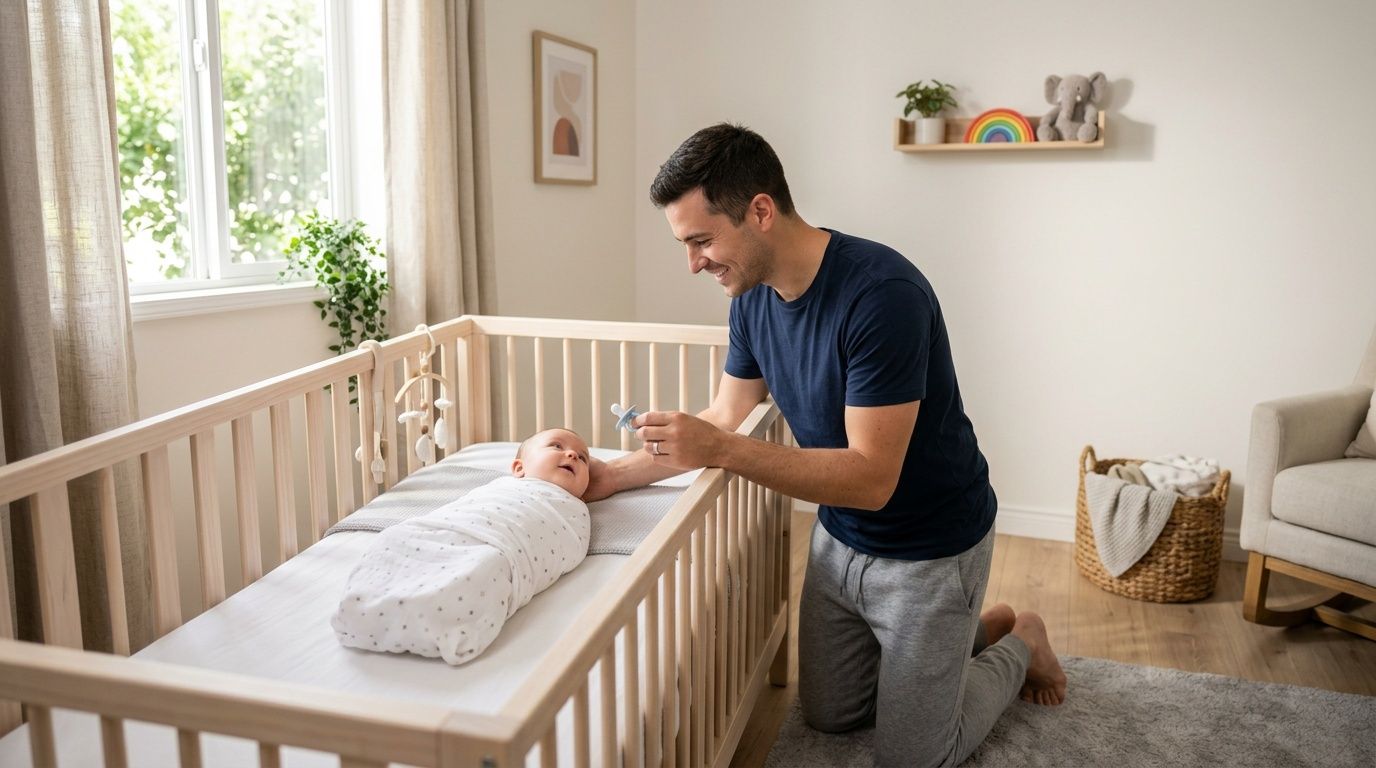
When to introduce pacifier is one of those decisions that seems small until you’re holding a tired baby at 2 a.m. and second-guessing every move. Dads get hit with mixed advice fast. One person says use it right away. Another says wait. A third acts like you’ll ruin feeding if you even open the package.
Here’s the straight answer. Pacifiers can be useful, safe, and worth having in your toolkit, but timing matters. The right move depends first on how your baby is fed, then on whether feeding is going smoothly, and then on how you plan to use it.
If you’re still in the prep phase, it helps to get your overall newborn game plan squared away before baby arrives. This guide on what to expect when your wife is pregnant is a solid starting point for that bigger-picture prep.
Introduction
A pacifier is not magic. It’s a tool.
Used well, it gives your baby comfort, helps with soothing, and makes sleep routines easier. Used poorly, especially too early in a breastfeeding setup, it can create problems you did not need. That’s why dads need a clear call, not vague internet chatter.
My advice is simple. If your baby is breastfed, wait until breastfeeding is clearly established. If your baby is bottle-fed, you can start much sooner. After that, use it strategically, mostly around sleep and calming routines, not as a default plug for every sound your baby makes.
This is the no-fluff playbook. You’ll get the timing, the method, the safety rules, the weaning plan, and the product picks that make this easier.
Why Pacifiers Can be a Dad's Best Friend
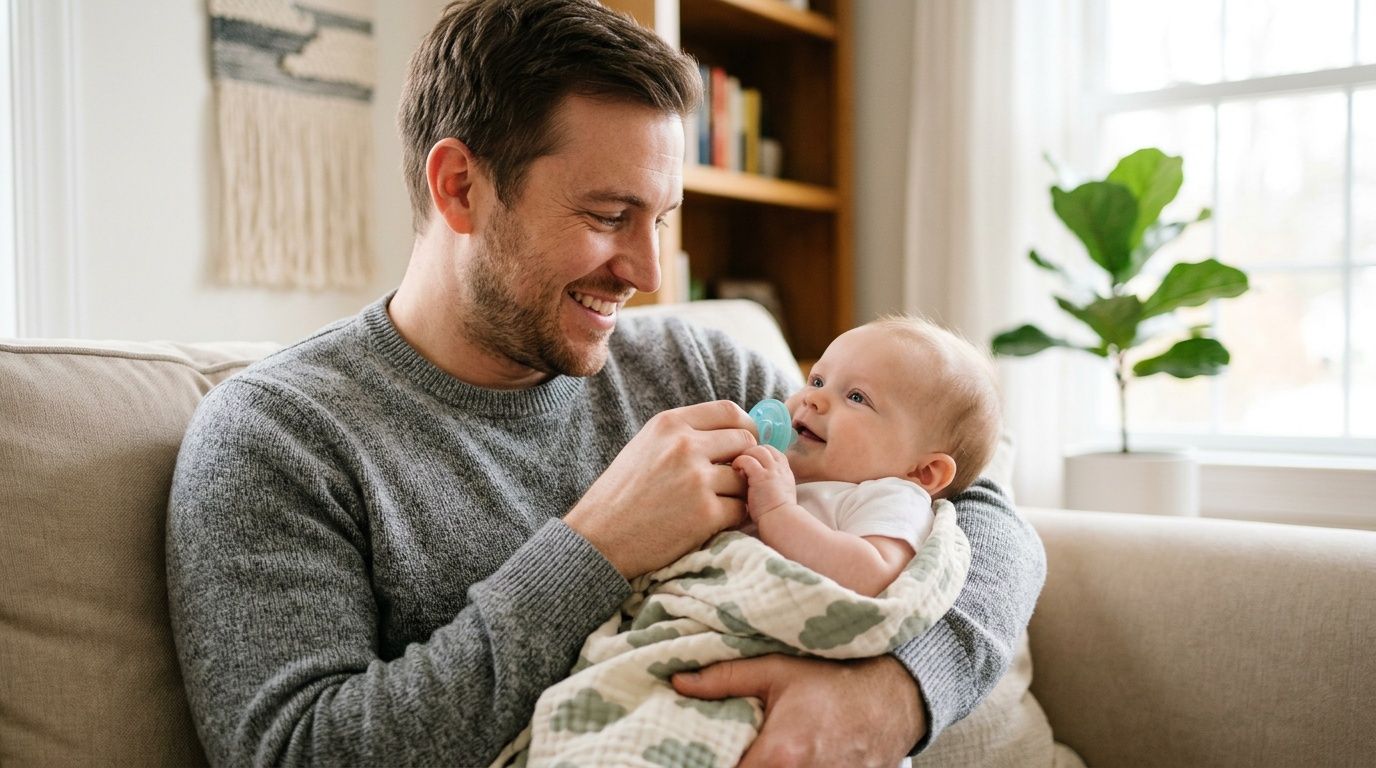
A lot of dads think pacifiers are just a desperation move. Wrong. They can be one of the most practical baby soothing tips you use in the first year.
Why they work
Babies are wired for non-nutritive sucking. That means sucking for comfort, not food. A pacifier gives them a clean, simple way to settle when hunger is already handled.
That matters because not every cry means feed me. Sometimes it means help me regulate. Sometimes it means I’m tired. Sometimes it means I need help getting from overstimulated to calm.
The big benefit that matters most
There’s one reason pacifiers deserve serious attention from parents. Two meta-analyses of 7 case-control studies found that pacifier use at bedtime or naps can lower SIDS risk by as much as 61%, which is a major reason sleep-time use is recommended after breastfeeding is established, according to the AAFP review of pacifier use and sleep safety.
That’s not a small side benefit. That’s real value.
Dad takeaway: If your baby takes a pacifier for naps or bedtime, that is a legitimate safety plus, not just a convenience move.
A simple decision framework
Use this quick read on pacifier introduction:
- Breastfed baby: Wait until feeding is settled and reliable.
- Bottle-fed baby: You can usually introduce a pacifier much earlier.
- Preterm or NICU baby: Ask the care team directly, because pacifiers can play a different role there.
- Any baby: If they hate it, don’t force it. Some babies just don’t care for pacifiers.
Pacifier benefits for infants are real. Better calming. Easier wind-down. A useful sleep association. For dads, that means fewer guessy moves and more control.
The Right Time to Introduce a Pacifier
Timing is the whole game. Get this part right and pacifier introduction is usually straightforward. Get it wrong and you may create unnecessary feeding stress.
If your baby is breastfed
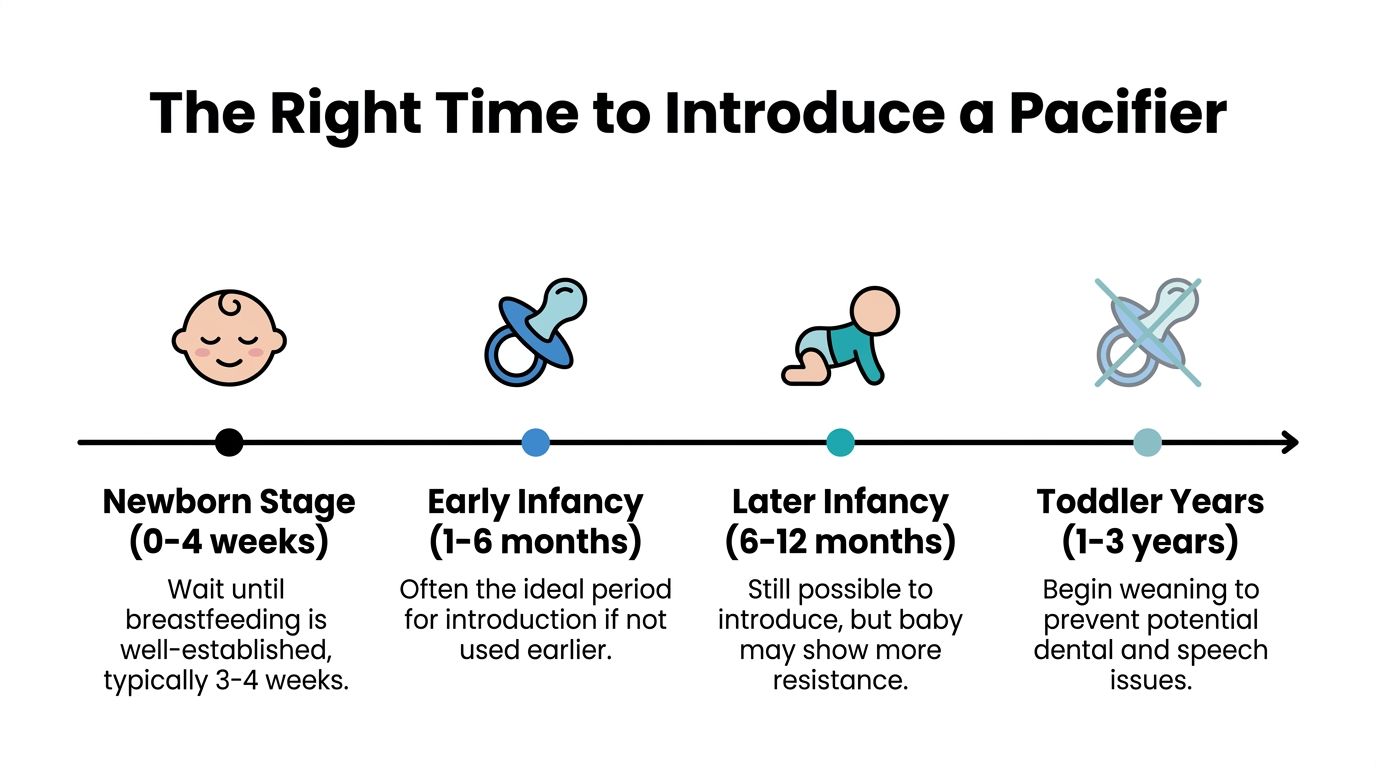
Wait until breastfeeding is established. The American Academy of Pediatrics advises waiting 2 to 4 weeks before introducing a pacifier to a breastfed baby, and an Australian study found that introducing one before 4 weeks was associated with a 3.67 times higher hazard of shorter breastfeeding duration, according to this PubMed summary of the study and guidance.
That should drive your decision.
Do not use the pacifier as a shortcut while latch, milk supply, or weight gain are still shaky. If feeding is still being figured out, the breast comes first.
What established breastfeeding looks like
Use common sense here. You want three things in place:
- Milk supply looks solid
- Baby latches consistently and transfers milk well
- Weight gain is on track
If those boxes are checked, pacifier for newborns becomes a more reasonable move.
If your baby is bottle-fed
You can introduce pacifier use much earlier. In practice, bottle-fed babies usually do fine with it from the start because the feeding setup is different and the concern about establishing breastfeeding does not apply in the same way.
That does not mean shove it in on day one just because you can. It means you have more flexibility.
My direct recommendation by age
- 0 to 4 weeks, breastfed: Wait.
- 0 to 4 weeks, bottle-fed: Fine to try if baby wants comfort sucking.
- 1 to 2 months: Strong window for introducing a pacifier safely.
- 3 to 6 months: Still a good window, especially for naps and bedtime.
- Later than that: Still possible, but some babies are less interested.
If you’re trying to decode fussiness around feeds and sleep at the same time, this guide on when do you stop burping a baby helps clean up another common point of confusion.
Best first attempt: Offer the pacifier when baby is calm, fed, and getting sleepy. Do not make the first try during a hunger meltdown.
How to Introduce a Pacifier Successfully
The right timing helps, but execution matters. A lot of parents fail because they introduce a pacifier at the worst possible moment, then declare that the baby “won’t take one.”
Use the right moment
Start when your baby is:
- Fed
- Calm or slightly drowsy
- Not screaming
- Not actively looking for a full feeding
That last one matters. If your baby is hungry, a pacifier is the wrong answer. Hunger gets food, not soothing tools.
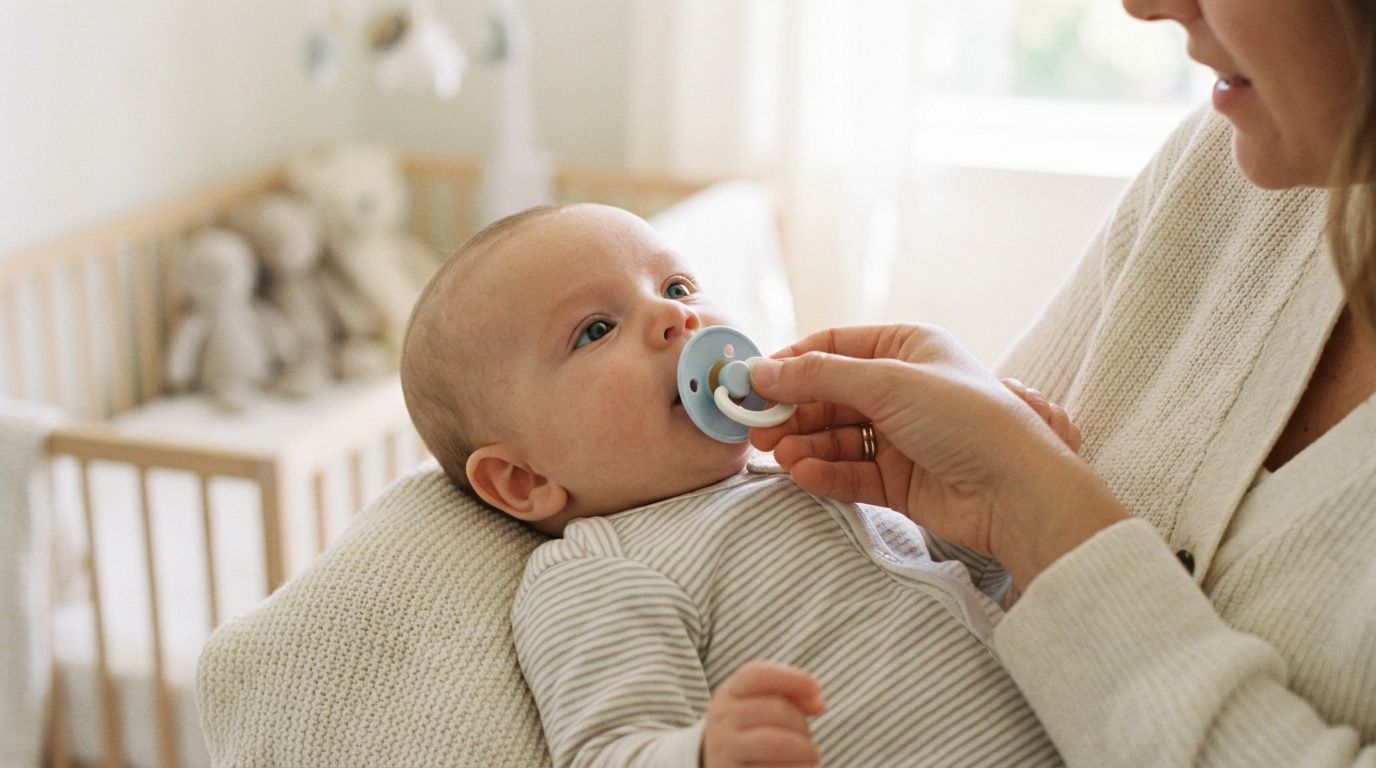
The first try
Keep it simple.
- Hold your baby in a relaxed position.
- Gently touch the pacifier to the lips.
- Let baby draw it in rather than pushing it deep into the mouth.
- If they spit it out, pause.
- Try again later.
Do not turn this into a contest of wills.
What not to do
Some mistakes make pacifier introduction harder than it needs to be:
- Don’t offer it during a feeding window. That blurs hunger cues.
- Don’t force it back in over and over. If baby rejects it, back off.
- Don’t use it to delay a needed feed. That’s where trouble starts.
- Don’t act like one failed attempt means it’s over. Babies change fast.
Build a routine, not a crutch
Pacifiers work best when they fit a pattern. Use them during naps, bedtime, car rides, or wind-down periods. That gives the baby a predictable comfort signal.
For dads, consistency beats improvising every time.
If you’re still learning the basics of newborn handling, sleep deprivation, and how to stay useful instead of hovering awkwardly, read these tips for new dads. That mindset carries over here.
Rule: Offer the pacifier after the need is identified correctly. If the baby needs food, feed. If the baby needs help settling, soothe.
Your Top Pacifier Questions Answered
Here are the questions dads ask.
Will a pacifier hurt breastfeeding
It can if you introduce it too early in a breastfeeding relationship. The safest play is to wait until breastfeeding is established, then use the pacifier intentionally instead of reflexively.
That means no using it to stretch time between feeds when milk supply is still getting built.
Can pacifiers help reduce SIDS risk
Yes. Sleep-time pacifier use is one of the clearest reasons many pediatric groups support them. If your baby spits it out after falling asleep, you do not need to put it back in.
That point matters because a lot of parents overmanage this.
How long should a baby use a pacifier
Do not let it drift endlessly. The AAP and AAFP recommend weaning by 18 months to help prevent ear infections and dental issues like malocclusion, and speech development becomes central from 12 months onward, with waking-hour pacifier use potentially getting in the way of articulation, as noted in this Huckleberry overview on pacifier timing and weaning.
My opinion is stronger than that. Start dialing it back earlier, especially during waking hours.
What’s the best weaning approach
Use a phased approach:
- Sleep-only use first: Keep it for naps and bedtime.
- Cut daytime dependence: Don’t let it become the answer to boredom.
- End it before attachment hardens: Earlier is easier.
What about NICU or preterm babies
For NICU or preterm babies, dads need to speak up and ask smart questions.
For preterm babies, pacifiers can serve a different purpose than they do for full-term babies at home. Non-nutritive sucking during hospital care can support feeding development and comfort. If your baby is in the NICU, ask the care team how they use pacifiers during feeds or procedures, what their unit protocol is, and how you can support the transition from hospital to home.
Do not assume the home rules apply the same way in intensive care.
How do I keep a pacifier clean
Follow the manufacturer’s cleaning instructions and keep it basic. Wash or sterilize as directed, inspect it often, and replace it when it shows wear.
Never use a damaged pacifier.
Which pacifier type should I buy
Go with a respected brand, the right age range, and a simple design that’s easy to clean. You do not need ten fancy features. You need one that your baby takes.
Recommended Pacifiers That Get the Job Done
You do not need a giant stash. Start with two or three solid options and see what your baby takes.
If you also want to browse stylish baby gear and gift-worthy essentials beyond pacifiers, the Baby Le Bebe collection is worth a look.
Top-Rated Pacifiers for Dads
| Product | Purpose | Age | Price | Affiliate Link |
|---|---|---|---|---|
| Philips Avent Soothie ★ Parent-Recommended, Best for Newborns | Newborn-friendly pacifier | 0–3 months | $6 | Buy Here |
| MAM Original Pacifier ★ Parent-Recommended, Best for Sleep Soothing | Orthodontic design | 0–6 months | $8 | Buy Here |
| NUK Orthodontic Pacifier ★ Best for Oral Development Focus | Supports healthy oral development | 0–6 months | $7 | Buy Here |
| Tommee Tippee Closer to Nature ★ Easiest to Clean | Soft silicone comfort | 0–6 months | $5 | Buy Here |
My quick read on each one
Philips Avent Soothie is the simplest starting point for a young baby. Good if you want a basic newborn comfort option without overthinking it.
MAM Original Pacifier is a strong pick if your goal is bedtime and nap calming. It’s a popular style for parents who want a more orthodontic feel.
NUK Orthodontic Pacifier makes sense for dads who care about shape and oral development design. Good backup option if your baby rejects rounder nipples.
Tommee Tippee Closer to Nature is the practical dad choice. Soft, straightforward, and easy to keep in rotation.
Essential Pacifier Safety Rules
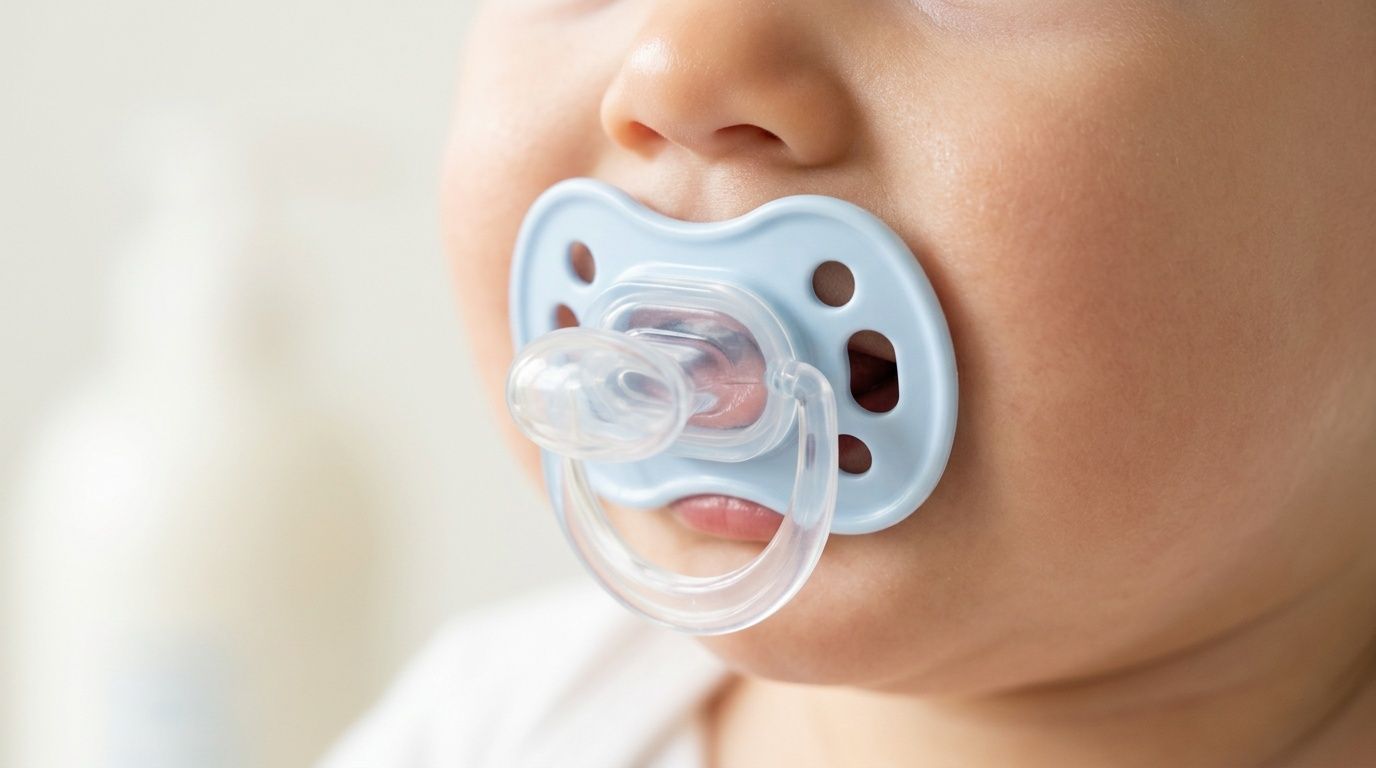
You don’t need complicated baby pacifier guidelines. You need a few essential rules and you need to follow them every time.
The rules
- Clean it before first use. Then keep up with regular washing or sterilizing based on the product instructions.
- Check for damage often. If it looks cracked, torn, sticky, or worn out, toss it.
- Use it mainly for sleep and soothing. Do not let it become an all-day mouth plug.
- Never tie it around your baby’s neck. Convenience is not worth the risk.
- Don’t force re-insertion during sleep. If it falls out, leave it out unless your baby clearly wants it again while awake.
- Match the pacifier to your baby’s age range. Don’t wing that part.
If your baby is moving into the teething phase, dads often start looking at every soothing product on the market. Before buying random stuff, read this take on the teething necklace so you know what deserves extra scrutiny.
Safety beats preference: The best pacifier is the one your baby takes, that you keep clean, and that you use with discipline.
Conclusion Your Pacifier Game Plan
Here’s the play.
If your baby is breastfed, wait until feeding is established. If your baby is bottle-fed, you have more room to introduce a pacifier earlier. Offer it when your baby is calm and fed. Use it mostly for naps, bedtime, and real soothing moments. Don’t let it replace feeding. Don’t let it become an all-day habit. Have a weaning plan before you need one.
That’s how you handle when to introduce pacifier without turning it into a household debate.
One more smart move. Keep a broader emergency mindset as a parent, not just a soothing mindset. This expert guide for child care emergencies is a useful read for any dad building his family safety playbook.
If you need gear now, shop recommended pacifiers, keep a couple clean backups ready, and make the decision with confidence.
Alpha Dad Mode helps fathers lead with clarity, not chaos. If you want more no-fluff advice on baby care, gear, routines, and real family leadership, head over to alphadadmode.com.
