


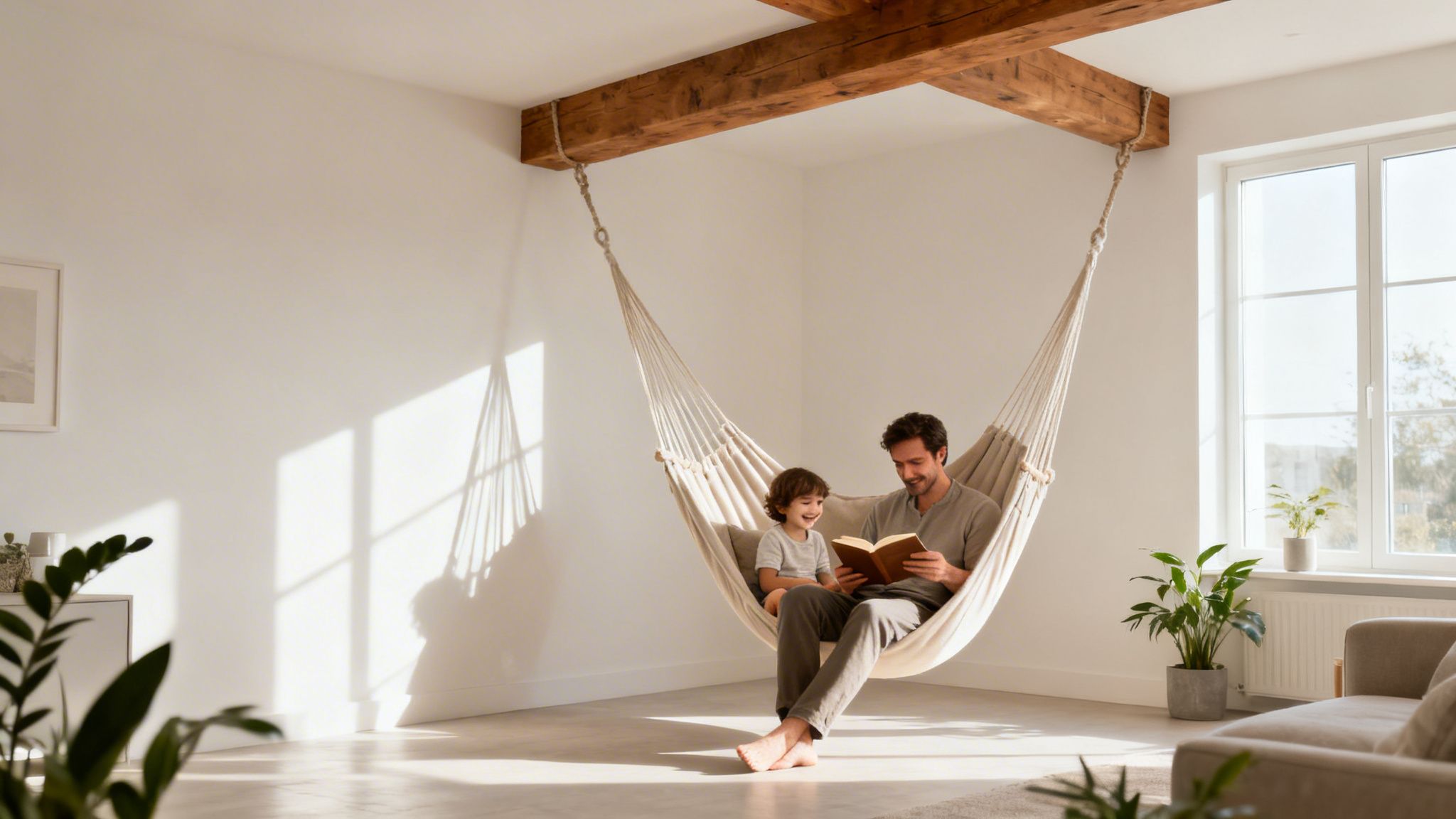
Saturday morning usually goes the same way. The kids are loud before coffee, somebody needs help finding a shoe, and the patio chair you thought was “your spot” is already covered in snacks, towels, or a half-finished school project. Most dads are not looking for luxury. They want one reliable place to sit down, breathe, and stay put for ten minutes without feeling like they’re balancing on furniture that was never built for real family use.
That is why a hammock chair swing makes sense. It gives you a real seat, a little movement, and a smaller footprint than a full hammock. It can live on a patio, in a bedroom corner, in a bonus room, or under a covered outdoor area without taking over the whole space.
The modern version is also more practical than a lot of people realize. The modern hammock chair was invented in 1989 when its creators adapted a single-point suspension design inspired by a Costa Rican fishing net, then paired it with durable nylon cord to make it work in smaller indoor and outdoor spaces, according to this history of hammock evolution. That one design change matters. It turned the idea from “vacation gear” into something a dad can install at home and use every day.
The Ultimate Dad Escape Pod
A good hammock chair is not just decor. It is a working part of the house.
The best setups usually happen in the spaces dads already use. A covered patio near the grill. A corner of the office that needs a softer landing than a desk chair. A basement spot where the noise level drops enough to read, scroll, or sit with a cup of coffee after bedtime. If you’re planning an outdoor zone, these covered patio design ideas are useful because they show how to build around shade, traffic flow, and daily use instead of treating the patio like a showroom.
Why this piece works in real homes
A hammock chair swing solves a problem regular seating often does not. It creates a personal zone without demanding a full room redesign.
A bench is shared. A sectional gets taken over. A recliner looks permanent and eats space. A hanging chair feels lighter, visually and physically, which is part of why it works so well in tighter homes.
It also lines up with how many families live now. More rooms are doing double duty. Home office by day, quiet corner at night. Playroom in the afternoon, parent reset spot after dinner. If you’ve been thinking more intentionally about layout, this guide on smart home interior design is a solid companion read because good furniture decisions start with how the room functions.
Tip: The best dad retreat is the one that stays usable on a normal weekday, not just the one that looks good in a product photo.
What makes it more than a trend
Hammock chairs moved into the mainstream because they fit modern life. They work in small spaces, they shift between indoor and outdoor use, and they feel casual enough for the whole family.
That last part matters. When a chair becomes the place for morning coffee, story time, and a quiet reset after work, it stops being an impulse buy and starts earning its keep.
Choosing Your Relaxation Style
The right hammock chair swing depends less on color and more on how you plan to use it. Reading chair and kid magnet are not the same job. Neither is “looks great on the patio” versus “gets used every day inside.”

The main styles that matter
Spreader-bar chairs feel the most open. They usually give you an upright sit, easier entry and exit, and a cleaner shape that works on patios and porches. They are a strong pick for dads who want a chair they can use with coffee, a book, or conversation.
Pod or nest chairs wrap around you more. These are better when comfort is the priority and the chair is mainly for solo downtime. Kids also tend to love this style because it feels enclosed and cozy, but that same cocoon effect can make it less convenient for older adults or anyone who wants a quick in-and-out seat.
Macrame or boho chairs lean hard into looks. Some are comfortable, some are not. A lot depends on the cushion and the shape of the seat. If this chair is going in a finished living room or a styled patio, this category gets attention fast, but it’s worth checking the support structure before buying for daily family use.
Match the chair to the job
Here’s the cleanest way to choose:
- For reading and quiet downtime: Go with a spreader-bar style that supports your back and keeps the seat open.
- For naps, decompressing, or a cocoon feel: A pod or nest chair usually wins.
- For visual impact in a styled space: Macrame works, but only if the hardware and seat construction hold up.
- For a social patio corner: An open chair is easier to use because people can sit down without climbing into it.
If your outdoor area is part of a larger backyard project, this piece on creating a relaxing outdoor seating area can help you think through how a hammock chair fits with pathways, shade, and surrounding seating.
One style mistake dads make
They buy for appearance first, then try to force the chair into a role it was not built for.
A beautiful macrame chair with a thin cushion may look perfect online and end up ignored after a week. A more practical spreader-bar model might not photograph as well, but it gets used constantly because it feels stable and easy. That same logic shows up in other gear decisions too. The gear that gets used is the gear that wins. That is true whether you are choosing backyard seating or building a family kit from the best camping gear for families.
Key takeaway: Choose the chair style based on how your family will sit in it, not how the listing is staged.
Decoding Materials for Durability and Comfort
Material choice is where a smart purchase separates itself from a regrettable one. Soft fabric feels great on day one. Weather resistance matters on day one hundred.
This category changed as hammock demand grew. Hammock sales doubled between 2014 and 2016, and that boom was driven largely by millennials treating them as affordable social experiences, which pushed demand toward more durable, all-weather materials for indoor-outdoor use, as noted in Kammok’s history overview.
Comfort first versus durability first
Cotton is usually the comfort winner. It feels softer against bare skin, has a relaxed look, and works well indoors. The trade-off is maintenance. Cotton is not what I’d choose for a chair that lives outside through changing weather, kid spills, and regular grime.
Polyester is often the practical middle ground. It tends to handle outdoor use better, dries faster, and is easier to wipe down. It may not feel as soft as cotton, but for family use that trade can be worth it.
Nylon and weather-resistant synthetics are the workhorses. They make sense when the chair will stay outside, deal with moisture, or need extra strength in the woven sections. They usually feel more functional than cozy, but they hold up better under rougher use.
Blended fabrics can be a good compromise if the chair comes from a reputable maker with solid stitching and hardware. The blend matters less than how the whole seat is built.
Hammock Chair Material Comparison
| Material | Best For | Comfort Level | Weather Resistance | Maintenance |
|---|---|---|---|---|
| Cotton | Indoor reading corners, bedrooms, covered spaces | High | Low | Higher |
| Polyester | Patios, porches, mixed indoor-outdoor use | Medium | Medium to high | Moderate |
| Nylon | Outdoor setups, frequent use, exposed conditions | Medium | High | Lower |
| Weather-resistant blends | Family spaces that need balance | Medium to high | Medium to high | Moderate |
What works in a dad house
If the chair will be used by kids, pets, and adults, I would lean toward easy-clean fabric over premium softness. Daily life is hard on furniture.
That same mindset applies in the shop. Build for abuse, not for the first photo. If that sounds familiar, it is the same principle behind a durable work surface. A solid guide like how to build a workshop bench comes from the same school of thought. Use materials that match the job.
Practical rule: Indoor-only chairs can prioritize feel. Outdoor family chairs should prioritize cleanup, weather resistance, and stitching quality.
Don’t ignore the parts around the fabric
Fabric gets the attention, but durability also comes from rope quality, stitching, spreader-bar finish, and whether metal components resist corrosion.
A comfortable seat with weak attachment points is still a bad buy. If the chair looks great but the ropes seem thin, the bar looks rough, or the seams look sloppy, keep moving.
The Dad’s Guide to Safe Hammock Chair Installation
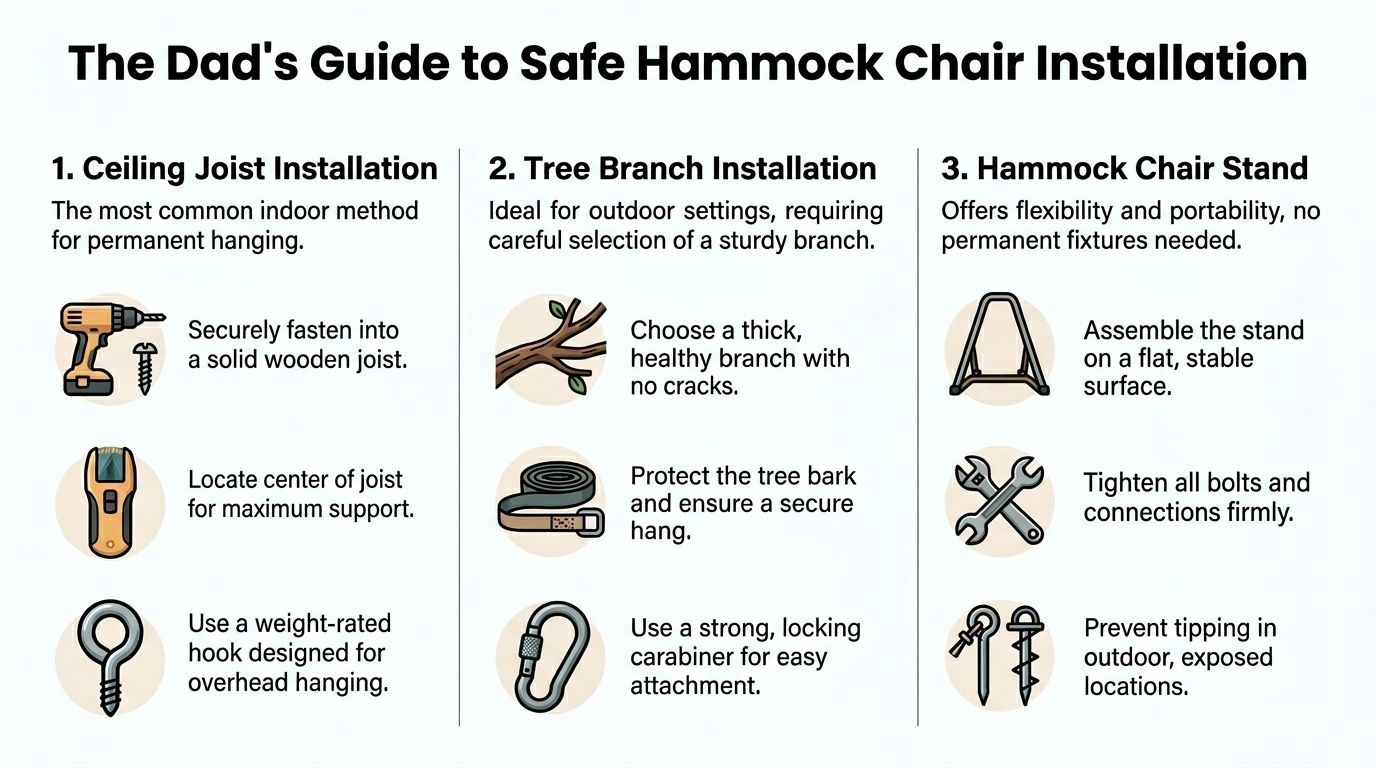
Installation is where dads either create the best seat in the house or a future repair job. The rule is simple. Anchor to structure, not surface. Drywall is not structure. Trim is not structure. Decorative beams are not automatically structure either.
The image below sums up the three most common install paths.
A second rule matters just as much. Weight capacity is not just about the fabric. It is about suspension geometry. Premium chairs in the 330 lbs to 500 lbs range often use wide spreader bars and 22 or more suspension ropes to spread force, which can work out to roughly 15 lbs to 23 lbs per rope, creating a safer margin for swinging loads, according to the engineering details on this hammock chair product page.
Ceiling joist installation
This is the cleanest indoor setup if the room has the right framing.
Use this method when you want a permanent chair in a bedroom, office, sunroom, or covered interior area.
Basic process
- Find a real joist. Use a stud finder, then confirm the center manually before drilling.
- Check the location. Make sure the chair has room to move without hitting walls, shelves, or windows.
- Use weight-rated hardware. Choose hardware designed for overhead hanging, not random garage leftovers.
- Drill correctly. Follow the hardware manufacturer’s pilot hole guidance.
- Install the hook or mounting plate tightly. No wobble. No guesswork.
- Hang low and test first. Put body weight on it gradually before anybody swings.
What does not work is anchoring into drywall with generic expansion hardware and calling it good. That might hold a light fixture. It is not the same thing as holding a moving person.
Hammock chair stand setup
A stand is the easiest option if you rent, expect to move the chair, or do not trust the ceiling structure.
Use this method when flexibility matters more than visual minimalism.
A stand also avoids one of the biggest DIY problems, which is not knowing what is above the drywall. If you go this route, assemble it on a flat surface and tighten every connection fully. Then check it again after the first few uses because bolts can settle.
A stand is not foolproof, though.
- It takes floor space. More than many anticipate.
- It can rock on uneven ground. Patio pavers and soft yard spots cause problems.
- Cheap stands fail at the joints first. That is where you look during inspections.
Tree branch installation
This is the most relaxed-looking setup and the one people underestimate most.
Use a healthy, thick branch with no visible cracks, dead sections, or bark damage. Protect the branch with a tree strap. Do not loop rough rope directly over bark and assume it is fine.
A few outdoor rules matter:
- Use locking hardware: Carabiners should be strong and appropriate for the application.
- Watch branch height: Too high creates a bigger risk during setup and more force in motion.
- Inspect after storms: Wind and moisture can change conditions fast.
Tip: If you cannot confidently judge the branch, skip the tree. Use a stand.
Stability checks before family use
Before the kids claim it, run a short test routine.
- Static test: Sit still and listen for creaks, shifting, or hardware movement.
- Motion test: Add gentle swinging and watch the anchor point.
- Clearance check: Make sure feet, elbows, and the chair edge clear nearby objects.
- Recheck fasteners: Tighten anything that moved during the test.
Most bad hammock chair installs fail for boring reasons. Wrong anchor. Weak hardware. Poor clearance. Rushing. The fix is not complicated. Slow down and build it like your kid will test it harder than you ever planned. Because they will.
Family-Proofing Your Hammock Chair

Once the chair is up, testing begins. Family use changes everything. The chair is no longer just a calm place to sit. It becomes a launch point, a reading nook, a spinning ride, and sometimes a wrestling target unless you set rules early.
Many guides focus on comfort and skip the bigger issue. A swinging child increases force on the anchor point, which is why rated hardware and regular inspections matter, especially since safety standards such as ASTM often get overlooked in everyday buying advice, as discussed in this video on hammock setup and safety considerations.
House rules that prevent dumb accidents
You do not need a giant rule list. You need a few essential rules.
- One rider at a time: Kids will try to pile in. Stop that early.
- No standing in the chair: Fabric seats and spreader bars are not jungle gyms.
- No twisting the suspension on purpose: Repeated spinning adds wear and can tangle hardware.
- Enter and exit under control: Most near-falls happen getting in or out, not while sitting.
- Keep the landing zone clear: No side tables, sharp decor, or toy bins in swing range.
If the chair is indoors and your child is still in the climb-everything phase, the principles in this guide to baby-proofing a house apply here too. Hazard reduction beats reacting after the fact.
The maintenance routine that keeps it safe
Good maintenance is simple and repeatable.
Weekly glance check
Look at the rope, seams, hardware, and the anchor area. You are checking for fraying, loosening, corrosion, and any change in how the chair hangs.
Monthly hands-on check
Touch every connection. Tighten hardware if needed. Run your fingers along load-bearing fabric and rope to spot wear before it becomes obvious.
Seasonal reset
Wash or spot-clean the fabric based on the material. Bring indoor-style chairs in during rough weather. Clean pollen, dirt, and moisture off metal parts before they sit.
Key takeaway: A hammock chair swing stays safe when it is treated like active gear, not ignored like static decor.
Best family uses that last
The best chairs become part of the daily rhythm.
A child uses it for reading. You use it after work. It becomes a calm-down seat during overstimulated moments. In some homes, it even works as a quiet homework perch for a kid who focuses better with a little movement.
That only works if the chair remains predictable. Stable install. Clear rules. Simple upkeep. That is what turns it from a novelty into a fixture.
Your Final Hammock Chair Buyer’s Checklist
Buying the right hammock chair swing is mostly about eliminating bad options fast. A flashy listing can hide weak hardware, vague installation details, or a design that does not match your space.

For smaller homes and apartments, one choice matters right away. A ceiling-mounted chair uses minimal floor space but requires solid structural support, while a freestanding frame gives you flexibility but can eat up more room, as noted in this overview of hammock chair considerations for compact spaces.
Use this checklist before you buy
- Confirm the install plan first: Do not buy the chair and then figure out where it goes. Know whether you have a joist, a suitable tree, or room for a stand.
- Check the hardware situation: Find out what is included and what is not. Included hardware is not always install-ready for your specific surface.
- Read the seat shape carefully: Some chairs look roomy but sit narrow or awkwardly upright.
- Look at the spreader bar and suspension design: Wider, better-distributed support usually feels steadier.
- Match the material to the location: Outdoor chair means outdoor fabric. Indoor comfort chair can prioritize softness.
- Inspect cleanability: Removable cushions and wipeable materials make family life easier.
- Think about who will use it: Dad retreat, kid reading seat, patio lounge chair, or all three. Buy for the heaviest real use case.
- Protect the clearance zone: A good chair still needs breathing room around it.
Red flags worth walking away from
Some product listings tell you almost nothing. That is already an answer.
Skip chairs that have:
- Vague mounting language
- Thin-looking ropes or weak seams
- No clear mention of rated hardware
- Photos that hide how the chair is suspended
- A stand that looks narrow or lightly built for outdoor use
The smart buying mindset
The right chair is not the one with the trendiest weave or the thickest cushion in the photo. It is the one your family can use safely, comfortably, and often.
If a model looks great but raises questions about install, structure, or cleanup, keep shopping. A hammock chair earns its spot by being easy to trust.
Alpha Dad Mode helps fathers make smarter calls on gear, home projects, parenting, and everyday life without the fluff. If you want more practical guides built for real homes and real family use, visit alphadadmode.com.
