



Best mountain bike helmets are designed to provide maximum protection, comfort, and ventilation for off-road riding. The top-rated options include models with MIPS technology, lightweight construction, and secure fit systems. Trail riders typically prefer half-shell helmets, while downhill riders benefit from full-face protection.
🔹 Quick Picks (Top Rated Helmets)
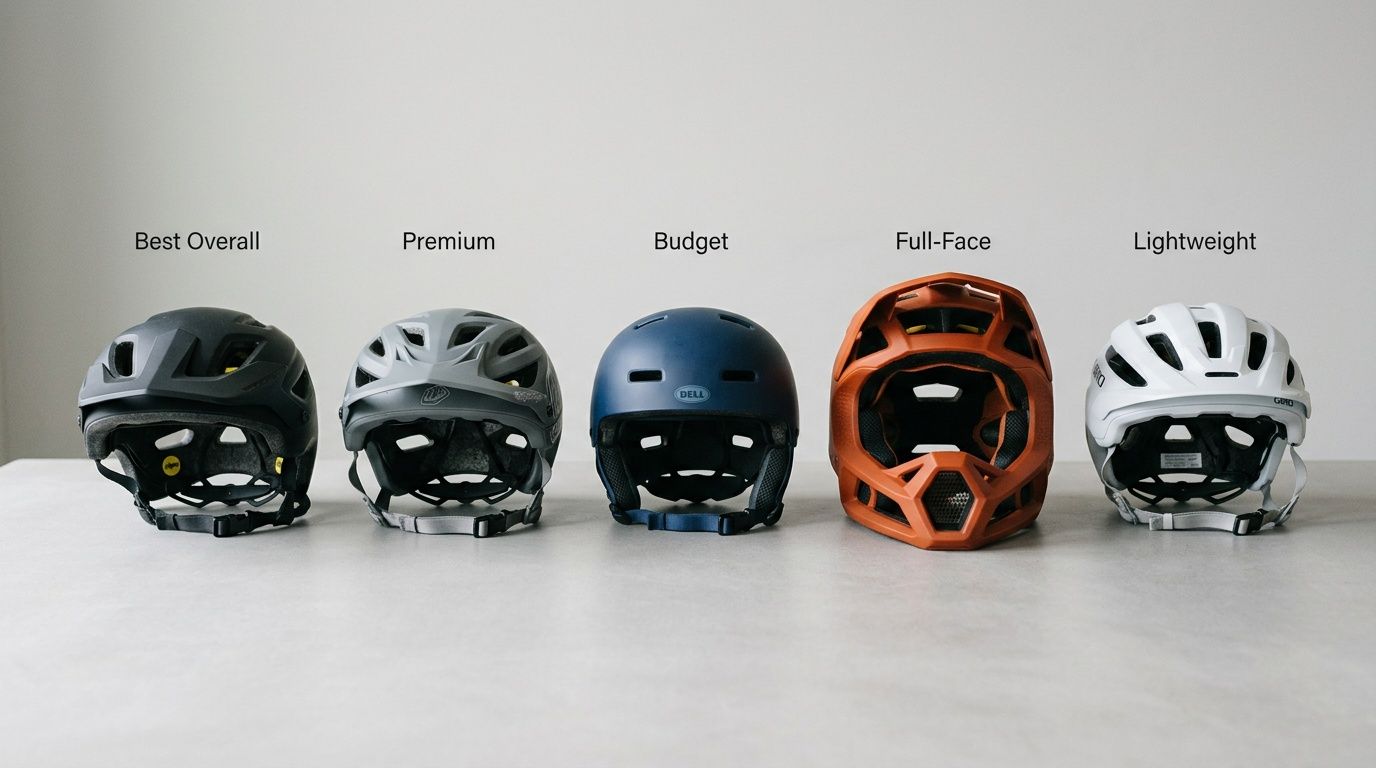
Best overall: Giro Fixture MIPS
Best premium: POC Tectal Race MIPS
Best budget: Bell Nomad MIPS
Best full-face: Fox Proframe
Best lightweight: Troy Lee Designs A2
When you're out on the trail, a good mountain bike helmet is the single most important piece of gear you'll wear. The best ones manage to perfectly balance top-tier protection with the kind of comfort and airflow that makes you forget you're even wearing it. It's about more than just a logo; it's about coming home safe after a day of clearing your head in the woods.
If you’re a dad trying to stay fit and sane, that weekend ride is your reset button. Choosing the right helmet means you can push your limits a bit, knowing you've got serious protection, and still make it home for Saturday morning cartoons. If you’re also looking for beginner bikes, check our guide on best starter motorcycle.
Key Takeaways
- Fit and safety matter more than brand
- MIPS technology improves impact protection
- Lightweight helmets reduce fatigue
- Full-face helmets offer maximum protection
- Most riders prefer half-shell for trail use
It’s a fantastic time to be shopping for a helmet. The mountain bike segment is seeing a massive surge in innovation, with a projected growth rate of 19% between 2025 and 2032—way faster than the rest of the bike helmet market. For us, that means better, safer, and more comfortable tech is hitting the shelves every season.
What are the best mountain bike helmets right now?
With a sea of helmets on the market, it’s easy to get lost in all the tech jargon and marketing hype. So, we’ve done the legwork for you. We've focused on five standout models that we've personally tested and can confidently recommend.
These are the helmets that deliver where it counts—on the trail. They offer the best blend of safety, comfort, and value for different kinds of riding and budgets. Whether you're a dad hitting the local trails on weekends or a seasoned rider chasing adrenaline, there's a perfect fit here.
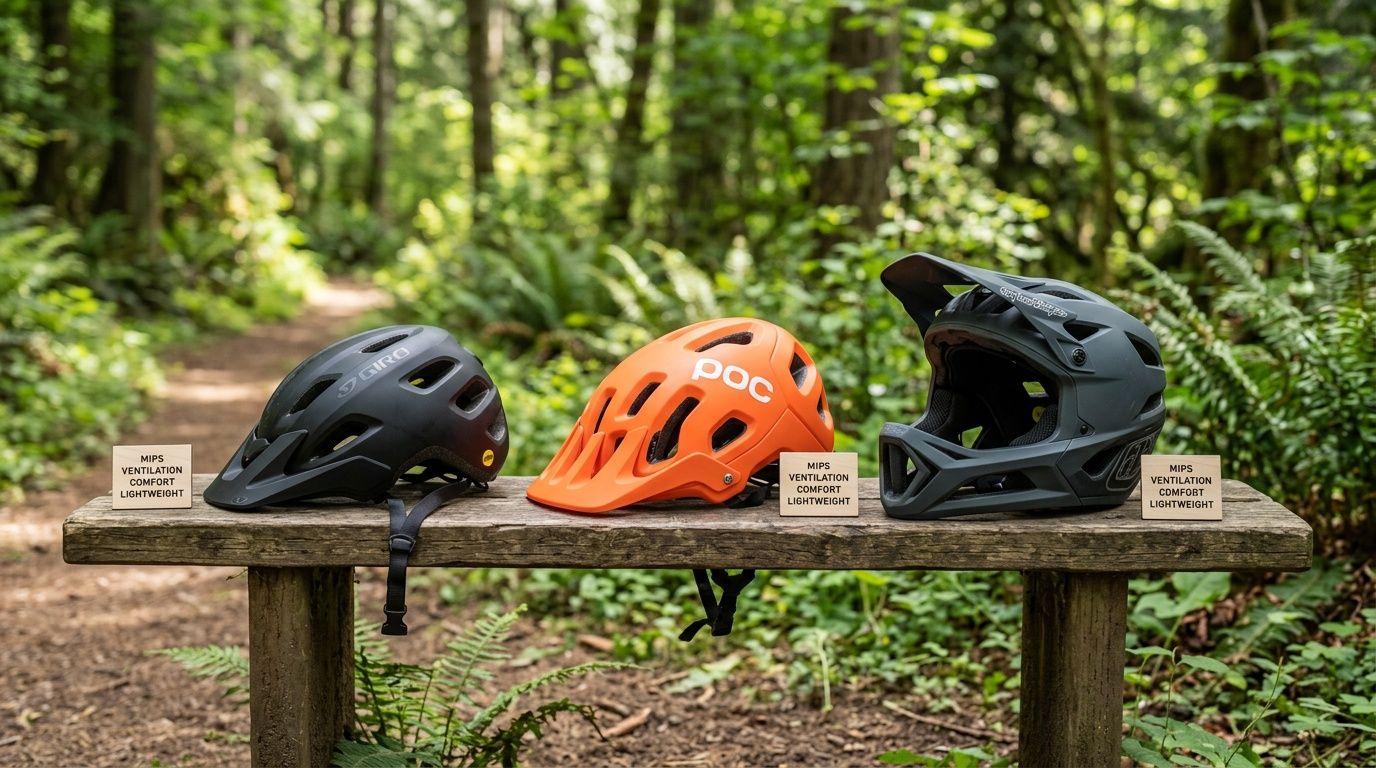
Best Overall: Giro Fixture MIPS
The Giro Fixture MIPS is our go-to recommendation for just about everyone. It’s the helmet we suggest to friends who are finally getting serious about mountain biking. Why? It packages critical safety features and all-day comfort into a lid that doesn't cost a fortune. It’s a true workhorse.
The star of the show is MIPS (Multi-directional Impact Protection System). Think of it as a low-friction liner inside the helmet that allows a tiny bit of movement during a crash. This slip-plane technology is designed to reduce the dangerous rotational forces that can happen during an angled impact—which, let's be honest, is how most of us crash. It’s a feature that used to be exclusive to expensive helmets.
The helmet itself is built using an in-mold polycarbonate shell fused to a foam liner, which keeps it light but tough. Getting the fit right is a breeze with Giro's Roc Loc Sport system—just a simple dial on the back that snugs it down perfectly.
Key Features:
- MIPS Technology: The gold standard for reducing rotational forces in a crash.
- Roc Loc Sport Fit System: A simple, one-handed dial for a secure, custom fit.
- Universal Fit Sizing: Takes the guesswork out of sizing and fits most heads right out of the box.
- Removable Visor: Shields your eyes from sun and low-hanging branches.
Out on the trail, the 18 vents do a decent job of keeping you cool, though you might feel the heat on a slow, grueling climb in the middle of July. But for 90% of rides, it's perfectly comfortable. The visor is fixed, but it’s positioned just right to block the sun without getting in the way of your view down the trail.
Pros:
- Incredible value for a helmet with MIPS protection
- Comfortable and easy to adjust
- Durable construction that can handle trail life
Cons:
- Can get a bit warm in very hot climates
- The visor isn't adjustable
View latest price and availability
Best Premium: POC Tectal Race MIPS
If you're the kind of rider who invests in gear that offers the absolute best protection and comfort, look no further. The POC Tectal Race MIPS is a serious piece of equipment. Yes, it’s pricey, but for long days in the saddle and technical, challenging trails, that investment pays off big time.
Right away, you'll notice it provides more coverage, extending lower on the temples and the back of the head. But the real magic is inside. POC integrates an aramid bridge system—think of it like rebar in concrete. A grid of super-strong aramid fibers is molded into the foam liner, adding massive structural integrity. This allows POC to carve out huge vents for airflow without compromising safety one bit.
And that ventilation is incredible. You can feel the air moving even at slow climbing speeds, making this a top choice for riders in hot climates. The fit is dialed, with straps molded directly into the liner for a clean, comfortable feel against your face.
Key Features:
- Aramid Bridge System: Adds strength, allowing for massive, cooling vents.
- Extended Coverage: More protection for the vulnerable parts of your head.
- Superior Ventilation: A wind-tunnel-tested design that truly keeps you cool.
- RECCO Reflector: A small transponder that can help rescue teams find you in an emergency.
Helmet fit is the most important factor in real-world protection. The Tectal Race has a 360° adjustment system that cradles your head securely without creating uncomfortable pressure points. It's finished with thoughtful details like an adjustable visor and a goggle clip, proving it was designed by people who actually ride.
Pros:
- Best-in-class ventilation and cooling performance
- Exceptional build quality and advanced safety tech
- Surprisingly lightweight for how much protection it offers
Cons:
- A significant investment
- The bold, angular style isn't for everyone
Best Budget: Bell Nomad MIPS
The Bell Nomad MIPS is proof that you don't have to empty your wallet for a safe, modern mountain bike helmet. It's the perfect helmet for someone new to the sport, a dad buying a helmet for a fast-growing teenager, or even as a solid backup lid. Bell has done an amazing job packing great features into an affordable package.
Just like our top pick, the Nomad includes MIPS technology, giving you that crucial layer of rotational impact protection. The helmet is built with the same solid in-mold process used on much pricier models, making it both durable and light.
Adjusting it is simple with the Ergo Fit dial—it's easy to turn, even with gloves on. Bell’s No-Twist Tri-Glides are another nice touch, keeping the straps flat and out of your way. While it might not have the plush padding or fancy finishes of a premium helmet, the core safety and function are absolutely on point.
Key Features:
- MIPS Equipped: Bringing essential modern safety to an entry-level price.
- Ergo Fit System: A secure and user-friendly dial for quick adjustments.
- Fusion In-Mold Polycarbonate Shell: A durable construction process pioneered by Bell.
On the trail, the Nomad feels light and stays put. The ventilation is perfectly adequate for most rides, giving you enough airflow for moderate efforts. For any dad looking to get into mountain biking without a huge financial commitment, the Bell Nomad MIPS is an absolute winner.
Pros:
- Outstanding value, especially with MIPS included
- Lightweight and comfortable enough for long rides
- Clean, modern look that doesn't scream "budget"
Cons:
- The visor is fixed, not adjustable
- Padding is more basic than what you'll find in premium helmets
Winner Summary Table
| Category | Helmet |
|---|---|
| Best Overall | Giro Fixture MIPS |
| Best Budget | Bell Nomad MIPS |
| Best Premium | POC Tectal Race |
| Best Full Face | Fox Proframe |
| Best Lightweight | Troy Lee A2 |
Which helmet should you choose based on your riding style?
- Trail riding → Giro Fixture MIPS
- Downhill → Fox Proframe
- Long rides → Troy Lee A2
- Budget riders → Bell Nomad
Once you've got your lid sorted, you'll need a way to get your bike to the trailhead; check out our guide on the best bed bike racks for trucks.
How to choose the best mountain bike helmet?
Walking into a bike shop and staring at a wall of helmets can feel like you're trying to decode a secret language. All the acronyms and tech specs can be a lot to take in. But let's break it down.
Think of a modern helmet like the safety system in your car. It has a tough outer shell (the car’s body), a foam liner that absorbs impact (the crumple zone), and smart tech like MIPS that acts like an airbag for your brain. Each part works together to protect you when you need it most. This guide will cut through the noise and help you find the right lid for your head and the trails you ride.

When you get right down to it, picking a great helmet comes down to three things: the safety tech inside, how well it fits, and the features that match where and how you ride.
Understanding Safety Technology
Today’s helmets are about more than just surviving a direct hit. The real innovation is in how they handle the rotational forces that happen in most real-world crashes, the kind of twisting that can cause serious brain injuries.
MIPS (Multi-directional Impact Protection System): This is the gold standard for rotational protection. It’s a thin, low-friction layer inside the helmet that lets the outer shell slide just a tiny bit (10-15mm) during an angled crash. That little slip helps redirect the dangerous twisting forces away from your brain. Most modern helmets include rotational impact protection systems like MIPS, which are widely recommended for added safety.
EPS Foam (Expanded Polystyrene): This is the real workhorse of any helmet. EPS Foam is the stiff, crushable material that makes up the bulk of the liner. On impact, it's designed to compress and crack, absorbing the damaging energy before it gets to your skull. It's a one-and-done deal; once it has done its job in a crash, its protective ability is gone, and the helmet needs to be replaced immediately.
Shell Construction: That outer plastic shell does more than just look good. It's there to resist punctures from rocks or branches and to keep the EPS foam intact as it crushes during an impact. Most quality helmets use an in-mold construction, fusing the shell directly to the foam. This creates a stronger, lighter, and more durable helmet.
When you're trying to gauge a helmet's safety chops, it helps to see what the experts consider top-tier across the board. You can see this in guides for the best ebike helmets with ultimate safety and tech, where features like MIPS are a given.
Why Fit and Sizing Are Non-Negotiable
You could buy a helmet with every piece of safety tech imaginable, but if it doesn’t fit right, it’s not going to protect you properly. Helmet fit is the most important factor in real-world protection.
A helmet that’s too loose can shift or even come off in a crash. One that’s too tight is a recipe for headaches and dangerous pressure points. It's like trying to put your kid in soccer cleats that are two sizes too big—it ruins their performance and just isn’t safe.
How to Measure for a Perfect Fit:
- Grab a flexible tape measure and wrap it around the widest part of your head, about an inch above your eyebrows and ears. Keep the tape level all the way around.
- Note that measurement in centimeters and check it against the manufacturer’s sizing chart. Brands can fit a little differently, so always refer to their specific guide.
- When you try the helmet on, tighten the rear dial or slider until it's snug but not squeezing your head. Give your head a good shake—the helmet shouldn't wobble around.
- Finally, buckle and tighten the chin strap. You should only have room to slip two fingers between the strap and your chin.
Deciphering Safety Certifications
Those little certification stickers inside a helmet are your proof that it’s passed a series of standardized tests. In the U.S., there are two main ones you need to know.
CPSC (Consumer Product Safety Commission): This is the legal minimum for any bicycle helmet sold in the United States. It certifies that a helmet can withstand a major direct impact and that the straps are strong enough.
ASTM (American Society for Testing and Materials): This is a tougher, voluntary standard. For aggressive mountain biking, the one to look for is ASTM F1952. This is the downhill racing standard, which involves higher-energy impact tests and a crucial test of the chin bar on full-face helmets.
Being the leader of your family crew means setting the example for safety, and a quality helmet is a non-negotiable part of the uniform. It’s no surprise the bicycle helmet market is projected to grow from USD 0.9 billion in 2025 to USD 1.25 billion by 2030, driven by more dads turning to cycling for fitness and mental clarity. You may also like our guide on fitness gear for riders.
Balancing Ventilation, Weight, and Coverage
Once you’ve got safety and fit dialed in, the final piece of the puzzle is matching the helmet’s features to your specific needs on the trail.
Ventilation: More vents mean more airflow, which is a lifesaver on hot summer climbs. The trade-off is that vents mean less foam coverage. High-end helmets solve this with clever internal air channels and structural reinforcements to give you maximum cooling without compromising on safety.
Weight: A few grams might not sound like much, but a lighter helmet can make a huge difference in neck fatigue over a long day of riding. After a few hours, you'll definitely appreciate a helmet that doesn't feel like a bowling ball.
Coverage: Modern trail and enduro helmets provide significantly more coverage than a road helmet, dipping lower in the back to protect the base of your skull. For bike parks or downhill tracks, nothing beats a full-face helmet for complete protection of your chin and jaw. Just as you’d pick from the best tools for dads for a specific job, you choose your helmet coverage based on the terrain.
Visors and Goggle Compatibility: A good adjustable visor is key for blocking the sun on exposed trails and can be pushed up and out of the way to "park" your goggles on long climbs. If you ride with goggles, make sure the helmet has a dedicated channel to hold the strap in place and that it fits well without pushing down on your nose. Getting your gear right shows your kids how to be prepared and ride smart.
Are expensive mountain bike helmets worth it?
You’re standing in the bike shop, staring at a wall of helmets. One costs under $100, while the one next to it is over $300. So what’s the deal? Do you really get more protection for your money, or are you just paying for a flashy color and a brand name?
It's a great question, and the answer isn't a simple yes or no. The good news is that any helmet you buy from a reputable shop has to meet mandatory safety standards. But when you invest more, you're buying tangible upgrades in safety, comfort, and weight that you can genuinely feel on the trail.
Think of it like buying tools. A cheap wrench will turn a bolt, sure, but a pro-grade one feels better in your hand, grips without slipping, and is built to last. Helmets are the same—a higher price tag often means better engineering, not just a fancier paint job.
What Your Extra Money Really Buys
When you jump from a basic helmet to a more premium one, you're paying for advanced R&D and materials that make a real difference. The upgrades aren't just for show; they directly impact your ride.
Advanced Safety Features: While every helmet must pass basic CPSC certification, pricier models add layers of protection. Most modern helmets include rotational impact protection systems like MIPS, which are widely recommended for added safety. High-end helmets often go further, using dual-density foam to better handle both high-speed crashes and low-speed tumbles, or adding internal skeletons (like POC's aramid bridge) for more structural integrity.
Better Ventilation and Comfort: This is where you’ll feel the biggest difference on a hot day. More expensive helmets feature carefully designed internal air channels that actively suck cool air in and push hot air out. The padding is a huge step up, too—think softer, antimicrobial fabrics that actually pull sweat away from your skin instead of just getting soggy.
Lighter Weight: Engineers use premium materials and construction methods to build helmets that are incredibly strong but don't feel like a brick on your head. Shaving off a few hundred grams might not sound like a big deal, but you'll absolutely notice less neck fatigue after a few hours in the saddle.
A premium helmet is an investment in a better riding experience. The improved ventilation keeps you cooler, the lighter weight reduces fatigue, and the enhanced fit provides a level of comfort that makes you forget you're even wearing it.
So, is an expensive helmet "worth it"? That really depends on you. If you ride a couple of times a month on gentle paths, a solid entry-level helmet is perfectly fine. But if you're putting in serious miles every week, the combined benefits of better comfort, less weight, and top-tier ventilation make a premium helmet a fantastic upgrade that improves every single ride.
Do mountain bike helmets expire?
It’s a question that comes up a lot: does a bike helmet really expire if it’s just been sitting in the garage? The short answer is a definite yes. Think of your helmet less like a piece of gear and more like a car’s airbag—it’s a critical safety device with materials that have a finite lifespan, even if they've never been deployed.
The real culprit here is the EPS (Expanded Polystyrene) foam that makes up the core of your helmet. This is the stuff that’s engineered to crush on impact, absorbing the dangerous forces that would otherwise go straight to your head. But over time, things like UV rays from the sun, wild temperature swings in your garage, and even the natural oils from your skin and sweat slowly make that foam brittle and less effective. You can't see it happening, but the degradation is real.
When to Replace Your Helmet
Knowing when to retire your lid isn't just a manufacturer's suggestion; it's a fundamental part of staying safe out there. I tell every rider to live by two simple rules.
After Any Significant Impact: This one is non-negotiable. Your helmet is a one-and-done piece of equipment. If you crash and your helmet hits the ground, a tree, or anything else, its job is done. You must replace it. The internal foam structure has likely been compromised, even if you can't see a single crack on the outside. It won’t protect you the same way a second time.
Based on Age: As a general rule, plan on replacing your helmet every 3 to 5 years. The exact timing depends on how much you ride, but this window accounts for that invisible breakdown of the foam and other materials. The best way to track this is to write your purchase date on a piece of tape and stick it inside the helmet.
The most important rule in helmet safety is simple: one crash, one helmet. Even a seemingly minor impact can compress the internal foam, compromising its ability to protect you in the future.
How to Maintain Your Helmet
While you can't stop time, a little bit of care will help your helmet perform its best right up until retirement day. Giving it a quick once-over every few rides is a great habit to get into.
Simple Helmet Inspection Checklist:
- Outer Shell: Run your hands over the shell. Are there any deep gouges, cracks, or dents? Significant fading or discoloration is also a red flag for UV damage.
- EPS Foam Liner: Look inside. Do you see any cracks, flat spots, or indentations in the foam?
- Straps and Buckles: Check the straps for any fraying. Does the buckle still click together with a solid, secure snap?
- Fit System: Turn the dial on the back. Does it adjust smoothly and, more importantly, does it hold its position firmly?
Cleaning is easy—just use mild soap and water to get rid of the grime and sweat that can break down the pads and foam over time. Steer clear of any harsh chemical solvents, as they can eat away at the shell and liner. A well-cared-for helmet is a smart investment in your own well-being on the trail.
FAQs
What are the best mountain bike helmets for beginners?
The best options are lightweight helmets with MIPS technology and adjustable fit systems, such as Giro Fixture MIPS.
Is MIPS necessary in mountain bike helmets?
MIPS is not mandatory but is widely recommended for improved impact protection.
How long do mountain bike helmets last?
Most helmets should be replaced every 3–5 years or after a crash.
Are full face helmets safer than half shell?
Full-face helmets provide more protection, especially for downhill riding.
Our Final Word
Choosing the right helmet is the single most important gear decision you'll make in mountain biking. After extensive testing, the Giro Fixture MIPS stands out as the best choice for most riders, offering unbeatable safety and comfort for its price. For those on a tight budget, the Bell Nomad MIPS provides essential protection without compromise. Ultimately, the best helmet is the one that fits perfectly, matches your riding style, and gives you the confidence to hit the trails knowing you’re well-protected. Happy trails, and check updated price here for our top picks.
