


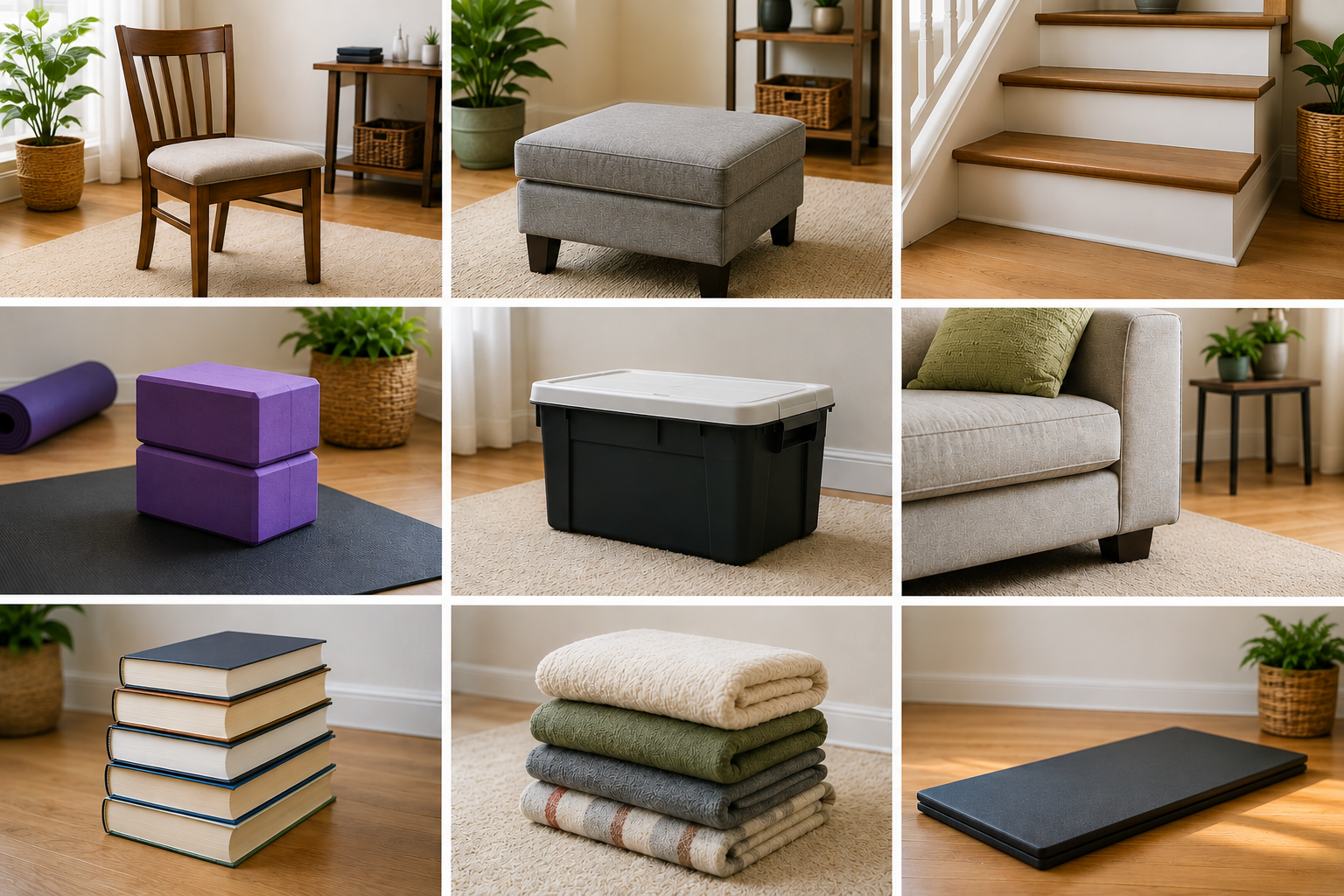
If you’re looking for Home Alternatives for a Gym Bench, there’s a good chance you’re trying to build strength without turning your spare room, garage or living room into a commercial fitness centre.
I’ve been training since my teens, and one thing I’ve learned is that a lot of fitness equipment is nice to have, but not always necessary.
A gym bench certainly has its place.
However, if you’re training at home, limited on space or simply don’t want to spend money on equipment you’ll only use occasionally, there are plenty of practical alternatives available.
In fact, some of the strongest people I’ve met started with very basic setups.
A few dumbbells.
A bit of floor space.
Consistency and discipline.
As dads, we’re often balancing family responsibilities, work commitments and household expenses. Not everyone wants a giant adjustable bench permanently occupying valuable garage real estate.
Let’s look at the best Home Alternatives for a Gym Bench, when they work well and what limitations you should be aware of.
Do You Actually Need a Gym Bench?
Before buying any piece of fitness equipment, I always ask myself one question:
Will this genuinely improve my training?
Sometimes the answer is yes.
Sometimes the answer is:
“It would look impressive while collecting dust.”
A gym bench can be useful for:
- Bench presses
- Dumbbell presses
- Rows
- Step-ups
- Split squats
But many exercises can be modified using equipment you already own.
According to resources from ACE Fitness, many effective strength-building exercises can be performed using bodyweight, dumbbells and minimal equipment.
Comparison Table: Home Alternatives for a Gym Bench
| Alternative | Cost | Stability | Space Required | Best For |
|---|---|---|---|---|
| Floor | Free | Excellent | Minimal | Pressing Movements |
| Ottoman | Low | Moderate | Minimal | Light Exercises |
| Sturdy Storage Box | Low | Good | Minimal | Dumbbell Work |
| Stability Ball | Low | Moderate | Low | Core Training |
| Couch Edge | Free | Moderate | None | Light Upper Body Work |
| Plyometric Box | Moderate | Excellent | Moderate | Versatile Training |
For some guys, the floor and a sturdy storage box often provide the best combination of safety, practicality and value.
1. The Floor
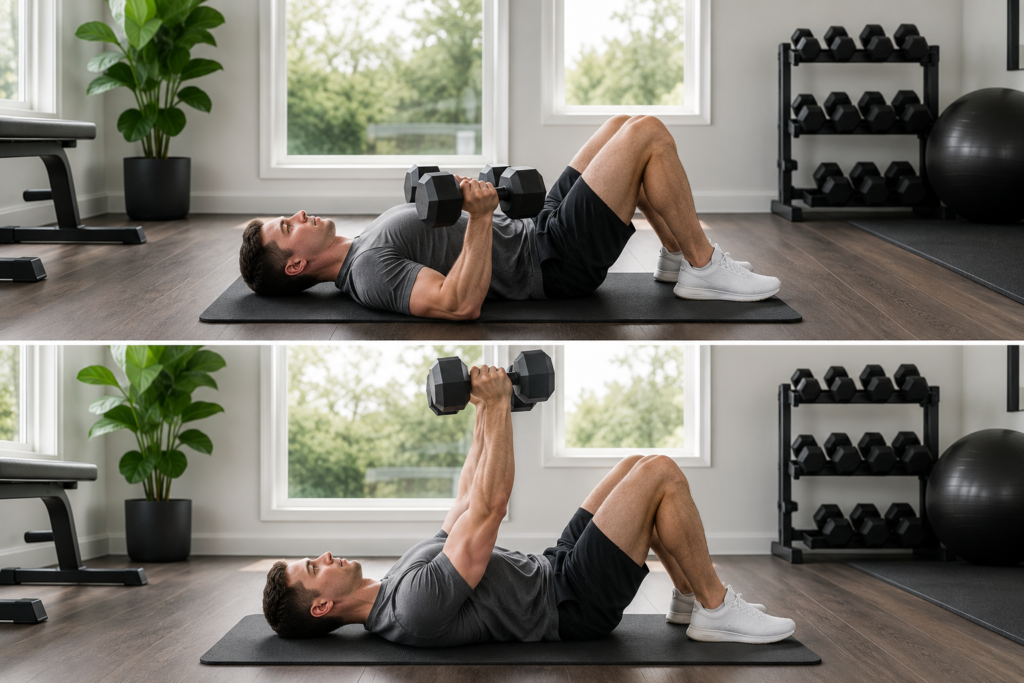
Let’s start with the most obvious option.
The floor.
It’s not flashy.
It doesn’t have adjustable angles.
It doesn’t require assembly instructions translated from seven different languages.
But it works.
Exercises You Can Perform
- Floor press
- Glute bridges
- Dumbbell pullovers
- Core exercises
- Leg raises
Benefits
- Free
- Stable
- Safe
- Available immediately
I’ve performed countless dumbbell floor presses over the years.
While you lose some range of motion compared to a traditional bench, you can still build impressive strength.
2. A Sturdy Storage Box
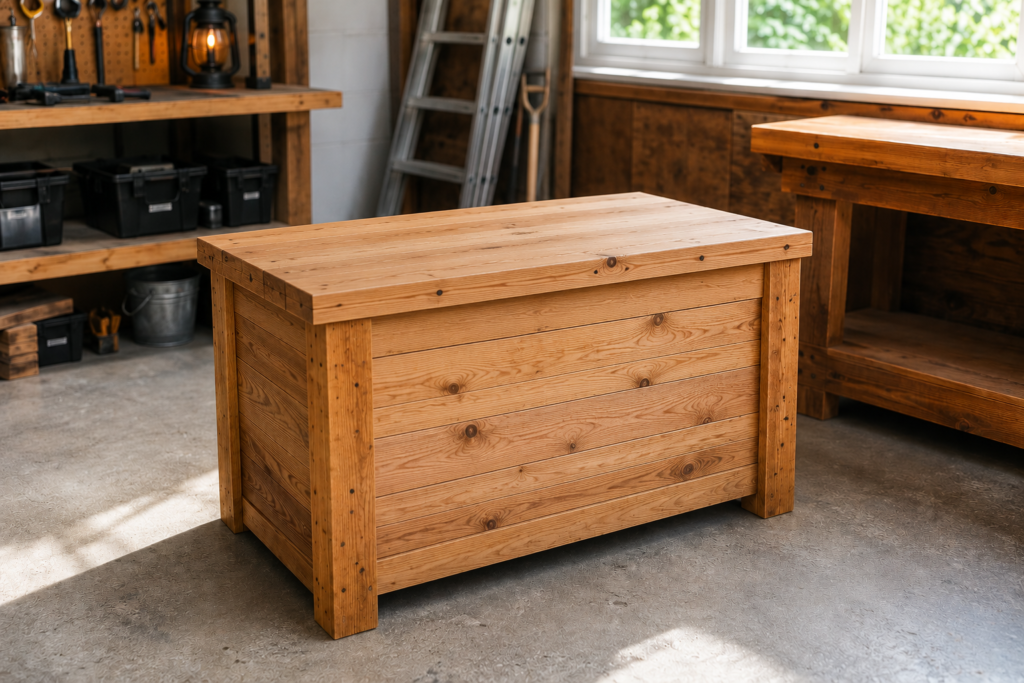
Many people already have suitable storage boxes in garages or sheds.
A quality storage box can work well for:
- Seated presses
- Supported rows
- Step-ups
- Bulgarian split squats
Things to Consider
- Weight capacity
- Stability
- Height
If it wobbles when you sit on it, it’s probably not the best choice.
A trip to the emergency room is generally more expensive than a gym bench.
3. An Ottoman
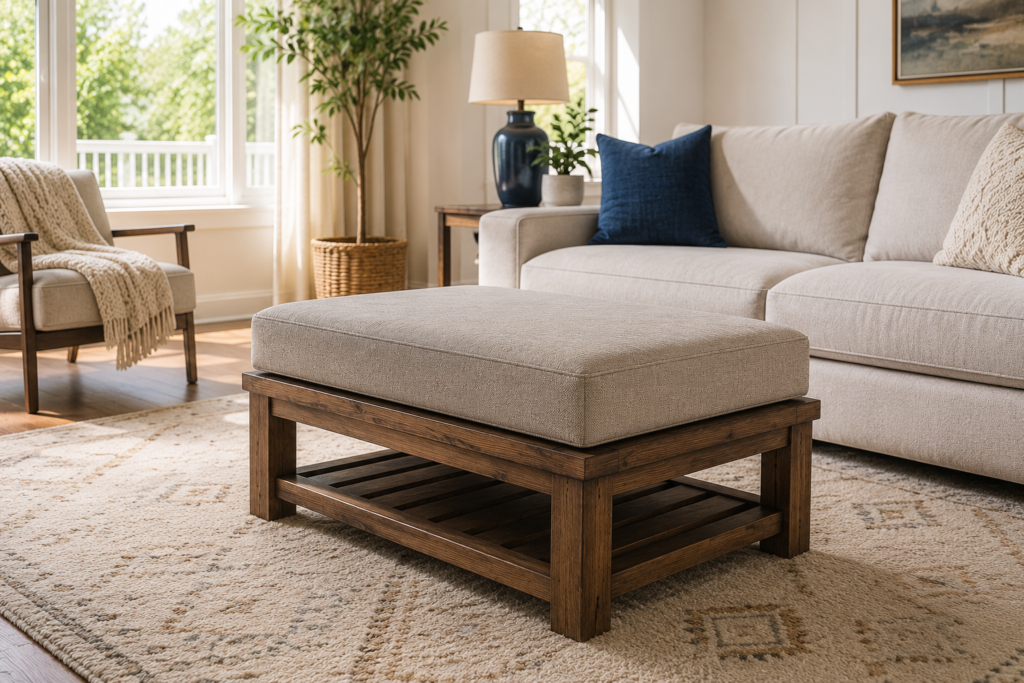
A solid ottoman can serve as a surprisingly useful training platform.
Best Uses
- Seated dumbbell curls
- Shoulder presses
- Light chest work
- Core exercises
Limitations
Not all ottomans are created equal.
Some are sturdy.
Others collapse under the weight of a house cat.
Test carefully.
4. A Plyometric Box
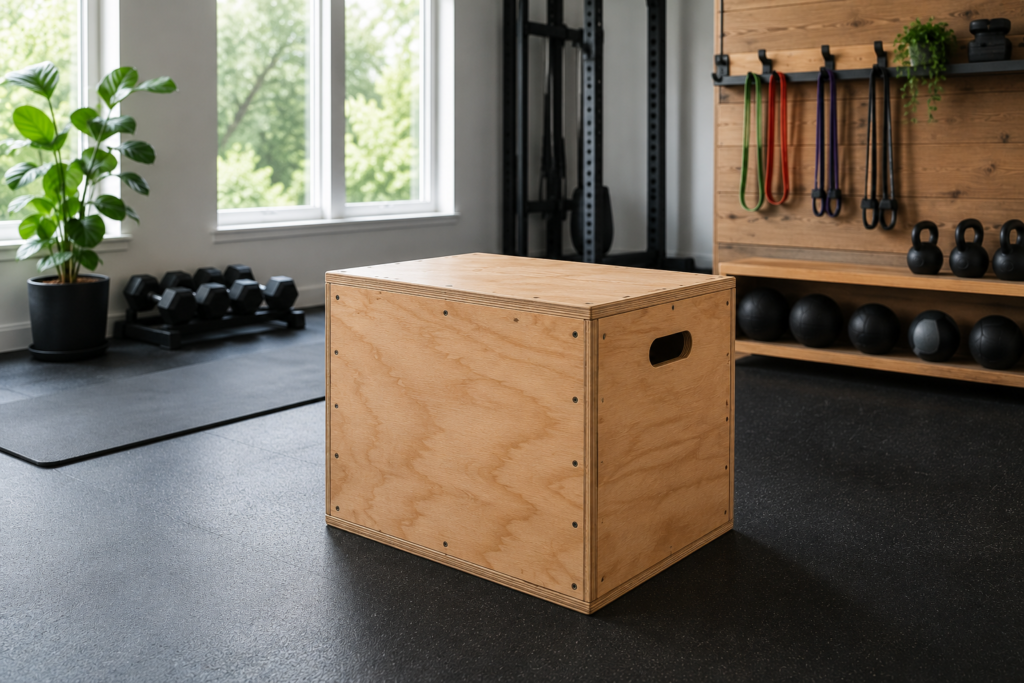
If you’re willing to purchase one piece of equipment, a plyometric box offers excellent versatility.
Benefits
- Extremely stable
- Multiple heights
- Durable
- Useful beyond strength training
Exercises
- Step-ups
- Box squats
- Incline push-ups
- Dumbbell presses
For many home gym setups, a plyo box offers a surprising amount of functionality without taking up much room.
5. Stability Ball

The stability ball divides opinions.
Some people love them.
Others view them as inflatable injury opportunities.
Used correctly, they can be valuable.
Benefits
- Core activation
- Improved balance
- Low cost
Drawbacks
- Reduced stability
- Less suitable for heavy loads
Keep expectations realistic.
This isn’t the place to attempt personal records.
6. The Edge of a Couch or Chair
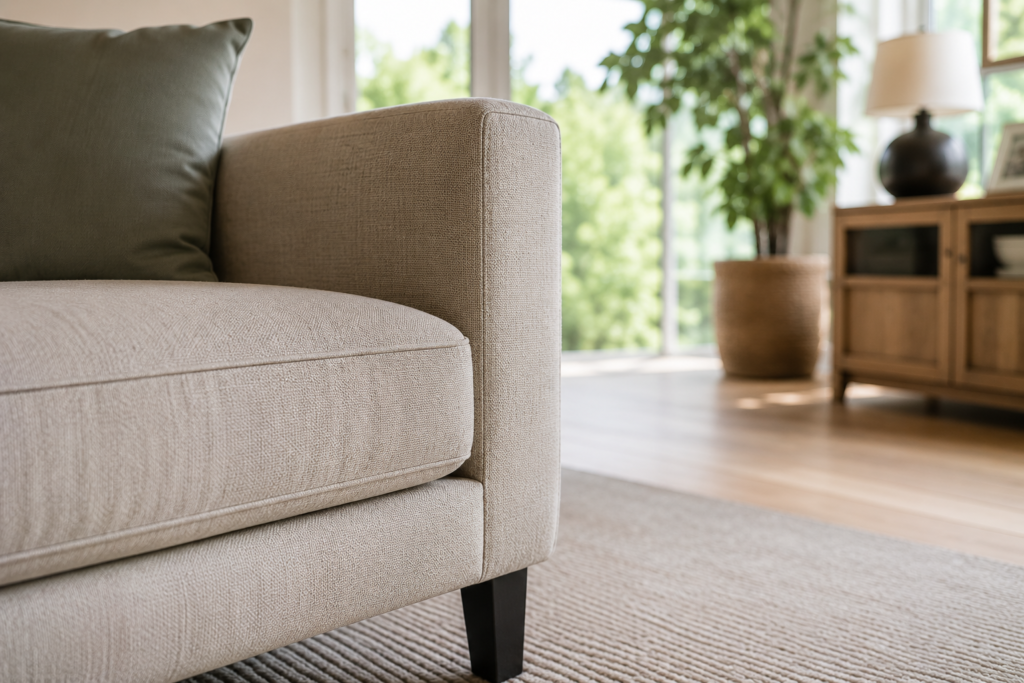
This isn’t my favourite option.
But it works in certain situations.
Suitable For
- Light dumbbell work
- Seated exercises
- Beginner training
Not Ideal For
- Heavy lifting
- Dynamic movements
I’ve used a couch edge plenty of times while traveling.
It’s not perfect.
But imperfect training beats no training.
Why Simplicity Often Wins
One thing I’ve learned over the years is that people often overestimate the importance of equipment and underestimate the importance of consistency.
A fancy gym setup doesn’t automatically create results.
Training regularly does.
I’ve seen people achieve impressive physiques using:
- Bodyweight exercises
- Dumbbells
- Resistance bands
- Basic household items
Meanwhile, others own enough equipment to open a commercial gym and rarely use any of it.
Exercises You Can Perform Without a Bench
Many effective movements require no bench whatsoever.
Push-Ups
One of the best upper-body exercises ever invented.
Free.
Effective.
Portable.
Goblet Squats
Simple and brutally effective.
Romanian Deadlifts
Excellent for:
- Hamstrings
- Glutes
- Lower back
Speaking of lower back strength, I recently covered several effective exercises in my guide 7 Best Dumbbell Exercises for Lower Back Strength and Stability
Strong backs tend to make life easier.
Particularly if your days involve lifting kids, tools or both.
Shoulder Training Without a Bench
Many shoulder exercises don’t require a bench at all.
Examples include:
- Standing overhead press
- Lateral raises
- Front raises
- Rear delt flyes
If you’re looking to build stronger shoulders, check out my guide on Deltoid Exercises.
Shoulder development often contributes significantly to overall upper-body appearance.
Safety Considerations
This is where common sense becomes important.
Before using any household item as exercise equipment, ask yourself:
Is It Stable?
No wobbling.
No shifting.
No surprises.
Can It Handle My Weight?
Including your body weight plus external resistance.
Is It Positioned Correctly?
Flat surface.
Secure footing.
No obstacles nearby.
The goal is strength training.
Not accidental gymnastics.
When You Should Buy a Real Bench
Despite everything I’ve said, there are situations where a proper gym bench makes sense.
Frequent Dumbbell Training
A bench increases exercise variety.
Progressive Strength Goals
Particularly for pressing movements.
Dedicated Home Gym
If you have the space, it’s a useful addition.
Long-Term Training Plans
Equipment should support your goals.
Not become an obstacle.
Common Mistakes People Make
Waiting for Perfect Equipment
Many people delay training because they don’t have the ideal setup.
Start with what you have.
Overcomplicating Things
Simple training often works surprisingly well.
Choosing Unstable Alternatives
Safety always comes first.
Buying Equipment Too Early
Use what you have before spending money.
You’ll quickly discover what equipment actually matters.
Pros and Cons of Home Alternatives for a Gym Bench
Pros
- Save money
- Save space
- Immediately available
- Encourage creativity
- Reduce home gym costs
Cons
- Limited exercise options
- Reduced adjustability
- Potential stability concerns
- Not ideal for heavy lifting
Frequently Asked Questions
What can I use instead of a gym bench at home?
Common alternatives include the floor, storage boxes, ottomans, plyometric boxes, stability balls and sturdy household furniture.
Is floor pressing as effective as bench pressing?
Floor pressing remains an excellent strength exercise, although it provides less range of motion than traditional bench pressing.
Can I build muscle without a gym bench?
Absolutely. Many effective exercises require little or no equipment.
Are stability balls safe for lifting weights?
They can be useful for lighter exercises and core work but generally aren’t ideal for heavy strength training.
Should beginners buy a gym bench?
Not necessarily, ideally yes. Many beginners can make excellent progress using basic equipment and bodyweight exercises.
Is a plyometric box better than a gym bench?
For versatility and space efficiency, many home gym users find plyometric boxes extremely useful. It won’t replace a gym bench though.
My Take on Home Alternatives for a Gym Bench
If you’re a dad trying to build strength at home, don’t fall into the trap of believing you need a fully equipped gym before you can start training.
I’ve seen far too many people spend weeks researching equipment instead of exercising.
The reality is that most of the basics can be accomplished with:
- Dumbbells
- Floor space
- Consistency
- A little creativity
Would a proper gym bench be nice?
Sure.
Is it absolutely essential?
Not for most people.
The best training setup is the one you’ll actually use.
If that’s a dedicated home gym, fantastic.
If it’s a pair of dumbbells and a sturdy storage box in the garage, that’s perfectly fine too.
I’ve found that the best solutions are often the simplest, especially when they save both money and space.
For some dads, that’s exactly what these Home Alternatives for a Gym Bench provide.
