


Alright, dads. Let's talk about one of the most important pieces of gear in your kid's daily arsenal: the lunch box. Packing a decent lunch is how we fuel them for a long day of learning and playing, and having the right container makes all the difference. The best childrens lunch box needs to be tough enough to survive the playground, but also leak-proof and easy for little hands to open.
This guide is designed to help you find the perfect match without the guesswork.
Choosing the Best Childrens Lunch Box for Your Kid
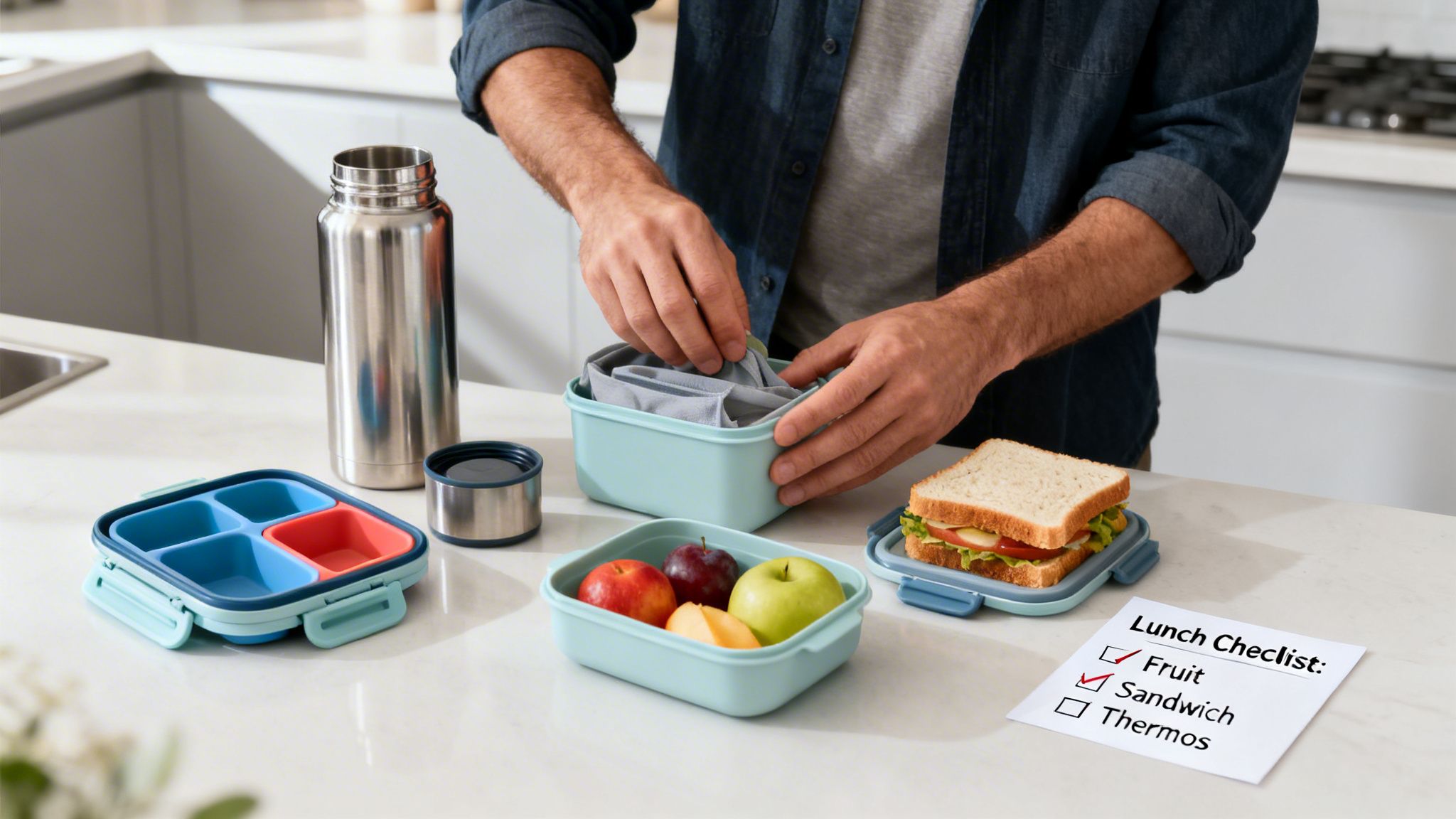
The real challenge is finding something that works for everyone. You need a lunch box that keeps yogurt away from the sandwich, but it also has to be simple enough to pack during the morning chaos and easy for your kid to manage on their own at school.
For those of you who just need a quick answer, here’s a look at our top recommendations. We'll get into the details later, but this table will give you a solid starting point.
Top Children's Lunch Box Picks for 2026 At a Glance
| Lunch Box Model | Best For | Material | Key Feature |
|---|---|---|---|
| Bentgo Kids | Preschoolers & Picky Eaters | BPA-Free Plastic | Five perfectly portioned, leak-proof compartments. |
| OmieBox | Hot & Cold Meals | Plastic & Stainless Steel | Removable insulated thermos for temperature control. |
| PlanetBox Rover | Durability & Older Kids | Stainless Steel | Five non-leaking compartments and built to last for years. |
| Yumbox Original | Easy Opening & Leak-Proofing | BPA-Free Plastic | Single-latch design ideal for young children. |
This quick summary should help you narrow down the options. Now, let’s dig into why this choice matters so much.
The market for this stuff is booming for a reason. It hit USD 11.46 billion in 2023 and is on track to nearly double to USD 20.72 billion by 2032. That's because more parents are seeing the benefits of packing lunch—better nutrition, portion control, and catering to picky eaters.
A great lunch box isn't just a container; it's a tool that empowers you to control ingredients, save money, and ensure your kid gets the fuel they need. Packing lunches can save up to 30% on weekly food costs compared to buying from the cafeteria.
Ultimately, choosing the right container makes your morning routine smoother and helps you stay on track with your family's health and budget goals. It's a small thing that pays off all year long. And when you pair the right gear with a solid strategy, you can really build an efficient system; our guide to meal planning for busy families shows you how to pull it all together.
What to Look for When Choosing a Kids Lunch Box
Before you even think about hitting that "buy" button, it's worth knowing what separates a great lunch box from a frustrating one. Forget the slick marketing for a second. The right lunch box can make your mornings easier, keep food fresh and safe, and even help your kid eat better.
This isn't just about finding a container. It's about finding a reliable sidekick that can survive the daily chaos of school life. The best choice prevents messes, keeps food appetizing, and is easy enough for your child to use on their own.
Material Matters: Steel vs. Plastic
Your first big choice is usually the material, and it almost always comes down to stainless steel or BPA-free plastic. Each has its own set of pros and cons that fit different needs.
Stainless steel is the undisputed champion of durability. These things are built like tanks. You can drop them, throw them (not recommended, but it happens), and they won't absorb those stubborn stains or smells from things like spaghetti sauce or last week's tuna. They're also naturally free of chemicals like BPA or phthalates, which gives a lot of parents peace of mind. The trade-off? They're heavier and usually cost more upfront.
BPA-free plastic boxes, on the other hand, are much lighter and easier on the wallet. They also tend to come in the bright, fun designs that kids love. While modern food-safe plastics are tough, they can stain or hold onto odors over time. Their light weight is a huge plus, especially for younger kids who have to lug their own school bags around.
Leak-Proofing and Insulation Performance
Nothing will ruin your day faster than a call from school about a backpack full of yogurt. A truly leak-proof design is non-negotiable if you plan on packing anything wetter than a cracker. Look for models that have a thick silicone seal built right into the lid, creating a tight barrier for each compartment.
Heads up: "Leak-resistant" is not the same as "leak-proof." If you're packing sauces, dips, or yogurt, you absolutely need a box with dedicated seals for each section to prevent that dreaded swampy mix of wet and dry foods.
Insulation is the other game-changer, opening up a whole new world beyond cold sandwiches. Insulated options, whether they're double-walled steel or have a foam-lined carrier, are designed to hold a temperature. A quality insulated container can keep food warm for 4-6 hours, meaning leftovers like mac and cheese are still warm and tasty at noon. The same goes for keeping things like cheese sticks and yogurt safely chilled.
Design and Daily Usability
Beyond the basic materials, it’s the little design details that determine how easy a lunch box is to use day in and day out.
Ease of Opening: Can your kid actually open it? The latches need to be secure enough to stay closed in a backpack but simple enough for little hands to manage without adult help. A latch that's too tricky means your kid might not be able to get to their food at all.
Ease of Cleaning: This is a big one for dads. The ideal lunch box is either completely dishwasher-safe or has simple parts that are a breeze to clean. Removable seals are a huge bonus, letting you get in there and prevent any mold from growing. A hand-wash-only box with a bunch of tiny nooks and crannies will become your enemy.
Size and Compartments: The right size depends entirely on your kid's age and how much they eat. Bento-style boxes with lots of little compartments are perfect for picky eaters who demand their foods remain separate. For older kids with bigger appetites, a larger single-compartment box or one with a few big sections might be better to fit a whole sandwich or a hearty portion of leftovers.
Real-World Lunch Box Showdown
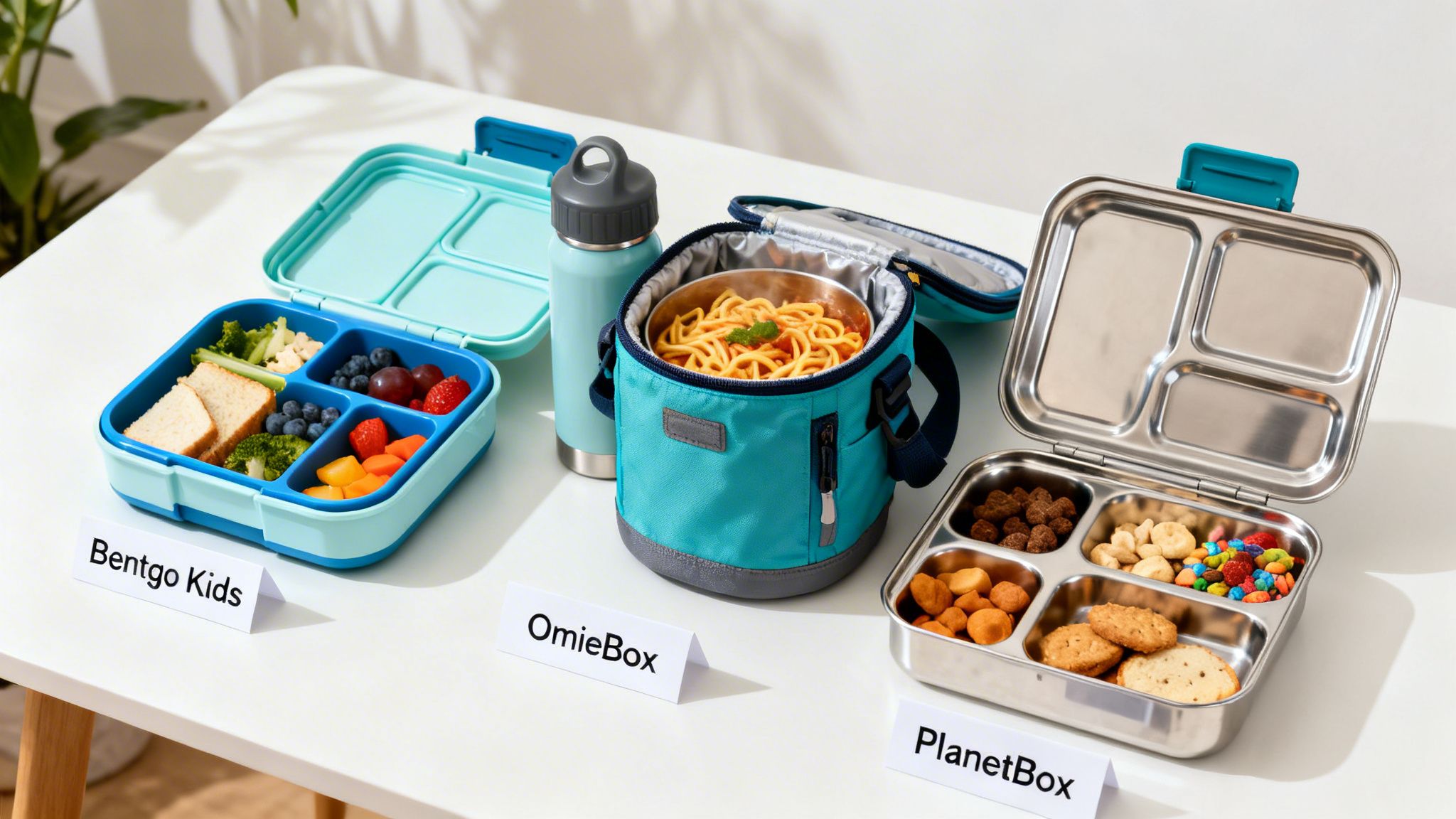
Knowing the specs of a lunch box is one thing, but how it holds up to the daily chaos of school lunches is what really counts. We’re pitting three of the most popular and well-regarded models—the Bentgo Kids, OmieBox, and PlanetBox Rover—against each other in a few real-world scenarios.
This isn't just about listing features. We're looking at which box is best for a preschooler who needs to feel independent, how each one handles notoriously messy foods, and which one will give you the most bang for your buck over the years.
Scenario 1: The Preschooler's First Lunch
For a preschooler, the biggest hurdle is independence. A lunch box they can't open on their own means a hungry kid and a frustrated teacher. A difficult latch is a deal-breaker.
Bentgo Kids: This is where the Bentgo Kids truly excels. It’s built with two big, kid-friendly latches that are a breeze for little hands to snap open and click shut. The attached lid design means there’s only one piece to worry about, so nothing gets lost or confusing.
OmieBox: The OmieBox is a bit more of a challenge for the youngest crowd. The main latch is a single, large clasp that takes a bit more strength and coordination than some preschoolers have. On top of that, the fantastic insulated thermos has its own screw-top lid, which adds a second, sometimes tricky, step.
PlanetBox Rover: While it’s built like a tank, the PlanetBox has a single, very firm clasp that can be tough for toddlers to conquer. It demands a level of hand strength most kids don't develop until they're in elementary school.
For this round, the Bentgo Kids is the hands-down winner. It’s clearly designed with the fine motor skills of a 3- or 4-year-old in mind, helping them feel confident and self-sufficient at lunchtime.
Scenario 2: The Messy Meal Test
Alright, let's talk containment. Every dad has faced the dilemma of packing yogurt, applesauce, or leftover chili. It’s a high-stakes game where a leak can ruin a backpack, a day, and your laundry plans.
Bentgo Kids: The magic of the Bentgo is the silicone-lined lid, which creates a custom seal over each of the five compartments. When you shut it, you get a nearly airtight barrier that does an amazing job containing thick liquids. You can put yogurt next to crackers and not worry about a soggy mess.
OmieBox: This box has a unique, two-part system. The main compartments are not leak-proof, so they’re best for sandwiches and dry snacks. The real star is the removable thermos, which is 100% leak-proof for soup, chili, or mac and cheese.
The OmieBox design is brilliant for parents who want to send hot meals. But it's crucial to remember its limits—if you put ranch dip in one of the other sections, it’s going on an adventure inside that box.
PlanetBox Rover: By itself, the stainless steel PlanetBox is not leak-proof at all. To handle anything wet, you have to use the included "Little Dipper" and "Big Dipper" containers. These small, lidded steel pods fit inside the compartments and work great, but they are extra pieces that can (and do) get lost.
For simple, all-in-one leak protection, the Bentgo Kids is the most straightforward choice. If sending hot liquids is your top priority, the OmieBox is unbeatable, as long as you pack accordingly in the other sections.
Scenario 3: The Long-Term Value Proposition
A good lunch box is an investment. Some are cheap upfront but wear out quickly, while others come with a premium price tag and a promise to last for years.
Bentgo Kids: Made from tough, BPA-free plastic, the Bentgo is a fantastic mid-range option. It can handle drops and daily use, though the plastic can stain over time and the latches might wear down after a few school years. It delivers great value for the preschool and early elementary grades.
OmieBox: Combining plastic and stainless steel, the OmieBox is a sturdy but complex piece of gear. Its durability is solid, but more moving parts—like the thermos seal or the main hinge—mean more potential points of failure down the road. Its versatility often justifies the higher price for families who use its features.
PlanetBox Rover: This is the absolute tank of the lunch box world. Built entirely from high-grade stainless steel, the PlanetBox Rover is designed to last a decade, easy. It won’t stain, hold onto smells, or break. The upfront cost is the highest of the three, but its incredible longevity means you might only buy one per child to last them from kindergarten through middle school, making it the most cost-effective choice in the long run.
For pure, brute-force durability and the best long-term investment, the PlanetBox Rover is in a league of its own. It's the classic "buy it once, cry once" product that pays you back over years of reliable service.
Detailed Lunch Box Feature Comparison
To see how these contenders stack up at a glance, we've broken down their key features. This table helps translate the real-world scenarios above into hard data, making it easier to see the trade-offs between each model.
| Model | Leak-Proofing Rating (1-5) | Insulation (Hours Hot/Cold) | Child-Friendliness (Ease of Opening) | Dishwasher Safe Parts | Best Use Case |
|---|---|---|---|---|---|
| Bentgo Kids | 4 (For thick liquids) | N/A (Needs separate insulated bag) | Excellent | Top Rack (Inner Tray Only) | Preschoolers & Picky Eaters |
| OmieBox | 5 (Thermos Only) | 4-6 Hours (Thermos) | Good (Latch can be firm) | Yes (Excluding the shell) | Hot Lunches & Meal Variety |
| PlanetBox Rover | 2 (Needs inserts) | N/A (Needs separate insulated bag) | Fair (Clasp is tough for little kids) | All Parts | Long-Term Durability & Eco-Friendly |
Ultimately, the right choice depends entirely on your child's age and what you plan to pack. The Bentgo is perfect for little ones, the OmieBox is a champion for hot meal variety, and the PlanetBox is an investment that will outlast them all.
Keeping It Hot (and Cold): The Lowdown on Insulated Lunch Boxes
Let’s be honest, sending your kid off with a warm meal on a chilly day feels like a parenting win. The same goes for making sure their yogurt is still cold and refreshing by lunchtime, not a lukewarm mess. This is where a good insulated lunch box stops being a nice-to-have and becomes a total game-changer, opening up a world of options beyond the classic PB&J.
And we're not the only ones catching on. The insulated lunch box market is already huge and expected to rocket from USD 1.78 billion in 2025 to USD 3.11 billion by 2034. Why? Because dads and moms get it. Over 70% of parents are now using insulated containers to keep food at safe temperatures. The CDC's own guidelines suggest this simple step can slash the risk of foodborne illness by an estimated 40%. If you're a numbers guy, you can discover more insights about the insulated lunch box market on custommarketinsights.com.
How Insulation Actually Works
You’ll see the word "insulated" everywhere, but not all lunch boxes are built the same. The technology inside is what separates a box that keeps things vaguely cool from one that truly holds its temperature.
Here are the two main types you'll run into:
Foam-Lined Bags: Think of your typical soft, fabric lunch bag. That squishy feel comes from a layer of foam stitched between the outer shell and the inner lining. It’s a basic thermal barrier that works well for keeping pre-chilled items cool for a few hours, especially when you toss in an ice pack. They’re lightweight and flexible, but they won't keep soup piping hot.
Vacuum-Insulated Containers: This is the powerhouse tech. Found in high-end stainless steel thermoses and some bento-style boxes, this design features an airless void between two walls of steel. With no air to transfer heat or cold, it's incredibly effective at locking in temperature—we're talking 6+ hours for both hot and cold foods.
The difference is everything. A foam bag is perfect for a cool turkey sandwich and a yogurt cup. But if you want to send last night's chili or some warm mac and cheese, you absolutely need a vacuum-insulated container.
Real-World Performance and Food Safety
So what does this tech mean for your morning routine? It means you can pack that mac and cheese and know it’ll still be warm and gooey at noon. It means that fruit salad will stay crisp and cool, not sad and soggy.
Pro Tip: To get the best performance out of a thermos for hot food, you have to "prime" it first. Fill it with boiling water, screw the lid on tight, and let it sit for about five minutes. Dump the water and immediately add the hot food. This little trick makes a massive difference in keeping food above the 140°F (60°C) safety zone for hours.
The same logic works for cold foods. Pop the empty container in the freezer for ten minutes before packing, and always use an ice pack. This ensures things like dairy and deli meats stay below the 40°F (4°C) danger zone where bacteria can thrive. These temperature control strategies are just as vital when you're heading outdoors; we dive deeper into this in our guide on the best camping gear for families.
At the end of the day, controlling the temperature of your kid’s lunch isn't just about giving them more variety. It's about making sure the food you carefully pack is just as safe and delicious hours later as it was when it left your kitchen.
Matching the Lunch Box to Your Child and Situation
Let's get one thing straight: there's no single "perfect" lunch box. The best one is the one that actually works for your kid's age, appetite, and the daily grind of school. What's a game-changer for a preschooler will be a total fail for a fifth-grader. Context is everything.
Trying to find a one-size-fits-all solution just leads to frustration. You'll end up with lunches that are too small, latches they can't open, or features you paid extra for but never touch. Instead of chasing some mythical "best" box, the real mission is to find the right tool for the job. That’s how you make sure your money is well-spent.

This decision tree gives you a quick visual on how to think about packing hot, cold, or a mix of both. The main takeaway? If you need to keep some foods hot and others cold in the same lunch, your options quickly narrow down to some very specific, multi-functional lunch boxes.
For Preschoolers and Early Learners
With the little ones, it’s all about independence. A lunch box should empower them, not make them wait for a teacher to help.
Easy Latches are Non-Negotiable: Their fine motor skills are still a work in progress. Look for a box with one big latch or a couple of oversized clasps that tiny hands can manage on their own.
Lightweight and All-in-One: A heavy stainless steel box is often just too much for a three-year-old to lug around. A light, BPA-free plastic model is usually the way to go. An attached-lid design is a huge plus—no more hunting for a lost lid at the end of the day.
For Growing Elementary School Kids
As kids get bigger, so do their appetites. Their lunch box needs to keep up. Now, capacity and durability become the most important factors.
Increased Capacity: They need room for a full sandwich, a couple of snacks, and bigger portions. A box with fewer, larger compartments often works better than one with a dozen tiny sections.
Durability for the Long Haul: This is the age where backpacks get thrown, dropped, and kicked. Investing in a tougher model, like one made of stainless steel, can really pay off. It can easily survive the elementary school gauntlet for years.
For the Picky Eater
If you're a dad dealing with a picky eater, you know the golden rule: foods cannot touch. This is a real and serious obstacle to a successful lunch.
Bento-style lunch boxes are your secret weapon here. The built-in compartments act as a firewall, keeping the crunchy crackers from getting soggy next to the wet fruit. Every food stays exactly where you packed it.
This is about more than just appeasing a particular taste. A clean, visually organized lunch can make food seem much more inviting to a skeptical kid. This strategy is a key part of navigating picky eating, as it provides a sense of control and predictability. For more great tactics, check out our guide on how to handle picky eaters.
For the Active Kid or Big Eater
If your kid is in sports or just has a bottomless stomach, a standard-issue lunch box isn't going to cut it. You need a setup that can hold enough fuel to get them through a packed day.
Look for larger-capacity models or systems that let you stack multiple containers. The goal is to have enough space for an extra sandwich, more protein, and some energy-dense snacks to keep them going.
For Dads on a Budget vs. Premium Investors
Your budget obviously plays a big role. You can find some great, inexpensive plastic bento boxes that do the job well. The catch is they might stain, warp, or break, needing replacement every year or two. They work, but they aren't a long-term solution.
On the flip side, a premium stainless steel lunch box is more of a "buy it for life" (or at least their school life) investment. The upfront cost is higher, but its durability often makes it cheaper in the long run. It’s the classic trade-off between short-term savings and long-term value.
Ultimately, the market is shifting to meet these different needs. Bento-style boxes are the fastest-growing category, with a projected CAGR of over 7%, as 80% of parents are actively looking for new and leak-proof designs.
Your Lunch Prep and Maintenance Playbook

Alright, so you’ve got the perfect lunch box. Now what? The real win isn’t just owning the gear—it's building a system around it that makes your mornings run on autopilot. A little planning on Sunday is all it takes to conquer the weekday chaos.
Batch-prepping is the name of the game. Seriously, dedicate an hour over the weekend to get your core lunch items ready. Grill some chicken strips, hard-boil a few eggs, or cook up a big batch of pasta salad.
Once everything is prepped, you can line it all up for a quick assembly line each morning. To really dial in your system, check out these stress-free school lunch packing tips. What was once a frantic morning scramble becomes a simple, five-minute operation.
Smart Packing Hacks for Dads
A few simple packing tricks can make the difference between a sad, soggy lunch and one your kid actually wants to eat.
- Silicone Liners Are a Game-Changer: Use silicone muffin cups to create extra compartments inside a bento. They’re perfect for holding small snacks like blueberries or crackers and stop everything from jumbling together.
- Stop the Browning: For sliced apples or avocados, give them a quick toss in a little lemon or pineapple juice. This simple step stops them from looking sad and brown by lunchtime.
- Prime Your Thermos: To keep hot food genuinely hot, you have to "prime" the thermos first. Fill it with boiling water and let it sit for five minutes. Dump the water out right before you add the hot soup or pasta. It makes a huge difference.
The goal is to make the lunch you pack look just as good hours later. These little tweaks keep textures and flavors separate, which is a lifesaver if you have a picky eater who can't stand their foods touching.
Essential Lunch Box Maintenance
Keeping the lunch box clean isn't just about appearances; it's about food safety and making your gear last. A neglected lunch box can get gross fast, growing mold and holding onto smells until you have no choice but to toss it.
First, make this a non-negotiable daily habit: empty and wash the lunch box every single day. The minute your kid walks in the door, dump the leftovers and give it a good wash with hot, soapy water. If any parts are dishwasher-safe, just toss them on the top rack.
Pay close attention to the silicone seals and gaskets. That's where moisture and gunk love to hide. If they’re removable, pop them out at least once a week for a separate, thorough cleaning.
Most importantly, let everything air dry completely before putting it back together. Trapped moisture is what causes mold to grow. By leaving all the pieces out to dry overnight, you guarantee your kid's lunch box is clean, safe, and ready for action the next morning.
Your Top Lunch Box Questions, Answered
When you're trying to find the right lunch box, a few questions always seem to pop up. Let's cut through the noise and get straight to the practical answers you need to make a solid choice without all the guesswork.
Are Stainless Steel Lunch Boxes Better Than Plastic?
Honestly, it's not about one being "better" overall—it's about which one is better for your situation. Both have their place.
Stainless steel is the undisputed champion of durability and longevity. These things are built like tanks. They can handle being dropped, tossed, and generally abused, and they won't hold onto smells or stains from last Tuesday's spaghetti. Plus, steel is naturally BPA-free and often does a better job keeping food hot or cold. The trade-offs? They're usually heavier and cost more upfront.
On the other hand, a good BPA-free plastic lunch box has its own perks. They are incredibly lightweight, easier on the wallet, and often feature the bright colors and fun characters that get younger kids excited about lunchtime. The best ones are still completely dependable and simple to clean. It really boils down to what you value more: the buy-it-once durability of steel or the lower cost and lighter weight of plastic.
The right call really depends on your kid's age and how you see this purchase. A lightweight plastic box is often the perfect fit for a preschooler. But for an older kid who’s tough on their gear, a quality steel box can be a smart investment that lasts for years.
How Do I Prevent My Kid's Lunch Box From Leaking?
Nothing ruins a day faster than a backpack soaked in yogurt. A leaky lunch box is a total catastrophe. The first step is to pick a lunch box that is explicitly advertised as "leak-proof," not just "leak-resistant." The best designs have a thick silicone seal built into the lid that creates a tight barrier around each compartment.
When you're packing, try not to fill compartments to the brim, especially with runny foods like applesauce or yogurt. If you're packing something really liquidy, like a vinaigrette, your safest bet is to put it in a small, separate container with a screw-top lid and place that inside the lunch box. And before it goes in the bag, give it a final check to make sure every single latch is snapped shut.
For parents managing dietary restrictions where even a little cross-contamination is a big deal, you can find some great packing strategies and Gluten Free Lunch Box Ideas for Kids that also help keep everything securely in its place.
alphadadmode.com is here to help you win at fatherhood. Find more no-nonsense gear guides and parenting tips for dads at https://alphadadmode.com.
