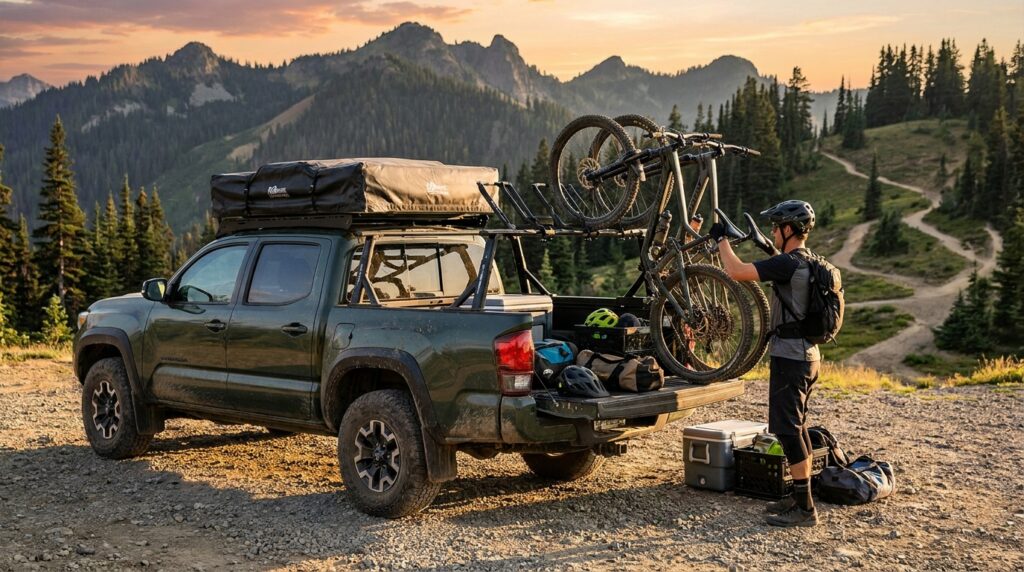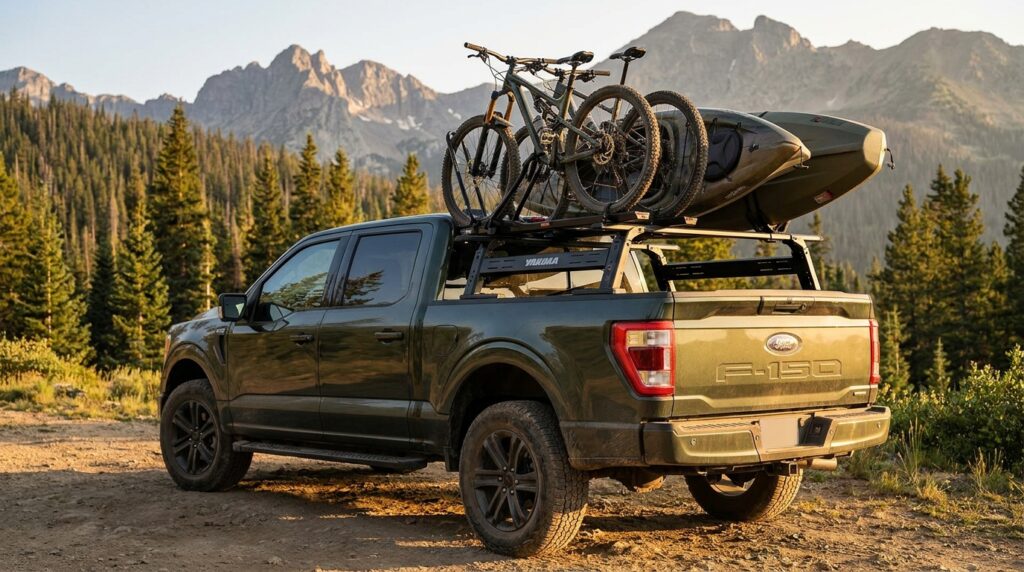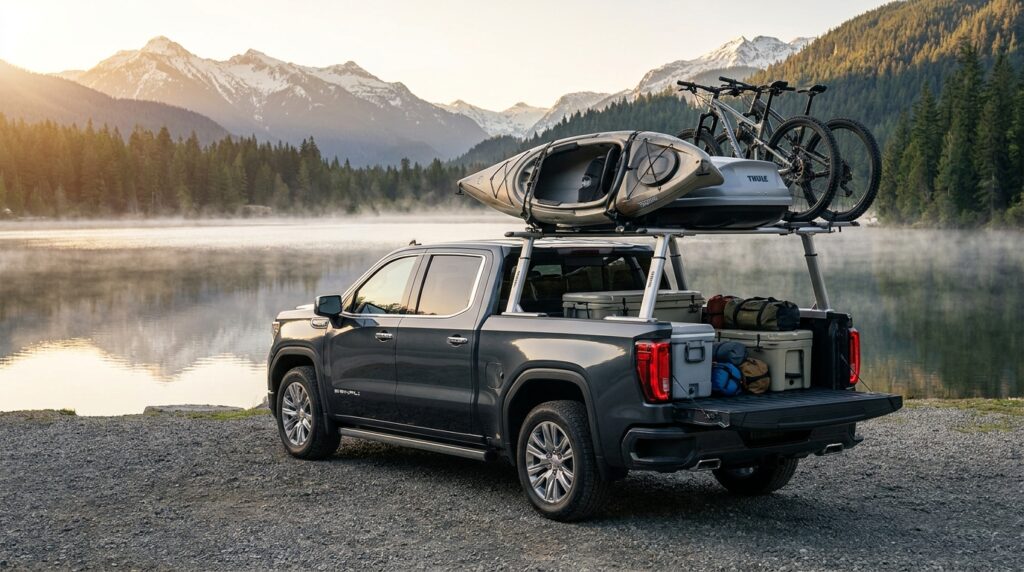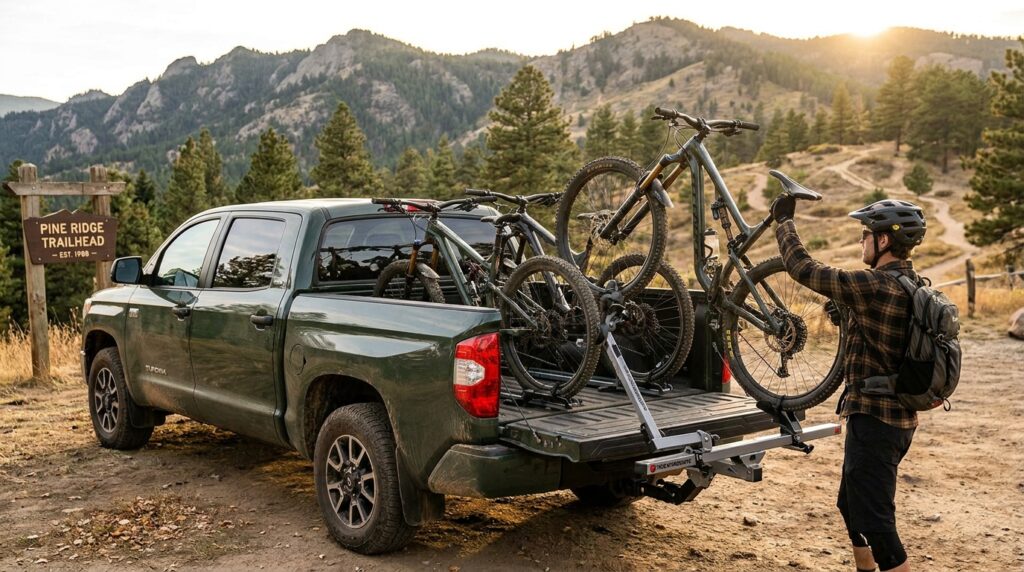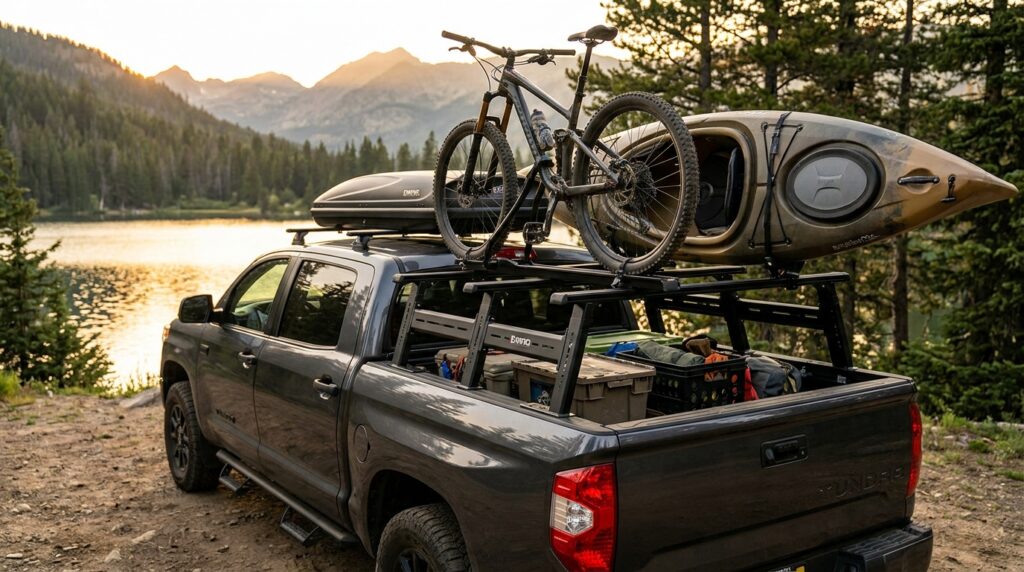

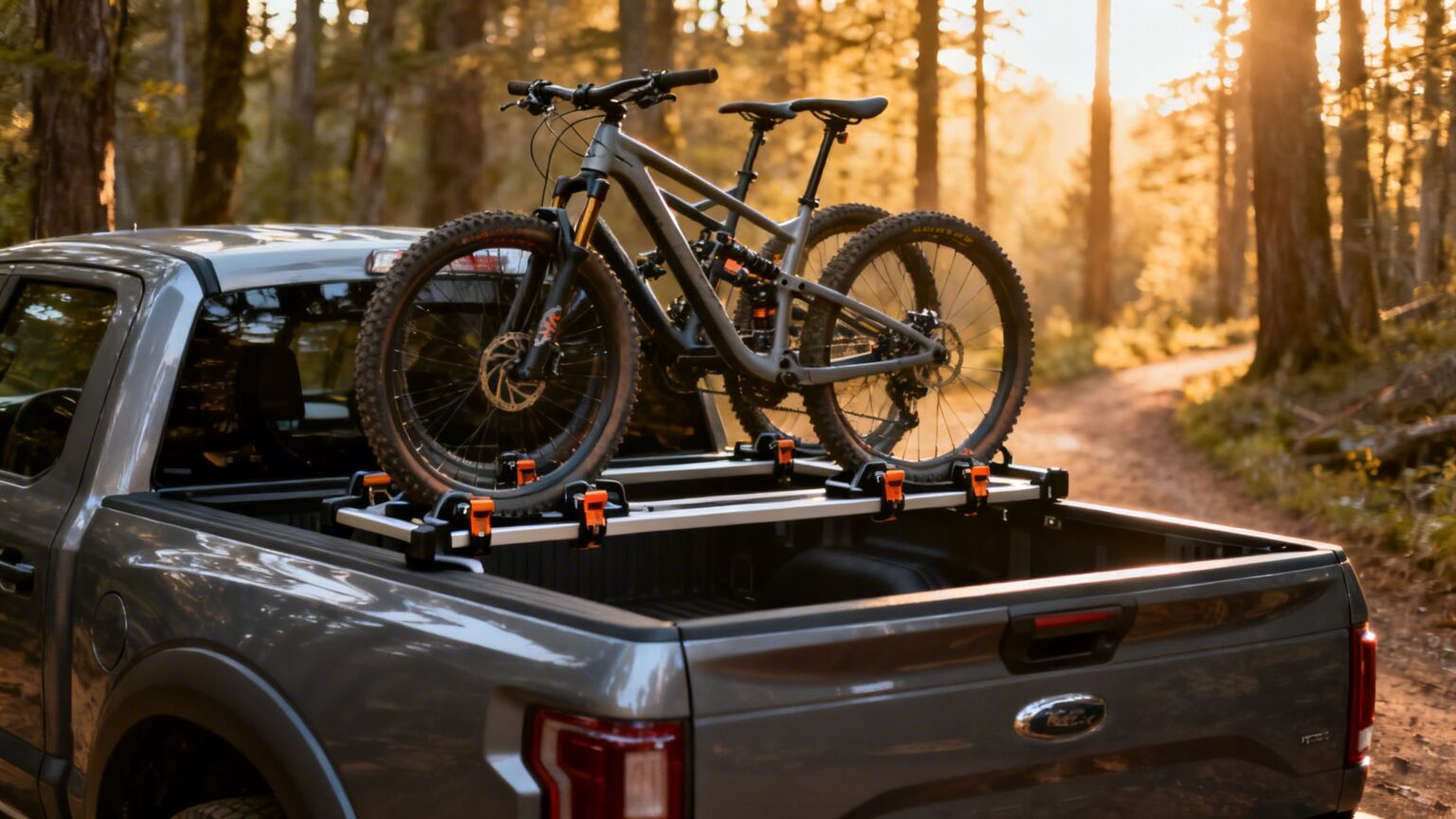
Getting the family's bikes to the trailhead shouldn't feel like a game of Tetris gone wrong. For us dads, a truck is a workhorse during the week, but on the weekend, it needs to be an adventure machine. A good bed bike rack is the key, making it as easy to load up for a ride as it is to toss in a cooler.
Your Guide to Hauling Bikes in a Truck Bed
We’ve all been there: wrestling with tangled straps, bikes sliding around, and the inevitable cringe when you hear a pedal scrape against your truck’s paint. That pre-trip chaos is a real mood-killer. A dedicated rack system gets rid of that headache for good.
It's about more than just convenience. It’s about protecting your investments—both the truck you rely on and the bikes you bought for the family. The right rack gives you a secure, stable platform, so your bikes get to the destination in the exact same shape they left. That peace of mind is priceless, freeing you up to focus on the fun ahead instead of fumbling with gear.
Why More Dads Are Choosing Truck Bed Racks
If you’re looking for a better way to haul bikes, you're definitely not alone. It’s no surprise the market for truck bed bike racks hit USD 62.3 million in 2024 and is expected to climb to USD 80.5 million by 2031. This lines up perfectly with the boom in recreational biking, which has seen participation jump over 25% since 2020.
This isn't just a random trend. It’s a sign that dads everywhere are looking for efficient, reliable gear that makes an active family life easier. A solid rack system delivers on all fronts:
- Damage Prevention: Say goodbye to scratched truck beds and dented bike frames.
- Time Savings: Quick-loading systems get you on the road faster, which means more trail time.
- Enhanced Security: Lockable options are a huge deterrent against theft at a busy trailhead or a pit stop.
- Optimized Space: Your bikes stay organized and out of the way, leaving plenty of room for coolers, bags, and other gear. If you're kitting out for a bigger trip, check out our guide on the best camping gear for families.
A good bed bike rack just makes life easier. It turns "packing the bikes"—a job we all tend to dread—into a quick, simple task that gets your family adventure started on the right foot.
A Quick Glance at Your Options
To help you narrow down the choices, let's break down the main types of bed bike racks. Each style is built for a different purpose, whether you're heading out for a solo ride or loading up the whole family's bikes.
Here's a quick comparison to help you figure out what might work best for your truck and your crew.
Quick Guide to Truck Bed Bike Rack Types
| Rack Type | Best For | Typical Capacity | Bed Space Impact |
|---|---|---|---|
| Tailgate Pad | Maximum capacity and speed; great for group rides. | 5-7 Bikes | Minimal; bikes hang over the tailgate, freeing up the bed floor. |
| Fork-Mount | Ultimate stability and security; ideal for road and high-end bikes. | 1-4 Bikes | Moderate; bikes sit low, leaving room for gear around them. |
| Wheel-Mount | Convenience and ease of use; no wheel removal required. | 1-4 Bikes | Moderate; holds bikes upright, similar to fork mounts. |
| Clamping Rack | Versatility for different bike frames and quick loading. | 1-4 Bikes | Moderate to High; clamp arms can take up more vertical space. |
Think about how many bikes you typically need to carry and how much gear you need to fit alongside them. That will usually point you toward the perfect solution.
Comparing The Main Types of Truck Bed Bike Racks
Picking the right bike rack for your truck bed can feel like a major decision, but it's really not that complicated once you get the lay of the land. It’s just like picking the right tool for a job—you wouldn’t grab a sledgehammer to hang a picture frame. Let's walk through the four main styles so you can figure out which one is the perfect fit for your family, your truck, and your wallet.
We’re going to look at Fork-Mounted Racks, Wheel-Mounted Racks, Clamping Racks, and the ever-popular Tailgate Pads. For each one, we’ll weigh the pros and cons from the perspective of a busy dad who needs things to just work. Think fast installation, solid bike security, and how much bed space you’ll have left for all the other gear.
Fork-Mounted Racks: The Precision Specialist
If you want your bikes locked down with absolutely zero wiggle, fork-mounted racks are the gold standard. You pop the front wheel off and clamp the bike’s fork directly onto the rack. This creates an incredibly rigid connection that serious roadies and mountain bikers trust with their expensive rides.
Because the bikes sit lower in the bed, they’re more aerodynamic and less battered by the wind. This low-profile setup also frees up a surprising amount of space next to the bikes, perfect for sliding in coolers, tents, and duffel bags.
But here’s the catch: you have to take the front wheel off every single time. That’s an extra step when you’re loading up and another one when you’re unloading. You also have to figure out where to stash that loose wheel so it doesn't get banged up. For a dad trying to get out the door for a quick ride with the kids, that extra hassle can be a deal-breaker.
Wheel-Mounted Racks: The Convenient All-Rounder
If wrestling with a loose front wheel sounds like a headache you don’t need, a wheel-mounted rack is your answer. These things are built for speed and convenience. You just roll your bike into a tray, and an arm swings up to grab the front wheel, holding the bike upright without ever touching the frame.
This makes them incredibly fast to use and awesome for families with a whole garage full of different bikes—from 20-inch kids' bikes to your beach cruiser. No messing with different axle sizes or worrying about carbon frames.
The trade-off is a little less stability compared to a fork mount. They’re plenty secure for daily driving, but you might notice a bit more sway on bumpy backroads. The upright arms also take up more vertical space, which could interfere with a tonneau cover. If you appreciate gear that simplifies your life, you might also like our guide to the best tools for dads.
Clamping Racks: The Versatile Grab-and-Go
Clamping racks hit that sweet spot between security and versatility. They secure the bike using a padded, adjustable arm that grabs onto the frame. This grab-and-go design is a true problem-solver, accommodating pretty much any bike out there, even those with fenders or odd shapes that won’t work with other systems.
It’s another fantastic choice for a family with a diverse fleet of bikes. Loading is a breeze: lift the bike into place, position the clamp on the frame, and tighten it down. The bike is held firmly, ready to hit the road in minutes.
The main thing to keep in mind with clamping racks is frame contact. The clamps are always well-padded, but if you have a high-end carbon fiber frame or a custom paint job you’re protective of, you might prefer a rack that doesn’t touch the frame at all.
Tailgate Pads: The Ultimate Group Solution
When you’re the designated shuttle driver for the whole crew, nothing beats a tailgate pad. This is, by far, the simplest and highest-capacity way to haul bikes in a truck bed. It’s just a thick, heavy-duty pad that you drape over your tailgate to protect both your paint and your bike frames.
To load up, you just hang the front wheel over the tailgate, letting the bike’s down tube rest against the pad. Most pads have built-in straps to keep the bikes from smacking into each other. It’s not uncommon to fit five to seven bikes across the back, making this the undisputed king for family trips and group rides.
The one drawback is theft protection. While the straps stop the bikes from shifting, they don’t lock. If you’re stopping for a bite to eat after a ride, you’ll need a good cable lock to thread through all the frames and secure everything to your truck’s tie-down anchors.
Choosing the Right Rack for Your Truck and Bikes
Buying a bed bike rack that doesn't fit your truck or your bikes is a classic rookie mistake. Think of it like buying new furniture without measuring first—it’s a recipe for a massive headache and a frustrating return process. Getting the fit right from the start means your gear is stable, your truck and bikes are protected, and your trips to the trail are that much smoother.
To save you from that costly mismatch, we’re going to walk through two simple checklists. First, we’ll dive into your truck’s specific build. Then, we’ll look at the bikes you’re hauling to make sure your chosen rack can handle everything from the kids' 20-inchers to your pride and joy.
Truck Compatibility Checklist
Your truck isn't a one-size-fits-all box on wheels. The little details of its design heavily influence which bed racks will work. What fits perfectly on a buddy’s Ford F-150 might be a complete non-starter for your Toyota Tacoma with its factory track system. Let's run through the things you absolutely have to check.
1. Bed Length and Height
First up, what size bed are you working with? Is it a short bed (usually around 5.5 feet) or a standard/long bed (6.5 to 8 feet)? This is a huge factor.
- Short beds have less real estate, making tailgate pads or compact fork-mount systems a natural fit.
- Long beds give you the freedom to install larger systems that hold up to four bikes and still leave plenty of room for coolers and camping gear.
2. Tonneau Covers
This is probably the biggest hurdle for most guys. If you have a tonneau cover, you need a rack that plays nice with it.
- Rolling or Folding Covers: You’re in luck. Look for racks that mount below the bed rails. This setup usually lets the cover roll or fold open without a problem.
- Retractable or Hard-Panel Covers: Here's where it gets tricky. A tailgate pad is often your best—and sometimes only—option, since it works completely independently of the cover and bed rails.
3. Bed Liners and Utility Systems
What’s lining your truck bed? A drop-in plastic liner, a tough spray-in liner, or a factory utility track system like Toyota's Deck Rail or Nissan's Utili-track?
- Drop-in Liners: These can sometimes get in the way of racks that need to clamp directly onto the bed rails. You might have to trim a small section of the liner to get a secure grip.
- Spray-in Liners: These almost never cause a problem since they don't really change the bed's dimensions.
- Utility Track Systems: Good news. Many rack brands sell adapter kits that let their racks mount right into these factory tracks. It makes for a super clean, secure, and drill-free installation.
This quick guide can help you narrow it down based on how many bikes you're hauling.
As you can see, the number of bikes is a major fork in the road, often pushing you toward individual mounts for one or two bikes or a tailgate pad for the whole crew.
Bike Compatibility Checklist
Alright, now for the other side of the coin: the bikes themselves. A great rack has to handle the whole family fleet, which often means a wild mix of shapes, sizes, and weights. Getting this right is crucial because a family’s bike collection changes over time—much like how you outgrow a car. If you're in that boat too, you might get some ideas from our guide on finding the best family cars.
1. Tire Width and Bike Weight
A road bike's skinny tires have nothing in common with the chunky rubber on a mountain bike. And then there are the real beasts, like a fat tire e-bike, which have extra-wide tires and can be incredibly heavy. E-bikes in particular can easily top 70 pounds, so you absolutely must check the rack's weight limit per bike.
Key Takeaway: Always confirm the rack's maximum tire width and per-bike weight capacity. Wheel-mount racks are generally the most forgiving for different tire sizes, while some fork-mounts need specific adapters for different axles.
2. Frame Material and Design
Do you own any bikes with delicate carbon fiber frames? If so, you need to steer clear of any rack that clamps onto the frame. That pressure, even from a padded clamp, can potentially damage the carbon.
- Carbon Frames: Stick with fork-mount or wheel-mount racks. They secure the bike without ever touching the frame itself.
- Step-Through or Kids' Bikes: These frames are notoriously awkward for traditional clamping racks. Again, wheel-mount racks and tailgate pads are your best friends here because they don't depend on a standard top tube.
By checking your truck's specs against your family's bike collection, you'll know exactly which racks will actually work for you. A few minutes of checking now is the surest way to make sure your new rack is a win from day one.
Getting Your Rack Installed and Your Bikes Secured
A bike rack is only as good as its installation. Think of it like a car seat for your kids—it doesn’t matter how well-made it is if it’s not anchored down properly. A wobbly rack is a recipe for disaster, putting your bikes, your truck, and even other drivers at risk.
Don't worry, you don’t need to be a master mechanic to get this done. Most of these racks are designed for a straightforward, driveway installation. If you’ve got a basic socket wrench, a tape measure, and a set of hex keys, you’re pretty much set. Honestly, if you've ever put together furniture or a simple how to build a workshop bench, you have all the skills you'll need.
The Basic Install Process
Every rack is a little different, so always read the manual first. That said, most of them follow the same core steps. Here’s a quick rundown of what to expect.
- Prep Your Space: Clean out your truck bed completely. You don’t want dirt and grit getting caught under the mounting points, which can cause scratches and prevent a solid fit.
- Assemble the Rack: Most racks come in a few pieces. Lay everything out on a blanket or some cardboard to keep the parts and your driveway from getting scuffed up.
- Position and Mount: Set the assembled rack in the bed. Follow the instructions for placement, then attach it using the included clamps, bolts, or any specific adapters for your truck’s utility track system.
- Hand-Tighten Everything: Get all the bolts started by hand. This is crucial for preventing cross-threading, which can be a real headache to fix.
- Torque It Down: Now, grab your wrench. The goal is to get it tight enough that the rack feels like part of the truck, but not so tight you strip a bolt or damage your bed rails. Give it a good push and pull—if it doesn't budge, you're golden.
Keeping Your Bikes Rock-Solid
With the rack installed, it’s time to get the bikes locked in. The real goal here is to eliminate any sway or bounce. You want the bike to feel like it’s become one with the truck, not just a passenger along for a bumpy ride. Any movement can damage the bike’s frame, the rack, or your truck’s finish.
This is exactly why the truck rack market is booming. It hit USD 977.1 million in 2023 and is expected to climb to nearly USD 1.3 billion by 2030. That growth is fueled by guys like us who need gear haulers that can handle multiple bikes over rough roads without breaking a sweat. Today’s bed racks are engineered to meet that demand.
Pro Tip: When you’re loading more than one bike, face them in opposite directions (one forward, one backward). This simple trick keeps handlebars and pedals from clashing—the #1 cause of scratches and loading frustration.
Final Checks Before You Roll Out
- Straps and Buckles: With cam buckles, just pull the strap snug. Don’t try to crank on it like a ratchet strap. You want it tight enough to kill any movement, but not so tight that you're putting a ton of stress on the bike's frame or wheels.
- The "Shake Test": This is your final confirmation. Grab the bike by its frame and give it a firm shake. The entire truck should move with it. If the bike wiggles on its own, your straps or clamps need another look.
- Pre-Trip Check: Your bikes aren't the only thing you're hauling. Before hitting the road for a big trip, a quick once-over on your truck is always a smart move. A good pre-trip vehicle inspection checklist can help you make sure everything from your tires to your signals is good to go.
Getting the Most Value from Your Rack
When you're looking at bed bike racks, the price tag is only the beginning of the story. The real value isn’t just about what you spend today, but about getting a setup that’s ready for the family adventures you’re planning for tomorrow. Think of it as an investment in less stressful trips, safer gear, and more time actually riding.
You don't need to drain your wallet for a solid rack, but it helps to know what your money gets you at different price points. That way, you can find the sweet spot between what’s affordable and what features will genuinely make your life easier.
What Your Money Really Buys
Buying a bike rack is a lot like buying tools for the garage. You can grab a basic adjustable wrench or invest in a full socket set. Both will turn a bolt, but one is built for more durability, flexibility, and a better fit. The same logic applies here.
- Entry-Level (Under $200): This is almost exclusively tailgate pad territory. For a pretty small investment, you get a simple and surprisingly effective way to haul a whole crew of bikes. It's hands-down the most budget-friendly option for getting the whole family’s bikes to the trail.
- Mid-Range ($200 – $500): Here’s where you start seeing well-made fork-mounts and some of the more basic wheel-mount systems. These racks offer a big jump in security and stability, usually built from steel with tough, weather-resistant powder coatings.
- Premium ($500+): In this bracket, you're paying for top-tier materials, clever engineering, and sheer convenience. Expect things like integrated locking systems, lighter-weight aluminum construction, and tool-free adjustments that make loading a bike a sub-30-second job.
The price jump often comes down to the small details in materials and manufacturing. A premium rack might use robotic welds for perfect strength and a multi-stage coating process to guarantee it won’t rust, even after years of hard use.
Don't Forget the Accessories
The rack itself is the main event, but a few smart accessories can make a world of difference in how you use it. These aren't just nice-to-haves; they solve real problems you'll run into at the trailhead or on a long road trip.
For Security and Stability
Even the fanciest rack can use a little extra backup. If your system doesn't come with built-in locks, this should be your very first add-on purchase.
- Cable Locks: A thick, high-quality cable lock is non-negotiable for peace of mind. Get one long enough to loop through every bike frame and anchor it to your truck’s built-in tie-down points.
- Extra Mounts: Some rack systems are modular, letting you add more wheel chocks or bike mounts down the road. This is a great feature if your family's bike collection might grow over time.
For Convenience and Hauling
These are the little things that smooth out the loading process and help you carry more than just bikes.
- Bed Extenders: If you have a truck with a short bed, an extender can give you that crucial extra foot or two. It’s perfect for safely hauling longer bikes or just giving you more room for coolers and gear with the tailgate down.
- Loading Ramps: This is a back-saver, especially for heavy e-bikes that can easily top 70 pounds. A small ramp accessory lets you roll the bike right up into the mount instead of trying to clean-and-jerk it into place.
A smart purchase is about looking at the whole picture. By picking a quality rack that fits your needs and adding the right accessories, you're building a complete system that makes your truck more capable and your family outings that much better.
Got Questions About Truck Bed Bike Racks? We’ve Got Answers.
Alright, let's tackle those nagging questions that are probably bouncing around your head. When you’re trying to pick the right gear, a few uncertainties can hold you back. Here are the straight-up answers to what we hear most from dads trying to get their setup dialed in.
Can I Still Use My Tonneau Cover with a Bike Rack?
You sure can, but you have to pick the right combo. The absolute easiest route is a tailgate pad. It just drapes over your tailgate, so it doesn't interfere with your bed cover at all. Simple.
For hard-mounted racks, the trick is finding one that bolts in below your truck's bed rails. A lot of the fork-mount and wheel-mount racks are designed this way, which lets most rolling or folding tonneau covers work just like they always have. Just do yourself a favor and measure the clearance before you click "buy" to make sure it all fits together.
Will This Thing Scratch Up My Truck or My Bike?
Not if you buy a quality rack and install it the right way. A good rack is built specifically to avoid damage. For your bike, look for racks with soft, padded clamps or wheel trays that cradle the tires without ever touching your bike's frame. This is a must if you're trying to protect a nice paint job or a carbon fiber frame.
When it comes to your truck, a proper installation is your best friend. Make sure every bolt is tight and all the mounting points are solid. Get in the habit of giving everything a quick check now and then to ensure bolts and straps haven't loosened up—that's what prevents the slow, vibrating rub that causes scuffs over time.
A well-designed rack protects your investments. Its whole job is to get your bike and your truck to the trail and back without a single scratch or dent.
How Many Bikes Can I Actually Fit Back There?
This really comes down to the style of rack you choose. Most of the individual systems—like fork-mounts, wheel-mounts, or clamp-style racks—will hold anywhere from one to four bikes. You're mostly just limited by the width of your truck bed.
But if you need to haul bikes for the whole crew, the tailgate pad is the undisputed champion. A good one can handle five to seven bikes, hanging them securely over the tailgate. Just remember to stick to the manufacturer’s limit to keep everyone and everything safe on the road.
How Do I Keep a Thief from Walking Off with My Bikes?
Think in layers. Your best bet is to get a rack with built-in locks. Many of the better ones have locking cores that secure the bike to the rack, and then another lock that secures the rack itself to your truck.
If your rack doesn't have integrated locks, don't sweat it. Grab a thick, heavy-duty cable lock. Running a long cable through all the bike frames and then locking it to your truck’s built-in tie-down anchors is a huge deterrent. Honestly, using both a built-in lock and a cable gives you the best peace of mind.
At alphadadmode.com, we’re all about giving dads practical advice and real-world recommendations to lead with confidence. For more no-fluff guides on gear, fatherhood, and getting better every day, check out our other articles at https://alphadadmode.com.