


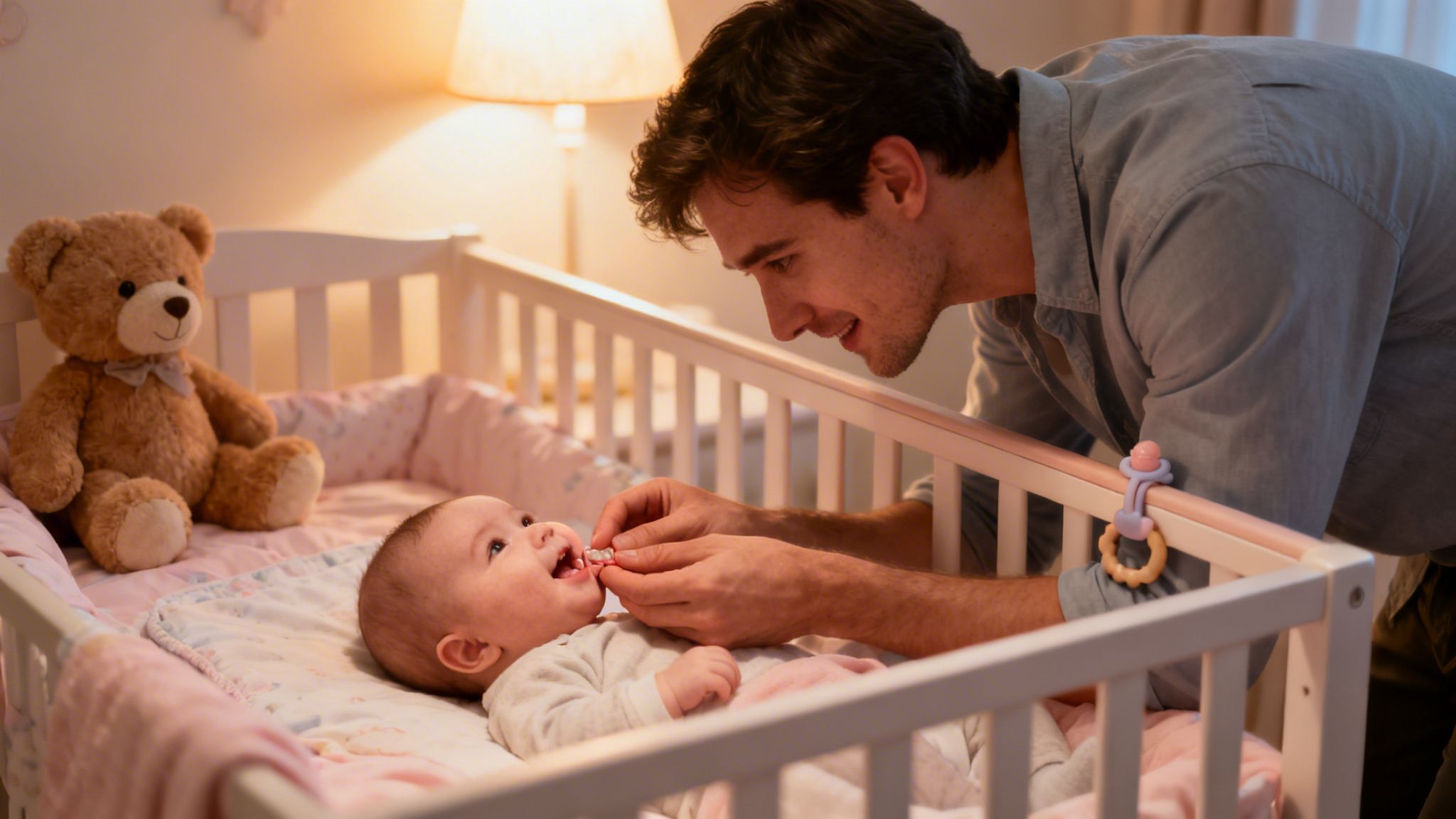
That strange, grating sound coming from the crib at night is enough to make any new parent's hair stand on end. Before you jump to the worst-case scenario, take a breath. That noise is likely just your baby grinding their teeth, a behavior technically called bruxism. The good news is that it’s far more common in infants and toddlers than you might think. For most, this is a normal developmental phase that will pass.
This guide is here to walk you through exactly why do babies grind their teeth. We’ll cover the common causes, potential risks, signs to watch for, and practical tips to help you manage it. By the end, you'll have the confidence to know when to relax and when it might be time to see a dentist.
What is Teeth Grinding in Babies?
Teeth grinding, or baby bruxism, is the medical term for when an infant or toddler clenches their jaw or grinds their top and bottom teeth together. While adults often grind their teeth due to stress, the reasons for babies are usually quite different and linked to their development.
This behavior typically appears between the ages of 6 months and 3 years old, a period marked by major milestones like teething and jaw growth. Unlike adult bruxism, which can be a chronic issue, grinding teeth in infants is almost always a temporary habit that they outgrow naturally.

Common Causes of Teeth Grinding in Babies
When you’re trying to figure out why your baby is doing something, it helps to get to the root of it. The question of why do babies grind their teeth isn't as simple as it is for adults. For little ones, the reasons are usually instinctual and almost always temporary.
Let's dig into the most common causes of grinding teeth in infants.
- Teething Discomfort: This is the number one cause. As new teeth push through tender gums, they create a constant ache. Grinding creates counter-pressure that acts like a massage, providing relief.
- Developing Jaw Muscles: Babies are constantly testing their bodies. Just as they learn to clap or kick, they explore how their jaw works by clenching and grinding.
- Reaction to New Sensations: When those first few teeth pop up, it’s a brand-new feeling. Babies grind their teeth to explore this new landscape inside their mouths.
- Misaligned Teeth or Changes in Bite: Baby teeth don’t always erupt perfectly straight. A baby might grind their teeth to find a more comfortable resting position for their jaw as their bite changes.
- Stress or Tension: While rare in infants, this can be a trigger for toddlers. Big emotions, overstimulation before bed, or frustration can manifest as physical tension.
Understanding these common causes can reassure you that, most of the time, baby bruxism is a normal part of growing up.
Signs That Your Baby is Grinding Their Teeth
Sometimes the signs are obvious, but other times they can be subtle. Here’s what to look and listen for if you suspect your little one has started grinding their teeth.
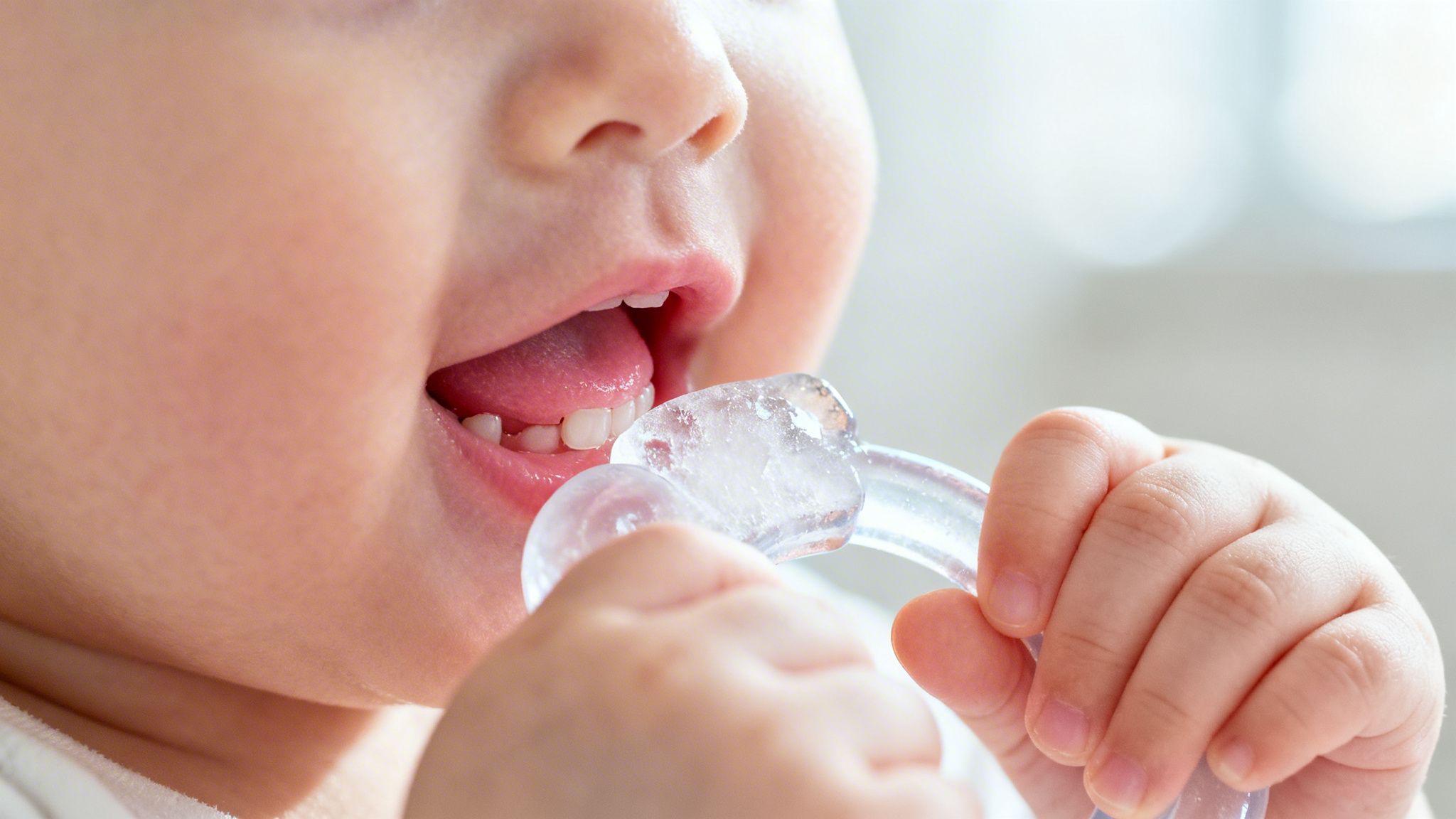
- Audible Grinding Noise: The most common sign is a distinct grating or scraping sound, which is often more noticeable when the baby is sleeping.
- Jaw Soreness or Irritation: Your baby might seem fussy while eating or pull at their ear or jaw, indicating discomfort.
- Worn Teeth or Enamel: In cases of prolonged or intense grinding, you might see that the edges of their teeth look flattened or worn down. This is more visible in older infants or toddlers.
- Frequent Waking at Night: If the grinding is intense, it might be disruptive enough to wake your baby from their sleep.
Is Teeth Grinding Normal?
For the vast majority of babies and toddlers, teeth grinding is completely normal. It’s usually a temporary habit they’ll outgrow on their own as they get used to new teeth, a growing jaw, and all the sensations that come with it.
Think of it like learning to walk—their first steps are clumsy. Baby bruxism is a similar kind of awkward phase for their mouth. Most kids stop grinding once their permanent teeth begin to erupt and their bite settles into a more stable position.
While the sound can be alarming, your child is in good company. Research on childhood bruxism shows that it’s a common behavior. Your main job is to be an observer. Does the grinding seem connected to teething? Is your child actually bothered by it? Most of the time, the answer will be no. However, if the habit is persistent or causing pain, it’s wise to consult a pediatric dentist.
Potential Risks or Concerns
While baby teeth grinding is usually harmless, it's good to be aware of the potential risks, especially if the habit is intense or continues for a long time.
- Tooth Enamel Wear: This is the primary concern. Constant grinding can wear down the protective enamel on baby teeth. While rare in babies, it’s important to monitor.
- Jaw Discomfort or Irritation: Just like any overworked muscle, the jaw can become sore. This might cause fussiness during feeding or when they wake up.
- Sleep Disturbances: A loud grinding sound can wake up not only the baby but the entire household, leading to disrupted sleep.
- Long-Term Effects: If grinding continues into childhood, it can sometimes affect the alignment of permanent teeth. However, these effects are minimal if the habit is monitored by a dentist.
Tips for Managing Teeth Grinding
While you can't force a baby to stop grinding their teeth, you can manage the underlying causes and provide comfort. Your goal is to address the "why" behind the grinding.
Parent Tip: Start a simple log on your phone. Note when you hear the grinding (naps, nighttime), and what was happening beforehand (e.g., teething fussiness). This information will be invaluable if you need to talk to a doctor.
- Maintain Proper Teething Care: If teething is the culprit, focus on soothing their gums. Offer chilled (not frozen) teething rings, a clean, damp washcloth, or gently massage their gums with a clean finger.
- Encourage Healthy Sleep Habits: For toddlers, stress can be a factor. A calm, predictable bedtime routine can help. Try a warm bath, quiet stories, and avoiding stimulating activities before bed. We cover more ways to handle this phase in our guide to navigating the terrible twos and threes.
- Ensure No Underlying Medical Issues: In rare cases, grinding can be linked to other issues like earaches or misaligned teeth. A quick check-up can rule these out.
- Regular Dental Check-ups: The American Academy of Pediatric Dentistry recommends a child's first dental visit by their first birthday. This allows a professional to monitor their dental health from the start.
When to See a Doctor or Dentist
While most teeth grinding is a phase, knowing when to call in a professional provides peace of mind. You are the first line of defense, and your observations are key.
Schedule an appointment with your pediatrician or a pediatric dentist if you notice any of the following:
- Persistent Grinding: The habit continues aggressively beyond the toddler years (after age three).
- Signs of Pain or Discomfort: Your child complains about a sore jaw, headaches, or earaches, especially after waking up.
- Visible Damage to Teeth: You can see that their teeth are becoming chipped, flattened, or noticeably worn down.
- Associated Developmental or Sleep Concerns: The grinding is so intense it consistently disrupts sleep, or if you have a child with a neurodevelopmental condition where bruxism is more common. Research on bruxism and neurodevelopmental disorders shows a higher prevalence in some children.
Knowing how to make your kid's first dental visit a positive one can make the experience stress-free.
This flowchart gives you a simple visual guide for when to keep an eye on things and when to step in.

Frequently Asked Questions (FAQ)
Here are quick answers to the most common questions parents have about baby teeth grinding.
Do babies grind their teeth in their sleep?
Yes, many babies grind their teeth in their sleep (sleep bruxism). It's an involuntary reflex that often happens during lighter stages of sleep. You might also notice them doing it while they're awake (awake bruxism) as they explore or concentrate.
Can teething cause teeth grinding?
Absolutely. Teething is one of the leading causes of teeth grinding in babies. The pressure from grinding can help soothe sore, itchy gums as new teeth erupt. This is a primary reason why we need to understand the answer to why do babies grind their teeth.
Does teeth grinding affect permanent teeth?
It is extremely rare for baby teeth grinding to affect permanent teeth. The habit usually stops on its own long before adult teeth come in. Baby teeth are designed to fall out, and any minor wear they sustain typically has no impact on future dental health.
How can I stop my baby from grinding their teeth?
You can't directly stop the grinding, but you can address the causes. Focus on providing teething relief with chilled toys or gum massages. For toddlers, ensure a calming bedtime routine to reduce stress. A mouthguard is not safe or recommended for babies.
Conclusion: A Normal Phase in Baby Dental Health
Hearing your baby grind their teeth can be alarming, but it's important to remember that it is usually a normal, temporary phase. The most common causes, like teething and jaw development, are simply signs that your baby is growing.
By monitoring for signs of pain or tooth damage, providing comfort through teething relief, and maintaining a calm routine, you can manage this phase with confidence. And for ultimate peace of mind, regular dental check-ups will ensure your baby’s dental health is on the right track from the very beginning.
At alphadadmode.com, we're here to give you the practical, no-fluff guidance you need to lead your family with confidence. For more real-world tips on fatherhood, check us out at https://alphadadmode.com.
