


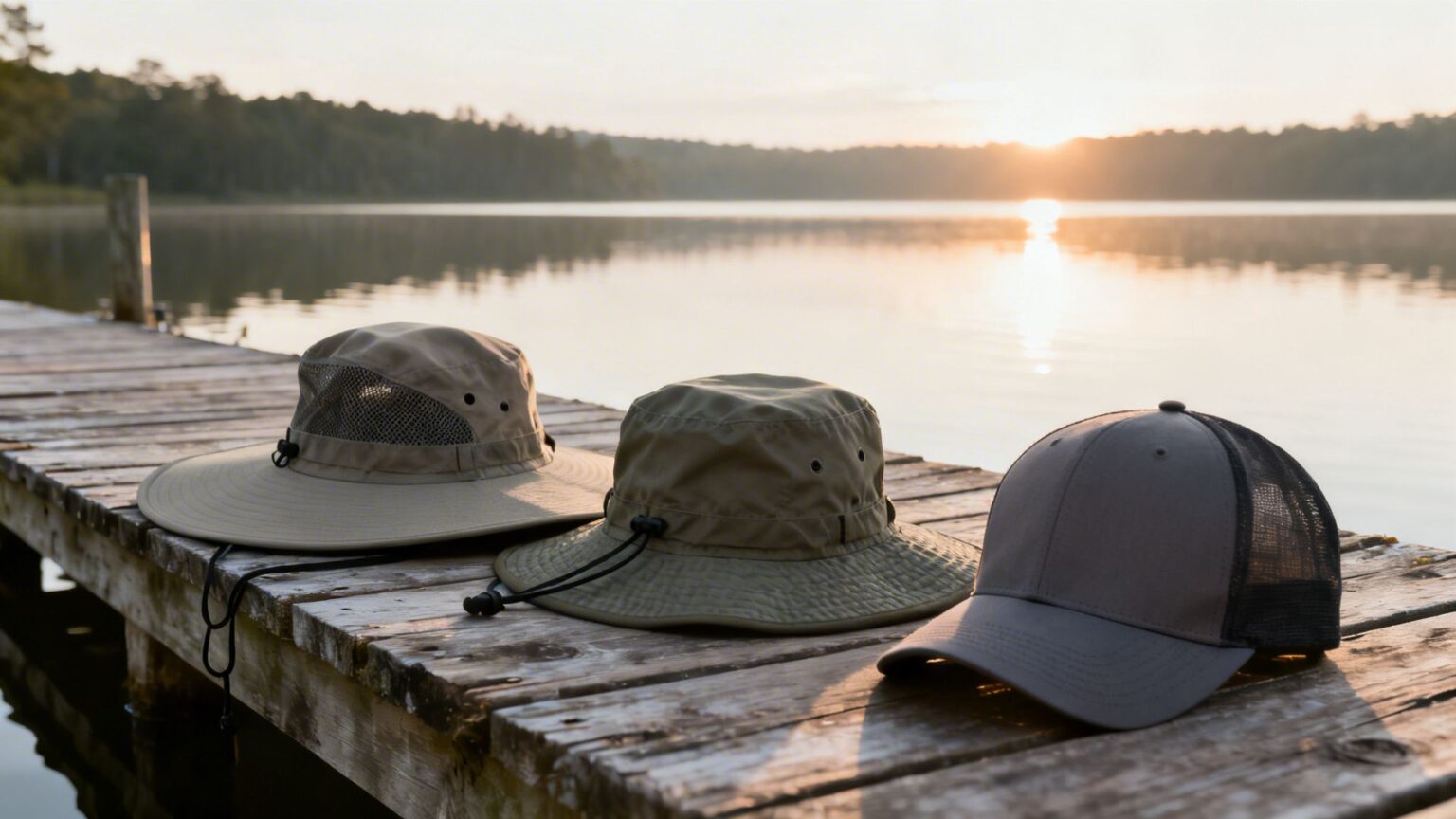
If you’re looking for the best Mens Fishing Hats, you’ve probably realised there are hundreds of options available and every manufacturer claims theirs offers superior comfort, better ventilation and ultimate sun protection.
Having spent plenty of time outdoors for both work and recreation, I’ve come to appreciate just how important a decent fishing hat can be.
When you’re standing on a riverbank, drifting across a lake or spending an entire day chasing fish, the difference between a quality hat and a poor one becomes obvious pretty quickly.
One keeps you comfortable.
The other leaves you feeling like your head has been slow-cooked for six hours.
As a dad, I’ve also learned that spending money on the right gear often saves discomfort later. A quality fishing hat won’t magically help you catch more fish, although some marketing departments seem determined to suggest otherwise. What it can do is keep you cooler, reduce sun exposure and make long days outdoors significantly more enjoyable.
Let’s look at the best Mens Fishing Hats, what features actually matter and which styles are worth considering.
Why a Good Fishing Hat Matters
Many people underestimate how much sun exposure occurs while fishing.
You’re dealing with:
- Direct sunlight
- Reflected sunlight from water
- Long periods outdoors
- Limited shade
According to information from The Skin Cancer Foundation, reflected UV exposure from water can significantly increase overall sun exposure levels.
In simple terms, your head, face, ears and neck are taking a beating.
I’ve had enough sunburns over the years to know that prevention is far preferable to aloe vera treatments afterwards and long term skin damage.
What Makes a Great Fishing Hat?
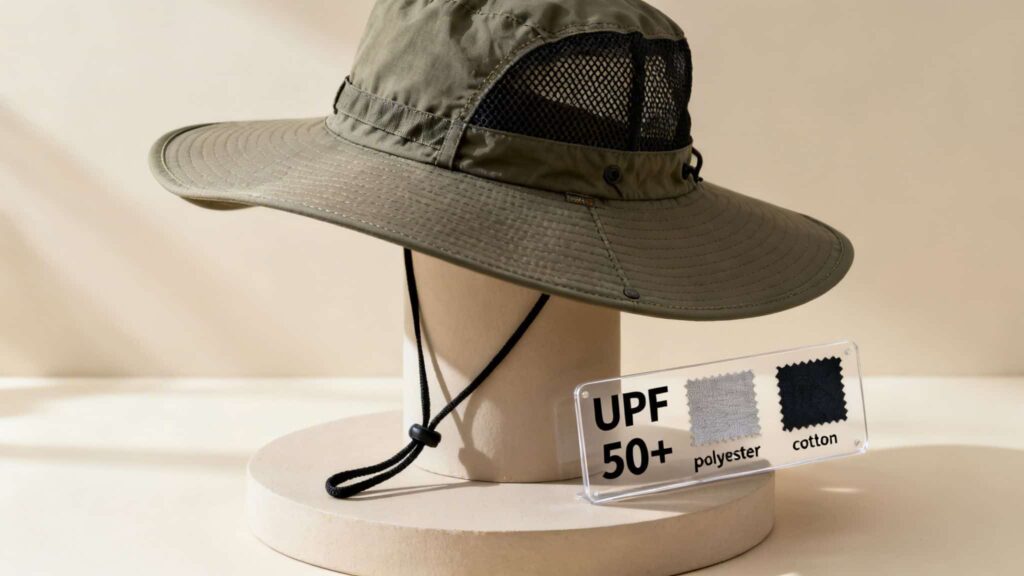
Not all fishing hats are created equal.
Wide Brim Coverage
The wider the brim, the better the protection.
This isn’t exactly groundbreaking information.
More shade equals less sun.
Yet many people continue wearing tiny caps that leave half their face and neck exposed.
Ventilation
Fishing can involve hours in the heat.
Good airflow matters.
Look for:
- Mesh panels
- Ventilation ports
- Breathable materials
A hat that traps heat isn’t doing you many favours.
Chin Strap
This feature becomes particularly important on boats.
Wind has an uncanny ability to locate expensive hats.
I’ve watched enough hats disappear across lakes to appreciate a good retention system.
Lightweight Construction
Heavy hats become annoying surprisingly quickly.
Comfort matters when you’re wearing something all day.
Comparison Table: Popular Fishing Hat Styles
| Hat Style | Sun Protection | Ventilation | Wind Resistance | Best For |
|---|---|---|---|---|
| Baseball Cap | Low | Good | Excellent | Casual Fishing |
| Boonie Hat | Excellent | Very Good | Good | General Fishing |
| Wide-Brim Hat | Excellent | Good | Moderate | Maximum Sun Protection |
| Straw Fishing Hat | Excellent | Excellent | Moderate | Hot Conditions |
| Legionnaire Hat | Excellent | Good | Excellent | Extreme Sun Exposure |
For most dads, boonie hats tend to offer the best balance between comfort, protection and practicality.
Best Mens Fishing Hat
1. Columbia Bora Bora Booney

The Columbia Bora Bora Booney has earned a strong reputation for a reason.
Features include:
- Wide brim
- Moisture-wicking sweatband
- Adjustable fit
- Excellent ventilation
- Chin straps
It’s lightweight, comfortable and affordable.
Three qualities that don’t always appear together.
Pros
- Great value
- Comfortable
- Excellent airflow
Cons
- Style won’t win fashion awards
Fortunately, fish don’t care.
2. Sunday Afternoons Adventure Hat

The Sunday Afternoons Adventure Hat is one of the most protective options available.
Highlights include:
- Large brim
- Neck cape
- Excellent coverage
- Lightweight design
- Chin straps
This hat prioritises function over appearance.
A lot of serious outdoor gear does.
3. Simms Superlight Sun Hat
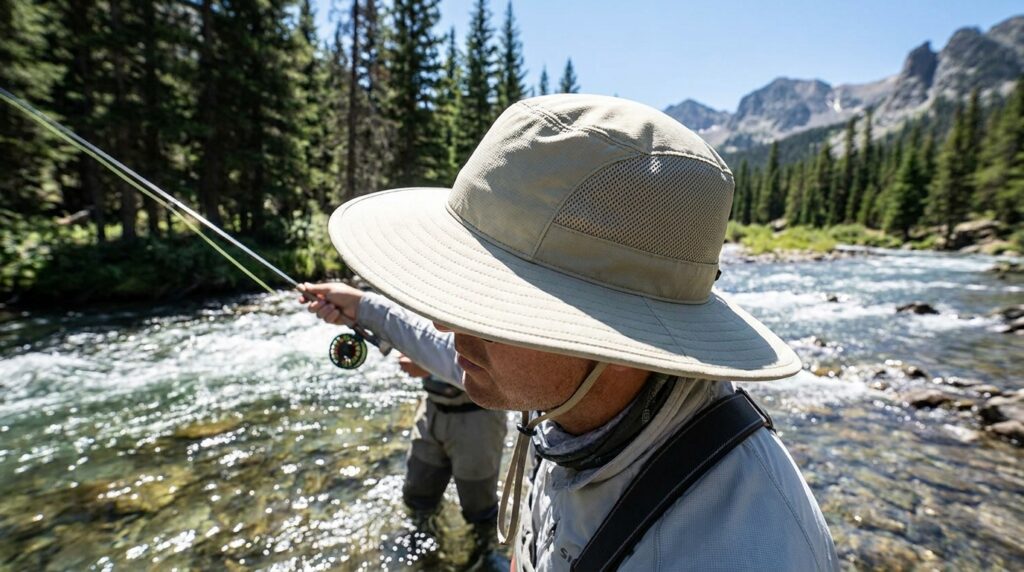
If you’re a dedicated angler, Simms produces some excellent fishing gear.
The Superlight Sun Hat offers:
- Lightweight construction
- Strong ventilation
- Quality materials
- Excellent comfort
- Chin straps
It’s particularly popular among fly fishermen.
Speaking of fly fishing, if you’re spending time wading rivers, you might also find my guide to the best wading boots useful:
https://alphadadmode.com/best-wading-boots/
Good footwear and good headwear are both investments you’ll appreciate after a long day outdoors.
4. Tilley LTM6 Airflo

Tilley has built an impressive reputation over the years.
The LTM6 Airflo features:
- Premium construction
- Excellent durability
- Strong ventilation
- Comfortable fit
- Chin straps
These hats aren’t cheap.
However, they’re often viewed as long-term investments.
5. Huk Straw Hat
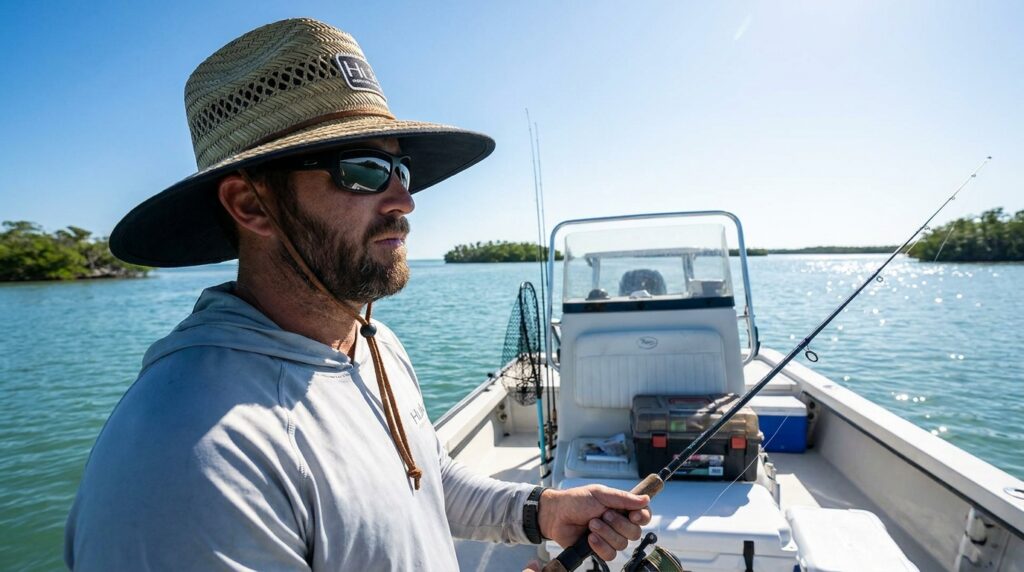
For hot summer conditions, straw hats remain surprisingly effective.
Benefits include:
- Excellent airflow
- Wide coverage
- Lightweight feel
- Chin straps
They’re particularly popular among saltwater anglers.
The Most Common Fishing Hat Mistakes
Choosing Style Over Protection
We’ve all done it.
Something looks good in the shop.
Then you spend eight hours in direct sunlight regretting your decision.
Fishing hats should prioritise function first.
Style second.
Ignoring Neck Protection
Your neck receives enormous sun exposure while fishing.
Many anglers overlook this entirely.
Forgetting About Wind
A hat only protects you if it’s still on your head.
Simple but important.
Buying Cheap Hats Repeatedly
I’ve found that quality outdoor gear usually pays for itself over time.
Cheap gear often ends up being replaced repeatedly.
Fishing Hats and Other Outdoor Gear
One thing I’ve learned after years outdoors is that every piece of gear works together.
Your boots matter.
Your clothing matters.
Your hat matters.
Your footwear grip matters.
For example, many outdoor enthusiasts appreciate high-traction sole compounds like Vibram Megagrip.
I recently covered that topic in my detailed Vibram Megagrip soles review:
https://alphadadmode.com/vibram-megagrip-soles-review/
When you’re navigating slippery riverbanks, boat ramps or wet rocks, grip becomes surprisingly important.
Usually right before you nearly fall over.
Are Expensive Fishing Hats Worth It?
Sometimes.
Not always.
The sweet spot usually sits somewhere between bargain-bin products and ultra-premium options.
A quality fishing hat should provide:
- Good coverage
- Comfortable fit
- Reliable durability
- Adequate ventilation
Beyond that, you’re often paying for premium materials, branding or additional features.
Whether those extras matter depends on how often you’re outdoors.
What Materials Are Best?
Cotton
Advantages:
- Comfortable
- Natural
Disadvantages:
- Holds moisture
- Slower drying
Straw
Advantages:
- Excellent airflow
- Comfortable in heat
- Natural
Nylon
Advantages:
- Lightweight
- Fast drying
- Durable
Polyester
Advantages:
- Affordable
- Quick drying
- Easy maintenance
Why Dads Should Prioritise Sun Protection
I’ve learned over the years that prevention is easier than dealing with the consequences later.
A quality fishing hat falls firmly into that category.
Most dads spend enough time:
- Working outdoors
- Mowing lawns
- Watching kids’ sports
- Fishing
- Camping
Additional sun exposure adds up quickly.
Good protection becomes increasingly important over time.
Pros and Cons of Fishing Hats
Pros
- Improved sun protection
- Better comfort
- Reduced glare
- Protection for ears and neck
- Increased outdoor enjoyment
Cons
- Some styles look less fashionable
- Wide brims can catch wind
- Premium models can be expensive
- Requires occasional cleaning
Frequently Asked Questions
What is the best fishing hat for sun protection?
Wide-brim hats and boonie hats generally provide the best combination of face, ear and neck protection.
Are boonie hats good for fishing?
Yes. Boonie hats remain one of the most popular fishing hat styles due to their balance of protection, comfort and ventilation.
What colour fishing hat is best?
Lighter colours generally absorb less heat and tend to remain cooler in sunny conditions.
Should fishing hats have chin straps?
If you fish from boats or windy locations, a chin strap is highly recommended.
Are expensive fishing hats worth it?
They can be if you spend significant time outdoors. Better materials, durability and comfort often justify the higher cost.
What hat do professional anglers wear?
Many professional anglers wear wide-brim hats, performance sun hats or boonie-style designs with maximum sun coverage.
So, Which Fishing Hat Should You Buy?
After years of working outdoors, fishing and spending countless hours under the sun, I’ve come to a fairly simple conclusion.
The best Mens Fishing Hats aren’t necessarily the most expensive.
They’re the ones you’ll actually wear.
A hat sitting in the garage provides zero protection.
Comfort matters.
Fit matters.
Ventilation matters.
For most dads, a quality boonie hat offers the best balance of protection, comfort and practicality.
If you’re regularly fishing in intense sun, consider options with additional neck coverage.
It keeps the sun off your face, helps you stay comfortable and allows you to focus on enjoying your day rather than wondering why your ears feel like they’re on fire.
That’s money well spent in my book.
About the Author
Nick is the founder of Alpha Dad Mode (https://alphadadmode.com), where he shares practical advice on gear, fatherhood, health, outdoor activities and everyday life. As a father of three and a tradesman with more than 20 years of hands-on experience working outdoors, he values durable, reliable equipment that performs in real-world conditions. His goal is to help dads make smarter buying decisions.
