


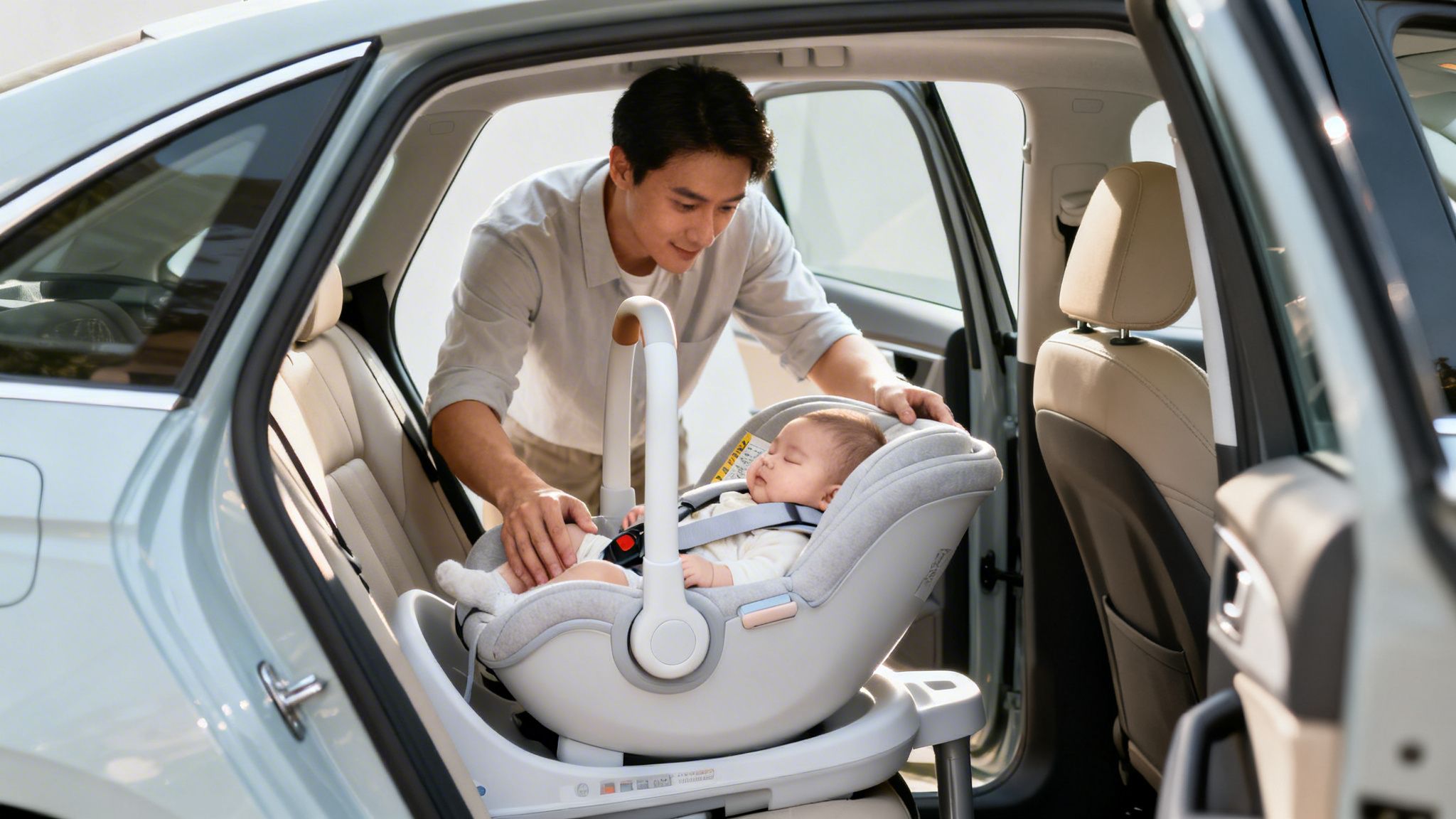
A portable car seat for a newborn is more than just a piece of safety gear—it's your secret weapon for navigating those first few months of fatherhood. Think of it as a lightweight, detachable carrier that clicks into a base you leave in your car. Many also click into a matching stroller, making life a whole lot easier when you're on the move.
Your First Mission: Choosing the Right Newborn Car Seat

Alright, Dad. Your first big assignment has arrived: picking the car seat that will keep your new baby safe on every trip, starting with the ride home from the hospital. The options can feel endless, but zeroing in on a portable infant model is a smart first move.
This style of seat is basically your baby’s personal safety pod. Unlike a convertible seat that stays put in the car, a portable infant carrier is all about mobility. You can get your baby buckled in comfortably inside the house, carry them out to the car, and just click the whole carrier into its pre-installed base. Best of all? You can do it all without waking a sleeping baby.
Why Dads Prefer Portable Newborn Car Seats
So, what makes a portable car seat such a go-to for dads? It’s all about practical, real-world convenience that keeps things simple and stress-free.
Here’s a quick look at why these seats are a game-changer for new fathers.
| Feature | Benefit for Dads |
|---|---|
| Click-and-Go System | Lets you move the baby from car to house or stroller in seconds. No waking them up. |
| Detachable Carrier | Makes quick errands a breeze. Just unclick and carry the seat with you. |
| Travel System Ready | Snaps onto a compatible stroller, so you don't need a separate bassinet for walks. |
| Lightweight Build | Designed to be carried, making it manageable to get from point A to point B. |
Essentially, this system is designed to fit your life, not the other way around. It lets you keep your newborn safe without feeling trapped at home.
The Ultimate Tool for Modern Dads
The real magic of a portable car seat is what happens when you get where you're going. Need to pop into the store? Visiting your parents? Just unclick the carrier from the base and bring your baby with you. This simple “click-and-go” functionality is a lifesaver.
A portable car seat is more than a safety device; it’s your key to freedom as a new dad. It lets you maintain your lifestyle while ensuring your child is secure, whether you're heading to the grocery store or a friend's house.
This flexibility is a huge win, especially in the first few months. It completely eliminates the struggle of unbuckling a tiny, sleeping baby in a cramped back seat, turning what could be a stressful outing into a smooth operation. It's no wonder the baby car seat market, valued at around USD 6.0 billion in 2024, continues to grow, with parents demanding these convenient designs. You can find more market analysis on this trend over at Market.us.
Getting the right gear is one of the best tips for new dads looking to build confidence. Choosing a portable car seat is a solid first step in mastering the logistics of parenthood and, most importantly, protecting your new little sidekick.
What You Need to Know About Newborn Car Seat Safety Standards
When you're staring down the aisle of baby gear, let's be honest—choosing a car seat can feel overwhelming. Forget the fancy colors and trendy fabrics for a minute. The only thing that truly matters is safety. This is your essential briefing, designed to cut through the jargon and get straight to what keeps your newborn protected on the road.
Think of safety standards as the ground rules every car seat manufacturer has to follow. In the United States, the National Highway Traffic Safety Administration (NHTSA) is the referee. Any seat sold in the U.S. must meet the Federal Motor Vehicle Safety Standards (FMVSS). These aren't just suggestions; they are a series of tough, non-negotiable tests that simulate crashes to ensure a seat will do its job when it counts the most.
A car seat that meets these standards is like a professional athlete's helmet. It's been slammed, tested, and pushed to its limits to prove it can protect the most vulnerable parts—in this case, your newborn's fragile head, neck, and spine.
Meeting these regulations is the absolute minimum requirement. It's your starting point, your first and most important checkpoint to ensure you're choosing a product built for protection.
The Golden Rule: Rear-Facing is Non-Negotiable
For newborns, one rule trumps all others: they must ride rear-facing. This isn't a matter of opinion or preference; it's a critical safety directive rooted in a newborn's unique physiology. A baby's head is disproportionately large and heavy compared to their body, and their neck muscles are still very weak.
In a front-end collision, a rear-facing seat acts as a protective shield. The shell of the seat absorbs the immense force of the crash, cradling your baby’s head, neck, and spine in perfect alignment. This distributes the impact across the entire seat back, dramatically reducing the stress on any single part of their tiny body.
Turning them forward-facing too soon is like putting a young sapling in a hurricane—the fragile stem simply can't support the weight. Your job is to keep them rear-facing for as long as the seat's height and weight limits allow.
Understanding the Key Safety Features
Beyond the basic regulations, today's car seats come equipped with specific features that work together like a team of bodyguards. Knowing how they function will help you look past the marketing noise and focus on what provides real-world protection.
- 5-Point Harness: This is the web of straps that holds your baby securely. It has five points of contact: two at the shoulders, two at the hips, and one between the legs. The whole point of this system is to distribute crash forces across the strongest parts of your baby's body, keeping pressure away from their soft abdomen.
- Energy-Absorbing Foam: Look for EPS or EPP foam lining the inside of the seat, especially around your baby’s head. This material is designed to crush and compress during an impact, absorbing crash energy and directing it away from your child. It works on the same principle as a modern bicycle helmet.
- Side-Impact Protection: Not all crashes happen head-on. This feature is vital. It usually consists of extra layers of foam, deeper side walls, or even air-filled cushions around your baby’s head and torso. These additions create a crucial buffer in a side-impact collision.
Think about it. As a dad, you might be navigating busy city streets or cruising down the highway. Knowing your seat has robust side-impact protection gives you confidence that your baby is cocooned in safety. It’s technology like this that has made a real difference. When Tennessee became the first state to mandate car seats in 1978, it set off a chain reaction. By the 1990s, infant crash deaths had been slashed by 50% nationwide. You can find more on the evolution of this market on Introspective Market Research.
By understanding these core components, you move from being just a consumer to being an informed protector. You're no longer just buying a product; you're choosing a life-saving device based on how it’s engineered to perform under pressure. And that knowledge, Dad, is your superpower.
Ensuring a Perfect Fit for Your Baby and Your Car
A portable car seat is only as safe as its fit. Think of it like a perfectly tailored suit—if it’s too loose or just doesn't sit right, it can’t do its job. For a newborn, that precision is non-negotiable. We're going to walk through getting that perfect fit for both your new baby and your vehicle, turning you into an installation pro.
Let's start with your newborn. They're tiny, fragile, and can't support their own head yet. A car seat that’s too big is a huge safety risk. They could slump over in a way that affects their breathing or even slide around during a sudden stop.
What you need is a portable car seat for newborn that’s actually designed for their unique proportions. This isn't about fancy brands; it's about specific features that guarantee a snug, secure fit right from day one.
Securing the Tiniest Passenger
For a newborn, especially smaller or premature babies, a proper fit boils down to three critical elements. These features work in concert to create a safe little cocoon that supports their delicate frame.
- Low Harness Slots: When rear-facing, the shoulder straps must come from a slot that is at or below your newborn's shoulders. If the lowest slot is still above their shoulders, the seat is too big. Period. This prevents them from sliding upwards in a crash.
- Plush Newborn Inserts: Good seats come with specialized inserts and cushions. These aren't just for comfort—they are crucial safety components. They fill the extra space around a tiny baby, providing essential head, neck, and torso support.
- Low Minimum Weight Rating: Check the specs for a seat rated for babies as small as 4 pounds. This is a clear sign the manufacturer has specifically designed and tested the seat to safely protect the smallest passengers right from birth.
Getting these features right ensures your baby is positioned correctly, with their back flat against the seat and their head and neck fully supported.
A car seat is a piece of life-saving equipment, and a proper fit is its most important calibration. For a newborn, this means eliminating any gaps where they could slump or slide, ensuring the harness and side-impact protection can do their job effectively.
Installing the Base for a Rock-Solid Fit
Once you’ve confirmed the seat is a good match for your baby, the next step is fitting it to your car. Most portable infant seats use a stay-in-car base, which you can usually install using one of two methods: the LATCH system or your vehicle’s seat belt.
It's important to know that one method isn't inherently safer than the other. The safest method is simply the one that gives you the tightest, most secure installation in your specific vehicle.
The LATCH system (Lower Anchors and Tethers for Children) uses built-in anchors in your car's back seat. It’s often praised for being straightforward—connectors on the car seat base just click onto these anchors. But be aware, LATCH anchors have a weight limit that includes both the seat and the baby, so you'll eventually need to switch to a seat belt installation as your child grows.
Installing the base with the vehicle’s seat belt, on the other hand, is a universal method that works in almost any car. This can feel a bit trickier at first. You have to thread the belt through the correct path on the base and lock it down tightly to remove all slack. Whether you have a compact sedan or are shopping for the best family cars with more room, mastering this skill is essential.
Your goal with either method is exactly the same: the base should not move more than one inch side-to-side or front-to-back when you yank on it at the belt path. Nailing this "one-inch test" is your pass/fail for a safe installation. It takes a bit of muscle and practice, but getting it right is what ensures the car seat will perform as designed when it matters most.
Mastering Car Seat Installation and Daily Use
Alright, Dad. You’ve picked out the perfect portable car seat for your newborn. Now comes the most important part: becoming an absolute pro at installing it and using it every single day. This goes way beyond just skimming the manual. It’s about building the muscle memory and confidence to know, without a shadow of a doubt, that your baby is secure on every trip.
Think of yourself as the chief safety officer for your new little passenger. Your mission is to make sure every piece works flawlessly, from the base anchored to your car to the harness that holds your baby snug. Getting this right is your number one job every time you get behind the wheel.
The Recline Angle: A Critical Check for Newborns
One of the very first things you'll need to lock in is the recline angle. Newborns have zero neck control, so if their car seat is too upright, their head can slump forward. This can block their tiny airway—a silent danger called positional asphyxia. It's a scary thought, but thankfully, it's completely preventable.
Every infant car seat has a recline angle indicator—it might be a bubble level, a colored line, or a dial. Your job is to check that this indicator is in the correct "newborn" or "infant" range after the seat is installed. A perfectly reclined seat is what keeps your baby’s airway wide open.
A correct recline is the foundation of newborn car seat safety. It isn’t just about comfort; it’s about making sure your baby can breathe easily for the entire ride, especially when they’re asleep.
This visual guide shows how getting the fit right for the baby, the seat, and the vehicle creates a complete safety system.

As you can see, each piece of the puzzle—securing the newborn in the carrier, getting the recline right, and locking the seat into the car—is equally vital for total protection.
Performing the Rock-Solid One-Inch Test
Once your recline angle is dialed in, the next step is getting the base installed tight. Whether you're using the LATCH system or your car’s seat belt, the goal is the same: no wiggle room. This is where you’ll use the "one-inch test."
Here's how it's done: Grab the car seat base right at the belt path (where the LATCH strap or seat belt runs through). Now, using your non-dominant hand, give it a firm tug from side-to-side and front-to-back. The base should not move more than one inch in any direction. If it does, you need to tighten it down more. Don’t be afraid to put your weight into it to get all the slack out of that belt.
Securing the 5-Point Harness Every Single Time
The final step is buckling your baby into the carrier with the 5-point harness. Getting this right on every single trip is just as critical as the installation itself.
- Harness Height: For a rear-facing newborn, the straps must come from slots that are at or just below their shoulders. This prevents them from sliding upward in a crash.
- Harness Tightness (The Pinch Test): After buckling up, try to pinch a horizontal fold of the strap webbing at your baby's collarbone. If you can grab any excess webbing, it’s too loose. Keep tightening until the strap is snug and you can't pinch a fold.
- Chest Clip Position: Always slide the chest clip up to armpit level. This is non-negotiable. It holds the shoulder straps in the correct position over your baby's strongest points.
Common (and Dangerous) Mistakes to Avoid
Even the most well-intentioned parents can make mistakes. Knowing the common pitfalls is half the battle.
- Loose Harness: This is the number one mistake and it's incredibly dangerous. A loose harness can allow a baby to be ejected from the seat in a crash. Always, always do the pinch test.
- Chest Clip Too Low: A clip sitting down on the belly can cause severe internal organ damage in a collision. Keep it at armpit level. Period.
- Using Unapproved Add-ons: Fluffy aftermarket inserts, cute strap covers, and any product that goes between your baby and the seat are not crash-tested with your specific car seat. They can interfere with the harness fit and void the warranty. Stick to accessories made by the car seat manufacturer.
Mastering these steps turns that new-dad anxiety into focused action. For a deeper dive, you can learn more about general car seat safety guidelines and best practices. With a bit of practice, these checks will become second nature, giving you the peace of mind that your little one is protected on every single adventure you take together.
Fitting the Car Seat into Your Life as a Dad

A portable car seat is more than just a safety device. Let's be real—it's your key to keeping some freedom and mobility now that you're a new dad. This isn't about being tied down. It's about smartly integrating your new little sidekick into your life, from coffee runs to cross-country flights, without everything grinding to a halt.
The beauty of a modern infant car seat is how it adapts to your day. Picture this: you pull up to the coffee shop, unclick the carrier from its base in the car, and click it straight onto a compatible stroller. Your baby stays asleep, and you get your much-needed caffeine without a major production. That’s the core of the "travel system" idea, and trust me, it's a lifesaver.
Making Life Easier for a Dad on the Move
The true value of a portable car seat for newborn babies really comes through when you’re out and about, especially without your own car. Your daily routine doesn't have to stop; the right gear just helps you keep moving, albeit with a bit more planning.
Here’s how it plays out in the real world:
- Taxis and Rideshares: Live in the city? Most infant carriers can be installed without the base, just using the car’s seat belt. This “baseless install” is a crucial skill for quick trips, letting you secure your baby safely in pretty much any vehicle.
- Air Travel: The majority of infant car seats are FAA-approved for use on airplanes. That means you can buckle your baby into their own seat on the flight, which is far safer than holding them in your lap. Plus, having your own seat when you land makes rental cars and visits with family instantly manageable.
- Visiting Friends and Family: Showing up at the grandparents' house is a breeze. You can carry your sleeping baby right inside in the carrier and let them finish their nap. It doubles as a temporary, safe spot for them to hang out while you catch up, so you don't have to lug a separate bassinet for a short visit.
A lightweight carrier is your best friend. Seriously. It’s the difference between a quick, easy transfer and a back-straining ordeal. Think of it as an investment in your own sanity, not just your baby's convenience.
Lifestyle Features That Actually Make a Difference
When you're shopping for a seat, think past the car. Some features are designed specifically to make your life less complicated. When you're a dad juggling a million things at once, these details are what really matter.
- Lightweight Carrier: Try to find a carrier that weighs under 10 pounds. That might not sound like a lot, but once you add a growing baby, every single ounce counts when you're hauling it from the car, across a parking lot, and into a store.
- Ergonomic Handle: You'll be carrying this thing everywhere. A handle that feels good in your hand and lets you carry it in different ways can save your arm and wrist from getting totally fried.
- Machine-Washable Fabrics: Spit-up, diaper blowouts, and snack messes are going to happen. It's a fact of life. Being able to easily strip the cover off and toss it in the wash is a non-negotiable feature for quick, painless cleanups.
This push for gear that balances top-tier safety with real-world convenience is why demand is soaring. The global market for baby car seats is on track to grow from USD 8.2 billion in 2023 to over USD 16 billion by 2033. A big part of that is the 20% increase in dual-income households in the U.S. since 2000, which has created a massive need for lightweight, versatile gear. You can read more about this trend on Spherical Insights. Your choice is part of a bigger shift toward products that fit a dynamic, modern family.
Dad's Portable Car Seat Checklist
As you narrow down your options, it helps to have a quick checklist. This isn't about finding a "perfect" seat, but the one that's perfect for your family and your lifestyle. Run through these points when you're comparing models.
| Checklist Item | Why It Matters | Dad's Quick Check |
|---|---|---|
| Carrier Weight | A lighter carrier (under 10 lbs) saves your back during transfers from car to stroller or house. | Pick it up. Does it feel manageable? Imagine adding 15 lbs to it. |
| Stroller Compatibility | A "travel system" is a game-changer for errands. Seamless clicks mean no waking the baby. | Does it click into a stroller you like? Are adapters needed? |
| Installation Method | Can you install it easily with and without the base? Baseless install is key for taxis/travel. | Watch an install video. Does it look straightforward or overly complex? |
| Fabric Care | Spit-up and blowouts are inevitable. Machine-washable fabric is a must for easy clean-up. | Check the tag. Is the cover easy to remove and machine washable? |
| Handle Ergonomics | You'll be carrying this a lot. A comfortable, multi-position handle prevents arm fatigue. | How does the handle feel? Can you carry it on your arm comfortably? |
| FAA Approval | Essential if you plan to fly. It allows you to safely secure your baby in their own airplane seat. | Look for the sticker on the carrier that says it's certified for aircraft use. |
This checklist gives you a practical framework. Ultimately, the best car seat is one that you'll use correctly every single time because it fits both your baby and your life.
Frequently Asked Questions for Dads
Stepping into the world of newborn gear opens up a floodgate of questions. And when it's something as crucial as your baby's car seat, you need straight answers, not fluff. Here are some of the most common questions we hear from dads about portable car seats for newborns.
Can I Use My Regular Car Seat for Travel?
Technically, yes, you can use your everyday car seat. But it's worth thinking about the trade-offs. Your primary seat is probably a tank—incredibly safe, but also heavy and cumbersome. Trying to haul that beast through an airport or wrestle it into a rental car is a workout you don't need.
That's where a dedicated travel car seat comes in. They're built to be lighter and more compact, which makes life on the road so much easier. If you know you'll be traveling often, investing in a lightweight model can save you a mountain of hassle.
Is It Better to Rent a Car Seat or Bring My Own?
Bringing your own seat is almost always the right call. Think about it: you know its entire history, you know exactly how to install it, and you know it meets the safety standards you’ve set. Plus, you’re a pro at buckling your kid in, and they're already comfortable in it.
Renting a seat from a car rental company is a total gamble. You have no idea if it's been in an accident, if it's expired, or even if it's been properly cleaned. For your own peace of mind, just bring yours.
Having your own FAA-approved car seat for a flight is the safest way for your baby to travel. It ensures they are properly secured during takeoff, landing, and any unexpected turbulence, giving you one less thing to worry about.
How Do I Know if a Car Seat Is Approved for Airplanes?
This one's easy. Just look for a sticker somewhere on the car seat itself. It'll have red text that reads: "This restraint is certified for use in motor vehicles and aircraft." If you see that sticker, you're cleared for takeoff.
Most infant car seats sold in the U.S. are FAA-approved, but it's always smart to confirm before you head to the airport. Having that approval means you can buckle your baby into their own seat on the plane—a much safer option than holding them on your lap.
Do I Need the Base to Install the Car Seat?
The base is a lifesaver for quickly clicking the seat in and out of your own car, but it’s not always required. Most infant carriers are specifically designed to be installed safely without the base, using the car's seat belt instead.
This "baseless install" is a game-changer for travel. It means you can secure the seat properly in a taxi, rideshare, or rental car without having to drag that heavy base along. It’s a skill every dad on the move should have in his back pocket.
At alphadadmode.com, we're building a community for fathers who want the best tools and resources for their family. Sign up now to get exclusive updates, promotions, and early access to content that will help you master every mission of fatherhood. Be the first to know when we go live by joining us at https://alphadadmode.com.
