


As a new parent, you've likely mastered the gentle shoulder pat and can coax a burp out of your little one like a seasoned pro. But as the weeks turn into months, a common question arises: when do you stop burping a baby? Knowing the answer is key to understanding your child's development.
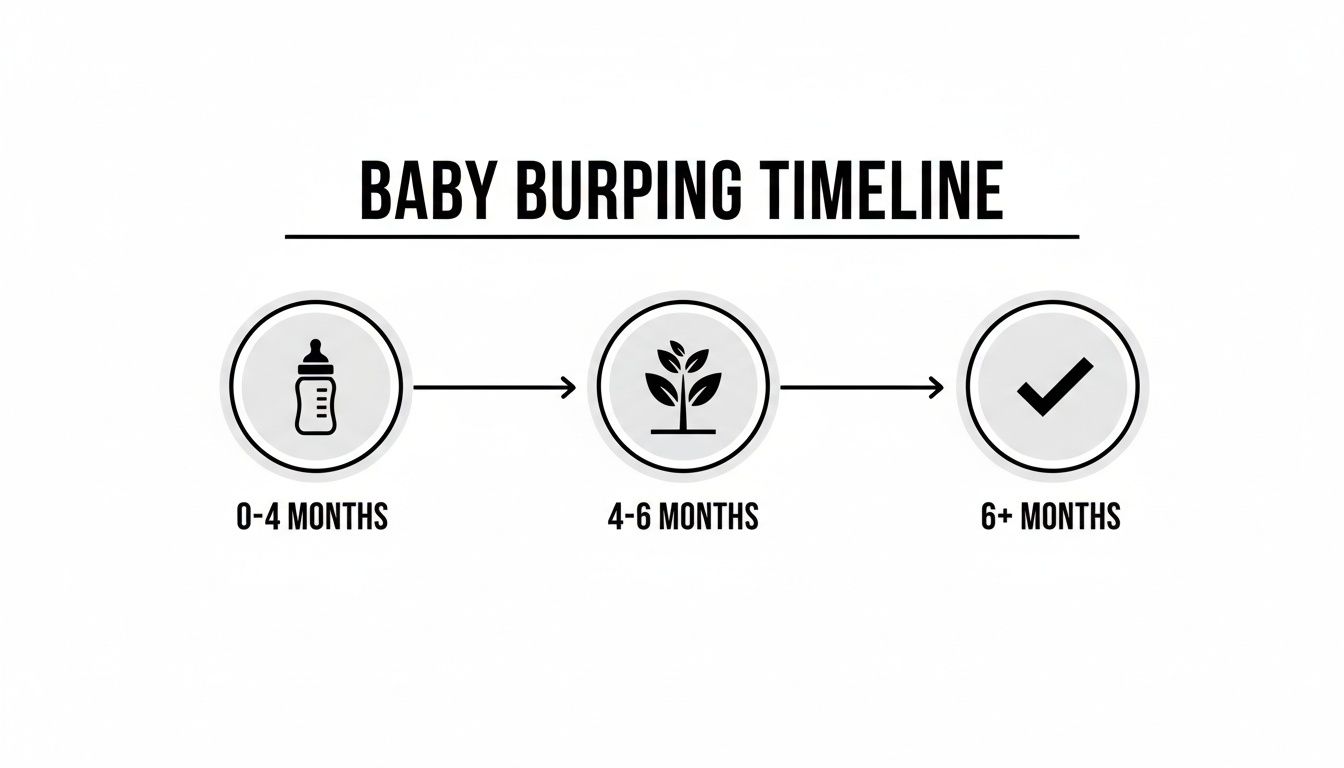
The short answer is that most babies are ready to graduate from burping somewhere between 4 and 6 months old. This isn't just about convenience; it's a sign that their digestive system is maturing. This guide will walk you through why burping is important, the signs that it's no longer necessary, and effective techniques for providing your infant with gas relief.
Why Burping a Baby is Important
In the early months, a baby's digestive system is still developing. They are pros at swallowing air while they eat, whether they’re on the bottle or breast. Burping is the essential process of helping them release that trapped air.
This simple act is crucial for several reasons:
- Prevents Discomfort: Trapped air bubbles in a tiny stomach can cause painful gas, pressure, and discomfort.
- Reduces Spitting Up: When air takes up space in the stomach, it can push milk back up. A good burp makes room for a full feeding and helps keep milk down.
- Minimizes Fussiness and Crying: A gassy baby is often a fussy baby. Releasing that trapped air can quickly calm a squirming, uncomfortable infant, leading to a more peaceful post-feeding experience.
- Aids Digestion: By removing air, you help the digestive process run more smoothly, ensuring your baby gets the full nutritional benefit of their meal without gassy side effects.
Think of burping less as a chore and more as your go-to move for a happy, comfortable baby.
Signs Your Baby Needs to Be Burped
Your baby can’t tell you they have trapped gas, but they send clear signals. Learning to read these cues allows you to provide relief before discomfort escalates into a full-blown meltdown.
Look for these tell-tale signs during or after a feeding:
- Fussiness or Squirming: If your baby suddenly gets restless, wiggles uncomfortably, or pulls away from the breast or bottle, an air bubble is the likely culprit.
- Arching Their Back: An arched back is a classic sign of tummy discomfort. They're instinctively trying to stretch their body to relieve that internal pressure.
- Pulling Knees Toward Their Chest: This is your baby's natural attempt to scrunch up and squeeze the gas out.
- Grimacing or Gurgling: Watch their face. Pained expressions, grimaces, or wet-sounding gurgles often mean trapped air and milk are causing trouble.

Age When You Can Stop Burping a Baby
The typical age when you can stop burping a baby is between 4 to 6 months old. During this window, several developmental milestones converge that make burping less necessary.
The main reason is that your baby’s digestive system matures. The muscles in their stomach and esophagus become stronger, allowing them to move food and air more efficiently. They also gain better head and neck control, which helps them release air on their own, especially as they learn to sit upright.
However, this timeline is a guideline, not a rule. Your baby's individual development is what matters most. Some babies, especially those who feed efficiently and have robust digestive systems, may need burping for a shorter period. Others might benefit from it a little longer.
How to Tell Your Baby No Longer Needs Burping
Rather than focusing on age alone, pay attention to your baby’s cues. They will show you when they are ready to handle feedings without your help.
Here are the signs your baby is ready to graduate from burping:
- Finishes Feedings Calmly: A key indicator is when your baby can finish a nursing session or a full bottle without becoming fussy or squirmy.
- No Signs of Discomfort: If they seem happy and content after eating, without arching their back or pulling up their knees, they are likely managing gas on their own.
- Reduced Spitting Up: A noticeable decrease in spit-up suggests their digestive system is keeping milk down more effectively.
- Can Sit Upright Comfortably: As your baby develops core strength and can sit up with little to no support, this upright posture naturally helps them release any trapped air without needing pats on the back.
When you notice these signs, you can start experimenting with skipping the post-meal burping session and see how they do.
Tips for Burping a Baby Effectively
Until your baby is ready to stop, mastering a few burping techniques can make all the difference. Patience and a gentle approach are your best tools.

Here are some tips from this baby burping guide:
- Burp Mid-Feed: Don't wait until the entire bottle is gone. For bottle-fed babies, stop to burp them every 2 to 3 ounces. For breastfed babies, a good time is when you switch breasts.
- Use Different Positions: Your baby might prefer one position over another. It's smart to master a few.
- Over-the-Shoulder: Hold your baby high on your chest with their chin on your shoulder. Support their bottom with one hand and gently pat their back with the other.
- Sitting on Your Lap: Sit your baby on your lap, facing away. Support their chest and head with one hand (cupping their chin, not their throat), lean them forward slightly, and pat their back.
- Tummy-on-Lap: Lay your baby face-down across your lap, with their head turned to the side and slightly higher than their chest. Gently rub or pat their back.
- Be Gentle and Patient: A burp doesn't always come up immediately. A firm, steady pat or rub is all that's needed—no need to thump them hard. Give it a few minutes before trying another position or concluding they don't need to burp.
Navigating this transition is one of many new stages. For more no-nonsense advice, check out these other tips for new dads and our guide on hospital hats for newborns.
Common Questions Parents Ask
Baby care comes with a million questions. Here are answers to some of the most common ones about burping.
What if my baby doesn’t burp?
Don't worry. If you’ve tried for a few minutes without success, your baby may not have swallowed much air during that feeding. Instead of forcing it, simply hold them in an upright position for 10-15 minutes to aid digestion. If they seem comfortable, you can move on.
Can burping too much harm a baby?
You can't "over-burp" a baby, but you can be too forceful. Always use a gentle but firm pat or rub. If your baby fusses or seems uncomfortable, ease up. The goal is to coax the air out, not pound it out.
How long should each burping session last?
A few minutes is usually sufficient. If a burp doesn't come up after 3-5 minutes, it’s generally okay to stop.
Is burping necessary for formula-fed vs breastfed babies?
Generally, yes, but the frequency differs. Bottle-fed babies tend to swallow more air and often need to be burped more frequently (e.g., every 2-3 ounces). Breastfed babies often have a better latch and may only need burping when switching breasts or after the feed is complete.
When to Consult a Pediatrician
While burping helps with normal gas and spit-up, certain symptoms warrant a call to your pediatrician. Your gut instinct is a powerful tool—if something feels off, don't hesitate to seek professional advice.
Consult your doctor if you notice:
- Excessive Spitting Up or Vomiting: Especially forceful or projectile vomiting.
- Signs of Pain or Discomfort: Inconsolable crying that you can't soothe.
- Difficulty Feeding: If your baby consistently struggles during feedings.
- Poor Weight Gain: If they aren't meeting their growth milestones.
- Symptoms of Reflux: Frequent spit-up combined with arching, crying, and poor sleep could be a sign of gastroesophageal reflux disease (GERD). Understanding acid reflux in babies can be a game-changer.
These could indicate an underlying issue that needs a doctor's diagnosis. It's also wise to be prepared for other safety topics like choking management.
Conclusion: Trust Your Baby's Cues
Knowing when to stop burping your baby is a milestone in your parenting journey. While the typical age is between 4 and 6 months, the most important thing is to observe your baby's individual cues.
When they can feed calmly, show no signs of discomfort, and have better physical control, you can confidently phase out the post-meal pat-down. Every baby is different, so let them lead the way. Trusting their signals over a rigid schedule is the hallmark of a responsive and confident parent.
As you move past this stage, you'll shift focus to new challenges, like choosing a portable car seat for newborns and finding the best diaper bags for dads.
At Alpha Dad Mode, we give you the clear, actionable advice you need to lead your family with confidence. For more no-nonsense guides on mastering fatherhood, check us out at https://alphadadmode.com.
