


Alright, let's talk about one of the biggest schedule shifters you'll face: the two-to-one nap transition. This is a huge milestone, and it typically happens when your toddler is between 13 and 18 months old.
When this change hits, it can feel like your perfectly tuned routine has been thrown out the window. But understanding why it's happening makes it a lot easier to manage.
The Critical Window for Dropping to One Nap
This isn't just your kid being difficult. It's a massive developmental leap. As your toddler gets older, their brain matures, and they can simply stay awake and engaged for much longer stretches. These "wake windows" start to expand significantly.
Think of it like their energy tank. As a baby, that tank was small and needed refilling often. Now, they've upgraded to a bigger tank and can go much longer before they run on fumes. The old two-nap schedule suddenly becomes too much daytime sleep, which is why you might see them fighting naps or waking up in the middle of the night again.
Dropping a nap is their body’s natural way of recalibrating their sleep needs for this new stage of life.
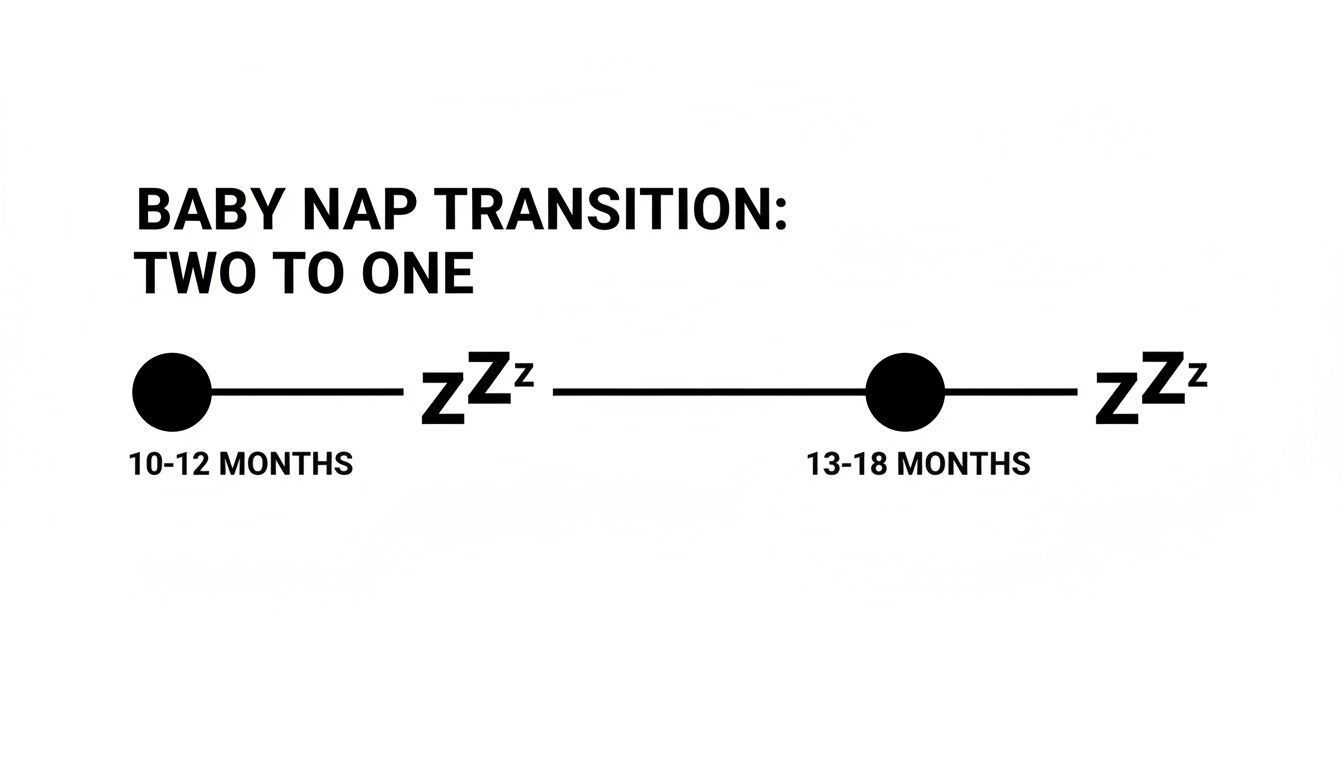
As you can see, this transition is firmly planted in the early toddler years, right after that big first birthday milestone.
To help you get a bird's-eye view of your child's sleep journey, here's a quick roadmap. This table shows how nap needs evolve over time, giving you a clear picture of where you've been and what's coming next.
Your Child's Nap Progression Roadmap
| Age Range | Typical Naps Per Day | Average Total Sleep |
|---|---|---|
| 0-3 months | 3-5+ naps | 14-17 hours |
| 4-6 months | 2-3 naps | 12-16 hours |
| 7-12 months | 2 naps | 11-14 hours |
| 13-18 months | 1-2 naps (transition) | 11-14 hours |
| 18 months – 3 years | 1 nap | 11-14 hours |
| 3-5 years | 0-1 nap | 10-13 hours |
This table is a great guide, but remember, every kid is different. Use it to understand the general progression, not as a rigid set of rules.
Understanding the Nap Progression Timeline
This isn't an overnight switch. It's the final major step in a sleep consolidation process that started way back in the newborn days. It's a different kind of milestone than learning to sit up or figuring out when you stop burping a baby; it's about their internal clock completely rewiring itself.
Research from child sleep studies confirms this timing. The transition from two naps down to one is most common between 13 and 18 months. While most 10-to-12-month-olds are still firmly on a two-nap schedule, by the time they hit 19 to 24 months, the vast majority have settled into a solid one-nap routine.
Dad's Bottom Line: Don't force it. Pushing the one-nap schedule too early will just get you an overtired, miserable toddler. The real key is to watch your kid for consistent signs they're ready, not just circle a date on the calendar.
This transition often lines up with their first birthday, a time when you might be looking for memorable gifts like personalized books for a 1st birthday. It’s all part of recognizing and rolling with the big milestones—in their sleep and their life.
Decoding the Signs Your Toddler Is Ready
Figuring out when to drop to one nap isn’t about a specific date on the calendar. It’s about becoming a detective and learning to read your toddler's unique signals. It’s surprisingly easy to misread the signs, so you need to know the difference between a real cue for change and a temporary "false alarm."
Before you even think about making a change, look for consistent patterns. One rough day or a single weird nap doesn't mean it's time to blow up the whole schedule. We're looking for behaviors that stick around for at least one to two weeks before making a move.
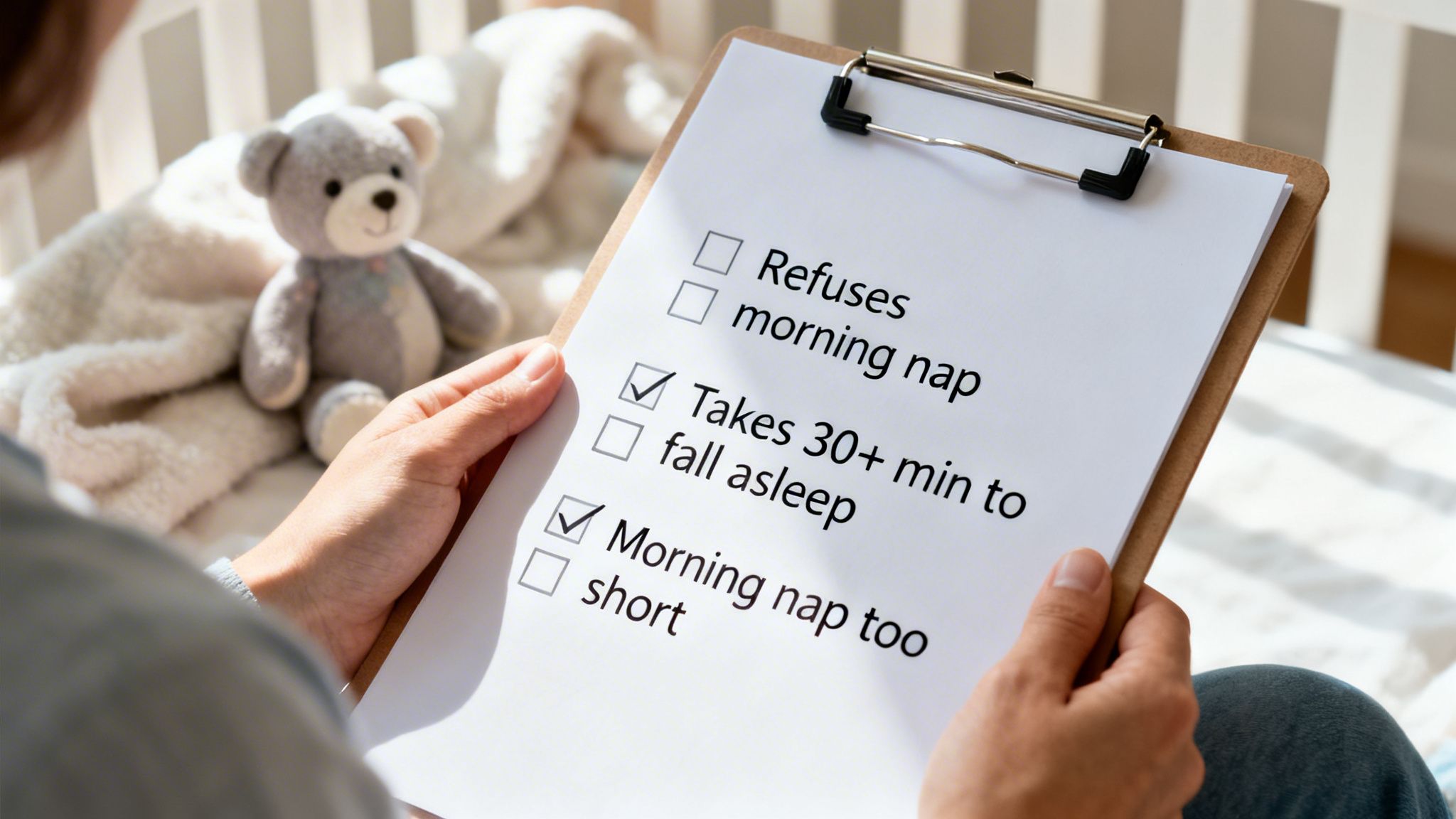
The Definitive Readiness Checklist
If your kid is between 13-18 months and you're seeing several of these signs day after day, they’re probably telling you they’re ready for a change. Think of this as your field guide for spotting the transition.
- Consistently Refusing a Nap: This is the big one. They might fight the morning nap, but more often, they’ll start flat-out refusing the afternoon nap, even when you know they're tired.
- Taking Forever to Fall Asleep: All of a sudden, naps or bedtime involve 30 minutes or more of them fussing, playing, or protesting before they finally pass out.
- Waking Up Happy and Early from Naps: That second nap, which used to be a solid hour or two, turns into a 30-minute “disaster nap.” The key is they wake up cheerful and ready to party, not grumpy.
- Bedtime Battles or Night Wakings Return: Your once-great night sleeper suddenly starts fighting bedtime like a champ. Or maybe they start waking up in the middle of the night or at 5 a.m. again. This is a classic sign they’re getting too much daytime sleep.
Don’t Get Faked Out by False Flags
Sometimes, sleep gets weird for reasons that have nothing to do with nap transitions. These temporary hiccups can look a lot like readiness signs, so it's critical to rule them out before you commit to a major schedule change.
A temporary sleep regression is a storm, but a nap transition is a change in the climate. Don't tear down the house because of a thunderstorm. Make sure the weather pattern has truly shifted.
Before you drop that nap, ask yourself if one of these common culprits is the real problem:
- Teething: Those molars are no joke. Their arrival can disrupt sleep and make your kid miserable and fussy for days.
- Illness: Even a simple cold can throw sleep completely off track while their body fights it off.
- Growth Spurts or Developmental Leaps: Is your toddler learning to walk, run, or talk up a storm? Big brain developments are exhausting and can temporarily mess with sleep patterns.
- A Change in Routine: Did you just get back from vacation? Have houseguests? Any disruption to the normal flow can impact sleep for a little while.
These "false flags" are often paired with other new behaviors, which can sometimes look like the start of the dreaded "terrible twos." You can learn more about how to get a handle on those big emotions in our guide on navigating the terrible twos and threes.
If the sleep issues magically disappear once the tooth pops through or the cold is gone, you’ll have your answer—it wasn't time for a nap transition after all.
A Step-by-Step Nap Transition Playbook
Alright, you've seen the signs, and they’re not just a one-off fluke. It's time to make your move. Winging it is a recipe for an overtired, screaming toddler and a dad who’s about to lose his mind. You need a game plan.
Think of it like a strategic operation. You have two main ways to approach this, and the right one really comes down to your kid’s personality and how much chaos you’re willing to handle for a few days. Some kids need a slow, steady change, while others do better if you just rip the band-aid off.
Strategy 1: The Gradual Shift
This is the most popular route, and for good reason—it’s usually the gentlest on everyone involved. Instead of dropping the morning nap cold turkey, you’re just going to slowly nudge it later and later until it becomes the only nap. This one’s perfect for kids who are more sensitive to change.
Here’s how you run this play:
- Start Pushing the Morning Nap: Begin by delaying the first nap by 15-30 minutes every couple of days. So, if he usually goes down at 9:30 AM, you’ll aim for 9:45 AM for two days, then 10:00 AM, and so on.
- Let the Afternoon Nap Fade: As that morning nap slides later into the day, the afternoon one will naturally get squeezed out. In the beginning, you might need to rescue the afternoon with a quick, 30-minute catnap in the car or stroller to prevent a full-scale meltdown before bedtime.
- Merge into One Midday Nap: The end goal is a single, solid nap that kicks off sometime between 12:00 PM and 1:00 PM. Once you’ve successfully pushed that morning nap to this point, it officially becomes the new one-and-only nap of the day.
This approach takes the edge off by slowly stretching their wake window, which minimizes the overtiredness. The whole process can take anywhere from 2-4 weeks, but it's a much smoother ride. To get through those longer mornings, you'll need an arsenal of things to do. We’ve got you covered with our guide on fun and easy activities for toddlers at home to help you burn that extra time.
Strategy 2: The Direct Switch
This method is exactly what it sounds like. You pick a day, and you just go for it—no more morning nap, period. From day one, you’re aiming for a single nap right in the middle of the day. This works best for more adaptable, easy-going toddlers.
If you’re going for the direct approach, here’s what to do:
- Pick Your Day Wisely: Choose a day when you’re home and have a flexible schedule. This is not the day to try and run a bunch of errands.
- Power Through the Morning: Your mission is to keep your toddler awake and happy until lunchtime. Pull out all the stops: get outside, have an extra snack, introduce a new toy. Whatever it takes.
- Aim for a Midday Nap: Put them down for their one nap around 12:00 PM or 12:30 PM.
- Use an Early Bedtime (This is Critical): If that one nap is short or they’re falling apart by 5:00 PM, an early bedtime is your secret weapon. Don’t hesitate to put them to bed as early as 6:00 or 6:30 PM to fight off the overtired beast.
Here's the bottom line, man-to-man: Whichever strategy you go with, an earlier bedtime is non-negotiable. Your kid is losing a big chunk of daytime sleep, and you have to make up for it at night. This temporary adjustment protects their night sleep and keeps the entire transition from going completely off the rails.
Building a Reliable One-Nap Schedule
Alright, so you’ve made the call to drop a nap. Now comes the most important part: building a new, reliable routine. Consistency is everything here. Getting this right gives your day a predictable flow and, best of all, gives you back huge, usable chunks of time.
Forget thinking of this as a rigid, military-style timetable. It’s more like a framework for your day, one that you can flex when needed. The goal is to anchor everything around one long, restorative nap right in the middle of the day. This predictability isn’t just for your toddler—it’s a game-changer for your own sanity and productivity. You can finally plan your own stuff, whether that's work, a workout, or just a quiet cup of coffee.
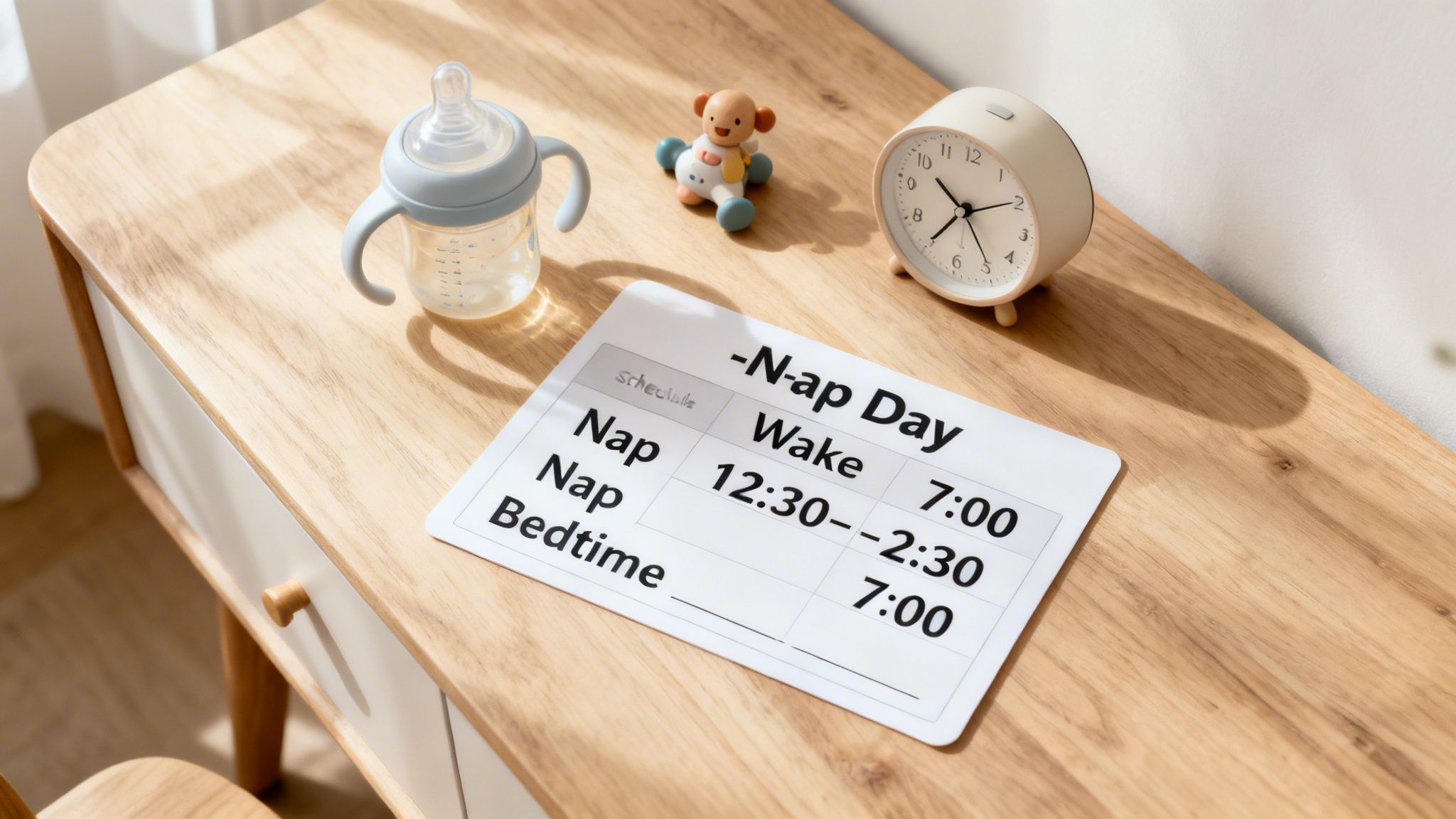
A Blueprint for Your One-Nap Day
The new normal revolves around a much longer morning wake window and that single, consolidated nap. Every kid is a little different, but most toddlers on this schedule can handle being awake for 4-6 hours at a time. This means the nap should land pretty squarely in the middle of their day. The bedrock of this whole system? A consistent morning routine.
Let’s walk through what this looks like in the real world. Think of the following schedule as a solid starting point you can adjust to your own kid’s rhythm.
A good schedule is like a guardrail for your day. It keeps you from swerving into that dreaded overtired-meltdown territory and guides your toddler toward predictable, solid sleep. When they sleep better, the whole family wins.
Getting this new routine locked in doesn't just fix naps; it lays the groundwork for a more organized life. For more on that, check out our guide on how to create a morning routine that sets the whole family up for a win.
Sample One-Nap Daily Schedule
Here's a sample daily schedule to help you visualize how to structure your day around that one big nap. Use it as your template and adjust the times based on your child's natural wake-up time, but try to keep the sequence of events the same each day.
| Time | Activity |
|---|---|
| 7:00 AM | Wake Up & Breakfast |
| 7:30 AM – 9:30 AM | Morning Activity (e.g., park, playtime) |
| 9:30 AM | Snack |
| 10:00 AM – 11:30 AM | More Activity (run errands, play outside) |
| 11:30 AM | Lunch |
| 12:15 PM | Wind-Down & Nap Routine |
| 12:30 PM – 2:30 PM | The Nap |
| 2:30 PM | Wake Up & Snack |
| 3:00 PM – 5:00 PM | Afternoon Activity (quieter play, reading) |
| 5:30 PM | Dinner |
| 6:15 PM | Bath & Bedtime Routine |
| 7:00 PM | Bedtime |
Making the Schedule Work for You
Remember, this is a guide, not a contract. You have to be flexible. If the nap ends up being short one day—and it will happen—don't hesitate to move bedtime up. An earlier bedtime, even around 6:30 PM, can make a huge difference in preventing an overtired kid.
The three most important anchors in your day are wake-up time, the start of the nap, and bedtime. Keep those three pillars as consistent as you possibly can, and you'll find the rest of the day falls into place much more easily.
Troubleshooting Common Nap Transition Problems
Let's be real: even the best-laid plans can go completely off the rails when a toddler is involved. They haven't read the sleep training manual, and some days, this transition is just plain messy. This is your game plan for when things go sideways.
The biggest hurdle you'll face is an overtired, cranky kid. As you start stretching that morning wake window, the late afternoon can quickly turn into a meltdown minefield. The one move that saves the day, time and time again, is a surprisingly early bedtime.
Seriously. Don't hesitate to put your toddler down for the night as early as 6:00 or 6:30 PM. Think of it as a temporary reset button. It stops a cycle of overtiredness before it can sabotage the entire week.
Then there’s the dreaded "disaster nap." You do everything right, they finally go down for their one big nap… and pop up 30-45 minutes later, looking refreshed and ready to party. It's maddening, but the key is not to panic.
When a nap gets cut short, your job is simple: roll with it. Don't try to force a second nap later in the day—that almost always backfires. Just pivot to an even earlier bedtime to compensate for the lost sleep and start fresh tomorrow.
Managing Common Nap Hurdles
Even on a good day, you're bound to hit a few snags. Here’s how to handle the most common frustrations without losing your cool.
- The Accidental Car Nap: You had to run a quick errand, and they passed out for 10 minutes in the car. It’s just enough sleep to ruin the real nap but not nearly enough to be restorative. Your best bet? Write off the scheduled nap for the day and aim for a super early bedtime.
- The Late Afternoon Crankiness: That stretch from 4:00 PM onward can get ugly. Your secret weapon here is shifting to quiet, low-key activities. Break out the books, do a simple puzzle, or put on some calming music. A small, healthy snack can also work wonders for their mood and blood sugar.
- Worsening Night Sleep: Sometimes, dropping a nap causes new problems at night, like waking up when they previously slept through. This is almost always a flashing neon sign of overtiredness. The solution is to double down on that early bedtime until their body catches up to the new one-nap routine.
If the transition feels particularly rough, looking into some well-regarded baby sleep aid products can offer extra support. Above all, sticking to a calm and predictable bedtime routine becomes more important than ever during this phase.
Remember, this whole process typically takes 2-4 weeks. You'll have good days and bad days. Stay consistent, use that early bedtime whenever you need it, and trust that your kid will get there.
Answering Your Top Questions About the One-Nap Transition
Even with the best game plan, this transition can throw some curveballs. You're not alone in hitting a few roadblocks. Here are the questions I hear most often from dads who are in the thick of it.
What if My 12-Month-Old Seems Ready to Drop to One Nap?
I get this question constantly. You've got a 12-month-old who is suddenly fighting their second nap like it's their job, and you're thinking, "Is it time?" My answer: almost certainly not.
What you're likely seeing is a classic sleep regression in disguise. Around this age, huge developmental leaps are happening—they're learning to walk, talk, and explore their world in a whole new way. Their brains are so fired up that shutting down for a nap is the last thing they want to do.
Before you make any drastic changes, just wait it out for a week or two. More often than not, they’ll settle back into their two-nap routine once the novelty of their new skill wears off. Most kids just aren't built to handle the long stretches of awake time on a one-nap schedule until they're at least 13 months old.
How Long Should the One Nap Ideally Last?
When you do make the switch, that single nap becomes the main event. You're aiming for one solid, restorative block of sleep, ideally lasting between 2 and 2.5 hours.
A nap shorter than 90 minutes just won't cut it. It’s not enough quality rest to power them through the afternoon, and you'll end up with a cranky, overtired toddler by dinnertime. If you're getting consistent "disaster naps" of 45 minutes or less, that's your cue to troubleshoot the schedule—usually by bringing bedtime earlier for a bit.
Will Dropping a Nap Affect My Baby's Bedtime?
Yes, and this is probably the most important piece of the puzzle. An early bedtime is your secret weapon during this transition. When you take away that second nap, your kid is going to hit a wall much earlier in the evening.
Don't hesitate to move bedtime up, even as early as 6:00 or 6:30 PM. This isn't a permanent change; it's a temporary fix to prevent them from getting wildly overtired, which can wreck nighttime sleep and make the whole process miserable. Once they adjust and that midday nap gets longer and more consistent, you can slowly push bedtime back to your normal target, like 7:00 PM.
