

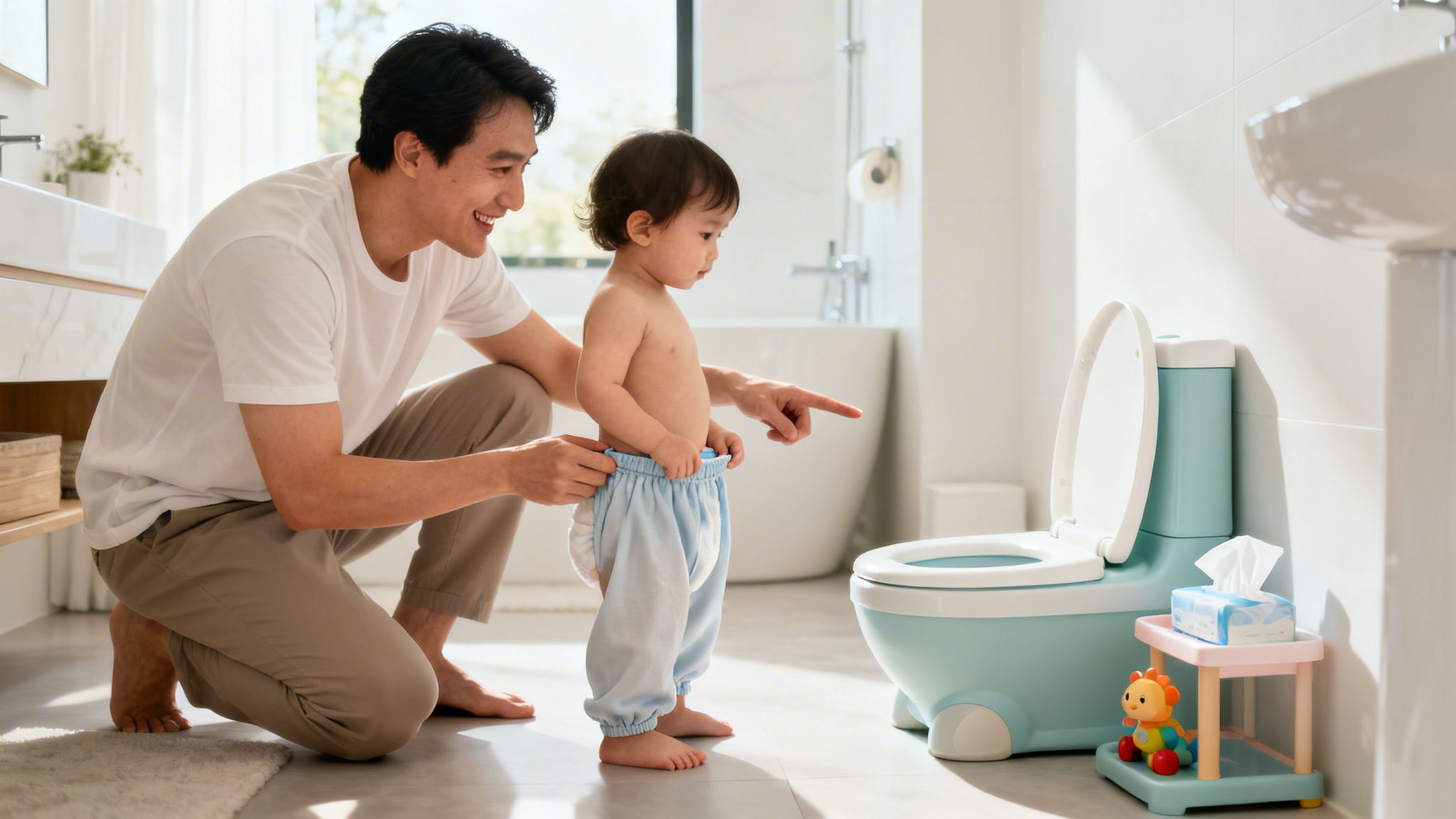
I know what you're thinking. Going straight from diapers to pants sounds like a one-way ticket to nonstop cleanups. But trust me on this—it's also one of the fastest ways to potty train. This direct approach helps your child physically feel the sensation of being wet, forging a powerful and immediate link between the urge to go and the need to get to the potty. Using potty training with pants from the start bypasses the confusion of pull-ups and gets right to the core lesson.
For many toddlers, this is the lightbulb moment that makes everything click. However, it's natural to have concerns about accidents and setbacks. This guide provides step-by-step tips for success, reassurance, and motivational strategies to help you and your child navigate this major milestone with confidence.
When to Start Potty Training with Pants
Let’s be real for a second: that 18 months to 3 years window you always hear about? It’s just a suggestion, not a deadline. True readiness for potty training isn’t about a date on the calendar. It’s about paying attention and learning to spot the specific signals your kid is sending you. Every child develops at their own pace, so look for these signs of readiness:
- Can communicate needs: They might tell you mid-stream, "I'm peeing!" or eventually announce, "I have to go potty!" This verbal heads-up is a game-changer.
- Shows interest in the toilet: Your toddler might start following you into the bathroom, asking questions, and wanting to know what's happening.
- Can pull pants up/down independently: A child who can manage their own clothes is one step closer to potty independence and less likely to have an accident while fumbling with their pants.
- Stays dry for longer: If your child can stay dry for at least two hours or starts waking up dry from naps, it’s a clear sign their bladder control is improving.
- Dislikes the feeling of a wet diaper: If they suddenly start demanding a change right after they go, that discomfort is your best friend in this process.
Don't just watch for one of these signs—look for a cluster of them. True readiness is when the mental, verbal, and physical pieces all start to click into place.
Preparing for Potty Training with Pants

Before you even start the countdown to day one, you need to set the stage. A little prep work goes a long way in turning your home into a potty-friendly environment. The goal here isn’t just about having the right stuff; it’s about removing obstacles so your kid feels empowered, not overwhelmed.
Here’s what you can do to prepare:
- Choose comfortable, easy-to-remove underwear: Opt for loose, elastic-waist pants or shorts. Think sweats, leggings—anything they can push down easily without fumbling with buttons or zippers. Let them pick their own "big kid" training underwear to build excitement.
- Create a potty-friendly environment: Place a small, floor-level potty chair in a main bathroom and another in their primary play area (like the living room). For the main toilet, use a sturdy potty seat insert and a non-slip step stool. Proximity is everything.
- Encourage frequent trips to the potty: Set up a routine of trying the potty at key times: upon waking, before meals, and before naps/bedtime. This creates low-pressure opportunities for success.
- Discuss reward systems or positive reinforcement: Decide if you'll use stickers, small treats, or just enthusiastic verbal praise. A sticker chart can be a powerful visual motivator for many toddlers.
Step-by-Step Potty Training with Pants

You’ve done the prep work, and it’s go-time. This flexible game plan turns potty training with pants into an exciting adventure, not a stressful chore.
Step 1 – Introduce the Concept
Make a big deal out of switching from diapers to underwear. Explain the difference between diapers and underwear, emphasizing that pants don't hold pee like a diaper does. Make a little ceremony out of ditching the diapers. Let your toddler dramatically throw the very last one into the trash can with a big "goodbye!" Then, present the new "big kid pants" like they’re a coveted prize. If you let the child pick their own pants, make a huge deal about it: “You’re a big kid now, so you get to wear these awesome dinosaur pants!”
Step 2 – Establish a Routine
Consistency is your secret weapon. For the first few days, set regular potty breaks built around key moments: upon waking, before and after meals, and before sleep. Between these scheduled trips, observe signs of needing to go, like the classic "potty dance," holding themselves, or getting quiet. The moment you spot a cue, calmly say, "It looks like your body needs to go potty. Let's go try."
Step 3 – Positive Reinforcement
Praise is a game-changer. Praise successes specifically: “Wow, you listened to your body and got all your pee in the potty!” For many kids, sticker charts are pure magic. Use stickers, small treats, or verbal encouragement immediately after a successful potty trip. A simple high-five or a "potty victory dance" can make the process fun and reinforce that they are doing something amazing.
Step 4 – Handling Accidents
Accidents are going to happen. Just accept it now. How you react is one of the most critical parts of this process. Stay calm and avoid punishment. If you show frustration, you risk creating potty anxiety. Say something simple and direct: "Uh oh, you had an accident. That's okay. Pee goes in the potty. Let's get you cleaned up." Teach cleanup as a normal routine by having them help carry wet clothes to the hamper or wipe the floor. This isn't a punishment; it's about natural consequences.
Step 5 – Transitioning to Independence
Once they're getting more consistent, it's time to start pulling back and transitioning from manager to coach. Encourage self-pulling of pants by prompting them, “Okay, time to potty! You can pull your pants down.” As they get the hang of it, gradually reduce assistance and let them start initiating trips themselves. Try asking, “Listen to your body. Does it have anything to tell you?” This fosters true toddler bathroom independence.
Common Challenges and Solutions
Even with a great plan, potty training rarely goes in a straight line. Here’s how to handle common bumps in the road.
- Resistance or fear of the potty: This is incredibly common, often triggered by a loud flush or an uncomfortable experience. Don't force them to sit on it. Instead, make the potty friendly again. Let a favorite toy "go potty," or read books about potty training together.
- Nighttime accidents: Daytime training and staying dry at night are completely separate skills. It's perfectly fine—and expected—for your child to wear a diaper or pull-up for sleep, sometimes until age four or five. Don't let a wet bed at 3 a.m. mess with your daytime progress.
- Regression during illness or travel: Just when you’ve declared victory, you might feel like you’re back at square one. This is potty training regression, usually a response to stress or big changes. Meet it with empathy, not frustration. Return to more frequent reminders and praise every small success.
- Tips for managing multiple children: If training a younger child while caring for others, try to dedicate a few days exclusively to the potty trainer. Use older siblings as positive role models who can cheer on their younger brother or sister.
Benefits of Potty Training with Pants
Choosing the pants method comes with significant advantages that go beyond just ditching diapers. This approach actively supports your child’s development in key ways.
- Builds independence and confidence: Moving into "big kid" pants is a huge milestone that makes them feel capable and proud. It’s a tangible symbol of growing up that fosters toddler bathroom independence.
- Helps children recognize bodily signals: Without a super-absorbent diaper, they learn to recognize the feeling of a full bladder before an accident happens. This is the absolute foundation of potty independence and is a key part of how to develop self-awareness in children(https://thatsokay.co.uk/blogs/news/how-to-develop-self-awareness).
- Easier transition to school or daycare: Many preschools and daycares require children to be potty trained. Mastering this skill at home makes the transition smoother and less stressful for everyone.
- Promotes healthy hygiene habits: This process is the perfect time to teach the basics of wiping, flushing, and washing hands, setting them up for a lifetime of good hygiene.
Expert Advice
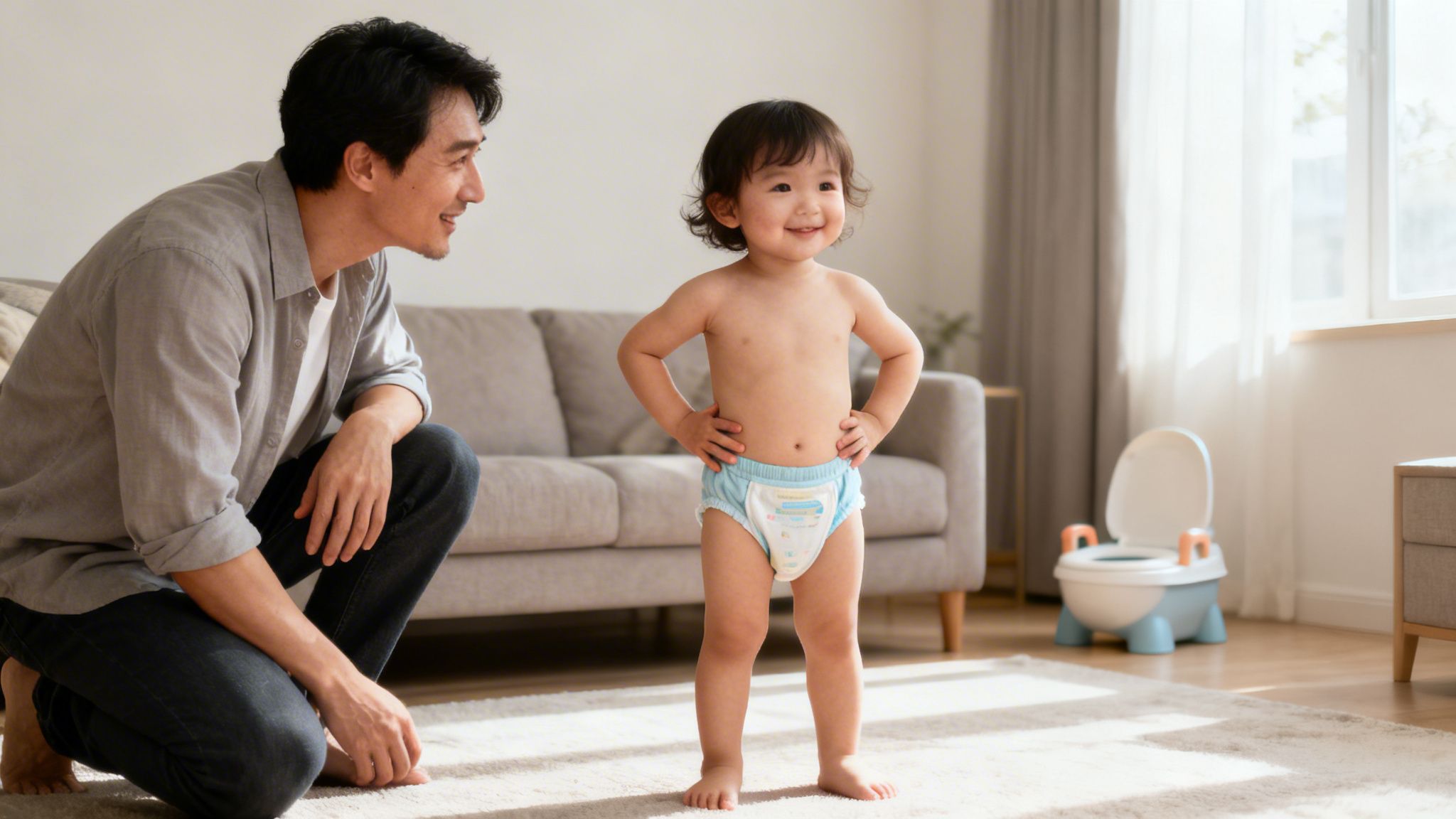
Pediatrician tips: Most pediatricians advise parents to look for signs of readiness rather than focusing on age. They emphasize that a low-pressure, positive environment is key. If you encounter significant resistance or signs of a medical issue (like pain during urination), consult your child’s doctor.
Child development perspectives: Experts agree that potty training is a natural developmental process, not a race. A child's ability to control their bladder and bowels is linked to neurological and muscular development. Forcing the issue before they are physically and emotionally ready can lead to power struggles and setbacks, which are common during the navigating the challenging toddler years.
Recommended potty-training schedules or techniques: While a strict schedule isn't recommended, a consistent routine is. The "Oh Crap! Potty Training" method by Jamie Glowacki is a popular technique that also advocates for ditching diapers and pull-ups from day one to improve body awareness.
Frequently Asked Questions (FAQ)
Can potty training with pants work for stubborn toddlers?
Yes, in fact, it's often the best approach. A "stubborn" toddler is often just expressing a desire for control. Sidestep power struggles by offering choices: "Do you want to use the little potty or the big one?" or "Should we race to the bathroom or hop like bunnies?" This gives them a sense of control and makes them more cooperative.
How long does potty training usually take?
There's no magic number, but with a consistent plan, most families see real progress within 3 to 7 days. "Trained" is a moving target; daytime dryness is the first hurdle. Naps and nighttime can take months or even a year longer. Your consistency matters more than speed.
What to do if my child refuses underwear?
This is common. If they fight underwear because it feels too much like a diaper, try going "commando" at home for a day or two. Let them wear loose pants with nothing underneath. This makes the cause-and-effect of an accident immediate and obvious. Once they're having more success, reintroduce training underwear as a cool "big kid" milestone.
Should I use rewards or just verbal praise?
This depends on your child. For many, your genuine excitement is enough. A big "You did it!" can be incredibly motivating. Others respond well to tangible rewards like a sticker chart. The goal isn't to bribe them, but to find what truly motivates them. Keep it simple and immediate for the best results.
Conclusion
Successfully potty training with pants boils down to preparation, patience, and a positive mindset. By watching for signs of readiness, creating a supportive environment, and following a consistent routine, you set your child up for success.
Remember to celebrate the small wins and handle accidents with calm confidence. This is a journey, not a race. Be patient and consistent, and reassure yourself that potty training accidents are a normal part of the learning process. Your persistence will pay off, leading to a confident, independent child and a diaper-free future.
At alphadadmode.com, our mission is to provide the no-nonsense, practical guidance you need to lead your family with confidence. From mastering potty training to handling life's other big challenges, we've got your back. Explore more practical parenting strategies at alphadadmode.com.
Preserved Invisible Links and Data for Context (Not Part of Article):

