

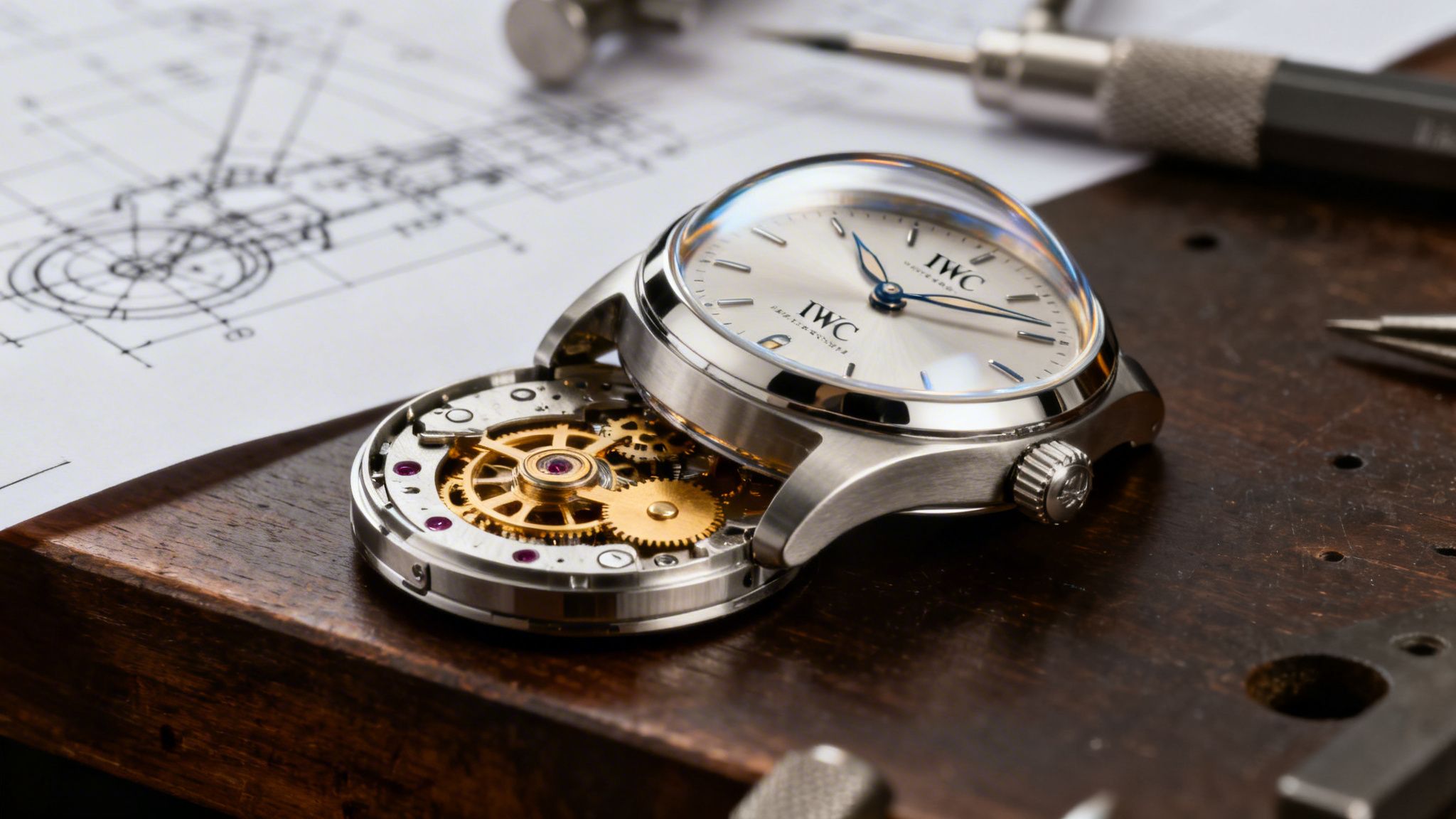
When you think of International Watch Company, or IWC Schaffhausen as it’s better known, you’re thinking of a very particular kind of luxury watch. Did you know that IWC, with an estimated annual production of only around 90,000 timepieces, is one of the more exclusive top-tier brands compared to giants like Rolex who produce over a million? These aren’t just pretty accessories; they are serious, purpose-built instruments known for their incredible engineering, durability, and a clean, confident style. An IWC on the wrist signals an appreciation for function over flash, a choice favored by those who understand the deep history of horological innovation.
The Engineering-First Heart of IWC
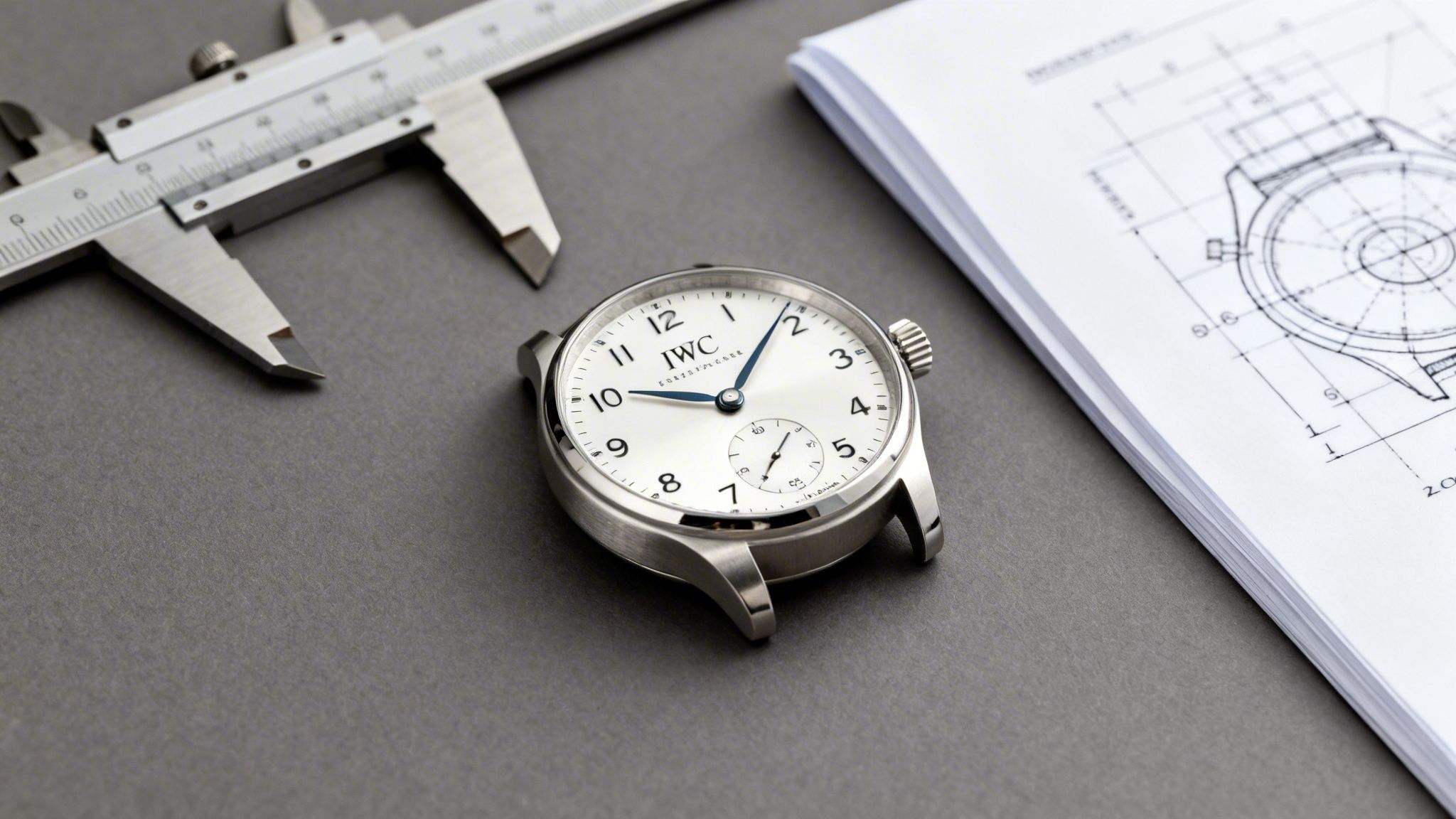
In the often-dazzling world of Swiss watches, IWC has always cut its own path. While some brands chase trends or focus on elaborate decoration, IWC has stayed true to its founding mission: Probus Scafusia, which translates to "good, solid craftsmanship from Schaffhausen." It’s more than a motto from 1903; it's the core belief system that has guided the company for over a century.
This engineering focus isn't a modern marketing angle—it’s been there from day one. It all started back in 1868 when an American engineer, Florentine Ariosto Jones, traveled to Switzerland with a radical idea. He wanted to combine American industrial efficiency with the legendary precision of Swiss watchmakers to produce high-quality movements for the American market. He chose Schaffhausen for its hydropower, setting up a factory to build watches with an engineer's mindset.
Form Follows Function, Every Time
You can see this philosophy in action the moment you look at an IWC. The design language is clear and direct, much like the instruments in an aircraft cockpit. Every detail is there for a reason, and that reason is almost always readability and performance.
- Unmistakable Legibility: Dials are typically clean and uncluttered, with high-contrast hands and markers that are easy to read at a glance.
- Practical Complications: When IWC adds a feature like a chronograph or a perpetual calendar, it’s designed to be intuitive and useful in the real world.
- Built to Last: These watches are constructed to handle demanding environments, whether it’s the cockpit of a fighter jet, the pressure of a deep-sea dive, or simply the rigors of daily life.
This unwavering commitment to substance has earned IWC a dedicated following among collectors who know what they're looking for. It's a focus on quality over sheer quantity that’s becoming increasingly relevant today.
We're seeing a fascinating shift in the watch market. In the first half of 2022, for example, the number of luxury watches sold actually dropped by 30.4% compared to 2019, yet overall revenue held strong. This tells us that buyers are moving away from mass-produced glitz and are instead willing to invest more in brands with true craftsmanship and history—a trend that plays directly to IWC's strengths. You can explore more about this market shift and what it means for the industry.
An Investment in Horological Innovation
Choosing an IWC is an investment in a rich history of technical achievement. This is the brand that pioneered the use of titanium and ceramic in watch cases long before it was fashionable. It’s also the brand that gave us game-changing innovations like Kurt Klaus’s legendary perpetual calendar, a masterpiece of mechanical engineering.
Think of this guide as your personal tour of the IWC universe. We'll dive into the hallmark collections, unpack the technology that makes them tick, and give you the practical advice you need, whether you're a lifelong enthusiast or just starting your journey into the world of fine watches.
The Unwavering Heritage of IWC Schaffhausen
To really get a feel for an IWC watch, you have to understand where it comes from—and the story doesn't start where you might expect. It begins not in the traditional French-speaking watchmaking valleys of Switzerland, but in Schaffhausen, a German-speaking city powered by the mighty Rhine Falls. This was the deliberate choice of the brand’s founder, a trailblazing American engineer and watchmaker named Florentine Ariosto Jones.
Back in 1868, Jones had a radical idea. He wanted to combine the efficiency of American industrial manufacturing with the time-honored skill of Swiss artisans. His plan was to use the Rhine's hydropower to run a modern factory that would produce high-quality pocket watch movements for the American market. It was a fascinating mix of New World ambition and Old World precision, establishing an engineering-first mindset that still defines IWC today.
Pioneering Purpose-Built Timepieces
This focus on engineering wasn't just a concept; it quickly translated into some of the most iconic watches ever made. By the early 20th century, IWC was already building a reputation for tough, reliable instruments. This legacy was truly cemented in the 1930s with two foundational collections that remain pillars of the brand.
First, in 1936, IWC introduced a watch designed specifically for aviators, creating the template for the legendary Pilot’s Watch. Then, just three years later in 1939, the company answered a request from two Portuguese businessmen who wanted a large wristwatch with the accuracy of a marine chronometer. The result was the elegant and oversized Portugieser. You can dive deeper into the brand’s formative years and its unique blend of engineering and aesthetics on Chrono24.
These weren't just new models. They were statements that proved IWC could build watches for specific, demanding jobs. The Pilot’s Watch was all about clear legibility and durability in a vibrating cockpit, while the Portugieser was about bringing navigational-grade accuracy to the wrist.
Innovation in the Face of Crisis
When the "quartz crisis" hit the Swiss watch industry in the 1970s and 80s, many historic brands went under. IWC, however, did what it does best: it engineered its way out of the storm. Rather than give up on mechanical movements, the company doubled down on technical innovation and materials science.
It was during this period that IWC really made its mark as a pioneer in advanced materials.
- Titanium: IWC was one of the very first brands to master the difficult process of machining titanium for watch cases. This resulted in timepieces that were incredibly light, strong, and resistant to corrosion.
- Ceramics: The company also led the way in developing black zirconium oxide ceramic cases, which offered incredible scratch resistance and a cool, stealthy look.
This innovative spirit was perfectly captured in the work of legendary watchmaker Kurt Klaus. In 1985, he developed a brilliant perpetual calendar module that was both mechanically elegant and unbelievably simple to use—the entire complication could be adjusted just by using the crown. This became a signature of IWC's technical expertise.
Owning an IWC is like owning a piece of engineering history. It’s more than just a luxury watch; it’s a direct link to over 150 years of innovation, from the first purpose-built pilot’s instruments to the material science that helped save the brand.
This heritage isn't locked away in a museum. It’s alive and ticking in every single watch that leaves the Schaffhausen factory today. The classic design language of the original Portugieser and the no-nonsense clarity of the first Pilot’s Watches are still easy to spot in the modern collections. This deep, authentic history gives the brand a substance that few others can claim, making every IWC a legacy to be worn, used, and one day, passed on.
Exploring The Six Iconic IWC Watch Collections
Getting to know IWC means understanding its six core watch families. Each one has a completely distinct personality and a clear mission, but they all share that unmistakable IWC DNA of robust engineering and impeccable design. Think of them as six different specialists, all graduated from the same prestigious academy. Finding the right IWC is simply a matter of figuring out which specialist’s character clicks with your own.
This lineage chart perfectly captures the brand's dual identity, tracing a direct line from IWC's founder to two of its most important pillars.
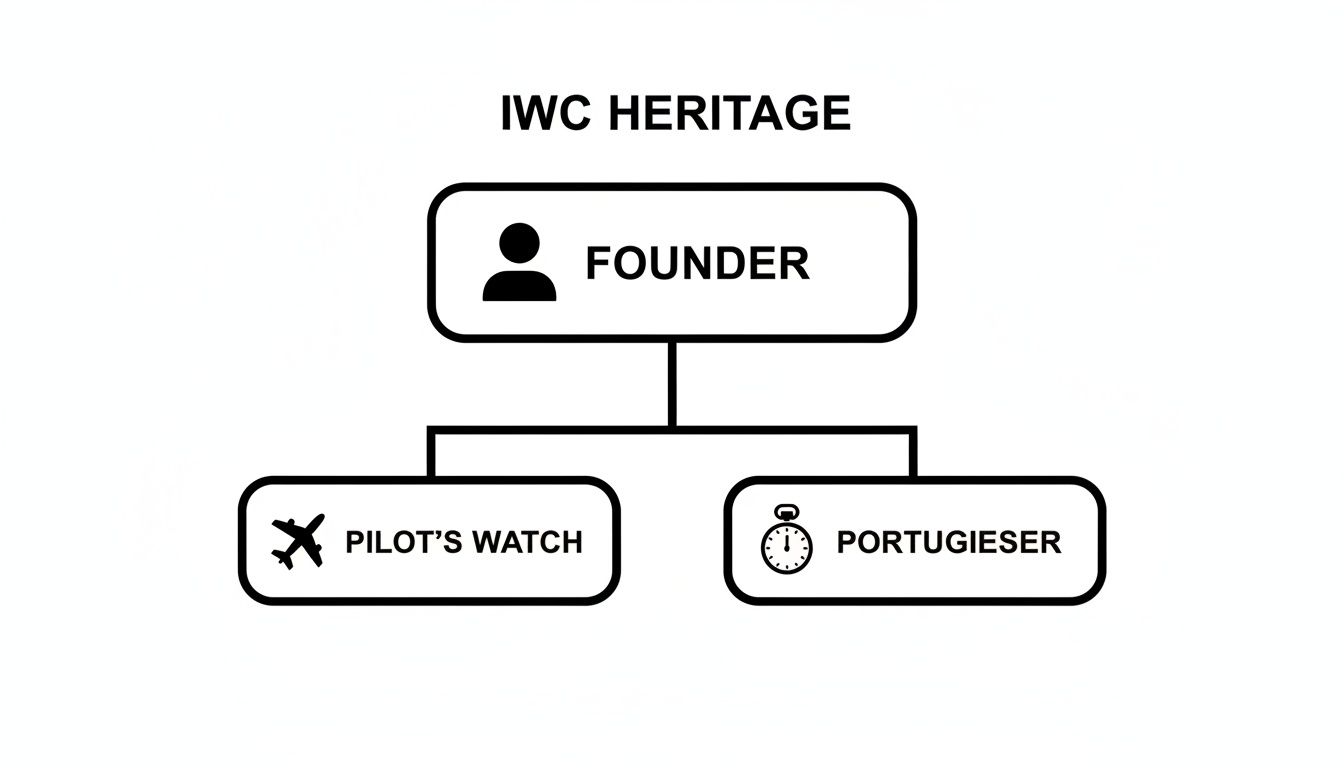
You can see how the brand was built on two foundational concepts: the rugged, purpose-built tool watch (the Pilot’s Watch) and the supremely elegant, high-precision instrument (the Portugieser). This contrast is the key to the incredible diversity you see across their entire catalog today.
To help you get a quick sense of the landscape, here's a look at how each of the six main IWC collections stacks up.
IWC Watch Collections At a Glance
| Collection | Core Identity | Style | Ideal For The Wearer Who… |
|---|---|---|---|
| Pilot’s Watch | Aviation Heritage & Tool Watch | Utilitarian, Bold, Legible | …values rugged functionality and a piece of history. |
| Portugieser | Navigational Precision & Elegance | Classic, Refined, Oversized | …appreciates sophisticated complications and boardroom presence. |
| Portofino | Understated Italian Luxury | Minimalist, Timeless, Graceful | …prefers quiet confidence and versatile, classic style. |
| Aquatimer | Deep Sea Exploration & Sport | Robust, Sporty, Functional | …leads an active life and needs a high-performance dive watch. |
| Ingenieur | Technical Prowess & Anti-Magnetism | Industrial, Genta-Inspired, Sleek | …is fascinated by material science and iconic 70s design. |
| Da Vinci | Haute Horlogerie & Innovation | Artistic, Complex, Avant-Garde | …is a connoisseur of mechanical genius and creative watchmaking. |
Now that you have the bird's-eye view, let's dive into the story and soul behind each of these incredible collections.
The Pilot’s Watches: For The Adventurer
When most people picture an IWC, this is the watch that comes to mind. The Pilot’s Watch collection is the absolute heart of the brand, a direct link to its history of creating instruments for the cockpit starting way back in 1936. These were never designed to be fashion accessories; they were built for survival, prioritizing absolute legibility, toughness, and resistance to magnetic fields.
Their design is pure, distilled function: big, high-contrast dials you can read at a glance, oversized crowns that can be operated with gloves, and tough-as-nails cases. Today, that legacy lives on in lines like the classic Mark series, the high-tech Top Gun models made from advanced ceramics, and the legendary "Big Pilot," a modern icon with a presence you can't ignore.
An IWC Pilot’s Watch isn't just a timepiece; it's a piece of aviation history on your wrist. It’s the natural choice for the pragmatist, the adventurer, and anyone who respects a design that's been proven in the most challenging conditions imaginable.
The Portugieser: For The Visionary
The Portugieser story began in 1939 not as a design exercise, but as a practical solution. Two Portuguese businessmen requested a wristwatch with the accuracy of a marine chronometer—a tall order at the time. IWC’s ingenious answer was to take a highly precise pocket watch movement and house it in a large wristwatch case. The result was an aesthetic that was both unusually large for its day and stunningly elegant.
That spirit defines the collection today. The Portugieser is known for its clean, open dials and sophisticated complications, including some of the most intuitive and beautiful annual and perpetual calendars ever made. It’s the quintessential IWC dress watch, but one with an intelligent, confident soul.
The Portugieser is for the person who thinks three moves ahead—the leader who values precision, clarity, and design that stands the test of time. It’s a boardroom watch with an engineer’s mind, and it pairs just as well with a business suit as it does with formal wear. If you're dialing in that black-tie look, our guide on how to properly wear a tuxedo can help you nail the details.
The Portofino: For The Connoisseur Of Elegance
If the Pilot's Watch is for the cockpit, the Portofino is for the coast. Inspired by the relaxed, chic lifestyle of the Italian Riviera, this collection is all about understated luxury. These watches are classic, clean, and perfectly proportioned, making them arguably the most traditionally elegant timepieces in the IWC lineup.
With their simple round cases, delicate Roman numerals, and slim hands, they are the very picture of timeless good taste. The Portofino is for the person who exudes quiet confidence, not someone who needs their watch to shout. It's effortlessly versatile, looking just right whether you're closing a deal or escaping for the weekend.
The Aquatimer: For The Explorer
As the name implies, the Aquatimer is IWC’s dedicated deep-sea instrument. First launched in 1967, these dive watches are engineered from the ground up to be tough, reliable, and perfectly legible deep beneath the waves. One of their coolest innovations is the SafeDive system, a brilliant design that gives you the ease of an external bezel with the safety of an internal one.
The collection is characterized by its bold, powerful designs and use of corrosion-resistant materials, making it a true high-performance sports watch. It’s the ultimate companion for the modern explorer, whether your adventures are aquatic or purely urban.
The Ingenieur: For The Scientist
First hitting the scene in 1955, the Ingenieur (French for "engineer") was created for a very specific customer: the scientists and technicians working in the new high-tech labs of the post-war era. Its defining feature was a soft-iron inner cage that shielded the movement from the powerful magnetic fields that could wreck a normal watch's accuracy.
The collection was famously reimagined in the 1970s by the legendary designer Gérald Genta, who gave it a revolutionary integrated bracelet and a sharp, industrial look that still feels modern today. The Ingenieur has always been IWC's tribute to technical brilliance, making it the perfect watch for anyone who gets excited by great design and material science.
The Da Vinci: For The Innovator
The Da Vinci line has always served as IWC’s creative laboratory. This is where the brand shows off its most forward-thinking ideas, both mechanically and aesthetically. It was in a Da Vinci, back in 1985, that Kurt Klaus's game-changing perpetual calendar—so simple to set with just the crown—made its debut. The family was also where IWC first pioneered the use of black ceramic in watch cases.
Often recognized by its unique articulated lugs and complex movements, the Da Vinci collection is a true marriage of art and science. It speaks to the innovator, the art lover, and the connoisseur of high-level watchmaking who appreciates when mechanical genius is matched by genuine beauty.
The Art and Science Inside an IWC Watch
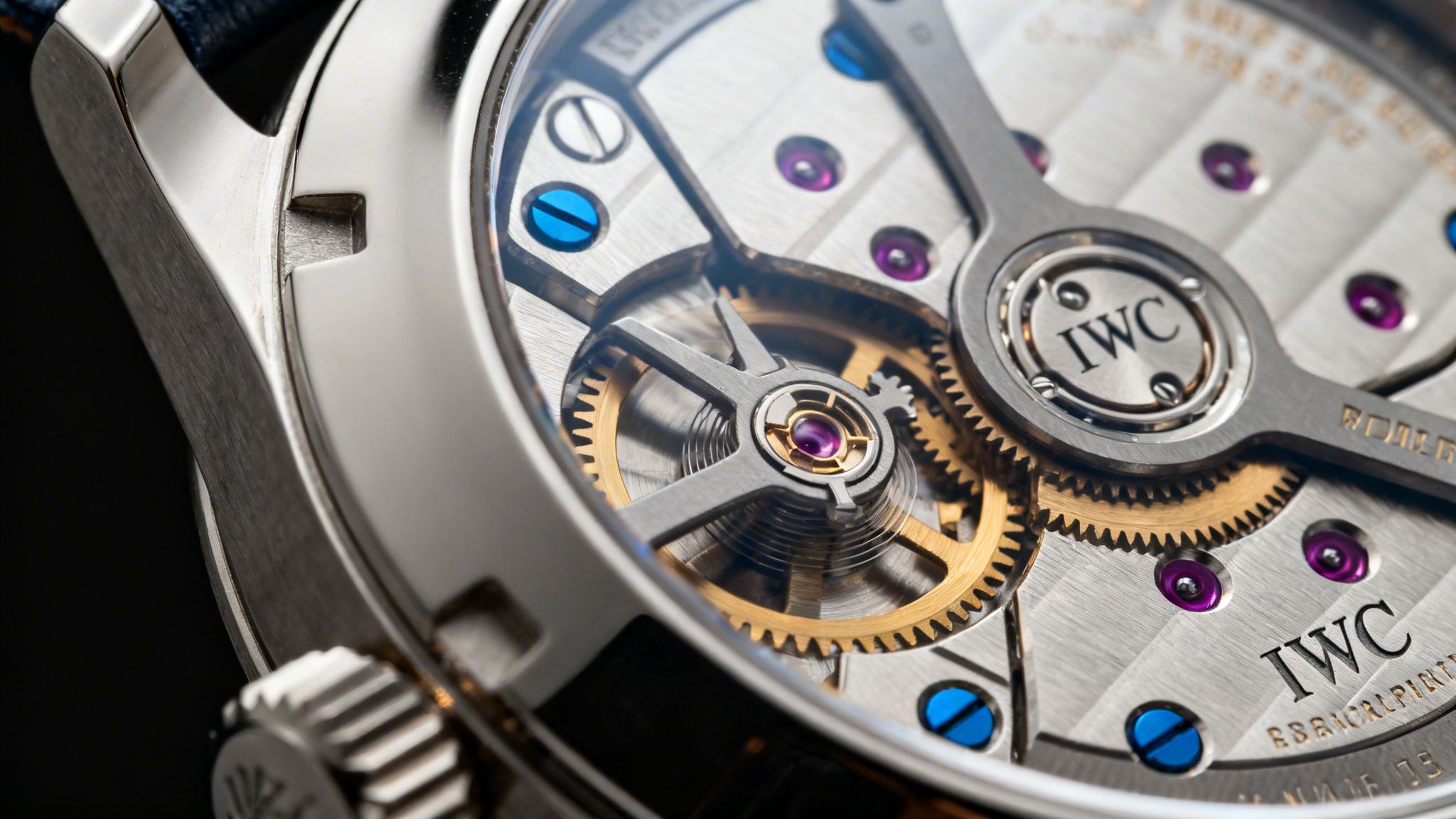
While the face of an IWC is what grabs your attention, the real story—the soul of the watch—is ticking away just beneath the dial. Looking through the sapphire crystal caseback is like peering into the engine bay of a supercar. Every gear, spring, and jewel is a testament to the brand's "form follows function" ethos, engineered for nothing less than precision, durability, and absolute reliability.
At the heart of every IWC is its caliber, which is the watchmaking term for the movement. IWC has a deep and storied history of developing its own movements from scratch. This is a massive commitment to "in-house" manufacturing that truly separates the master watchmakers from the brands that just assemble pre-made parts.
The Power of In-House Calibers
When we say a movement is in-house, it means IWC is designing, building, and assembling the watch's engine from the ground up. This gives them total control, paving the way for unique innovations like Kurt Klaus’s legendary perpetual calendar or the incredibly efficient Pellaton winding system. This brilliant bi-directional system uses the slightest movement of your wrist to wind the mainspring, making it remarkably efficient and tough.
At its core, an IWC in-house caliber is a statement of capability. It’s proof that the brand has mastered the complex art of horology from both a micro-mechanical and an engineering perspective.
This focus on craftsmanship over sheer volume is reflected in their production numbers. Industry insiders estimate that IWC produces around 80,000 to 90,000 watches each year. That deliberate pace, managed by a team of about 750 skilled employees, ensures that meticulous work wins out over assembly-line speed. You can often find discussions about IWC's production scale on enthusiast forums.
Pioneering Advanced Materials
IWC’s engineering obsession doesn’t stop at the movement. It’s one thing to build a world-class engine, but it’s another to build the chassis that protects it. Long before it was fashionable, IWC was a trailblazer in using advanced materials to create cases that were tougher, lighter, and more resistant to the real world.
- Titanium: IWC was one of the very first watchmakers to figure out how to work with this notoriously difficult metal back in the 1980s. The result? Timepieces that were feather-light, hypoallergenic, and exceptionally resistant to corrosion.
- Ceramics: The brand also led the charge in using black zirconium oxide ceramic for watch cases. This gave their watches phenomenal scratch resistance and a cool, stealthy look that has since become iconic.
- Ceratanium®: This is IWC's proprietary masterpiece. A special alloy, it combines the lightness of titanium with the near-indestructible hardness of ceramic, all finished in a signature matte black.
Think of it this way: a Formula 1 car uses a carbon fiber monocoque for strength and low weight. IWC uses these materials for the exact same reasons—to create a protective shell that’s both incredibly durable and comfortable to wear. Crafting components from these materials requires specialized tools and know-how, much like you’d find in a professional's space. For anyone looking to set up their own area for detailed projects, our guide on how to build a workshop bench has some great tips. This material science ensures an IWC is built not just for the boardroom, but for any adventure you throw at it.
A Practical Guide to Buying and Owning Your IWC
Deciding to buy an IWC timepiece is more than just a purchase; it's an investment in a piece of engineering history. It’s an exciting moment, but it’s also the start of a journey. To make sure you end up with the right watch and keep it that way for decades, you need a good roadmap. The experience should be just as satisfying as finally strapping it on your wrist.
First things first: you need to figure out which watch fits your life. Are you the type who feels the call of a rugged Pilot’s Watch, or is the polished elegance of a Portugieser more your speed for the daily grind? Think about your budget, your personal style, and what you’re really looking for. Is this a tough, everyday tool or a sophisticated work of art for special moments?
New Versus Pre-Owned IWC Timepieces
Once you've zeroed in on a collection, your next big decision is whether to buy brand new from an authorized dealer (AD) or dive into the pre-owned market. Each route has its own set of pros and cons.
| Buying Method | Pros | Cons |
|---|---|---|
| New from an AD | Full manufacturer warranty, absolutely pristine condition, the whole unboxing experience, access to the very latest models. | The highest upfront cost, and you'll likely take an immediate depreciation hit on some models. |
| Pre-Owned | Significant cost savings, a shot at discontinued or rare references, and often better value retention over time. | The risk of fakes or undisclosed damage, no factory warranty (unless certified), and signs of previous wear. |
Making the right call here comes down to your priorities. Buying new is all about that fresh-from-the-factory peace of mind. The pre-owned world, on the other hand, is where you'll find incredible value and a much deeper catalog of IWC's history.
To help bridge this gap, IWC has a fantastic program called "IWC. Curated." Their own watchmakers source, fully restore, and certify vintage and pre-owned pieces. Each one comes with a new eight-year warranty, giving you the character of a historic watch with the confidence of buying new.
What to Look For When Buying
Whether you go new or pre-owned, verifying the watch is genuine is absolutely paramount. Always, always insist on the original box and papers. This isn't just about collectibility; the warranty card and manuals should have serial numbers that perfectly match the engraving on the watch's caseback. Get a close look at the watch itself. The dial printing should be razor-sharp, the hands perfectly aligned, and the case finishing should feel immaculate—these are the tell-tale signs of real IWC quality.
Of course, a love for precision engineering often extends beyond watches. For those who appreciate having the right tool for any job, there’s a whole world of gear to explore. Take a look at our guide on the best tools for dads for some great ideas.
Finally, remember that owning an IWC is a commitment to its upkeep. The brand recommends a complete service every 5 to 8 years. This keeps the movement running accurately and ensures the case maintains its water resistance. Think of it as a crucial investment in protecting your watch so it can perform perfectly for a lifetime—and beyond. With this advice in hand, you're ready to make a choice that will bring you years of satisfaction.
IWC Timepieces: A Summary of Pros and Cons
Choosing a luxury watch is a personal decision, and while IWC Schaffhausen has a stellar reputation, it's wise to weigh the good against the bad. Here’s a balanced look at what makes IWC a fantastic choice, and what might give you pause.
The Upside of Owning an IWC
- Engineering and Innovation: This is IWC's calling card. From in-house movements with clever complications to pioneering materials like titanium and Ceratanium®, you're buying a piece of advanced engineering.
- Understated Luxury: IWC watches are rarely flashy. They project a quiet confidence and an "if you know, you know" appeal, making them a sophisticated choice for those who value substance over spectacle.
- Rich Heritage and Iconic Designs: With a history stretching back to 1868, IWC offers authentic, purpose-built designs like the Pilot's Watch and Portugieser that have stood the test of time.
- Exclusivity: With a relatively low production volume compared to other giants, owning an IWC feels more special and less common.
Potential Downsides to Consider
- Value Retention: While many models hold their value well, they generally don't see the same meteoric appreciation as certain Rolex or Patek Philippe models. It's an investment in craftsmanship, not a speculative asset.
- Size: Many of IWC's most iconic designs, like the Big Pilot and Portugieser, are traditionally large. While they've introduced smaller sizes, those with slender wrists might find some core models overpowering.
- Service Costs: As with any high-end mechanical watch, maintenance is essential and can be costly. A full service every 5-8 years is a necessary investment to keep it in peak condition.
Ultimately, for those who prioritize technical substance, authentic history, and a design language that favors clarity over clutter, the pros of owning an IWC overwhelmingly outweigh the cons.
Why an IWC Is More Than Just a Timepiece

When you get right down to it, choosing an IWC isn’t really about buying a watch. It’s about a mindset. These IWC timepieces are for those who value substance over flash, integrity over hype. It’s a statement, but a quiet one—a nod to your own achievements, not a shout for outside approval.
An IWC becomes a part of your journey. It’s a tool built to an incredible standard, ready for anything, but it’s also a marker of where you've been and where you’re going. You’re not just buying a piece of engineering; you're investing in a legacy of precision that’s built to outlast you.
An IWC on your wrist is a future heirloom. It doesn’t just hold the history of its maker; it starts to hold yours, becoming a tangible piece of your story for the next generation.
Think of it as both a trusted tool and a personal treasure. It does its job perfectly, day in and day out, all while reflecting the same care and attention to detail you put into your own life. And just as the watch speaks to a higher standard, so does your overall presentation. A proper fitting suit is the perfect complement to that understated confidence.
Frequently Asked Questions About IWC Timepieces
Here are answers to some of the most common questions potential buyers and collectors have about IWC watches.
Is IWC better than Rolex?
"Better" is subjective, as they excel in different areas. Rolex is the king of brand recognition and market value, known for its iconic, virtually indestructible watches. IWC stands out for its engineering-first philosophy, complex in-house movements, and pioneering use of materials like titanium and ceramic. An IWC is often seen as a more understated, "insider's" luxury choice compared to the universal status symbol of a Rolex.
Are IWC watches a good investment?
IWC watches are an excellent investment in craftsmanship and heritage, but not typically a high-yield financial one. While popular models from the Pilot’s and Portugieser collections hold their value very well, they don't experience the same rapid appreciation as some other brands. The return is in owning a superbly engineered timepiece that will last for generations.
Why are IWC watches so expensive?
The cost of an IWC timepiece reflects several factors: extensive research and development for in-house movements and materials like Ceratanium®; the use of high-quality, durable components; the meticulous hand-finishing and assembly by skilled Swiss watchmakers; and the brand's rich 150+ year history of innovation. Their limited annual production also adds to their exclusivity and value.
What is the most iconic IWC watch?
While several models are iconic, the Big Pilot's Watch is arguably the most recognizable symbol of IWC. Its massive 46mm case, oversized conical crown, and ultra-legible dial are directly descended from the B-Uhr observation watches of the 1940s. Close behind is the Portugieser Chronograph, celebrated for its elegant and perfectly balanced dial design.
How often should an IWC watch be serviced?
IWC recommends a complete service every 5 to 8 years. Regular maintenance is crucial to ensure the movement's accuracy, lubricate mechanical parts, and replace gaskets to maintain water resistance. Adhering to this schedule is the best way to protect your investment and ensure your watch performs flawlessly for a lifetime.
Is IWC considered a high-end luxury brand?
Absolutely. IWC is a member of the haute horlogerie (high watchmaking) world. It stands alongside other prestigious brands as a true manufacturer that develops its own complex movements, has made significant historical contributions to watchmaking, and is part of the Richemont luxury group.
Who wears IWC watches?
IWC watches appeal to individuals who appreciate engineering, history, and understated style. They are popular among pilots, engineers, architects, and discerning professionals. Celebrity ambassadors like Lewis Hamilton and Tom Brady embody the brand's spirit of performance and precision, but its core appeal is to anyone who values substance over pure status.
At alphadadmode.com, we believe in making informed decisions that build a legacy of strength and integrity. Exploring the world of IWC is about more than just watches; it's about appreciating the discipline, engineering, and timeless value that you can apply to every aspect of life. Visit us to discover more.
