


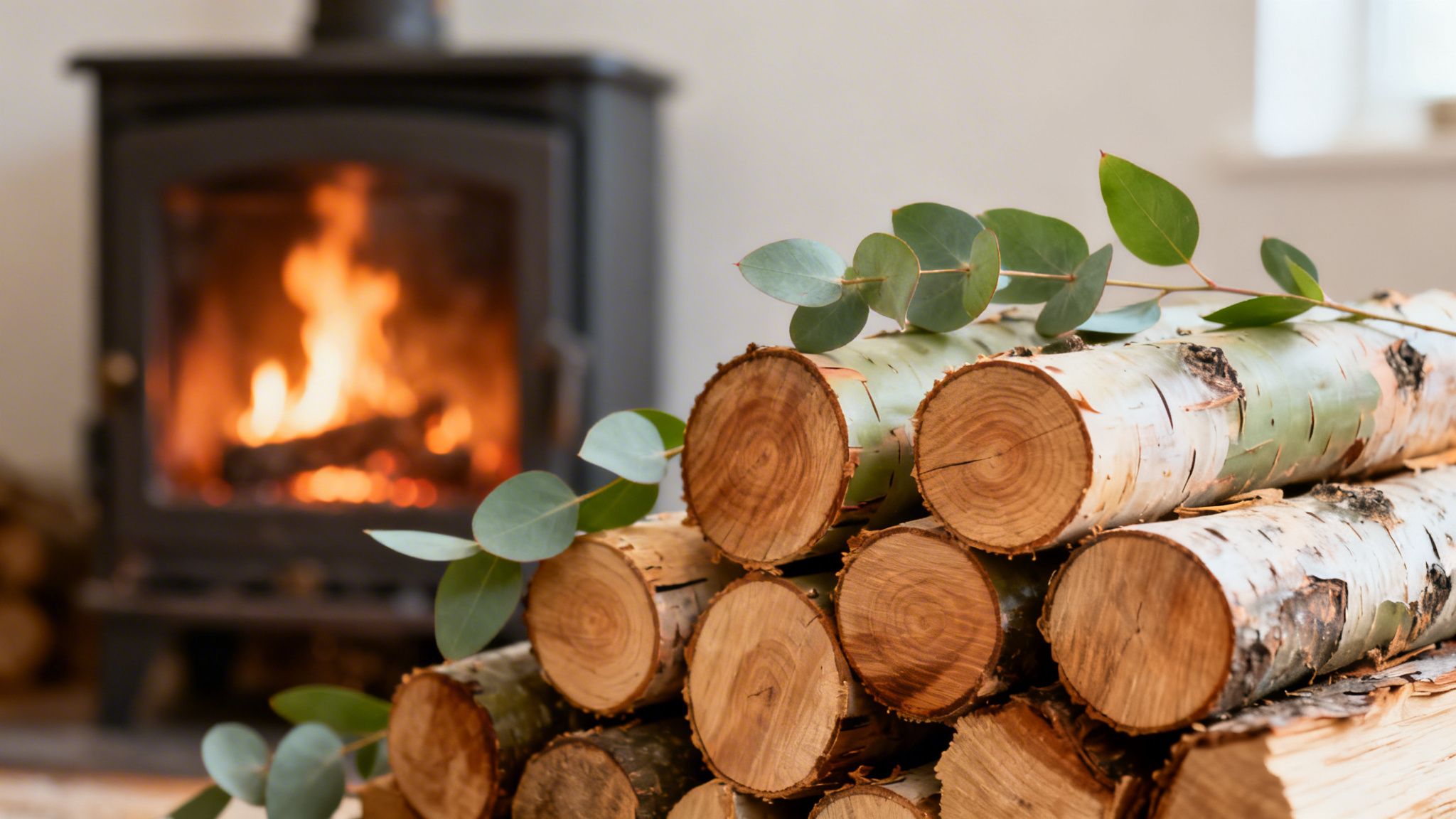
Yes, eucalyptus is excellent firewood, but it’s the kind of wood you need to respect. Think of it less like typical firewood and more like a high-performance fuel for your stove—it packs an incredible punch but demands careful handling and preparation. Its density allows it to burn much hotter and longer than many hardwoods you might be used to, but all that power is only unlocked under one critical condition: it has to be properly seasoned.
Unpacking The Power Of Eucalyptus Firewood

When people ask if eucalyptus is good for burning, what they’re really getting at is its performance, safety, and practicality. The answer isn't a simple yes or no. It's a "yes, but only if you know what you're doing." Choosing to burn eucalyptus is a bit of a commitment, but the reward is a level of warmth and efficiency that most other woods just can't deliver.
At the core of its impressive performance is its remarkable density. This density crams a huge amount of energy into every single log, which translates to a fire that burns intensely and lasts for a very long time. In this guide, we'll cover everything you need to know—from harnessing its amazing heat to managing it safely—so you can decide if it's the right choice for you.
Heat Output That Dominates
The single biggest reason people turn to eucalyptus is its sheer heating power. We measure a firewood's energy potential in British Thermal Units (BTUs), and this is where eucalyptus truly shines. It delivers a massive 34.5 million BTUs per cord, which is a huge leap compared to a classic hardwood like oak, which typically provides around 24 million BTUs. The experts at Charnwood explain the benefits of burning eucalyptus and back up its high-performance reputation.
What does this mean in practical terms? You'll simply use less wood to get the same amount of heat, saving you a lot of time, money, and stacking effort over a long winter. For anyone trying to get the absolute most heat out of their wood stove, eucalyptus is hard to beat.
Understanding The Trade-Offs
Of course, a high-performance fuel comes with its own set of rules. The same dense, oily characteristics that make eucalyptus burn so hot also give it a unique personality. If you don't season it properly—a process we'll dive into next—it can create a ton of smoke, pop and spark aggressively, and lead to a dangerous buildup of creosote in your chimney.
To give you a clear picture, here's a quick summary table of what you're getting into with eucalyptus.
Eucalyptus Firewood at a Glance
| Attribute | Performance |
|---|---|
| Heat Output | Exceptional (up to 34.5M BTU/cord) |
| Burn Time | Very Long |
| Seasoning Time | Very Long (12-24 months) |
| Splitting | Difficult due to density and stringy grain |
| Sparks/Popping | High risk if not fully seasoned |
| Creosote | High potential if burned unseasoned |
| Aroma | Pleasant and medicinal when properly burned |
Ultimately, the pros are significant, but so are the cons if you're not prepared for the work involved. Here’s a quick breakdown:
- Pros: You get exceptionally high heat, long, steady burn times, and a pleasant, clean aroma once it's properly seasoned.
- Cons: It needs a very long seasoning period (12-24 months), can be a real bear to split, and poses a serious spark risk if it isn't completely dry.
Understanding Eucalyptus Heat Output and Performance

When you're sizing up firewood, the first thing anyone asks is, "How hot does it burn?" The answer to that lies in BTUs, or British Thermal Units. Think of it as the horsepower rating for a log. The higher the BTU number, the more energy is packed inside, ready to warm your home.
This is exactly where eucalyptus sets itself apart. It’s a true heavyweight in the firewood world, delivering a massive 34.5 million BTUs per cord. To give you some context, that kind of power leaves many classic North American hardwoods like oak and maple in the dust.
So, when the question is whether eucalyptus is good firewood, its sheer heat production is a huge check in the "yes" column. This isn't just a number on a spreadsheet; it’s a difference you can feel.
What High BTUs Mean for Your Wood Stove
A high BTU rating doesn't just mean a warm fire; it means an intense one. When you load your stove with properly seasoned eucalyptus, you get a powerful, roaring fire that pumps serious heat into a room. It’s the kind of fire that makes you back away a few extra feet.
That intensity also creates one of the best side effects you can ask for in firewood: a fantastic bed of long-lasting coals. Once the big flames have settled, those glowing embers will continue to put out steady, reliable heat for hours. This is what lets you sleep through the night without having to get up and reload the stove.
This isn't just something wood-burners have noticed, either. The efficiency of eucalyptus is well-documented. For instance, research on eucalyptus energy efficiency for industrial use has shown that certain varieties can cut wood consumption by up to 20%. For you, that translates to burning fewer logs to keep your house just as warm.
The core benefit is simple: you use less wood for the same amount of heat. Over a long, cold winter, that adds up to a lot less work and money spent.
Practical Benefits of a High-Efficiency Burn
Choosing a high-efficiency wood like eucalyptus has some real-world advantages that, for many, make the extra effort in seasoning completely worth it.
- Less Wood to Handle: Your woodpile will shrink a lot slower. That means less time spent splitting, stacking, and hauling wood from the shed to the house all winter.
- More Consistent Heat: Those long-lasting coals are your best friend for avoiding the temperature roller coaster you get with faster-burning softwoods. Your home stays comfortably warm without the constant ups and downs.
- Real Savings: Whether you cut your own firewood or buy it, using less of it means more money in your pocket and less strain on your back.
At the end of the day, the incredible heat output is the main reason people seek out eucalyptus. It demands a bit more from you in terms of seasoning and handling, but the performance you get in return is tough to beat. For anyone who seriously relies on wood for heat, it's an outstanding choice.
Navigating The Risks: Smoke, Sparks, and Creosote

While eucalyptus delivers impressive heat, that power comes with a few responsibilities. The main things to watch out for—especially if the wood isn't perfectly seasoned—are heavy smoke, aggressive sparking, and most importantly, creosote buildup. These issues all trace back to the same culprits: the natural oils and high moisture content locked inside green eucalyptus.
When you burn damp eucalyptus, its water and oils vaporize into a thick, acrid smoke. This smoke is more than just unpleasant; it's loaded with unburnt particles that travel up your chimney. As they hit the cooler surfaces of the flue, they condense into a sticky, black, tar-like gunk. That substance is creosote, and it’s extremely flammable.
Think of it like the grease that builds up in a kitchen exhaust hood over years of frying. A little bit is expected, but a thick, caked-on layer is a serious fire hazard. All it takes is one hot ember floating up the chimney to ignite that creosote, potentially starting a dangerous chimney fire that can quickly spread to your home.
Taming The Sparks and Smoke
Eucalyptus has a well-earned reputation for its tendency to pop and throw sparks. This happens when tiny pockets of water and oil trapped deep in the wood’s dense grain flash-boil and burst open. A few crackles are normal for any firewood, but eucalyptus can be especially volatile if it’s still holding onto moisture.
This aggressive sparking is precisely why burning eucalyptus in an open fireplace is a bad idea. It only takes one stray spark landing on a rug, a blanket, or a piece of furniture to start a house fire.
The best and safest way to burn eucalyptus is inside a modern, enclosed wood stove or a fireplace insert with a sealed glass door. These appliances are built to contain sparks and handle the intense heat safely, turning a potential risk into a well-managed source of warmth.
The fix for both excessive smoke and dangerous sparking is the same: impeccable seasoning. Once the wood is properly dried out, there’s very little water or volatile oil left to produce all that smoke or cause those explosive pops.
Your Best Defense Against Creosote
Creosote formation is the most serious risk to manage when using eucalyptus firewood, but the good news is that it's entirely preventable with the right habits. Your number one defense is making absolutely sure your wood’s moisture content is below 20%.
Beyond proper seasoning, here are a few other critical safety practices to get into:
- Burn Hot Fires: Try to avoid long, smoldering, low-temperature fires. A hot, roaring fire ensures more complete combustion, which sends fewer unburnt particles up the chimney to become creosote.
- Regular Chimney Inspection: At a minimum, have a professional inspect and clean your chimney once a year before the burning season starts. If you burn a lot of eucalyptus, checking it yourself mid-season is a wise move.
- Know the Signs: Keep an eye out for dark, puffy, or shiny tar-like deposits inside your stove and flue pipe. These are clear signs of creosote buildup that demand immediate attention.
Keeping a safe hearth is a fundamental responsibility, especially if you have kids around. For more on household safety, you might find our guide on baby proofing a house helpful. In the end, burning eucalyptus safely is all about committing to a strict seasoning routine and consistent chimney maintenance.
The Essential Guide to Seasoning Eucalyptus Wood
If you want to master eucalyptus as firewood, you've got to start with patience. This isn't your average wood. Because it's so dense and packed with natural oils, properly seasoning it is absolutely non-negotiable. It's the one thing that turns a risky, smoky log into a top-tier fuel source. Skip this step, and you’re signing up for a fireplace full of thick, acrid smoke and a chimney dangerously lined with creosote.
You'll need to adjust your timeline, too. Eucalyptus takes significantly longer to dry than woods like pine or even oak. While many hardwoods are good to go in about six to twelve months, you need to plan for a minimum of 12 months for eucalyptus. Honestly, for the best, cleanest burn, you should really aim for an 18 to 24-month seasoning period. That’s what it takes to get the moisture content below that magic 20% number.
Splitting and Stacking for Success
The road to perfectly seasoned eucalyptus starts the second you get your hands on the logs. This wood is notoriously tough and stringy, and splitting it can be a real battle. A good-quality maul can get the job done if you've got the muscle, but a hydraulic log splitter will save your back and a whole lot of time. If you enjoy tackling big projects like this, you might find some useful gear in our guide to the best tools for dads.
Once the hard work of splitting is done, how you stack it is just as important. The entire goal is to get air flowing over every single surface of every piece of wood.
- Elevate Your Stack: Never, ever stack firewood directly on the ground where it can soak up moisture. Use a dedicated firewood rack, a couple of old pallets, or even just some 2x4s to create a raised base. This allows air to circulate underneath the pile.
- Promote Airflow: Don't cram the wood together. Leave plenty of space between your rows for air to move freely. A good trick is to build end-caps in a crisscross pattern, which adds stability and boosts ventilation.
- Cover the Top, Not the Sides: You’ll want to protect your woodpile from rain and snow, but don't suffocate it. Use a tarp or a proper firewood cover, but make sure it only covers the top. Leave the sides completely open so the wind can whip through and carry all that moisture away.
How to Tell When Eucalyptus Is Ready
So, after a year or two has passed, how do you know for sure that your eucalyptus is ready to burn? Time is a good guideline, but you really need to check the wood itself for confirmation.
The old-timer's trick is still the best one: listen to the wood. Grab two pieces and knock them together firmly. If you hear a sharp, hollow "clink" or "crack," it’s likely dry and ready. If it makes a dull, heavy "thud," it's still holding too much water.
Look for these other tell-tale signs as well:
- Color: The wood loses its fresh, vibrant hue and fades to a duller, grayish-brown.
- Weight: A seasoned log will feel noticeably lighter than a fresh-cut piece of the same size.
- Cracks: You'll see cracks, often called "checks," spreading out from the center on the ends of the logs. These are a great sign that moisture has escaped.
There's real science to back this up. Properly dried wood simply performs better. In fact, one study showed that after 150 days of drying, eucalyptus chips produced a useful calorific value of 2600 kcal/kg with an incredibly low ash content of just 0.52%. This was a massive improvement over wood dried for only 30 days. If you want to dive into the data, you can read more about the combustion performance of eucalyptus on Revista Árvore. It just goes to show why your patience will be rewarded.
Eucalyptus vs. Common Firewoods: A Head-to-Head Comparison
Picking the right firewood isn’t just about grabbing the nearest log pile; it’s about matching the wood's unique personality to what you need from your fire. When you put eucalyptus in the ring with old favorites like oak and pine, you start to see some dramatic differences. This isn't about which wood is "best," but which one is best for you.
I like to think of it like choosing a vehicle. Pine is like a zippy compact car—it gets going fast but burns through its fuel in a flash. Oak is the dependable family sedan; it’s steady, safe, and gets you where you need to go without any drama.
Eucalyptus? That’s the heavy-duty truck. It demands more effort to get it running properly, but once it’s humming, it can haul a massive load and go the distance like nothing else.
A Direct Performance Showdown
To really get a feel for where eucalyptus shines—and where it asks for a little more patience—a side-by-side comparison tells the whole story. Its signature profile is a trade-off: incredible performance in exchange for more prep work. Its high heat and long burn time are a huge plus, and while some species are considered invasive in certain regions, that often makes it an abundant and excellent source of firewood.
The data below paints a clear picture of just how impressive well-seasoned eucalyptus is when it comes to energy output and low ash.

These numbers don't lie. Once you get it properly dried, eucalyptus becomes an incredibly efficient, clean-burning fuel that delivers a serious energy punch.
So, how do these three popular firewood choices really stack up against each other on the metrics that matter most?
Firewood Face-Off: Eucalyptus vs. Oak vs. Pine
The table below gives you a direct comparison of the key performance stats for these three woods. It highlights the trade-offs you make with each choice, from heat generation to the work required to prepare it.
| Feature | Eucalyptus | Oak | Pine |
|---|---|---|---|
| Heat Output (BTU/Cord) | Very High (~34M) | High (~24-29M) | Low (~15-20M) |
| Seasoning Time | Very Long (12-24 months) | Long (12-24 months) | Short (6-12 months) |
| Creosote Risk | High (if unseasoned) | Moderate | High (due to resin) |
| Sparks & Popping | High (if unseasoned) | Low | Moderate to High |
| Splitting Difficulty | Difficult | Moderate to Difficult | Easy |
| Availability | Varies by Region | Widely Available | Very Widely Available |
As you can see, eucalyptus is the undisputed champion of pure heat output. However, it demands the longest seasoning time to burn safely and effectively. Oak offers a fantastic balance of strong heat and predictable behavior, which is why it has been a favorite for generations. Pine, while easy to prep, burns out quickly and its high resin content means more creosote—making it better for kindling than for a long, cold night.
Sourcing Sustainable Eucalyptus Firewood
Choosing your firewood isn't just about how hot it burns—it's also about making a smart, responsible choice for the long run. When you ask if eucalyptus is a good firewood from an environmental angle, the answer is a big yes. It's actually one of the most sustainable options out there.
The main reason? Its incredible growth speed. A eucalyptus tree can be ready for harvest in just 7-10 years. That's a tiny fraction of the time it takes for classic hardwoods like oak to reach maturity. This fast turnaround means eucalyptus can be farmed on dedicated plantations, providing a steady source of fuel and timber without threatening our slow-growing native forests.
Finding Your Supply
You might be surprised at how easy it is to get your hands on eucalyptus firewood, particularly if you live in a warmer climate where it grows like a weed. Because they shoot up so quickly, these trees are often planted for landscaping or as windbreaks and need regular trimming or removal, creating a constant local supply.
Here are a few great places to start your search:
- Local Firewood Suppliers: Many commercial sellers in the right regions stock eucalyptus. The best part is they usually have properly seasoned wood that's ready to burn right away.
- Tree Services: Arborists and tree removal companies are a fantastic resource. They're always taking down large eucalyptus trees and are often more than willing to sell you the logs at a pretty good price.
- Growing Your Own: If you're in USDA zones 8-11, you can take self-reliance to the next level and grow your own firewood. It's an amazing way to guarantee you’ll always have fuel ready to go.
Thinking about where your wood comes from is a lot like choosing the right vehicle for your needs. Just as you’d research fuel efficiency for a new car—something we dive into in our guide on the best family cars—picking a fast-growing firewood like eucalyptus is a practical decision you can feel good about.
Answering Your Top Questions About Eucalyptus Firewood
We've covered a lot of ground—from the incredible heat eucalyptus puts out to the critical importance of seasoning it properly. But even with all that info, some very practical questions always pop up when people are deciding if it's the right choice for their home.
Let's tackle those common questions head-on so you have all the facts you need to burn eucalyptus safely and effectively.
Can I Use Eucalyptus in My Open Fireplace?
I would strongly advise against it. Eucalyptus has a natural habit of popping and throwing sparks, and this gets much worse if the wood isn't perfectly dry. In an open hearth, those flying embers are a serious fire hazard that can easily land on your rug, furniture, or anything else flammable.
Frankly, eucalyptus belongs in a modern, enclosed wood stove or a fireplace insert with a sealed glass door. These units are built to contain sparks and handle the intense, long-lasting heat that makes this wood so special.
How Long Does Eucalyptus Really Need to Season?
This is where patience becomes your best friend. Because it's so dense and oily, eucalyptus needs a much longer drying time than most other hardwoods you might be used to. You're looking at a bare minimum of 12 months.
For the best, safest, and most efficient fire, aim for an 18 to 24-month seasoning period. This extra time is what it takes to get the internal moisture content below that magic 20% mark, turning it into a truly premium fuel.
Is the Smell of Burning Eucalyptus Bad?
Not at all—as long as it's properly seasoned! When fully dry, burning eucalyptus gives off a clean, slightly medicinal scent that many people actually find quite refreshing. Think of how the trees smell after a good rain.
The trouble starts when you burn it green or partially seasoned. That's when the oils and moisture combine to create a harsh, acrid smoke with a really unpleasant, overpowering odor. The secret to a great aroma is simply giving it enough time to dry.
Is Eucalyptus Harder to Split Than Oak or Maple?
Yes, it absolutely is. Eucalyptus has a reputation for being incredibly hard, dense, and often stringy. This trio of traits makes it a real challenge to split by hand with a maul or axe. It’s not impossible, but it is a serious workout.
This is exactly why a hydraulic log splitter is highly recommended. It will save you a world of time and back-breaking effort. While splitting it is tough work, your reward is an exceptionally hot and long-burning firewood that makes all that upfront effort worthwhile.
Ready to embrace the journey of fatherhood with confidence and community? alphadadmode.com is launching soon with the resources, tools, and content you need. Sign up for exclusive updates and be the first to know when we go live.
