




If dinner time feels more like a hostage negotiation than a family meal, trust me, you're in good company. Here’s the secret that took me way too long to figure out: the key to handling picky eaters isn't about forcing their fork, it's about shifting your mindset.
Your job is to put healthy food on the table. Their job is to decide what—and how much—of it to eat. That single principle is what ends the power struggle for good.
The Dad's No-Stress Playbook for Picky Eaters

That feeling of frustration when your kid only eats three things is a universal dad experience. It's easy to feel like you're failing when they turn their nose up at another meal you spent time making. The good news? This phase is incredibly common, and for most kids, it’s temporary.
Picky eating is a real thing for 13% to 22% of kids between 3 and 11, and as many as 39% go through it at some point. For dads, just knowing these numbers can be a huge relief. It’s confirmation that you’re not doing anything wrong and that pressuring them to eat usually just makes things worse.
In fact, the data shows that nearly 58% of picky eaters get over it within two years when parents focus on positive, low-stress habits. You can read more about the prevalence of picky eating if you want to dig into the research.
It All Starts With a Foundational Mindset Shift
The most powerful tool you have isn't a new recipe—it's changing your approach from one of control to one of guidance. Two core ideas can immediately take the pressure off mealtimes and get you on the right track.
- The Division of Responsibility: This is the absolute game-changer. Your role is simple: decide what food is served, when it’s served, and where it’s served. Your child’s role? To decide whether they eat it and how much they eat from what you’ve offered.
- Food Neutrality: It's time to stop labeling foods as "good" or "bad." Broccoli isn't a chore you have to suffer through to earn the "reward" of a cookie. When all foods are just food, you take away their power and make obsession or aversion much less likely.
Adopting the Division of Responsibility isn't about giving in. It’s about strategically letting go. By handing over control of their own appetite, you eliminate the very thing they’re fighting you for—autonomy.
This simple shift transforms the dinner table from a battlefield back into a place to connect. Once your kid realizes there's no fight to be won, they start to relax. Over time, that relaxation often turns into curiosity about the food in front of them. Your job isn't to be a food enforcer; it's to be a patient and consistent provider.
To make this crystal clear, here’s a quick-start guide that breaks down exactly what this looks like in practice.
The Dad's Quick-Start Guide to Handling Picky Eaters
This table summarizes the core principles you can put into action tonight to lower mealtime stress and build a foundation for success.
| Principle | What You Do (Your Role) | What They Do (Their Role) | Why It Works |
|---|---|---|---|
| Division of Responsibility | You decide the what, when, and where of meals. Serve one meal for everyone. | They decide if and how much they eat from what's offered. | Ends power struggles. Teaches them to listen to their own hunger cues. |
| Food Neutrality | Serve all foods without labels or pressure. A cookie is just a cookie, broccoli is just broccoli. | They learn that all foods can fit into a healthy diet without guilt or shame. | Removes the "forbidden fruit" appeal of treats and the "chore" of vegetables. |
| Consistent Meal Routine | Offer meals and snacks at predictable times. Don't let them graze all day. | They arrive at the table genuinely hungry and ready to eat. | Structures their appetite and prevents them from filling up on snacks right before dinner. |
| Zero Pressure | Don't bribe, beg, or comment on what they are (or aren't) eating. "You don't have to eat it." | They explore food at their own pace without fear of being forced or shamed. | Creates a safe, positive environment where they feel comfortable trying new things. |
Stick to these principles, and you'll find that you’re no longer the "food police." Instead, you become the reliable captain of the ship, calmly steering your family toward healthier and happier mealtimes. It takes patience, but it works.
Creating a Positive Mealtime Environment
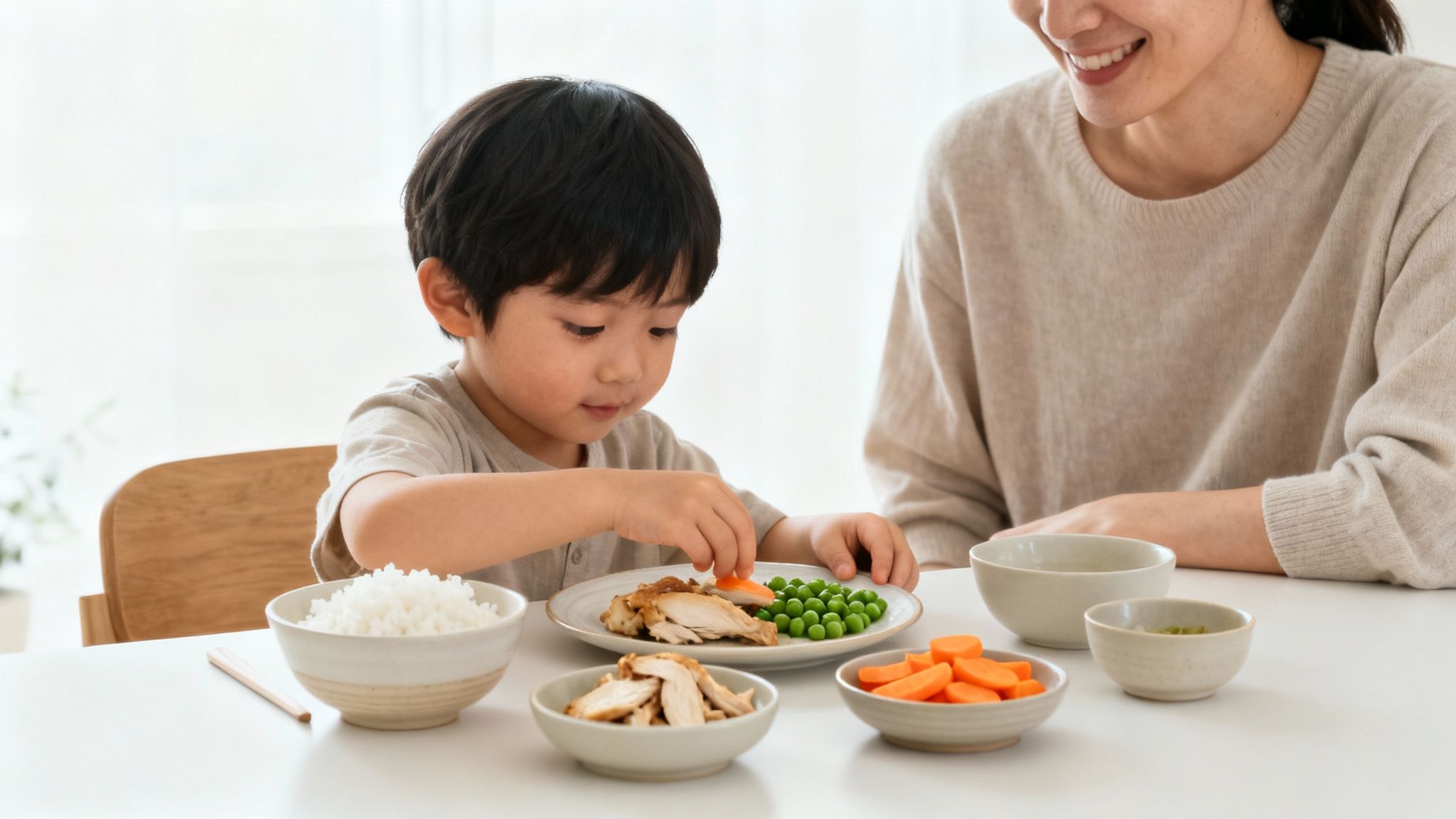
Sometimes the biggest influence on your kid’s eating isn't what’s on the plate, but the vibe at the table. If meals feel like a high-pressure performance, kids start to connect food with stress, and that just digs the picky eating trenches even deeper.
The real mission is to turn the dinner table from a battlefield into a place of calm, predictable connection.
One of the most powerful tools in your arsenal is a simple, reliable routine. Kids just do better when they know what’s coming. Serving meals and snacks around the same time every day helps their internal hunger clock sync up. This simple structure means they aren't constantly grazing, so they show up to the table genuinely hungry and a lot more willing to actually eat.
Set the Stage for Success
Long before the food makes its appearance, you can make a few small tweaks that pay off big. It's all about cutting out the noise and making family and food the main event. This isn't about enforcing a list of rigid rules—it's about building a positive, relaxed feeling around eating together.
One of the biggest mealtime saboteurs is distraction. This means the TV goes off and the phones and tablets get put away. We’ve all seen the studies on screen time's impact, and dinner is the perfect chance to unplug from the tech and plug into each other. You can read more about how most kids under 5 are getting too much screen time right here on the site.
Here’s how to create that peaceful zone:
- Have a Pre-Meal Ritual: Something as simple as everyone washing hands together or letting the kids help set the table sends a clear signal: playtime is over, and it's time to eat.
- Kill the Distractions: Make a "no screens at the table" rule that applies to everyone—dads included. This shows your kid that this time is important and deserves everyone's full attention.
- Keep the Conversation Positive: This is crucial. Avoid any discussion about what your kid is or isn't eating. Talk about their day, tell a goofy story, ask them what Bluey was up to in the latest episode. Keep it light.
Embrace the Power of Family-Style Serving
If you want to give your child a sense of control without turning into a short-order cook, serving meals "family-style" is a game-changer. Instead of fixing a plate for them, put all the separate parts of the meal in bowls on the table and let everyone serve themselves.
This one simple shift hands the power back to your kid. When they get to decide what and how much goes on their plate, their sense of autonomy goes through the roof. Suddenly, the odds they’ll actually eat something without a fight get a whole lot better.
Think about a taco night. You put out bowls of ground beef, shredded cheese, lettuce, tomatoes, and tortillas. Your picky eater might just make a tortilla with meat and cheese. And you know what? That’s a win.
They’re still part of the family meal, they’re eating a reasonably balanced plate they chose themselves, and they’re watching you enjoy all the other stuff without feeling any pressure. Trust me, this method can completely transform the mealtime dynamic.
Introducing New Foods Without a Fight
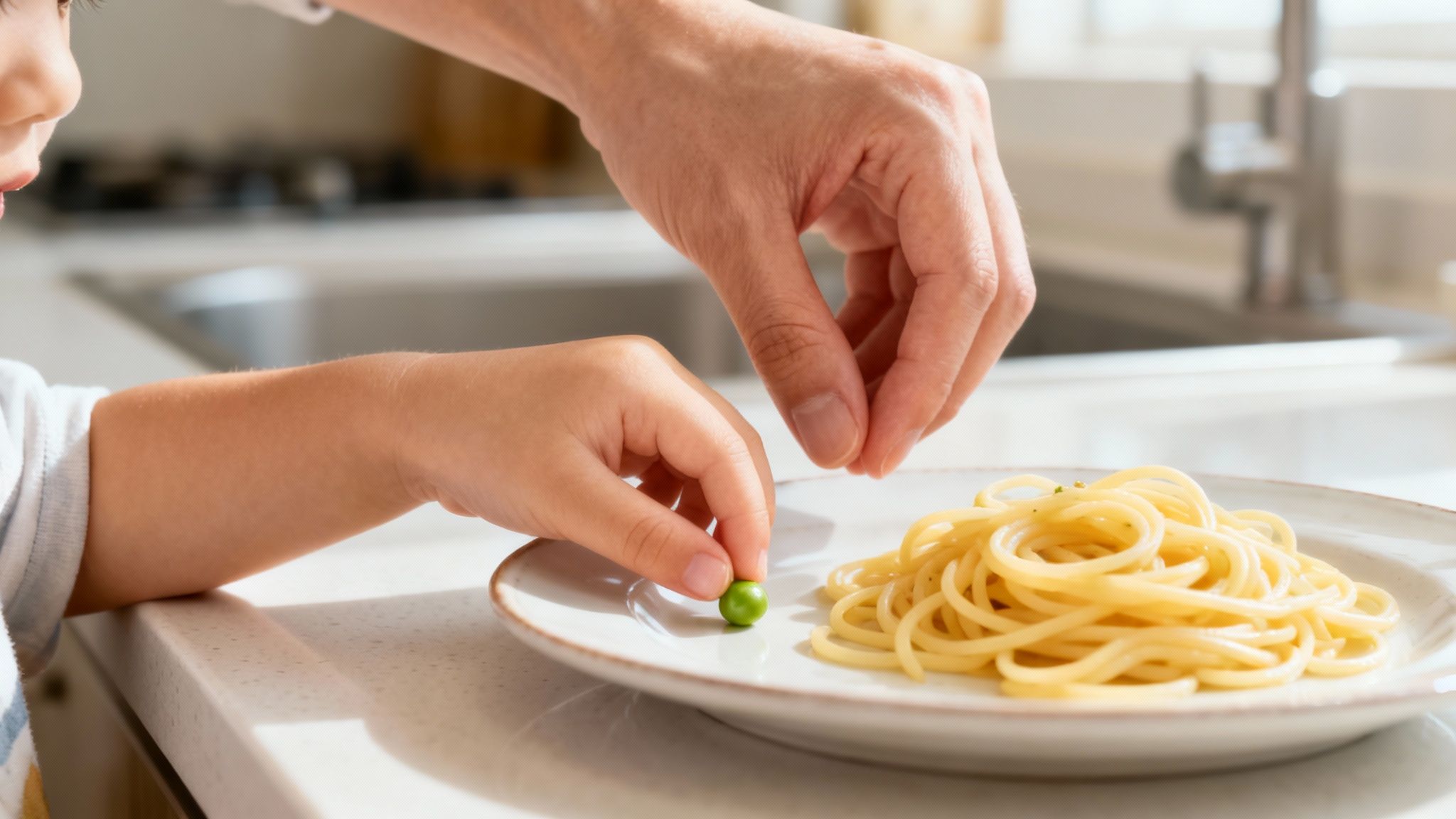
Getting your kid to try something new can feel like a monumental win. The key isn't some magic trick, but a consistent, no-pressure strategy. Your goal is to make new foods seem less scary and more like just another part of the dinner landscape.
A core principle here is repeated exposure. It’s easy to get discouraged when broccoli gets rejected on the first, second, or even tenth try. But you have to stick with it. Research has shown that picky eating can sometimes last for over two years, but the good news is that dads can leverage the science of repeated exposures.
It can take up to 15 times for a child to finally accept a new food. With a positive approach, the incidence of picky eating can drop from 13% at age 2 to just 2-3% by age 11. You can learn more about these picky eating findings in this comprehensive study.
Make New Foods Feel Familiar and Safe
Instead of dropping a pile of roasted asparagus on their plate and hoping for the best, start small. Build connections to what they already know and love. This is where a tactic called “food bridging” comes in handy.
Food bridging is really just the art of serving a tiny portion of a new food right next to a well-loved favorite. Think one piece of roasted sweet potato next to their mac and cheese, or a single raspberry alongside their usual apple slices. The familiar food acts as a safety net, making the entire plate feel less intimidating.
Here are a few ways to put this into action:
- Serve Tiny Portions: Offer a minuscule amount of the new food—sometimes called a "tasting portion." A single pea or a thumbnail-sized piece of chicken is much less overwhelming than a full serving.
- Pair with Dips: A familiar dip can be a fantastic bridge. Offering broccoli florets with their favorite ranch dressing or apple slices with peanut butter makes the new item part of a fun, interactive activity.
- Don't Comment: This is a big one. Place the food on their plate and say nothing. Let them explore it on their own terms, even if that just means poking it with a fork.
Your only job is to provide the opportunity. The child’s job is to decide what to do with it. Removing your own expectations from the equation instantly lowers the pressure for everyone.
Get Them Involved Before Dinnertime
One of the most effective strategies for battling picky eating starts long before you sit down at the table. When kids have a hand in preparing the meal, they develop a sense of ownership that sparks curiosity instead of suspicion.
You don't need to hand them a chef's knife. Simple, age-appropriate tasks are all it takes to get them invested.
- Toddlers can: Wash vegetables in the sink, tear lettuce leaves for a salad, or stir ingredients in a bowl (with your help, of course).
- Preschoolers can: Help measure ingredients, knead dough, or use a butter knife to cut soft foods like bananas.
- Older kids can: Read recipe steps, set the table, or help decide which vegetable to serve with dinner.
When a child helps make the meal, they’re not just a passive recipient; they're an active participant. This simple shift in roles can make them far more willing to try the food they helped create.
Smart Nutrition Strategies That Actually Work
When your kid's diet consists of three beige foods on a good day, it's easy to start stressing about their nutrition. Are they getting what they need to grow? The good news is, you don't have to force-feed them kale to get the job done.
The real goal here is to strategically boost the nutritional value of the foods they already eat. This is about working smarter, not harder. A few small, almost invisible, additions can make a massive difference. Think about blending a handful of spinach into that fruit smoothie they love or mixing some puréed white beans into their favorite pasta sauce. The taste barely changes, but the nutrient profile gets a serious upgrade.
Deconstructed Meals Are Your Secret Weapon
One of the best tactics I've ever used is the "deconstructed" meal. A lot of kids, especially picky ones, get overwhelmed by mixed dishes like casseroles or stews. They can't see or control what's in there, and for many, a plate where different foods are touching is an instant deal-breaker.
So, instead of serving a fully assembled chicken pasta dish, try breaking it down. Put the different parts separately on the plate:
- A pile of plain, cooked pasta.
- Some shredded or diced chicken.
- A little mound of shredded cheese.
- A few peas or carrot coins on the side.
This simple shift puts them back in the driver's seat. It respects their need for simple, predictable foods and gives them the power to choose what they combine from the balanced options you’ve provided. Suddenly, dinner isn't a battle; it's a build-your-own adventure.
And this isn't just about avoiding a meltdown. It has real health implications. Studies show that picky eaters often have lower intakes of key nutrients. One UK study of 7,000 children found that picky kids had lower levels of carotene, iron, and zinc because they consistently skipped meats, fruits, and veggies. You can discover more insights about the health impacts of picky eating and see why these small strategies matter so much.
Pinpoint and Fill Common Nutrient Gaps
Knowing which nutrients picky eaters typically miss helps you target your efforts. Iron and zinc are two of the biggest worries because they’re most abundant in meats and certain vegetables—the exact foods selective kids often refuse.
You don't need a degree in nutrition to fix this, just a few clever moves.
- For Iron: If red meat is a no-go, try offering iron-fortified cereals as a snack. A spoonful of molasses can be mixed into oatmeal, or you can even blend lentils into a spaghetti sauce undetected.
- For Zinc: Pumpkin seeds are a powerhouse of zinc. Grind them up and sprinkle them into yogurt, pancake batter, or smoothies. Fortified whole-grain breads and cheese are also good, kid-friendly fallbacks.
Sometimes, the sneakiest approach is the best one. Here are a few simple ways to add a nutritional punch to foods they probably already like.
Nutrient Boosts for Foods Your Kid Already Eats
This is all about small, easy wins. A tiny addition here or there can turn a simple snack into something much more beneficial, and they'll likely never notice the difference.
| If They Eat This… | Try Adding This… | Nutrient Boost |
|---|---|---|
| Mac & Cheese | Puréed butternut squash or cauliflower | Vitamin A, Vitamin C, Fiber |
| Pancakes or Waffles | Ground flaxseed or chia seeds | Omega-3s, Fiber, Protein |
| Yogurt | A scoop of unflavored collagen peptides | Protein |
| Smoothies | A handful of spinach or a spoonful of hemp hearts | Iron, Protein, Healthy Fats |
| Spaghetti Sauce | Finely grated carrots or puréed white beans | Vitamin A, Fiber, Protein |
| Scrambled Eggs | A sprinkle of nutritional yeast | B Vitamins (especially B12), Protein |
Just a few of these tweaks can give you peace of mind, knowing you're covering the nutritional bases even on the toughest days.
The key is to introduce these boosts in a low-pressure way. It's about enhancing what they already eat, not introducing another new food to reject. This makes building a healthier diet feel like teamwork, not a test.
By focusing on these practical, nutrient-dense additions, you can feel much more confident that your child is getting what they need. For more ideas, you might be interested in our guide on four simple ways to build health and boost immunity.
When to Call in the Professionals
Most of the time, picky eating is just a phase. It's a frustrating, often messy, developmental rite of passage that kids eventually grow out of. If you're patient and stick with the strategies, you'll likely see progress. But sometimes, what looks like stubbornness can signal a deeper issue that needs a professional eye. Knowing when to wait it out versus when to seek help is crucial.
Typical picky behavior is annoying but normal: suddenly hating a food they loved yesterday, declaring war on all green vegetables, or eyeing a new food with deep suspicion. The real red flags are more severe and persistent.
This flowchart is a great mental model for those tough mealtime moments. It helps you quickly decide whether to adjust the meal (like separating foods) or find a way to boost its nutritional value.
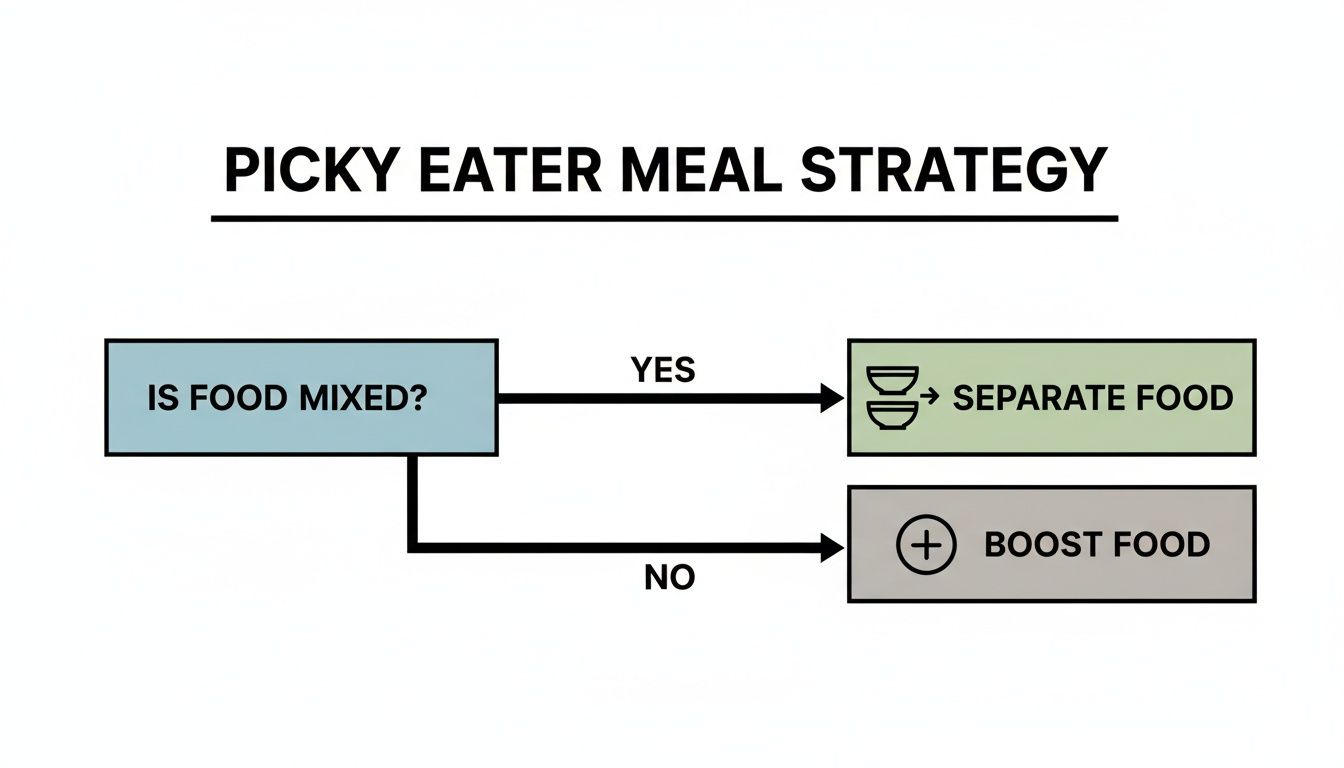
It’s a simple, tactical way to feel more in control when dinner isn't going as planned.
Red Flags That It’s More Than Just Pickiness
It's time to book an appointment with your pediatrician if you spot patterns that go beyond the usual dinner table drama. Dad-instinct is a real thing, so if something feels off, it’s always better to get it checked out.
Keep an eye out for these specific warning signs:
- Weight Loss or Stalled Growth: This is a big one. If your child is dropping weight or not tracking along their growth curve, it's a clear signal to get medical advice right away.
- Extreme Anxiety Around Food: I'm not talking about a bit of whining. This is severe distress—full-blown tantrums, uncontrollable crying, or genuine panic at the sight of new or non-preferred foods.
- Trouble Physically Eating: Does your child frequently gag, choke, or seem to have a hard time swallowing? This could point to an underlying physical or sensory issue that needs to be addressed.
- A Radically Small "Safe" List: A standard picky eater might have a roster of 20-30 accepted foods. But if their diet shrinks to fewer than 15 total foods, and they keep dropping items without ever adding new ones, that's a major concern.
These kinds of symptoms can sometimes be tied to things like sensory processing disorders, oral-motor delays, or significant food-related anxiety. A professional can figure out the root cause and build a plan, which might involve a feeding therapist or a registered dietitian.
Dealing with Unhelpful Advice from Family
Let's be honest, one of the hardest parts of navigating picky eating is the peanut gallery. Well-meaning grandparents, aunts, and friends often chime in with advice that’s not just outdated, but genuinely unhelpful. Hearing "Just make them eat it" or "We ate what was on our plate, or we went hungry" can make you want to pull your hair out.
Your best bet is to present a calm, united front with your partner. Agree on your strategy beforehand and stick to your guns.
When the unsolicited advice starts, you can shut it down politely but firmly. Try something like, "Thanks for the suggestion. We're actually working with our pediatrician on a plan that we're comfortable with." It sends a clear message: you've got this handled. It ends the debate without starting a family feud.
At the end of the day, you're the dad. You know your kid best. Trust that.
Common Questions from Dads
Look, even when you have the best game plan, situations are going to pop up that make you wonder what on earth to do next. You're not the first dad to face this, and you definitely won't be the last. Here are some of the most common questions I hear from other dads about picky eating, with some straight-up, actionable answers.
My Toddler Used to Eat Everything and Now Rejects All Vegetables. What Happened?
Ah, the classic bait-and-switch. This is a totally normal phase called neophobia—a fear of new things—and it hits its peak between ages two and six. It’s an old survival instinct from our caveman days kicking in, stopping little kids from munching on a poisonous berry. Their taste buds are also going haywire, so a texture or flavor they loved last week can suddenly feel like an alien invasion in their mouth.
Don't panic. The absolute worst thing you can do is make it a battle.
Just stay calm and consistent. Keep offering a tiny amount of vegetables on their plate without any pressure. If you eat your broccoli with a smile and don't react when they ignore theirs, you're winning. A no-pressure zone is your best weapon for riding this out.
Should I Make a Separate Kid's Meal If My Child Refuses What We're Eating?
Resist this urge at all costs. The moment you become a short-order cook, you've lost the war. It’s a slippery slope that ends with you making three different dinners every single night.
The rule in our house is simple: we all eat one meal. This is non-negotiable for keeping your sanity.
But here’s the secret to making it stick: always include at least one thing on the table you know your kid will eat. This is their "safe food." It could be a dinner roll, some plain pasta, a side of apple slices—whatever. This gives them a sense of control. They don't have to eat the chili, but they won't starve. It's the perfect way to reinforce that you provide the food, and they decide what to eat from what's on the table.
Is Hiding Vegetables in Their Food a Good Idea?
I get the appeal. Sneaking some pureed cauliflower into the mac and cheese feels like a parenting win, and it does boost their nutrition in the short term. The only problem is that it doesn't teach them to actually like vegetables. They never learn to accept broccoli for what it is—a tiny, edible tree.
The best strategy is to do both. Go ahead and use those "stealth health" tricks to get the vitamins in and give yourself some peace of mind. But at the same time, keep serving those same vegetables in their whole form on the side of their plate. This way, you’re covering your nutritional bases while still giving them the exposure they need to eventually try the real thing.
How Long Should I Wait Before Offering a New Food Again?
Don’t throw in the towel after the first rejection. Or the second. Or the tenth. Seriously. Research shows it can take 10-15 exposures before a kid feels brave enough to even take a nibble.
A good rhythm is to wait a few days between attempts so it doesn't feel like you're nagging them.
The real pro-move here is to change how you serve it. If they snubbed steamed carrots, try offering shredded raw carrots with a dip next time. Or maybe roasted carrot sticks with a little cinnamon. A simple change in preparation can make all the difference.
Your job is to be patient, positive, and persistent—without being pushy. If you’re looking for more solid advice, you might want to check out our other guide covering essential tips for new dads.
At alphadadmode.com, we're building a community for fathers who want practical tools and real-world advice. Sign up for updates to get our best resources and product announcements delivered straight to your inbox. https://alphadadmode.com
