


Falling out of love isn't like flipping a switch. It’s a deliberate, often painful, process of untangling your heart from someone you once cared for deeply. Acknowledging the difficulty of this journey is the first step toward healing. It’s a common human experience, and figuring out how do you fall out of love with someone is a challenge many of us face. There's no magic pill, but there is a path forward. This guide will provide actionable strategies, emotional coping mechanisms, and practical self-care tips to help you navigate heartbreak and move on with strength.
Understanding Your Feelings
Before taking action, it’s crucial to understand what you're feeling. Love is a complex emotion, often tangled with habit, dependency, and the fear of being alone.
- Recognize why you feel attached: Is it genuine love, or the comfort of a familiar routine? Sometimes we cling to the idea of a person rather than the reality. The way we connect in relationships can follow painful patterns. If you've been in a cycle of closeness and distance, learning about the Anxious Avoidant Attachment Style can be an eye-opener.
- Distinguish love from habit: Ask yourself if you miss the person or just the security of not being single. True love and codependency can feel similar in the moment.
- Assess why it isn't working: Be honest about the reasons the relationship ended or why unrequited love isn't sustainable. Often, a lack of communication in a relationship is a major culprit.
- Validate your emotions: It's okay to feel sad, angry, or confused. Don't rush the process. As psychologist Dr. Guy Winch states, "Grief has its own timeline." Acknowledging your pain is the first step toward healing it.
Step 1 – Accept the Situation
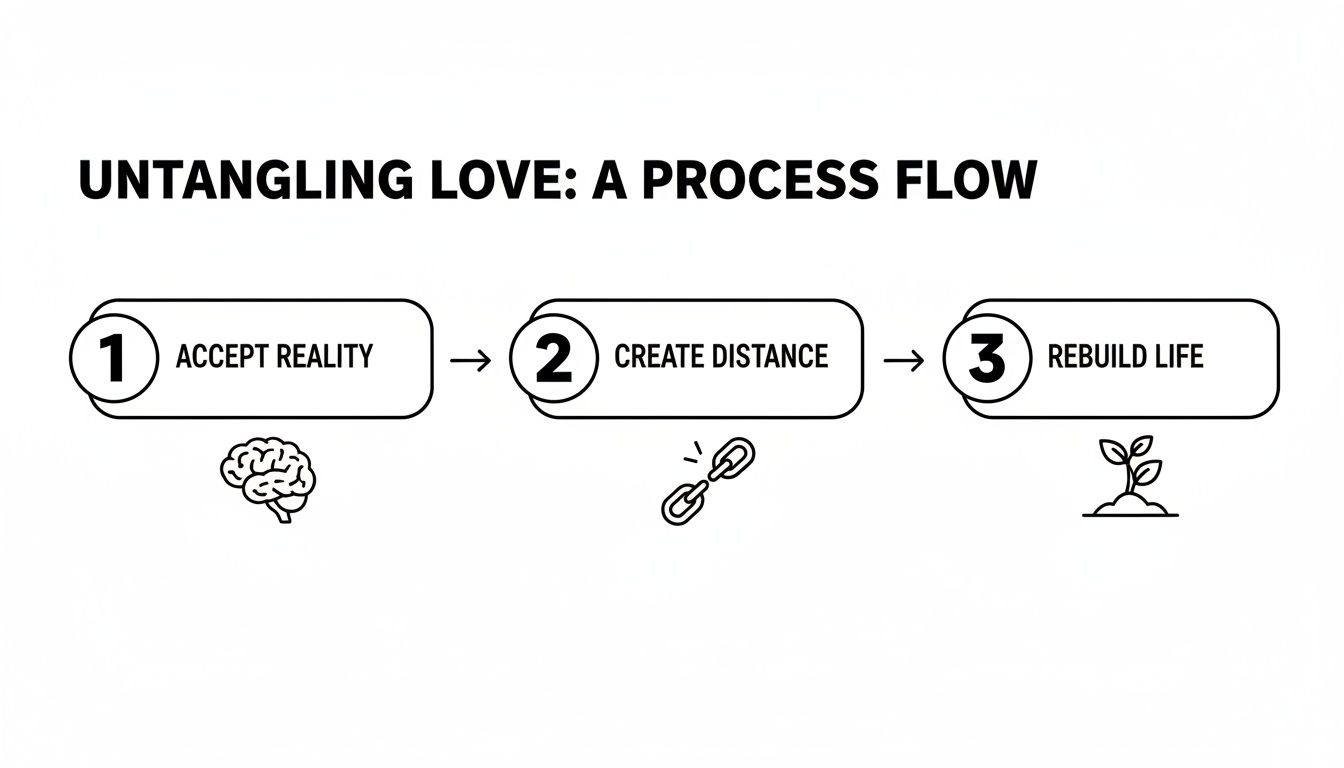
If you want to move forward, you have to stop looking back. This is the hardest part, but it's non-negotiable. To begin the process of how do you fall out of love with someone, you have to accept, deep in your gut, that the relationship is finished or the unreciprocated love is not going to change.
That means you have to stop re-reading old texts, searching for hidden meanings that aren't there. It means shutting down the "what if" scenarios that play on a loop in your head. Hope is powerful, but when it morphs into denial, it just chains you to a past that no longer exists, prolonging the pain. Acceptance is the foundation for everything else you're about to do to heal. It’s the moment you finally decide to stop fighting a battle that’s already over. For many, this mental shift is paired with the tangible steps of a legal divorce process, which provides concrete closure.

Step 2 – Limit Contact
If you truly want to fall out of love, you have to cut off the emotional fuel source. Every time you check their social media, it's like adding oxygen to a fire you're trying to put out. To finally extinguish it, you must create distance through both digital and physical boundaries.
- Digital Detox: Your phone is the biggest hurdle. Unfollow, mute, or even block their social media accounts. Archive old chats and delete their number if you find yourself tempted to reach out. This isn't about being cruel; it's an act of self-preservation.
- Physical Boundaries: Avoid places and situations that trigger strong memories or where you know you might run into them. If you share friends, let them know you need some space and ask them not to bring the person up in conversation for a while.
This intentional space is the only way to clear your head and begin moving on after heartbreak. Honing the skill of setting healthy boundaries is non-negotiable here.

Step 3 – Reflect and Reframe
Just thinking about the past isn't productive. To truly move forward, you have to process it with intention. This is where you reframe your attachment into an opportunity for growth.
- Journal your thoughts and feelings: Don't just vent. Use prompts to guide your writing. Ask yourself: What did I learn from this relationship? What were the red flags I ignored? What are my non-negotiables for the future?
- Focus on lessons learned: See the end of the relationship not as a personal failure, but as a valuable lesson. What did this experience teach you about yourself and what you need in a partner?
- Reframe attachment into growth: Every moment of pain is a chance to build resilience. You're taking the raw material of this experience and building a stronger, wiser you.
Step 4 – Focus on Self-Care

Healing is an active job. When you’re wondering how do you fall out of love with someone, pouring that energy back into yourself is the most productive answer. This is the point where you move from just surviving to intentionally building your next chapter.
- Engage in hobbies and exercise: Reconnect with activities you love or start new ones. Physical activity is a powerful antidepressant and a great way to channel frustrated energy.
- Prioritize mental and physical health: Ensure you're eating well, getting enough sleep, and not numbing the pain with unhealthy habits. Your body and mind are your greatest allies in this process.
- Spend time with supportive friends and family: Isolation is the enemy of healing. Reconnect with people who lift you up and remind you of who you are outside of the relationship.
Step 5 – Let Go of Idealization
The biggest trap we fall into after a breakup is idealization. Your memory has a funny way of sanding down all the rough edges, leaving behind a polished, romanticized version of the person that wasn’t the full picture.
- Stop romanticizing the person: To fight this, create a "Reality Ledger." On one side, list the good memories. On the other, list the difficult moments—the recurring arguments, the unmet needs, the fundamental incompatibilities.
- Accept both positive and negative traits: This isn't about bitterness; it's about honesty. Your ex is a whole person with flaws, just like you. Acknowledging this dismantles the fantasy.
- Avoid comparing new experiences: When you try a new coffee shop or meet someone new, resist the urge to compare it to the past. Each experience deserves to be its own.
Step 6 – Create New Experiences
The life you built together runs on autopilot. Every Sunday coffee run, every show you watched—they are emotional landmines. You have to start intentionally rewriting the script of your day-to-day life.
- Try new activities and meet new people: Join a local sports league, sign up for a class, or volunteer for a cause you care about. These experiences introduce you to new people in a low-pressure way and expand your world.
- Build independence and confidence: Every new skill you learn or challenge you overcome builds self-respect. If you find you're wrestling with your self-confidence vs. self-esteem, this kind of structured action is incredibly powerful.
- Redefine life without that person: You’re not just plugging a hole; you’re laying a new foundation. You’re actively building a life so full and interesting that the old relationship naturally starts to feel like a smaller part of your story.
Step 7 – Seek Support if Needed
You don't have to go through this alone. Reaching out for help is a sign of strength, not weakness.
- Consider therapy or counseling: A professional can provide you with tools and a safe space to process your emotions. They can help you identify patterns and develop healthier coping strategies for emotional healing.
- Join support groups or online communities: Connecting with others who are going through a similar experience can be incredibly validating. You'll realize you're not alone in your struggle.
- Talk to trusted friends: Don't bottle up your emotions. Lean on the friends and family who have your back. Sometimes, just saying things out loud can make a world of difference.
Common Mistakes to Avoid
As you work on getting over someone, be mindful of common pitfalls that can set you back.
- Rushing into a new relationship: Using a new person to numb the pain of the last one—often called a "rebound"—prevents you from truly healing and addressing the root issues.
- Staying stuck in nostalgia or social media stalking: Constantly revisiting the past through photos or social media profiles keeps the wound fresh and stops you from moving forward.
- Ignoring personal growth: If you don't take the time to understand your role in the relationship's end, you risk repeating the same patterns in the future.
Frequently Asked Questions (FAQ)
How long does it take to fall out of love?
There is no magic timeline. While some studies suggest people feel significantly better after three months, it depends on the length of the relationship, the circumstances of the breakup, and how actively you commit to healing. Focus on daily progress, not a deadline.
Is it normal to still care about them?
Yes, it's completely normal. Love doesn't have an off-switch. Caring about someone you shared a history with is a sign of your humanity. The goal is to move that care from an active entanglement to a fond, distant memory.
Can you fall back in love after falling out?
While possible, it's rare and requires immense work from both individuals. The original reasons for the breakup must be fully addressed. In most cases, your energy is better spent on healing and building a new, healthier future.
How do I stop thinking about someone constantly?
You can't just "stop" a thought, but you can redirect it. When a thought of them appears, acknowledge it ("That's a thought about the past") and immediately pivot to a pre-planned activity: listen to a specific podcast, go for a walk, or call a friend. This trains your brain to create new mental pathways.
Conclusion
The journey to stop loving someone is a process of active healing, not passive waiting. By following these actionable steps—accepting the reality, setting boundaries, reflecting on lessons learned, prioritizing self-care, creating new experiences, and seeking support—you can untangle your heart and reclaim your life. Remember to be patient and compassionate with yourself. Healing is not linear, but with each deliberate choice to focus on your own growth, you are moving forward toward a future that is entirely your own.
