


A healthy sex life is so much more than just performance. It’s built on a bedrock of emotional connection, genuine physical affection, and honest communication. For us dads, it means finding ways to intentionally nurture that intimacy with our partners, even when life feels like pure chaos. The real secret is understanding that connection is the foundation of it all.
Redefining Intimacy in Modern Fatherhood

Let's be real: fatherhood changes everything, and your sex life is usually one of the first things to take a hit. The non-stop demands of raising kids, juggling a career, and keeping the house from falling apart can shove your relationship right to the back burner. Suddenly, exhaustion and stress become the norm, and the calendar is so packed with school runs and soccer practice that sex feels like a distant memory.
This guide isn't here to pile another chore onto your plate. Think of it as a practical roadmap for dads who get it—intimacy is a vital part of our own well-being, the strength of our partnership, and our overall energy. A strong intimate bond isn't a luxury; it's the glue that holds everything together during these demanding years.
The Core Pillars of Connection
Maintaining a fulfilling sex life as a dad isn’t about grand, movie-style romantic gestures. It's about the small, consistent actions that keep you and your partner connected every single day. The research backs this up time and time again.
One massive study of 70,000 people across 24 countries found something fascinating. Couples with a great sex life all did a similar set of things, while those with a poor sex life did not. The secret wasn't some complex formula—it was simply consistent, affectionate connection.
This guide breaks down the essential pillars that support a thriving intimate relationship for busy parents. We're going to move beyond the generic advice and give you real, actionable strategies you can start using tonight. This is your playbook for navigating the new realities of fatherhood without sacrificing one of the most important parts of your partnership.
To give you a quick overview of what's ahead, this table summarizes the core concepts we'll be diving into.
Core Pillars of a Healthy Sex Life for Modern Dads
| Pillar | Why It Matters for Dads | First Action Step |
|---|---|---|
| Open Communication | It turns sex from a performance into a shared experience. It's how you stay on the same team. | Ask one open-ended question about your partner's day and actively listen to the answer—no fixing, just listening. |
| Physical Health & Energy | You can't pour from an empty cup. Your libido and energy are directly tied to your sleep, diet, and stress levels. | Swap one sugary drink for a glass of water today, or go for a 15-minute walk during your lunch break. |
| Adaptability & Teamwork | Life changes, especially after kids. Being able to adapt together is what keeps you close through different stages. | Acknowledge one thing your partner did today that you appreciate, and tell them specifically why it mattered. |
| Intentional Intimacy | Spontaneity is a myth for parents. Scheduling and prioritizing connection ensures it actually happens. | Pull out your calendars together and block off 30 minutes this week for "us time"—no kids, no phones. |
Each of these pillars works together to build a stronger, more resilient connection with your partner.
Strengthening these areas is about more than just having more sex; it’s about rebuilding foundational trust and feeling like a team again. For a deeper dive into that, you might want to check out our guide on couples trust exercises.
Now, let's get into the specifics.
Mastering Communication Beyond the Kids' Bedtime

Let's get one thing straight: the generic advice to "just talk more" is useless for parents. Once the kids are finally asleep, the last thing anyone wants is a formal, high-stakes discussion that feels like another chore.
The real key to a healthy sex life isn't forcing those big talks. It’s about weaving small, meaningful conversations into the life you already have.
These moments can happen anywhere—while washing dishes together, on a quick walk around the block, or even during the morning chaos of the daycare drop-off. The goal is to create an ongoing, low-pressure dialogue that builds emotional intimacy. When you’re in sync, physical connection feels natural, not forced.
Finding Your Moments to Connect
Your day is packed with opportunities to connect, but they're easy to miss if you aren't looking for them. Forget waiting for that perfect, uninterrupted hour that never arrives. Seize the small windows instead.
A great conversation doesn’t need a couch and two hours of free time.
For instance, when your partner mentions feeling overwhelmed, that's your opening. Instead of jumping to fix it, try asking, "What's one thing I could take off your plate right now that would help you feel a little lighter?" That simple question shows you're listening, you get it, and you're in this together.
The foundation of a great sex life isn't some big secret; it's friendship. Research on thousands of couples shows that those who maintain a strong friendship and talk openly—including about sex—report the highest satisfaction.
This approach turns mundane tasks into moments of connection. It builds a foundation of teamwork and emotional closeness that directly fuels desire. When you feel seen and supported in the small things, it’s a hell of a lot easier to connect on a physical level.
Actionable Scripts for Tough Conversations
Talking about sex can feel awkward, especially if things have been in a slump. Having a few phrases in your back pocket can make starting these conversations much less intimidating. The trick is to be gentle, curious, and frame it as an "us" thing, not a "you" or "me" problem.
Here are a few real-world examples to get you started:
- When Libidos Don't Match: "I’ve been thinking about us, and I really miss feeling close to you. I know we’re both wiped out, but could we brainstorm some ways to connect that don't feel like pressure?"
- To Discuss Desires: "Hey, I was thinking about something fun… What’s one thing you miss about our intimacy before we had kids?" This is a soft entry point that focuses on positive memories.
- To Address the "Roommate Phase": "I feel like we’ve been more like business partners than a couple lately, just managing logistics. I want to change that. What do you need from me to feel more like we're a team?"
Notice how these starters are open-ended and don't place blame. They invite collaboration instead of demanding a specific outcome, which is where productive, loving conversations begin.
Building Emotional and Non-Verbal Affection
A healthy sex life is nurtured by more than just what happens in the bedroom. It's fed by a constant stream of small, affectionate gestures throughout the day—think of them as deposits in your relationship's emotional bank account.
Start incorporating more non-sexual touch. A lingering hug in the kitchen, a hand on her back as you pass in the hallway, or holding hands while you're watching TV sends a clear message: "I see you, I desire you, and I love you."
These small physical acts keep the pilot light of intimacy on, even when you don't have the time or energy for a full-blown fire. It proves your connection is about more than just sex. For more ideas on how to reconnect without leaving the house, check out our guide on date night ideas at home.
This consistent affection builds a bridge back to each other, making the leap to sexual intimacy feel much shorter and easier to cross.
How Your Physical Health Fuels Your Libido

It’s easy to separate physical health from sexual health. One seems to be about the gym and your diet, while the other is what happens behind closed doors. But the truth is, they’re completely intertwined, especially for dads.
Your energy levels, your hormones, even your mood—they're all tied directly to your daily habits. And every single one of them plays a huge role in your desire for intimacy.
This isn't about getting a six-pack or training for a marathon. It's about making smart, sustainable choices that build you up instead of wearing you down. Think of your body as an engine. If you're running on fumes and low-grade fuel, you can't expect high performance anywhere, including the bedroom.
Taking care of yourself physically is one of the most direct routes to a better sex life. It's not selfish; it's a core part of being the present, energetic partner and father you want to be.
Fuel Your Body Right
What you eat has a direct line to your testosterone, blood flow, and energy. You don't need some crazy restrictive diet, but working specific, nutrient-rich foods into your routine can make a real difference in how you feel.
Focus on whole foods that support hormone health and get your blood pumping. Zinc, for example, is critical for testosterone production—you'll find it in foods like oysters, beef, and pumpkin seeds. Healthy fats from avocados, nuts, and olive oil are also your friend when it comes to keeping hormones balanced.
Here are a few simple swaps to get you started:
- Dark Leafy Greens: Spinach and kale are loaded with magnesium, which can help boost testosterone.
- Fatty Fish: Salmon and tuna are high in omega-3s, which are fantastic for improving blood flow.
- Berries: Dark berries like blueberries are packed with antioxidants that support vascular health.
Making small, consistent upgrades to what you eat is the name of the game. If you feel like you might have some nutritional gaps, you might find some useful tips in our guide to the best multivitamins for men over 30.
Move for Energy, Not Exhaustion
When you’re already wiped out from work and kids, exercise can feel like the absolute last thing you have energy for. But the goal here isn't to spend hours grinding it out at the gym. It's about using movement as a tool to slash stress and boost your energy.
Regular physical activity gets your blood flowing everywhere it needs to go, which is essential for arousal. It also releases endorphins that lift your mood and melt away stress. A stressed-out brain is rarely in the mood for sex, so think of a workout as a mental reset button.
The 10-Minute Energy-Boosting Workout
Pushed for time? Try this quick circuit:
- Jumping Jacks (60 seconds): Get your heart rate up.
- Bodyweight Squats (60 seconds): Work your biggest muscle groups.
- Push-ups (60 seconds): Build upper-body strength.
- Plank (60 seconds): Fire up your core.
- Rest (60 seconds): Catch your breath.
Run through that circuit one more time. It's a short burst, but it's enough to release those feel-good chemicals and wake up your body.
Sleep: The Ultimate Libido Booster
In the world of fatherhood, a full night's sleep can feel like a mythical creature. But if you start treating it as a non-negotiable foundation for your well-being, everything can change.
Poor sleep absolutely tanks your testosterone levels, spikes your cortisol (the stress hormone), and leaves you way too drained to even think about being intimate.
Getting a consistent 7-8 hours of quality sleep is one of the most powerful things you can do for your libido. Period. If your sleep is suffering, your desire is almost guaranteed to follow.
Beyond personal health, we also have to be mindful of broader risks. Safe, communicative intimacy doesn't just strengthen your bond; it protects your family's health. Data shows that from 1990 to 2021, global STD cases surged by 58.38% to 289.17 million. Projections show that number could hit 820 million by 2031 if trends continue. By prioritizing safety and open communication, dads can mitigate these risks and maintain the mental and physical health needed for the job. You can dig deeper into these global health trends on PMC.
Navigating Your New Normal After Parenthood
Let’s get one thing straight right out of the gate: your pre-kid sex life is gone. It’s a fond memory. Trying to recapture that exact same dynamic is a surefire way to feel frustrated. But here's the good news—your new normal can be just as fulfilling. In many ways, it can be deeper and more connected than ever before. You just have to adapt to the new reality.
Parenthood doesn't just add a person to your family; it completely rewires your relationship, your schedule, and what’s left in your energy tank at the end of the day. Acknowledging this massive shift isn't about admitting defeat. It's the first real step toward building a healthy sex life that actually fits the life you have now, not the one you used to have.
Surviving the Postpartum Trenches
The postpartum period is a fragile, demanding, and often overwhelming time for everyone involved. Your partner’s body is recovering from a major physical event while her hormones are on a wild rollercoaster. Your job here is simple: be patient, be supportive, and completely redefine what intimacy looks like when intercourse isn’t even on the table.
This is the season to double down on non-sexual touch and emotional connection. Think about things like:
- Gentle Massages: A foot rub or a shoulder massage with zero expectation of it leading anywhere else can be an incredibly powerful way to connect.
- Meaningful Cuddling: Don't underestimate the power of just holding each other on the couch after the baby is finally asleep. It reinforces your physical bond without any pressure.
- Verbal Affirmation: Telling her she's an amazing mom and that you still find her beautiful is more potent than you might think. Say it often.
And by the way, your own hormones are in flux, too. Studies show that new fathers often experience a dip in testosterone, which can temporarily lower your libido. This is a normal biological response designed to help you bond with your baby and be a more nurturing parent. It’s not permanent, so give yourself some grace.
Tackling the Toddler Years Gauntlet
Once you're out of the newborn fog, a whole new set of challenges pops up. Privacy becomes a distant memory. Exhaustion is your new best friend. And the pitter-patter of tiny feet can interrupt even the most carefully planned moment. This is where creativity and teamwork become your greatest assets.
You'll likely have to trade those spontaneous, passion-fueled encounters for something a bit more… practical. Welcome to the era of the "quickie," the scheduled session, and finding intimacy in the little gaps of your day. It might not sound like the stuff of romance novels, but it’s what keeps the connection alive and well.
A healthy sex life isn't just about the fireworks; it’s about consistent maintenance. Think of it like changing the oil in your car. It’s a planned, necessary action that keeps the engine running smoothly so it’s ready to go when you want to hit the open road.
It’s also crucial to remember that your sexual health is a core part of your overall well-being. Keeping it a priority doesn't just protect your relationship—it protects your family's long-term health. A healthy sex life is linked to better health outcomes, which includes being mindful of risks. Globally, targets for reducing new cases of HIV and viral hepatitis are off-track, with 3.5 million new cases in 2022. For dads, this is a real-world concern, as common STIs like HPV are linked to cancers that can affect your partner and devastate your family.
But proactive measures really do work. U.S. data from 2023 showed syphilis cases fell 10% from the year before—the first drop in over two decades—proving that focused interventions make a difference. By staying tuned into your own sexual wellness, you’re building a legacy of health and strength for your family. You can learn more about these critical health trends from TIME's recent report.
Intimacy Strategies for Different Fatherhood Stages
The intimacy playbook has to change as your kids get older. What works when you have a newborn will be totally useless when you have a curious five-year-old who thinks locked doors are a personal challenge. Here’s a quick breakdown of how to adapt your strategy over time.
| Fatherhood Stage | Common Intimacy Challenge | Actionable Solution |
|---|---|---|
| Newborn (0-1 year) | Physical recovery for mom, extreme sleep deprivation for both, and zero personal time. | Focus on non-sexual touch like cuddling, massages, and holding hands. Prioritize emotional check-ins and shared moments of rest. |
| Toddler (1-4 years) | Lack of privacy, constant interruptions, and physical exhaustion from chasing a mobile child. | Capitalize on nap times, schedule "us time" after bedtime, and embrace quick, spontaneous moments of connection when they arise. |
| School-Age (5+ years) | Complicated schedules with school and activities, kids staying up later, and mental fatigue from managing family logistics. | Plan regular date nights (even at home), take weekend getaways if possible, and maintain a daily ritual of connection, like a 10-minute chat before sleep. |
The key takeaway here is to stay flexible. You have to keep talking about what’s working and what isn’t. Your sex life as parents is going to be a constant evolution, not a fixed destination. The secret to long-term success is embracing each stage for what it is and finding new ways to connect within its unique—and often crazy—constraints.
Solving Common Roadblocks to Intimacy
Every couple hits a roadblock. It's a totally normal part of any long-term relationship, especially when you toss the beautiful chaos of fatherhood into the mix. The secret isn't trying to avoid these hurdles; it's learning how to get over them together, as a team.
Think of this as your practical, no-nonsense troubleshooting guide for the most common intimacy challenges you'll face as a dad. We need to get to the root of the issue. Is it stress from work? A physical problem that needs attention? Or maybe an emotional gap that's been slowly widening? Pinpointing the "why" is the only way to find a solution that actually works.
Mismatched Libidos: The Universal Challenge
This is probably the single most common issue couples face, yet it can feel incredibly isolating when it’s happening to you. One of you is ready to go, the other just isn’t. This isn't a sign that your relationship is broken; it’s a sign that you’re both human. Libidos are fickle things, influenced by everything from stress and sleep to hormones and diet.
The fix isn't about one person magically matching the other's level of desire. It’s about finding a middle ground built on empathy and solid communication.
- Acknowledge the Difference, No Blame Allowed: Try opening with something like, "I've noticed our energy for intimacy has been a bit out of sync lately, and I really want to understand what's going on for you." This starts a dialogue, not a fight.
- Lean into Non-Sexual Connection: When your libidos aren't aligned, double down on the other stuff. Go for a walk and hold hands, cuddle on the couch while you watch a movie, or just have a real, distraction-free conversation. These actions rebuild the emotional closeness that often fuels physical desire.
Managing Performance Anxiety
Performance anxiety is the silent killer of intimacy. The second you start worrying about whether you can "perform," you've checked out of the moment. You've gone from being a present partner to being trapped in your own head. The pressure can come from anywhere—a stressful day at work, pure exhaustion, or a previous night that just felt "off."
The best way to dismantle performance anxiety is to take the pressure off completely. Redefine what a "successful" intimate encounter looks like. It's not about orgasm or intercourse; it's about feeling connected.
When you feel that anxiety creeping in, consciously shift your focus. Instead of aiming for a specific outcome, make the goal simply to pleasure your partner. Focus on touch, massage, or oral sex. This takes the spotlight off your own performance and puts it right back where it belongs: on shared connection and enjoyment.
The simple infographic below is a great gut-check for those moments when you're trying to figure out how to connect.
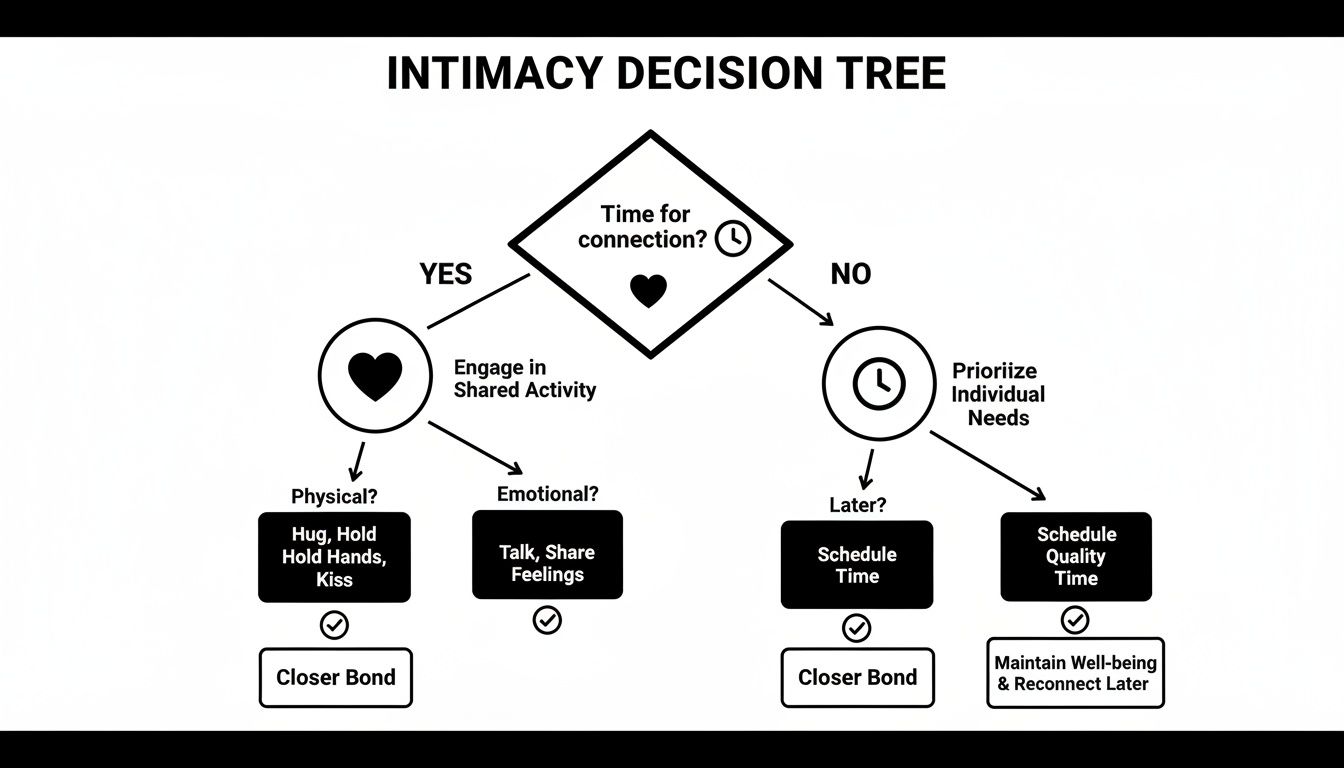
Sometimes, as the visual shows, prioritizing your own needs (like sleep!) is the best way to show up for your partner later.
The Great Debate: Scheduling Sex
I know, scheduling sex gets a bad rap. A lot of people feel it kills the spontaneity and turns intimacy into just another chore on the calendar. But let's be real—for busy parents, "spontaneous" sex is a fantasy. If you don't intentionally make time for it, it often just doesn't happen.
Scheduling intimacy is really an act of prioritization. It sends a powerful message: "You are important to me, and our connection is worth carving out dedicated time for."
Here’s how to do it right:
- Reframe it as "Connection Time": Don't just slap "Sex" on the Google Calendar. Call it "Our Time" or "Date Night." This removes the pressure and makes the goal connection, with sex being a possible—and welcome—outcome, not a requirement.
- Build Some Anticipation: A flirty text during the day can make a huge difference. It keeps that playful energy alive and turns the scheduled time into something you both look forward to, rather than just another to-do list item.
- Stay Flexible: If the scheduled time arrives and one of you just isn't feeling it, that's okay. Use the time to talk, cuddle, or give each other a massage instead. The goal is connection, not a mandatory performance.
Finally, a quick but critical note on physical health. Worldwide, over 1 million curable sexually transmitted infections (STIs) are acquired every day. For fathers, untreated STIs can lead to serious issues like infertility or a higher risk of HIV, which can destabilize a family. Open communication, regular testing, and consistent condom use are the best ways to protect yourself and your family. You can find more global STI trends from the World Health Organization).
Dads Ask: Your Top Questions, Answered
Let's be honest, even with the best advice, sometimes you just need a straight answer to a specific, nagging question. This is where we tackle the common, candid stuff that dads often wonder about but might hesitate to ask. Think of this as your quick-reference guide for the real-world challenges of keeping your sex life healthy after kids come along.
How Do We Find Time for Sex When We're Both Exhausted?
This is the million-dollar question for every new parent. And the answer is, you don’t find the time; you have to make it. Spontaneity becomes a luxury most of us just can't afford anymore.
The real shift has to happen in your mindset. Stop waiting for that perfect, energetic moment—it might never arrive. Instead, start intentionally prioritizing your connection. This often means embracing "good enough" intimacy. A 15-minute quickie before you both collapse can be just as connecting as a long, drawn-out session, especially when you're running on fumes.
Lower the bar and celebrate the small wins. The goal is consistent connection, not a scene out of a movie.
My Partner's Libido Tanked After Childbirth. Is This Normal?
Yes, absolutely. This is incredibly normal and completely expected. Your partner's body has just gone through a monumental physical event, and her hormones are all over the map. Things like physical recovery, sleep deprivation, breastfeeding hormones, and the sheer emotional weight of new motherhood all have a massive impact on libido.
In fact, some studies show that nearly 90% of women report huge changes in their sex life after having a baby.
The single most important thing you can do right now is offer patience and support, not pressure. Focus on non-sexual intimacy—cuddles, back rubs, taking the baby so she can shower, and just telling her she’s doing a great job. Her desire will likely come back, but it needs time and a foundation of emotional safety.
This phase is temporary. Your job is to be a supportive partner, which is frankly the most attractive thing you can be right now.
Does Scheduling Sex Kill the Romance?
It’s a common fear, but I’ve seen the opposite happen time and time again. For busy parents, scheduling sex can be the very thing that saves it. If it's not on the calendar, it often just doesn't happen.
The trick is all in how you frame it. Don't think of it as a clinical appointment. Reframe it as "prioritizing us." It’s a statement that your relationship is important enough to carve out dedicated time for.
You can actually build romance around it. Send a flirty text during the day. Plan to have a glass of wine together beforehand. This turns it from a chore into something you both get to look forward to, proving that being intentional can be incredibly romantic.
What's the Best Way to Initiate Without Adding Pressure?
Trying to initiate sex when you're not sure where your partner is at can feel like walking on eggshells. The secret is to make invitations, not demands. An invitation is an offer of connection that can be accepted or gracefully declined without making anyone feel rejected or pressured.
Try these low-pressure approaches:
- Start Without an Agenda: Begin with non-sexual touch, like a back rub or just cuddling on the couch while you watch a show. This lets you gauge her response and build connection without an immediate expectation of it leading to sex.
- Ask Open-Ended Questions: Instead of a direct "Do you want to have sex?" which forces a yes/no answer, try something softer. "I'm really missing you tonight. How are you feeling?" This opens a conversation about connection, not just a vote on an activity.
- Express Desire Gently: A simple, "I was thinking about you today and how much I'm attracted to you," sets a loving, appreciative tone. It communicates desire without creating an immediate obligation for her to do anything about it.
This approach makes initiation a shared exploration rather than a one-sided request.
When Should We Think About Getting Professional Help?
Reaching out for help is a sign of strength, not failure. It’s the smart move when you're dealing with issues that feel too big or too tangled to solve on your own.
It might be time to bring in a professional if:
- You're Stuck in a Loop: You're having the same unresolved argument about sex over and over again.
- The Disconnect Feels Permanent: You feel more like roommates than partners, and the emotional gap is widening.
- Resentment is Building: One or both of you feels consistently hurt, ignored, or resentful about your sex life.
- A Physical Issue is in the Way: You're dealing with persistent pain, erectile dysfunction, or other physical challenges that are blocking intimacy.
A sex therapist or a couples counselor can offer a neutral space and give you practical tools to help you reconnect. They've seen it all before and can help you build the healthy, fulfilling sex life you both deserve.
At alphadadmode.com, we're committed to building a community where dads can find the resources and support they need to thrive in every aspect of life, including their relationships. Sign up for our newsletter to get more practical insights and be the first to know when we launch.
