


In a world of screens and schedules, the call of the outdoors offers more than just a change of scenery. It provides a chance to build tangible, confidence-boosting skills. For dads, teaching these skills isn't just about survival; it's about leading your family with competence, creating unbreakable bonds, and modeling a life of capability and adventure. This guide breaks down ten foundational and easy to learn skills outdoors that every modern father can master and pass down.
Forget abstract theory. We're providing actionable steps, minimal gear recommendations, and kid-friendly practice methods to get you and your family outside, learning, and growing together. These aren't just hobbies; they are investments in resilience, resourcefulness, and memories that will last a lifetime. Mastering these abilities, from basic fire safety to simple navigation, transforms a standard camping trip into a masterclass in self-reliance.
To embark on your outdoor journey with confidence, equipping yourself with the right starter backpacking gear is crucial. Having reliable equipment ensures you can focus on the experience and the skills at hand, rather than worrying about your tools. This list will show you how to use that gear effectively, turning you into the capable outdoor guide your family looks up to.
1. Fire Building & Fire Safety
Mastering fire is a primal and deeply satisfying outdoor skill. It’s about more than just creating warmth or cooking a meal; it's about understanding responsibility, respecting nature, and building confidence. Learning to safely build, maintain, and extinguish a fire is one of the most fundamental and easy to learn skills outdoors, providing a perfect opportunity to teach children about consequences and preparedness in a controlled setting.

Getting Started with Fire
The key to a successful fire is structure and material. The "teepee" method is excellent for beginners. Start by gathering three types of fuel:
- Tinder: Small, fluffy, and highly flammable material like cotton balls, dryer lint, or birch bark.
- Kindling: Pencil-sized sticks that will catch fire from the tinder.
- Fuel Wood: Larger logs that will sustain the fire once it's established.
Arrange your kindling in a teepee shape over a tinder bundle. Once the tinder ignites, the flames will climb the kindling, allowing you to gradually add larger fuel wood. Remember that wood selection matters; if you're curious about different fuel types, you can find helpful information on whether certain woods like eucalyptus make good firewood.
Safety First: Always build your fire in a designated fire pit or a cleared area at least 15 feet away from tents, trees, and other flammable objects.
Actionable Safety Rules
Before striking a match, establish clear rules.
- Always have an extinguisher ready. A bucket of water or sand should be within arm's reach at all times.
- Never leave a fire unattended. Even for a minute.
- Extinguish it completely. Before leaving or going to bed, douse the fire with water until the hissing stops. Stir the ashes to ensure all embers are out. If it's too hot to touch, it's too hot to leave.
2. Knot Tying & Rope Work
The ability to tie a reliable knot is a practical and timeless skill. More than just a party trick, knot tying is the art of securing rope for countless outdoor tasks, from setting up a tarp shelter to securing gear on a roof rack. Learning a few essential knots is one of the most accessible and easy to learn skills outdoors, building problem-solving abilities and self-reliance with little more than a piece of cordage.

Getting Started with Knots
Focus on learning a few core, multi-purpose knots first. The goal is muscle memory, so practice is key. Start with these essentials:
- Bowline: Creates a fixed loop at the end of a rope that won't slip or jam.
- Clove Hitch: Excellent for temporarily tying a rope to a post or tree.
- Square Knot: Used for tying two ropes of the same size together.
- Figure-Eight: A strong, non-jamming stopper knot often used in climbing.
Once you have these down, you can move on to more specialized ties; for instance, you can find detailed guides on how to tie a lasso knot for more advanced utility.
Practice Makes Permanent: The best way to learn is by doing. Practice tying your knots while watching TV or during any downtime until the motions become second nature.
Actionable Practice Tips
Integrate knot tying into daily life to build proficiency.
- Use Different Colors. When practicing, use two different colored ropes to easily see how the knot is formed and where each line goes.
- Understand the Purpose. Don't just memorize the steps; learn what each knot is designed for. This context helps you remember which knot to use in a real-world situation.
- Practice Blindfolded. Once you feel confident, try tying your core knots with your eyes closed. This deepens your muscle memory and prepares you for using the skill in low-light conditions.
3. Basic Navigation & Map Reading
Understanding how to read a map and use a compass is a timeless skill that builds confidence and spatial awareness. While GPS is convenient, relying on traditional navigation reduces anxiety when technology fails and connects you more deeply to the landscape. It's one of the most rewarding easy to learn skills outdoors, turning a simple hike into an engaging challenge of observation and problem-solving, making it perfect for family adventures.
Getting Started with Navigation
Begin with a topographic map of a familiar local park or trail. These maps show elevation changes through contour lines, which is key to visualizing the terrain. The first step is orienting the map; lay it flat and turn it until the features on the map (like a river or a hill) align with the actual landmarks you see in front of you. A compass makes this much more precise.
- Map: A physical, waterproof topographic map of your area.
- Compass: A simple baseplate compass is all you need to start.
- Landmarks: Use prominent features like peaks, streams, or trail junctions as checkpoints.
Learning these basics transforms you from a passive follower of trails into an active navigator, capable of planning and executing your own routes, whether for backcountry camping or a geocaching treasure hunt.
Safety First: Always tell someone your planned route and expected return time. Carry both a physical map and a compass, even if you have a GPS device.
Actionable Practice Tips
Integrate navigation practice into short, fun outings.
- Start Local. Practice on a short, 1-2 mile hike with clear trails before attempting more complex routes.
- Make it a Game. Turn a hike into a scavenger hunt for kids by marking "treasure" locations on the map for them to find.
- Use Tech as a Trainer. Navigate using only your map and compass, then use a phone's GPS to check your accuracy. Download offline maps to your phone as a reliable backup.
4. Tent Pitching & Camp Setup
Setting up your temporary home in the wild is a foundational skill that directly impacts your comfort, safety, and overall enjoyment of the great outdoors. It's about more than just unrolling a tent; it’s about creating an efficient and secure basecamp. Learning how to properly pitch a tent and organize your site is one of the most practical and easy to learn skills outdoors, giving you a sense of accomplishment and ensuring a good night's rest.
Getting Started with Camp Setup
Before your trip, practice setting up your tent in the backyard. This "dry run" helps you identify missing parts and understand the process without the pressure of fading daylight or bad weather. When you arrive at your campsite, the first step is site selection.
- Find Level Ground: Choose a flat, durable surface. A slight elevation is ideal to prevent water from pooling under your tent if it rains.
- Check for Hazards: Look up for dead branches (widow-makers) and check the ground for sharp rocks, roots, or ant hills.
- Consider the Wind: Position the tent's door away from the prevailing wind to reduce drafts and strain on the structure.
Safety First: In bear country, your cooking and food storage area must be at least 100 feet downwind from your tent to avoid attracting wildlife to your sleeping area.
Actionable Setup Rules
A methodical approach makes setting up camp quick and stress-free.
- Arrive with Daylight. Always plan to have camp fully set up before it gets dark. Fumbling with poles and stakes in the pitch black is a recipe for frustration.
- Organize Your Gear. Keep related items together. Having the right camping gear for families makes a huge difference in comfort and organization.
- Involve the Kids. Assign age-appropriate tasks like laying out the footprint, hammering in stakes, or inflating sleeping pads. This builds their confidence and gives them a sense of ownership.
5. Wilderness First Aid & CPR
Knowing how to respond in a medical emergency is one of the most empowering easy to learn skills outdoors. Unlike urban settings where help is minutes away, the wilderness demands self-reliance. Basic first aid and CPR skills bridge the crucial gap between an incident occurring and the arrival of professional help, turning a potentially catastrophic situation into a manageable one. It's about having the confidence to act decisively when it matters most.
Getting Started with First Aid
Begin by familiarizing yourself with the basics of treating common outdoor ailments. Building a solid foundation starts with understanding how to manage issues like blisters, sprains, heat exhaustion, and minor cuts.
- Build a Kit: Assemble a first aid kit specific to your activities. Include essentials like bandages, antiseptic wipes, blister treatment (moleskin), pain relievers, and any personal medications.
- Learn the Basics: Start with simple techniques. Practice cleaning and dressing a mock wound or properly wrapping a sprained ankle on a family member.
- Take a Course: Enroll in a certified Wilderness First Aid (WFA) course. These hands-on classes, often offered over a weekend, provide practical, scenario-based training for backcountry emergencies.
Safety First: Your primary responsibility is to ensure the scene is safe for you, the patient, and others before you attempt to provide any aid.
Actionable Safety Rules
Preparedness is the core of wilderness medicine.
- Know Your Plan. Before every trip, review your first aid kit and emergency communication plan. Know how to use your satellite messenger or PLB if you carry one.
- Practice Regularly. Skills like CPR are perishable. Refresh your knowledge annually through a local Red Cross, hospital, or fire department course.
- Stay Calm and Assess. In an emergency, take a deep breath. A calm mind can properly assess the situation, check for breathing, and make a clear plan of action before intervening.
6. Fishing Basics & Catch-Cook Methods
Fishing is an accessible and rewarding outdoor skill that combines relaxation with the thrill of the catch. It’s an activity that teaches patience, environmental awareness, and a direct connection to our food sources. For families, a simple fishing trip offers quality time, a chance to learn about local ecosystems, and the satisfying experience of preparing and eating what you catch, making it one of the most fulfilling easy to learn skills outdoors.
Getting Started with Fishing
Success for beginners often starts at stocked ponds or local lakes where fish are plentiful. Your primary goal is to learn how to cast and get a feel for the equipment. A simple setup is all you need:
- Rod & Reel: A basic spin-casting combo is perfect for beginners.
- Tackle: A small selection of hooks, bobbers, and weights.
- Bait: Live bait like worms or crickets is highly effective and exciting for kids to use.
Practice casting in an open area like your backyard to get the motion down before heading to the water. Keep initial fishing trips with kids short, around one to two hours, to maintain their interest and focus on the experience rather than just the number of fish caught.
Safety First: Always check local regulations to see if a fishing license is required. Supervise children closely near water and teach them safe hook handling.
Actionable Safety Rules
Before you cast your first line, review these essential rules.
- Respect the Water. Never fish alone in a remote area, and always be aware of your footing, especially on wet, slippery banks. If you're wading into streams, proper footwear is critical, and you can learn about the best wading boots for stability and safety to prevent accidents.
- Handle with Care. When handling fish, wet your hands first to protect their sensitive slime coat. If practicing catch-and-release, remove the hook quickly and gently return the fish to the water.
- Know Your Limits. Adhere to all local catch limits and size regulations. This ensures fish populations remain healthy for future generations to enjoy.
7. Trail Running & Hiking Technique
Moving with confidence and efficiency on a trail is one of the most rewarding and easy to learn skills outdoors. It’s not just about walking or running; it’s about developing body awareness, proper foot placement, and a steady pace to prevent injury and make the experience enjoyable. Mastering trail movement turns a grueling hike into a fluid adventure, connecting you to the terrain in a new way.
Getting Started with Trail Movement
The key to good technique is starting slow and building awareness. Begin on well-maintained, relatively flat trails to focus on form before adding challenging terrain. A crucial first step is investing in proper footwear. When preparing, understanding the differences in gear, such as in Trail Running Shoes Vs Road Running Shoes, is vital for performance and safety.
- Pacing: Maintain a consistent, conversational pace rather than sprinting and stopping. On uphills, shorten your stride.
- Foot Placement: Scan the trail 10-15 feet ahead to pick your line. Aim for light, quick steps, like a "ninja," to maintain balance.
- Body Position: Keep your core engaged and lean slightly forward from your ankles, especially on inclines.
Safety First: Always carry more water than you think you’ll need (at least 2 liters for a day hike) and high-energy snacks. Let someone know your route and expected return time.
Actionable Training Tips
Before tackling a major peak, practice these fundamentals.
- Start Small. Begin with 1-2 mile hikes on familiar trails and gradually increase your distance and the difficulty of the terrain.
- Use Your Tools. On steep or uneven ground, trekking poles can provide stability and reduce strain on your knees. Teach kids how to use them for balance.
- Practice Downhills. Find a gentle, grassy slope to practice leaning back slightly and taking shorter steps to control your descent without braking with your quads.
8. Outdoor Cooking & Meal Planning
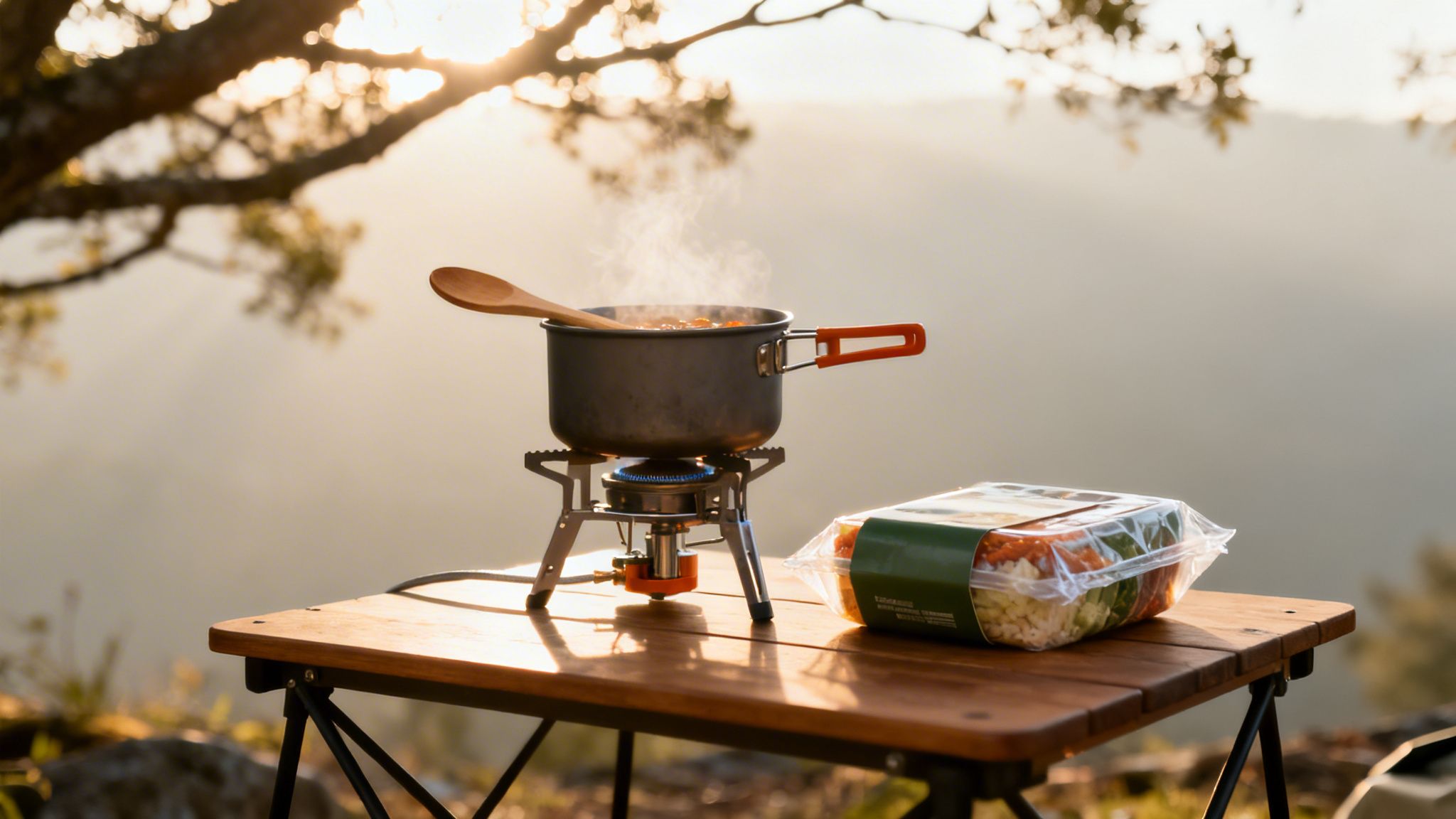
There's something uniquely rewarding about preparing and enjoying a meal in the great outdoors. Outdoor cooking is a practical and satisfying skill that transforms a simple camping trip into a memorable culinary adventure. It teaches self-sufficiency, planning, and resourcefulness, making it one of the most delicious and easy to learn skills outdoors. Plus, it’s a fantastic way to create lasting family traditions around the campfire.
Getting Started with Outdoor Cooking
Success begins at home with smart preparation. For beginners, car camping with a simple camp stove or cooking over a fire pit offers a great starting point. Don't try to get fancy on your first outing; stick with proven, simple recipes.
- Prep at Home: Chop vegetables, mix spices, and measure dry ingredients into labeled bags. This minimizes work and mess at the campsite.
- One-Pot Wonders: Master a few one-pot meals like chili, pasta, or hearty stews. They maximize flavor while keeping cleanup to a minimum.
- Gear Up: A basic, lightweight camping cookware set and a reliable camp stove are excellent initial investments. Practice using the stove at home first.
Safety First: In bear country, store all food, scented items, and trash in a bear canister or hang it correctly. Never bring food inside your tent.
Actionable Meal Planning Rules
A good plan prevents a hungry camper.
- Write It Down. Plan every meal from breakfast on day one to the last snack on the way home.
- Purify Your Water. Always use a filter, purification tablets, or boil water for at least one minute before using it for cooking or drinking.
- Clean Up Properly. Wash dishes at least 200 feet from water sources using biodegradable soap. Strain food scraps from your dishwater and pack them out with your trash.
9. Weather Prediction & Storm Safety
Understanding weather is a vital outdoor skill that transforms you from a passive observer into an active, prepared participant. It’s about more than checking an app; it’s about reading the sky, feeling the air, and knowing how to respond to nature’s signals. This knowledge builds confidence, ensures safety, and is one of the most practical and easy to learn skills outdoors, empowering you to make smart decisions when conditions change unexpectedly.
Getting Started with Weather Prediction
Begin by connecting what you see in the sky with official forecasts. This blend of traditional observation and modern technology is key. A great starting point is learning basic cloud types and their meanings.
- Puffy Cumulus: Fair weather, but watch if they grow tall.
- Wispy Cirrus: Often indicate a change in weather is coming in the next 24 hours.
- Dark Cumulonimbus: The classic thunderstorm cloud; a sign to seek shelter immediately.
Before any trip, check a detailed forecast. While hiking, pay attention to how the clouds are changing. For example, if fair-weather cumulus clouds start building vertically in the afternoon, it often signals an impending thunderstorm, especially in mountain environments.
Safety First: Your "turn-around time" isn't just about daylight; it's also about weather. Deciding to head back when clouds darken isn't failure, it's a successful safety decision.
Actionable Safety Rules
Teach your family to recognize and respect changing conditions.
- Always carry layers. Weather can shift fast. Pack rain gear and an insulating layer, even on a sunny day.
- Descend at the first sign of a storm. If you hear thunder or see lightning, get below the treeline or to lower ground immediately. Avoid open fields and lone trees.
- Know hypothermia symptoms. Shivering, confusion, and lethargy are serious signs. Act fast by adding layers, getting out of the wind, and consuming warm drinks or high-energy food.
10. Wildlife Awareness & Safe Coexistence
Understanding how to interact with wildlife is one of the most rewarding and easy to learn skills outdoors. It transforms a simple hike into an opportunity for awe and connection, rather than fear. Teaching kids to respect animals and their habitats fosters a deep appreciation for the natural world while ensuring everyone remains safe. This skill is less about confrontation and more about informed, peaceful coexistence.
Getting Started with Wildlife Awareness
The core principle is giving animals space. Begin by learning about the common wildlife in the areas you frequent. Knowing the difference between black bear scat and deer droppings or recognizing the warning signs of an agitated moose are practical lessons in safety.
- Observe from a distance: Use binoculars or a camera zoom lens. A great rule of thumb is the "thumb rule": if you can cover the entire animal with your thumb held at arm's length, you are likely at a safe distance.
- Make noise: Talk, sing, or clap your hands periodically while hiking, especially in areas with dense brush. This alerts animals to your presence so you don't startle them.
- Secure your food: Never feed wildlife. Always store food and scented items in bear-proof containers or a properly executed bear hang when camping in bear country.
Safety First: Teach children that seeing a wild animal is a privilege, not a threat. Frame the experience around respect, explaining that we are visitors in their home.
Actionable Safety Rules
Before you hit the trail, review these key rules for safe encounters.
- Know your distances. The National Park Service recommends staying at least 25 yards (75 feet) from most wildlife and 100 yards (300 feet) from predators like bears and wolves.
- Never run. If you encounter a predator, do not run, as this can trigger a chase instinct. Stand your ground, make yourself look bigger, and back away slowly while speaking in a calm, firm voice.
- Leave no trace. Pack out everything you pack in, including food scraps. This prevents animals from associating humans with food, a dangerous pattern that can lead to aggressive behavior.
10 Easy-to-Learn Outdoor Skills Comparison
| Skill | Implementation Complexity 🔄 | Resource Requirements ⚡ | Expected Outcomes 📊 | Ideal Use Cases ⭐ | Key Advantages 💡 |
|---|---|---|---|---|---|
| Fire Building & Fire Safety | 🔄🔄 — Moderate: technique + supervision required | ⚡⚡ — Matches/lighter, fuel wood, containment tools | ⭐⭐⭐ — Safe fire skills, cooking/warmth, emergency prep | Family camping, backyard fire pits, survival drills | Teaches responsibility, emergency readiness, memorable bonding |
| Knot Tying & Rope Work | 🔄 — Low: repetitive hands-on practice | ⚡ — Very low: rope/paracord only | ⭐⭐⭐⭐ — Practical tying skills, gear security, fine-motor development | Tarp shelters, gear rigging, boating, climbing prep | Low-cost, widely transferable, rapid skill retention with practice |
| Basic Navigation & Map Reading | 🔄🔄 — Moderate: symbols, compass use, practice | ⚡ — Low: map + compass (phone GPS as backup) | ⭐⭐⭐⭐ — Independence, reduced getting-lost risk, spatial reasoning | Backcountry hiking, orienteering, geocaching, route planning | Tech-independent, builds critical thinking and confidence |
| Tent Pitching & Camp Setup | 🔄🔄 — Moderate: site selection and assembly skills | ⚡⚡ — Medium: tent, stakes, cookware, organization gear | ⭐⭐⭐ — Improved comfort, safety, equipment protection | Family campgrounds, backpacking, emergency sheltering | Directly improves comfort/safety, teaches systems thinking |
| Wilderness First Aid & CPR | 🔄🔄🔄 — High: certified training and scenario practice | ⚡⚡ — Medium: course fees, first-aid kit, refreshers | ⭐⭐⭐⭐ — Life‑saving capability, better emergency decisions | Remote trips, group leaders, expeditions, family safety plans | Certification-backed skills, reduces anxiety, saves lives |
| Fishing Basics & Catch-Cook Methods | 🔄 — Low: basic casting and patience needed | ⚡⚡ — Low–Medium: rod/reel, license, cleaning tools | ⭐⭐⭐ — Bonding, potential food source, patience training | Ponds/lakes, streams, family weekend trips, backcountry fishing | Relaxing bonding activity, teaches stewardship and patience |
| Trail Running & Hiking Technique | 🔄🔄 — Moderate: pacing, footwork, progression | ⚡⚡ — Medium: footwear, poles, hydration gear | ⭐⭐⭐ — Fitness gains, injury prevention, outdoor confidence | Trail fitness, family hikes, endurance training | Improves health, models discipline, accessible with progression |
| Outdoor Cooking & Meal Planning | 🔄🔄 — Moderate: recipe and fuel management skills | ⚡⚡ — Medium: camp stove, cookware, food storage | ⭐⭐⭐ — Self-sufficiency, memorable shared meals | Car camping, backcountry meal planning, family trips | Teaches planning/resource management, creates traditions |
| Weather Prediction & Storm Safety | 🔄🔄 — Moderate: observation + forecast interpretation | ⚡ — Low: knowledge, apps, basic instruments | ⭐⭐⭐ — Safer trip decisions, reduced exposure to storms | Mountain outings, storm-prone regions, day hikes | Prevents emergencies, sharpens decision-making and timing |
| Wildlife Awareness & Safe Coexistence | 🔄🔄 — Moderate: species-specific protocols and behavior reading | ⚡ — Low: knowledge, binoculars, proper storage | ⭐⭐⭐ — Safer encounters, enriched observation, reduced conflicts | National parks, backcountry, wildlife-heavy areas | Prevents dangerous encounters, fosters stewardship and respect |
Your Next Adventure Starts Now
You've just explored a full roster of essential outdoor abilities, from building a reliable fire to understanding the subtle language of the weather. The journey from novice to a competent outdoorsman isn’t about mastering everything overnight. It's about taking the first step, and then the next, building a foundation of practical knowledge one skill at a time. The list you've just read isn't a final exam; it's a menu of opportunities.
The true value in learning these skills lies not just in your own capability but in what you can pass on. Think of the confidence you'll project when you can effortlessly pitch a tent as the sun goes down, or the calm you'll exhibit treating a scraped knee on the trail. These moments are where you build a legacy of competence and preparedness for your children. They see a father who doesn't shy away from challenges but meets them with skill and a steady hand.
From Theory to Trail: Your Action Plan
The key is to move from reading to doing. Don't let this list become just another piece of information. Make it a catalyst for action. Here’s how you can start this weekend:
- Pick One Skill: Don't try to tackle all ten at once. Choose one that feels most accessible or exciting. Maybe it's practicing the bowline and taut-line hitch in your garage or taking the family to a local park to practice map reading on a marked trail.
- Create a Low-Stakes Environment: Your backyard is your best friend. Practice setting up the tent, lighting a small, contained fire in a proper fire pit, or cooking a simple meal on a camp stove. This removes the pressure of being deep in the wilderness and makes learning enjoyable.
- Involve Your Kids: Turn skill-building into a game. Have a knot-tying race. Let them gather kindling (with supervision). Ask them to help you spot landmarks on a map. When they are part of the process, the lessons stick, and the memories are richer.
Mastering these easy to learn skills outdoors is about more than just survival; it’s about thriving. It's about replacing screen time with green time and building a profound connection with the natural world and, most importantly, with your family. Each small success, whether it's identifying a bird call or landing your first fish, chips away at hesitation and builds a quiet, unshakable confidence. You are showing your children that their father is a man of action, a leader, and a lifelong learner. The wild is calling, and you are more than ready to answer.
Ready to build more than just a campfire? At alphadadmode.com, we focus on the practical skills and mindset that forge capable fathers and resilient men. Visit alphadadmode.com to find resources and a community dedicated to helping you become the leader your family deserves.
