


Yes, for many women, feeling extra horny during ovulation is completely normal. It’s not just in your head—it’s a powerful biological response. This mid-cycle spike in desire is driven by a surge of hormones that signal it's the most fertile time of the month.
Think of it as nature’s not-so-subtle way of encouraging intimacy right when conception is most likely.
The Simple Answer to Ovulation and Desire
To really get why you might feel an undeniable urge for sex around the middle of your cycle, you have to look at your body’s monthly rhythm. The key to this puzzle is the fertile window, a period of roughly six days that ends with ovulation, when an egg is released.
This window is when your body is biologically primed and ready for pregnancy. Your hormones are the ones running the entire show, and right before ovulation, they don’t just prepare an egg—they also turn up the volume on your libido. It's a beautifully designed evolutionary feature.
The Hormonal Green Light for Intimacy
Science has confirmed this isn't just a feeling; it's a real, measurable shift. Studies have shown that women tend to have sex more often and even think about it more frequently during their fertile window.
For instance, one study found that thoughts about sex jumped from an average of 0.77 times per day to 1.3 times per day in the days leading up to ovulation. Another major analysis revealed that intercourse was 24% more frequent during this fertile phase. If you're curious, you can explore more about the science behind libido during ovulation.
So, what’s behind this predictable change in desire? It all comes down to a few key hormonal players working in sync.
The link between ovulation and desire is one of biology's clearest signals. It’s a primal cue designed to maximize the chances of reproduction by aligning peak fertility with peak sexual interest.
Getting to know these hormones can demystify why you feel the way you do each month.
Hormones at Play During Her Fertile Window
Let’s take a closer look at the main hormones involved during ovulation and how they directly influence her libido, mood, and even physical state. This table breaks it all down.
| Hormone | What It Does | Impact on Her Libido & Mood |
|---|---|---|
| Estrogen | Rises dramatically to thicken the uterine lining and prepare the body for ovulation. | Directly boosts libido, increases energy, and enhances mood. It also increases natural lubrication, making sex more comfortable and pleasurable. |
| Luteinizing Hormone (LH) | Surges about 24-36 hours before ovulation, triggering the release of the egg. | While it doesn't directly impact desire, the LH surge contributes to a feeling of physical vitality and energy, which supports increased sexual activity. |
These hormones work together as a team, creating the perfect storm of physical readiness and heightened desire right when it matters most for reproduction.
The Biology Behind Her Mid-Cycle Libido Boost
To really get why desire often spikes mid-cycle, we have to look at what's happening with her hormones. Think of ovulation as her body’s most powerful biological signal—it’s announcing that it's the ideal time for conception.
This isn't just a coincidence; it's a smart evolutionary design. Her increased libido during this fertile window is basically biology’s way of making sure sex is on the mind when the chances of pregnancy are at their absolute highest.
The Estrogen Effect
The main driver behind this surge in desire is estrogen. In the days leading up to ovulation, her estrogen levels climb dramatically. This powerful hormone doesn't just work on a physical level; it has a direct line to her brain, turning up the volume on sexual interest.
This estrogen peak often comes with a boost in energy, confidence, and a general feeling of being more open to intimacy. It also increases natural lubrication, making sex more comfortable and pleasurable—a clever physical cue that matches her heightened emotional state.
This timeline gives a great visual of how desire can shift, hitting a clear peak at the most fertile point.
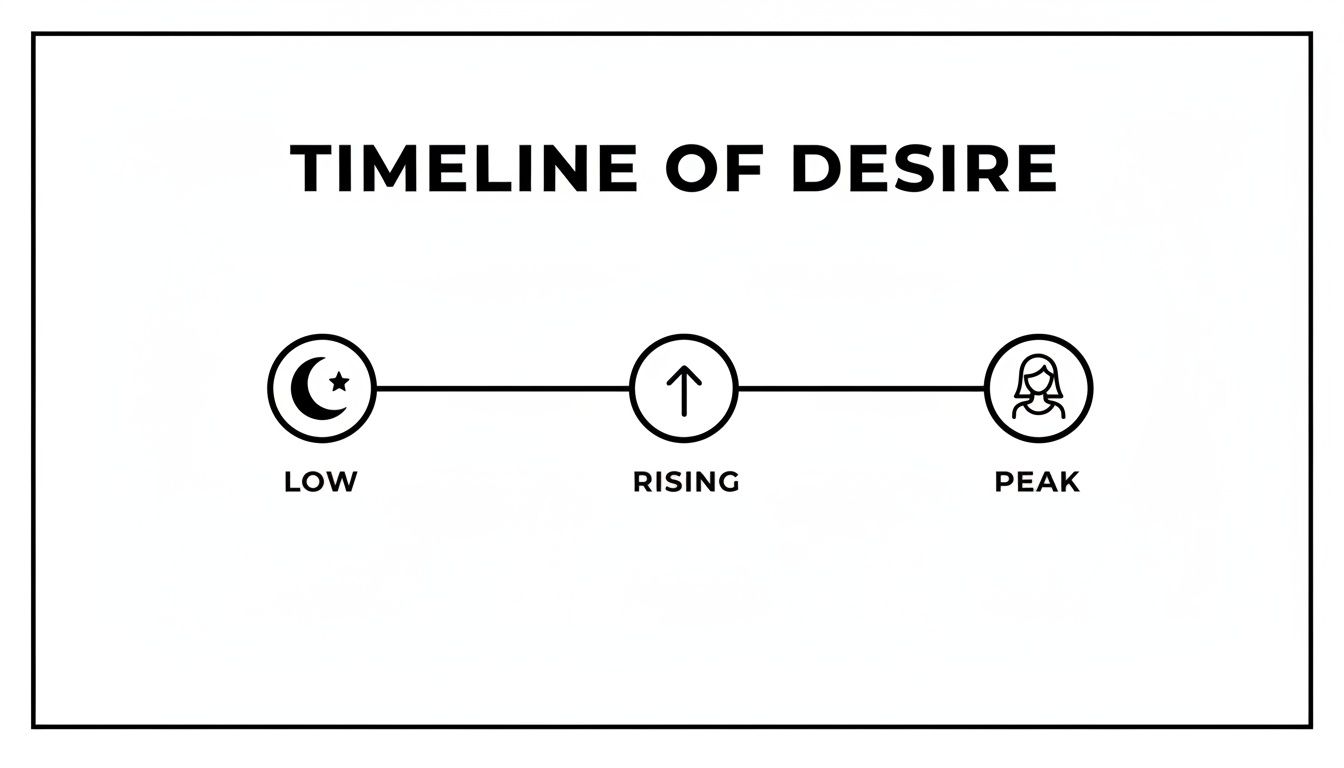
As you can see, desire isn't just a flat line. It builds and peaks in response to her internal hormonal clock.
The Supporting Hormonal Cast
While estrogen gets most of the credit, it has a few key helpers. Another hormone, luteinizing hormone (LH), spikes about 24 to 36 hours before the egg is released, acting as the final trigger for ovulation. While LH might not directly drive libido, many women report feeling more vibrant and full of energy during this surge.
Then there’s testosterone. Even though it's often seen as a "male" hormone, women have it too, and it sees a small but important bump around ovulation. This little increase can fire up sexual thoughts and make her body more sensitive to touch, making every sensation feel a bit more electric. It’s this combination of hormones that makes ovulation and feeling horny go hand-in-hand for so many.
Key Takeaway: The libido boost during ovulation isn’t just one thing. It's a coordinated hormonal event where estrogen, LH, and a touch of testosterone all work together, syncing up peak fertility with peak sexual interest.
The complex interplay of these hormones is what makes this phase so unique. If you're interested in learning more about keeping this system in check, you can find helpful info on hormone balance supplements for women.
Knowing the science here is about more than just biology—it's about connection. When you understand these natural rhythms, you can appreciate her shifts in energy and desire, which fosters a much deeper sense of empathy and a stronger bond.
How to Recognize the Subtle Signs of Ovulation
Okay, so you get the science behind her libido spike. But how do you actually spot it in the real world? This is where you move from theory to being a truly attentive partner.
Her body sends out clues when she’s ovulating, and they’re surprisingly consistent once you know what to look for. Think of it less like trying to solve a mystery and more like learning her unique rhythm. It’s about being present and connected, not just tracking data.

Physical Cues to Look For
The most reliable indicators of ovulation are physical. Her body makes some distinct adjustments to get ready for a potential pregnancy, and a few of them are pretty obvious if you’re paying attention.
- Changes in Cervical Mucus: This is probably the clearest sign of all. As her estrogen levels climb, her cervical mucus will become clear, slippery, and stretchy—think of the consistency of raw egg whites. This isn’t random; it’s a biological green light designed to help sperm survive and travel more effectively.
- Slight Rise in Body Temperature: A woman’s basal body temperature (her temperature when she’s fully at rest) takes a small but noticeable jump right after ovulation. While this tells you ovulation just happened, tracking it over time can help you predict the next cycle with more accuracy.
- Mild Pelvic Discomfort: Ever heard of mittelschmerz? It’s German for "middle pain," and it’s a faint, one-sided twinge some women feel in their lower abdomen. That’s literally the sensation of an ovary releasing an egg.
Emotional and Behavioral Clues
The changes aren't just physical. Ovulation can also bring about some very real shifts in her mood and actions. This is where her body and mind sync up, often answering the "does ovulating make you horny?" question with a definite yes.
For example, research has shown that women often feel a major boost in their own perceived attractiveness during this fertile window. One study noted that women rated their own sexiness higher around ovulation, averaging about 50.30 out of 100. This isn't just in her head; it's a deep-seated biological signal that boosts her confidence, and you might see it in how she carries herself or the energy she gives off. If you're curious about the specifics, you can explore the research on ovulation and attractiveness.
Key Insight: That spike in her libido during ovulation often comes with a serious dose of self-assurance. You might notice she chooses outfits that make her feel great, initiates more physical contact, or just seems more vibrant and "in her skin."
This newfound confidence can also show up as her being more flirtatious, social, and outgoing. It's nature’s way of making sure her outward behavior matches her peak fertility.
Of course, recognizing these signs is just the first step. The real magic happens in how you respond. If talking about intimacy and cycles feels like a hurdle, you might find our guide on overcoming the lack of communication in a relationship helpful. A little open dialogue goes a long way.
How Your Relationship Status Impacts Her Desire
That surge of hormones she experiences during ovulation definitely amps up her libido, but it's not just a random, scattershot feeling. That desire is surprisingly focused, and the context of her relationship plays a massive role in where all that sexual energy goes.
For women who are in a committed, stable partnership, that mid-cycle desire is almost always aimed directly at their partner. You can think of it as biology’s way of strengthening your bond right when the time is best for conception. It’s less about a general feeling of being horny and much more about a specific, intense attraction to you.
In a Relationship vs. Single: The Science of Desire
This isn’t just a nice idea—hard science backs this up. A landmark 2004 study dove into how ovulation affects desire differently for women in relationships ("mated") versus those who were single. The findings were crystal clear.
The study found that women in relationships experienced a sharp peak in sexual desire for their partners that lined up perfectly with their most fertile days. But here's the fascinating part: that same spike in desire was completely absent in single women. This suggests the libido boost is most powerful and reliable within a committed relationship.
This discovery basically shows that the relationship itself acts as an amplifier for ovulation's biological signals. If you’re in a solid partnership, this is fantastic news. Her fertile window often means her desire for you is at an all-time high. You can even read the full research findings on relationship status and ovulatory desire to see the data for yourself.
But the study also uncovered something a bit more complex. Women in longer-term relationships sometimes reported a slight increase in sexual thoughts about other people during this fertile window. It’s really important not to see this as a red flag about your connection.
Instead, think of it as a faint "evolutionary echo."
This doesn't mean she has any intention of acting on these fleeting thoughts. It's more like a biological whisper from our species' distant past—a leftover primal impulse for genetic variety. The real takeaway here isn't to get insecure, but to double down on what makes your connection special. Maintaining a healthy sex life after marriage is the best way to ensure her ovulatory desire stays focused on you, reinforcing your bond month after month.
A Practical Guide to Connecting During Her Fertile Window
Alright, understanding the biology behind her mid-cycle libido boost is one thing. But knowing how to respond to it in a way that actually strengthens your relationship? That's where the real magic happens. This isn't about gaming her cycle or timing sex like some kind of science experiment. It’s about being a partner who's paying attention.
When you're tuned in to her natural rhythms, you can use that awareness as a powerful opportunity for connection. It transforms the whole "does ovulating make you horny?" question from a simple fact into a shared experience. This is your chance to lean in and make her feel seen and desired—not just for a few days, but all month long.
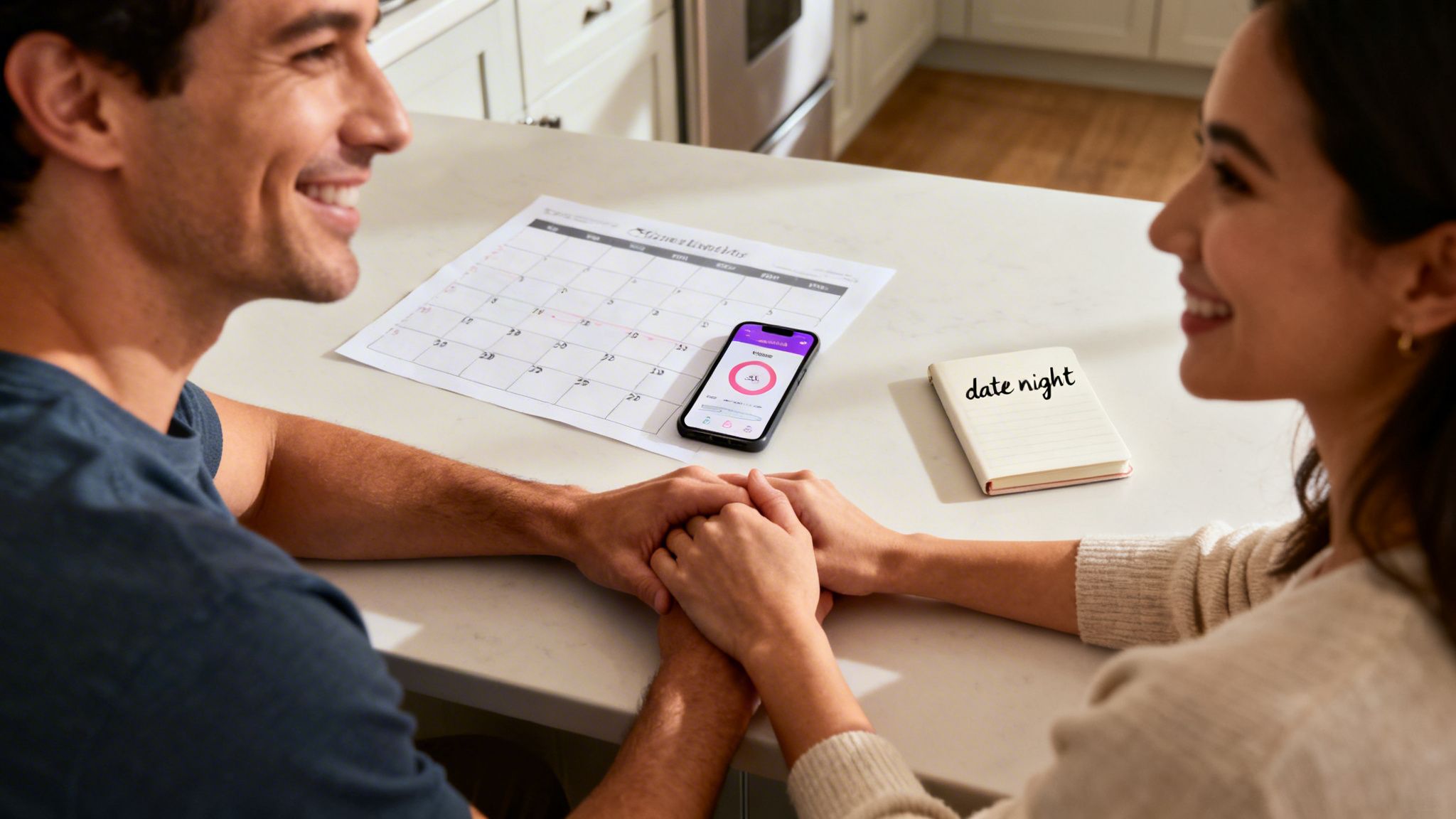
Communicate and Connect Openly
Talking about her cycle shouldn't feel like navigating a minefield. The key is to approach it as a genuine part of understanding her overall health and how she’s feeling. A simple, no-pressure question like, "How are you feeling energy-wise this week?" can be a great way to open the door.
When you show you're genuinely interested, it sends a clear message: you care, and you see this as a partnership. This builds a foundation of trust that makes conversations about sex and intimacy feel natural and collaborative, not like a negotiation.
Plan for Peak Connection
Once you both have a general sense of her cycle, you can work with it. If you know her energy and desire are likely to spike around the middle of the month, that’s the perfect time to be proactive and plan something special.
- Plan a Date Night: Don’t just wait for her to suggest it. Take the lead and plan a great evening that happens to line up with her high-energy phase.
- Prioritize Emotional Intimacy: Remember, her increased desire isn't purely physical. Use this time for those deep conversations or shared activities that remind you both why you're a team.
- Be Ready for Spontaneity: While planning is great, be open to spur-of-the-moment connection. That heightened libido might mean she’s extra receptive to a spontaneous kiss or a playful touch that leads to more.
Of course, desire is about more than just hormones. The everyday emotional and physical closeness you share is huge. Making time for essential intimacy exercises for couples can deepen your bond and make it easier for desire to spark at any time of the month.
A Critical Reminder on Consent and Contraception
This is incredibly important, so let’s be crystal clear. Just because biology might be increasing her libido, consent is never automatic. Her increased desire is an invitation, not a guarantee. You always need to make sure intimacy is enthusiastic and wanted by both of you, every single time.
Crucial Point: A heightened libido during ovulation does not automatically equal a desire for pregnancy. Your shared family planning goals are paramount.
Unless you are actively trying to conceive, contraception is just as vital during her fertile window. This is a conversation that requires total honesty. Talk about your goals to ensure you're both on the same page, protecting your relationship and your future. And if you're looking for new ways to keep things exciting, you can explore some ideas in our guide on how you can spice up your sex life.
Why Real Life Can Disrupt the Biological Rhythm
Biology has its script, sure. But life loves to ad-lib.
Think of it this way: her ovulatory hormone surge is like a clear radio station broadcasting a signal for intimacy. Now, imagine a thunderstorm of everyday stress rolling in. That storm creates so much static that it can easily muffle, or even completely drown out, the original signal.
So, even if her hormones are screaming "go," other factors can hit the mute button. The answer to "does ovulating make you horny?" isn't always a simple "yes" when the complexities of real life get in the way.
Common Static and Interference
Modern life is packed with pressures that can override the body's natural rhythms. These aren't just minor annoyances; they are significant forces that can throw her physical and emotional well-being off-kilter.
- Work Stress and Burnout: A demanding job, looming deadlines, and a high-pressure environment are notorious libido killers. It’s tough for her body’s subtle cues to get through when her mind is stuck in a spreadsheet.
- Sleepless Nights: Lack of sleep is a massive disruptor, whether it's from a sick kid, a newborn’s 2 AM feeding, or just general anxiety. It tanks her energy and jacks up stress hormones, which go head-to-head with the ones that fuel desire.
- Individual Health and Medications: Chronic health conditions, mental health struggles like anxiety or depression, and even certain medications can significantly alter her hormonal baseline. Some forms of hormonal birth control, for instance, are specifically designed to suppress ovulation and can dampen libido as a side effect.
The bottom line is that a woman's sexual desire is incredibly complex. Hormones are a huge influence, but they’re just one piece of a much larger puzzle that includes her mental, emotional, and physical state.
When these outside stressors pile up, it can be nearly impossible for that natural ovulatory desire to even surface. If you're trying to navigate these challenges, learning how to deal with relationship stress together is far more important than tracking a calendar.
Ultimately, communication and mutual support become the bedrock of intimacy, no matter what her hormones are doing.
Frequently Asked Questions About Ovulation and Libido
Even with a good grasp of the science, you probably still have some practical questions. Let's dig into a few of the most common things men wonder about when it comes to their partner's cycle and desire.
How Reliable Are Apps for Tracking Ovulation?
Fertility tracking apps can be a fantastic tool for getting a ballpark idea of your partner’s cycle. But it's crucial to understand that they are just making an educated guess.
These apps work by taking the data you give them—like the first day of her period and average cycle length—and running it through an algorithm to predict the fertile window. They can't, however, see into the future. Real-life factors like a stressful week at work, a sudden illness, or even travel can easily throw that prediction off and shift when ovulation actually happens.
For a much clearer picture, you need to combine the app's prediction with real-world signs. Paying attention to things like changes in her cervical mucus or charting her basal body temperature provides real-time data.
Think of the app as your starting guide, not the final word.
What if My Partner Says She Feels No Different During Ovulation?
This is completely normal, so don't be concerned. While a lot of women report feeling a definite increase in desire around ovulation, plenty of others feel no change at all. The biological answer to "does ovulating make you horny?" is a general "yes," but a woman's actual experience is far more complex.
Her libido isn't just a switch flipped by hormones. It's influenced by a whole host of other things happening in her life.
Factors that can easily drown out that biological signal include:
- High levels of stress from her job or family life.
- Sheer exhaustion from poor sleep or running after kids.
- The emotional connection and overall relationship dynamics.
- Individual health issues or the side effects of certain medications.
If your partner doesn't feel a spike in desire, it doesn’t mean anything is wrong with her or your relationship. It just means her libido is a product of her whole life, not just her monthly cycle.
Is It Okay to Talk to My Partner About Her Cycle?
Absolutely. In fact, it can be a great thing for your relationship—if you approach it from a place of genuine care and not pressure. The key is to frame it as wanting to understand and support her, not just trying to figure out when she'll be in the mood.
Turning this from an awkward topic into a moment of connection is all about your approach.
A great way to open the door is with something like, "I've been learning about how energy and mood can shift throughout the month, and I'd love to understand more about your experience and how you're feeling."
This kind of question shows you’re an engaged, supportive partner. It opens the door for teamwork and makes future conversations about intimacy and planning feel much more natural and collaborative.
At alphadadmode.com, we provide practical, no-fluff guidance to help you lead your family with confidence. For more insights on strengthening your relationship, explore our articles at https://alphadadmode.com.
