


Alright, Dad, let's get down to it. When it comes to car seat safety, there's no room for "good enough." The mission is simple: get it 100% right, every single time. Think of it as the most important job you'll ever have—because it is.
It’s not just about following the law; it's about making sure your kid is as safe as humanly possible on the road.
Your Mission Briefing on Car Seat Safety

Consider yourself the pilot of your family's vehicle. Just like a pilot runs through a meticulous pre-flight checklist before every takeoff, you need to approach every car ride with that same precision. There are absolutely no shortcuts when you're hauling the world's most precious cargo.
The whole point of a car seat is to be a life-saving tool. But here’s the catch: it only works if you use it correctly. Once you get the 'why' behind the rules, the 'how' becomes second nature. This guide will make sure you have the confidence to know you're doing everything right.
The Stakes Are High
Let's not sugarcoat it—the numbers speak for themselves. When you buckle your child into their car seat correctly, you are dramatically cutting their risk of serious or fatal injury in a crash. It’s not a guess; it's a fact backed by decades of research.
According to the National Highway Traffic Safety Administration (NHTSA), proper car seat use slashes the risk of fatal injury by 71% for infants and 54% for toddlers.
But here's the reality check: misuse is rampant. Studies from safety experts, including the NHTSA's historical research on child safety seats, consistently find that more than half of all car seats are installed or used incorrectly. That’s a staggering statistic that can erase all the safety benefits.
Your Role as the Safety Officer
Your job is to close that gap. You're the one who ensures the car seat’s potential safety becomes actual safety. This guide is your playbook to eliminate the guesswork and move with total certainty.
Here’s what you’ll walk away with:
- Confidence: You'll know for sure that the straps are right and the seat is locked in tight. No more second-guessing.
- Clarity: You'll understand exactly when it's time to move your kid to the next stage.
- Control: You'll have the skills to install any seat in any car, making sure they're safe no matter where you go.
This is more than just reading a manual. It's about adopting a mindset of precision and vigilance—a core part of being a dad. If you're looking to build that confident mindset in other areas, check out our essential tips for new dads.
Now, let's dive in.
Understanding Each Type of Car Seat
Walking into the car seat aisle can feel like trying to pick the right tool for a job you've never done before. There are so many options, and they all look a little different. Don't worry, this is your toolbox guide. We'll break down what each seat does and, more importantly, when you need it.
Think of it like this: you wouldn't use a sledgehammer to hang a picture frame. Each car seat is a specialized tool built for a specific stage of your kid's growth. Using the right one at the right time isn't just a good idea—it's the foundation of keeping them safe on the road.
Rear-Facing Seats: The First Line of Defense
For newborns, infants, and toddlers, a rear-facing car seat is the only way to go. It's the law, but it's also just plain physics. In a collision, this position cradles their head, neck, and spine, spreading the crash forces across the entire shell of the seat. It’s the safest cocoon you can provide.
You’ve got two main choices for this stage:
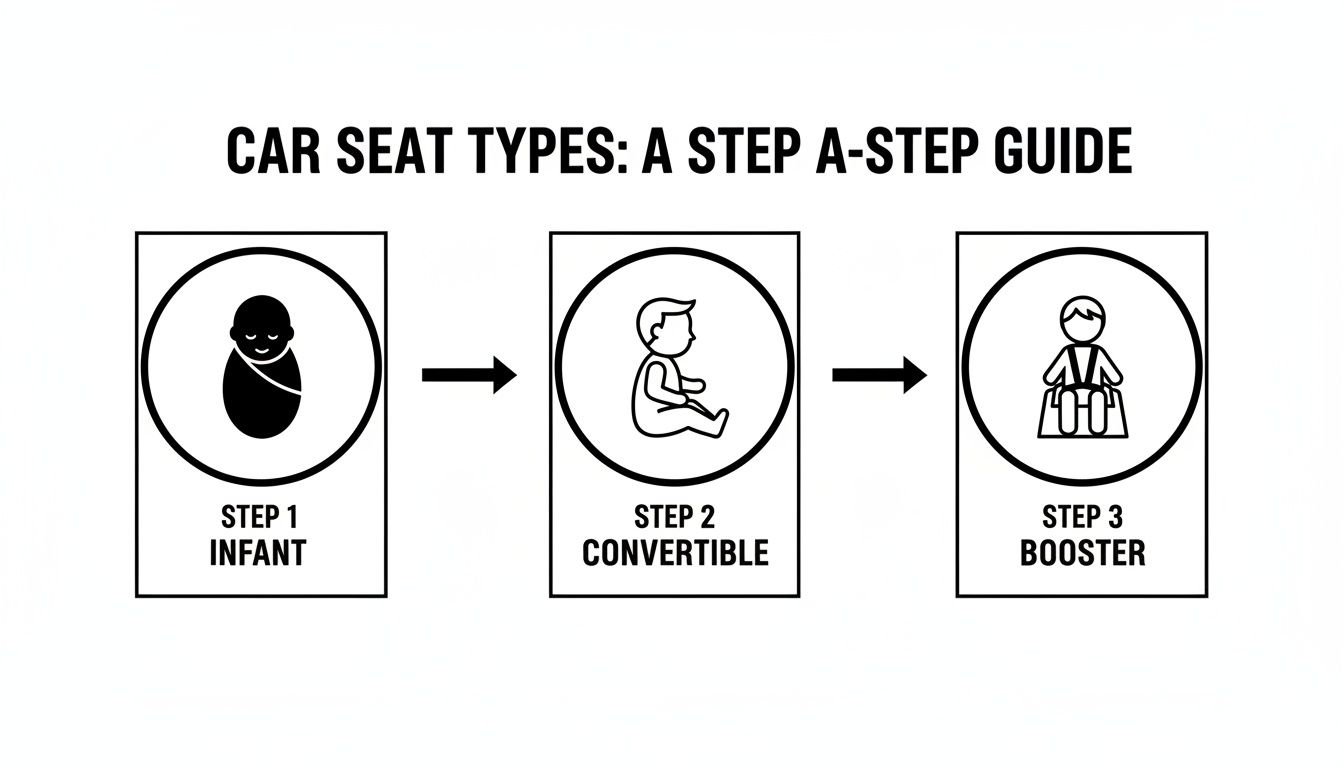
- Infant-Only Seats: These are the portable ones with a carrier that clicks in and out of a base you leave in the car. They're built just for babies and can only be used rear-facing. The convenience factor is huge—you can carry a sleeping baby right out of the car without unbuckling them. A lifesaver.
- Convertible Seats: These are the long-haul investment. They start out rear-facing for the little ones and then "convert" to forward-facing when your child is big enough. They're bulkier and stay in the car, but you'll get years of use out of them.
The experts at the American Academy of Pediatrics (AAP) and the NHTSA are clear on this: keep your child rear-facing as long as possible. Don't rush it. They need to stay in that position until they hit the absolute maximum height or weight limit listed on the seat's label. For most kids, that's well past their second birthday.
Forward-Facing Seats: The Next Step Up
Once your child has officially outgrown the rear-facing limits of their convertible seat—and only then—it's time to turn them around. Transitioning to a forward-facing car seat with a harness is a big step, but remember, rear-facing is always the safest option, so max it out first.
At this point, you'll either spin your convertible seat around or switch to a combination seat. The crucial piece of equipment here is the five-point harness. This system is designed to secure your child at their strongest points (shoulders and hips), effectively managing the immense forces of a crash.
Booster Seats: Positioning for Safety
When your not-so-little one finally outgrows the weight or height limits of their forward-facing harness, they graduate to a booster seat. A booster's job is surprisingly simple: it just "boosts" your child up so the car's built-in seat belt fits them like it would an adult. It's a positioning device, not a restraint.
Without a booster, a car's seat belt is dangerous for a child. The lap belt cuts across their soft stomach instead of their hips, and the shoulder belt slices into their neck. In a crash, that can cause catastrophic internal injuries. A booster ensures the lap belt sits low on the hips and the shoulder belt crosses the chest and collarbone.
You’ll find two common styles:
- High-Back Booster: This is your best bet for cars with low seat backs or no headrests. It provides critical head and neck support in a side-impact collision.
- Backless Booster: A simple, portable cushion that's great for older kids who still need that boost but don't need the extra side support. They're also handy for carpooling.
Choosing the right seat is less about a birthday and more about your child’s size and the seat’s design. It’s all about getting the right fit for their current stage.
Mastering Car Seat Installation Methods
A top-rated car seat is just a fancy piece of plastic until it's properly locked into your vehicle. This is where the rubber meets the road—literally. Getting the installation right is the foundation of car seat safety, ensuring the seat can do its job if the worst happens.
You’ve got two ways to anchor that seat: using the LATCH system or your car’s seat belt. Think of them as two different paths to the same destination: a rock-solid installation. Your car seat manual is the bible here; it will tell you exactly how to do it. One thing to remember: never use both at the same time unless the manual explicitly says you can (which is almost never).
The journey from infant carrier to booster seat is a long one, but a secure installation is the one constant.
The LATCH System Explained
LATCH stands for Lower Anchors and Tethers for CHildren. It was created to make installation a little less of a headache. Most cars built after September 1, 2002, have them. You’re looking for two small metal bars—the lower anchors—tucked into the crease of your back seats. There’s also a top tether anchor, usually on the back of the seat or on the rear deck.
Using LATCH is pretty straightforward:
- Find the anchors. Look for the little circular symbols on the seat fabric that mark their location.
- Click the straps. Attach the clips from the car seat's LATCH straps onto those lower anchors.
- Cinch it down. Use your body weight to press down firmly on the car seat and pull the LATCH strap until there’s no slack left.
While LATCH can feel simpler, there’s a critical weight limit that a lot of parents don't know about.
The lower anchors are only rated to a certain maximum weight—typically 65 pounds, including the weight of the car seat itself. Once your child and the seat combined hit that limit, you have to switch to the seat belt method.
Using The Vehicle Seat Belt
Don’t think of the seat belt method as second best. When done right, it's every bit as safe as using LATCH. It's the universal method and the one you’ll absolutely need to master once your kid outgrows the LATCH limits.
The key is to "lock" the seat belt so it holds the car seat tight. In most newer cars, this is built right in. Just pull the shoulder belt all the way out until it won't go any further. As you let it retract, you should hear a clicking or ratcheting sound. That's the lock engaging, and it means the belt will now only get tighter.
The One-Inch Rule
No matter which method you use, this is the final exam for your installation.
Grab the car seat at the belt path (where the LATCH strap or seat belt is routed through) and give it a firm shake side-to-side and front-to-back. The seat should not move more than one inch in any direction. If it does, you need to put some more muscle into it and tighten it down.
We've come a long way. Proper car seat use has jumped from a dismal 15% in 1999 to nearly 90% today. But we can't get complacent. A booster seat alone reduces the risk of serious injury by 45% for kids aged 4-8. Getting the installation right is a massive part of that success, especially when you have one of the best family cars with easy-to-reach anchors.
Cracking the Code on Car Seat Laws
Let's get one thing straight: understanding car seat laws isn't just about dodging a ticket. Think of the law as the absolute floor—the bare minimum for keeping your kid safe. As a dad, your job is to aim much, much higher.
Things can get a little confusing because while the feds set the safety standards for making the seats, it's up to each state to decide the rules for using them. That means the law for turning your child forward-facing in California might be totally different from the one in Texas.
Law vs. Best Practice: The Real Deal
Here’s the most important thing to get your head around: laws often play catch-up with the latest safety research. For example, your state law might say it's legal to turn a child forward-facing at age one. But every single safety expert and organization, like the American Academy of Pediatrics (AAP), will tell you that’s a bad idea.
The AAP and other pros strongly recommend keeping kids rear-facing until they hit the maximum height or weight limit of their seat. For most kids, that’s well past their second birthday, and sometimes even closer to four.
Following best practices, not just the legal minimum, is what being a safety-focused dad is all about. The law tells you what you have to do; safety experts tell you what you should do. Always go with the "should."
This gap between the law and best practice is where you come in. You're the one in charge of your kid's safety, so it’s on you to know the difference and always choose the safest path.
It's a Worldwide Thing
This isn't just a U.S. issue; it's a global focus with some pretty big differences in how rules are made and followed. Over in Europe, for instance, they have standards like i-Size that focus more on a child's height than weight and make rear-facing mandatory until at least 15 months.
These different approaches all point to the same truth: car seats save lives, but only if they're actually used. The numbers from the World Health Organization (WHO) are eye-opening. Their 2023 data shows that while child seat use in Europe is around 77%, it plummets in other places, with some parts of South America reporting usage below 10%. That massive gap leads to tragedies that could have been prevented. You can read more about these global safety disparities from the WHO.
How to Find the Rules for Your State
You absolutely have to stay on top of your local laws, because they can and do change. Luckily, finding them is pretty easy.
Here are a few rock-solid places to check:
- The Insurance Institute for Highway Safety (IIHS): They offer a super simple, clickable map that breaks down the car seat laws state by state.
- Your State's DMV or DOT Website: Go straight to the source. Your state's Department of Motor Vehicles or Department of Transportation site will have the official legal language.
- Safe Kids Worldwide: This is a fantastic organization with local chapters that provide up-to-date info and can even point you to local car seat inspection stations.
Getting this information doesn't just make you a rule-follower. It turns you into an informed dad who makes smart, safe decisions for his kid on every single trip.
Avoiding the Most Common Car Seat Mistakes
Look, we've all been there. You're wrestling a squirming toddler into their car seat, you're running late, and you just want to hear that click and get on the road. But even the most on-it dads can make small mistakes that have huge safety implications. Let's walk through the most common slip-ups I see and, more importantly, how to get them right every single time.
It’s a sobering statistic, but studies have shown that a shocking number of car seats are used incorrectly—in some cases, the error rate is as high as 73%. These aren't just minor oopsies; they can completely undermine the protection the seat is built to offer. Our job is to make sure you're not part of that statistic.
The Loose Harness Straps Fumble
This is probably the #1 mistake I see. A harness that isn't snug enough is a huge risk. If you can grab a horizontal fold of the strap webbing at your kid's collarbone, it's way too loose. In an accident, that slack can be enough for a child to be thrown from the seat entirely.
The fix is simple: use The Pinch Test. After you buckle them in, try to pinch the harness strap right at their collarbone. If your fingers slide off because the strap is flat, you're golden. If you can pinch any slack, you need to tighten it until you can't. It should feel as snug as a good hug.
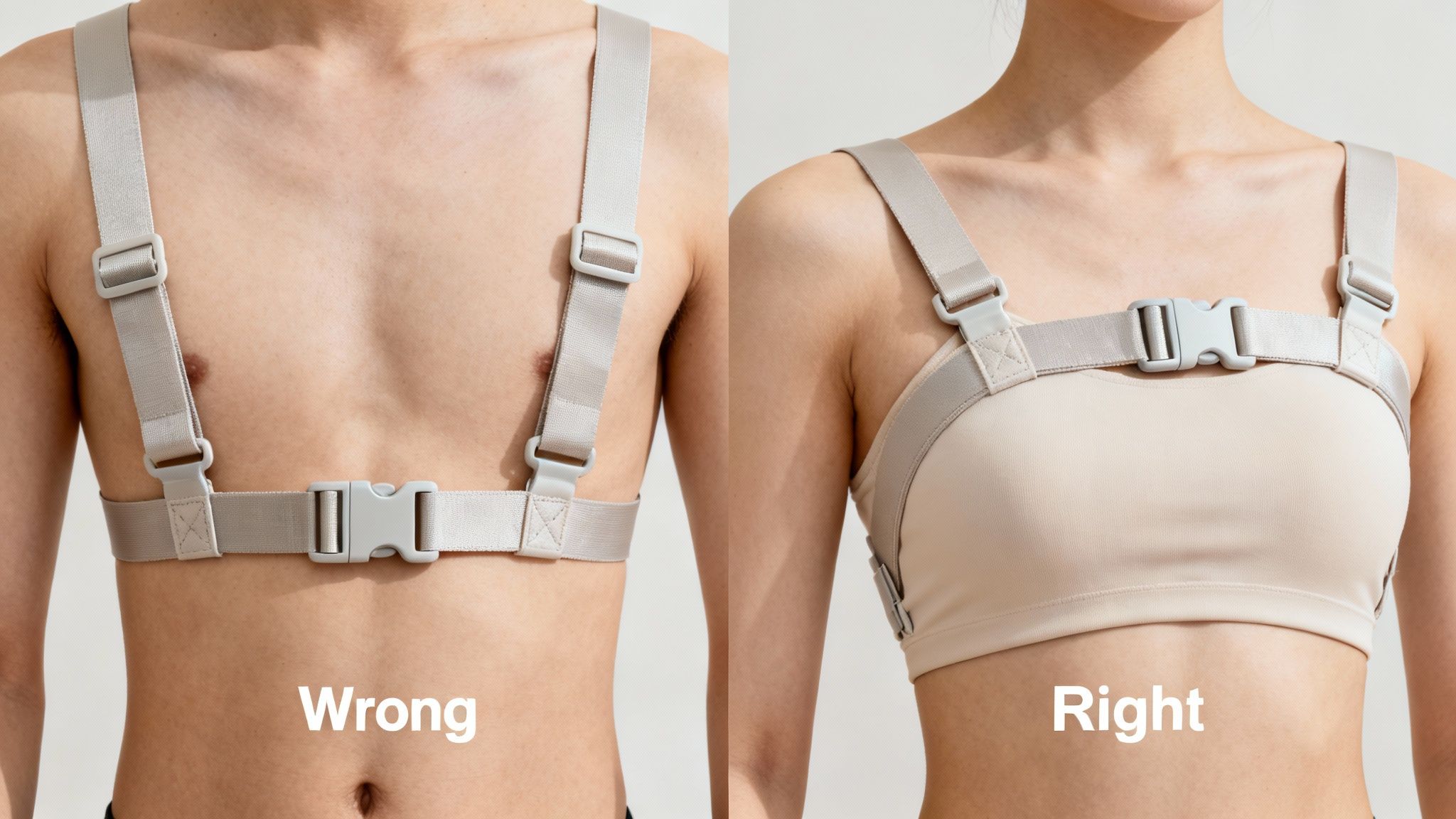
The Wandering Chest Clip
It's called a chest clip for a reason, but all too often it ends up down by the belly button. When the clip is too low, the shoulder straps can easily slip off during a crash, leaving your child's head, neck, and torso completely vulnerable.
Make it a habit to slide that clip up to the proper spot: armpit level. This is non-negotiable. Think of it as the final lock that holds the whole system in place over the strongest part of your kid's little body.
Rushing to the Next Stage
We all get excited to see our kids hit new milestones, but "graduating" to the next car seat stage too early is a major safety step backward. Turning a child forward-facing or moving them into a booster before their body is ready puts them at risk for serious injury.
Safety Pro-Tip: Max out the limits. The safest thing you can do is keep your child in their current car seat stage until they hit the absolute maximum height or weight limit set by the manufacturer. Don't rush graduation day.
For instance, keeping your toddler rear-facing for as long as possible is one of the most critical car seat safety guidelines. It gives their developing head, neck, and spine the best possible protection in a crash.
To make this crystal clear, here’s a quick-glance table of common errors and the pro-dad fixes.
Common Mistakes vs Best Practices
| Common Mistake | The Risk | The Pro-Dad Solution (Best Practice) |
|---|---|---|
| Loose Harness Straps | Child could be ejected from the seat during a crash. | Perform the Pinch Test. Straps are tight enough when you can't pinch a horizontal fold of webbing at the collarbone. |
| Chest Clip at Belly Level | Shoulder straps can slide off, leaving the torso and head unprotected. | Position the chest clip at armpit level every single time. |
| Turning Forward-Facing Too Soon | Exposes a child's weak neck and spine to severe injury forces. | Keep your child rear-facing until they reach the maximum height or weight limit of their convertible seat. |
| Using Unapproved Accessories | Aftermarket products can interfere with the seat's safety features and void the warranty. | Only use accessories that came with the seat or are explicitly approved by the car seat manufacturer. |
| Ignoring the Expiration Date | Degraded plastic and outdated standards mean the seat may fail in a crash. | Find the expiration date on the seat's label (usually 6-10 years) and replace it before it expires. |
Bookmark this table or snap a picture of it. Nailing these five things puts you way ahead of the curve.
Beware of Unapproved Add-Ons
The baby aisle is full of tempting aftermarket gadgets—plush strap covers, infant head positioners, and bulky seat protectors. They might look comfortable or convenient, but they were not crash-tested with your specific car seat.
Adding unapproved products can change how the car seat performs in an accident and could even void your warranty. The rule is simple: if it wasn't in the box when you bought the seat, don't use it. The only exceptions are products that the car seat manufacturer has specifically tested and approved for use with your model.
Forgetting the Expiration Date
Believe it or not, car seats expire, just like a carton of milk. Over the years, the plastic shell can become brittle from constant exposure to extreme hot and cold temperatures inside your car. Safety standards also get updated. An expired seat is a gamble you don't want to take.
So, where do you find it? Every seat has a label or a stamp molded into the plastic with its date of manufacture and an expiration date. This is typically 6 to 10 years from the day it was made. Find that date, put a reminder in your phone, and make sure you replace it on time. Safety equipment has a shelf life for a reason.
Long-Term Care and When to Replace Your Seat
Think of your kid’s car seat like any other high-performance safety gear—a helmet, climbing ropes, you name it. It's built tough, but it's not invincible. This isn't just another piece of baby gear; it's a life-saving device that needs regular attention to do its job right. Wiping off a few crumbs is one thing, but real maintenance is about making sure it will hold up if you're ever in a wreck.
A car seat's lifespan is a real thing. The constant temperature swings inside your car—baking in the summer sun, freezing in the winter—take a toll. Over time, that tough plastic can become brittle and the harness webbing can lose its strength. Knowing how to care for it and when to call it quits is a core part of being on top of your car seat safety guidelines.
Keeping It Clean Without Wrecking It
Kids are messy. That’s a given. So, cleaning the car seat is going to happen, probably more often than you'd like. But how you clean it is crucial. Blasting it with harsh chemicals, bleach, or throwing the straps in the washing machine can seriously damage the materials designed to save your child’s life.
Your car seat's manual is your bible here. Follow its cleaning instructions exactly.
- Harness Straps: This is a big one. Never submerge the straps or put them in the laundry. That can weaken the fibers you're counting on. A soft cloth with a bit of mild soap and water is all you need.
- Plastic Shell: Easy peasy. A damp cloth usually does the trick.
- Fabric Cover: Most covers can handle a gentle cycle in the washing machine, but double-check the manual before you toss it in.
This is about more than just looks; it's about protecting the seat's integrity. Taking care of your safety gear is just as vital as knowing what to do when you're stuck on the side of the road. For other practical vehicle skills, check out our guide on how to change a tire step-by-step.
Car Seat Expiration Dates and Recalls Aren't Suggestions
Look on any car seat and you'll find a "do not use after" date stamped right on the plastic. This isn't some marketing gimmick to get you to buy a new one. It's a hard deadline. Most seats expire 6 to 10 years after the date they were made. Find that date, put a reminder in your phone, and when the time comes, retire the seat. An expired seat is a gamble you don't want to take.
Beyond expiration dates, you've got to keep an eye out for recalls. A recall means the manufacturer found a defect that could be dangerous. The easiest way to stay informed is to register your seat when you buy it. You can also check the National Highway Traffic Safety Administration (NHTSA) database with your seat’s model number anytime.
The Golden Rule After a Crash: Replace It
This is the one rule you can't bend: You must replace a car seat after any moderate to severe crash. Period. The violent forces in a collision can cause hairline fractures and stress damage you can't see, compromising the seat's ability to protect your child in a future impact.
NHTSA has some clear guidelines for this. You need a new seat if the crash involved any of these:
- The vehicle had to be towed from the scene.
- The door closest to the car seat was damaged.
- Anyone in the car was injured.
- The airbags went off.
Even in a fender bender that seems minor, your car seat manufacturer might still require a replacement. Read their policy. When your kid’s safety is on the line, there’s zero room for guesswork. Just replace the seat.
Dad's Car Seat FAQ
Alright, you've wrestled the seat into place, you know the laws, and your "pinch test" is second to none. But let's be real, new questions always seem to crop up when you least expect them. Here are the straight-up, no-nonsense answers to the questions we hear most from dads in the trenches.
Can I Use a Second-Hand Car Seat?
Look, I get it. Saving money is always a good thing. But a used car seat is one of the few places I'd tell you to be extremely cautious. It's strongly discouraged unless you know its entire life story from someone you trust completely—like a brother or best friend.
You need to be 100% certain it has never been in an accident (even a fender bender), it's not past its expiration date, and all the original parts and labels are there. If there's any doubt at all, walk away. A brand-new, budget-friendly seat is a far safer bet and a small price to pay for your peace of mind.
What If My Kid's Head Slumps Forward?
This one is a classic, especially with those tiny, floppy-headed newborns. For rear-facing infants, a head slumping forward can be a serious breathing risk. The first thing you need to do is check the recline angle. Every seat has a level indicator on the side—make sure it’s in the correct range for your baby's age. And whatever you do, don't add pillows or any aftermarket inserts that didn't come with the seat.
For older, forward-facing kids, head slump is mostly a comfort issue, not a safety one. A properly snug harness will hold their torso upright and keep their head from falling forward too much when they doze off.
Remember, a snug harness and the correct recline angle are your best tools. The seat is designed to provide the necessary support without any extra padding you might find in stores.
Seriously, Why No Puffy Winter Coat?
This is the one rule you can't bend on. A puffy coat creates a huge, hidden gap between your child and the harness. In a crash, all that fluffy padding compresses in a split second, leaving the harness dangerously loose. That slack can lead to severe injury or even ejection from the seat. It’s a scary thought, but a real one.
The fix is simple and takes just a few extra seconds:
- Take the coat off before you put your kid in the seat.
- Buckle them in and tighten the harness until it passes the pinch test.
- Then, you can lay their coat or a blanket over them like a cape to keep them toasty warm.
This way, the harness is right against their body, ready to do its job if you ever need it to.
At alphadadmode.com, our mission is to arm you with the confidence and know-how for every part of this fatherhood journey. Sign up for updates on our official launch and get exclusive guides and resources sent straight to your inbox. Be the first to know at https://alphadadmode.com.
