




Being a dad today means more than just being a provider or a protector. It means being a guide, a coach, and a rock for our kids. A huge part of that job is teaching them how to be resilient—how to handle life’s curveballs and come out stronger on the other side.
This isn't about making our kids tough in an old-school, "suck it up" kind of way. It's about building genuine mental and emotional strength.
Your Impact as a Dad is Non-Negotiable
Let's get one thing straight: resilience isn't something kids are born with. It's built, piece by piece, through experience and guidance. And as a father, you have a massive role to play.
You're the one who can show them how to face a challenge, dust themselves off after a failure, and keep moving forward. Think of yourself as the coach on the sidelines, not shielding them from the game but giving them the skills to play it well.
This guide is all about giving you real-world, practical things you can do every day. No fluff, just actionable strategies that fit into a busy dad's life.
The real win here is raising kids who don't just get through tough times, but actually grow from them. They become more confident, more capable, and ready for whatever comes next. Your steady hand and presence make all the difference.
The Four Pillars of Resilience for Dads
We're going to break this down into four core areas. These are the foundational pillars you can build on to raise a truly resilient child. Think of them as the cornerstones of your coaching strategy.
| Pillar | What It Looks Like In Action | Why It Works |
|---|---|---|
| Secure Connection | Being a safe harbor for their emotions, good or bad. Listening without judgment. | When kids feel safe and loved, they have the confidence to take risks and bounce back from setbacks. |
| Problem-Solving Skills | Stepping back and letting them figure things out. Asking, "What could you try next?" instead of fixing it for them. | It builds their competence and teaches them they are capable of overcoming obstacles on their own. |
| Emotional Coaching | Talking openly about your own feelings (in an age-appropriate way) and helping them name theirs. | Kids learn that all feelings are okay and develop healthy ways to manage them instead of bottling them up. |
| Predictable Routines | Having consistent daily schedules for meals, homework, and bedtime. | Routines create a sense of safety and order, which is incredibly grounding for a child, especially during stressful times. |
These pillars aren't complicated theories; they're about the small, consistent things you do day in and day out.
Why This is So Critical Right Now
Life seems to be throwing more at our kids than ever before. From social pressures to a world that feels uncertain, their plates are full. That's where a strong family unit comes in. It’s the buffer against the outside world.
The data backs this up. Globally, kids in homes with strong family support show 15% lower anxiety rates during a crisis. You can dig into some of these global children's rights insights to see just how powerful that family foundation is.
The great news is that building this foundation isn't about adding a bunch of new, complicated tasks to your plate. It's woven into the things you're already doing. Every bedtime story, every game of catch, and every heart-to-heart talk is a brick in the wall of their resilience. It’s all part of the quality time you spend together, like the moments you create through father-son bonding activities.
Mastering Emotional Coaching: The Dad's Playbook
Emotional coaching is one of the most powerful tools in a father's arsenal. It means moving past the old-school "stop crying" or "you're fine" and, instead, becoming your child's guide through their biggest feelings.
This isn't about coddling; it's about equipping them with the emotional intelligence to handle life's storms.
The core idea is simple: validate the feeling first, then connect. When you acknowledge what your child is feeling without judgment, you create a safe space. This simple act tells them their emotions are normal and manageable—a true cornerstone of resilience.
Age-Specific Coaching Scripts
Naturally, your approach will need to change as they grow. What works for a toddler won't fly with a pre-teen. Here are some real-world scripts to get you started.
For Toddlers (Ages 2-4)
- Scenario: Your toddler has a full-blown meltdown because their favorite block tower just collapsed.
- What to say: "Wow, you are SO mad right now! You worked hard on that tower, and it fell down. It's okay to feel angry."
- Action: Get down on their level. Use a calm, steady voice. Don't try to fix it immediately. Just sit with them in their frustration for a moment. This teaches them that big feelings aren't scary.
For Young Children (Ages 5-9)
- Scenario: Your 7-year-old is anxious about a test at school and says they feel sick.
- What to say: "It sounds like your tummy is feeling worried about the big test tomorrow. I get that. It's normal to feel nervous when something important is coming up."
- Action: After validating, you can gently shift to problem-solving. "What's one thing we could do right now to help that worry feel a little smaller? Maybe we could review your notes together?"
For Pre-teens (Ages 10-13)
- Scenario: Your pre-teen slams their door after a frustrating argument with a friend.
- What to say: (After giving them a few minutes) "Hey. I can see you're really upset about what happened with Sam. You don't have to talk about it, but I'm here if you want to."
- Action: Your job here is to be a steady presence, not an immediate problem-solver. Giving them space while also offering connection shows respect for their growing independence and reinforces that you're in their corner.
The goal isn't to solve their problems for them. It's to show them they have a secure base to return to while they learn to solve problems themselves. This builds their internal confidence and resourcefulness.
Making Emotional Connection a Habit
Integrating this into your daily life is where the real magic happens. Small, consistent efforts make a huge impact. Think of it as a process: you connect, which opens the door to problem-solving, which you then model and reinforce through simple routines.
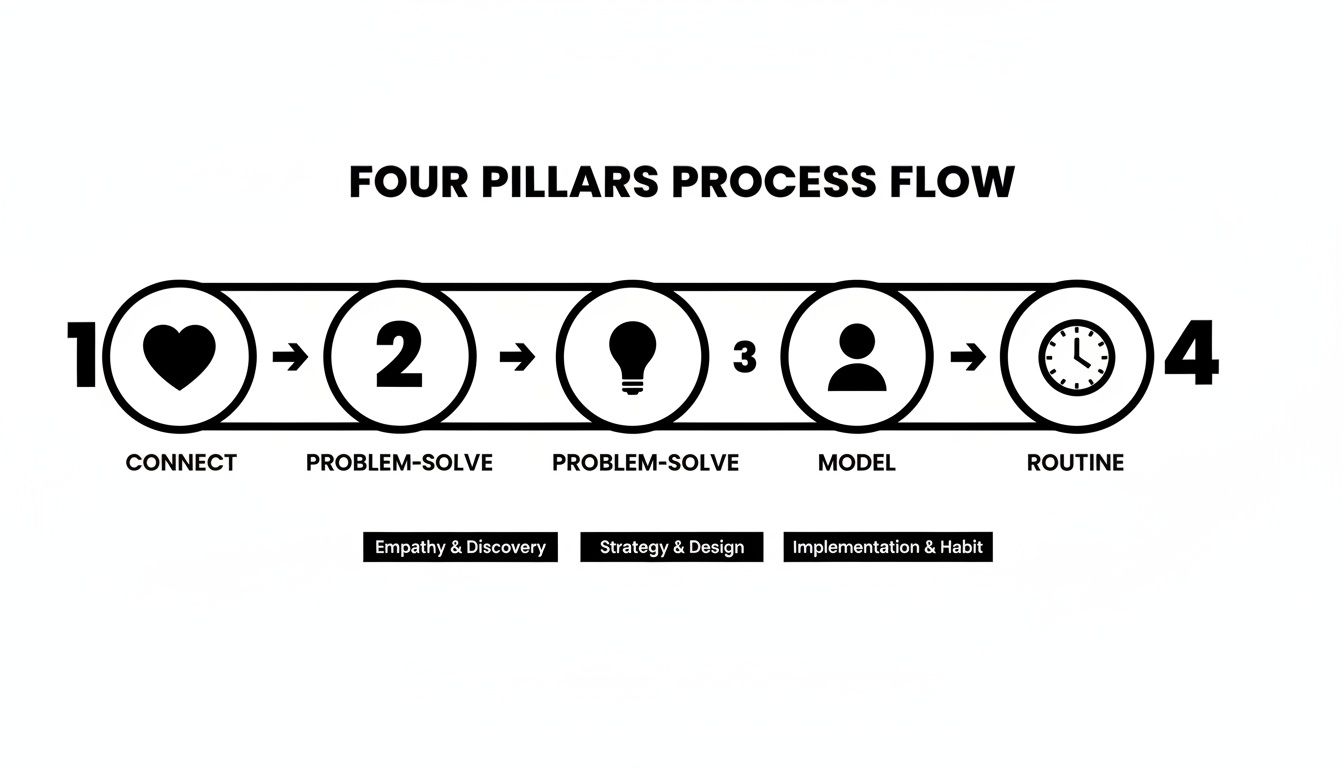
This process isn't just a nice idea—it gets results. In fact, research shows that a father's involvement in simple daily routines can boost a child's emotional regulation by an incredible 40%.
These consistent touchpoints are where you build trust and teach coping skills without it ever feeling like a formal lesson. You can discover more insights about these child mental health findings and see the data for yourself. For more practical ideas, check out our tips for new dads to start strong from day one.
From Problems to Projects: Fostering a Growth Mindset
One of the toughest instincts for a dad to fight is the urge to be the hero. When our kids are frustrated, we want to swoop in, fix the problem, and make the tears stop. But building real resilience means doing the exact opposite. We need to shift from being the problem-fixer to being a problem-solving coach.
This is all about helping them see a challenge not as a wall, but as a puzzle. It’s the core of what’s known as a growth mindset. When you teach your kids that their brains and abilities can grow with effort, you hand them a superpower. Failure is no longer a verdict on their worth; it's just a necessary stepping stone on the path to getting better.
This shift starts with the words we use every single day. The way we talk to our kids can either reinforce a fixed mindset ("You're so smart") or build a growth one ("I'm so proud of how hard you worked on that").
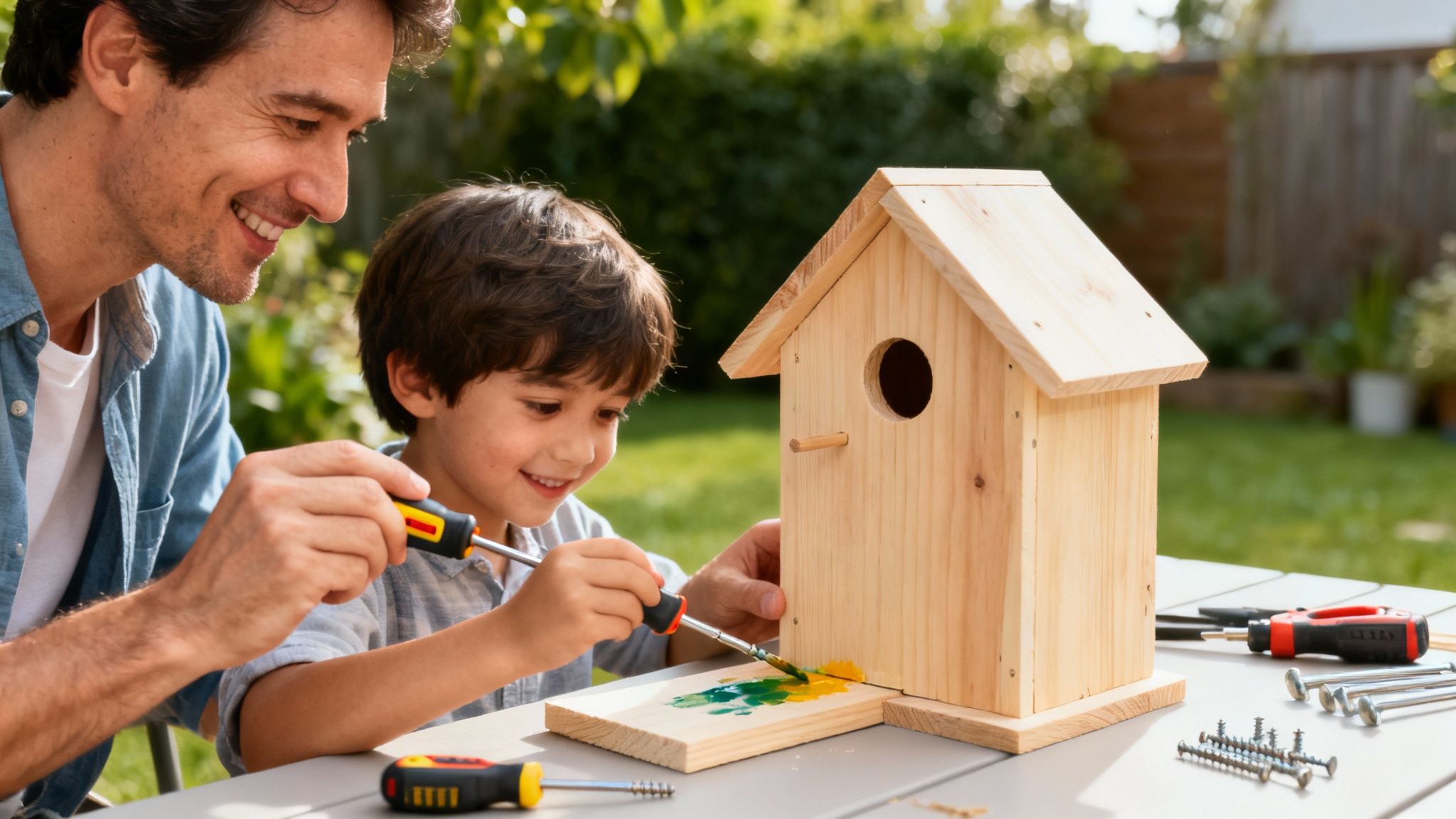
Praising the Process, Not Just the Person
When you praise effort, strategy, and persistence, you’re showing your kids what truly leads to success. These are the things they can actually control. Talent is great, but grit is what carries you across the finish line when things get tough.
Here are a few simple language swaps you can try today:
- Instead of: "You're a natural at this!"
- Try this: "I can tell you've been practicing. Your hard work is really paying off."
- Instead of: "Don't worry, you'll get it, you're so smart."
- Try this: "This puzzle is a tough one! What's another way we could look at it?"
- Instead of: "You finished so fast!"
- Try this: "I love the focus you brought to building that. You really stuck with it."
It's a small change, but it encourages a love for challenges and the grit to bounce back from setbacks. You're celebrating the journey, not just the win.
Turning Frustration into a Project
Let's be real: kids get frustrated. A Lego tower will inevitably crash down. A friendship will hit a snag. A new skill will feel impossible. These aren't just moments to endure; they are prime opportunities to put a growth mindset into practice. Your job is to help turn their problem into a project.
Think about your five-year-old staring at a pile of blocks that used to be a tower. It’s not just a mess; it's an engineering challenge. Get on the floor with them and become their assistant engineer. "Huh, that's interesting. What do you think would happen if we built a wider base this time?" Suddenly, the frustration becomes a moment of discovery. You're teaching them to analyze a problem instead of just giving up.
It’s the same with a ten-year-old who's upset about a fight with a friend. Your gut reaction might be to call the other parent, but hold back. Instead, become their strategist. Help them brainstorm. "Okay, what are three different ways you could handle this? What do you think might happen with each choice?" You aren't handing them the answer; you're giving them the tools to find their own.
By acting as a guide rather than a hero, you teach a far more valuable lesson: that competence and resourcefulness are skills they can build themselves. This is foundational for their long-term well-being and a key part of building resilience in children.
This approach has powerful, proven benefits. Teaching problem-solving through hands-on activities fosters a level of grit that can cut the risk of PTSD by half in at-risk youth. If you want to dig deeper, you can explore more about the crucial role of resilience and its impact on kids' mental health.
Building a Resilient Home Base: The Power of Routine and Connection
Big, memorable events are great, but the real work of building resilience in children is done in the trenches of daily life. It’s the small, consistent moments that forge a stable, connected home environment. Think of it as their training ground—a secure base where they feel safe enough to take risks, fail, and learn how to get back up.
This foundation isn't built with grand gestures, but with the simple bricks of predictability and routine. When a kid knows what to expect—dinnertime is at 6 PM, bedtime stories are a non-negotiable, we have family game night on Fridays—their world feels less chaotic. This sense of order frees up their mental and emotional bandwidth, making them far better equipped to handle the curveballs life throws at them outside your front door.

Weave Connection into Your Routines
Let's be clear: "routine" doesn't have to mean "boring." In fact, your daily schedule is the perfect canvas for intentionally building connection. The trick is to transform mundane tasks into meaningful touchpoints.
Make Dinnertime Count: Don't just eat. Start a tradition like the 'High-Low-Buffalo' game. Everyone shares their high point of the day, their low point, and one random, weird fact (the 'buffalo'). It's a simple game that cracks open the door to real conversations you might otherwise miss.
Establish a Screen-Free Zone: When you get home from work, carve out a non-negotiable, screen-free 20-minute block. No phones, no tablets, no TV. Whether you're wrestling on the living room floor or just sitting and listening to them ramble about school, this focused attention sends a powerful message: "You are my priority."
These small rituals create a rhythm of connection that your kids can depend on. It’s in these moments they learn they have a safe harbor to return to, no matter what storms they face. It's not just talk; this stuff works. Similar programs in Norway that emphasized parental emotional coaching saw a 28% improvement in kids' stress management. You can dive deeper into these global parental support findings to see the worldwide impact of this approach.
Here’s a quick guide with some practical, age-specific ideas you can try right away.
Age-Based Resilience Building Activities
| Age Group | Activity Idea | Resilience Skill Built |
|---|---|---|
| Toddlers (2-4) | "Problem-Solving Puzzles": Let them struggle (safely) with a simple puzzle or stacking blocks. Don't jump in immediately. | Frustration tolerance, persistence |
| Kids (5-8) | "Backyard Obstacle Course": Build a simple course with pillows, boxes, etc. Time them and encourage retries to beat their score. | Goal setting, handling setbacks |
| Pre-Teens (9-12) | "Kitchen Takeover": Task them with planning and cooking a simple family meal (with supervision). | Responsibility, planning, coping with mistakes |
| Teens (13+) | "Volunteer Day": Find a local cause they care about and volunteer together for a day. | Empathy, perspective, sense of purpose |
These are just starting points. The key is finding activities that challenge them just enough while reinforcing the message that you're there to support them through it.
Model the Resilience You Want to See
Your kids are always watching. They're little sponges, and you're their primary role model for how to handle life's ups and downs. How you react when you’re cut off in traffic, how you apologize after you lose your cool, how you talk about a tough problem at work—they're absorbing it all.
Strength isn’t about being perfect; it's about showing them how to repair, learn, and move forward. When you apologize for being impatient, you're teaching them humility and accountability. When you talk through a stressful day at work, you’re modeling healthy emotional processing.
This is where your influence is most profound. By managing your own challenges with grit and grace, you’re giving your kids a real-life playbook for resilience they’ll use for the rest of their lives. For dads trying to juggle it all, our guide on how to balance work and family life offers some solid, actionable strategies.
Navigating Setbacks and Knowing When to Seek Help
A huge part of raising resilient kids is knowing you don't have to go it alone. In fact, you shouldn't. Scraped knees, friendship squabbles, and the sting of not making the team are all standard-issue parts of growing up. But some struggles are simply too heavy for a child to carry by themselves, and knowing the difference is one of the most important jobs you have as a dad.
Your gut is your best guide. You know your kid better than anyone on the planet. If you sense a shift that feels deeper than just a bad mood or a tough week, it’s time to lean in and pay closer attention.
Red Flags to Watch For
It’s tempting to write off quietness or a short temper as "just a phase," but when those changes stick around, they might be signaling something more. The key is to look for patterns, not just one-off bad days.
Here are a few things that should get your attention:
- Persistent Behavioral Shifts: Is your usually easygoing kid suddenly aggressive or irritable for weeks on end? Or maybe they seem to be in a constant state of worry that's new for them.
- Changes in Physical Habits: Watch for big swings in appetite—eating way more or way less—or sleep. Insomnia, frequent nightmares, or suddenly sleeping all the time can be big clues.
- Social Withdrawal: This one is a major tell. Maybe they've lost all interest in hanging out with their friends, or they've dropped hobbies they used to love. If they’re consistently choosing to be alone, that’s worth exploring.
- Overwhelming Reactions: Are minor problems causing major meltdowns? If they seem completely overwhelmed by small tasks or can't cope with tiny stressors, that's a sign they need more support.
Reaching out for help isn’t a sign that you've failed. It’s a sign of strength. It shows your child you’ll do whatever it takes to get them the right tools to win. You are their biggest advocate.
Taking Proactive Steps
If you're nodding along to any of those signs, the next step is to take action. It's a tough world for kids right now; with 14% of 10-19-year-olds struggling with mental health issues, your involvement has never been more critical. You can see the bigger picture by checking out the full report on global children's rights.
How you frame this is everything. Talk about it like getting a coach for a specific skill. You'd hire a batting coach to fix a swing, right? A therapist is just a coach who helps you learn how to handle big feelings.
Not sure where to start? Here are some solid first steps:
- National Mental Health Organizations: Places like the National Alliance on Mental Illness (NAMI) or the Child Mind Institute are treasure troves of free articles, guides, and directories.
- Your Pediatrician: This is often the best first call. Your doctor knows your child’s history and can give you a trusted referral to a local child therapist or psychologist.
- Parenting Support Networks: Don't underestimate the power of talking to other dads. Online communities or local parenting groups can be a fantastic source of recommendations from guys who've walked this path before.
At the end of the day, you're the captain of your kid's team. By staying observant, trusting your gut, and moving decisively, you're building a support system that will catch them when they fall, both at home and out in the world.
Answering Your Questions About Building Resilience
Even with the best intentions and a solid plan, you're going to hit roadblocks. It's just part of the process. Let’s tackle some of the most common questions and tricky situations dads run into when they're working on building resilience in their kids.
My Kid Gets Frustrated and Gives Up at the First Sign of Trouble. What Do I Do?
This is a classic one. When a child throws their hands up in the air, our instinct is to either fix it for them or tell them to try harder. A better approach is to shrink the challenge down to something manageable and then celebrate the effort, not the end result.
Let's say they're getting angry over a huge Lego set. Instead of focusing on the finished castle, make the goal simply finishing page one of the instructions. That's it. Once they get that far, praise their persistence. Say something like, "I saw how you kept working at that, even when that little piece was hard to find. That was awesome."
This tiny shift changes the definition of a "win" from finishing to trying. Over time, you're teaching them that the struggle itself is valuable. It wires their brain to stick with bigger challenges later because they’ve learned to find satisfaction in the process of overcoming difficulty.
How Can I Help Them Be Tougher Without Making Them Feel Like Their Feelings Don't Matter?
This is a delicate, but crucial, dance. The secret is to validate first, then problem-solve later. Never, ever skip the validation part.
Always start by putting a name to their emotion, without judgment. "Wow, it sounds like you're really disappointed that the soccer game got rained out." Then, and this is the important part, just stop talking. Let them sit with that feeling of being understood for a moment.
Only after you've connected with them on an emotional level can you gently shift gears. You might ask, "I know it sucks, but what's one thing we could do right now to make this afternoon a little more fun?" This two-step—connect, then redirect—shows them their feelings are legitimate, but also that they have the power to move forward.
Can I Actually Be Too Helpful? Is Overprotecting a Real Thing?
Yes, and it's probably one of the most common ways we accidentally undermine our kids' resilience. Think of resilience like a muscle. It only gets stronger when it’s forced to lift something heavy. If we, as dads, are always rushing in to solve the forgotten homework or fix the argument with a friend, we're robbing them of their reps at the gym.
Your role is to be scaffolding, not a crane. You're there to provide support and structure, but they have to do the actual building.
- Instead of just giving them the answer, try asking, "What have you tried so far?"
- Instead of calling the other parent, ask, "What's your game plan for sorting this out?"
This approach forces them to use their own problem-solving muscles, which builds the confidence and competence that are the true cornerstones of resilience.
What if I'm Trying to Teach This, but I Never Had a Resilient Role Model Myself?
This might feel like a disadvantage, but it’s actually your superpower. Your authenticity is your best tool. You don't need to be a stoic, unflappable rock; you just need to be real.
Model your own journey with resilience right in front of them. When you're struggling to assemble that new grill, say it out loud: "Ugh, this is so frustrating. I'm going to take a five-minute break to clear my head before I try again." You are literally demonstrating a healthy coping strategy in real time.
Learning and growing alongside your child is a far more powerful lesson than pretending you have it all figured out. It shows them that resilience isn't a destination you arrive at—it's a lifelong process for everyone, even Dad.
Ready to join a community of dads committed to being their best? At alphadadmode.com, we're building a resource hub for modern fatherhood. Sign up now at alphadadmode.com to get exclusive updates, early access, and practical tools delivered straight to your inbox.
