


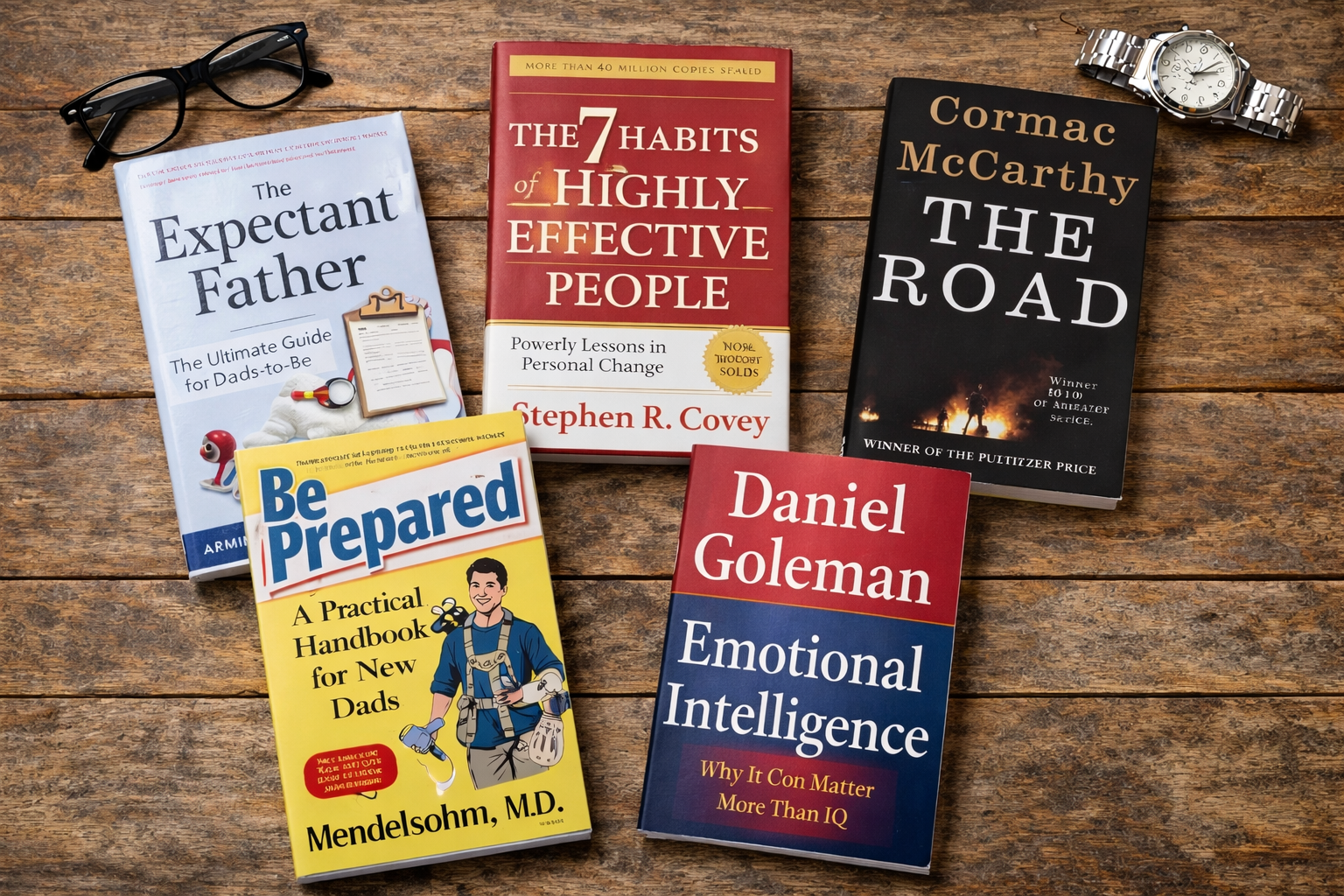
Modern fatherhood is a complex, demanding role that goes far beyond simply providing. It requires emotional intelligence, psychological resilience, and a clear sense of purpose. While experience is the ultimate teacher, the wisdom of those who came before can provide a powerful roadmap. This isn't just another reading list; it's a curated arsenal of tools designed to help you become a more intentional, effective, and present father and man.
The selections that follow are more than just books every man should read; they are foundational texts for building a meaningful legacy. We have distilled the wisdom from countless pages into a practical guide, saving you the guesswork and delivering high-impact knowledge directly. Forget generic recommendations; this list is built for action.
We’ve organized these essential reads into three critical categories to guide your journey:
- The Architect: Foundational mindset and philosophy to build your core principles.
- The Strategist: Actionable frameworks for navigating family life and personal growth.
- The Guide: Practical tools for specific parenting and relationship challenges.
Each entry is designed not just to inform but to equip you with concrete strategies for the road ahead. You will find summaries, key takeaways for fathers, and specific ways to apply these concepts to your daily life. This is your blueprint for intentional living and leadership within your family. Let's begin building.
1. The 7 Habits of Highly Effective People by Stephen Covey
Stephen Covey's seminal work is more than a business book; it's a foundational guide to principle-centered living that makes it one of the essential books every man should read. It provides a systematic framework for achieving personal and professional effectiveness by aligning your actions with your deepest values. For fathers, this means moving from reactive parenting to a proactive, intentional approach.

The book introduces seven habits that build upon each other, guiding you from self-mastery to effective teamwork and continuous improvement. It’s about defining your destination (family vision, personal legacy) before you start the journey, ensuring every step you take is in the right direction.
Key Takeaways for Dads
Covey's principles are directly applicable to fatherhood. For instance, Habit 3: Put First Things First teaches men to prioritize high-impact family activities over urgent but unimportant distractions. This could mean dedicating a non-negotiable hour for homework help instead of mindlessly scrolling through emails. Similarly, Habit 5: Seek First to Understand, Then to Be Understood is a game-changer for communicating with your partner and children, fostering deep connection and trust.
How to Implement the 7 Habits
- Create a Personal Mission Statement: Dedicate an afternoon to writing down your core values as a father. What kind of dad do you want to be? What legacy do you want to leave? Let this guide your daily decisions.
- Use the Time Management Matrix: For one week, categorize all your activities into Covey's four quadrants. You’ll quickly see where your time is being wasted and where you can invest more in what truly matters, like family connection. For a deeper dive into this, explore our guide on how to balance work and family life.
- Practice "Win-Win" Thinking: The next time a conflict arises with your child over screen time, approach it by looking for a solution that satisfies you both, rather than resorting to a power struggle.
2. Man's Search for Meaning by Viktor Frankl
Viktor Frankl's powerful memoir is a profound exploration of what it means to be human in the face of unimaginable suffering. Based on his experiences in Nazi concentration camps, the book argues that our primary drive in life is not pleasure, but the discovery and pursuit of what we personally find meaningful. For modern men, it's one of the essential books every man should read because it redefines strength not as the absence of pain, but as the ability to find purpose through it.

Frankl outlines three primary ways to find meaning: through creating a work or doing a deed, by experiencing something or encountering someone (love), and by the attitude we take toward unavoidable suffering. This framework offers a powerful lens through which fathers can view their role, transforming daily duties and sacrifices into a source of deep personal fulfillment.
Key Takeaways for Dads
This book teaches that meaning can be found in responsibility. Fatherhood, with its immense duties, becomes a primary vehicle for a meaningful life. A career setback, for instance, can be reframed as an opportunity to be more present with your children. Similarly, the daily grind of parenting a toddler isn't a chore to be endured; it’s a direct path to finding meaning through love and dedication to another human being. Frankl’s work shows that purpose isn't something you find "out there" but something you build through your choices and attitude, especially within your family.
How to Implement Frankl's Ideas
- Identify Your Fatherhood "Why": Ask yourself, "What unique meaning does being a father to my children give me?" Write down how your role contributes to your sense of purpose beyond just being a provider.
- Practice Attitudinal Freedom: The next time you face a parenting challenge you can't control, like a child's tantrum or a difficult diagnosis, focus on the one thing you can control: your response. Choose patience and love over frustration.
- Find Meaning in Sacrifice: Reframe personal sacrifices, like giving up a hobby for a season or taking on extra work to support your child's dreams, not as losses but as active choices that create a meaningful legacy for your family.
3. The Courage to Be Disliked by Ichiro Kishimi and Fumitake Koga
This powerful book presents the psychological theories of Alfred Adler through an engaging dialogue between a philosopher and a young man. It challenges the deep-seated need for approval and argues that true freedom and happiness come from disconnecting our self-worth from the opinions of others. For men and fathers, it's a revolutionary guide to building authentic relationships based on mutual respect, not validation-seeking, making it one of the essential books every man should read.

The core idea is that all problems are interpersonal relationship problems, and we can solve them by understanding our own roles and responsibilities. It teaches that your past does not determine your future, and you have the power to change your life right now by changing how you perceive your circumstances.
Key Takeaways for Dads
Adlerian psychology offers a liberating perspective on parenting. The concept of the Separation of Tasks is crucial: you are responsible for your actions (your task), and your child is responsible for theirs. For example, your task is to provide a healthy meal; it is your child’s task to decide whether to eat it. This simple distinction removes immense pressure and conflict. Instead of trying to control outcomes, you focus on contribution and support, which fosters genuine connection rather than a power struggle.
How to Implement Adlerian Principles
- Practice Task Separation: The next time your teen neglects their homework, recognize that managing their education is their task. Your task is to offer support and resources, not to force them or feel their failure as your own. This builds their sense of responsibility.
- Focus on Contribution, Not Praise: Instead of saying, "I'm so proud of you for cleaning your room," try, "Thank you for helping keep our home tidy." This shifts the motivation from seeking praise to feeling like a valuable, contributing member of the family unit.
- Stop Seeking Approval: Notice when your decisions as a father are driven by a fear of what other parents, your partner, or even your kids will think. Make choices based on your principles and what you believe is helpful, not what is popular.
4. The Boy Crisis by Warren Farrell and John Gray
Warren Farrell and John Gray’s investigative work is a critical read for any man raising a son in the 21st century. This book dives deep into the systemic issues hindering boys' development, from education to mental health, making it one of the most important books every man should read. It provides a research-backed roadmap for understanding the unique challenges boys face and empowers fathers to become their sons' most effective advocates.

The authors argue that a lack of "dad-deprivation" and purpose are at the core of many problems, such as academic underachievement and social isolation. The book isn't about blaming mothers; it’s about highlighting the irreplaceable role an engaged father plays in a boy's journey to becoming a healthy, well-adjusted man.
Key Takeaways for Dads
The Boy Crisis provides fathers with the language and data needed to address their sons' specific needs. It explains neurological differences that affect learning styles and emotional expression in boys, helping you parent with empathy instead of frustration. For example, understanding why your son needs to move around to focus can change homework battles into productive sessions. The book also equips you to recognize and combat destructive issues like video game addiction and a lack of real-world social skills.
How to Implement Its Insights
- Advocate at School: Use the book’s research to have informed conversations with teachers and administrators about creating more boy-friendly learning environments, such as incorporating more hands-on activities or advocating for male mentorship programs.
- Adapt Your Parenting: Implement gender-specific strategies tailored to your son's needs. This could mean using more direct communication for discipline and creating intentional roughhousing time to build a physical bond and teach boundaries.
- Create Father-Son Activities: Schedule regular, dedicated activities that fill the "dad-deprivation" gap. This could be anything from building a project together to volunteering, teaching him skills and instilling a sense of purpose.
5. No Country for Old Men by Cormac McCarthy (or The Road)
Cormac McCarthy’s stark, powerful novels are not self-help guides, but their philosophical depth makes them essential books every man should read. Works like The Road and No Country for Old Men force a confrontation with core themes of legacy, moral responsibility, and the fierce, primal instinct to protect one’s family in a harsh world.
These literary masterpieces push past simple advice to explore the very essence of masculinity and fatherhood. The Road, in particular, is a raw examination of the father-son bond, stripping it down to its most vital elements: survival, sacrifice, and the desperate need to pass on a flicker of hope and humanity.
Key Takeaways for Dads
McCarthy's narratives serve as a powerful mirror for self-reflection. The father in The Road is driven by a singular purpose: keeping his son alive and "carrying the fire." This provokes crucial questions for modern dads: What is the "fire" you are trying to pass on to your children? Is it resilience, kindness, or a specific moral code? Similarly, No Country for Old Men explores what happens when a man confronts a world that no longer operates by his principles, forcing a contemplation of one's own legacy.
How to Implement the Lessons
- Journal About Your "Fire": After reading, spend time defining the core values and principles you want to instill in your children. Write them down as a personal charter.
- Examine Your Protective Instincts: Consider how your desire to protect your family manifests. Is it always productive, or does it sometimes stem from your own fears? Use the book's extreme scenarios to analyze your real-world responses.
- Discuss with Other Fathers: The themes in these books are heavy and best processed in conversation. Start a discussion with a friend or in a group to explore different perspectives on paternal responsibility and sacrifice.
6. Emotional Intelligence by Daniel Goleman
Daniel Goleman's groundbreaking book argues that our emotional intelligence (EQ) is a greater predictor of success and happiness than traditional IQ. This work is a must-have on any list of books every man should read because it decodes the science of emotions and relationships. It offers a powerful blueprint for mastering the interpersonal skills that define great leaders, partners, and fathers.
The book breaks down EQ into five core components: self-awareness, self-regulation, motivation, empathy, and social skills. For men who may have been taught to suppress emotions, this provides a practical guide to understanding and harnessing them as a source of strength, creating a more stable and connected family environment.
Key Takeaways for Dads
Goleman’s framework is directly applicable to the daily challenges of fatherhood. Developing self-awareness helps you recognize your own parenting triggers, like frustration during a toddler's tantrum, before you react impulsively. Mastering empathy allows you to understand the world from your child’s perspective, transforming conflicts into opportunities for connection. It’s the difference between demanding compliance and building trust.
How to Implement Emotional Intelligence
- Practice Naming Emotions: Instead of saying you feel "bad," get specific. Are you feeling "overwhelmed," "disappointed," or "anxious"? Modeling this emotional vocabulary teaches your children how to understand their own feelings.
- Model Self-Regulation: When you feel anger rising, state it calmly: "I'm feeling very frustrated right now, so I'm going to take a few deep breaths before we continue this conversation." This shows your kids a healthy way to manage intense emotions.
- Use Empathy-Building Exercises: When your child is upset, try reflecting their feelings back to them. "It sounds like you felt really left out when your friend didn't share the toy." This validates their experience and strengthens your bond.
7. Why Men Are the Way They Are by Warren Farrell
Warren Farrell's deep dive into male psychology is a critical text, exploring the evolutionary and cultural forces that have shaped male behavior for generations. This isn't a prescriptive guide but a framework for understanding, making it one of the essential books every man should read. It helps men decipher their own conditioning and make conscious, informed choices about the kind of men and fathers they want to become.
The book unpacks why men often feel pressured to be providers and protectors, how societal expectations shape their emotional expression, and the psychological underpinnings of male behavior in relationships. For fathers, this understanding is the first step toward breaking unhealthy cycles and modeling a more balanced, emotionally aware form of masculinity for their children.
Key Takeaways for Dads
Farrell’s work provides a compassionate lens through which to view your own struggles and strengths. By understanding the historical "survival-focused" roles men have played, you can identify which of those instincts no longer serve your family. For example, recognizing that a stoic, provider-only mindset can limit emotional connection allows you to consciously choose to be more present and vulnerable with your kids and partner, building deeper, more meaningful relationships.
How to Implement Farrell’s Insights
- Identify Your Conditioning: Reflect on your upbringing and identify one or two "traditional" male behaviors you've inherited, such as difficulty expressing emotions or a need to always be "the fixer." Commit to consciously changing one of them.
- Start a Dialogue: Use the book's concepts to have an open conversation with your partner about your respective expectations and conditioning. This can foster incredible empathy and teamwork in your relationship.
- Model a New Masculinity: When your son experiences a setback, resist the urge to just say "toughen up." Instead, help him name his feelings and work through them, showing him that emotional strength and resilience are not mutually exclusive.
8. The 5 Love Languages by Gary Chapman
Gary Chapman’s revolutionary guide helps decode the emotional signals we send and receive, making it one of the most practical books every man should read. It proposes that everyone primarily expresses and interprets love through one of five "languages": Words of Affirmation, Quality Time, Receiving Gifts, Acts of Service, and Physical Touch. Understanding this framework can fundamentally change how you connect with your partner and children.
The core idea is that showing love isn't enough; you must show it in the recipient's primary language for it to be truly felt. A father might think fixing his child's bike (Acts of Service) is the ultimate expression of care, but if the child’s language is Quality Time, they would have preferred he just sat and watched a movie with them.
Key Takeaways for Dads
This book provides a direct roadmap to deeper family bonds. For instance, a father might discover his partner’s love language is Words of Affirmation and realize his quiet, stoic support isn’t being fully received. A simple, heartfelt "I appreciate you" could be more powerful than a dozen completed chores. Similarly, recognizing a child’s language is Physical Touch helps a dad understand why a hug after a tough day means more than any gift he could buy.
How to Implement the 5 Love Languages
- Identify Each Family Member's Language: Pay close attention to how your partner and each child show love to others and what they request most often. Their actions often reveal their primary language.
- Speak a Different Language Each Day: For one week, intentionally express love using a different language each day. This helps you become fluent in all five and see what resonates most with your family.
- Connect with Your Partner: Dedicate time to learning your partner’s language to rebuild and strengthen your foundation. For more ways to connect, check out our guide on couples trust exercises.
9. Atomic Habits by James Clear
James Clear’s revolutionary work provides a practical, science-backed guide to building good habits and breaking bad ones. It argues that massive success doesn't come from massive action, but from tiny, incremental improvements compounded over time. For men, this book offers a clear methodology for establishing routines that support health, presence, and personal growth, making it one of the most actionable books every man should read.
The framework is built on four simple laws: make it obvious, make it attractive, make it easy, and make it satisfying. Instead of relying on willpower, Clear teaches you to design your environment and systems to make good habits the path of least resistance.
Key Takeaways for Dads
The power of Atomic Habits lies in its direct application to fatherhood. It transforms the overwhelming goal of "being a better dad" into small, manageable actions. For example, the desire to be a more present father becomes the tiny habit of putting your phone in a drawer when you walk in the door. The goal isn't to be perfect; it's to get 1% better every day, and this book shows you how.
How to Implement Atomic Habits
- Use Habit Stacking: Attach a new desired habit to a current one. For instance, after you brush your teeth each night, read one page of a book to your child. The existing habit becomes the cue for the new one.
- Design Your Environment: To build a habit of playing with your kids more, leave a basket of their favorite toys in the living room where you can see it. To reduce screen time, create a phone-free dinner table rule by placing a charging station in another room.
- Start Absurdly Small: Want to exercise in the morning? Don't commit to a 60-minute workout. Start by simply putting on your workout clothes. The consistency of showing up is more important than the intensity of the action at first.
10. The New Toddler 411 by Denise Fields and Ari Brown, MD
While many parenting books feel abstract, The New Toddler 411 is a refreshingly practical, quick-reference manual that makes it one of the essential books every man should read during the toddler years. It’s the field guide you grab at 2 AM when dealing with sleep regressions or a sudden fever, providing evidence-based, no-nonsense answers from pediatricians. This book skips the fluff and gets straight to what fathers need to know.
The content is organized like a Q&A, tackling everything from decoding tantrums and navigating potty training to managing picky eating and understanding developmental milestones. It’s designed for busy parents who need reliable information fast, empowering you to handle daily challenges with confidence and competence.
Key Takeaways for Dads
This book treats fatherhood like the hands-on job it is. Instead of vague philosophy, it offers concrete strategies. For example, it provides scripts for managing public meltdowns without losing your cool and checklists for what to discuss with your pediatrician at check-ups. The book validates the feeling of being overwhelmed and gives you permission to be an imperfect but informed parent, arming you with facts to make the best decisions for your family.
How to Implement The New Toddler 411
- Treat it Like a First-Aid Kit: Don't read it cover-to-cover. Keep it accessible on a nightstand or bookshelf to quickly look up specific issues like night terrors, biting, or sibling rivalry as they arise.
- Prepare for Transitions: Before a big change like welcoming a new sibling or starting preschool, read the relevant chapter. This proactive approach helps you anticipate challenges and set your child up for success.
- Align with Your Partner: When facing a persistent issue like screen time limits, read the corresponding section together with your co-parent. Use the book's expert advice as a neutral third party to build a united strategy.
11. The Art of Living by Epictetus (Modern Translation or Commentary)
The timeless wisdom of Stoicism, encapsulated in Epictetus's teachings, is a powerful tool for modern fathers. This philosophy isn't about suppressing emotion; it’s about understanding what you can and cannot control, making it one of the most practical books every man should read. It provides a framework for building resilience, emotional regulation, and an unshakeable inner peace, even amidst the chaos of raising a family.
The core principle is the dichotomy of control: some things are up to us, and others are not. For a dad, this means accepting you cannot control your teenager's choices or whether your child makes the sports team, but you have absolute control over your response, your guidance, and the example you set.
Key Takeaways for Dads
Stoicism provides an operating system for navigating the anxieties of fatherhood. When your child acts out, you learn to separate the event (the behavior) from your judgment about it. This allows you to respond with wisdom and patience rather than frustration. By focusing on your own character and virtue instead of trying to engineer perfect outcomes (like a flawless college application), you cultivate a more stable and supportive home environment.
How to Implement Stoic Principles
- Practice the Dichotomy of Control: At the end of each day, list one thing you were worried about. Was it within your control? If not, practice letting that anxiety go. This reduces stress about your child’s future or social challenges.
- Separate Facts from Judgments: The next time your child misbehaves, consciously separate the objective fact ("My son didn't do his chores") from your immediate judgment ("He is being lazy and defiant"). Respond to the fact, not the story you've created.
- Focus on Your Virtue: Instead of worrying if your child will be successful, ask yourself: "Am I being a patient, supportive, and virtuous father right now?" Shift your focus from controlling outcomes to controlling your actions and character.
12. The Gifts of Imperfect Parenting by Brené Brown
Brené Brown’s research on vulnerability, courage, and shame provides a revolutionary roadmap for raising children in a way that fosters connection and resilience. This work is a must-have on any list of books every man should read, as it challenges the traditional male script of having to be perfect, stoic, and always in control. It gives fathers permission to be human, authentic, and emotionally present.
The book dismantles the myth of the "perfect" parent and instead champions wholehearted living. For dads, this means embracing imperfection not as a weakness, but as the foundation for teaching children about self-compassion, courage, and genuine connection. It’s about showing up as you are, struggles and all.
Key Takeaways for Dads
Brown’s core message is that who we are is far more important than what we do. For fathers, this means modeling emotional honesty. Instead of defensively justifying a mistake, a wholehearted dad can say, "I messed up, and I'm sorry." This single act teaches children that it's safe to be imperfect and that mistakes are opportunities for growth, not shame. It shifts the focus from parental performance to authentic presence.
How to Implement Imperfect Parenting
- Practice Saying "I Don't Know": The next time your child asks a tough question you can't answer, resist the urge to fake it. Admit you don’t have the answer and suggest finding it out together. This models intellectual humility and curiosity.
- Share Your Feelings Appropriately: Let your children see that you experience a range of emotions. Saying something like, "I'm feeling a little frustrated right now, so I need a moment," teaches emotional literacy and healthy coping skills.
- Create a Shame-Free Zone: Foster a family culture where imperfection is celebrated as part of the learning process. You can learn more about how this approach nurtures confidence by exploring our guide on building self-esteem in children.
12-Book Comparison: Essential Reads for Men
| Title | 🔄 Implementation Complexity | ⚡ Resource Requirements | ⭐📊 Expected Outcomes | 💡 Ideal Use Cases | ⭐ Key Advantages |
|---|---|---|---|---|---|
| The 7 Habits of Highly Effective People | 🔄 High — multi-habit integration over time | ⚡ Moderate — time, journaling, practice | ⭐⭐⭐⭐ — clearer priorities, better family communication | 💡 Fathers needing a structured, principle-based roadmap | ⭐ Actionable tools (time quadrant, mission statement); interpersonal focus |
| Man's Search for Meaning | 🔄 Low–Moderate — reflective internalization | ⚡ Low — short read, reflective time | ⭐⭐⭐⭐ — deeper purpose, resilience in hardship | 💡 Fathers seeking meaning, identity, or coping tools | ⭐ Profound reframing of suffering and responsibility |
| The Courage to Be Disliked | 🔄 Moderate — reframing beliefs and boundaries | ⚡ Moderate — practice in relationships | ⭐⭐⭐⭐ — stronger boundaries, less approval-seeking | 💡 Fathers with people-pleasing or control patterns | ⭐ Practical Adlerian tools (task separation, community feeling) |
| The Boy Crisis | 🔄 Moderate — individual change plus systemic advocacy | ⚡ High — study, school engagement, program work | ⭐⭐⭐⭐ — targeted support for boys’ development | 💡 Fathers of sons or advocates in education/community | ⭐ Data-driven, gender-specific strategies and advocacy tools |
| No Country for Old Men / The Road | 🔄 Low — interpretive literary reading | ⚡ Low — time and emotional engagement | ⭐⭐⭐ — deep existential reflection on fatherhood/legacy | 💡 Fathers seeking philosophical or emotional depth | ⭐ Literary insight into protection, legacy, and sacrifice |
| Emotional Intelligence | 🔄 Moderate — ongoing self-assessment and practice | ⚡ Moderate — training, reflection, modeling | ⭐⭐⭐⭐ — improved empathy, conflict resolution, emotional modeling | 💡 Fathers wanting to model EQ and manage parenting stress | ⭐ Science-backed framework; practical skills for families |
| Why Men Are the Way They Are | 🔄 Low–Moderate — conceptual understanding and critique | ⚡ Low — reading and reflective application | ⭐⭐⭐ — clearer view of male socialization and patterns | 💡 Fathers exploring male identity and inherited behaviors | ⭐ Contextualizes male behavior; non-judgmental explanatory framework |
| The 5 Love Languages | 🔄 Low — simple assessment and behavior shifts | ⚡ Low — brief practice and observation | ⭐⭐⭐⭐ — improved emotional connection and reduced miscommunication | 💡 Fathers wanting quick, practical ways to express love | ⭐ Simple, universal framework; immediately actionable |
| Atomic Habits | 🔄 Moderate — habit design and consistent repetition | ⚡ Moderate — tracking, environment redesign | ⭐⭐⭐⭐ — sustainable routine change and greater presence | 💡 Fathers building routines, health, or presence habits | ⭐ Practical systems (habit stacking, identity-based change) |
| The New Toddler 411 | 🔄 Low — direct Q&A application | ⚡ Low — quick-reference use as needs arise | ⭐⭐⭐⭐ — practical solutions for toddler challenges | 💡 Fathers with toddlers needing immediate, evidence-based answers | ⭐ Father-friendly, medically grounded, pragmatic guidance |
| The Art of Living (Epictetus) | 🔄 Moderate — philosophical practice and daily exercises | ⚡ Low–Moderate — study and mental discipline | ⭐⭐⭐⭐ — greater resilience, reduced anxiety, focus on virtue | 💡 Fathers needing acceptance and emotional regulation tools | ⭐ Timeless dichotomy of control; builds character and focus |
| The Gifts of Imperfect Parenting | 🔄 Moderate — mindset change and vulnerability practice | ⚡ Moderate — emotional work and modeling | ⭐⭐⭐⭐ — less shame, more authentic connection, secure attachment | 💡 Fathers struggling with perfectionism or hiding vulnerability | ⭐ Research-backed shame resilience; permission to parent imperfectly |
Turn Reading into Action: Your Next Chapter Starts Now
This collection of books every man should read is far more than a simple reading list. It’s a curated toolkit for modern fatherhood and personal mastery, designed to equip you with the mindsets, strategies, and emotional intelligence required to lead your family with purpose and strength. The journey through these pages isn’t about passive consumption; it’s a direct call to action.
The true value isn't found in the number of books you finish, but in the principles you actively integrate into your life. The real work begins when you close the cover and decide to apply a single, powerful idea.
From Insight to Impact: Your Action Plan
We've explored a wide spectrum of wisdom, from the foundational principles of Stephen Covey’s 7 Habits to the profound resilience taught in Viktor Frankl’s Man's Search for Meaning. We’ve uncovered the mechanics of habit formation with James Clear, the complexities of emotional intelligence with Daniel Goleman, and the deep, often unspoken, dynamics of love and connection with Gary Chapman and Brené Brown.
To prevent this from becoming just another list of "should-reads," here’s how to transform this knowledge into tangible results:
- Identify Your Core Challenge: Which book spoke directly to your most pressing issue right now? Are you struggling with toddler tantrums (The New Toddler 411)? Feeling a disconnect with your partner (The 5 Love Languages)? Or are you seeking a more resilient mindset (The Art of Living)? Start there. Don't try to tackle everything at once.
- Commit to One Small Change: The "all or nothing" approach is a trap. Instead, pull one single, actionable concept from your chosen book. If you read Atomic Habits, don’t try to overhaul your entire morning routine. Just start by putting your running shoes by the door. That's it. One small, concrete action builds momentum.
- Discuss and Delegate: You are not an island. Share a key insight from your reading with your partner. Discussing a concept from The Gifts of Imperfect Parenting, for example, can open up a powerful conversation about your shared family values and pressures. This creates alignment and turns individual growth into a family mission.
Building Your Legacy, One Page at a Time
The books on this list are powerful because they address the fundamental questions of a man's life: How do I lead effectively? How do I build lasting relationships? How do I find meaning in struggle? How do I raise resilient, capable children in a complex world?
Mastering these concepts is not about achieving perfection. It’s about building a robust internal framework that allows you to navigate the inevitable challenges of fatherhood with grace and wisdom. It’s about replacing reactive patterns with intentional choices. This is how you stop just managing your family and start actively leading it. Your commitment to this journey of learning and application is the greatest inheritance you can give your children. It’s a legacy of curiosity, resilience, and intentional living.
Your next chapter is not written for you. It is written by you, one deliberate action at a time. Pick up the book that resonates, absorb its wisdom, and take that first small step today. The man, husband, and father you are striving to become is waiting on the other side of that decision.
Ready to move beyond the books and join a community of fathers dedicated to active excellence? At alphadadmode.com, we are building a platform with curated resources, actionable guides, and support systems designed for men like you. Sign up at alphadadmode.com to get exclusive access and be the first to know when we launch.
