

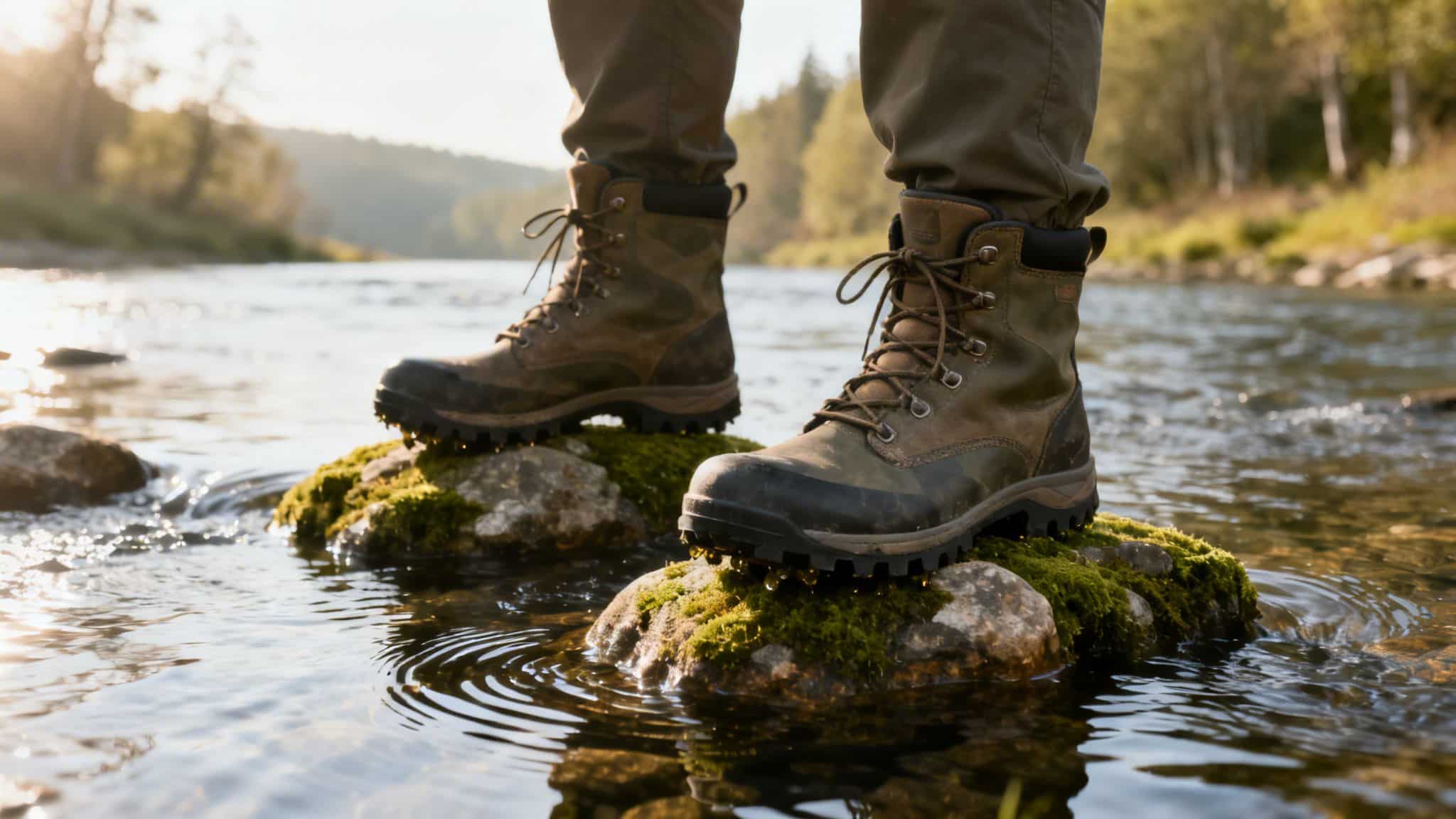
Welcome to the river, Dad. That feeling when you help your kid reel in their first fish? That moment is built on a solid footing—literally. In the US alone, over 52 million people went fishing last year, making it one of the most popular outdoor activities. For a dad, that's 52 million opportunities to make a memory. But on a slick riverbed, the line between a great day and a dangerous one is thinner than you think. Your wading boots are what connect you to the river, providing the grip and stability you need to make those memories happen safely.
Think of them less like shoes and more like safety equipment. They are your insurance policy against the estimated 20% of fishing-related accidents caused by slips and falls. A solid pair of boots means you can focus on the tug of the line, not the fear of taking a spill.
Why Your Wading Boots Are Your Most Important Gear
When you're knee-deep in a moving current, maybe with one of your kids just a few feet away, the absolute last thing you should be worrying about is slipping. A solid pair of wading boots gives you the confidence to navigate slick rocks and shifty gravel, turning you into a steady anchor for your family's adventure.
This goes way beyond just staying comfortable. It's about being present. Poor footing is a fast track to a bad day. A twisted ankle is more than just painful—it’s a memory you don’t want to make.
The Foundation of Family Adventures
It’s no secret that fishing is booming as a family activity. The global market for fishing waders and boots is projected to hit USD 2.9 billion in 2024 for a reason. Families are getting outside, and they need gear that keeps them safe. North America alone makes up about $1.5 billion of that, with millions of anglers hitting the water each year.
Choosing the right wading boots lets you focus on teaching your kids how to cast and telling stories, not on whether your next step will be your last upright one. You can find more on this trend in recent fishing gear industry analysis.
Think of your boots as the foundation of your confidence. With a secure footing, you can wade deeper, explore further, and be the steady presence your family relies on during your river adventures.
Getting the boots right is a decision that affects every other piece of gear you use. For more tips on picking out the best equipment for your family outings, feel free to browse our other articles on dad-approved gear.
Now, let's break down everything you need to know to find the perfect pair, so you can keep your mind on the fish, the fun, and the family.
Review and Comparison: The 3 Popular Types of Wading Boot Soles
Alright, let's talk about what's arguably the most important decision you'll make when buying wading boots: the soles. Think of them like the tires on your truck—the tread has to match the terrain. Your soles are your only point of contact with a slippery, uneven river bottom, and getting this choice right is all about safety and confidence.
When you're planted firmly in the current, you can focus on your cast, enjoy the moment, and keep an eye on your kids without worrying about taking a spill. It all starts from the ground up.
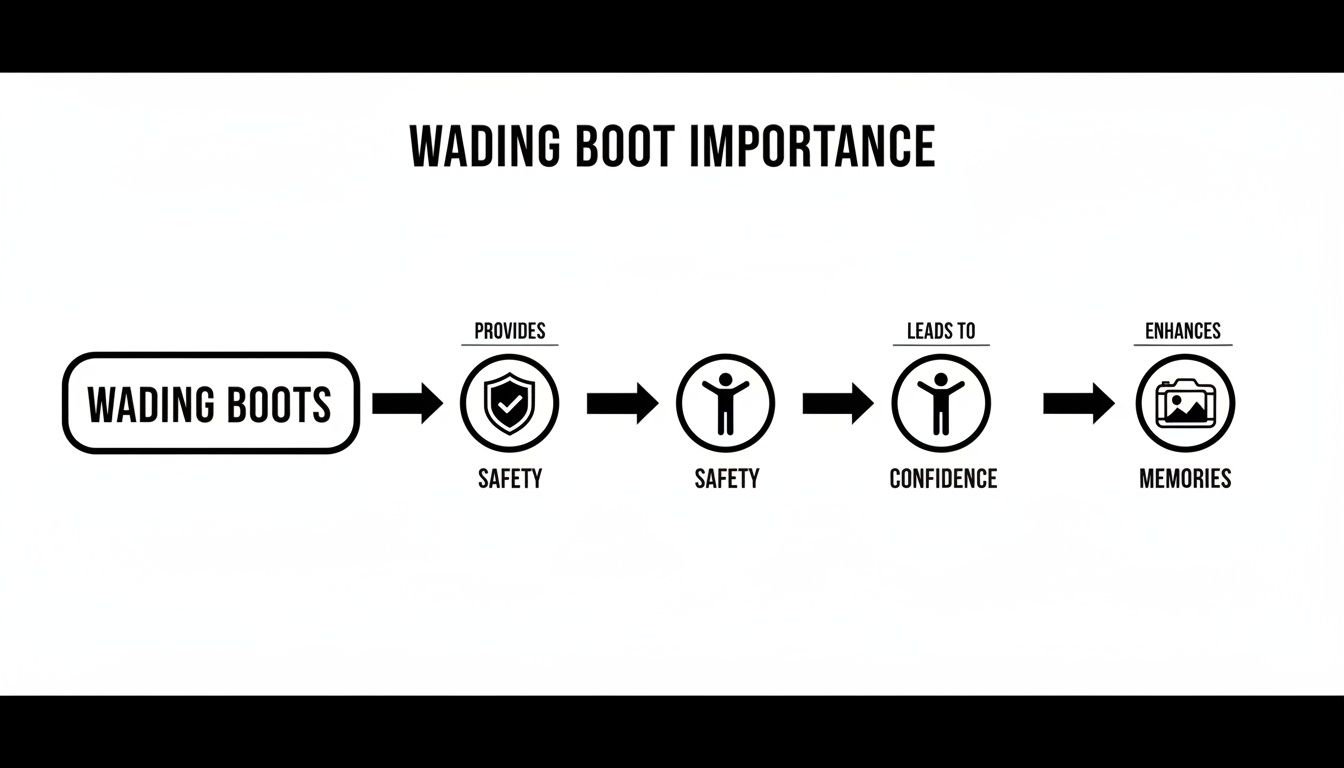
This really says it all. Solid footing provides the safety you need to wade with confidence, which is the foundation for making great memories on the water. The big debate has always been between traditional felt and modern sticky rubber, with the option to add metal studs for maximum bite. Let’s break them down.
1. Traditional Felt Soles
Felt was the undisputed king for decades for one simple reason: it offers incredible grip on super-slick, algae-coated rocks. The soft material conforms to the rock's surface, giving you a connection that’s hard to beat.
- Pros:
- Unmatched grip on slimy, mossy rocks.
- Quiet and stealthy in the water, which can be an advantage when stalking spooky fish.
- Cons:
- Poor traction on land, especially on mud, snow, or steep trails.
- Can spread aquatic invasive species (AIS) by trapping microscopic organisms.
- Less durable than rubber and wears out faster.
- Banned in many states and countries (e.g., Maryland, Alaska, Missouri). Always check local regulations.
Summary: Felt offers the best in-water grip on slick bottoms but comes with significant environmental risks and poor land performance. It's a specialized tool for specific, approved locations.
2. Modern Sticky Rubber Soles
Sticky rubber is the industry’s answer to the problems with felt. Advanced rubber compounds are designed to provide solid grip in a wide variety of conditions without the environmental risk, making it a far more versatile and responsible choice.
- Pros:
- Excellent all-around traction on land (trails, rocks) and in the water.
- Very durable and long-lasting.
- Does not spread invasive species, making it legal everywhere.
- The modern standard for most anglers.
- Cons:
- Less grip than felt on the absolute slickest, algae-covered "bowling ball" rocks.
- Can be less flexible in very cold water.
Summary: Sticky rubber is the modern workhorse. It's the most versatile, durable, and environmentally friendly option, suitable for over 90% of wading situations. For most dads, this is the best choice. You can read more about these wading gear trends in recent industry reports.
3. Studded Soles (Rubber or Felt)
When you absolutely, positively cannot afford to slip, you need studs. These small metal cleats screw into rubber or felt soles and bite into surfaces with an authority that other soles can't match.
- Pros:
- The ultimate in traction and safety for treacherous conditions.
- Bites into slick rocks, submerged logs, and even ice.
- Provides a locked-in feeling in fast, powerful currents.
- Cons:
- Noisy on rocks, which can spook fish.
- Can damage drift boat and raft floors (a major faux pas).
- Can be slippery on large, flat, dry rocks.
Summary: Studded boots are the peak of safety for extreme wading conditions. They provide the best grip money can buy but come with trade-offs in stealth and compatibility with boats. Many rubber-soled boots are "stud-compatible," allowing you to add them if needed.
Conclusion on Sole Types
The choice of sole is a balance between performance, versatility, and conservation.
- For the all-around dad who fishes in various locations and might hike to the spot, sticky rubber is the clear winner.
- For the angler facing consistently treacherous, high-flow rivers, studded rubber offers the ultimate peace of mind.
- Felt remains a niche option, only to be considered where legal and where its specific grip is an absolute necessity.
Ultimately, choosing a sole is about evaluating the real-world conditions you'll face and prioritizing safety above all else.
Understanding Boot Materials and Construction
While the sole of your wading boot is what grips the riverbed, the rest of the boot is your personal suit of armor. The materials and how they're put together are what stand between you and a day cut short by sore feet or a busted boot.
Think of it like a good work truck—it’s not just about the tires. The frame, the suspension, and the cab are what make it tough, reliable, and comfortable enough for a long day on the job. A well-built boot does the same for your feet, protecting them, supporting your ankles, and holding up to season after season of abuse. This is where you really start to see the difference between great wading boots and the ones that fall apart.
The Shell: Synthetic Leathers and Modern Textiles
The outer part of a wading boot, what we call the upper, takes an absolute beating. It’s constantly grinding against rocks, getting snagged on logs, and being dragged through gravel. For this reason, they’re typically built from two main types of materials: synthetic leather and advanced textile fabrics.
-
Synthetic Leather: Don’t picture your grandpa's old leather boots. Modern synthetic leather is incredibly tough and resists abrasion like a champ. It gives the boot a ton of structure and support, which feels great around the ankle. The tradeoff is that it can be a bit heavier and often takes longer to dry out between trips.
-
Modern Textiles (like Cordura®): These are tough, woven fabrics that are awesome for being lightweight and quick-drying. While they might not feel as rigid as synthetic leather, the high-denier versions (which is just a measure of the fiber's thickness) are exceptionally resistant to cuts and scrapes. Frankly, most of the best wading boots today use a hybrid design, strategically placing durable synthetic leather in high-wear spots and using lighter textiles everywhere else to get the perfect balance of toughness and comfort.
The bottom line is simple: better materials mean the boot lasts longer. A boot with a flimsy, cheap upper will start to fray and tear, which doesn't just look bad—it compromises the boot's integrity and your safety on the water.
Non-Negotiable Protection Features
Beyond the main fabric, a few key construction features are absolutely critical. Don't gloss over these when you're comparing boots, because they make a huge difference in how the boot performs and feels in the real world.
A boot that’s falling apart after a handful of trips isn't just a waste of money; it's a genuine safety hazard. Quality construction means you’ll see double- or triple-stitched seams and find that the glue holding the sole on is specifically formulated to handle constant wet-and-dry cycles. These are the details that ensure your gear doesn't fail you when you're miles from the truck.
A wading boot’s real job is to let you completely forget you’re wearing it. Proper protection means you can focus on your cast and where you’re stepping, not wincing every time your foot bumps a rock.
Think of these next features as the bumpers and roll cage for your feet.
1. Reinforced Toe and Heel Caps
This is completely non-negotiable. Look for a heavy-duty rubber cap that wraps around the toe and heel. This is your shield against impacts. When you inevitably kick a hidden boulder or slide your heel down a rock face while scrambling, this reinforcement is what prevents a stubbed toe and saves the boot itself from getting shredded.
2. Padded Ankle Collars
Wading on slick, uneven surfaces puts a ton of twisting force on your ankles. A well-padded collar gives you that crucial support to help prevent painful twists and sprains. It also makes a world of difference in comfort, especially on long days, by reducing chafing around the neoprene booty of your waders.
3. Integrated Drainage Ports
Wading boots are meant to fill with water—that’s a given. What they shouldn't do is stay full of it. Good boots have drainage ports, which are usually small, screened holes near the instep that let water pour out as you walk. This is what keeps you from feeling like you’re dragging a bucket on each foot. Without effective drainage, your boots become heavy, sloshy, and just plain exhausting to wear.
Finding the Perfect Fit for All-Day River Comfort
Let’s be honest, nothing will send you packing faster than a set of boots that are chewing up your feet. You can have the grippiest soles and toughest materials on the market, but if the fit is wrong, your whole day is shot. This is about finding a boot that feels like a natural extension of your foot so you can forget it's even there and just focus on fishing.
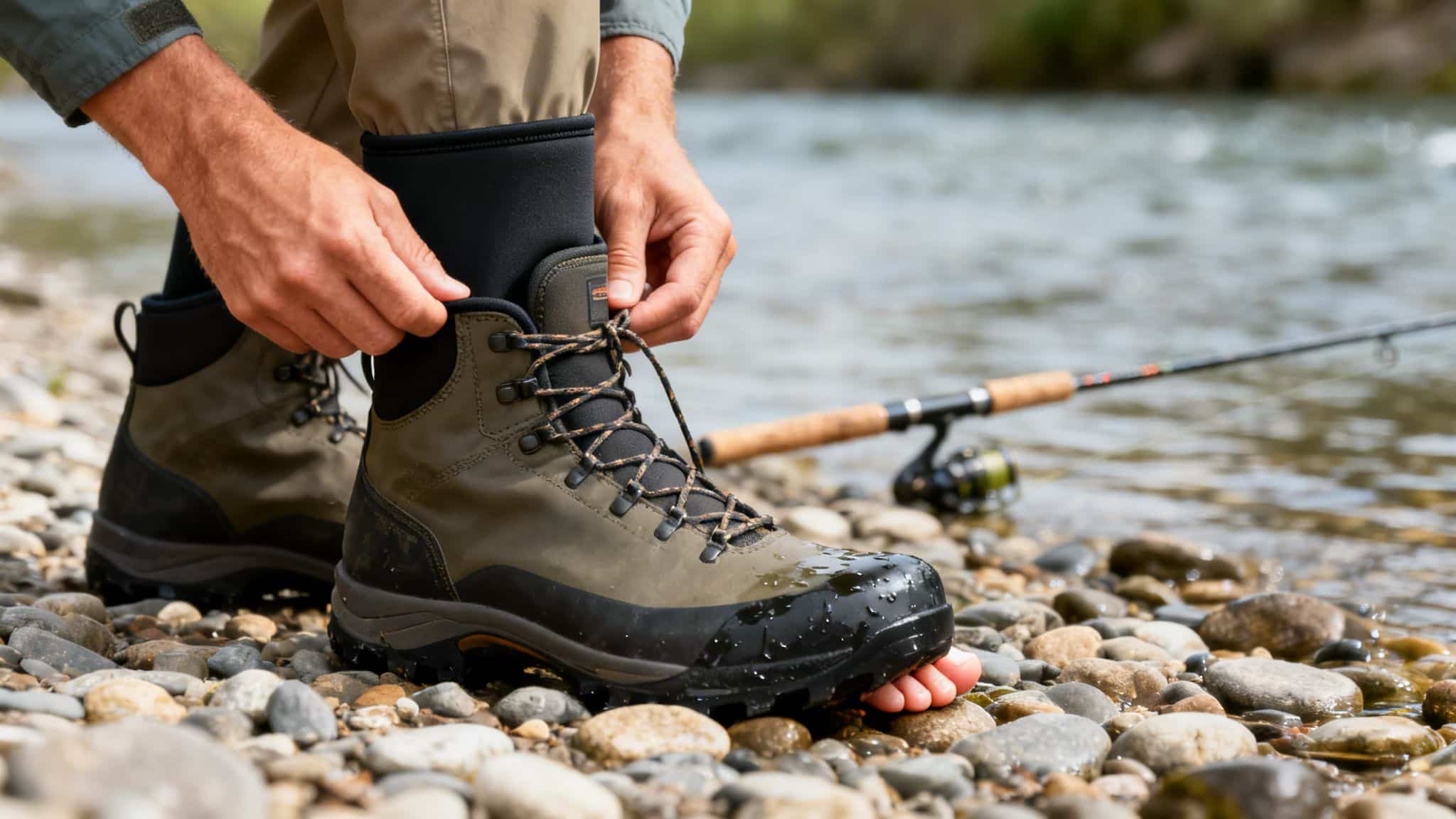
It’s a real balancing act. Boots that are too loose let your foot slide around, which is a one-way ticket to blisters and wobbly ankles on slick rocks. Cinch them down too tight, and you’re looking at cramped toes and numb feet—a miserable feeling, especially when the water's cold. Getting this right is the secret to staying comfortable and, more importantly, safe out there.
The Golden Rule of Sizing Wading Boots
If you only remember one thing about sizing, make it this: always size up from your street shoe size. Wading boots aren't like your everyday sneakers; they're built with extra room inside to account for the thick neoprene bootie on your waders, plus a good pair of wool or synthetic socks.
As a starting point, you should plan on going one to two full sizes larger than your normal hiking boot or sneaker size. So, if you're a size 10 in your everyday shoes, you'll want to start by trying on an 11 or a 12 in wading boots. While some brands are starting to adjust their sizing to be more "true to size," the "size up" rule is still the most reliable way to begin your search.
How to Test for the Perfect Fit
The only real way to know is to try them on—the right way. Just slipping your bare foot in won't cut it.
- Gear Up First: Always try on boots while wearing the waders and thick socks you actually fish in. That neoprene stockingfoot takes up way more room than you think.
- Check Your Toes: Once you're laced in, stand up and let your foot slide forward. You should have enough space to wiggle your toes freely without them being jammed against the end. A good benchmark is about a finger's width of space.
- The Heel Lift Test: This one's a game-changer. Keep your foot flat and try to lift just your heel inside the boot. A tiny bit of movement is fine, but if your whole heel is lifting an inch off the insole, the boot is too big. This annoying slip-and-slide motion, known as "heel lift," is the number one cause of blisters.
- Mimic River Movements: Don't just stand there! Walk around the store, do a few squats, and roll up onto the balls of your feet. The boot needs to feel locked-in and supportive, with no weird pinching or hot spots.
The perfect fit is a balance: snug enough around the ankle and midfoot to prevent your foot from sliding, but with enough room in the toe box for comfort during a long day of walking and wading.
Lacing Systems: Classic vs. Modern
Getting your boots tight is one thing, but how you do it matters, especially when your fingers are cold and wet. There are really two camps here.
-
Traditional Laces: You can't beat the classics. Laces are simple, totally reliable, and let you create a truly custom fit by adjusting the tension in different spots. The downside? They can come untied, collect ice in the winter, and become a real chore to manage with numb hands. If you need a refresher on precision lacing for other occasions, you might find our guide on how to wear a tuxedo correctly surprisingly relevant.
-
BOA Lacing System: The modern alternative is the BOA system, which uses a simple dial to tighten a web of tough steel cables. It's incredibly fast—just a few clicks and you're locked in. The ability to make micro-adjustments with one hand is a huge plus, and they don't loosen up as you walk. The only real trade-off is field repair; if a cable ever breaks, it's a much bigger headache than swapping out a shoelace.
Alright, let's get to the good stuff—the boots themselves. I've waded through a ton of options to find the best wading boots that give you the safety and grip you need without having to raid the kids' college fund.
Instead of just throwing a list of specs at you, I’ve broken this down into three straightforward budget levels that line up with how you probably fish. Whether you get out on the water a few times a year or you're all-in on this hobby, there’s a great fit here for you. This is all about getting the right tool for the job so you can spend your money wisely and get back to making memories.
Entry-Level Value Boots That Don't Compromise
If you're a dad who fishes a handful of times a season or is just dipping your toes into the sport, an entry-level boot is a fantastic place to start. These boots prove you don’t have to spend a fortune to get the essential safety features you need on slippery riverbeds.
Think of these as the reliable family sedan. They get you where you need to go safely and comfortably, just without the premium price tag. The key is to stick with a reputable brand that uses solid materials and proven construction, not some cheap knockoff that will fall apart after one trip.
- The Upside: You can get on the water with a reliable product for a minimal investment, usually in the $100-$150 range. They provide the essential reinforced toes, ankle support, and sturdy soles needed for safe wading.
- The Trade-Off: They often use less advanced materials, which can make them a bit heavier and take longer to dry. You'll also find standard laces and less sophisticated sole compounds.
For the dad whose main goal is safe, occasional fun, this tier gives you the confidence you need on slick rocks without a huge financial commitment.
Mid-Range Workhorses for the Growing Hobby
This is the sweet spot for most dads. If you're hitting the river consistently and you see fly fishing as a long-term family activity, a mid-range boot offers the perfect blend of performance, durability, and price. These boots, typically costing $150-$250, are true workhorses built to last for many seasons.
You’ll see significant upgrades here. We're talking lighter and more abrasion-resistant synthetic materials, much better drainage, and more advanced sticky rubber for superior grip. This is the kind of boot that can handle dozens of trips a year, from quick evening sessions to full-day family expeditions. Upgrading your core gear is one of the best ways to make all your family adventures run smoother; for more ideas, check out our guide on the best camping gear for families.
- The Upside: You’re getting excellent durability from high-quality materials built to withstand frequent use. They also offer enhanced performance with better grip, lighter weight, and superior comfort for long days on your feet.
- The Trade-Off: It’s a more significant upfront cost than an entry-level model. You also might not find top-tier lacing systems like BOA on every boot in this category.
For the dad who is getting serious about his time on the water, a mid-range boot is a fantastic investment that will pay you back in comfort and longevity season after season.
Premium Performers for the Dedicated Dad
When fishing is your passion and you demand the absolute best from your gear, premium boots deliver. Costing $250 and up, these are the pinnacle of wading boot technology, designed for the angler who spends countless days in the water, often in the toughest conditions.
Here you’ll find the cutting-edge stuff: BOA lacing systems for one-handed adjustments on the fly, the most advanced sole technologies for incredible grip, and ultralight, bombproof materials that seem to dry almost instantly. These boots provide maximum support with minimal weight, which makes a huge difference in reducing fatigue on long hikes into remote spots.
Picture this: a dad knee-deep in a rushing river, hooking the big one while his kids cheer from the bank—that's the magic of wading boots done right. Brands like LaCrosse and Decathlon are pushing affordability without skimping on performance, making high-end features accessible. In Alpha Dad Mode, choosing the best wading boots isn't splurging—it's compounding family memories with reliable footing that lets you focus on the joy, not the fear of falling. You can learn more about these market trends and their impact from recent fishing gear industry analysis.
- The Upside: You get top-tier technology, including features like BOA systems, the very best sole compounds, and the lightest materials available. The comfort and support are unmatched, designed for maximum performance and minimal fatigue.
- The Trade-Off: This is the highest price point, a significant investment that’s really for the most dedicated anglers. The advanced features are likely overkill for someone who only fishes a few times a year.
For the dad who wants gear that will never, ever hold him back, premium boots are the ultimate tool, offering the best performance money can buy.
How to Care for Your Wading Boots
You picked out a solid pair of boots—that’s a good start. But just like the best tools for dads in your garage, they won't last without a little upkeep. Taking care of your wading boots isn't just about getting your money's worth; it’s about protecting the very rivers and streams you want to show your kids.
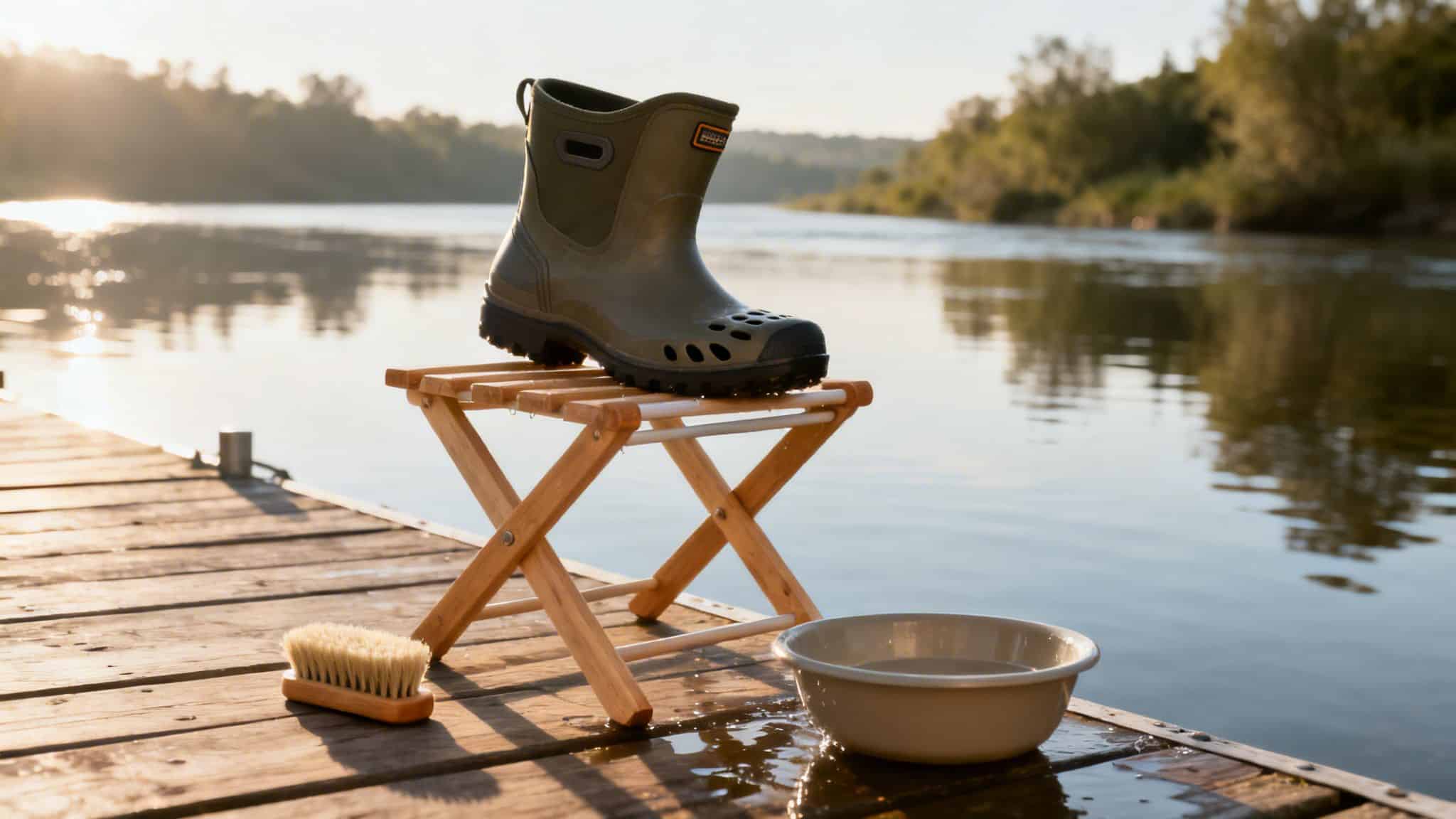
The best habit you can build is the "Clean, Drain, Dry" routine. It’s a simple process that does two critical things: it keeps your boots from falling apart and, more importantly, stops you from accidentally transporting aquatic invasive species (AIS) between waterways. This is a great, hands-on way to teach your kids about being good stewards of the outdoors.
The Clean, Drain, Dry Method
Think of this as brushing your teeth after a meal—it should be an automatic, non-negotiable part of every fishing trip.
-
Clean: Get a stiff brush and scrub everything down with fresh water. Really get into the nooks and crannies of the soles, around the laces, and along the seams. These are the spots where mud, algae, and microscopic hitchhikers love to hide. A 5% solution of dish soap works wonders on stubborn gunk.
-
Drain: Turn the boots upside down and let every last drop of water pour out. Don't forget to squeeze the tongue and the padded ankle collar to push out trapped moisture. The less water you start with, the faster they'll dry.
-
Dry: This is your most powerful weapon against invasive species. Let your boots dry completely, preferably in the sun, for at least 48 hours before you even think about stepping into a different body of water. If you're on a multi-day trip and can't wait that long, a hard freeze (like a night in a chest freezer) will also kill most of the nasty stuff.
Storage and Inspection Tips
Drying your boots thoroughly also prevents the fabric and glues from getting wrecked by mold and mildew. Tossing damp boots into a dark gear bag or the trunk of your car is the fastest way to ruin them.
Wading boots live a tough life. Giving them a quick once-over after you clean them is the best way to spot a small problem before it turns into a major gear failure miles from the car.
Keep an eye out for these common wear-and-tear issues:
- Frayed Stitching: Check the seams, especially around the high-stress areas like the toe and heel.
- Separating Soles: Look for any peeling along the edge where the rubber sole meets the boot material.
- Worn Studs: If your metal studs are ground down and rounded, they aren't giving you the grip you need. Luckily, most are easy to replace.
A few minutes of care after each trip ensures your boots are always ready for the next adventure. It's a small price to pay for reliable gear that protects both your investment and the wild places you explore as a family.
Frequently Asked Questions About Wading Boots
Alright, let's get into the nitty-gritty. You've probably got a few questions buzzing around your head as you narrow down the options. Let's tackle the most common ones so you can buy with total confidence.
1. What's better: felt or rubber soled wading boots?
For most anglers, rubber soles are the better choice. They are durable, provide excellent traction on trails and in the water, and don't spread invasive species, making them legal everywhere. Felt soles offer superior grip on extremely slick, mossy rocks but are banned in many states due to environmental concerns and offer poor traction on land.
2. Can I wear hiking boots for wading?
No, you should never wear hiking boots for wading. They lack the grip needed for slippery riverbeds, making them dangerous. Furthermore, they are not designed for repeated submersion; the materials will break down, they won't drain, and they will become incredibly heavy and waterlogged.
3. How do I choose the right size for wading boots?
The golden rule is to go one to two sizes up from your regular street shoe size. This accounts for the space taken up by the neoprene booties of your waders and thick wading socks. The best way to ensure a proper fit is to try them on in-store with your actual waders and socks.
4. Are expensive wading boots worth it?
It depends on how often you fish.
- For occasional use ($100-$150): An entry-level boot from a reputable brand is sufficient.
- For regular use ($150-$250): A mid-range boot is a great investment in durability and comfort.
- For dedicated anglers ($250+): Premium boots offer the best performance, lightest weight, and advanced features like BOA lacing, which can be worth the cost for those who spend a lot of time on the water.
5. Do I need studs on my wading boots?
You only need studs if you frequently wade in treacherous conditions like fast-moving water with notoriously slick, algae-covered bottoms. For most wading situations, modern sticky rubber provides ample grip. Many rubber-soled boots are "stud-compatible," so you can add them later if you find you need more traction.
6. How do I stop my wading boots from smelling?
The key is the "Clean, Drain, Dry" method. After each use, scrub the boots clean, drain all the water, and let them dry completely before storing them. Storing them damp is what causes mold, mildew, and foul odors. Placing them in a well-ventilated area, preferably with some sun exposure, is ideal.
7. How long do wading boots last?
The lifespan of wading boots depends on usage frequency, the conditions you fish in, and how well you care for them. An entry-level boot might last 1-2 seasons of moderate use, while a high-end, well-maintained boot can last for 5+ seasons of heavy use. Regular cleaning and proper drying will significantly extend the life of any boot.
At Alpha Dad Mode, we know that having the right gear is the foundation for a lifetime of awesome family adventures. Choosing the right wading boots isn't just another purchase. It's an investment in your safety and confidence, freeing you up to be fully present for those priceless moments on the water. Find more practical guidance for modern fathers at alphadadmode.com.
