


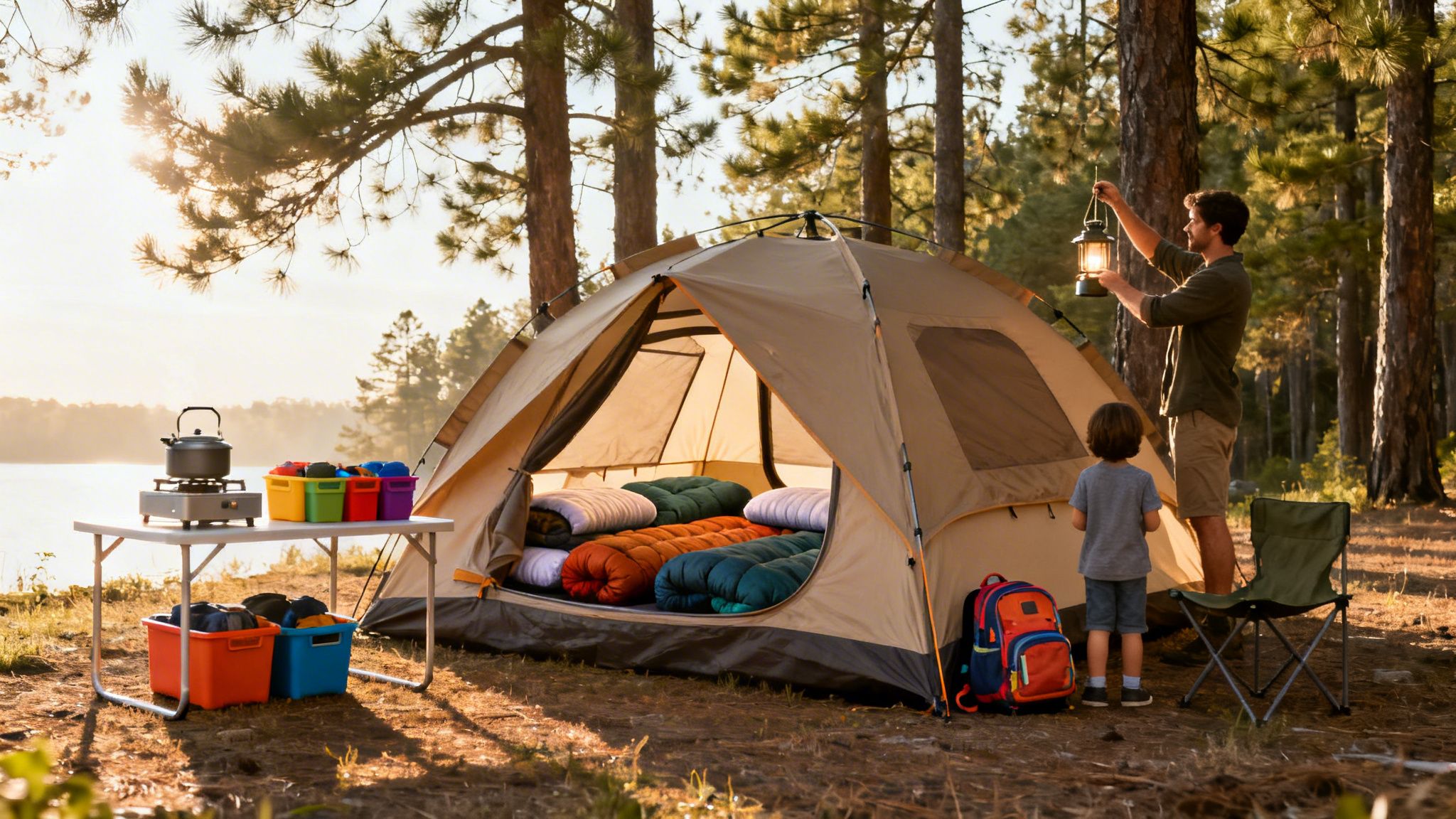
Gearing up for a family camping trip can feel more overwhelming than packing for your firstborn. You're staring at a mountain of gear options, and it's easy to get bogged down. But here’s the secret: you only need to focus on five key areas.
Think of it as your foundational kit: shelter, sleep systems, cooking gear, safety essentials, and a few kid-specific items. Nail these, and you're not just buying stuff—you're building a reliable system for creating incredible family memories.
Before we dive deep, here's a quick look at the pros and cons of investing in quality family camping gear:
| Pros | Cons |
|---|---|
| Creates Lasting Memories: Shared experiences in nature strengthen family bonds. | Initial Investment: Quality gear can have a significant upfront cost. |
| Builds Resilience & Confidence: Kids learn problem-solving and self-reliance. | Learning Curve: It takes a few trips to master setup and organization. |
| Disconnect to Reconnect: Get away from screens and enjoy focused family time. | Packing & Logistics: Can feel overwhelming, especially for the first few trips. |
| Cost-Effective Vacations: After the initial investment, camping is an affordable way to travel. | Weather Dependent: A trip can be derailed by bad weather if you're not prepared. |
| Promotes a Healthy Lifestyle: Encourages physical activity and an appreciation for the outdoors. | Requires Storage Space: Camping gear needs a place to live when not in use. |
Your Blueprint for Family Camping Success
Let's be honest, the wall of gear at an outdoor store can be intimidating. It's easy to get lost in technical jargon and fancy brand names, but remember the real goal here. You're trying to get your family out into nature to connect, have fun, and maybe even relax a little.
Think of picking out your gear as the first step in that adventure, not just another chore on the list.
This guide is designed to cut through all that noise. I'm not going to throw a list of brands at you. Instead, we'll break down the why behind each piece of gear. This will give you the practical know-how to make smart choices that fit your family, your budget, and your style of adventure.
What We Will Cover
We're going to walk through this step-by-step, building your confidence along the way. By the end, you'll have a solid game plan for your next trip. Here’s what we’ll get into:
- Core Gear Categories: We'll cover the non-negotiables: shelter, sleep setups, your camp kitchen, and safety gear.
- Key Decision Factors: You'll learn how to weigh size, durability, and ease of use to find what actually works for a family with kids.
- Smart Packing Strategies: I'll share some hard-won tips for organizing your gear so setting up and tearing down camp doesn't turn into a chaotic mess.
- Kid-Specific Items: We'll talk about the gear that keeps your little ones safe, happy, and entertained.
The best family camping trips happen when everyone is comfortable and safe. When you've got the basics covered—a good night's sleep, warm food, and a solid first-aid kit—you create the space for the real magic to happen. That's when the lasting memories are made.
At the end of the day, the right gear is simply the gear that gets you and your family outside without a ton of stress. It’s about being the dad who can confidently lead the charge, knowing everyone is set up for a great time.
Getting your gear sorted is a lot like packing the car for a road trip; a little planning upfront makes the entire journey smoother. And speaking of road trips, if you're planning your next family adventure, you might also want to check out our guide on the best family cars to get you there.
Alright, let's start building your family's go-to camping kit.
2. Your Shelter and Sleep System: The Foundation of a Great Trip
Let's be honest, your tent is more than just a tent. It's the basecamp, the bug-free zone, the rain shelter, and the cozy den where everyone crashes after a long day of exploring. A good night's sleep is the non-negotiable ingredient for a happy family camping trip, and it all starts with picking the right shelter and sleep system.
This isn't about getting bogged down in technical specs you'd find on a mountaineering forum. We’re going to focus on what actually matters when you've got kids along for the ride: enough room so you’re not all sleeping like a pile of puppies, a setup that doesn't end in a campsite argument, and solid protection from the elements.
Family camping is bigger than ever. The global camping market has swelled to $96.75 billion, and a huge part of that growth comes from families who prefer the convenience of car camping. In fact, private campgrounds now host 31% of all camping nights—a record high—showing just how much families value accessible, comfortable spots. For a dad with young kids, this trend points right to the sweet spot: 6- to 8-person tents that can be pitched in under 10 minutes. You can dig into more data on camping market trends to see how gear is evolving for families like ours.
How to Find a Tent That Actually Fits Your Family
When a tent manufacturer says "4-person," what they really mean is four adults in sleeping bags, packed in like sardines, with zero room for gear or midnight wiggles. For a family of four, that's a recipe for a cramped and grumpy morning.
Here’s a simple rule I swear by: the "plus-two" principle. If you're a family of four, you should be looking for at least a 6-person tent. That extra space isn't a luxury; it's a necessity. It’s where you’ll stash duffel bags, where a restless toddler can roll around without waking everyone up, and where you can play a card game on a rainy afternoon without feeling claustrophobic.
Think of it this way: you could all squeeze into a studio apartment, but wouldn't a one-bedroom be a lot more livable? Your tent is your temporary home, so give yourself a little room to breathe.
The "Comfort Sandwich": Your Secret to a Great Night's Sleep
A fantastic night's sleep under the stars comes down to something I call the "comfort sandwich." It’s a simple, layered approach that tackles insulation, cushioning, and warmth. Nail this, and you’ll keep everyone—especially the kids—rested and ready for the next day's adventures.
The layers are straightforward:
- The Pad (Bottom Layer): This is your shield against the cold, hard ground. It’s all about insulation and cushioning.
- The Bag (Middle Layer): This is your personal furnace. The sleeping bag's job is to trap your body heat and keep you toasty all night.
- The Pillow (Top Layer): Never underestimate the power of a good pillow. It's the final touch for real, restorative sleep.
The gear you choose for shelter and sleep forms the absolute bedrock of your entire camping kit. Everything else builds upon it.

As you can see, these two categories are the foundation. Get them right, and you're well on your way to a successful trip.
Putting Your Sleep System Together
Let's break down those layers. When it comes to sleeping pads, you're usually choosing between a big air mattress or individual self-inflating pads. An air mattress feels like home and can be plush, but they’re bulky, need a pump, and have a nasty habit of slowly deflating, leaving you on the cold ground by 3 AM.
Self-inflating pads, on the other hand, offer fantastic insulation, are way more durable, and won't let you down overnight. They might feel a bit firmer, but the trade-off is worth it.
My two cents? For families, a set of quality, insulated self-inflating pads is the smarter, more reliable choice. They provide that critical thermal barrier from the ground that keeps you warm, and you’ll never wake up to a slow leak.
Finally, the sleeping bag. Don't get lost in the weeds with temperature ratings. For most family car camping in the spring, summer, or fall, a bag rated for 20°F to 30°F (-6°C to -1°C) is the perfect all-rounder. Remember, you can always unzip a bag if you get too hot, but you can't magically make a flimsy bag warmer on a surprisingly chilly night. Choosing wisely here is what turns your tent from just a shelter into a true home in the wild.
3. Mastering the Camp Kitchen

Let's be honest: a hungry kid is a grumpy kid. And a campground full of grumpy kids is no one's idea of a good time. That’s why your camp kitchen is so much more than just a place to cook—it's the heart of a happy campsite.
Forget about trying to be a gourmet chef in the woods. The real goal is having a simple, bulletproof system for making easy, satisfying meals that keep everyone’s energy up. When you get this right, mealtime becomes a highlight of the trip instead of a logistical nightmare.
Think of your kitchen setup as the engine that drives your entire campsite. With a bit of prep at home, you can look like a hero without breaking a sweat. It all comes down to one key idea: a self-contained, grab-and-go system for everything you need to prep, cook, and clean.
Choosing Your Camp Stove
Your camp stove is the centerpiece of your outdoor kitchen. For families, the choice is pretty clear: the classic two-burner propane stove is king. It’s essentially a portable version of your cooktop at home—sturdy, reliable, and big enough to handle a pot of chili and a kettle for hot chocolate at the same time.
These stoves run on those small green propane canisters you can find almost anywhere, which makes them incredibly dependable. The flame control is fantastic, giving you the precision to simmer a sauce or blast the heat for a quick boil. It’s this reliability that makes them a cornerstone of the best camping gear for families.
You'll see smaller, lightweight canister stoves out there, but those are really built for backpackers who count every ounce. They’re great for boiling water fast but are often tippy and just not practical for cooking the real meals a hungry family needs. Stick with the tried-and-true two-burner for car camping.
Building Your Camp Kitchen Box
Here’s the single best trick for an effortless camp kitchen: the “kitchen box.” This is simply a dedicated storage bin that holds all your cooking, eating, and cleaning gear. When it’s time to eat, you just grab one box. No more digging through three different duffel bags to find the dang spatula.
Think of it like a toolbox for the camp chef. Every tool has its place, it's always stocked with the essentials, and it’s ready to go at a moment’s notice. This one piece of organization will completely change your camping game.
A well-organized box means you'll never again have that sinking feeling of realizing you left the can opener on the counter at home. After a few trips, you’ll have it dialed in perfectly for your family. This is especially true for cookware—after all, families make up a massive 76.05% of the camping market and prefer complete, easy-to-use sets. Smart dads often look for stainless steel cookware sets under 5 lbs to keep the kitchen box from getting too heavy to haul.
Cooler Management and Food Safety
Your cooler isn’t just a box for drinks; it’s your outdoor refrigerator, and it needs to be managed like one. The game is simple: keep the cold in and the warm air out. This is critical for keeping food fresh and, more importantly, safe.
If you can swing it, the two-cooler system is a game-changer. One cooler is for drinks (which gets opened constantly) and the other is strictly for food (which stays sealed and ice-cold). Always pre-chill everything before it goes in the cooler, and opt for block ice or frozen water bottles—they last way longer than cubed ice.
Pack your food cooler strategically, in layers, based on your meal plan. Dinner for the last night goes on the bottom; dinner for tonight goes right on top. Less digging means the lid stays closed and your food stays colder, longer. And while you’re thinking about food, don’t forget to properly store your firewood for those campfire meals. For instance, some woods work better than others, which we cover when discussing if eucalyptus is good firewood.
To get you started, here’s a simple checklist for building out your own camp kitchen box. This is just a foundation—you’ll tweak it over time to fit your crew perfectly.
Camp Kitchen Checklist Sample Load-Out
| Category | Essential Items | Pro-Tip |
|---|---|---|
| Cookware | Two-burner stove, propane, pots, pans, cast-iron griddle, long-handled lighter | A cast-iron griddle is a workhorse—perfect for pancakes, burgers, and grilled cheese. |
| Utensils | Spatula, tongs, large spoon, sharp knife, cutting board, can opener | Keep utensils in a fabric roll-up organizer to stop the rattling and keep them clean. |
| Dishware | Reusable plates, bowls, cups, and flatware for everyone | Assign each person a specific color of dishware. It makes it easy to keep track of whose is whose. |
| Cleaning | Collapsible sink, biodegradable soap, sponge, paper towels, trash bags | Use a two-bin system for washing up: one for soapy water, one for clean rinse water. It's much faster. |
| Food Storage | Airtight containers, aluminum foil, Ziploc bags, chip clips | Pack food in square or rectangular containers. They stack neatly and use cooler space much more efficiently. |
This checklist covers the basics for a weekend trip. Your first time out, you’ll probably bring too much or forget something small, and that's okay. The goal is to refine your kit with every trip until it becomes a perfect, no-think system for feeding your family in the great outdoors.
Alright, you've gathered the tent, sorted out the sleeping bags, and have a camp kitchen ready to go. Now for the real test: getting all of it into your car without it looking like a gear explosion. Packing for a family camping trip can feel like a high-stakes game of Tetris, but with the right system, you'll go from a stressed-out gear-stuffer to a calm, organized campsite commander.
The objective isn't just to haul everything to your spot. It’s about making your life easier when you get there. A little forethought now will save you a world of headaches later when you’re trying to find things in the dark.
Think in Modules, Not Piles
The single best trick I’ve learned for keeping our family's gear organized is modular packing. It's a simple concept: think of your gear as a collection of grab-and-go kits. Instead of just cramming things into bags, you group everything by function into dedicated storage bins—bonus points if they're color-coded.
This system makes your campsite setup predictable and smooth. Here’s a basic breakdown that works for us:
- Blue Bin (Kitchen): Everything for cooking and eating goes in here. Your stove, fuel, pots, pans, utensils, plates, and the wash basin. When dinner time rolls around, you just grab this one bin.
- Red Bin (Sleeping): This is home for all the sleeping bags, pillows, and air pumps. As soon as the tent is up, this bin comes inside, and everything you need for a cozy night is right there.
- Green Bin (Campsite): This is the catch-all for general camp life. Think headlamps, lanterns, rope, hatchets, and maybe even the camp chairs if they fit.
An approach like this completely eliminates that frantic, "Honey, where did you pack the headlamps?!" scramble as the sun goes down. It also makes it easy for the kids to help. "Go grab the blue bin from the car, please!" is a mission they can actually accomplish.
Load the Car Like a Pro
Once you've got your gear sorted into bins, loading the car becomes a strategic puzzle. The golden rule here is "first-in, last-out." Whatever you'll need right away when you arrive at the campsite should be the last thing you put in the car.
That means your tent and a small cooler with drinks and snacks should be easily accessible right by the trunk door. Trust me, there's nothing more demoralizing than having to unload half the car just to get to the tent, especially if you roll in late or the clouds open up.
The moment you pull into your campsite is when this system really pays off. Being able to immediately grab the tent, get it pitched, and hand the kids a snack starts the whole trip on a calm, positive note. That's how you win the arrival game.
Don't Underestimate a Good Backpack
Wait, backpacks for car camping? Absolutely. It might sound a bit odd when you aren't trekking miles into the wilderness, but a few good packs are invaluable at the campsite. There's a reason backpacks hold a massive 28.12% market share of all outdoor equipment. It's because families, who make up 76.05% of the market, have figured out how incredibly useful they are. You can dig into these market dynamics in camping equipment to see why they're such a staple.
For a dad, a solid daypack is a game-changer for those little excursions away from the main camp. You can load it up with water bottles, snacks, a first-aid kit, and rain jackets for a quick hike to a scenic overlook.
It’s also a fantastic tool for teaching kids a little responsibility. Giving them their own small, lightweight backpack with a water bottle and a granola bar makes them feel like a genuine part of the expedition. It’s a simple thing, but it builds their confidence and gets them even more excited for the adventure ahead.
Essential Safety and Kid-Specific Gear

Real confidence in the outdoors doesn’t come from having the most expensive tent or the fanciest gadgets. It comes from being prepared. When you’re the one leading the charge for your family, that means focusing on safety first and making sure the kids have an absolute blast. This is where you go from just packing stuff to packing peace of mind.
This part of the guide is all about the gear that turns a good trip into a great one by keeping everyone safe, comfortable, and excited. We’re going to cover the non-negotiables for safety and the little things that make camping feel like magic to your kids.
Building Your Family’s “Ouch Pouch”
Every campsite needs a first-aid kit. But when you’ve got kids, you need what I call an "Ouch Pouch." It’s your standard kit, but supercharged for the little ones. It’s less about handling a major disaster and more about dealing with the inevitable scrapes, splinters, and bug bites calmly and effectively.
A good family kit is about more than just antiseptic wipes and bandages; it also addresses the emotional side of a kid getting a little hurt.
- Kid-Friendly Supplies: Pack those colorful, character-themed bandages. It might seem silly, but they can stop tears in their tracks and turn a minor injury into a badge of honor.
- Sting and Bite Relief: A solid anti-itch cream is a must-have. Mosquito bites happen. So do run-ins with stinging nettle. Quick relief makes the difference between a minor annoyance and a miserable kid.
- Splinter and Tick Tools: A good pair of fine-tipped tweezers and a dedicated tick removal tool are your best friends here. They make a delicate, sometimes stressful, job much easier.
- Basic Medications: Make sure you have children’s ibuprofen or acetaminophen, antihistamines for unexpected allergic reactions, and some gentle antiseptic wipes.
Your goal isn't just to patch up a scrape; it's to be the reassuring hero who makes it all better. A well-stocked, kid-focused kit lets you handle minor incidents with confidence, keeping the adventure rolling.
Lighting the Way and Finding Your Path
Once the sun goes down, personal lighting becomes your most important safety tool. Every single person in your family—even the toddlers—needs their own headlamp. This isn't a luxury; it's for safety and building independence.
A headlamp keeps your hands free for scrambling over roots on a late-night bathroom trip or carrying firewood. For kids, having their own light is empowering and makes the dark feel a lot less spooky. Pro tip: get a headlamp with a red-light mode. It saves everyone’s night vision when you’re digging around the tent after dark.
And while your phone's GPS is great, never, ever rely on it as your only navigation tool. Batteries die and cell service is often non-existent where you want to be. Always bring a physical map of the campground or park and a basic compass. Better yet, spend a few minutes showing your older kids how to read the map—it’s a fantastic life skill and gets them more involved in the trip.
Wildlife Safety Without the Fear
Talking to kids about animals requires a calm, matter-of-fact tone. The goal is to teach respect, not create fear. The number one rule is simple: observe from a distance and never, ever feed wild animals.
Explain to them that keeping a clean campsite is how we protect both the animals and ourselves. This means storing all food and scented items in the car or a bear-proof locker and packing out every last scrap of trash. It’s a practical, hands-on lesson in sharing the outdoors responsibly. The mindset of camp safety extends to other areas of family preparedness. If you're looking for more ways to keep your family safe on the move, you might find our guide on car seat safety guidelines helpful.
Gear That Makes Kids Feel Like Part of the Adventure
The other side of this coin is making camping genuinely fun for your kids. One of the best ways to do that is to give them their own, kid-sized gear. It creates a sense of ownership and responsibility that gets them fired up for the trip. They go from being passengers to being part of the crew.
Here are a few items that make a world of difference:
- Their Own Camp Chair: A kid-sized chair gives them a designated spot around the campfire. It makes them feel important and included in the circle.
- A Proper Sleeping Bag: Don’t just toss them a spare adult bag. A child-specific sleeping bag is shorter and narrower, so their small bodies aren’t struggling to heat up a bunch of empty space. This is critical for keeping them warm all night.
- A Small Hydration Pack or Backpack: Letting them carry their own water bottle and a snack gives them a sense of purpose. They’ll feel like a real explorer on your hikes.
- A "Treasure" Bag: Give each kid a small cloth pouch for collecting “treasures.” Interesting rocks, unique leaves, and cool pinecones suddenly turn a simple walk into an exciting scavenger hunt.
This approach is at the heart of finding the best camping gear for families. When kids are equipped to be active participants, their enthusiasm is contagious and makes the entire trip better for everyone.
Tying It All Together: Your Blueprint for Adventure
You've got the lay of the land now. It's time to put it all into practice. Picking the right family camping gear was never about chasing the most expensive brands or the latest fads. It’s about creating a dependable kit that simplifies your job as camp chief and makes the whole experience more fun for your family.
This brief summary table highlights the key takeaway for each essential gear category. It’s your quick-glance guide to making smart choices.
| Gear Category | Key Takeaway | Why It Matters for Families |
|---|---|---|
| Shelter | Choose a tent rated for at least two more people than your family size (e.g., a 6-person tent for a family of four). | Extra space is crucial for storing gear, accommodating restless kids, and preventing claustrophobia on rainy days. |
| Sleep System | Invest in insulated sleeping pads and weather-appropriate sleeping bags for everyone, especially kids. | A warm, comfortable night's sleep is the non-negotiable foundation for a happy camper. It prevents meltdowns. |
| Camp Kitchen | Use a dedicated, organized "kitchen box" and a reliable two-burner propane stove. | A self-contained system makes mealtime fast and stress-free, keeping energy levels and morale high. |
| Safety Gear | Pack a kid-friendly first-aid kit ("Ouch Pouch") and ensure every family member has their own headlamp. | Being prepared for minor scrapes and having reliable lighting builds confidence and ensures everyone feels secure after dark. |
| Kid-Specific Gear | Provide age-appropriate items like smaller chairs, proper sleeping bags, and personal backpacks. | This gear fosters a sense of ownership, responsibility, and excitement, turning kids from passengers into active crew members. |
This whole process—from making a checklist to packing the car—is the first step in building a tradition of adventure. The real win isn't a perfectly organized gear shed; it's the stories you'll tell around the fire, the sound of your kids laughing, and those quiet moments you share under the stars.
So go ahead, take that first step. Plan a simple overnight trip to a nearby park, start a checklist, and just get out there. Your next great family story is waiting for you.
A Few Common Questions About Family Camping Gear
Even with a detailed guide, a few questions often pop up when you're assembling your family's first camping kit. Here are answers to some of the most common ones.
How Much Should I Budget for My First Set of Gear?
A realistic starting point for a family of four is usually somewhere between $500 and $1,500. That budget will get you quality essentials like a good tent, sleeping bags and pads for everyone, a reliable stove, and a decent cooler.
But you can absolutely get started for less. Don't be afraid to borrow a few things from friends, hunt for gently used gear online, or even rent from a local outdoor shop to test the waters.
If you're wondering where to put your money first, focus on the "Big Three":
- A quality waterproof tent: This is your family's shield from the elements. It’s not the place to skimp.
- Comfortable, weather-appropriate sleeping bags: Nothing kills the fun faster than a cold, sleepless night. Trust me on this one.
- A reliable two-burner stove: This is the difference between eating cold sandwiches and cooking up real, satisfying meals for your crew.
You can save some cash initially on things like camp chairs, high-tech lanterns, and kitchen gadgets. The smart strategy is to invest in safety and comfort first, then add the bells and whistles to your kit over time as you figure out what you really need.
What Gear Is Different When Camping with Toddlers Versus Older Kids?
Your gear list will absolutely change as your kids get older. The whole game shifts from you providing total care to them sharing in the adventure.
With toddlers and preschoolers, it’s all about safety and bringing some familiar comforts from home. This usually means packing:
- A larger tent with enough floor space for a portable crib or a toddler cot.
- Child-specific sleeping bags designed to fit their smaller bodies and keep them warm.
- A sturdy child-carrier backpack for hitting the trails.
Once you’ve got older kids (say, 6 and up), the gear becomes a tool for teaching them independence and getting them involved. It's time to get them:
- Their own small backpack to carry their water bottle and a few snacks.
- A personal headlamp so they can find their way around the campsite after dark.
- Their own mess kit and camp chair to give them a real sense of ownership and responsibility.
The mindset shifts from "carrying everything for them" to "equipping them to participate with you." This transition is key to building their confidence and love for the outdoors.
Should I Buy Premium Gear or Is Budget-Friendly Gear Good Enough?
Honestly, for most families who are car camping a few weekends a year in decent weather, today's budget-friendly gear is more than good enough. You simply don't need expedition-level equipment for a trip to the local state park.
A better approach is to mix and match. Spend the extra money where failure would be a disaster—your tent and sleeping bags are perfect examples. A leaky tent in a rainstorm or a sleeping bag that isn't warm enough will send you packing in a hurry.
On the other hand, you can easily save on cookware, camp furniture, and lighting. For a beginner, the performance gap between budget and premium in these categories is pretty small. Try not to get hung up on brand names. Instead, pay attention to the features and read reviews from people who camp like your family plans to.
At Alpha Dad Mode, we're building a community for fathers who are ready to lead their families in creating incredible memories. Sign up for our newsletter to get updates, practical tips, and be the first to know when we launch. Join us at https://alphadadmode.com.
