


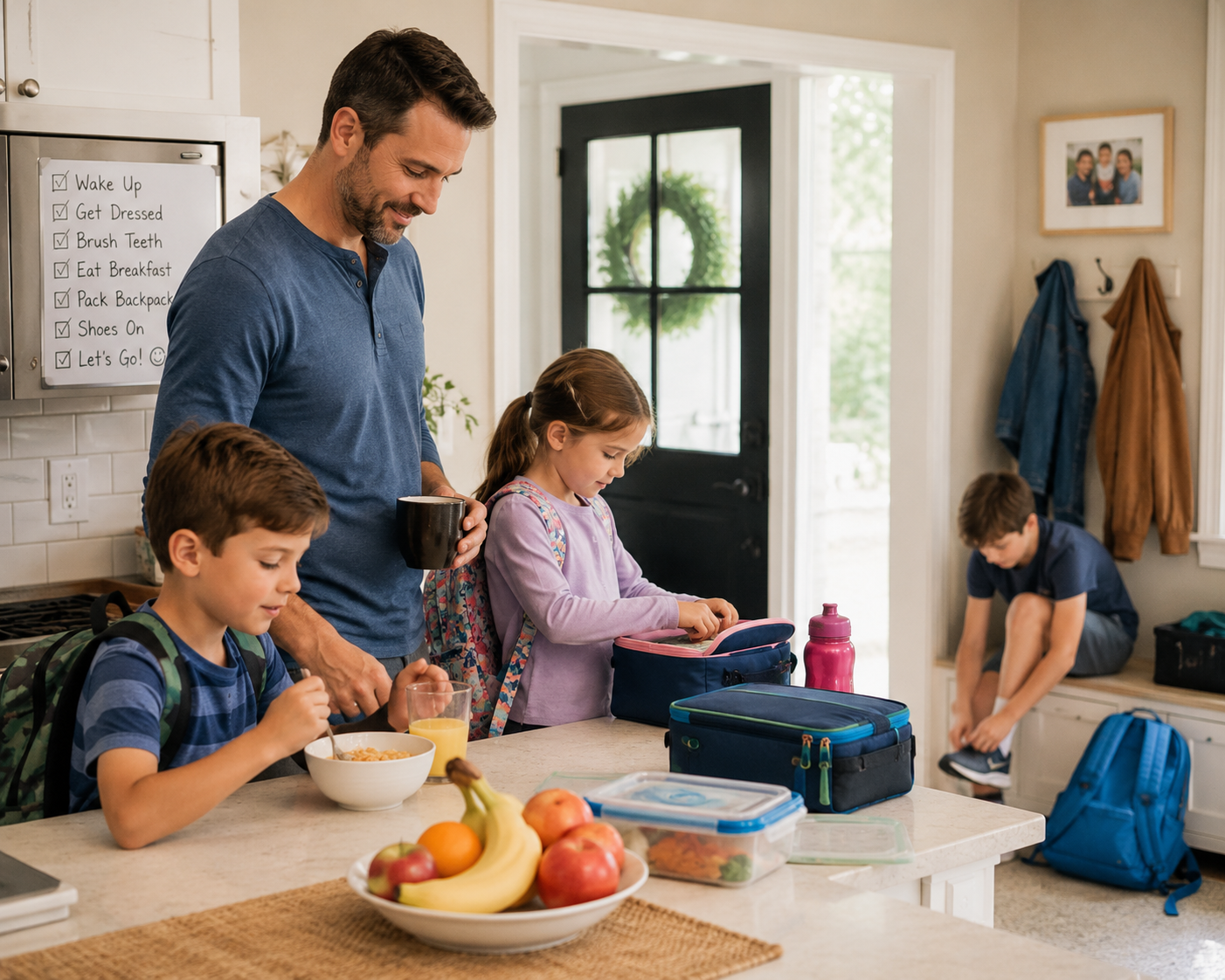
If your mornings feel like a reality TV survival challenge where someone can’t find their shoes, another child suddenly remembers a school project due today, and the toast burns while you’re packing lunches, you’re not alone.
As a father of three, I know exactly what morning chaos looks like. I’ve searched for missing uniforms five minutes before leaving, made breakfast while simultaneously locating a library book that mysteriously vanished overnight, and packed school lunches while answering questions about dinosaurs, Minecraft, and whether it’s OK for my daughter’s favourite unicorn to swim in her oat flakes while she’s eating breakfast.
A good morning routine for kids won’t magically transform your household into one of those suspiciously perfect families you see in advertisements. You know the ones. Everyone smiles. Nobody spills milk. The dog sits quietly in the corner contemplating life.
Real life doesn’t work that way.
What a structured Morning Routine for Kids can do is reduce stress, create consistency, and make mornings significantly more manageable for dads who already have enough on their plate.
Why a Morning Routine for Kids Matters
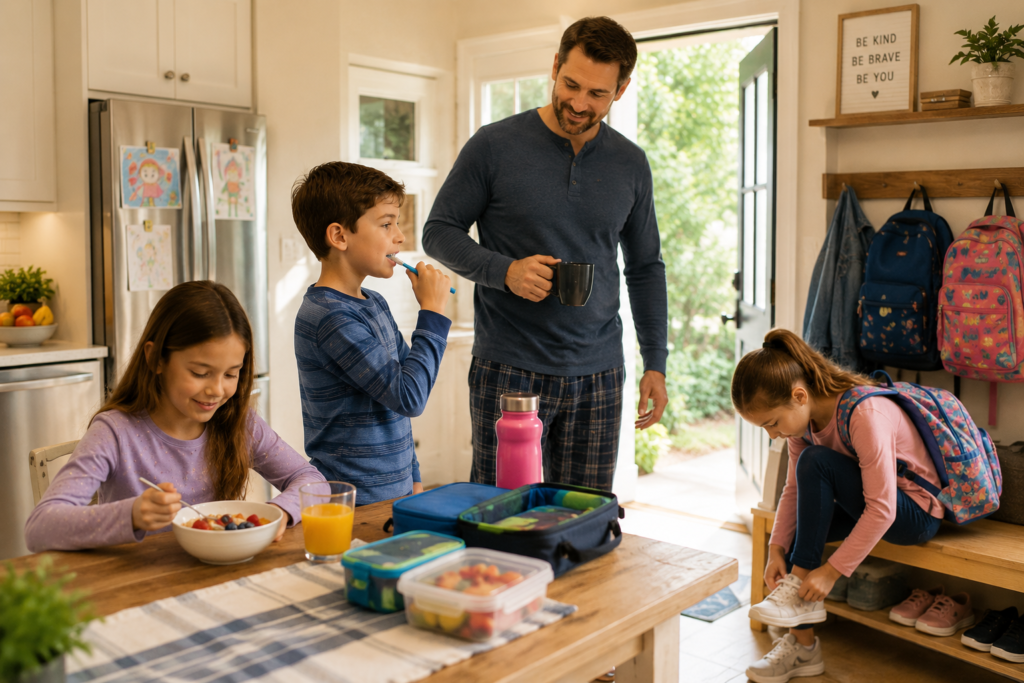
Children thrive on predictability.
When kids know exactly what happens next, they spend less mental energy figuring out the day and more energy actually getting things done.
Without a routine, every morning becomes a negotiation.
- “Do I have to brush my teeth?”
- “Can I wear my Spider-Man pajamas to school?”
- “Why do I need socks?”
With a routine, these decisions disappear because expectations are already established.
Research from organizations like the American Academy of Pediatrics consistently emphasizes the importance of predictable routines for children’s emotional well-being and development.
In practical dad terms?
Less arguing.
Less chasing.
Less shouting, “WE ARE LEAVING IN THREE MINUTES!” while nobody appears remotely interested in leaving.
The Biggest Morning Routine Mistakes Parents Make
Before building a better system, let’s address some common pitfalls.
Trying to Do Everything in the Morning
This is perhaps the greatest parenting trap ever invented.
Packing lunches.
Finding uniforms.
Signing permission slips.
Searching for missing water bottles.
Preparing breakfasts.
Checking homework.
All before 8 AM.
No wonder mornings feel chaotic.
Anything that can be done the night before should be done the night before.
Future-you will be grateful.
Morning-you is usually operating on limited caffeine and questionable decision-making abilities.
Constantly Changing Expectations
Kids struggle when rules change daily.
If one day they must get dressed before breakfast and the next day breakfast comes first, confusion follows.
Consistency matters more than perfection.
Expecting Speed
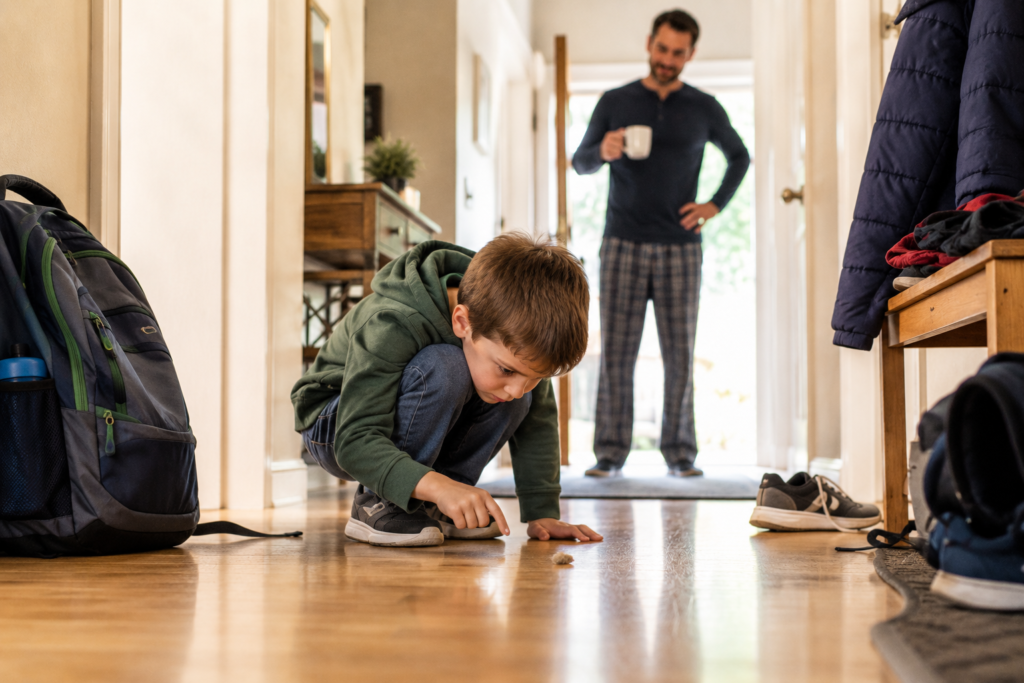
Children operate on a different timeline.
Adults measure time in minutes.
Children measure time in distractions.
A task that should take five minutes can somehow stretch into twenty when a child spots something mildly interesting on the floor.
The Ideal Morning Routine for Kids
Every family is different, but a basic framework works for most households.
| Step | Activity | Why It Helps |
|---|---|---|
| 1 | Wake Up | Creates a predictable start |
| 2 | Use Bathroom | Establishes hygiene habits |
| 3 | Get Dressed | Removes clothing battles later |
| 4 | Make Bed | Builds responsibility |
| 5 | Eat Breakfast | Provides energy and focus |
| 6 | Brush Teeth & Hair | Reinforces self-care |
| 7 | Grab School Items | Reduces last-minute panic |
| 8 | Leave on Time | Starts the day calmly |
Simple.
Not revolutionary.
That’s exactly why it works.
Prepare the Night Before
This is where dads win or lose the morning battle.
The night before:
- Lay out uniforms
- Pack backpacks
- Prepare lunches
- Fill water bottles
- Check homework
- Locate shoes
Seriously.
Locate the shoes.
You would think shoes would remain in predictable locations.
They do not.
Children apparently store them in alternate dimensions.
Completing these tasks the night before can dramatically reduce morning stress.
Breakfast: Keep It Simple
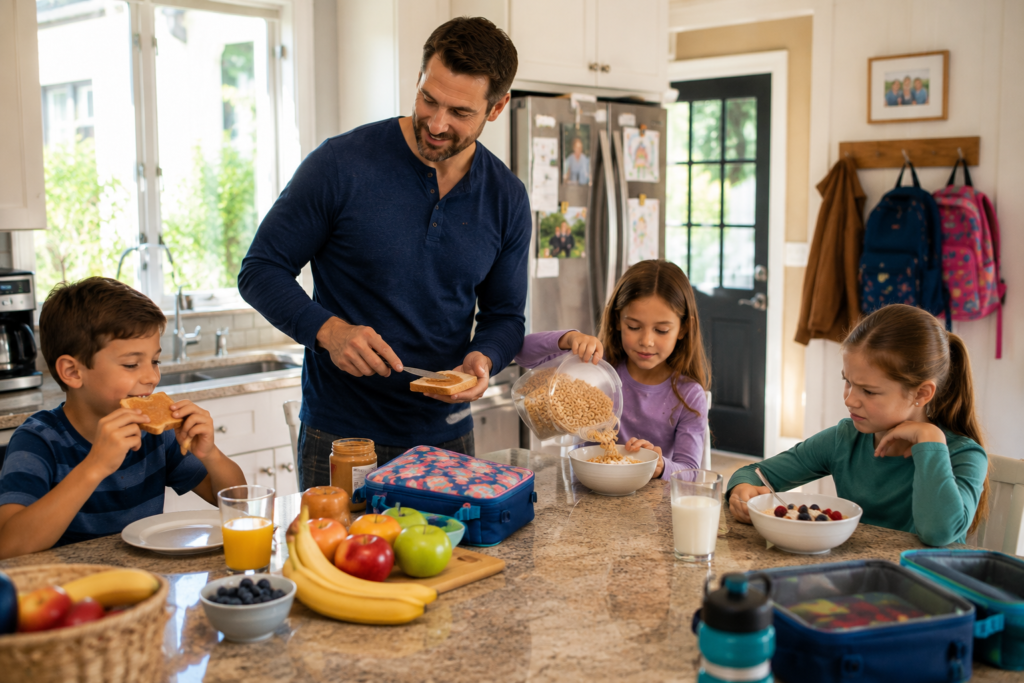
Breakfast can sometimes feel like running a small restaurant with very demanding customers.
One child wants toast.
Another wants cereal.
The third suddenly develops strong opinions about oatmeal.
The key is simplicity.
Some reliable options include:
Eggs
Fast, nutritious, and versatile.
Greek Yogurt
High in protein and easy to serve.
Banana Oat Pancakes
Make them in batches and freeze extras.
Oatmeal
Affordable, filling, and customizable.
Fruit
Bananas, apples, berries, and pears tend to work well.
If you’re dealing with selective eaters, you may find our guide on food choices for picky eaters helpful.
Anything that reduces breakfast negotiations is worth investigating.
How Much Sleep Do Kids Need?
A successful Morning Routine for Kids starts the night before.
Sleep matters.
According to the American Academy of Sleep Medicine:
| Age | Recommended Sleep |
|---|---|
| 3-5 Years | 10-13 Hours |
| 6-12 Years | 9-12 Hours |
| 13-18 Years | 8-10 Hours |
When children are sleep-deprived:
- Everything takes longer
- Emotional regulation declines
- Cooperation disappears
- Breakfast becomes a hostage negotiation
Earlier bedtimes often solve morning problems better than any productivity hack.
Morning Routine for Kids by Age
Toddlers
Focus on:
- Wake up
- Potty
- Get dressed
- Breakfast
- Brush teeth
Keep it simple.
If you have toddlers at home, you might also enjoy these indoor activity ideas.
Because eventually it rains.
And toddlers possess enough energy to power a medium-sized city.
Elementary School Kids
Add responsibility:
- Pack backpack
- Make bed
- Clear breakfast dishes
Tweens
Encourage independence:
- Set alarms
- Prepare lunches
- Manage school materials
They may resist.
This is normal.
Remember that children often oppose the very things they need most.
Creating a Visual Checklist
Many kids respond well to visual reminders.
A simple checklist might include:
☐ Wake up
☐ Bathroom
☐ Get dressed
☐ Eat breakfast
☐ Brush teeth
☐ Pack backpack
☐ Put on shoes
☐ Leave for school
This reduces constant parental reminders.
Which means fewer opportunities to repeat:
“Did you brush your teeth?”
Twelve times.
Pros and Cons of a Morning Routine for Kids
Pros
| Benefit | Why It Matters |
|---|---|
| Reduces Stress | Less rushing and arguing |
| Builds Independence | Kids learn responsibility |
| Creates Consistency | Expectations become clear |
| Improves Time Management | Helps children develop routines |
| Better School Readiness | Kids arrive calmer and more prepared |
Cons
| Challenge | Reality |
|---|---|
| Takes Time to Establish | Habits don’t form overnight |
| Requires Consistency | Parents must follow through |
| Progress Can Be Slow | Especially with younger children |
| Not One-Size-Fits-All | Every child is different |
The good news?
The benefits usually outweigh the challenges.
What Actually Worked in Our House
After years of trial and error, here’s what helped most.
Not color-coded charts.
Not complicated reward systems.
Not military-level scheduling.
Three simple things:
1. Prepare Everything the Night Before
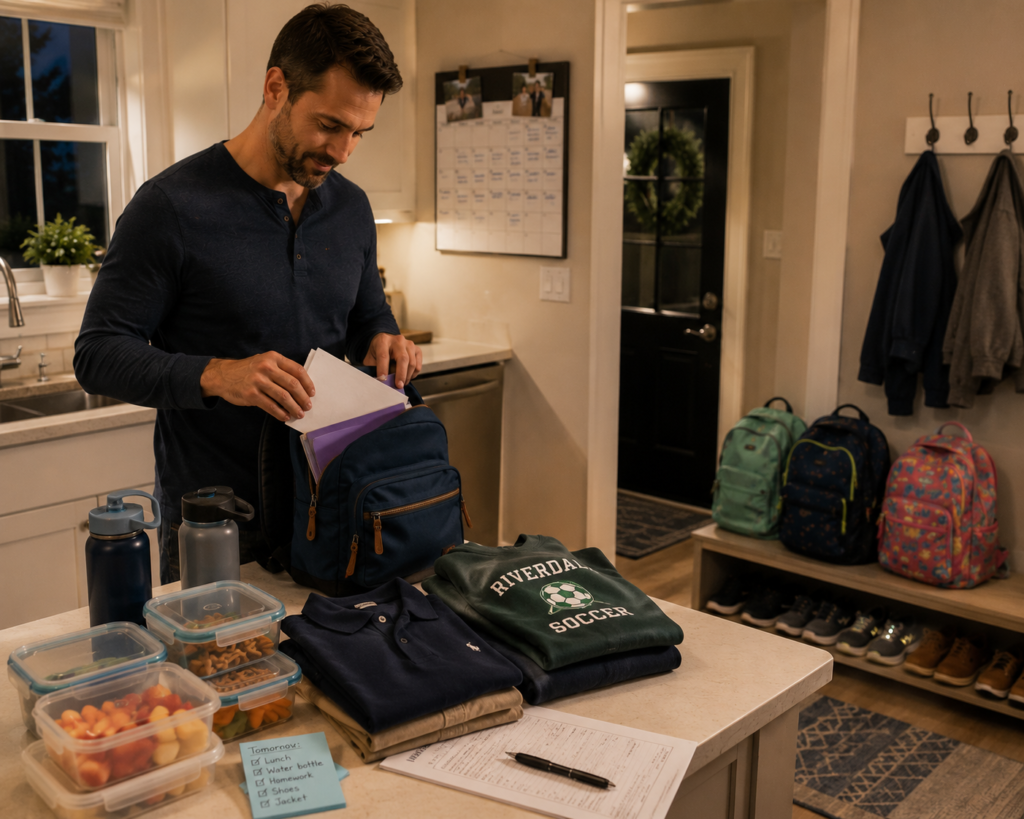
Game changer.
2. Same Order Every Day
Kids respond surprisingly well to repetition.
3. Fewer Choices
Too many options create delays.
Instead of asking:
“What do you want for breakfast?”
Try:
“Would you like eggs or oatmeal?”
Decision made.
Crisis avoided.
Helpful Resources for Parents
These evidence-based parenting resources offer useful guidance:
- American Academy of Pediatrics HealthyChildren.org
- American Academy of Sleep Medicine
- Harvard Center on the Developing Child
They provide practical information without making parents feel like they’re failing because their child wore mismatched socks.
Frequently Asked Questions
What is the best morning routine for kids?
The best Morning Routine for Kids is one that is simple, consistent, and realistic for your family. Most routines should include waking up, hygiene, getting dressed, eating breakfast, and preparing for school.
How long should a morning routine take?
Most school-age children need between 30 and 60 minutes depending on age, independence, and family schedules.
Should kids eat breakfast before or after getting dressed?
Either approach can work. Many parents find breakfast first prevents food stains and reduces delays.
How do I stop morning arguments?
Create clear expectations, use visual checklists, and eliminate unnecessary decisions.
What if my child refuses to follow the routine?
Stay consistent. Children often test boundaries before adapting to new systems. Patience and repetition are usually more effective than constant reminders.
At what age can children manage their own morning routine?
Many children begin handling significant portions independently around ages 8 to 12, though supervision is still helpful.
Are reward charts necessary?
Not always. Many families succeed with consistency and clear expectations alone.
Surviving the Morning Rush
A successful Morning Routine for Kids isn’t about perfection.
It’s about reducing stress.
It’s about helping kids become more independent.
And it’s about making mornings feel less like a disaster movie.
As a father of three, I’ve learned that no routine eliminates every problem. Someone will still occasionally lose a shoe. Someone will spill milk. Someone will remember an important school project approximately 47 seconds before leaving.
That’s parenting.
But having a structured routine dramatically reduces the chaos.
And honestly, if it prevents even one morning meltdown before coffee, it’s probably worth it.
