



I’ve been a huge music lover for as long as I can remember. During my teenage years I rarely went anywhere without my Sony Walkman. Writing that makes me feel old!
It was practically attached to me. Long before becoming a father and swapping late nights for early mornings, I was a pretty big party boy.
I spent years listening to and mixing techno and drum and bass, so decent audio equipment was never optional.
If you’ve spent any time researching headphones, you’ve probably stumbled across the Sony MDR-7506. These headphones have been around for decades and somehow continue appearing in recording studios, radio stations, podcast setups and home offices around the world.
That raises an obvious question.
Are they genuinely that good, or have they simply survived through reputation alone?
In this Sony MDR-7506 Review, I’m taking a practical look at what these headphones offer. A straightforward assessment from someone who appreciates reliable equipment that does its job.
I’ve always been a bit of a tech geek and enjoy quality audio gear, but I’m far more interested in how something performs in the real world than debating microscopic sound differences on internet forums.
What Are the Sony MDR-7506 Headphones?
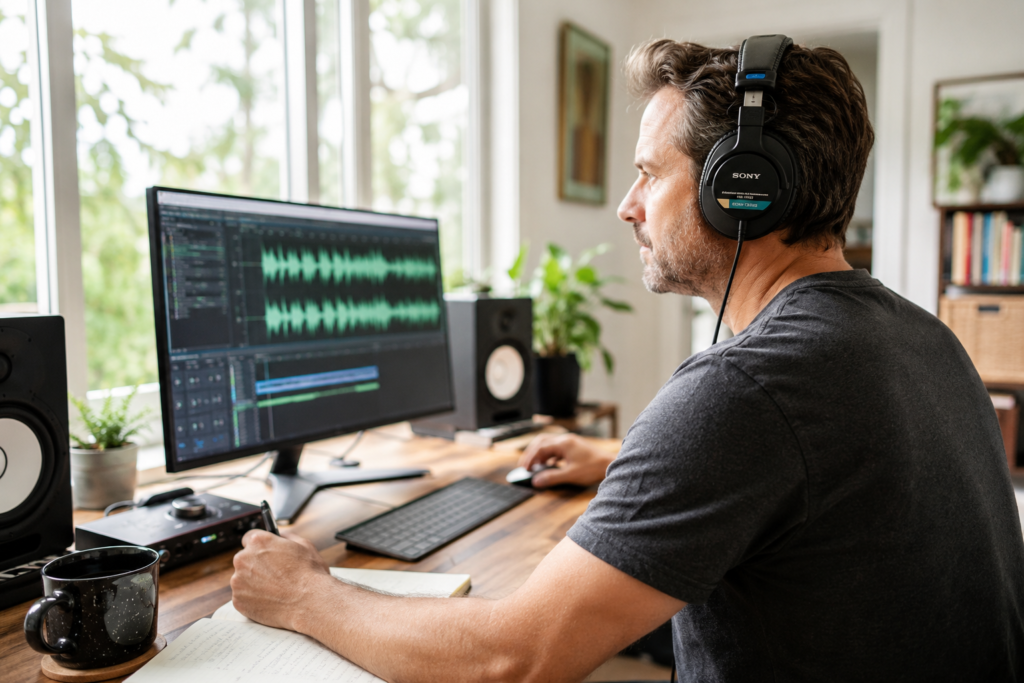
The Sony MDR-7506 is a professional closed-back headphone originally designed for studio monitoring.
Sony first released them in the early 1990s.
Most technology products struggle to stay relevant for three years.
These have survived for over three decades.
That’s older than some of the apprentices I’ve worked with.
The MDR-7506 has become one of the most widely used professional headphones in the audio industry. You’ll find them used by broadcasters, musicians, podcasters, audio engineers and content creators worldwide.
Today, they’re still sold through retailers such as Sony, B&H Photo Video and Sweetwater.
That kind of longevity doesn’t happen by accident.
Sony MDR-7506 Specifications
Before diving into real-world performance, let’s look at the basics.
| Feature | Sony MDR-7506 |
|---|---|
| Type | Closed-Back |
| Driver Size | 40mm |
| Frequency Response | 10Hz – 20kHz |
| Weight | Approximately 230g |
| Cable Type | Fixed Coiled Cable |
| Foldable | Yes |
| Impedance | 63 Ohms |
| Included Adapter | 1/4-inch Adapter |
The specifications aren’t particularly flashy by today’s standards.
But that’s part of the appeal.
These headphones focus on performance rather than gimmicks.
Why These Headphones Became Legendary
I’ve noticed something interesting over the years.
Products that genuinely work tend to stick around.
Products built primarily around hype usually disappear.
The Sony MDR-7506 falls into the first category.
The reason audio professionals continue using them comes down to a few key factors:
- Accurate sound reproduction
- Excellent reliability
- Lightweight design
- Affordable pricing
- Easy portability
They care whether the equipment performs consistently.
The MDR-7506 has built its reputation by doing exactly that.
Sound Quality
Let’s discuss the main reason most people buy headphones.
The sound.
The Sony MDR-7506 delivers a detailed and revealing listening experience.
Unlike many modern consumer headphones, Sony hasn’t artificially boosted the bass to earthquake levels.
That’s refreshing.
These headphones prioritise clarity.
Vocals sound crisp.
Podcasts sound excellent.
Dialogue remains easy to understand.
Instruments are separated clearly.
The treble can sound slightly bright at times, which some listeners love and others dislike.
Personally, I appreciate it.
When listening to podcasts, educational content or video editing projects, clarity matters more to me than excessive bass. Don’t misunderstand, I still love my bass though.
Comfort During Long Listening Sessions
One of the biggest surprises for me was how comfortable these headphones remain over extended periods.
The MDR-7506 weighs very little compared to many modern alternatives.
That makes a bigger difference than most people realise.
I’ve worn heavier premium headphones that felt fantastic initially but became uncomfortable after several hours.
The Sony avoids that problem.
The ear pads are reasonably comfortable, although they aren’t perfect.
After several years of use, many owners eventually replace the stock ear pads.
Fortunately replacement options are inexpensive and widely available.
For dads working from home, listening to podcasts, editing videos or simply enjoying music while everyone else in the house creates absolute chaos, comfort matters.
The MDR-7506 performs well here.
Build Quality
The design won’t win any modern fashion awards.
Let’s be honest.
These headphones look like they were designed during an era when mobile phones resembled house bricks.
But that’s part of their charm.
The construction feels practical rather than flashy.
The folding design makes storage easy.
The frame feels durable.
The cable is thick and robust.
Most importantly, these headphones have a proven history of surviving years of regular use.
I’ve always preferred products built for functionality.
The MDR-7506 fits that philosophy perfectly.
Closed-Back Design Benefits
The closed-back design provides several advantages.
It helps block external noise.
It reduces sound leakage.
It improves focus.
This makes them ideal for:
- Podcast listening
- Video editing
- Home office use
- Studio work
- Travel
- Remote work
If you frequently work in noisy environments, you’ll appreciate the isolation.
No active noise cancellation is present, but the passive isolation works surprisingly well.
Sony MDR-7506 vs Modern Wireless Headphones
Many dads will naturally wonder whether these can compete with modern wireless options.
Let’s compare.
| Feature | Sony MDR-7506 | Typical Wireless Headphones |
|---|---|---|
| Battery Required | No | Yes |
| Latency | None | Some |
| Reliability | Excellent | Good |
| Portability | Good | Good |
| Audio Accuracy | Excellent | Varies |
| Noise Cancelling | No | Often Yes |
| Charging Required | Never | Constantly |
| Longevity | Outstanding | Moderate |
One of the biggest advantages of the MDR-7506 is simplicity.
You plug them in.
They work.
No firmware updates.
No Bluetooth pairing drama.
No battery anxiety.
No mysterious software issues.
Just sound.
Sometimes older technology has advantages.
Real-World Use for Dads
This is where these headphones shine.
As fathers, we’re rarely sitting in dedicated listening rooms analysing audio recordings.
We’re multitasking.
We’re working.
We’re fixing things.
We’re managing households.
We’re trying to find thirty minutes of peace before somebody needs help locating a missing school shoe.
The Sony MDR-7506 works well because it’s practical.
Whether you’re:
- Listening to podcasts
- Editing videos
- Taking Zoom calls
- Learning new skills
- Watching YouTube tutorials
They perform consistently.
How They Compare to Comfortable Earbuds
If portability is your highest priority, earbuds make more sense.
I’ve covered some excellent options in my guide earbuds that are comfortable.
However, over-ear headphones offer several advantages:
- Larger soundstage
- Better long-term comfort for many users
- No battery limitations
- Improved audio accuracy
Personally, I alternate between both depending on the situation.
The Biggest Weaknesses
No product is perfect.
The Sony MDR-7506 has a few drawbacks.
Fixed Cable
The cable cannot be removed.
If the cable becomes damaged, repairs become more complicated.
Many modern headphones now offer detachable cables.
No Bluetooth
Some users will see this as a major disadvantage.
Others won’t care.
Personally, I appreciate the simplicity.
Ear Pads Wear Out
The original ear pads eventually deteriorate.
Fortunately replacements are cheap and easy to install.
Bright Treble
Certain listeners may find the treble slightly aggressive.
This depends largely on personal preference.
Why Audio Professionals Still Use Them
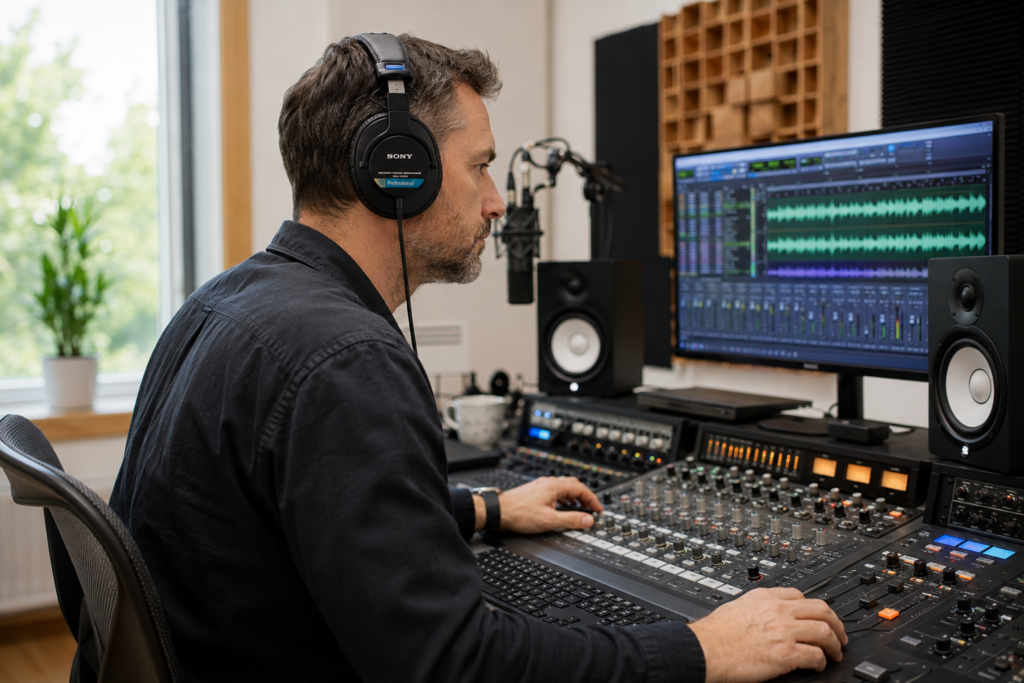
This is perhaps the strongest endorsement.
Professional audio engineers could choose almost anything.
Many continue choosing the MDR-7506.
Organizations involved in professional recording, production and broadcasting frequently recommend them because of their consistent performance and accurate monitoring characteristics. Resources from Sound On Sound and Headphonesty have also highlighted their long-standing reputation within the audio community.
That reputation wasn’t built through influencer sponsorships.
It was built through years of dependable performance.
Pros and Cons
Pros
- Excellent sound clarity
- Lightweight and comfortable
- Durable construction
- Affordable pricing
- Proven professional reputation
- No batteries required
- Foldable design
- Reliable long-term performance
Cons
- Fixed cable
- No wireless connectivity
- Ear pads eventually wear out
- Treble can be bright for some listeners
- Appearance feels dated
Are They Still Worth Buying in 2026?
Absolutely.
In fact, their value may be stronger now than ever.
While many manufacturers chase trends, Sony has continued producing a headphone that simply does its job exceptionally well.
That’s increasingly rare.
The MDR-7506 won’t impress people with flashy marketing.
It won’t connect to an app.
It won’t monitor your sleep quality.
It won’t remind you to drink more water.
It just delivers excellent sound.
What I’d Tell Another Dad
After spending years around technology, gadgets and audio equipment, I’ve become increasingly sceptical of hype.
Many products promise revolutionary experiences.
Most deliver slightly improved versions of things we already owned.
The Sony MDR-7506 is different.
Its reputation wasn’t built through marketing campaigns.
It was earned through decades of reliable performance.
They’re comfortable.
They’re durable.
They sound excellent.
Most importantly, they continue doing exactly what they were designed to do after more than thirty years on the market.
That’s not easy to achieve.
In a world filled with disposable technology and endless marketing noise, there’s something refreshing about a product that simply refuses to become obsolete.
Frequently Asked Questions
Is the Sony MDR-7506 still worth buying?
Yes. The Sony MDR-7506 remains one of the best value professional headphones available thanks to its excellent sound quality, durability and long-standing reputation.
Are the Sony MDR-7506 comfortable?
Most users find them comfortable for long listening sessions due to their lightweight design. Some owners eventually upgrade the ear pads for additional comfort.
Does the Sony MDR-7506 have noise cancelling?
No. These headphones do not feature active noise cancellation. However, the closed-back design provides useful passive noise isolation.
Are the Sony MDR-7506 good for music?
Absolutely. They provide detailed, accurate sound reproduction that works well across multiple music genres.
Can I use the Sony MDR-7506 for podcasts?
Yes. Podcast listening is one of the areas where these headphones excel thanks to their vocal clarity and detailed sound signature.
Is the Sony MDR-7506 better than wireless headphones?
That depends on your priorities. The MDR-7506 offers better reliability, no battery concerns and highly accurate sound, while wireless headphones provide greater convenience.
Why are the Sony MDR-7506 so popular?
Their popularity comes from decades of reliable performance, accurate sound reproduction, comfort and affordability. Many professionals continue using them because they consistently deliver excellent results.
